REVIEW · LONDON
Jack the Ripper Walking Tour with Expert Ripperologist
Book on Viator →Operated by Jack the Ripper Walks · Bookable on Viator
Whitechapel turns spooky fast on this walk. This 2½-hour Jack the Ripper experience follows real London streets in the 1888 Whitechapel area, with 14-inch backlit tablet visuals that help you see what your guide is describing without constantly checking your phone.
I also like that it’s built for easy wayfinding: you get pointed from stop to stop, so you can keep your attention on the street corners. The only real drawback is toilets are very limited, and the route asks you to stand and walk for 2+ hours (so plan accordingly).
If you’ve ever worried this kind of tour would turn into Hollywood-lite, the guides here often land in a better lane. Names like Lindsey, Jenny, and Paul show up in the feedback for being upbeat and respectful, especially in how they handle the women victims.
In This Review
- Key things I’d circle before you book
- St Botolph’s Aldgate: starting where the legend takes a breath
- Aldgate Square to Mitre Street: Whitechapel 1888 and the double-night focus
- Petticoat Lane, Goulston Street, and the police-trail perspective
- Gunthorpe Street and Thrawl Street: Martha Tabram and Mary Ann Nichols
- Hanbury Street to Wilkes Street: Annie Chapman, the Dear Boss letter, and the back-courtyard reality
- The Ten Bells, Christchurch Graveyard (Itchy Park), and the Mary Kelly finale
- Price, timing, and what you should expect on your feet
- Should you book the Jack the Ripper Walk with Expert Ripperologist?
- FAQ
- How long is the Jack the Ripper walking tour?
- What language is the tour offered in?
- What is included in the ticket?
- Where does the tour start and end?
- Is the tour suitable for children?
- Do I need to be able to walk for the whole tour?
- Can I cancel and get a refund?
Key things I’d circle before you book

- 14-inch tablet visuals at each stop: photos and scenes displayed clearly as you walk
- Costumed guide touch: a small bit of theatre, without losing the thread of facts
- Whitechapel route you can follow without maps: your guide keeps the pacing and turns clear
- City of London vs Metropolitan boundary: Petticoat Lane/Middlesex St is used to explain policing differences
- Real street-by-street links to multiple victims: you’ll hit locations tied to several key cases
- Small-group feel (max 30): easier listening than some larger walks
St Botolph’s Aldgate: starting where the legend takes a breath
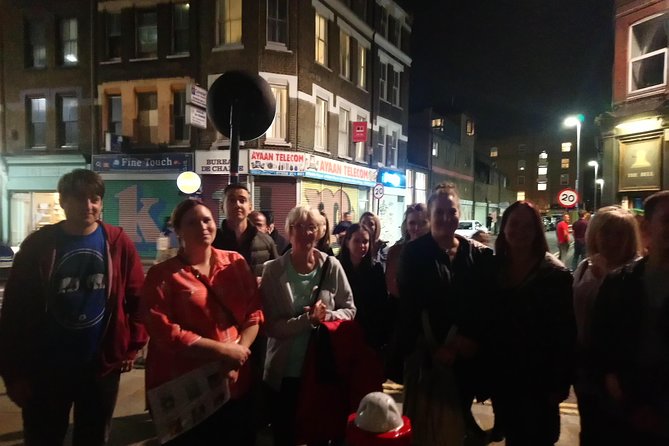
The tour kicks off at Aldgate Station, then moves to St Botolph’s Church area. This church is often tied to the idea of the Prostitutes Church, because women used to solicit on the island where the church stood. Even though you’re outside, the tone matters here. You’re not starting with gore. You’re starting with context: why Whitechapel drew desperate work, and why the streets were crowded and hard to police.
Then you get a quick visual and narrative intro that sets up the rest of the walk. This is where the expert approach helps. Instead of treating the murders as spooky trivia, the guide frames them as an outbreak happening in a specific neighborhood under specific conditions.
Time-wise, Stop 1 is short (around 5 minutes). That’s a good thing. You get oriented fast, and you’re not stuck listening for too long before you’re moving.
Practical tip: this is a walk, not a museum. If you like standing in small historical gaps in the street, you’ll enjoy the pacing. If you want lots of indoor time and seating, this format may feel more active than you expect.
You can also read our reviews of more walking tours in London



Aldgate Square to Mitre Street: Whitechapel 1888 and the double-night focus
From the church, the walk slides to Aldgate Square, where you’re guided through what life looked like in Whitechapel in 1888—poverty, crowding, and how people lived on the breadline. This matters because it explains opportunity and vulnerability in plain human terms, not just crime-story plot points.
At this stage, the tour does something useful for first-timers: it turns your attention to everyday details. You start noticing how a neighborhood like this could be both familiar to people living there and terrifying to outsiders. It’s less about a single street “mystery” and more about a system that made things worse.
Next comes Mitre Street. Here the guide connects specific sites to specific victims, including Elizabeth Stride (often called Long Liz). The tour also shifts a few yards to talk about Catherine Eddowes, killed only about 45 minutes later. This “same night, nearby locations” approach is one reason the tour feels intense even when you’re standing in daylight.
Stop 3 is about 10 minutes, so you’ll get the names and the timing, but you won’t sit through a long lecture at one corner. The best part is that the guide uses the tight geography to help you understand how the events unfolded across the same part of London.
If you’re the type who only knows the famous Hollywood version of Jack the Ripper, this section is where you’ll feel the difference most.
Petticoat Lane, Goulston Street, and the police-trail perspective
A key moment comes at Petticoat Lane Market (described as Middlesex St), which is presented as a boundary between the City of London and the Metropolitan area. That distinction isn’t trivia. It’s used to explain that policing didn’t work the same way everywhere. Different police forces, different jurisdictions—so the path of investigation can look different depending on where you are.
Stop 4 is brief (around 5 minutes), but it’s a sharp pivot: you stop thinking only about the victims and start thinking about how the city was organized—and how that affected response.
Then the tour moves to Goulston Street, where you’re taken to a doorway where a clue was found on the route the police took that night, hot on the trail of the killer. This is one of those stops where the guide’s method pays off. Instead of just pointing and naming, you get the sense of a pursuit happening in real streets, not a story happening in a book.
Stop 5 runs about 10 minutes. It’s long enough for meaning, short enough to keep you walking.
You don’t need to bring a map to follow the route. The stops are grouped with clear directional movement, and the guide keeps you from drifting off on your own.
Gunthorpe Street and Thrawl Street: Martha Tabram and Mary Ann Nichols
At Gunthorpe Street, you view it from Wentworth St, looking toward the spot where Martha Tabram was found murdered on 7th Aug 1888 in the George Yard Buildings area. The tour frames Tabram as the most likely first victim of Jack the Ripper (in the guide’s discussion), which adds a layer of perspective beyond the most commonly repeated storyline.
Stop 6 is about 10 minutes. Expect location-based storytelling: what’s nearby, what would have been in the area, and why the site matters to the timeline.
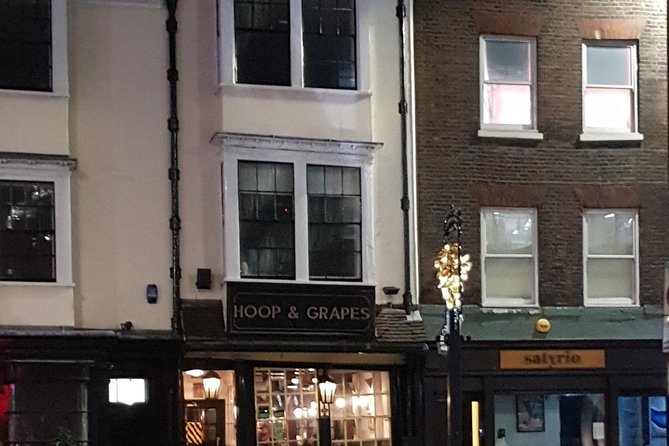
Then you head into Brick Lane and stop opposite the Frying Pan Pub at the corner of Thrawl Street. This is tied to Mary Ann Nichols, whose last drink the tour places before she staggered down Whitechapel Road and was murdered in Bucks Row behind Whitechapel Station.
Stop 7 runs around 10 minutes. One thing I like about this part of the route is that it doesn’t treat pubs as set dressing. They’re used as real anchors—places where people were in public life, then moments later you’re asked to imagine what happened when someone didn’t return.
You’ll likely feel how heavy the topic is here. The feedback consistently praises the guides for being sensitive to the women victims. If you’re hoping for a tour that handles the subject with care instead of shock value, this tour’s approach should match what you’re looking for.
Hanbury Street to Wilkes Street: Annie Chapman, the Dear Boss letter, and the back-courtyard reality
The walk turns left into Hanbury Street, stopping where Annie Chapman was murdered in the back yard of 29 Hanbury St. Stop 8 runs about 12 minutes. Back-yard settings are hard to picture if you’ve never spent time in older city neighborhoods, so this is exactly where the tablet visuals can help you follow the guide’s mental map.
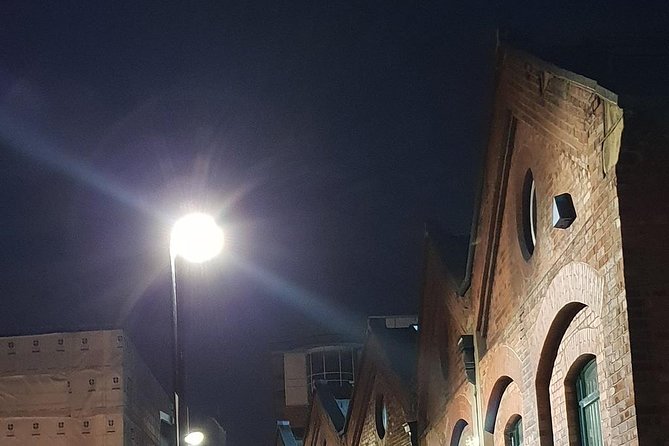
Next comes Wilkes Street, described as a street untouched by time since the 1800s. The tour then walks toward Puma Court, where you hear about the Dear Boss letter. This shifts you from street corners and victim sites into the “evidence and communication” side of the story—how messages fed fear, attention, and theory.
Stop 9 is about 5 minutes. Short, but the subject (the letter) tends to stick in your mind because it’s both specific and strange.
A quick caution: if you’re hoping the tour spends equal time on suspects and “who might have done it,” you may feel there’s more emphasis on victims and the neighborhood conditions. One feedback note pointed out this imbalance, though the guide does cover suspects mainly at the end with an alternative view about what kind of person Jack might have been, based on how he avoided capture across large police and vigilante efforts.





The Ten Bells, Christchurch Graveyard (Itchy Park), and the Mary Kelly finale
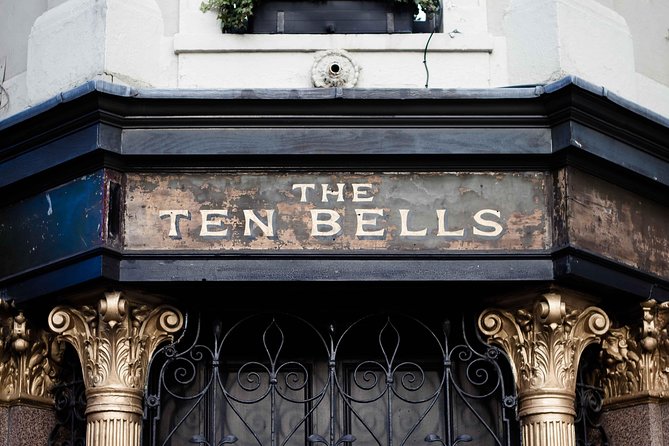
The tour continues to The Ten Bells, stopping opposite the pub that Mary Kelly is described as favoring. There’s a second layer here: you also view Christchurch Graveyard, known as Itchy Park, where the homeless were described as sleeping in the daytime.
Stop 10 is about 5 minutes. It’s brief, but it’s doing two jobs: placing Mary Kelly’s last-linked routines in a real social setting and showing the grim overlap between poverty and public spaces.
Then you move to Old Spitalfields Market, stopping opposite it near the London Fruit & Wool Exchange. You’re led into the entrance area where the tour places attention on a letter sent to George Lusk, head of the Whitechapel Vigilance Group. This part matters if you want the broader response—how community groups reacted, not just how police responded.
Stop 11 runs about 8 minutes. It’s also a strong “switch” point: you’re heading toward the final stop and wrapping the timeline around the last known victim.
Finally, the tour ends in the square behind the London Fruit & Wool Exchange, tied to Mary Kelly as the last victim, killed on 9th Nov 1888. From here, it’s described as a short walk (about 5 minutes) to Liverpool Street Station, so you have easy onward transport options.
Stop 12 is about 20 minutes, which is longer than many stops—useful for a closing narrative when you’ve been standing in the street for hours.
Price, timing, and what you should expect on your feet
At $23.61 per person for roughly 2 hours 30 minutes, this is priced for a “high-feel” walk: you’re not paying for a coach ride or an indoor museum ticket. You’re paying for a guided narrative anchored to specific locations, plus that standout tech element—photos and scenes displayed on a 14-inch backlit tablet for clear viewing.
You’re also paying for a group limit: up to 30 people. That helps the guide keep the story tight and the listening comfortable.
Duration is a big deal. Two and a half hours doesn’t sound long until you’re outside, standing at corners, and moving at a walking pace. The experience is described as requiring moderate physical fitness, and it isn’t recommended if you can’t walk and stand for 2+ hours.
Also note the tour has very limited toilets. If you’re sensitive to that, it’s worth planning water and timing so you don’t have to rush at the end.
If you’re traveling solo or with friends, you’ll likely appreciate the route pacing. One of the best value elements is that the guide handles turns and spacing so you can focus on the story instead of your bearings.
And yes, the tour is offered in English. If that’s your language, it’s a comfortable way to avoid gaps when you’re trying to follow the timeline.
Should you book the Jack the Ripper Walk with Expert Ripperologist?
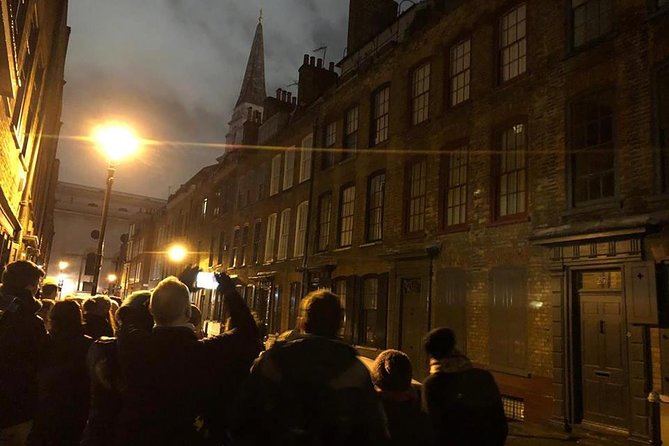
I’d book it if you want a Jack the Ripper tour that treats the case like a real neighborhood story in 1888 Whitechapel, not just a greatest-hits list. The tablet visuals are a practical plus, especially when you’re standing on modern streets. I’d also recommend it if you care about how the women victims are handled—feedback repeatedly highlights the guide sensitivity and respect.
You might skip it if you hate standing for long stretches or if you strongly need frequent toilet stops. Also consider whether you prefer deeper attention to suspects. This walk is more focused on victim locations, neighborhood conditions, and the evidence trail than on turning every corner into a suspect spotlight.
If you like your London darker but still grounded in place and timeline, this is one of the more direct ways to do it—starting at Aldgate, moving through the boundaries, and ending near Liverpool Street with the story still tight in your head.
FAQ
How long is the Jack the Ripper walking tour?
It runs for about 2 hours 30 minutes (approximately).
What language is the tour offered in?
The tour is offered in English.
What is included in the ticket?
You get a mobile ticket, plus photos of murder victims, sites, and the area shown on a 14-inch backlit tablet during the tour.
Where does the tour start and end?
It starts at Aldgate Station (Aldgate High St, London EC3N 1AH). It ends at 66-68 Bell Ln, London E1 7LA, with the finish described near the square of the London Fruit & Wool Exchange on Brushfield St.
Is the tour suitable for children?
No children under 15 are allowed. Ages 16–17 must be accompanied by an adult.
Do I need to be able to walk for the whole tour?
Yes. It’s not recommended for people who cannot walk and stand for 2+ hours.
Can I cancel and get a refund?
Yes. You can cancel for free up to 24 hours before the experience start time for a full refund. If you cancel less than 24 hours before, the amount paid is not refunded.