REVIEW · YULARA
Best of Uluru – Segway and Walking Tour
Book on GetYourGuide →Operated by Uluru Segway Tours · Bookable on GetYourGuide
Uluru can feel huge when you first arrive, but this tour makes it manageable fast by mixing Segway riding with short walks around the most meaningful spots. I especially like how you start with real practice time before you’re let loose around the base, and then you get guided storytelling that connects the land to Anangu culture and the rock’s geology. The main thing to plan for is that you will be walking some sections, plus you’ll be in warm desert conditions without a lot of shade.
What makes this outing worth your time is the combination of an off-the-main-route stop at Mutitjulu Waterhole and the cultural focus on the Mala Walk area with caves and rock art. Guides are a big part of it, and names that often come up for standout guiding include Sye, Jess, Blaize, Tori, Thomas, and Britney. The one drawback to keep in mind: the tour has strict physical limits (including no wheelchair use and restrictions around medical conditions), so it’s not a universal fit.
In This Review
- Key things I’d circle before you book
- Ayers Rock by Segway: why you get more Uluru per hour
- The 30-minute Segway lesson: practice, not guesswork
- Kantju Gorge and cave country: where you set the stage
- Mutitjulu Waterhole: the stop that turns the scenery into a story
- Segwaying Uluru’s base: quarter-circle views that feel oddly calm
- Mala Walk and rock art: learning the Anangu perspective without the rush
- Price and park ticket reality check: what $119 really includes
- What to bring: shoes, sun, water, and a small trick for flies
- Who this tour fits well (and who should skip it)
- Should you book Best of Uluru: Segway and Walking Tour?
- FAQ
- Do I need a separate entry ticket for the Uluru-Kata Tjuta National Park?
- What kind of shoes do I need to wear?
- How long is the tour?
- Is there Segway training for beginners?
- How big is the group?
- What languages are available for the audio guide?
Key things I’d circle before you book
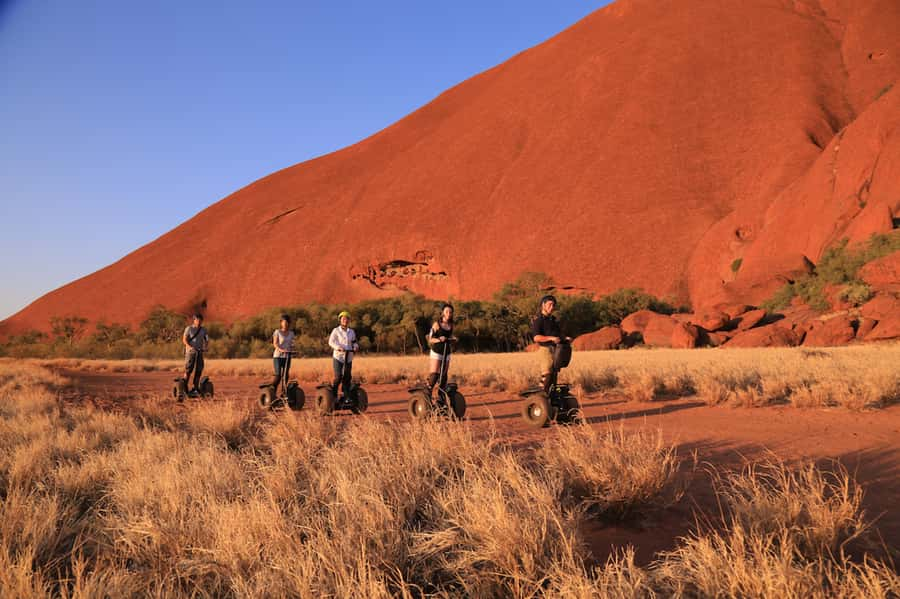
- 30-Minute Segway training with a practice ride so you’re not learning on the fly
- Mutitjulu Waterhole on foot for close-up views, sounds, and a deeper cultural story
- A guided Mala Walk with cave and rock-art context instead of a quick drive-by
- Small groups of up to 10 participants for more attention and easier photo stops
- National Park ticket needed in advance (not bundled in the tour price)
- Audio guide options in Spanish, Chinese, French, German, Italian, and Japanese
Ayers Rock by Segway: why you get more Uluru per hour
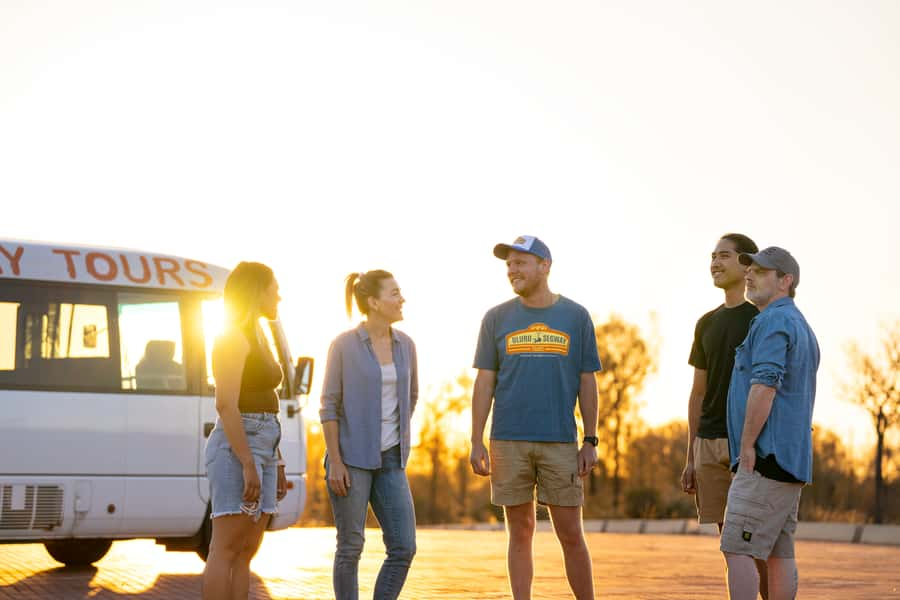
Uluru is one of those places where your first instinct is to just walk around the whole thing. But you’ll quickly realize the base is big, and time disappears in heat and distance. This tour gives you a smart shortcut: you cover a chunk of the base quietly on a Segway, then you slow down on foot where the stories matter most.
I like that you’re not trying to “race” the rock. The pace is built around getting your eyes on the right shapes and features, then having your guide explain what you’re seeing—flora, fauna, geology, and cultural meaning from the Anangu perspective. And because the group is capped at 10, it’s easier for the guide to help people individually when someone is figuring out their balance.
If you’re short on time at Uluru, this format is a strong value. You get the signature views plus the human layer, without needing a full-day hike around the entire perimeter.
You can also read our reviews of more walking tours in Yulara
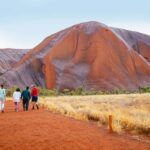
The 30-minute Segway lesson: practice, not guesswork
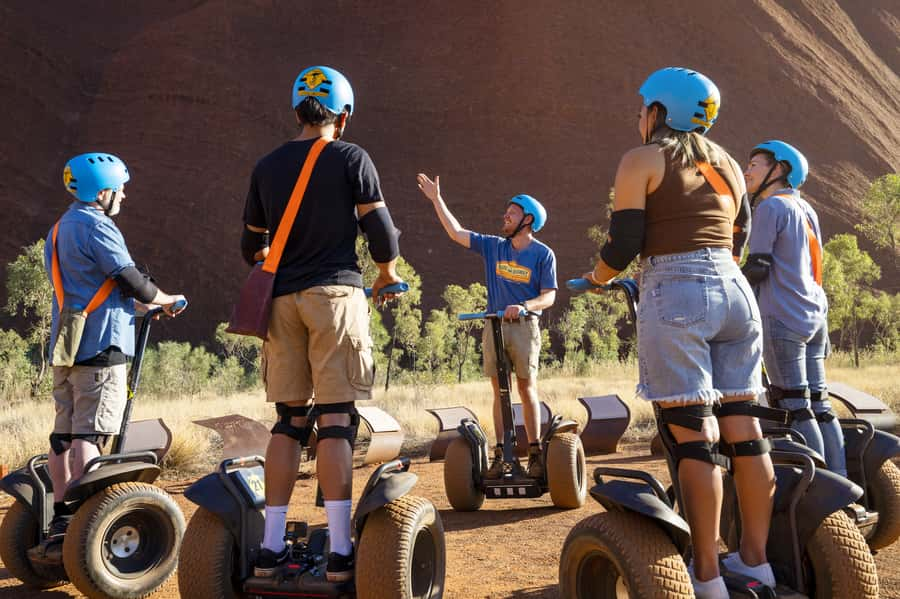
Before you start cruising, you get Segway training that includes a short safety briefing and a practice ride. That matters more than people think. Uluru tours can be intimidating if you’ve never done a Segway, but training first means you’re not spending the scenic portion fighting your feet.
The instruction approach seems to be patient and hands-on, and it shows in how often guides get praised for being supportive. Names like Amber, Sam, and Betty come up for people who felt comfortable quickly—especially first-timers and guests who weren’t trying to prove anything.
You’ll also want to treat this like learning a new mobility skill: pay attention during the lesson, keep your movements smooth, and don’t hesitate to ask the guide to correct your posture. It’s the fastest way to make the ride feel effortless.
Kantju Gorge and cave country: where you set the stage
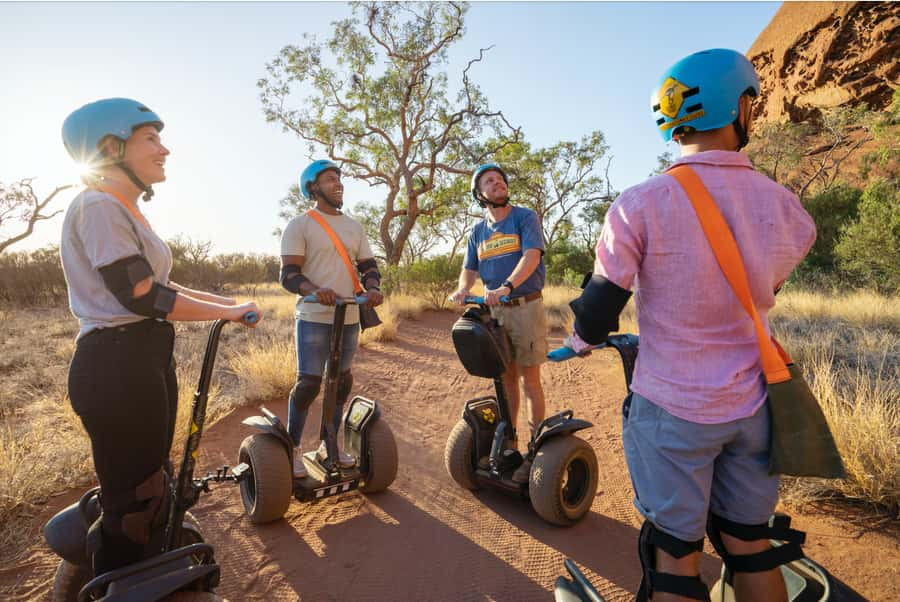
The day isn’t only about Segwaying. You also get bus time between key areas, and you spend time at Kantju gorge with a guided walk component. This is a useful setup because it frames what you’ll later see around Uluru’s base—caves, water, rock textures, and the way people read the landscape.
The practical side: bus segments help break up the day. Instead of hiking for hours right away, you get guided stops and then a ride when you’re ready for a change of pace. The downside is that there’s less control over timing than a DIY plan. If you love lingering exactly where you’re standing, you might feel the schedule.
Still, for most people, this structure makes the experience feel fuller, not rushed.
Mutitjulu Waterhole: the stop that turns the scenery into a story
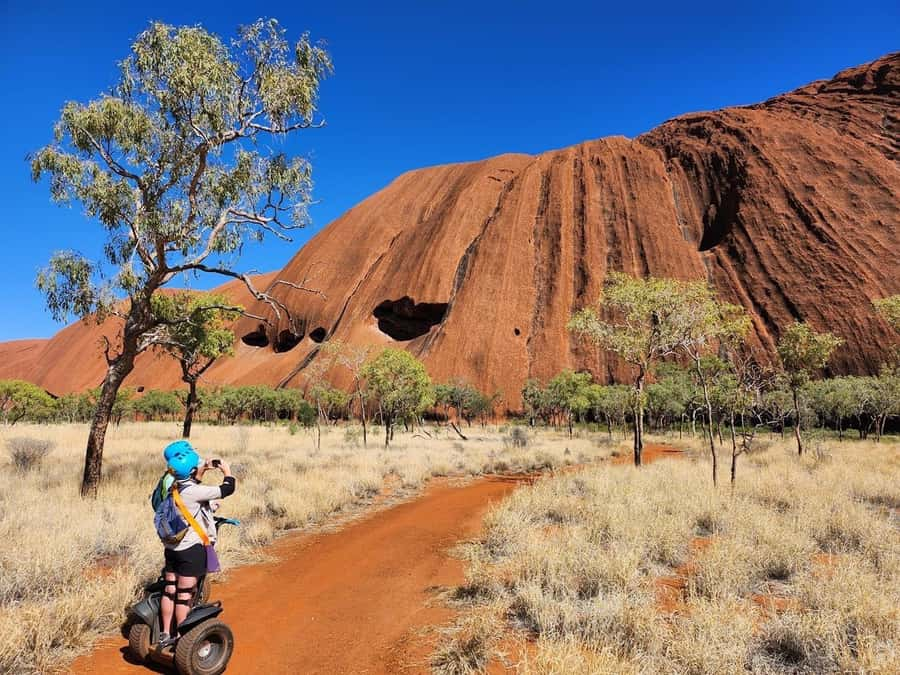
After pickup and Segway orientation, you head to Mutitjulu Waterhole for a guided visit on foot. What I like about Mutitjulu is that it doesn’t read like just another viewpoint. It’s described in a way that makes you pay attention to sounds, sights, and the landscape around the water source—exactly the kind of detail you miss when you only drive past.
This is also where the tour leans into meaning. Your guide’s explanation connects the waterhole to local culture and the Anangu relationship with the land. You’ll also be shown Aboriginal rock art, which adds a deeper layer to what you’re seeing rather than treating rock art as a random photo stop.
Time here is about 30 minutes, so don’t expect a long wander. But you do get enough time to look closely and let your guide’s context land. If you’re the kind of person who always asks what you’re actually looking at, this portion will feel rewarding.
Segwaying Uluru’s base: quarter-circle views that feel oddly calm
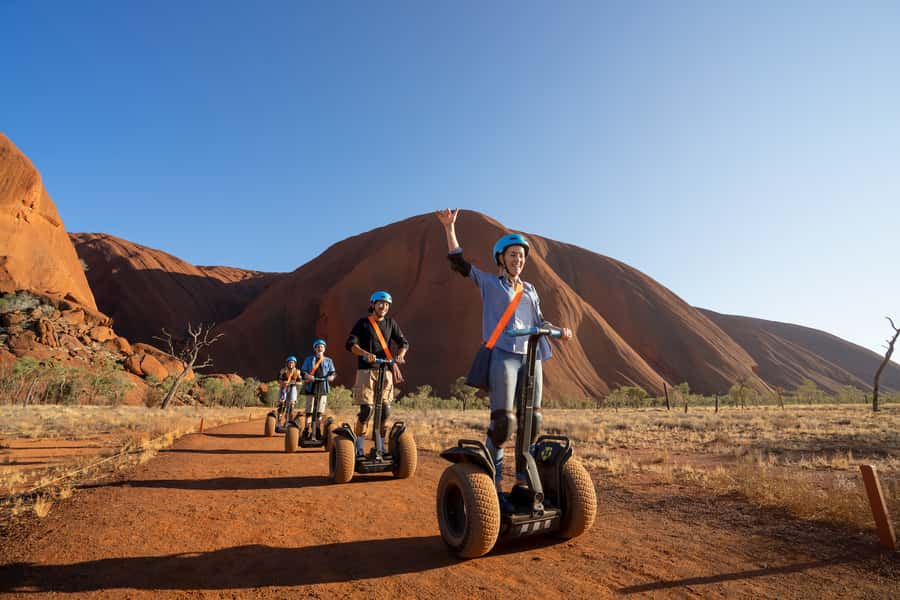
Once you’re trained, you cruise along a scenic section of Uluru’s base. The plan is to cover about a quarter of the enormous rock, quietly and efficiently—so you spend your energy looking, not walking.
This is the heart of the value. A full loop around Uluru is a bigger commitment than most people expect. Here, you get the “wow” of moving around the rock at ground level with far less fatigue. And because you’re not climbing, it’s easier to keep your attention on the guide’s geology and cultural points.
Photo-wise, you’ll get chances to stop. A lot of guests highlight that guides are also helpful with photos—some even stepping in so you get a shot of yourself rather than only selfies from the side of the group. If photos matter to you, charge your phone fully and consider bringing a small power bank.
For the ride itself: wear your closed-toe shoes properly, keep both feet planted, and avoid sudden braking. When you ride smoothly, the experience feels calm and almost meditative—desert silence broken only by your conversation and the soft rolling of the Segway.
Mala Walk and rock art: learning the Anangu perspective without the rush
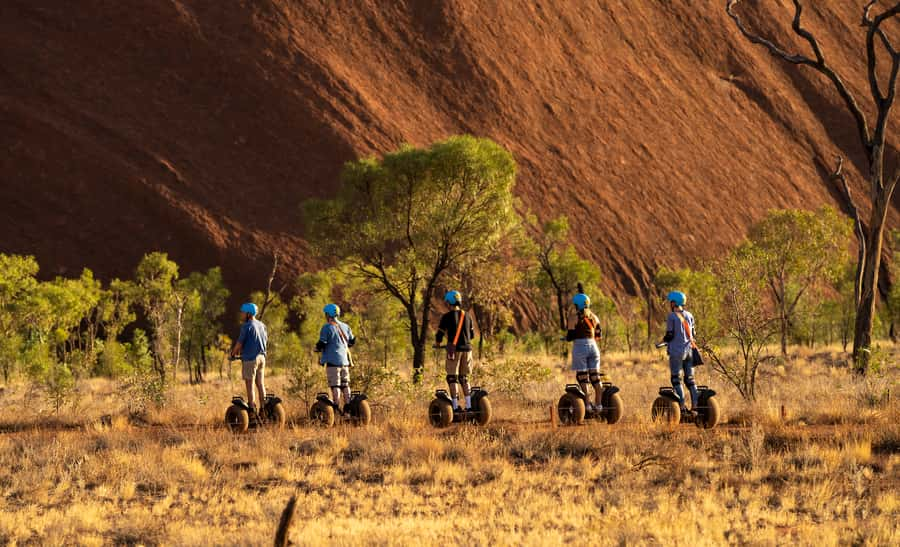
After the Segway portion, you move around Uluru by bus to explore caves and continue with guided walking at the Mala Walk area (with Kantju gorge also included). This is where the tour shifts from “seeing Uluru” to “understanding Uluru.”
On the Mala Walk, you get up close with the terrain and caves and you learn about local Aboriginal culture. That matters because caves and rock formations aren’t just scenery here—they’re part of a living map of stories, meanings, and connections to place. The guide’s storytelling is the difference between taking photos and actually grasping what you’re seeing.
This portion also tends to satisfy people who worry that a Segway tour means missing the real walking parts. You still do the walk, but it’s focused. You get the cultural and photographic payoff without having to cover the entire circuit.
One consideration: bring a mindset for walking. Even if you’re not doing a full ring around Uluru, you’ll still be on your feet. Plan for a comfortable pace and keep your water handy.
Price and park ticket reality check: what $119 really includes
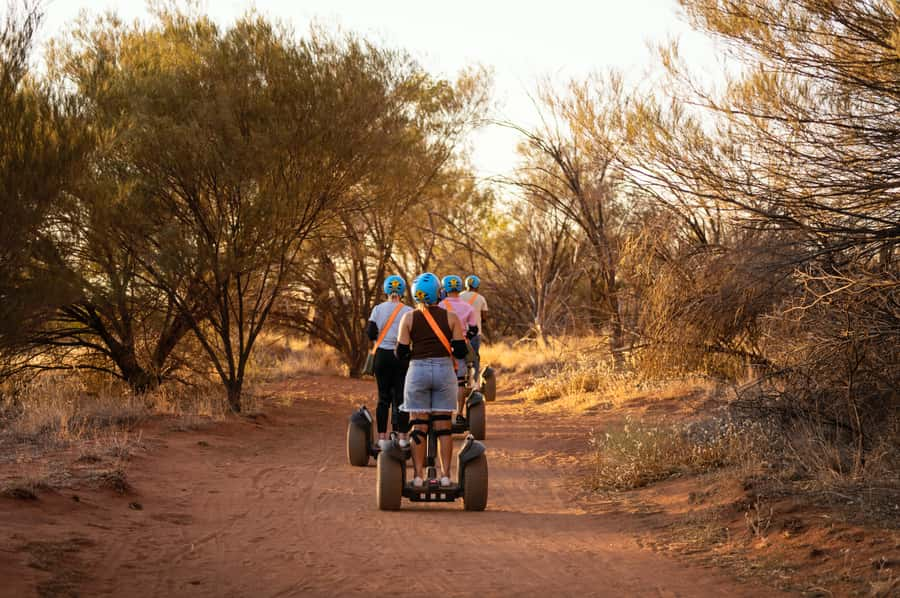
At $119 per person for a 4–5 hour experience, the pricing is competitive for what you’re actually getting: hotel-area transfers, Segway training, a guided Segway ride, and guided walking time at Mutitjulu and the Mala Walk. You’re also in a small group, capped at 10, which helps justify the cost compared to bigger coach-style tours.
The one cost to plan for separately is the Uluru-Kata Tjuta National Park entry ticket, which you must buy in advance. The tour itself doesn’t include it. If you’re budgeting, add that ticket early so there are no surprises at the last moment.
If you like flexibility, the booking option includes free cancellation up to 24 hours before departure and a reserve-now, pay-later style setup. That’s useful in the desert, where plans can change based on heat, energy, or timing.
What to bring: shoes, sun, water, and a small trick for flies
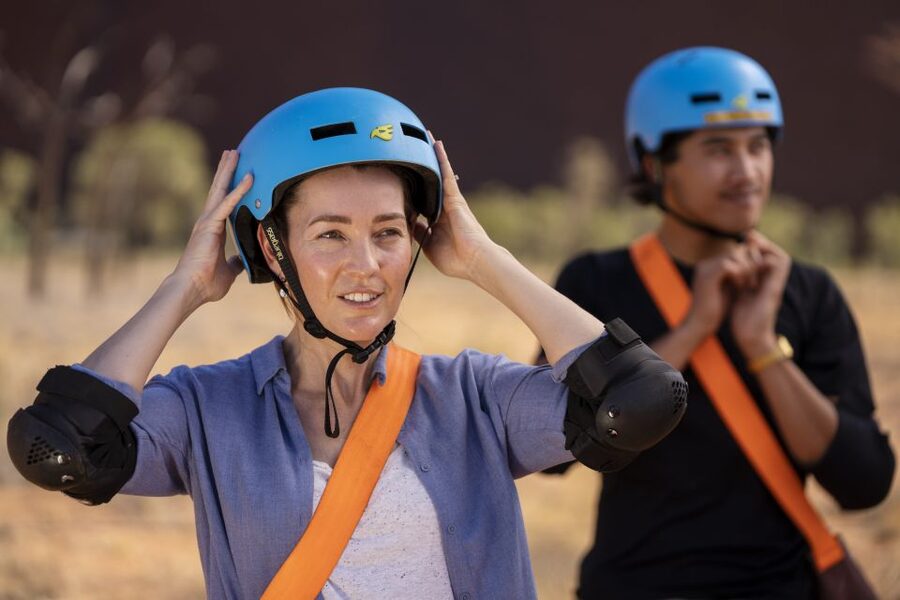
The required gear is simple and non-negotiable. Bring sunglasses, a sun hat, water, and closed-toe shoes. Flip-flops aren’t allowed, and you won’t be permitted to join if your footwear doesn’t meet the requirement.
For comfort, I’d also suggest layering your thinking for Uluru conditions. That means planning for sun and glare, not just temperature. Sunglasses plus a hat do more than you expect when you’re looking at bright red rock all day.
One practical tip that came up from experience: if you’re going during warmer months, flies can be intense. I recommend packing a lightweight head net or covering just in case you’re sensitive to them. It’s a small addition that can make the walking portions feel far less annoying.
Who this tour fits well (and who should skip it)
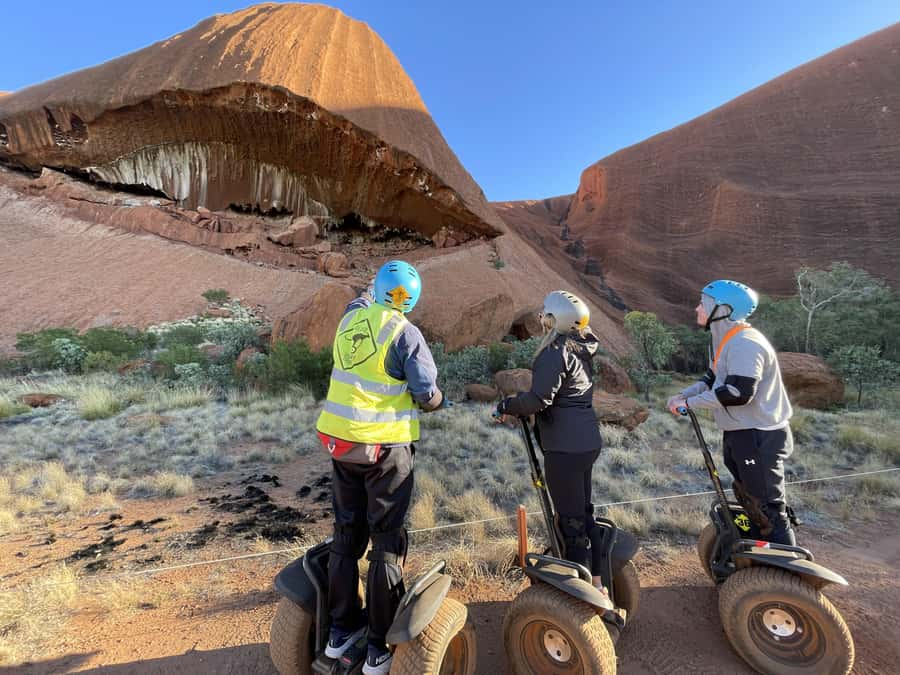
This is not a choose-your-own-adventure tour. It’s guided, structured, and it depends on safe Segway riding plus walking time.
You’ll likely enjoy it most if:
- You want a shorter, guided way to see Uluru’s base without doing the whole circuit on foot
- You’re comfortable learning a new device with a training session
- You care about cultural context, caves, and rock art, not only views
But skip it if any of the limitations apply to you. The tour is not suitable for children under 12, wheelchair users, people with back problems, pregnant women, guests who can’t ride a bike, people with pre-existing medical conditions or recent surgeries, and anyone outside the weight range (not below 45 kg and not above 118 kg). People under 99 lbs or over 70 also fall outside suitability, and the tour isn’t set up for visual impairment.
If you’re on the fence because of mobility or health, ask your provider before booking. It’s better to check than to find out on the day.
Should you book Best of Uluru: Segway and Walking Tour?
I’d book it if you want an efficient, high-context Uluru experience. The Segway portion makes the base sightseeing feel doable, and the guided walks at Mutitjulu and the Mala Walk add the meaning you came for. The small group size also means you get more attention during training and more time to hear the story behind the rock art and caves.
I’d think twice if you prefer long, unstructured wandering, because this tour is timed and guided. And if walking and desert comfort are tough for you, you’ll want to compare your needs to the tour’s physical requirements first.
If you’re aiming for the best mix of views, culture, and effort level in half a day, this tour is one of the more sensible choices.
FAQ
Do I need a separate entry ticket for the Uluru-Kata Tjuta National Park?
Yes. The Uluru-Kata Tjuta National Park entry ticket is not included, and you need to buy it in advance.
What kind of shoes do I need to wear?
Closed-toe shoes are required. Flip-flops aren’t permitted, and you won’t be allowed to take part if you’re wearing them.
How long is the tour?
The total experience runs about 4 to 5 hours, depending on starting time and the day’s schedule.
Is there Segway training for beginners?
Yes. You’ll receive about 30 minutes of Segway training, including a safety briefing and a short practice ride before the guided Segway section.
How big is the group?
The tour is limited to a small group, with a maximum of 10 participants.
What languages are available for the audio guide?
An audio guide is available in Spanish, Chinese, French, German, Italian, and Japanese, while the live tour guide is in English.