REVIEW · ROME
Highlights of Jewish Ghetto And Trastevere Walking Tour
Book on GetYourGuide →Operated by What About Tours · Bookable on GetYourGuide
Two Rome neighborhoods, one unforgettable story.
This Jewish Ghetto and Trastevere walking tour turns a short route into a living timeline, from ancient ruins to synagogue-era life, then into Trastevere’s alleyway legends. You’ll get food recommendations along the way and hear stories about resilience, tradition, and the city’s past that still echoes today.
I especially love how the tour ties together big, real places—like the area around the Theatre of Marcellus and the Portico d’Ottavia—with what daily life looked like behind ghetto restrictions under papal rule. I also love the guide energy: I’ve heard from guides like Ivan and Iris that the storytelling can be funny, even when the subject gets heavy, including dark humor and politically incorrect jokes.
One thing to consider: this is a walking tour that stays on your feet. It runs about 87 minutes, includes small streets and historic stone underfoot, and a few people advise wearing trainers and keeping a steady pace if you’re slower in crowded areas.
In This Review
- Key points you’ll care about
- Where the tour starts: Fontana delle Tartarughe to a fast first vibe check
- The Jewish Ghetto: ruins, restriction, and quiet resistance
- Great Synagogue of Rome: what you’re seeing and why it matters
- Photo stops that aren’t filler
- Tiber Island: a myth-and-medicine pause in the middle of Rome
- Quick stop, clear meaning
- Trastevere streets: ivy, medieval lanes, and the legend thread
- Raphael’s lover’s house and the artist’s private life
- Santa Maria in Trastevere: a short visit with big symbolism
- Ponte Sisto to Piazza Trilussa: finishing with river views and street energy
- Food recommendations: eating like you actually planned it
- What makes these tips feel useful
- The guide experience: story-first, with real personalities
- Dark humor note
- Tip-based pricing: what $3.77 buys you, and how to handle tips
- How to think about value
- Practical walk tips so you enjoy every minute
- Who should book this Jewish Ghetto and Trastevere walk
- Should you book it?
- FAQ
- FAQ
- Where does the tour start?
- Where does the tour end?
- How long is the tour?
- Is the tour guided?
- What language is the tour offered in?
- Is it a paid tour or tip-based?
- What’s a typical tip amount?
- What costs are involved besides the booking price?
- What is included in the experience?
- Can I cancel for a refund?
- Can I reserve now and pay later?
Key points you’ll care about
- Tip-based, pay-what-you-want model: the “price” is just the booking fee, not the full value.
- Ghetto history with story flow from ancient Rome to restricted district life to survival through faith and culture.
- Tiber Island stops fast: a quick crossing that connects myth, medicine, and refuge.
- Trastevere’s vibe is part of the lesson—rebellion, passion, nightlife, and medieval streets.
- Food picks that actually help you plan what to eat in both neighborhoods.
- Guides like Ivan, Iris, Max, and Martina often mix clear explanations with humor and lots of Q&A.
Where the tour starts: Fontana delle Tartarughe to a fast first vibe check
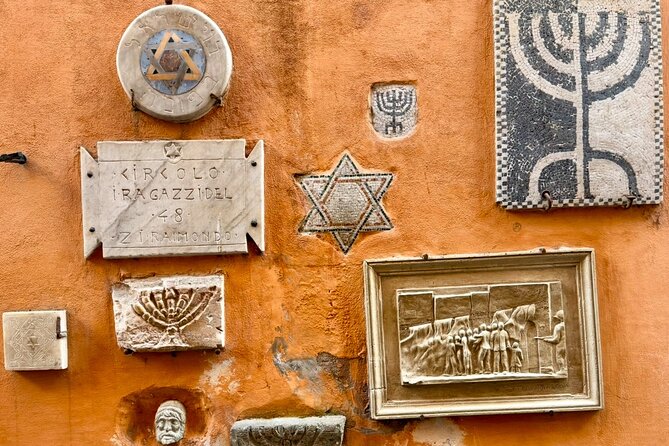
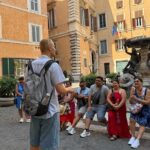
You meet by Fontana delle Tartarughe. It’s a good start point: easy to spot, central enough that you can arrive without doing a scavenger hunt. The guide holds a sign with the tour name, and you’re quickly set up for the kind of walk that feels like a local briefing, not a lecture.
That first stop is short and practical: photo time and a quick orientation. The benefit of starting with a quick visual anchor is that the story later has a “map” in your head.
You can also read our reviews of more walking tours in Rome



The Jewish Ghetto: ruins, restriction, and quiet resistance
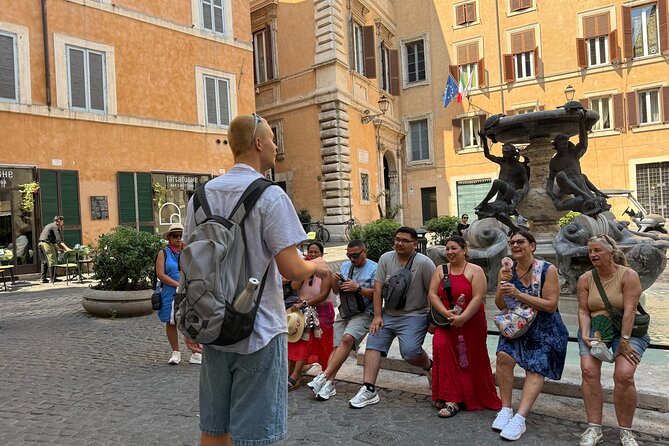
The tour begins in the Jewish Ghetto area, the heart of one of the oldest Jewish communities in the world. You’ll be walking in a corridor where the past is layered: ancient monuments nearby, ghetto walls and rules behind it, and centuries of continuity in between.
As you move through this section, the stories focus on how a once-prestigious part of ancient Rome became a restricted district under papal rule. The guide’s goal isn’t just dates. It’s daily life: what it meant to live with limits, how the community preserved identity through faith and culture, and how “quiet resistance” could look like holding onto traditions even when pressure was constant.
Great Synagogue of Rome: what you’re seeing and why it matters
You’ll stop at the Great Synagogue of Rome for photo time and a guided visit. This is where the tour often turns from survival stories to visible cultural presence. It helps to see a major religious site in context, not as an isolated postcard.
A helpful detail: the guide style matters here. Many people highlight that guides keep things engaging and answer questions, including when the topic is emotionally difficult. If you’re the kind of person who likes context—architecture, community life, and the “why” behind what you see—this stop is a strong payoff.
Photo stops that aren’t filler
This section includes short photo stops around the ghetto area, plus the walking time between points. That structure is useful because you’re not just rushing from one landmark to the next—you’re getting brief pauses to reset your mental map.
Downside: if you’re expecting a slow stroll with lots of standing around, this section is more “walk and learn” than “wander and browse.” Keep your energy up and you’ll get more out of it.
Tiber Island: a myth-and-medicine pause in the middle of Rome
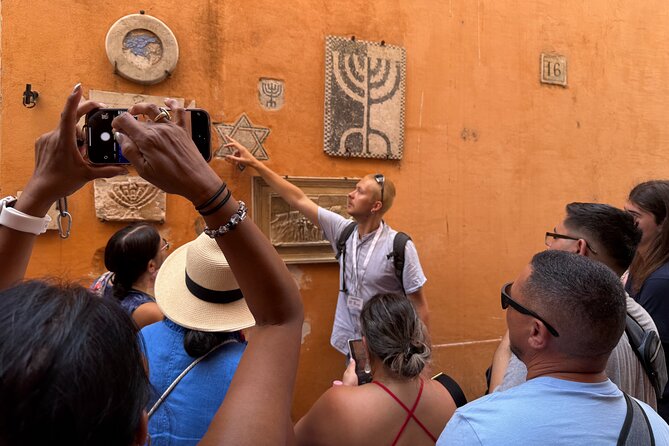
Next you cross over to Tiber Island, where ancient myth and early healing legends overlap. The tour connects the island’s long reputation as a place of refuge and healing with how people understood health before modern hospitals existed.
This is one of those stops that works well even if you’re not a “history museum” person. You’re getting a story with a strong visual setting: a river island in the middle of the city that feels calm compared with the tight streets around it.






Quick stop, clear meaning
The time here is short. That’s not a flaw if you’re on a tight schedule, but it does mean you won’t linger for long views from multiple angles. If you love scenery, you might want to do extra picture stops later in the day on your own.
Trastevere streets: ivy, medieval lanes, and the legend thread
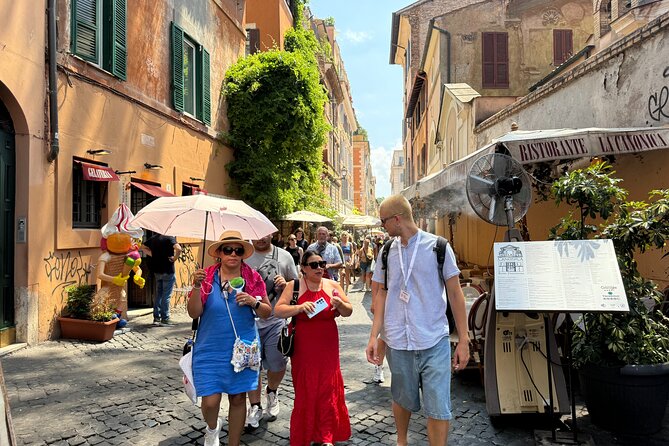
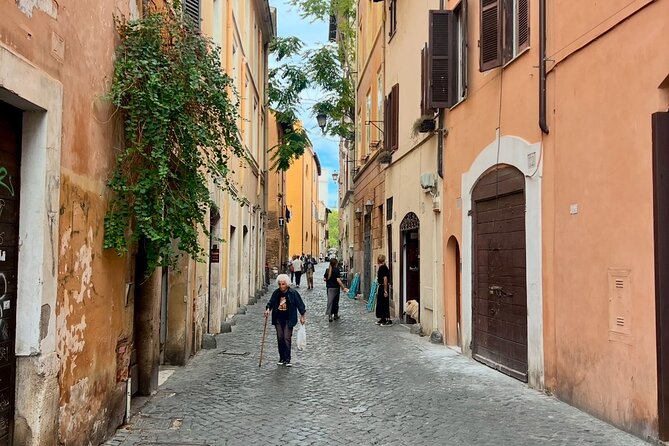
After the ghetto, the tour shifts into Trastevere, and the tone often changes with it. Medieval streets, ivy-covered facades, and small alley vibes start to show up in your photos and in the way the guide frames the neighborhood.
Trastevere is described as colorful and known for rebellion, passion, and nightlife. But the best part is that the tour doesn’t treat that reputation like pure gossip. It links the neighborhood’s attitude to the buildings, the legends, and the kind of Rome that formed after the ancient era.
Raphael’s lover’s house and the artist’s private life
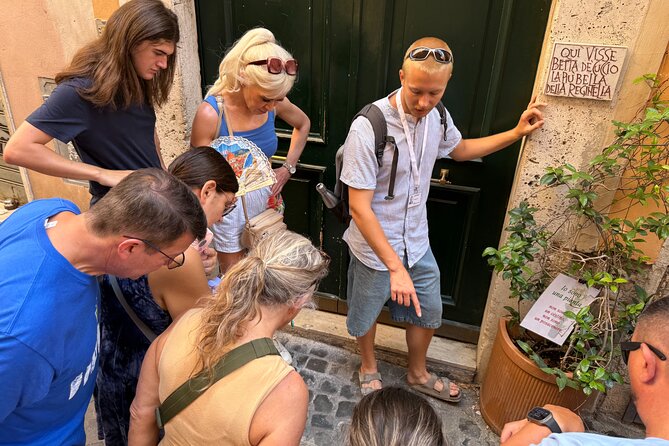
One of the standout story moments is the mention of the location of Raphael’s lover’s house, along with clues about the artist’s private life. Even if you’re not a Renaissance-obsessed person, you’ll like this approach because it makes art feel human, not just famous.
If you enjoy “spot the story” travel, this part clicks. You’re learning to look at a street and ask: who lived here, what rumor clung to this wall, what does this building hide?
Santa Maria in Trastevere: a short visit with big symbolism
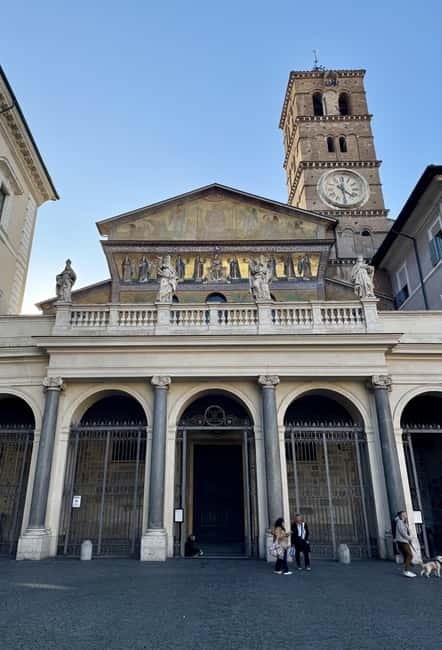
You also visit Santa Maria in Trastevere. The time here is brief, but it carries weight because churches in Rome often act like time capsules. You’re seeing how later religious life sits on top of older city rhythms.
This is also a good emotional balance point. After stories connected to restriction and survival, the tour gives you a place of continuity and ceremony. If you’ve got younger kids with you, this stop can help keep the pace from feeling too heavy for too long.
Ponte Sisto to Piazza Trilussa: finishing with river views and street energy
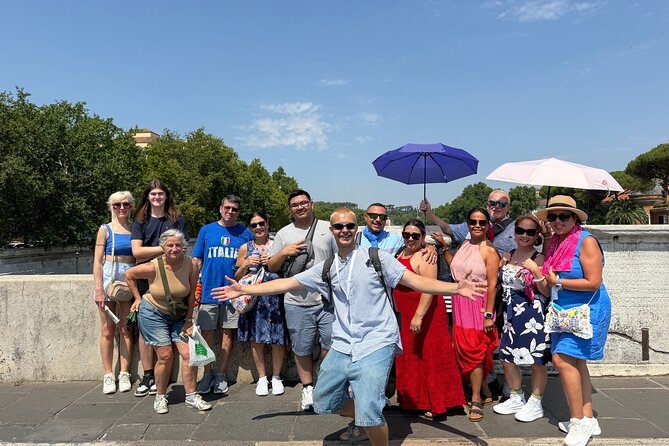
The tour includes Ponte Sisto for a photo stop and guided walk-through. Even though it’s not the longest segment, it’s a useful reset: you get a view that opens the space after narrow streets.
From there, the tour finishes at Piazza Trilussa. That ending matters. You’re released into a lively public square where it’s easy to keep the evening going—grab a bite, wander, or just people-watch with a clearer understanding of what you already saw.
Food recommendations: eating like you actually planned it
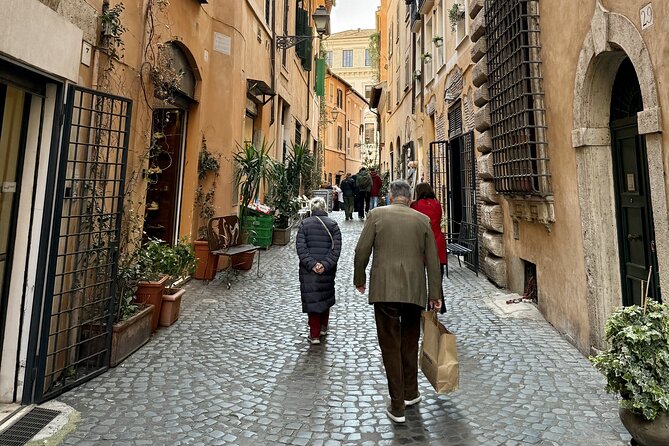
The tour includes food recommendations, and the highlights point to tasting authentic Roman flavors. In practice, this means the guide isn’t just giving you a list of random restaurants. You’ll get suggestions that match where you are and what you learned.
A bonus detail: one review specifically mentions gluten-free options being available at most stops. So if you eat with restrictions, you’ll likely feel more comfortable asking your guide what works at each point.
What makes these tips feel useful
The best food advice is location-based. This tour keeps you in both the ghetto area and Trastevere, so your recommendations stay relevant to your walk. Instead of thinking about meals later with no plan, you’re already “programmed” with places that fit the neighborhood mood.
The guide experience: story-first, with real personalities
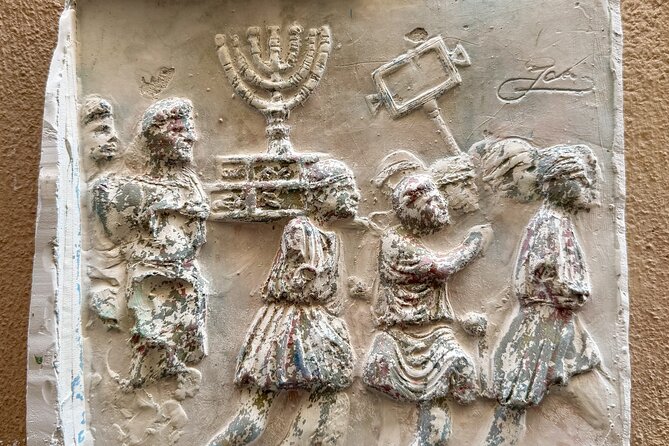
This tour lives or dies on the guide, and the feedback here is consistent. Names that come up often include Ivan, Iris, Max, and Martina—and the recurring theme is strong storytelling paired with humor.
You’ll see that reflected in how the group is handled in tight alleys and crowded moments. Many people mention the guides keeping everyone together safely and speaking clearly enough to follow along. Guides also tend to answer questions, which helps you steer the experience toward what you personally want more of: synagogue history, Renaissance gossip, or why Tiber Island mythology became part of Roman healing stories.
Dark humor note
The tour does mention dark humor and politically incorrect jokes. That doesn’t mean it’s sloppy or disrespectful, but it does mean you should be ready for a guide who uses humor as a storytelling tool. If that style would distract you from the topic, consider it in your booking decision.
Tip-based pricing: what $3.77 buys you, and how to handle tips
The listed price is $3.77 per person, and the model is tip-based (pay-what-you-want). That means the guide is effectively working for your tips alone. Typical tips mentioned range from 10€ to 50$, with another note suggesting 15€ to 50$ as the common range.
How to think about value
If you’re comparing to a standard fixed-price guided tour, this one can look “too cheap.” That’s because the booking fee is not the full amount of effort. In real terms, you’re buying access to a guided story with food recommendations, plus a route that covers major emotional and historical ground in a short time.
So the best move is simple: show up on time, listen, and tip fairly. If you feel the guide earned it (many people say they do), plan your tip budget before you start.
Practical walk tips so you enjoy every minute
This is a 87-minute walk, not a bus tour. You’ll do repeated photo stops, short visits, and guided walking segments.
- Wear comfortable shoes. One tip from a review: trainers help because the route can mean lots of time on foot.
- Keep a steady pace. If you’re slow on crowds or traffic-heavy corners, tell the guide to keep you grouped safely.
- Bring water. Even in cooler months, Rome days can get warm, and the tour keeps you moving.
Who should book this Jewish Ghetto and Trastevere walk
Book it if you want:
- A story-driven history walk focused on real places, not just a list of monuments.
- A blend of Jewish community history, Roman context, and Trastevere atmosphere.
- A guide style that mixes seriousness with humor and invites questions.
- Help planning where to eat in both neighborhoods.
You might skip it if you:
- Want a totally neutral, zero-humor history format.
- Struggle with short bursts of walking and navigating tight lanes.
- Prefer long museum time over a fast, street-level timeline.
Should you book it?
Yes, if you like your Rome with human stakes. This tour gives you a short route that teaches you how ancient Rome, Jewish community life, and Trastevere’s street culture connected over time. The guides—often Ivan, Iris, Max, and Martina—are frequently described as funny, animated, and organized, and that matters a lot on a 87-minute schedule.
Just go in with the right mindset: tip-based, lots of walking, and storytelling that can be darkly funny while still focused on the meaning of what you’re seeing. If that fits you, this is a strong use of a morning or evening slot in Rome.
FAQ
FAQ
Where does the tour start?
The meeting point is by Fontana delle Tartarughe. The guide will hold a sign with the name of the tour.
Where does the tour end?
The tour finishes at Piazza Trilussa.
How long is the tour?
The duration is 87 minutes.
Is the tour guided?
Yes. It includes a live local guide and is described as a walking tour.
What language is the tour offered in?
The tour is offered in English.
Is it a paid tour or tip-based?
It is tip-based and follows a pay-what-you-want model. You give the guide what you think the tour is worth at the end.
What’s a typical tip amount?
The provided information says tips are usually between 10€ and 50$, and another note suggests 15€ to 50$.
What costs are involved besides the booking price?
The booking price is listed as $3.77 per person, and the guide is supported by tips afterward.
What is included in the experience?
It includes a local guide, the walking tour, and food recommendations.
Can I cancel for a refund?
Yes. Free cancellation is available up to 24 hours in advance for a full refund.
Can I reserve now and pay later?
Yes. The listing offers reserve now & pay later, so you can book without paying today.