REVIEW · DUBROVNIK
Dubrovnik: Walls and Wars Walking Tour
Book on GetYourGuide →Operated by Dubrovnik Walks & Sea Kayaking · Bookable on GetYourGuide
Dubrovnik’s walls teach a story fast. This 2-hour walking tour mixes fortifications, politics, and sea-side views, guided by a Ministry of Tourism approved local. I especially like the licensed guide approach that turns stone into meaning, and the headset devices that keep you close to the explanation even in long wall sections.
One note before you go: the tour price does not include Dubrovnik City Walls entry, and you’ll work through lots of stairs and uneven steps. If heat and heights bother you, plan carefully.
In This Review
- Key Highlights You’ll Actually Feel
- How Dubrovnik’s Walls Turn Architecture Into a Survival Plan
- Meeting Point With the Orange Umbrella (So You Don’t Waste Time)
- What You Really Do in the 2 Hours on the Walls
- Walls and Wars: The Story Arc Behind Revelin, Minceta, and Lovrijenac
- Revelin Fortress: Fortified Control at a City Entry Point
- Minceta Tower: A Sightline Tool, Not Just a Tower
- Lovrijenac Fortress: The “Confidence” Point Over the Sea
- Views From the Fortifications: When the Climb Feels Worth It
- Stairs, Heat, and Heights: Plan Like a Pro
- Price and Value: What $29 Gets You, and What You Still Pay
- Guides in Real Life: The Names You Might Hear (and Why They Matter)
- Best Times to Go (Without Overthinking It)
- Who Should Book This Tour (and Who Should Skip It)
- Should You Book Dubrovnik: Walls and Wars Walking Tour?
- FAQ
- How long is the Dubrovnik Walls and Wars Walking Tour?
- What is included in the tour price?
- Are the Dubrovnik City Walls entrance tickets included?
- Where do I meet for the tour?
- What happens at the end of the tour?
- Is this tour suitable for people with mobility impairments or wheelchairs?
- Can I bring a baby stroller or record video during the tour?
- What should I bring?
Key Highlights You’ll Actually Feel
- UNESCO-level fortifications, explained with context for how a small republic stayed standing
- Revelin Fortress, Minceta Tower, and Lovrijenac Fortress tied to the city’s defense strategy
- Port + Old Town panoramas where you finally see Dubrovnik’s layout from above
- War-era perspective from local guides including lived experience tied to the 1991 conflict
- Headsets for clearer narration (useful on windy days and in busy wall stretches)
- A pace that still leaves room for photos without turning it into a sprint
How Dubrovnik’s Walls Turn Architecture Into a Survival Plan
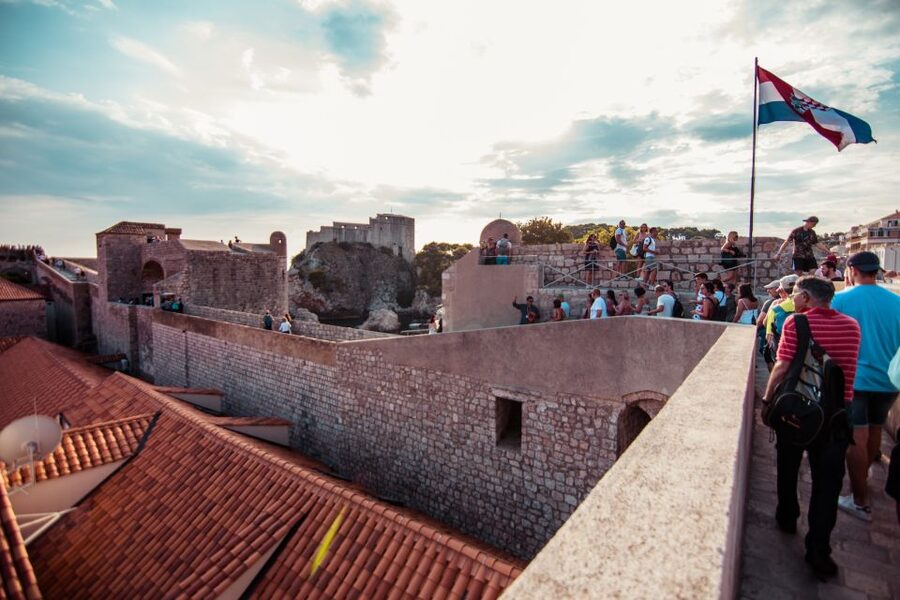
Dubrovnik’s walls aren’t just a pretty ring around the Old Town. They’re a working system—towers for sightlines, fortresses for chokepoints, and walls that forced attackers into slow, predictable problems.
What makes this tour valuable is how it connects those building choices to people’s real needs: protecting a wealthy port city, maintaining independence, and surviving repeated threats over centuries. You’ll also hear the story framed as both medieval defense and later conflict context, which helps the “why” stick in your mind instead of fading after the photos.
I like that the tour doesn’t treat the walls like a single viewpoint. It spreads you along different segments so you see how the city’s defenses “read” from multiple angles—inside the fortifications and over the sea toward the harbor.
You can also read our reviews of more walking tours in Dubrovnik


Meeting Point With the Orange Umbrella (So You Don’t Waste Time)
You’ll meet at Dubrovnik Walks, Brsalje 8, looking for representatives holding orange umbrellas. The meeting area is near the Pile local bus stop, which is the final stop before you head into Old Town access routes.
This matters more than you’d think. Dubrovnik is crowded and streets can funnel you fast; getting the meeting location right helps you start on time and saves you from late arrivals near the wall entry areas.
The tour ends near the Old Town port. That’s handy because after the climb and walking, you can naturally transition into the Old Town lanes for food, espresso, or an easy wander without backtracking across the hills.
What You Really Do in the 2 Hours on the Walls
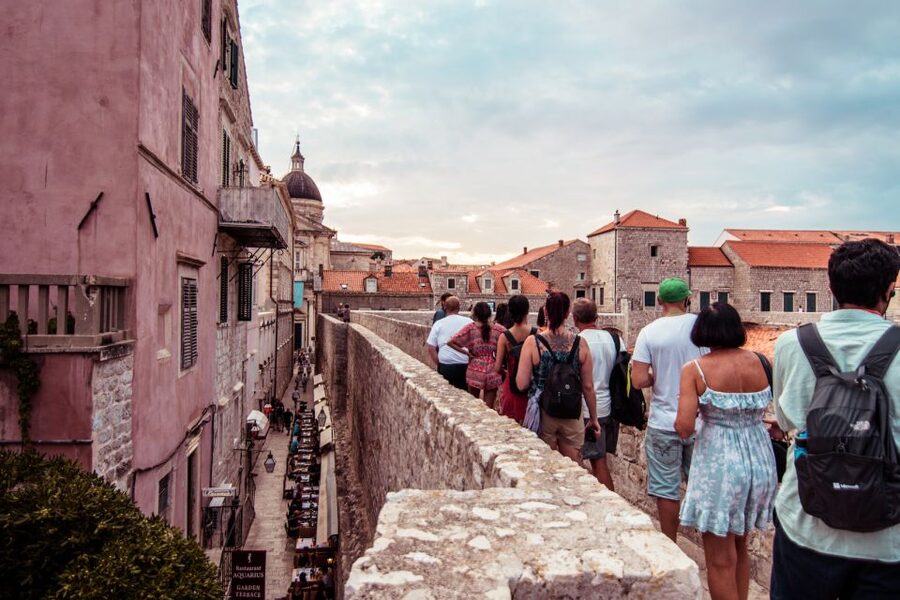
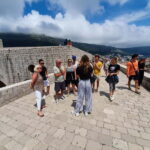
This is a guided city wall walking tour with a strong “move and interpret” rhythm. You’re not just standing at one famous spot. You’ll walk the fortified route with photo stops and guided explanations designed to make you understand specific landmarks and the logic behind them.
You’ll spend most of the time ascending and walking along fortifications, then getting key moments where the guide points out defensive purpose and historical significance. It’s timed to fit well with a typical Dubrovnik itinerary because it’s short enough to pair with Old Town sights the same day.
Also, the tour uses headset devices so you can hear the guide while you keep walking. That’s a big deal on exposed wall sections where wind and crowds make normal conversation difficult. One small tradeoff: if the group stretches out too much, headset reception can get weaker, so staying near the guide line helps.
Walls and Wars: The Story Arc Behind Revelin, Minceta, and Lovrijenac
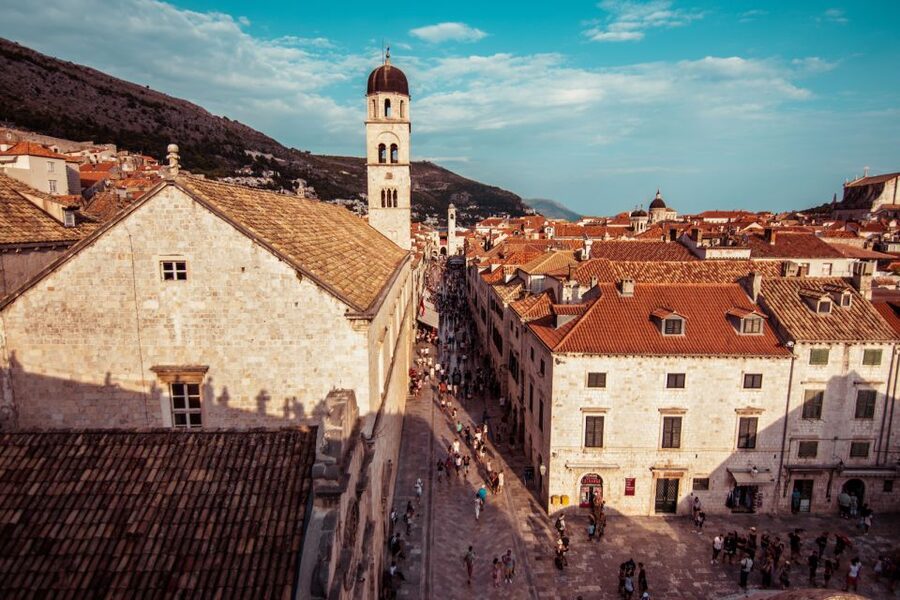
This tour is built around standout defense points, and the guide ties each one to the city’s survival thinking. Here’s the practical “what it means for you” breakdown.
Revelin Fortress: Fortified Control at a City Entry Point
Revelin Fortress is one of those places where you can feel how control works in stone. In simple terms, it helps manage and slow down the movement of attackers approaching the city—so even when the enemy gets close, they meet resistance designed to disrupt their pace.
When the guide explains Revelin, it usually clicks into place with the broader story: Dubrovnik wasn’t defending just land. It was defending access routes, timing, and movement patterns. You’ll likely understand why defensive architecture looks the way it does—less about beauty and more about forcing difficult choices on opponents.


Minceta Tower: A Sightline Tool, Not Just a Tower
Minceta Tower is the kind of structure that feels like it belongs on postcards, but on this tour it’s treated like a strategic instrument. Towers like this were about visibility—spotting threats early and covering approaches so defenders weren’t reacting blind.
You’ll also get a better sense of how the walls connect into a system. It’s one thing to see a tower from the street below. It’s another to understand what it was built to see and how it supports the defensive flow along the walls.
Lovrijenac Fortress: The “Confidence” Point Over the Sea
Lovrijenac Fortress is famous for a reason, and the guide’s explanations add a layer beyond the classic photos. This is a place that represents power projection—your sense of Dubrovnik’s stance changes when you see how far the city could “reach” visually and how defenders used height and position.
The tour helps you connect Lovrijenac to the broader theme: Dubrovnik wanted independence, and fortifications weren’t passive. They were designed to make the city harder to attack and easier to defend.
If you like history that feels practical rather than abstract, these stops are the heart of the walk.
Views From the Fortifications: When the Climb Feels Worth It

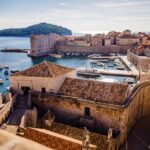
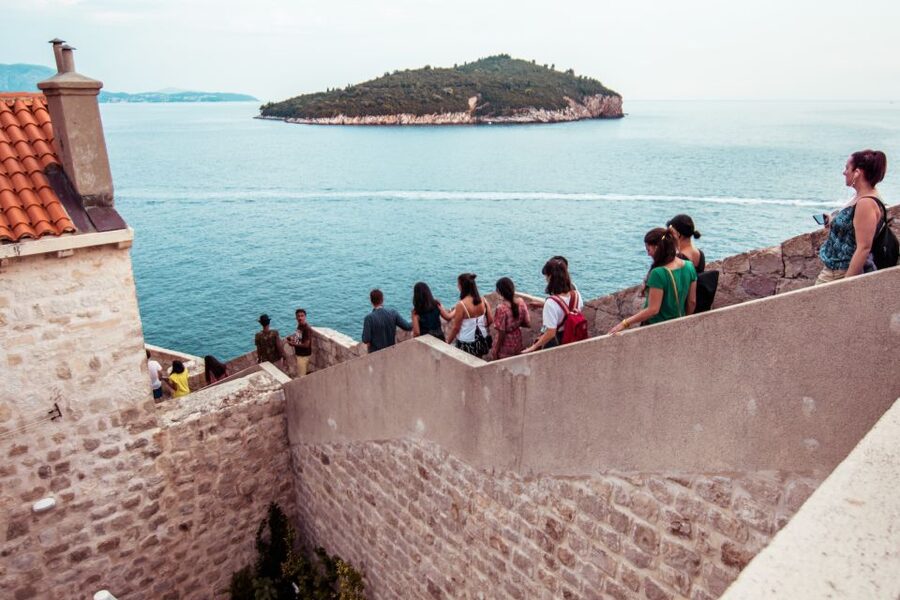
Yes, the views are the reward. From the walls and towers, you get a strong sense of Dubrovnik’s layout—Old Town rooftops, the port area, and the sea-facing side that shaped the city’s wealth and vulnerability.
What I like about the way this tour handles viewpoints is that it ties the scenic moments to the defense story. You’re not just looking around; you’re learning what you’re seeing and why it mattered. That makes the panorama feel useful instead of passive.
Photo time is built in. It’s not frantic; it’s structured so you can take shots while still moving through the route.
Stairs, Heat, and Heights: Plan Like a Pro

This tour is not for people who want flat, easy sightseeing. The walls require ascending and walking on steps and uneven surfaces, and the tour notes it may not suit everyone due to stairs.
From real-world experience, the limiting factors tend to be:
- Heat exposure and low shade on wall segments
- Stair effort across a multi-stop walk
- Height/vertigo concerns, since you’ll be exposed in open sections
If you’re going in peak summer or on a windy day, the headset and pace help—but your body still has to do the work. Bring water and a hat, and wear shoes you trust on stone.
If heights make you uneasy, take that seriously. The tour may not be suitable for people afraid of heights or with vertigo, and it’s also listed as not suitable for wheelchair users and people with mobility impairments, heart problems, respiratory issues, or low fitness.
Price and Value: What $29 Gets You, and What You Still Pay
The tour price is $29 per person, and it includes the guide plus the guided city walls walking portion, along with headset devices.
The big cost piece is the Dubrovnik City Walls ticket. Entry is not included in the tour price, and it’s listed as:
- €40 per adult
- €15 per child aged 7–18
So your true total is the tour plus the wall entry. That sounds expensive on paper, but the value comes from what you gain: the guide helps you understand what you’re walking on and why each fortress matters. Walking the walls alone can still be scenic, but it’s a lot easier to miss the defense logic and political context that make Dubrovnik’s fortifications more than a view.
One more “watch the bill” note: one visitor reported being surprised at the starting area about an extra daily pass requirement at the entrance. That’s not something you can plan perfectly from this info alone, but it’s smart to keep a credit card handy and be ready for possible add-ons at ticket time.
Guides in Real Life: The Names You Might Hear (and Why They Matter)

The tour has English live guides and uses headsets to keep narration clear. Several guide names show up in solid feedback—examples include Davor, Goran, Andreja, and Davor again in different dates, plus guides like David and Darko.
A common thread is personal, local framing. Some guides are described as having lived experience connected to the 1991 war, which changes the tone of the story from textbook to human-scale. If you care about how modern conflict shaped Dubrovnik’s identity, that perspective can make the walls feel current, not sealed in the past.
The guides also seem to handle questions well, and they often keep the pace comfortable enough for a 2-hour window—even when weather turns windy.
Best Times to Go (Without Overthinking It)
This tour works across the day, but conditions matter because you’ll be in exposed wall sections. If you’re sensitive to sun, midday can be rough due to low shade. If weather is windy, the walls still hold up as a great place to listen and watch—especially with the headset.
A practical tip: pack like you’re walking on a hilly path for a couple hours. Water, hat, and comfortable shoes aren’t optional here. You’ll feel it in your legs, and you’ll want your body to be in “enough left for Old Town” mode afterward.
Who Should Book This Tour (and Who Should Skip It)
This is a great fit if you:
- Want to understand Dubrovnik’s fortifications as a defense system, not just a walkway
- Enjoy views but also want the story behind them
- Like history that includes both medieval context and later conflict-era framing
- Appreciate practical guiding tools like headsets for clarity
Skip it if you:
- Struggle with stairs or uneven stone steps
- Have vertigo or strong fear of heights
- Have mobility impairments, wheelchair needs, heart problems, respiratory issues, or very low fitness
- Travel with baby strollers (strollers aren’t allowed)
If you’re on the edge of fitness, you can still consider it—but go in knowing the effort level is real, and bring water and a hat.
Should You Book Dubrovnik: Walls and Wars Walking Tour?
I’d book it if you want your Dubrovnik walls visit to feel like a real lesson with payoff: the key fortresses, the political and defensive story, and panoramic views from the inside edge of the city’s defenses.
It’s not the cheapest way to see the walls because the ticket is separate, and you’ll feel the stairs. But for most people who are able to walk comfortably, the guide + headsets combination turns the experience into something you’ll remember longer than a single photo moment. If your main goal is views only and you hate crowds or heights, you might rethink it. If your goal is meaning as well as scenery, this tour is a smart use of your time in Dubrovnik.
FAQ
How long is the Dubrovnik Walls and Wars Walking Tour?
It lasts about 2 hours.
What is included in the tour price?
You get a live English-speaking guide, a guided city walls walking tour, and headset devices so you can hear the guide better.
Are the Dubrovnik City Walls entrance tickets included?
No. City Walls entry tickets are not included in the tour price. The listed cost is €40 for adults and €15 for children aged 7–18.
Where do I meet for the tour?
Meet at Dubrovnik Walks, Brsalje 8, Dubrovnik. Look for representatives holding orange umbrellas. It’s by the Pile local bus stop.
What happens at the end of the tour?
The tour ends near the Old Town port area.
Is this tour suitable for people with mobility impairments or wheelchairs?
No. It’s listed as not suitable for people with mobility impairments and wheelchair users.
Can I bring a baby stroller or record video during the tour?
No. Baby strollers are not allowed, and video recording is not allowed.
What should I bring?
Bring comfortable shoes, a hat, credit card, and water.