REVIEW · BELFAST
Belfast Troubles Murals Street Art and Peace Wall Walking Tour
Book on Viator →Operated by belfastology walking tours · Bookable on Viator
Street art in Belfast has teeth. This Belfast Troubles Murals and Peace Wall walking tour uses murals as a living map of the city, from Cathedral Quarter to the Peace Wall, with local guide Marti explaining what changed and what still hurts. I love the community mural focus, and I love how the tour keeps steering you back to peace and rebuilding instead of treating history like a museum label.
You’ll also like the pace in a practical way: it’s long enough to actually look, not just pose for photos, and the tour includes shopping and restaurant discounts along the route. Plus, the group is capped at 8 travelers, so you’re not lost in a crowd.
One consideration: this is an adults-only, brisk walking tour, and Marti doesn’t use a microphone, so you’ll want to keep up (especially on rainy, colder days).
In This Review
- Key points worth knowing before you go
- Why Belfast’s murals matter more than you think
- Meeting Marti and what to expect from a 3-hour walk
- Cathedral Quarter: Modern street art, political murals, and re-imaging
- Shankill Road: Loyalist murals and local street art voices
- Divis Street International Mural Wall: causes beyond Belfast
- Peace Wall: seeing the division in the middle of the city
- Bobby Sands Mural: the photo magnet with a lot behind it
- What you get for $36.11, and where the math changes
- Who this tour suits best (and who should rethink it)
- Timing, weather, and how to pack so the walk doesn’t wear you down
- Should you book this Belfast Troubles murals tour?
- FAQ
- How long is the Belfast Troubles Murals and Peace Wall walking tour?
- What does the tour cost?
- Where does the tour start and end?
- What language is the tour offered in?
- Is this tour suitable for children?
- How large is the group?
- What’s included?
- Is admission included for the Peace Wall?
- Do I need a printed ticket?
- Is the tour near public transportation?
- What should I wear?
Key points worth knowing before you go
- Community murals everywhere: you’re not just seeing big political walls; you’ll spot neighborhood street art too.
- Marti’s local storytelling style: lots of context, and you’ll need to be ready for a fast flow of facts and opinions.
- Peace Wall included as a core moment: you’ll walk to the site where the city literally divides communities.
- Small group, no microphone: maximum 8 travelers means the route feels personal, but you should listen with your whole attention.
- Most stops are free entry, but Peace Wall isn’t: plan for a separate ticket for that one stop.
Why Belfast’s murals matter more than you think
Belfast’s street art isn’t only decoration. In many parts of the city, murals act like public memory—something people paint when they want a community story to be seen, argued over, protected, or handed to the next generation.
That’s what makes this tour click. You’re walking through areas where murals respond to real life: identity, grief, pride, and the long work of getting along. The tour doesn’t pretend the past is simple. Instead, it uses the art to help you understand why the walls look the way they do, and why peace efforts still take time.
I especially liked that Marti connects the murals to healing. You get the sense that people aren’t just reacting to the Troubles—they’re trying to build a future that doesn’t run on fear.
You can also read our reviews of more walking tours in Belfast

Meeting Marti and what to expect from a 3-hour walk
You start at Exchange Street West in Belfast city center. The tour runs about 2.5 to 3 hours, and the route is built for walking rather than cruising in a cab. The finish is 32 Bank St, near Kellys Cellers, with an option to continue on a short walk toward Belfast City Hall at 2 Royal Avenue.
This tour is English, and you’ll receive a mobile ticket. There’s a big practical note: Marti leads with no microphone. In a small group that’s manageable, but it means you’ll benefit from staying close and not drifting back to take photos every two seconds.
From the details provided, it’s also a moderate fitness kind of outing. One review noted about 6 km in 3 hours, and the overall feedback repeatedly points to a brisk rhythm. If you’re the type who likes to stop, stretch, and linger slowly, plan for that to be limited here.
Cathedral Quarter: Modern street art, political murals, and re-imaging
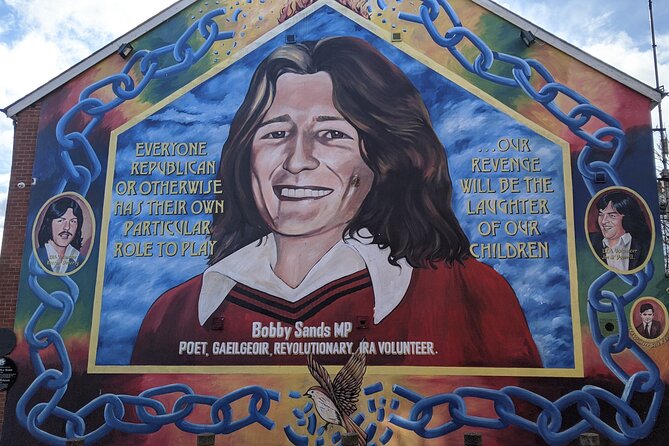
Your first stop is the Cathedral Quarter, and it’s where the tour shows you Belfast’s street art isn’t stuck in one era. You’ll see modern street art by international artists, which matters because it signals how Belfast’s walls aren’t sealed off from the wider world.
Then the walk pushes west toward some more controversial political murals. This part is central to understanding the Troubles: you’re not just seeing images, you’re learning what they meant to the people who put them up—and why they became contested.
One feature that’s worth paying attention to is the idea of re-imaging, a project aiming to put up murals or street art that local communities want to share. In plain terms, this is where the tour connects “what happened” to “what people are trying to do now.” The murals become a conversation: old trauma on one side, and new community expression on the other.
Practical tip: bring a second layer. This area can be colder than you expect, and the tour notes that rain can happen.
Shankill Road: Loyalist murals and local street art voices
Next you head to Shankill Road, where you’ll focus on Loyalist murals and other forms of local street art. This isn’t just “one neighborhood’s artwork.” It’s a lens into how community identity gets painted into public space.
The value here is the contrast with earlier stops. Seeing different sides of Belfast’s mural culture helps you understand that the walls aren’t neutral art projects. They’re part of how communities explain themselves to the city—and to history.
Time at this stop is listed as about 15 minutes. That’s enough for a look and a short explanation, but not enough for deep wandering. If you want extra time on murals, keep your phone camera ready and ask Marti for the key detail that ties each image to its context.
Divis Street International Mural Wall: causes beyond Belfast
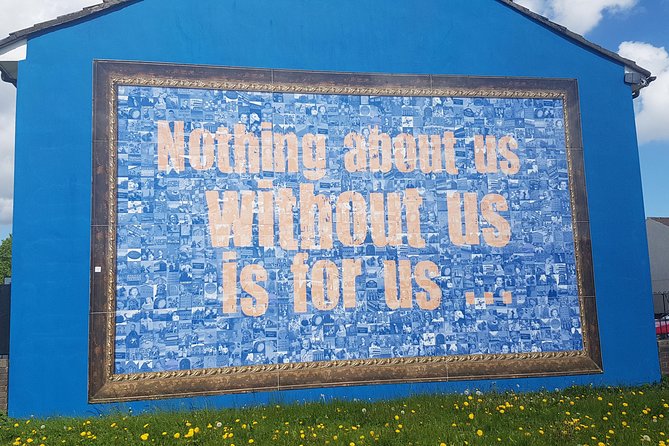
At Divis Street, you’ll reach the International Mural Wall, where you can see murals for causes from around the world. This is a helpful angle because it prevents the tour from becoming only a Belfast-only story.
It also gives you an easy way to make sense of how street art works as a language across borders. Communities may disagree on politics, but they often share the same emotional toolkit: solidarity, mourning, hope, and protest—painted in different styles with the same human drive.
The stop is also short, about 15 minutes, so treat it like a “pattern recognition” moment. Ask yourself: what symbols repeat, what messages change, and how does the wall’s tone shift compared with the political murals you saw earlier?
Peace Wall: seeing the division in the middle of the city
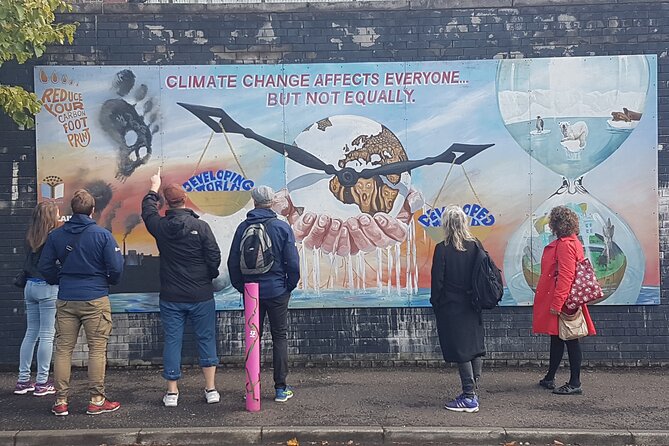
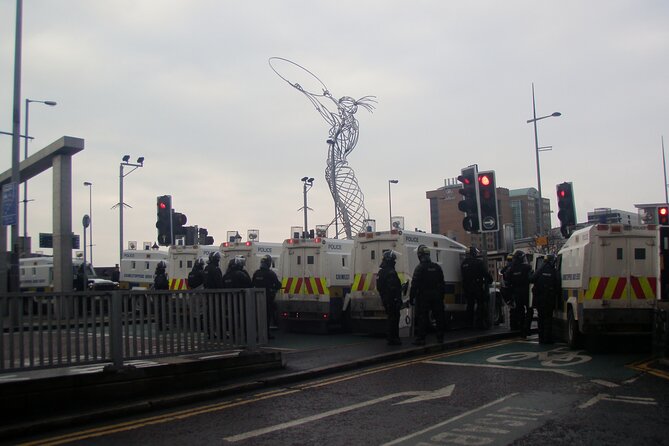
Then comes the most intense stop: the Peace Wall. The route description notes that you’ll view the wall that separates communities. This is where the walking tour turns from murals-as-story into murals-as-architecture—because the city layout itself is part of the conflict’s legacy.
This stop is about 10 minutes, and it has one important cost note: admission ticket not included. So you may need to budget for that separately when you arrive.
Even with the short time, this is the moment that tends to land with visitors. The wall isn’t abstract. It’s a physical reminder that peace isn’t only about speeches and signboards—it’s about space, daily movement, and trust. Marti also places a strong emphasis on peace and the long healing timeline, including the idea that recovery takes multiple generations.
Bobby Sands Mural: the photo magnet with a lot behind it
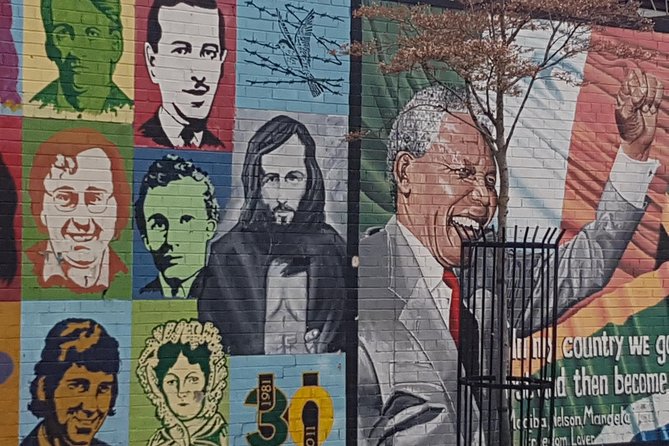
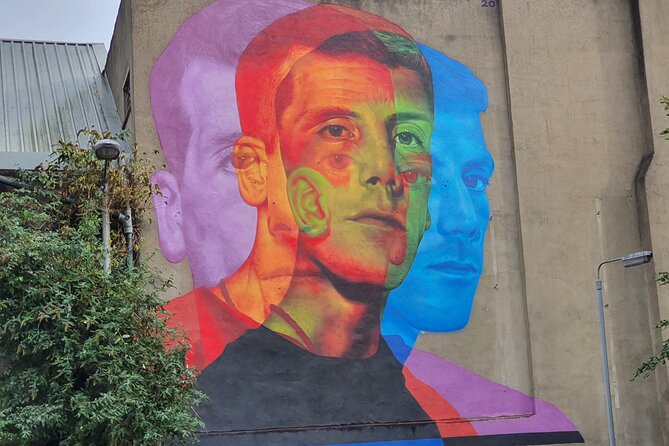
Your later stop is the Bobby Sands Mural in the Republican area of West Belfast. The tour description calls it the most photographed mural in that area, and it’s a major stop for anyone trying to understand why certain images become shorthand for larger political narratives.
This is listed as about 5 minutes, so it’s not a long pause. But it’s still important because it anchors the walk with a name people widely connect to the Troubles.
If you’re trying to be respectful, this is one of those times you don’t need to overdo it with selfies. Lean in for the context, look closely at what’s shown, and then let it sit in your head after the group moves on.
What you get for $36.11, and where the math changes
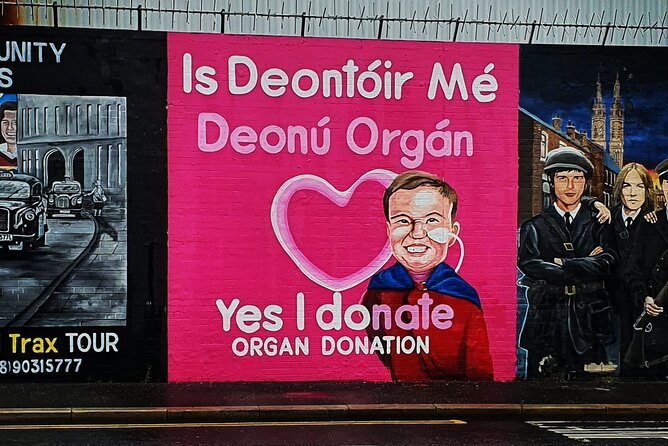
At $36.11 per person, the price is relatively good for a guided walking tour that covers multiple mural zones. You’re not paying only for “someone to lead the way.” You’re paying for a local guide who explains how the murals fit into Belfast’s past and current identity.
Most of the stops listed come with free admission tickets. That helps keep the experience feeling like value for money because you’re not stacking paid entrances on top of a walking itinerary.
The one likely cost bump is the Peace Wall admission, which is explicitly not included. Because the exact ticket price isn’t provided here, I suggest budgeting a little extra for that stop so you don’t get surprised mid-walk.
Also note the tour provides shopping and restaurant discounts. Even a small discount can help offset the overall cost, especially if you’re planning to eat or browse during your time in the neighborhood areas.
Who this tour suits best (and who should rethink it)
This is an adults-only activity, and the description states it is not suitable for under 18s. If you’re traveling as a family with teens, this likely won’t work for your group.
You should also expect a tour that favors learning through walking rather than slow sightseeing. The route involves enough ground that you’ll want comfortable shoes, and the guide’s pace can be quick.
On style, you should know what you might be walking into:
- Marti shares a lot of history and context, fast.
- Some feedback describes him as direct, with an occasional challenge to the group’s assumptions.
- There are also reports that questions weren’t always handled with the easiest tone.
None of that changes the core value of the experience, but it matters for your comfort. If you want a gentle, question-friendly vibe above all else, you might find the interaction style a bit intense.
If you do okay with structured, story-driven guiding—and you’re curious to understand why the murals matter—this tour will likely feel worth every step.
Timing, weather, and how to pack so the walk doesn’t wear you down
The tour notes that it rains sometimes and that it may be colder than you’re used to. That’s not just boilerplate. A wet Belfast afternoon plus brisk walking can drain your energy fast.
Pack for comfort:
- a rain layer (even if the forecast looks okay)
- a warm top you can add or remove
- comfy walking shoes
Also, sun can be strong at times. Sunglasses are listed as optional, and sun cream is always a good idea in summer. It sounds contradictory, but Belfast weather can flip without warning.
Finally, since the guide doesn’t use a microphone, don’t count on hearing clearly from far back. Stay in the group.
Should you book this Belfast Troubles murals tour?
Yes, I’d book it if your goal is to understand Belfast beyond postcards. This tour links murals to real community identity and shows you how peace work shows up on walls, not just in speeches.
I’d think twice if:
- you’re sensitive to intense political topics
- you want a slow stroll with lots of open-ended Q&A
- you need a very accessible, low-pace experience (because the walk is brisk and audio is “live,” not amplified)
Best fit: first-time visitors who want a clear introduction to the Troubles and the ongoing shift toward peace, plus anyone who likes street art enough to study what it’s saying.
If you go in ready to walk, ready to listen, and ready to treat murals as a language—not a photo backdrop—you’ll come away with a much sharper sense of Belfast’s past, present, and the hope people keep painting into public space.
FAQ
How long is the Belfast Troubles Murals and Peace Wall walking tour?
It’s about 2.5 to 3 hours.
What does the tour cost?
The price is listed as $36.11 per person.
Where does the tour start and end?
It starts at Exchange Street West (Exchange St W, Belfast BT1) and ends at 32 Bank St, Belfast BT1 1DA.
What language is the tour offered in?
The tour is offered in English.
Is this tour suitable for children?
No. It is adults only and not suitable for under 18s.
How large is the group?
The tour has a maximum of 8 travelers.
What’s included?
A local guide is included.
Is admission included for the Peace Wall?
Admission is not included for the Peace Wall stop. Other listed stops are free.
Do I need a printed ticket?
No. It’s a mobile ticket.
Is the tour near public transportation?
Yes, it’s listed as near public transportation.
What should I wear?
Dress for rain and cooler weather, bring comfortable shoes, and consider sun protection since sunlight can be strong at times.