REVIEW · LIVERPOOL
Liverpool: A Walk Through Time: Full History Walking Tour
Book on GetYourGuide →Operated by Global City Experience · Bookable on GetYourGuide
Liverpool’s past clicks into place on foot. You get a tight, two-hour story of Liverpool’s rise led by a local, academically trained guide, starting right by the water at the Royal Liver Building. The route is built around landmark-by-landmark explanations, so you don’t just see famous buildings—you understand why they matter.
I especially like two things. First, the guide turns big history into something you can track like a timeline, from 1207 to present day, tied to the exact streets and structures you’re standing beside. Second, the narration has personality: clear speaking, good pacing, and space for questions, so the walk feels like a conversation, not a lecture.
One possible drawback: it’s a walking tour through central areas, so you’ll want comfortable shoes and a weather plan. On a grey, cold day, the time outdoors can feel longer than it is, even though the pacing is usually friendly.
In This Review
- Key things to know before you go
- Starting at the Royal Liver Building: your waterfront “time machine”
- The 1207-to-now storyline: how Liverpool grew from trade to empire
- Parish Church Gardens and Old Hall Chambers: learning to read the city
- Town Hall, Castle Street, and the Queen Victoria Monument: civic identity in stone
- Liverpool ONE and the Old Dock: the city’s commercial middle chapters
- Royal Albert Dock and the waterfront finale: the port story comes full circle
- Timing, comfort, and who this suits best
- Price and value: is $22 worth it?
- Tips to get the most from the walk
- Should you book Liverpool: A Walk Through Time?
- FAQ
- How long is Liverpool: A Walk Through Time?
- Where do I meet the guide?
- What main sights will I see during the walk?
- What time period does the tour cover?
- Is the tour in English and is it wheelchair accessible?
- How much does it cost?
- Is free cancellation available?
Key things to know before you go
- An academic-style guide who connects waterfront, empire, and everyday life to what you’re seeing
- A timeline you can follow from medieval trading beginnings through the later British Empire era
- Architecture-focused stops that teach you where to look up and what details actually mean
- Lots of Q&A energy, so your questions steer part of the experience
- A dock-to-city center route, including the Royal Albert Dock area and major historic landmarks
- Good value for the time, especially if you want a fast orientation to Liverpool’s core sights
Starting at the Royal Liver Building: your waterfront “time machine”
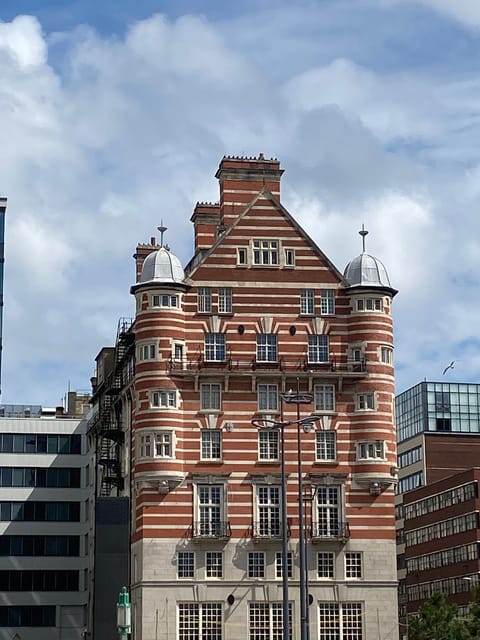
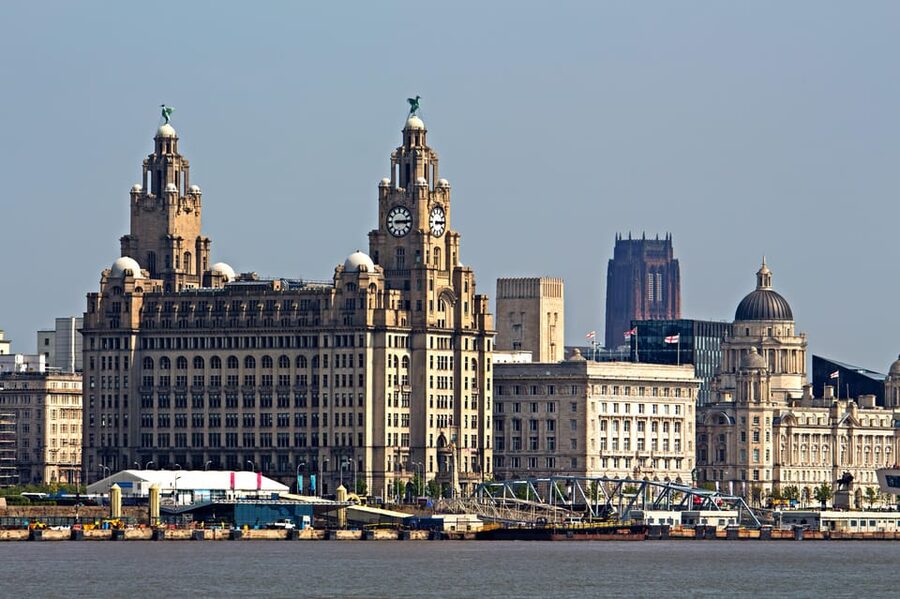
Your tour meets outside the Royal Liver Building, at the entrance facing the river at the black gate. This matters more than it sounds. Starting here gives you a clear anchor point: Liverpool’s story is a port story, and the Royal Liver Building is one of the visual shorthand answers to the city’s maritime identity.
From this start, you’ll quickly get oriented. You’re not just walking to random photo spots. The guide frames what you’re about to see with context—why these buildings went up, what they were used for, and how Liverpool’s position in global trade shaped everything from civic pride to the rise of the docks.
If you’re the type who likes to arrive and immediately understand a city, this opening is a big win. It also helps families and mixed-age groups, since the guide can start with something iconic and then expand outward into the details.
You can also read our reviews of more walking tours in Liverpool



The 1207-to-now storyline: how Liverpool grew from trade to empire
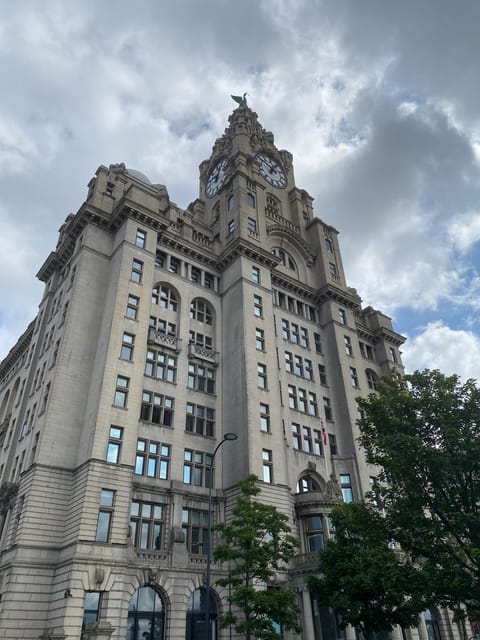
The heart of the experience is the storyline: how Liverpool developed from a medieval trading town into the second city of the British Empire. You’ll hear this across the walk as you move between key sites, with the timeline laid out in a way that feels chronological but not dry.
This is where the tour earns its reputation for being more than a checklist. Instead of tossing out dates, the guide ties dates to decisions and consequences: trade routes, shipping power, wealth in the city, and the way Liverpool’s institutions adapted to a growing role in Britain and beyond.
A helpful detail from past guests is that at least some guides (for example, John was described as having PhD-level training in imperial and maritime history) bring real academic grounding to the story. You don’t need to love history to enjoy it—you just need to like the idea that every street corner has a reason.
Parish Church Gardens and Old Hall Chambers: learning to read the city
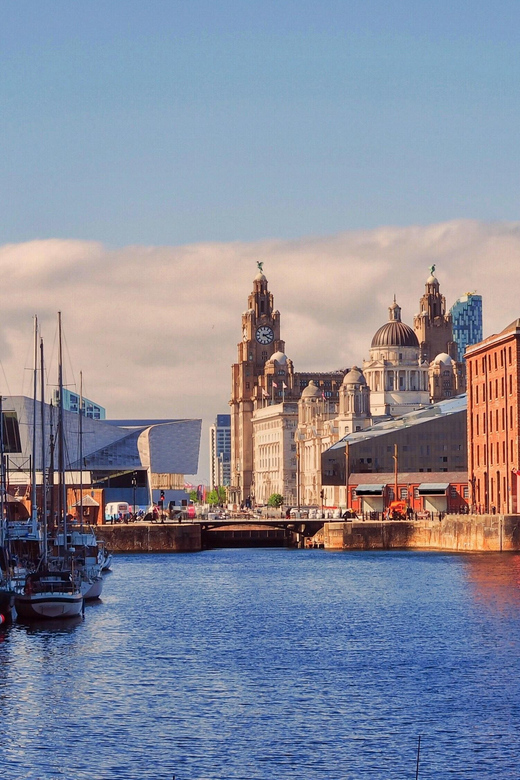
One of the best parts of the route is the shift from waterfront power to civic and community space. You’ll spend time around the Liverpool Parish Church area (Our Lady and Saint Nicholas), including the Parish Church Gardens. Then the tour continues toward the Old Hall Chambers area.
These stops are useful because they show Liverpool was more than ships and money. Churches and civic buildings reflect social structure, public life, and the confidence of a growing city. The guide’s focus tends to help you see what you might otherwise walk past—small architectural clues, historic uses, and how these spaces fit into the city’s expansion.
If you like the feel of “I never noticed that before,” this is the section you’ll remember. People often enjoy this kind of teaching because it changes how you look at buildings after the tour ends. You start noticing details without needing a guide forever.
Town Hall, Castle Street, and the Queen Victoria Monument: civic identity in stone
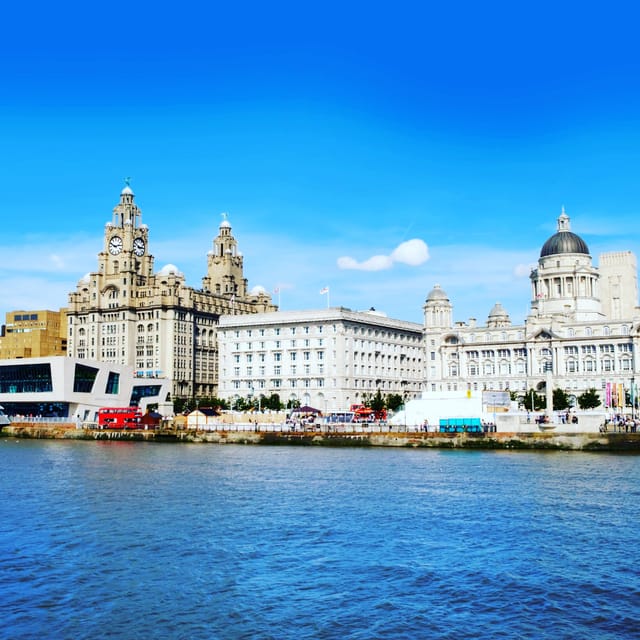
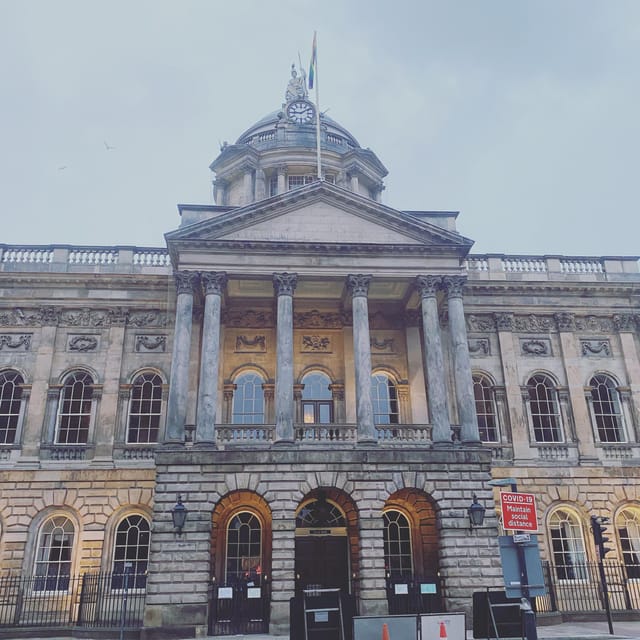
As you continue, the tour goes through central landmarks that signal Liverpool’s status and ambition. You’ll see the Town Hall, move through Castle Street, and learn about the Queen Victoria Monument.
This part is especially good if you want the broader civic picture. When Liverpool rose, it didn’t just build docks. It built authority: public buildings, monuments, and the kind of visual language meant to communicate importance.
Castle Street is a particularly practical stop because it helps you connect the story to what you can still experience today: a real working city center, not a museum set. The guide’s line through history gives you a sense of how today’s streets grew out of earlier phases of the city’s development.
One more thing I like here is the pacing. The walk keeps moving, but you get enough time at each place to absorb the meaning rather than just snapping photos and rushing on.
Liverpool ONE and the Old Dock: the city’s commercial middle chapters
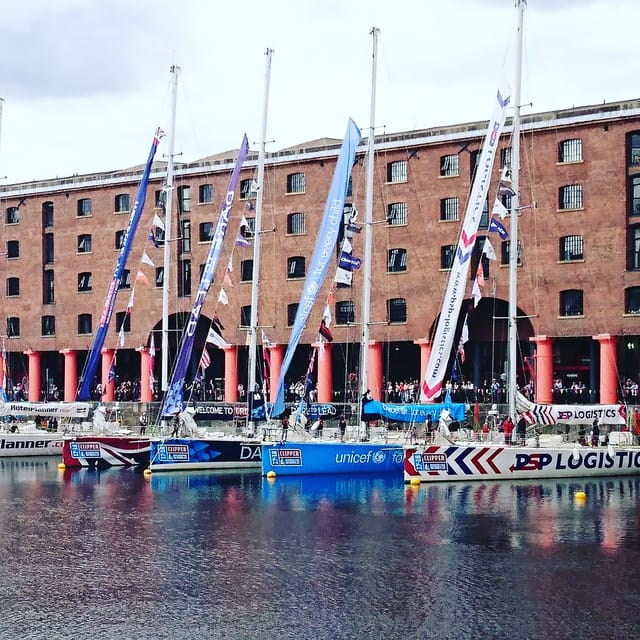
You’ll also pass through the Liverpool ONE area and spend time with the dock-related storylines, including references to the Old Dock. This isn’t just an intermission between “old” and “new.” It’s where you see how commercial Liverpool evolved.
Liverpool ONE, in particular, is a useful viewpoint. It gives you a modern anchor in the middle of the history narrative: the city’s commercial energy is still here, just expressed differently. The guide helps you connect what used to be primarily about maritime logistics and trade with what it became as the city’s economy broadened.
This section works well if you’re trying to understand Liverpool as a living place. The goal isn’t to freeze the city in time. It’s to show you how each era laid groundwork for the next.
You can also read our reviews of more historical tours in Liverpool

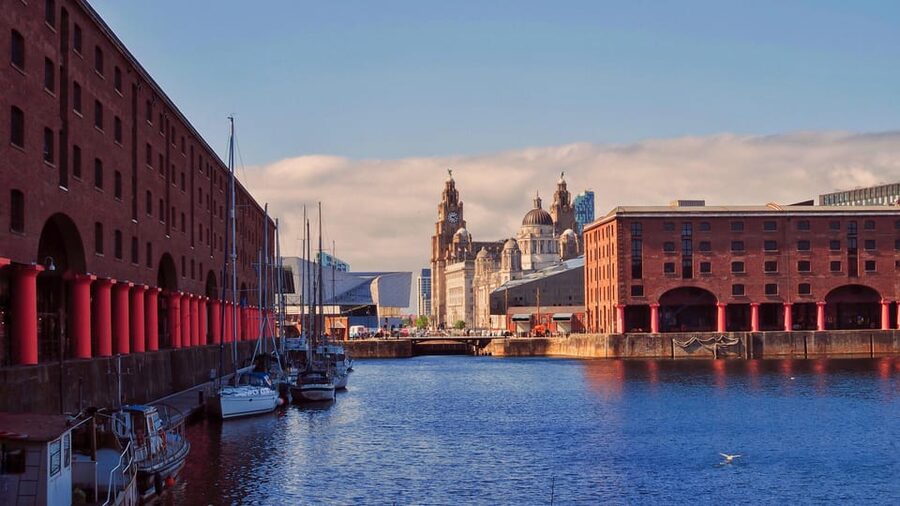
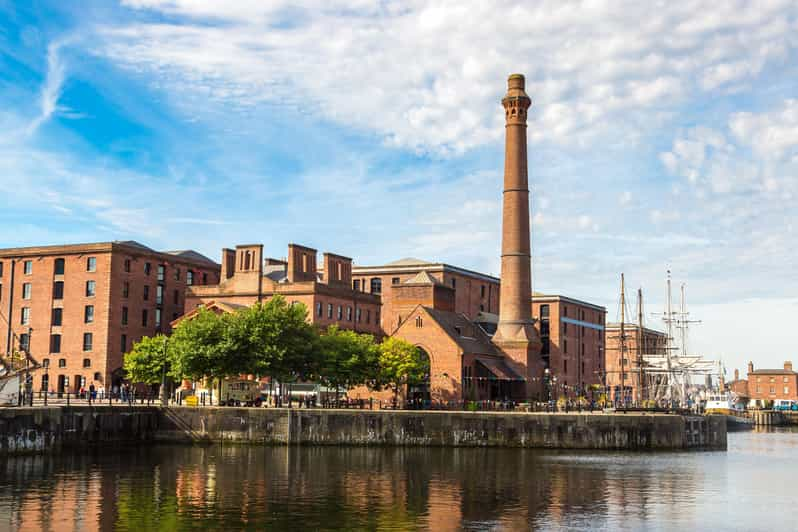
Royal Albert Dock and the waterfront finale: the port story comes full circle
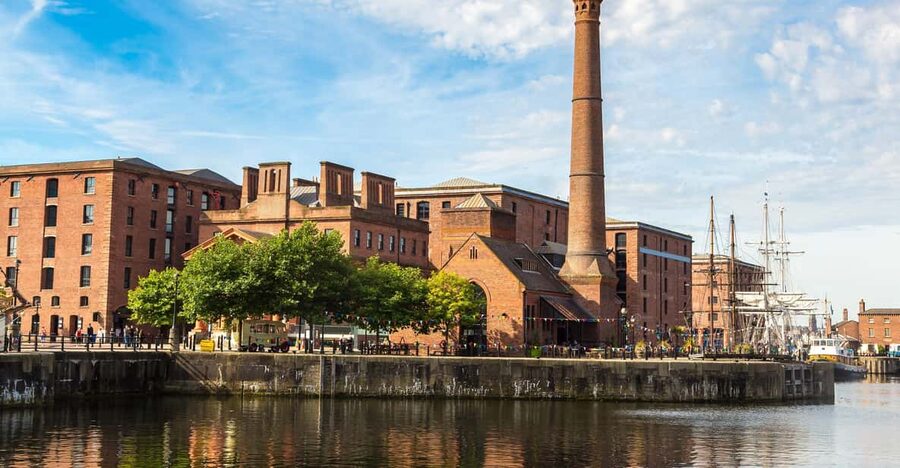
Near the end, you move toward the Royal Albert Dock Liverpool and the waterfront area. This is the payoff section for anyone who cares about why Liverpool is Liverpool.
The docks aren’t just scenery. They’re evidence. They reflect the scale of trade, the infrastructure investment, and the economic logic that pulled people, goods, and money into the city. When you’ve heard the earlier timeline points, the dock visit starts to feel like a confirmation: the story you heard earlier suddenly turns visible.
The tour rounds off back around the river area and near where you started, bringing the narrative full circle. Even if you’re not a history fanatic, you’ll likely walk away understanding the waterfront as the city’s main engine.
One practical tip: when you reach the dock/waterfront portions, slow down and look around on your own for a minute. If the guide has done their job well, you’ll find you can spot connections between buildings, streets, and the flow of the city without extra prompting.
Timing, comfort, and who this suits best
The total duration is about 2 hours. That’s short enough to fit into a busy first day, but long enough that the guide can explain the “why,” not just the “what.”
This tour is described as tailored for all ages, and the pacing is set to keep the group engaged. In one example, a guide accommodated a slightly late arrival and helped the person catch up. That gives you a sense the experience is managed well in real-life conditions.
Who it’s best for:
- First-time visitors who want a fast, accurate orientation to Liverpool’s core sights
- People who enjoy architecture details and learning how buildings connect to history
- Families with mixed interests, since it’s a narrative walk plus iconic landmarks
- Anyone who wants a guide-led version of what you might otherwise do on your own with a map and scattered reading
Comfort note: it’s still a walking tour. Even with good pacing, plan for time on your feet. Wear shoes that handle uneven pavement and bring a layer for wind off the water.
Price and value: is $22 worth it?
At $22 per person, this tour is priced like a serious bargain for a guided, landmark-heavy history walk. You’re paying for:
- a local guide
- a structured, timeline-driven story
- a route that links multiple iconic spots instead of one “big” attraction
What makes it good value is the density. In two hours, you cover the arc from medieval trading roots to imperial-era growth to the waterfront’s role. That kind of guided coherence is hard to recreate solo unless you already know what you’re looking for.
If you’re the type who hates paying for a tour that just tells you what a plaque says, you’ll likely appreciate this one more. Several past guests emphasized that the guide’s explanations were clear and that questions were answered in detail, which is the difference between paying for information and paying for understanding.
Tips to get the most from the walk
A few simple moves can make this experience even better:
- Bring questions. If you’re curious about how Liverpool connects to the wider British Empire or maritime trade, ask early. The guide’s style supports back-and-forth.
- Look up as often as you look forward. A number of guests liked the way architecture cues encouraged noticing details people miss.
- Plan your next meal nearby. One guide recommendation from a previous group included where to try scouse after the tour, which is exactly the kind of practical add-on that turns a history walk into a great day plan.
- Save time for the dock photos. You’ll get better shots if you pause and let the earlier story sink in before you start taking pictures.
Should you book Liverpool: A Walk Through Time?
If you want a clean, efficient way to understand Liverpool beyond one attraction, I think this is a smart booking. The tour’s biggest strength is its narrative structure: it connects the city’s major sites into a single storyline from early roots to modern Liverpool.
Book it if:
- you have about two hours and want maximum context per minute
- you like guided explanations tied to real buildings and streets
- you want a first-day orientation so the rest of your trip makes more sense
Skip it (or consider a different option) if:
- you prefer self-guided history at your own pace
- you dislike outdoor walking in variable weather
- you’re looking for something focused on one narrow topic only
FAQ
How long is Liverpool: A Walk Through Time?
It lasts about 2 hours, including the guided walking portion.
Where do I meet the guide?
Meet your guide outside the Royal Liver Building entrance facing the river, at the black gate.
What main sights will I see during the walk?
You’ll pass major historic areas and landmarks including the Royal Liver Building area, Liverpool Parish Church Gardens and Liverpool Parish Church (Our Lady and Saint Nicholas), Old Hall Chambers, Town Hall, Castle Street, Queen Victoria Monument, Liverpool ONE, the Old Dock, and the Royal Albert Dock Liverpool.
What time period does the tour cover?
The tour covers Liverpool’s development from its early medieval trading town phase through to the present day, described as running from 1207 to today.
Is the tour in English and is it wheelchair accessible?
Yes. The live guide provides the tour in English, and the tour is listed as wheelchair accessible.
How much does it cost?
The price is $22 per person, and it includes the guide and the walking tour.
Is free cancellation available?
Yes. You can cancel up to 24 hours in advance for a full refund.