REVIEW · ZAGREB
Zagreb: City & History Walking Tour & WW2 Tunnels
Book on GetYourGuide →Operated by Petros · Bookable on GetYourGuide
Zagreb tells its story best on foot. This 2.5-hour small-group walk turns major sights into one clear narrative, from the city’s legendary roots to the WWII-era Grič Tunnel under Upper Town. Along the way, you’ll hear local-style details that make familiar landmarks feel personal again, whether you’re starting your first day or tightening up your route.
I especially love two things here. First, the group size stays small enough that you can ask questions without shouting over other people. Second, the tour mixes big icons with everyday Zagreb moments, like Dolac Market and the café street culture on Tkalčićeva.
One thing to consider: the Grič Tunnel can close if there’s an event inside, and Dolac Market has limited hours (afternoons and public holidays). So, if your trip timing is tight, you’ll want a Plan B for that tunnel stop.
In This Review
- Key Highlights You’ll Actually Feel
- Why This Zagreb Walk Works: History Plus Real Street Life
- Where It Starts in Zagreb: Zrinjevac Park to Ban Jelačić Square
- The Cathedral Stop: Why It Became an Anchor for the City
- Dolac Market and Tkalčićeva Street: How Locals Actually Spend Time
- Grič Tunnel WWII Stop: The Most Unusual Part of the Route
- Upper Town (Gradec) and the View Walk: Moving From Streets to Sky
- Lotrščak Tower and St Mark’s Church: Postcards With Context
- Stone Gate, the Old Pharmacy, and a Chapel With a Miraculous Painting
- Museum of Broken Relationships and the Final Walk Back to Ban Jelačić Square
- Time, Pace, and Value: Why 150 Minutes Feels Like Enough
- Who Should Book This Zagreb Tour (and Who Might Skip It)
- Should You Book This Zagreb History and WWII Tunnel Tour?
- FAQ
- How long is the Zagreb City & History Walking Tour with WWII Tunnels?
- Where does the tour start?
- What are the main sights on the tour?
- Do you definitely visit the WWII Grič Tunnel?
- Is Dolac Market included?
- Is the funicular included?
- What language is the tour guide?
- Is food included?
- Is the tour suitable for wheelchair users?
- How much does it cost?
Key Highlights You’ll Actually Feel
- Small group format: more conversation, less crowd stress, easier pacing
- Zagreb’s center-to-Upper Town storyline: names, myths, and power shifts tied to real places
- Grič Tunnel visit (WWII shelter): a rare underground stop in the middle of a city walk
- Top photo landmarks: Cathedral, Lotrščak Tower, St Mark’s Church, Stone Gate
- Local rhythm stops: Dolac Market and the café culture street gives you atmosphere, not just facts
- Tour ends in the right place: back at Ban Jelačić Square with practical food and museum ideas
Why This Zagreb Walk Works: History Plus Real Street Life
Zagreb can feel like a city of layers. This tour helps you read those layers fast, without making it feel like homework. You start in the modern city center, you move into the story-heavy Upper Town, and then you drop underground into a WWII shelter you’d never notice on your own.
At $11 per person for 150 minutes, the value is strong because you’re paying mainly for time with a licensed local guide and a structured route that hits the essentials. It’s not about sitting in a bus seat and collecting stops. It’s about walking where locals walk, then hearing the meaning behind each turn.
You’ll also get a style of guiding that leans on personality. In practice, guides such as Petra and Tomislav are known for being friendly, funny when it fits, and responsive when questions come up. That makes a big difference on a history tour. You’re not just listening. You’re participating.
You can also read our reviews of more walking tours in Zagreb
Where It Starts in Zagreb: Zrinjevac Park to Ban Jelačić Square
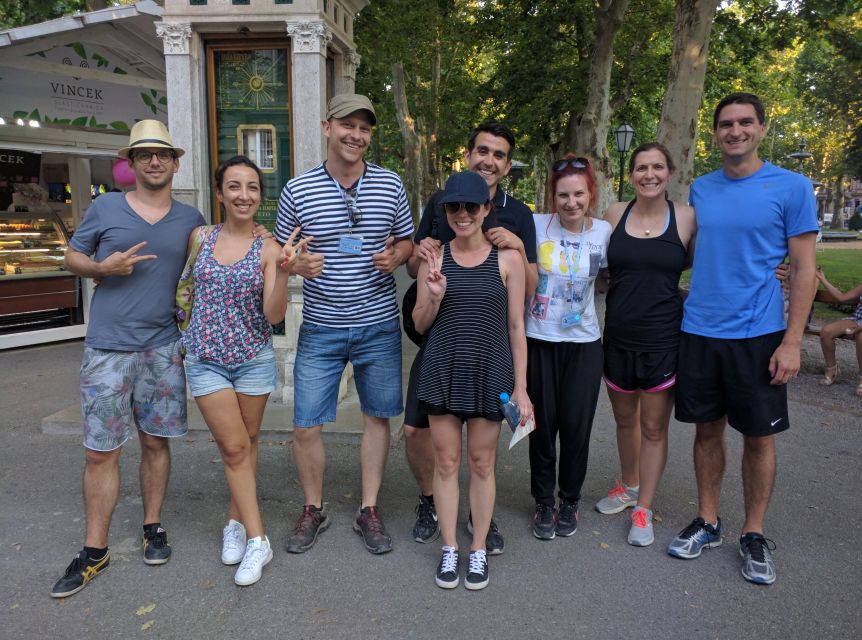
The meeting point is Zrinjevac Park, at Trg Nikola Subic Zrinski 2, next to the Meteorological station. It’s a simple landmark to find, and the setup is helpful if you want to arrive early and get your bearings. There’s even a temperature and barometric display on the north side of the park, which sounds random until you’re standing there and realizing it’s exactly the kind of detail you’d miss alone.
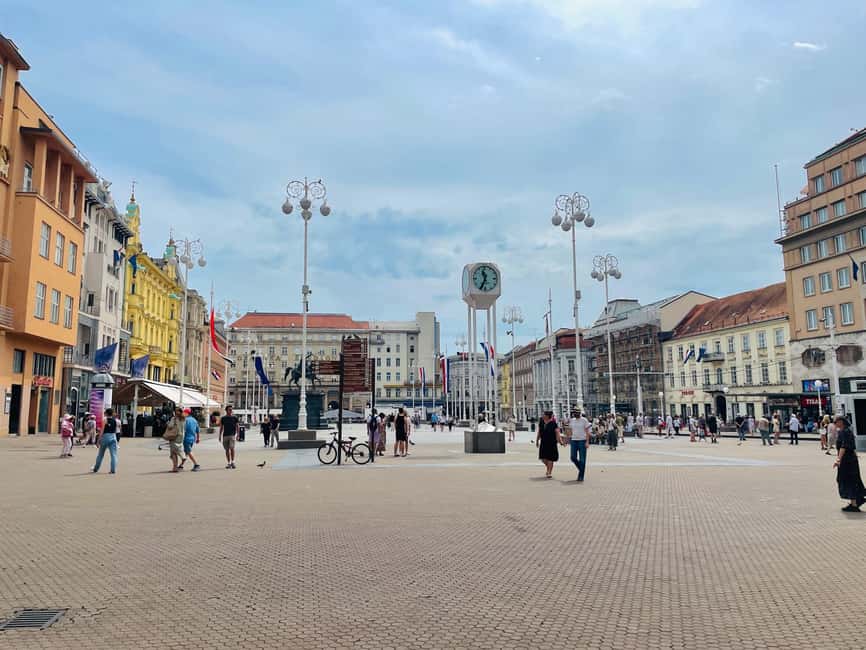
From there, the tour kicks off with a photo stop and a short guided intro. Then you head toward Ban Josip Jelačić Square, the bustling heart of Zagreb. This is where the tour does something smart: it doesn’t just tell you what the buildings are. It explains why this square matters as a civic center, and it gives you context for the name Zagreb and the legends around the city’s founding. It’s a fast way to orient yourself before you start climbing into heavier history.
The Cathedral Stop: Why It Became an Anchor for the City
Next up is the Zagreb Cathedral (Cathedral of the Assumption of the Blessed Virgin Mary). You’ll get the kind of landmark overview most visitors want, but with more meaning than you’ll get from a plaque.
Expect a guided walk-through of the cathedral’s origins and its turbulent history—plus the fact that it’s been restored multiple times over the centuries. That repeated cycle of damage and repair is part of Zagreb’s story in miniature. The building isn’t just old. It’s proof that the city kept re-building and re-defining itself.
Time here is tight but well paced. The tour includes a photo stop and guided context, so you don’t feel rushed, but you also don’t lose the rest of the day.
Dolac Market and Tkalčićeva Street: How Locals Actually Spend Time
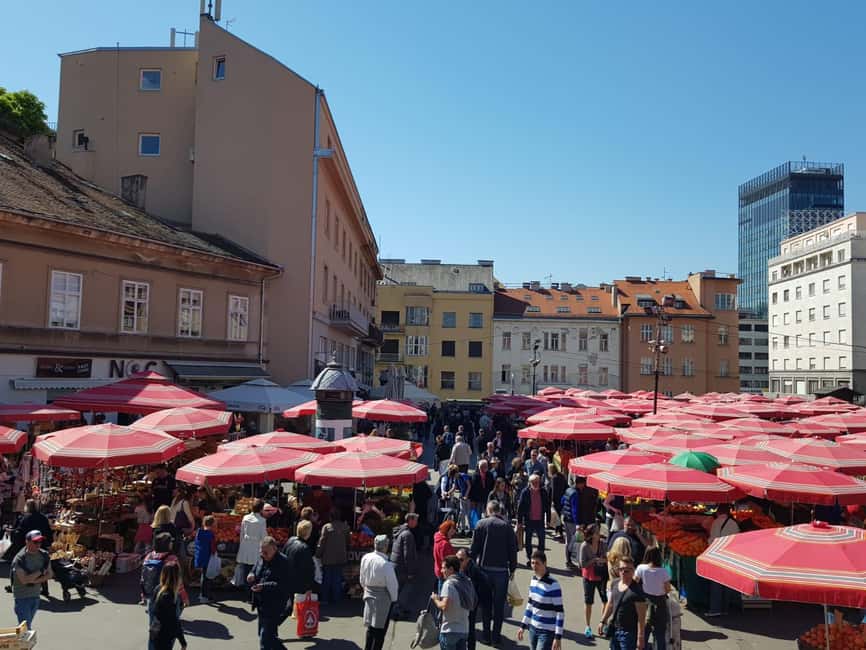
Then you hit Dolac Market, often described as the belly of Zagreb. This is one of the stops that makes the tour feel lived-in, because Dolac isn’t just a sight. It’s a daily habit for locals—fresh produce, quick conversations, and street life that gives the city its daily rhythm.
A practical note: Dolac Market is closed in the afternoon and on public holidays. So if you’re booking for a late time window, you may need to adjust expectations. If Dolac happens to be closed when you arrive, the tour experience will still make sense as a historical and cultural waypoint, but you might not get the full market energy.
After Dolac, you move toward Tkalčićeva Street, known for café culture. This part isn’t only about where to eat. The guide explains how the local habit of lingering and lounging is built into the street’s social design. It’s a small shift in focus, but it changes how you’ll look at the city long after the tour ends.
Grič Tunnel WWII Stop: The Most Unusual Part of the Route
The highlight for many people is the Grič Tunnel, a WWII-era underground passage beneath Zagreb’s Upper Town. This is where the walk earns its wow factor. Above ground, Zagreb looks like a Central European city. Underground, you get a different kind of reality: wartime shelter space that helps you understand what people were preparing for.
In the tour schedule, this is a dedicated stop with a guided visit time block. The only catch is the one you should plan around: the WWII Tunnel may be closed to visitors if there’s an event inside (like an exhibition or theater show). If that happens, you won’t be able to visit the tunnel. The rest of the tour still runs, but the underground portion won’t.
My advice: if the tunnel is the reason you booked, check your schedule and keep expectations flexible. Even with closures, the day still offers a strong Zagreb overview. Just don’t structure your entire trip around one single underground visit.
Upper Town (Gradec) and the View Walk: Moving From Streets to Sky
After the tunnel, you head toward Upper Town (Gradec). This is a key transition in the tour: the city changes feel once you’re walking up toward the medieval settlement.
You’ll make a stop for scenic views along the way, including Strossmayer Promenade, a leafy terrace known for panoramas over the rooftops. This is one of those places where your brain finally catches up. You see the layout of the city, the layers of older and newer Zagreb, and you understand why people built here first—defense, perspective, and control.
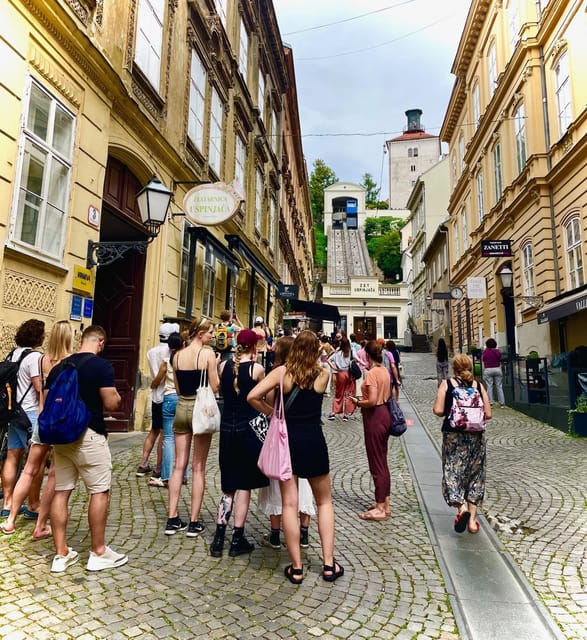
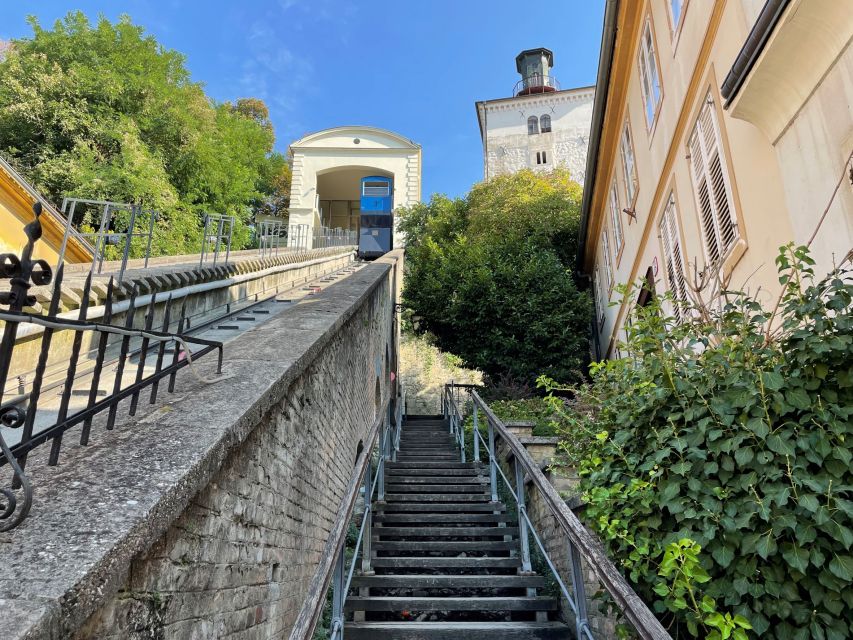
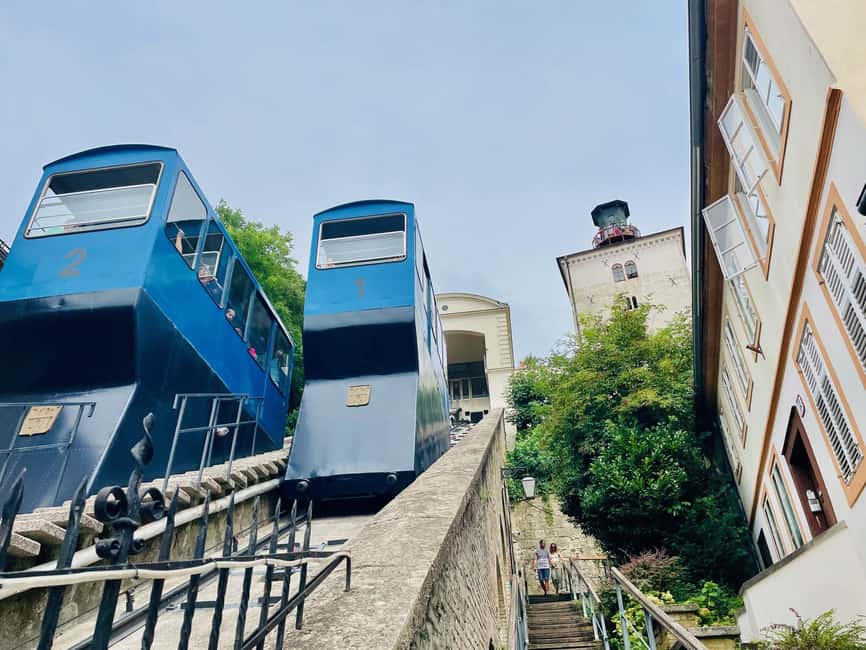
One more practical point: the tour notes the funicular nearby, but it’s closed for renovation until March 2026. So you should treat it as a landmark, not a ride you can rely on during your visit. The walking portion gets you what you need.
Lotrščak Tower and St Mark’s Church: Postcards With Context
Then comes Lotrščak Tower, another iconic piece of the Upper Town skyline. The tour includes a guided photo stop here, and it’s also a place where timing can help. In at least some cases, guides manage to align the walk with the midday cannon event near the tower. If you’re there at the right time, it’s a memorable piece of Zagreb tradition and easy to connect to the tower’s defensive purpose.
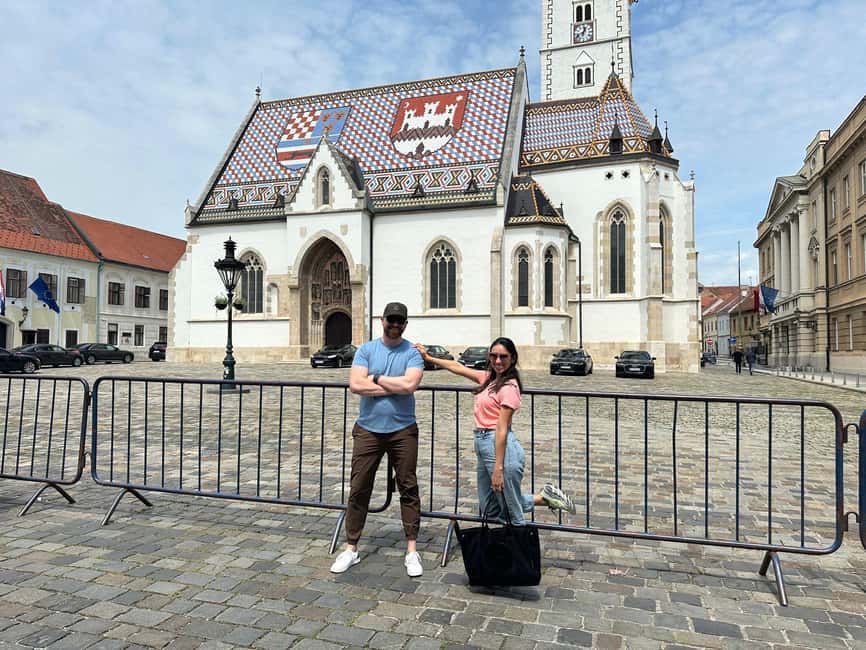
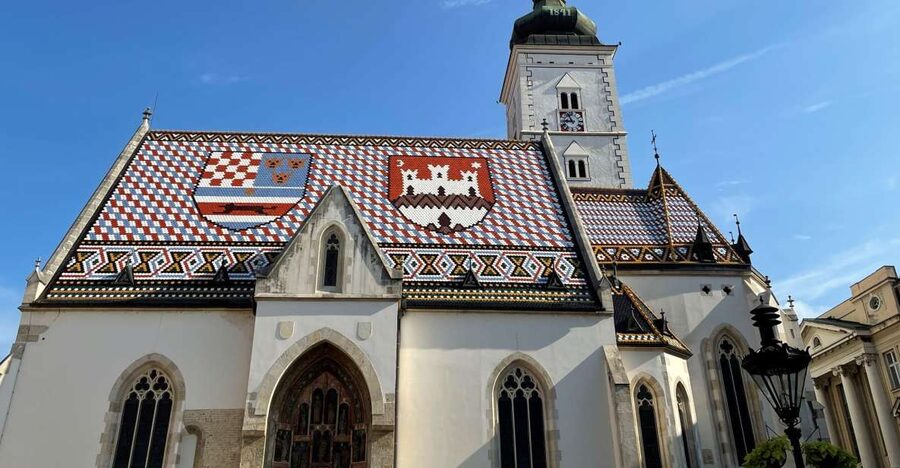
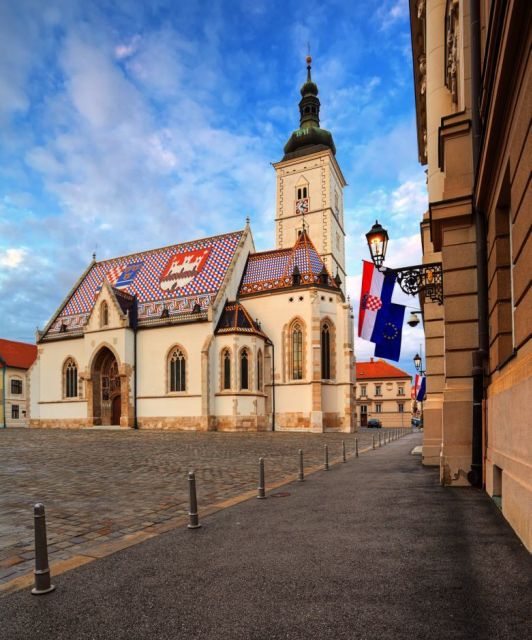
After the tower, you visit St Mark’s Church, instantly recognizable by its colorful tiled roof. The guide explains what you’re looking at and why the church is such a strong symbol for the city. Again, it’s not just “this is pretty.” It’s “this is why this matters.”
Stone Gate, the Old Pharmacy, and a Chapel With a Miraculous Painting
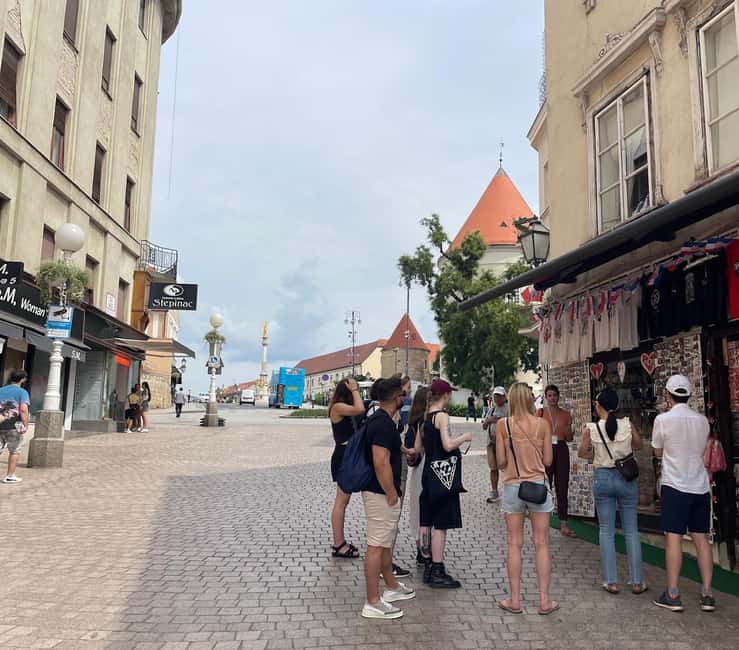
This part of the tour slows down in a good way. You walk past the oldest pharmacy in Zagreb, then continue to the Stone Gate, described as the only surviving gate from the city’s old fortifications.
One of the most interesting moments is inside the Stone Gate area, where you can see a hidden chapel and learn about a painting of Our Lady, said to be miraculous and beloved by locals. Even if you’re not religious, it’s still a powerful cultural stop. It shows how faith, community, and city walls all overlap in one physical place.
This is also where you get that authentic Zagreb vibe: not just museum-like history, but living traditions tied to architecture.
Museum of Broken Relationships and the Final Walk Back to Ban Jelačić Square
The tour makes a quick pass by the Museum of Broken Relationships. It’s not a long visit—more like a brief orientation moment—so you’re not forced into a museum timeline when you still have other sights to see.
From there, you continue through the historic core toward a finishing point at Ban Jelačić Square. There’s also a short secret stop along the way, designed to give you something off the main route. You might not remember every minute of the walk, but you’ll remember that the guide keeps sprinkling in small surprises to break up the standard tourist path.
When the tour ends, you’re back in a practical central location. The guide shares recommendations for food, museums, or what to do next. That matters because Zagreb rewards follow-up plans. If you leave with a list in your head, you’ll get more out of the rest of your trip.
Time, Pace, and Value: Why 150 Minutes Feels Like Enough
The tour lasts about 150 minutes, and the pacing is part of the value. It hits major sights without turning into a long slog. That’s especially important in Zagreb, where the Upper Town walk adds real altitude.
Small-group format also helps with time. When your group is smaller, photo stops stay smoother, questions get answered instead of delayed, and you don’t waste minutes waiting for the slowest person to arrive. If you’ve ever done a large group tour where you feel like a passenger in a human conveyor belt, you’ll appreciate this.
Included in the price is a licensed local guide and the walking tour itself. Food and drinks aren’t included, so plan to grab something after. If you want a simple strategy: eat lunch in the Dolac area if it’s open, or plan for a meal near Ban Jelačić Square at the end when you’re back in the center.
Who Should Book This Zagreb Tour (and Who Might Skip It)
This is a great match if you want a first-draft understanding of Zagreb. You’ll leave with a clear sense of what shaped the city—founding legends, cathedral history, medieval Upper Town, and the WWII tunnel that adds a heavier chapter.
It’s also a good choice if you like guides who answer questions and bring humor into the storytelling. Guides like Petra and Tomislav are frequently praised for being friendly and for mixing history with real city context. That kind of guiding turns facts into something you can remember.
Two situations where you may want to think twice:
- If you need wheelchair access, the tour is not suitable for wheelchair users.
- If you’re counting on Dolac Market in the afternoon, remember it’s closed in the afternoon and on public holidays. Plan your timing accordingly.
Should You Book This Zagreb History and WWII Tunnel Tour?
I think you should book it if you want an efficient, high-value overview that also includes one truly unusual stop: the Grič Tunnel. For the price, you’re buying guided storytelling plus a route that hits Zagreb’s most recognizable spots without feeling like a rushed checklist.
Book with a bit of realism, though. The tunnel can close if there’s an event, and Dolac has strict timing. If you can’t risk losing those parts, treat the tour as a strong core experience even without them, and be ready to adjust. If you want a morning or early afternoon plan that sets you up for the rest of your Zagreb day, this tour does that well.
FAQ
How long is the Zagreb City & History Walking Tour with WWII Tunnels?
The tour lasts about 150 minutes (2.5 hours).
Where does the tour start?
It starts at Trg Nikola Subic Zrinski 2 (Park Zrinjevac), next to the Meteorological station.
What are the main sights on the tour?
You’ll see Zrinjevac Park, Ban Josip Jelačić Square, Zagreb Cathedral, Dolac Market, Grič Tunnel, Upper Town (Gradec), Lotrščak Tower, St Mark’s, Stone Gate, and you pass by the Museum of Broken Relationships.
Do you definitely visit the WWII Grič Tunnel?
You’ll plan to visit the Grič Tunnel, but it may be closed to visitors if there’s an event taking place in it. If that happens, you won’t be able to enter the tunnel.
Is Dolac Market included?
Yes. The tour includes a stop at Dolac Market, but it is closed in the afternoon and on public holidays.
Is the funicular included?
The funicular is near the area, but it is currently closed due to renovation until March 2026. You should not rely on riding it during your tour.
What language is the tour guide?
The tour is offered in English.
Is food included?
No. The tour does not include food or drinks.
Is the tour suitable for wheelchair users?
No. It is not suitable for wheelchair users.
How much does it cost?
The listed price is $11 per person.