REVIEW · WARSAW
World War 2 in Warsaw walking tour in English
Book on GetYourGuide →Operated by Orange Umbrella Tours Warsaw · Bookable on GetYourGuide
Warsaw turns into a classroom on this walk. This 150-minute English tour takes you through the key WWII locations in the city where civilians, occupiers, and resistance groups collided. Led by Polish guides born and raised in Warsaw, it uses war photographs and personal family stories to make the history feel specific, not just familiar.
I especially like how the tour connects the big events to real streets. You move through the former Nazi German district, Adolf Hitler Square, and the former Jewish Ghetto, and the guide ties what you see to what people endured day to day. I also like that the group stays small, which makes it easier to ask hard questions and keep the pace human.
One catch: this is an outdoor, serious history walk, and winter cold can be brutal. Dress like you mean it, because the route still has to be walked even when temperatures drop hard.
In This Review
- Key Things I’d Pay Attention To
- Walking WWII Warsaw: What You See Is the Lesson
- Finding Your Guide: The Orange Umbrella by the Tall Column
- The 150-Minute Route: From Nazi Districts to Uprising Sites
- Former Nazi German District: Seeing Occupation in Plain Sight
- Adolf Hitler Square: Turning a Name Into a History Lesson
- Former Jewish Ghetto: The Weight of Location
- Execution Sites: Where War Turns Into Personal Consequences
- 1944 Warsaw Uprising Strongholds: Polish Resistance Where It Happened
- The Guides: What the Best Ones Do with Tough Material
- Pace Matters
- Heavy Subject, Kept Human
- Cold Weather Reality: How to Stay Comfortable and Focused
- Price and Value: Why $20 Can Be a Smart Spend
- Tip the Guide (Yes, Really)
- Who Should Book This Tour?
- Should You Book Orange Umbrella Tours Warsaw WWII Walking Tour?
- FAQ
- FAQ
- How long is the World War 2 in Warsaw walking tour?
- Where do I meet the guide?
- Is the tour in English?
- How much does the tour cost?
- Can I cancel and get a full refund?
- Is the tour wheelchair accessible?
Key Things I’d Pay Attention To
- Local Warsaw-born guides: You’re guided by Poles who grew up in the city, and that comes through in the way they tell the story.
- Photographs + personal family stories: Each stop is anchored to images and firsthand-style details, not just dates.
- Two major uprisings covered: The guide focuses on the 1943 Jewish Ghetto Uprising and the 1944 Warsaw Uprising.
- You visit execution sites and 1944 resistance strongholds: The tour doesn’t stay abstract. It points you to places tied to resistance activity.
- Small groups help with questions: You’re not swallowed by a crowd, and the flow stays conversational.
- Meet by a 20-meter column with a statue: Look for a guide holding an orange umbrella near the tall column.
Walking WWII Warsaw: What You See Is the Lesson
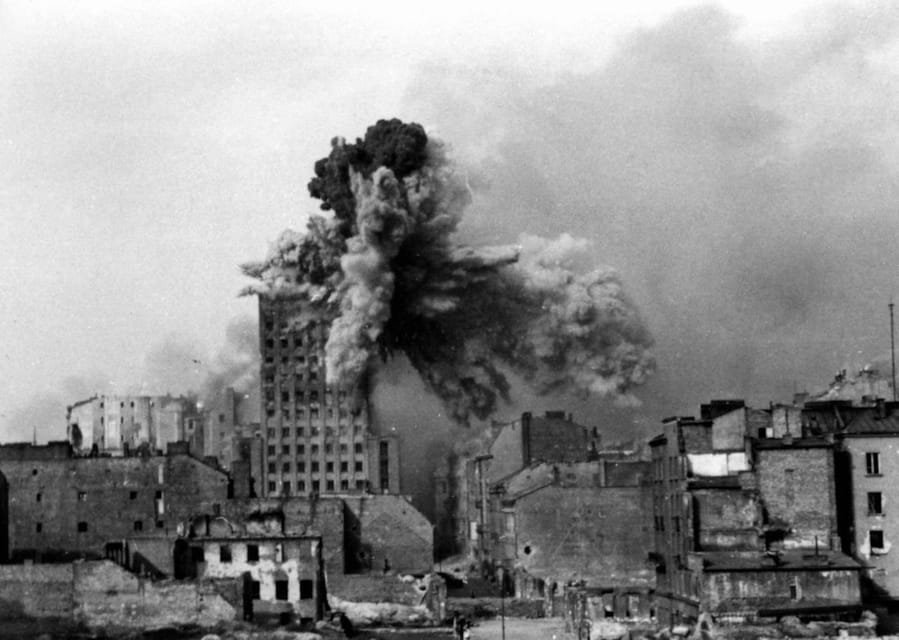
Warsaw in World War 2 wasn’t just damaged. It was controlled, terrorized, and reshaped. The best part of this tour is how it turns that reality into a walking sequence you can actually track: occupation, forced daily life under SS presence, and the uprisings when people refused to disappear quietly.
This is the kind of experience that makes you pay attention to details you’d normally ignore. A corner, a square, a neighborhood name that still echoes in memory. The guide helps you understand why those spots mattered, so you’re not just looking at old buildings. You’re looking at the geometry of decisions and violence.
And because the guides include personal family stories, the story doesn’t stay level. It rises and falls with lived consequences. It also helps you understand that many people in Warsaw carried multiple realities at once: fear, hope, caution, and then bursts of resistance.
You can also read our reviews of more walking tours in Warsaw

Finding Your Guide: The Orange Umbrella by the Tall Column
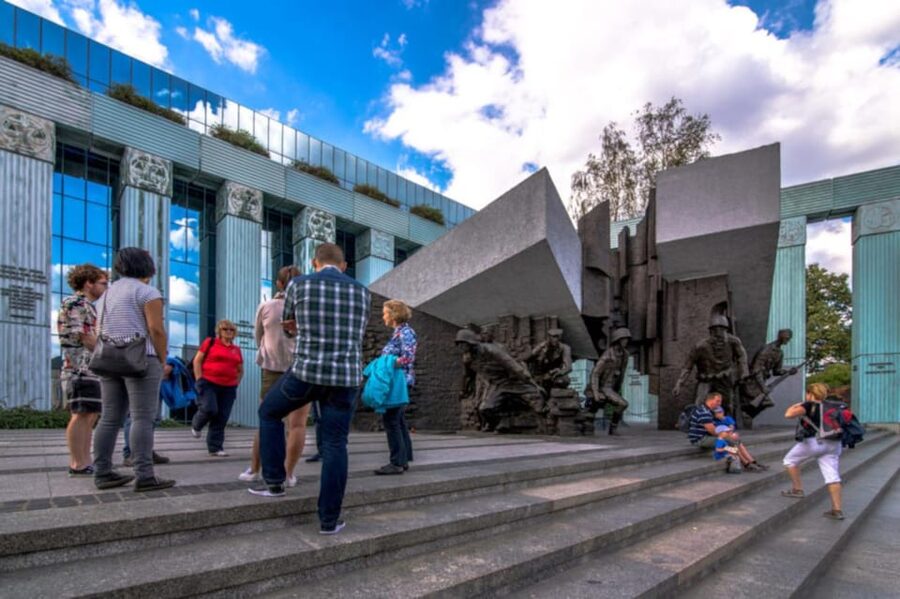
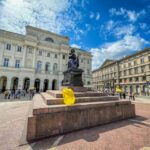
You’ll meet at a very specific landmark: find a guide holding an orange umbrella standing close to the 20-meter-high column with a statue on top. That clarity matters. In a city with lots of monuments, a clear meeting point prevents the awkward start where half the group is searching while the other half is already counting time.
The tour runs as a live English guided walk, and you’ll join a group of other tourists. Small group size is a real part of the value here. It means you can ask follow-up questions when something doesn’t make sense, and the guide can respond without rushing.
If you’re traveling with kids or teens, this kind of meeting point is also a relief. You get one clean handoff, not a vague “meet near this street” situation.
The 150-Minute Route: From Nazi Districts to Uprising Sites
This walk is built around major World War 2 moments in Warsaw, but the route is more than a checklist. The guide uses each location to explain how power worked on the ground and how people responded.
Former Nazi German District: Seeing Occupation in Plain Sight
The tour begins by introducing the former Nazi German district area, where the occupation wasn’t only a policy. It shaped how streets functioned, how residents moved, and how daily life felt under constant surveillance.
What makes this stop effective is the way the guide frames what you’re seeing. You’re not just told that Germans occupied the city. You’re guided to understand what that occupation looked like spatially: where authority concentrated, where control tightened, and how civilians experienced it.
Adolf Hitler Square: Turning a Name Into a History Lesson
Adolf Hitler Square is one of those places where the name alone can mislead you if you treat it like a normal square today. The tour works because it gives you the context to interpret the setting.
Expect the guide to connect the square to broader Nazi power—how symbolism, politics, and public space were used together. With war photographs added here, the square stops being an abstract label and becomes a place with a specific wartime role.

Former Jewish Ghetto: The Weight of Location
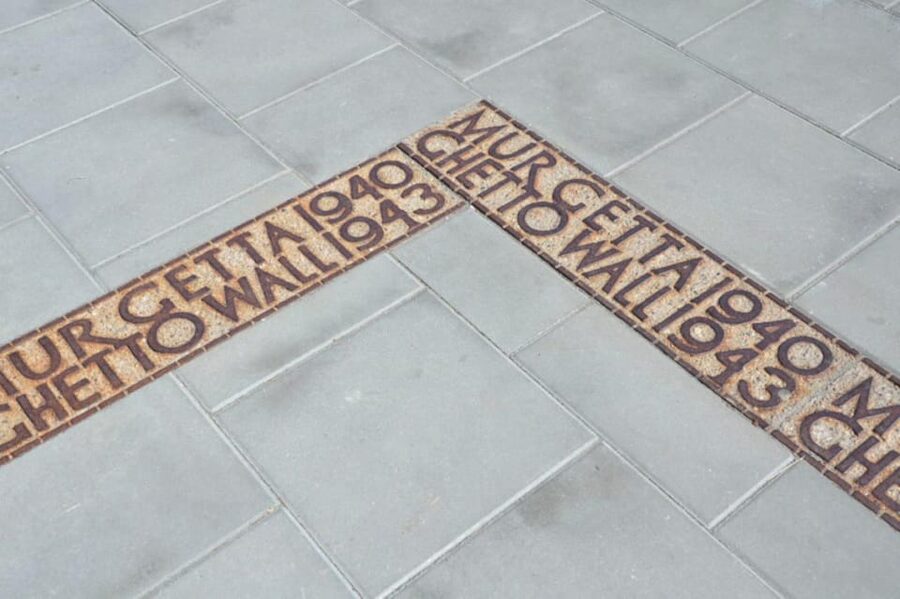
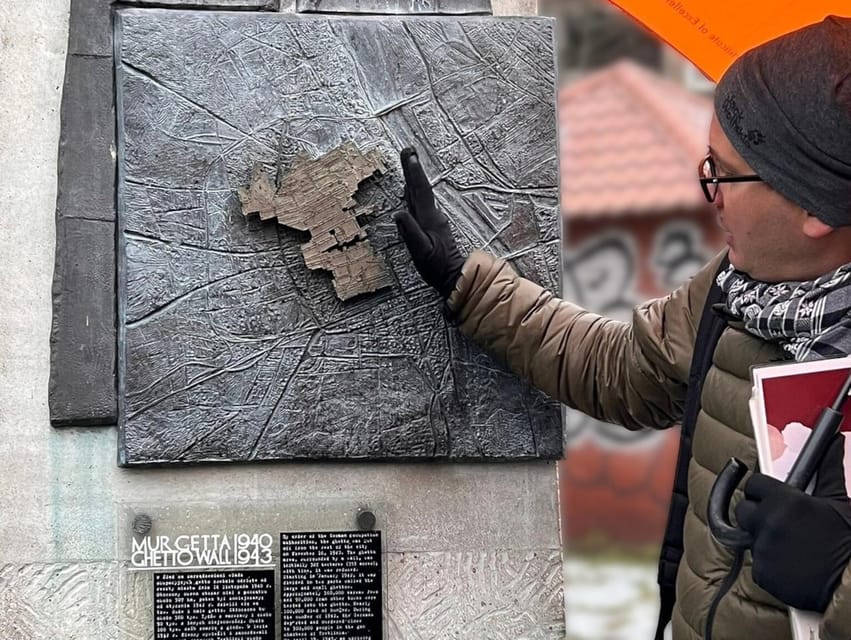
The former Jewish Ghetto stop is where the tour becomes emotionally heavy in a very grounded way. The guide explains the Jewish Ghetto Uprising in 1943, and it’s not presented as a single dramatic moment. Instead, you get the build-up: what life under persecution meant, and why the uprising happened when it did.
This section also benefits from the guide’s use of photos and personal stories. Seeing historical images while standing where people lived helps you grasp scale and routine. It’s harder to keep the events at arm’s length.
Execution Sites: Where War Turns Into Personal Consequences
The tour includes execution sites—places tied to killings and terror. This is not “dark tourism” in a casual sense. The guide’s job is to keep it factual, respectful, and clear about what resistance and occupation meant in practice.
The value here is that the tour doesn’t treat violence as background noise. It explains it as a tool: a method to crush resistance, enforce obedience, and break morale.
1944 Warsaw Uprising Strongholds: Polish Resistance Where It Happened
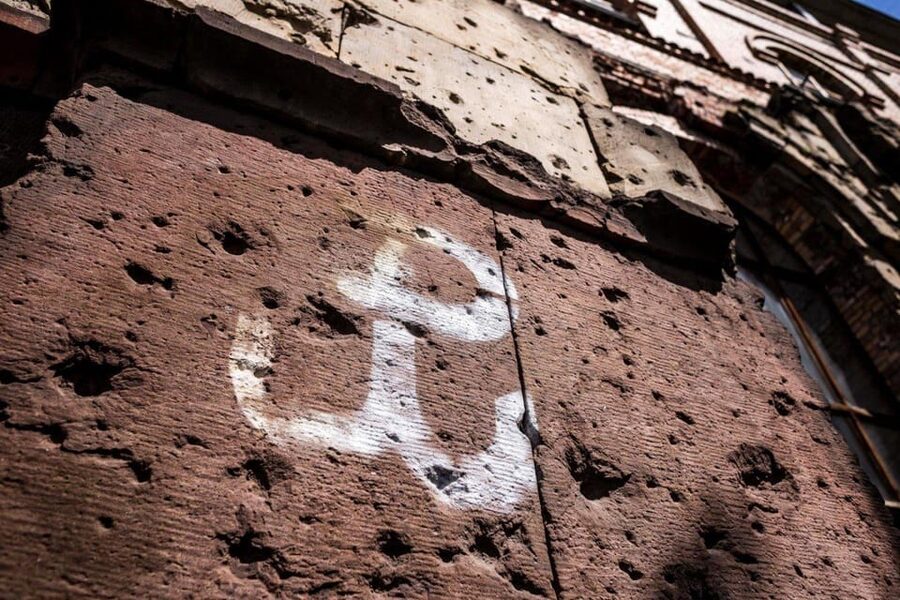
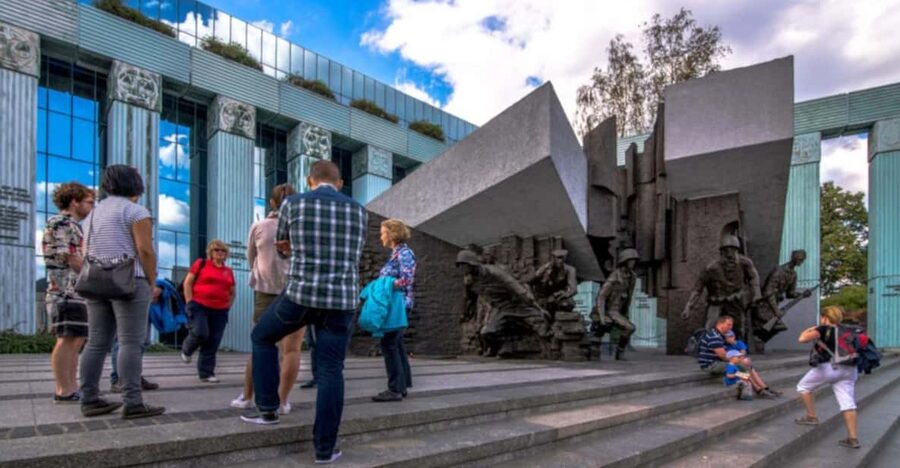
The final layers focus on the 1944 Warsaw Uprising and the Polish Resistance strongholds from that period. This part of the tour helps you understand the uprising as a strategy, not just a headline.
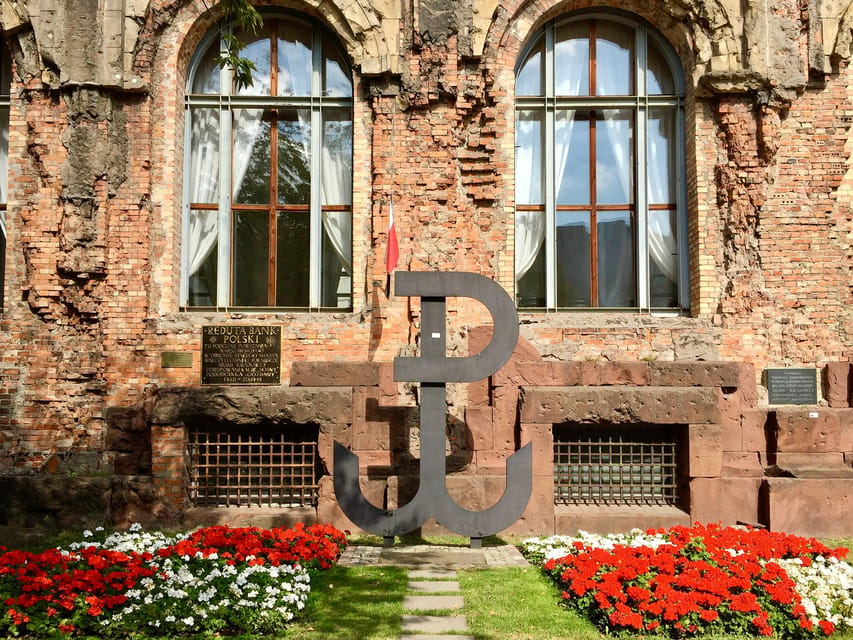
You’ll be pointed to locations connected with resistance activity, and the guide weaves in how everyday people intersected with decisions about sabotage, defense, and survival. That connection is one of the tour’s strengths: you see that resistance wasn’t only fighters in a story. It was an entire network shaped by desperate constraints.
Some tours also include the changing of the guard at the Tomb of the Unknown Soldier, depending on timing. If it happens during your walk, it’s a striking contrast: public remembrance in the present, built on what the city suffered in the past.
The Guides: What the Best Ones Do with Tough Material
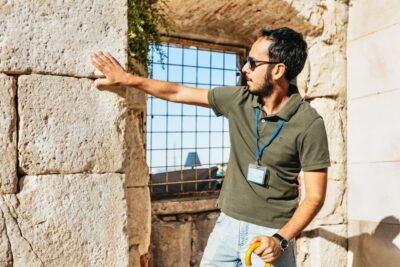
A huge part of the tour’s quality is the guide. The program relies on experienced local guides who are Poles born and raised in Warsaw, and that local grounding shows up in how they talk about the city.
The English delivery is also consistently praised, with guides such as Magda, Goska/Gosia, Piotr, Iga, Eliza, Andrew, Arek, Albert, Peter, and Martin all mentioned across bookings. Even if you don’t get one of those exact names, the point is clear: the tour attracts guides who can handle WWII with care and structure.
Pace Matters
This is a walking tour, not a museum talk. That’s great for people who like movement and street-level context, but it can be a factor for seniors or anyone who prefers slow strolling. One participant found the pace too quick for comfortable listening, even while acknowledging the guide was strong.
My advice: if you’re mobility-limited, tell the guide early what your walking comfort level is. The tour is wheelchair accessible, so there’s an expectation that you can be accommodated, but your experience will still depend on how you manage the route.
Heavy Subject, Kept Human
A delicate balancing act runs through the storytelling. The guide doesn’t sugarcoat horror, but they also know how to keep you from going numb. Several guides are praised for mixing sensitivity with clear explanations, so you leave understanding more than you came with.
Cold Weather Reality: How to Stay Comfortable and Focused
Warsaw winters can be extreme. People have reported days around minus 17 to minus 20 Celsius, with wind chill making it feel worse. Even when the guide is engaging and the group is small, you still have to stand and walk outdoors.
So dress for the weather, not for the photos. Bring warm layers you can move in, plus something for cold hands. If you’re the type who gets cold quickly, plan on taking breaks when the guide offers them.
It’s also worth knowing that in severe cold, the tour still happens. One booking reported only managing about 45 minutes because the cold was too intense. If you’re deciding whether to go on a harsh-weather day, make sure you can comfortably handle real outdoor time.
Price and Value: Why $20 Can Be a Smart Spend
At $20 per person for 150 minutes, you’re paying for more than a basic orientation walk. You’re paying for:
- a professional local guide
- a story-led route through specific WWII locations
- the time and care to connect what you see to what happened there
- small-group handling, so questions don’t get steamrolled
In other words, you’re buying guidance that turns streets into meaning. That’s what museums often can’t do as directly, because museums don’t let you stand in the same type of space where events played out.
Tip the Guide (Yes, Really)
The tour notes a practical point about money flow: broker, agency commissions, and taxes can consume a large share of what you pay. Tipping isn’t mandatory, but if you want your support to reach the person doing the work, tipping the guide can help.
Who Should Book This Tour?
This is a great fit if you:
- want WWII Warsaw history grounded in the actual city layout
- like learning from people with a local perspective
- prefer a structured walking format over a museum-only approach
- appreciate war photographs and personal stories alongside dates
It may be less ideal if you:
- have very limited tolerance for outdoor walking time (the pace can feel brisk)
- expect a light tone (this is serious material)
- are extremely sensitive to the emotional weight of execution sites and ghetto history
If you’re going with family, the tour can work well for teenagers and curious adults, especially if you’re prepared for the topic’s seriousness. Many participants described learning more because the guide explained the situation clearly without turning it into a dry lecture.
Should You Book Orange Umbrella Tours Warsaw WWII Walking Tour?
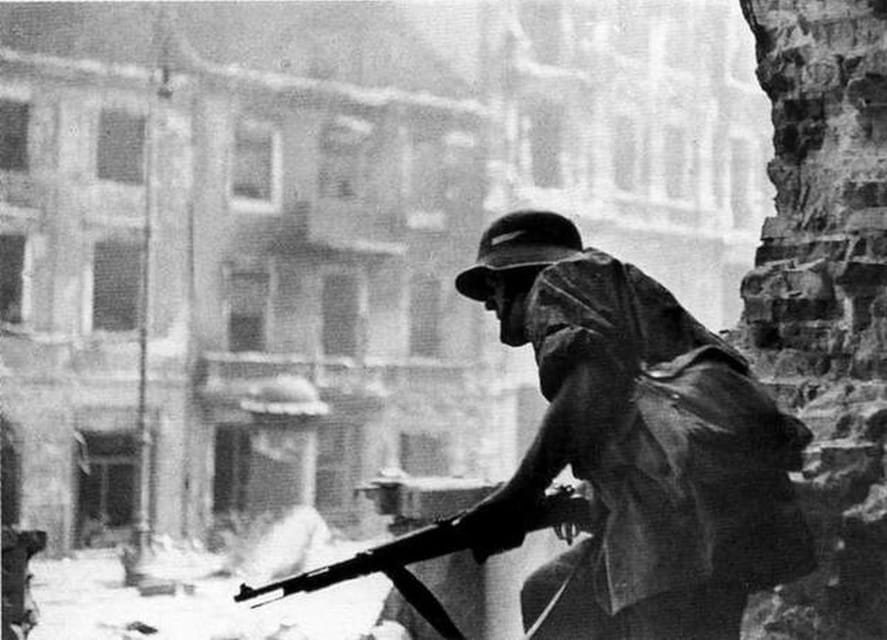
If your goal is to understand Warsaw under Nazi occupation and the uprisings in a way that sticks, I think this tour is a strong yes. The combination of local Polish guides, war photographs, and street-level stops is exactly what makes a WWII walking tour worth your time.
Book it if you can handle cold weather and you’re ready for heavy history. Consider a different format if you need very slow pacing or you know outdoor time is a struggle for you.
FAQ
FAQ
How long is the World War 2 in Warsaw walking tour?
The tour lasts 150 minutes.
Where do I meet the guide?
Meet a guide holding an orange umbrella close to the 20-meter-high column with a statue on top.
Is the tour in English?
Yes, the live tour guide speaks English.
How much does the tour cost?
The price is $20 per person.
Can I cancel and get a full refund?
Yes. You can cancel up to 24 hours in advance for a full refund.
Is the tour wheelchair accessible?
Yes, the tour is wheelchair accessible.