REVIEW · WARSAW
Warsaw: Jewish History Guided Walking Tour in English
Book on GetYourGuide →Operated by Walkative Tours · Bookable on GetYourGuide
Warsaw history hits differently on foot. This guided walk connects the Nożyk Synagogue and the Chłodna Street ghetto-area story to the real streets you can still stand on today. I especially love how the tour follows the logic of a city—who lived where, what changed, and why the war broke everything.
One caution: the tour runs 150 minutes outdoors, so cold weather is real. Plan for chilly standing and walking the whole way, and don’t count on long indoor breaks.
In This Review
- Key things that make this Warsaw Jewish History tour worth your time
- Starting out at Grzybowski Square, with a yellow umbrella
- Nożyk Synagogue: seeing what survived when so much didn’t
- Chłodna Street and the bridge site that joined parts of the ghetto
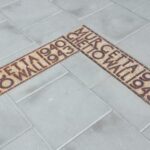
- Waliców Street: the ghetto border you can still imagine
- Warsaw between the wars: Jewish life that was creative, public, and real
- WWII scars in the streets: why the scale becomes clear on foot
- The guide’s role: handling hard history without making it feel like a lecture
- Your 150 minutes: pacing, walking time, and what to pack
- Price and value: $26 is low for what you’re getting
- Who this tour is best for (and who should choose something else)
- Before you book: make the choice that matches your energy
- FAQ
- Where is the meeting point for the tour?
- How long is the Jewish History Guided Walking Tour?
- Is the tour offered in English?
- What major places does the tour include?
- Is hotel pickup and drop-off included?
- Do I have to pay right away to reserve?
- Can I cancel for a refund?
Key things that make this Warsaw Jewish History tour worth your time
- Nożyk Synagogue stop: the only surviving pre-war Warsaw synagogue
- Chłodna Street bridge-area site: where parts of the ghetto were joined
- Waliców Street ghetto border: learn what it meant in practice, plus links to the Warsaw Uprising
- Interwar Jewish Warsaw before the catastrophe: artists, actors, writers, journalists, and everyday civic life
- Stories of resilience alongside the worst events: bravery and endurance, not just destruction
- English guide who answers questions: praised for thoughtful handling of a difficult subject
Starting out at Grzybowski Square, with a yellow umbrella
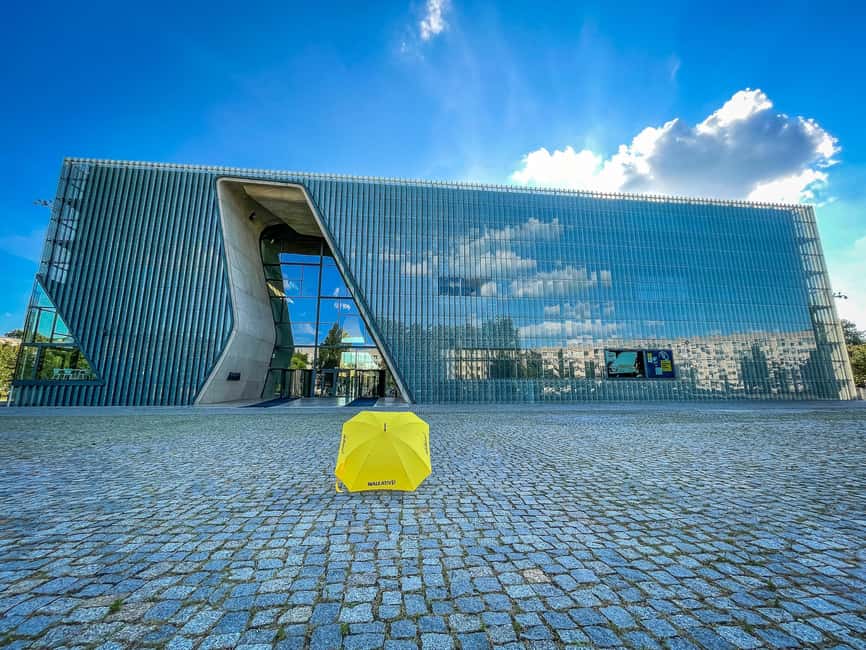
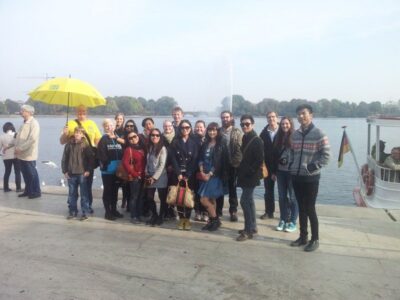
Most mornings in Warsaw feel like normal city business: trams, shops, people on errands. This tour starts the opposite way—at a point you can navigate easily, next to the All Saints Church at Grzybowski Square, with your group looking for a yellow umbrella.
It matters that the meeting point is simple. When your tour is about heavy history, you want a smooth beginning so you can focus on the story, not on hunting for the group. No hotel pickup means you’ll start under your own steam, which is fine—just give yourself a little extra time to arrive a touch early.
You can also read our reviews of more walking tours in Warsaw

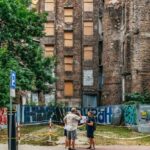
Nożyk Synagogue: seeing what survived when so much didn’t
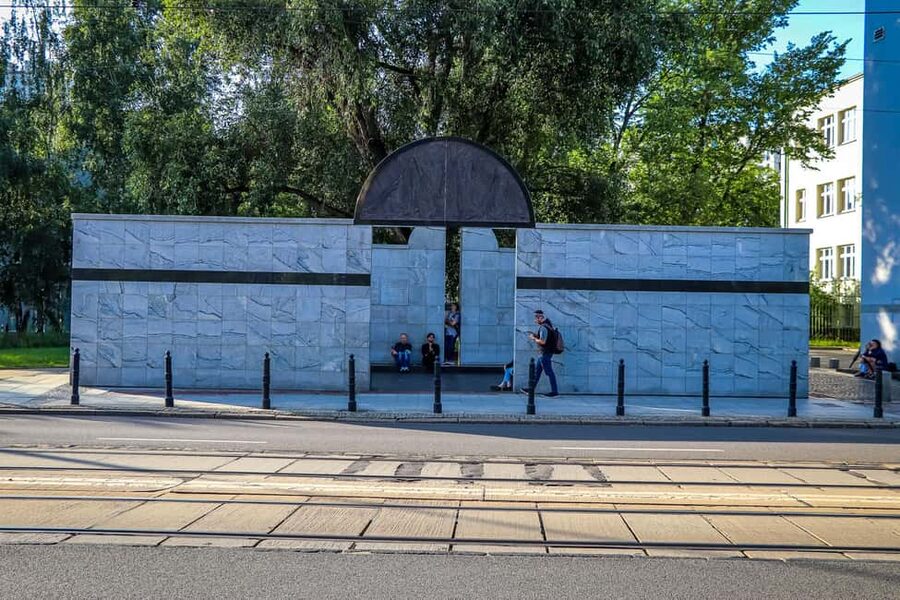
The Nożyk Synagogue is the kind of place that changes your posture. It’s the only surviving pre-war Warsaw synagogue, which makes it more than an architectural stop—it’s one of the rare physical anchors left from before World War II.
On this walk, the synagogue helps you understand the scale of loss without getting lost in theory. You’re not just hearing dates. You’re standing at a surviving reminder that Jewish Warsaw had deep roots, full of religious life and community institutions—long before the ghetto era and the Holocaust reshaped everything.
If you’re visiting in a group, you may also notice the guide pacing the moment. Many people feel emotional here, so the best tours give you time to absorb what’s in front of you and connect it to what comes next.
Chłodna Street and the bridge site that joined parts of the ghetto
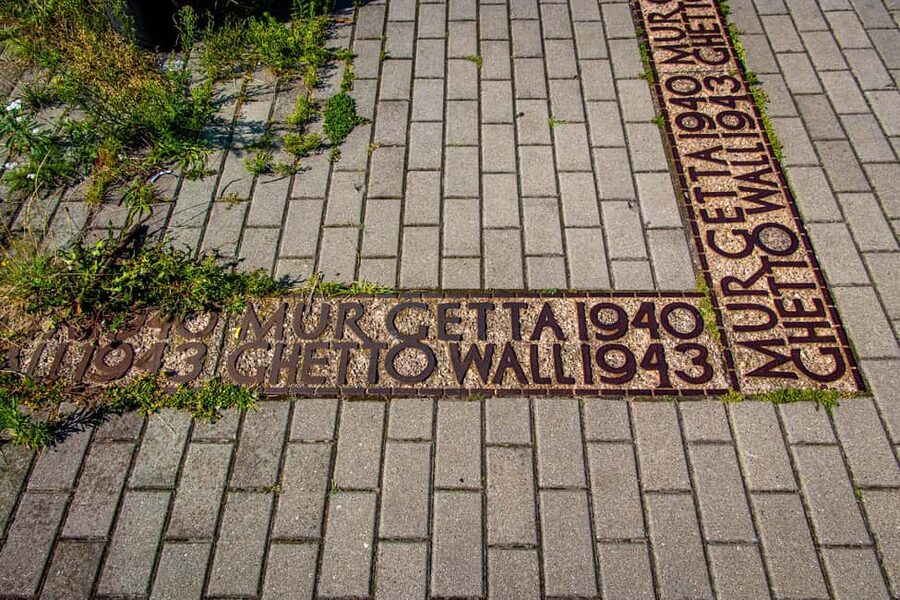
Then you move to Chłodna Street, where the story gets spatial. The tour focuses on the site of a bridge that joined parts of the ghetto—one of those details that’s easy to miss if you only look at buildings.
That bridge detail gives the history a practical shape. It shows how the ghetto wasn’t just a single boundary—it was a system made of streets, crossings, and controlled movement. When you stand near where people would have navigated those limits, the narrative turns from abstract to real.
This is also where good guides earn their fee. Several past guides have been praised for thoughtful explanations and for keeping the tone respectful while still making the geography clear. You’ll want to ask questions here if something doesn’t click, because this portion sets up everything the tour talks about later.
Waliców Street: the ghetto border you can still imagine
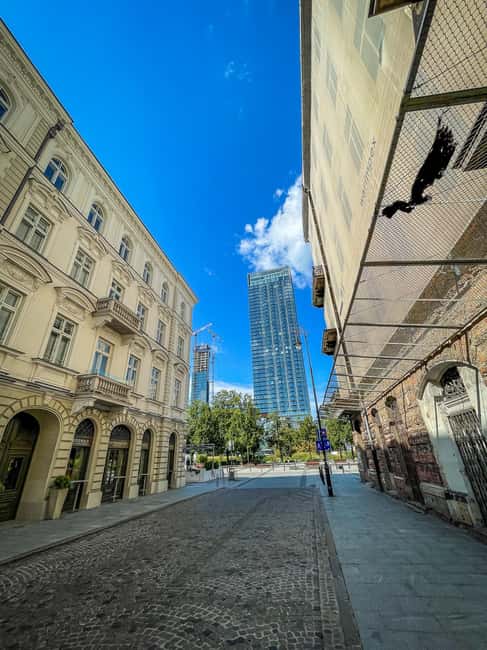
Next comes Waliców Street, once the ghetto border. This part hits because it’s not just a street you pass on the way to somewhere else. It’s a line—drawn, enforced, and lived with—so the guide’s job is to help you visualize what that border meant day to day.
The tour connects Waliców Street to broader wartime events, including discussion tied to the Warsaw Uprising. The key value here is perspective: the ghetto story isn’t isolated. Warsaw’s Jewish experience ran alongside Polish resistance, occupation policies, and the wider violent reshaping of the city.
If you like history that feels specific—names, places, and cause-and-effect—Waliców Street is a highlight. It’s the moment where the walk starts to feel like a map you can follow in your head.
Warsaw between the wars: Jewish life that was creative, public, and real
A smart history tour doesn’t start in 1939. This one builds backward first, showing you Jewish Warsaw during the Interwar Period, when the city was home to hundreds of artists, actors, writers, and journalists.
That section matters for one simple reason: it changes what you think you’re looking at. When you know this community wasn’t a footnote, you understand the Holocaust differently—not as a single event that happened to a nameless group, but as the destruction of an established, varied urban life.
You’ll also hear about Jewish participation in the city’s struggles and civic life over centuries, including the 19th century where Jews joined others in resisting occupying powers and participated in Polish uprisings. That added context helps you see Warsaw as a shared place that was fractured by occupation and genocide, not a separate story that began only with the ghetto.
You can also read our reviews of more guided tours in Warsaw
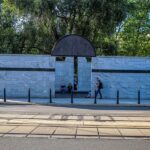
WWII scars in the streets: why the scale becomes clear on foot
The tour spends time on Warsaw’s Jewish history reaching the Holocaust era, including the reality that Warsaw was the second-largest Jewish city in the world before the war. Walking through the relevant streets helps the scale sink in, because you’re not just imagining a massive city—you’re moving through specific corridors where that world was remade.
Here’s the practical benefit: you’ll leave with a clearer mental inventory of what was present and what was erased. Even though many physical traces are gone, the guide uses the remaining cues and explanations to show what used to be there and how the ghetto changed the city’s rhythm.
You’ll also notice a pattern in how the tour handles the subject. The emphasis isn’t only persecution and death. You’ll also get stories of resilience and bravery, including the enduring spirit of the Jewish community that continues into today.
The guide’s role: handling hard history without making it feel like a lecture
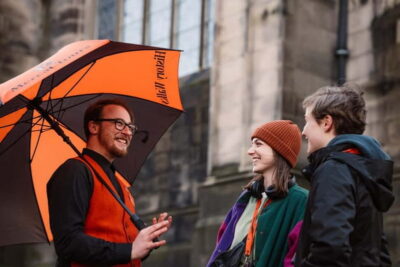
A standout feature is the way the tour keeps the experience human. Multiple guides have been praised for staying engaging during a difficult topic, including delivering stories with a sense of humor while still being honest about brutality.
It’s a delicate balance: too much emotion can shut people down, but too little can make the history feel bloodless. On this tour, the best guides appear to manage that by encouraging questions and by using visuals like photos and maps when needed—especially helpful for understanding street-level geography.
If you’re the type who asks for clarity—good. This tour seems built for that. Past experiences note that guides responded to questions from the group and stuck around when visitors wanted extra answers.
Your 150 minutes: pacing, walking time, and what to pack
This tour runs 150 minutes, which is about two and a half hours of continuous walking. That’s long enough to cover multiple emotionally intense sites, but short enough to keep your brain from going numb.
Because the schedule is walking-focused, clothing matters. Reviews frequently mention freezing weather, and the consistent takeaway is simple: dress for cold and wind. Even if you’re tough, you’ll be standing outside enough that you should treat warmth like a survival tool, not a comfort preference.
Good shoes are also non-negotiable. You’re covering streets where modern pavement meets historical memory, and you’ll want stable footing while you listen closely.
Price and value: $26 is low for what you’re getting
At $26 per person, this feels like strong value for a guided, English-language walking tour that covers several key sites tied to Jewish Warsaw’s pre-war life and wartime destruction. A big part of the value is that you’re not paying just for access—you’re paying for interpretation: connecting the Nożyk Synagogue, Chłodna Street’s bridge-area story, and Waliców Street to a coherent narrative.
Also, note how the tour is structured. It’s a general walking tour, and the price covers a reservation fee plus the guide’s payment. If you want a smaller private tour, you can contact the supplier after booking to organize it—useful if you prefer a quieter pace or more direct Q&A.
In short: if you’re looking for one tour that gives you both geography and context in a short time, this one fits the bill.
Who this tour is best for (and who should choose something else)
This is ideal if you want:
- A guided walk focused on Jewish history in Warsaw with specific street-linked stops
- An English-language explanation that keeps the story clear, even when it’s difficult
- A mix of pre-war life, ghetto-era detail, and WWII context, including connections to the Warsaw Uprising
- A route that helps you understand the city rather than just see monuments
It may not be ideal if:
- You’re seeking a light, casual sightseeing walk (this isn’t that)
- You hate long outdoor stretches in cold weather without an easy place to warm up
Before you book: make the choice that matches your energy
If you’re deciding between doing Jewish history on your own versus with a guide, I’d pick the guide for this one. The value isn’t only facts. It’s the way a good guide turns street corners into meaning—especially when so much has changed or disappeared.
Book this tour if you want to leave Warsaw with a mental map of Jewish Warsaw’s major locations and a clearer understanding of what was destroyed and what endured. Just come prepared for a serious subject, and bring layers if the weather is cold.
If you want to maximize what you get from 150 minutes, arrive on time, wear warm clothes, and be ready to ask questions at the points that feel confusing. That’s when the tour becomes more than walking—it becomes understanding.
FAQ
Where is the meeting point for the tour?
Meet next to the All Saints Church at Grzybowski Square. Look for a yellow umbrella.
How long is the Jewish History Guided Walking Tour?
The tour lasts 150 minutes.
Is the tour offered in English?
Yes, the tour guide provides the walking tour in English.
What major places does the tour include?
You’ll see the Nożyk Synagogue, visit the site on Chłodna Street connected to a bridge joining parts of the ghetto, and learn about Waliców Street, once the ghetto border, along with its links to the Warsaw Uprising.
Is hotel pickup and drop-off included?
No, hotel pickup and drop-off are not included.
Do I have to pay right away to reserve?
You can reserve and use the pay later option, meaning you can book your spot and pay nothing today.
Can I cancel for a refund?
Yes. You can cancel up to 24 hours in advance for a full refund.