REVIEW · SYRACUSE
Syracuse: Ortigia Private Walking Tour
Book on GetYourGuide →Operated by Hermes Sicily Tours · Bookable on GetYourGuide
Ortigia feels like a history book you can walk through. This private 2-hour tour strings together Greek ruins, baroque churches, and sea views, starting at the Temple of Apollo. I especially love how the guide turns stone and street corners into clear story beats, and you also get a great mix of landmarks plus water-side stops.
My favorite part is the way the route moves from the old spiritual center to the waterfront. You’ll spend time around Cathedral Square and the Cathedral, then carry that atmosphere to the area of Aretusa Fountain near the sea.
One consideration: plan for the dress code for churches and note that entering the Cathedral interior is optional and not included in the ticket price.
In This Review
- Key highlights in plain terms
- Why this 2-hour Ortigia walk works so well
- Meeting at Largo XXV Luglio and the Temple of Apollo
- Cathedral Square and the Syracuse Cathedral you can enter
- Aretusa Fountain: myth, water, and papyrus near the sea
- Viewpoint time and the sea panorama pause
- Jewish Quarter and Via Maestranza: seeing how power shaped streets
- Archimedes Square, the Fountain of Diana, and ending near Piazza Archimede
- Price, group size, and value for money
- Who this tour suits best (and who might skip it)
- Practical tips before you go
- Should you book this Syracuse Ortigia private walking tour?
- FAQ
- Where does the Ortigia private walking tour start?
- How long is the tour?
- Is this tour private or shared?
- Which languages are offered?
- Do I need special clothing for any stops?
- Are admission fees included for the Cathedral?
Key highlights in plain terms
- Private walking pace with a licensed guide, so you can ask questions and move at a comfortable tempo
- Temple of Apollo start in Largo XXV Luglio, which helps you understand what you’re seeing right away
- Cathedral Square focus, including the big church that’s still in use today
- Aretusa Fountain by the water, tied to the myth of Aretusa and papyrus growing nearby
- Jewish Quarter to Via Maestranza, for the sense of layers across centuries
- Stop at a viewpoint and finish near Piazza Archimede, with an option to walk toward the fish and fruit market in the morning
Why this 2-hour Ortigia walk works so well
Ortigia is not big in size, but it’s heavy on layers. You can wander on your own, of course, but the value of a guided walk is that it prevents Ortigia from feeling like a list of pretty buildings. With a good guide, the streets start to make sense.
This tour is designed for a two-hour window, which is ideal if Syracuse is one stop in a longer Sicily trip. You get enough time to see the main anchors—Greek, baroque, and seafront—without feeling like you’re on a forced march.
I also like the flexibility that comes with a private format. The route is guided, but it’s not so rigid that you lose the chance to ask something you actually care about. And if you’re traveling as a small group, this is one of the better ways to get individual attention while staying on a tight schedule.
You can also read our reviews of more walking tours in Syracuse

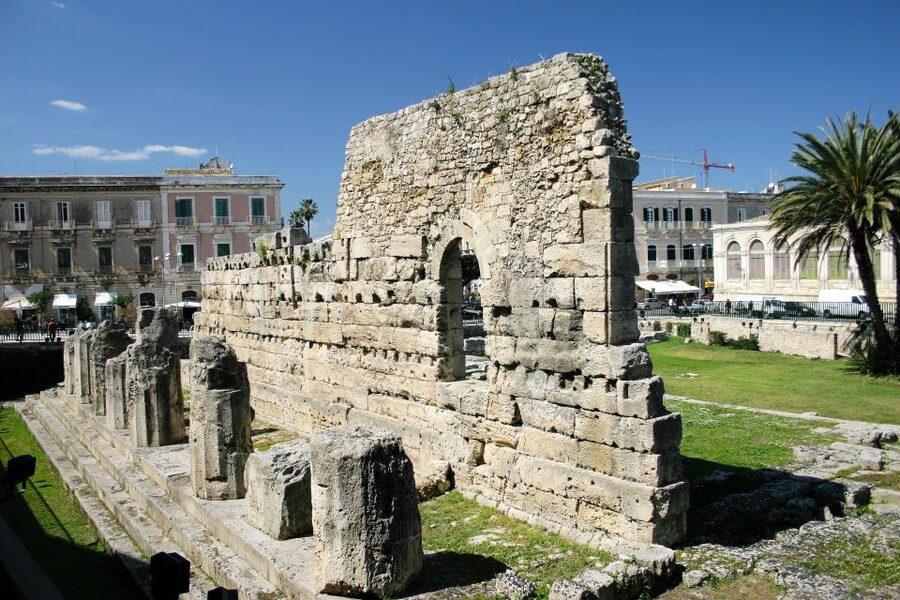
Meeting at Largo XXV Luglio and the Temple of Apollo
The tour starts at Largo XXV Luglio, with the guide waiting at the entrance area by the Temple of Apollo. You’ll spot them with a Hermes Sicily Tours sign or logo, standing in the zone between the small fountain and the benches in front of the temple.
Starting at the Temple of Apollo is smart because it sets the map in your head. Before you’re even deep in the narrow lanes of Ortigia, you get a short introduction that frames what you’re about to see. It helps you notice the clues of what came first, and what was later built over it.
From there, you move through Ortigia’s old-town streets. Expect a walk that feels like strolling, not rushing. The guide helps you cross time periods—people governed Sicily in different eras, and Ortigia shows the traces in its architecture and religious sites.
If the weather turns, the walk still works because the route stays tight. You won’t be stuck searching for sights; the whole point is that the area around the start is your main stage.
Cathedral Square and the Syracuse Cathedral you can enter
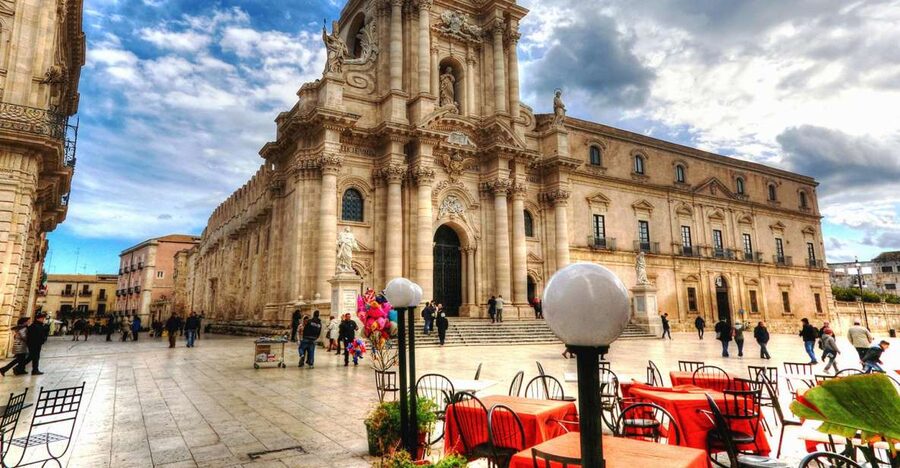
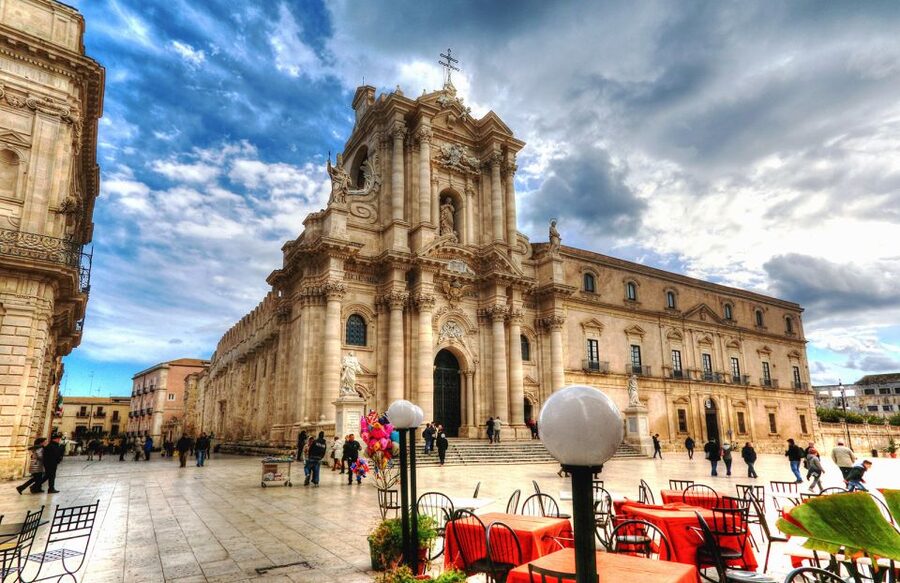
Cathedral Square is where Ortigia starts to feel theatrical. You’ll come upon bright limestone buildings and the surrounding civic and religious landmarks: the town hall, Palazzo Beneventano, the bishop’s palace, and St. Lucy’s Church.
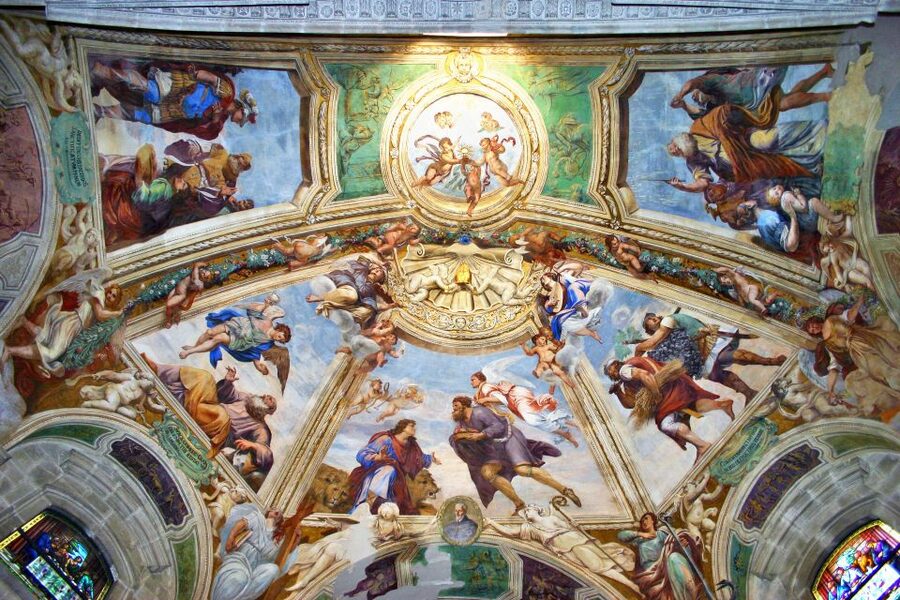
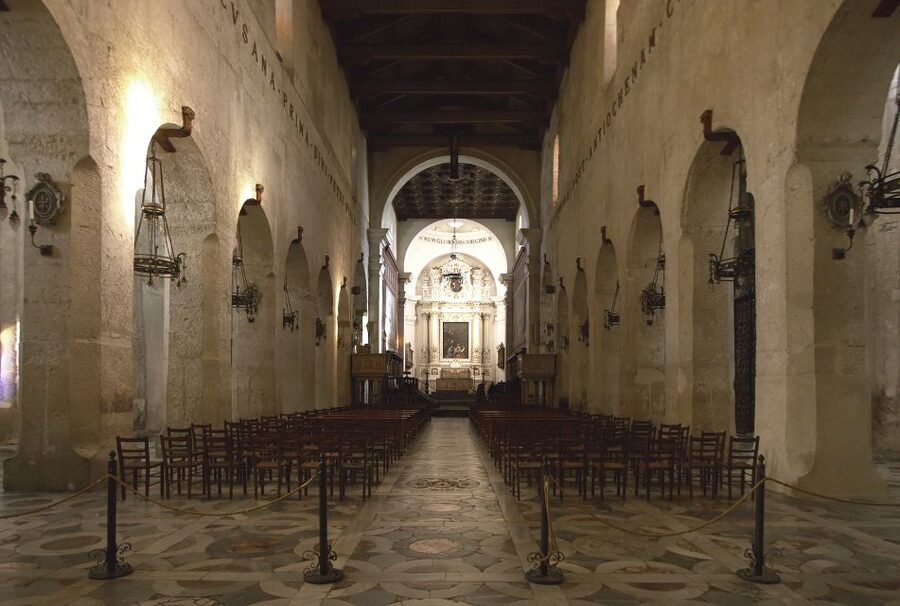
Then comes the star stop: the Cathedral, described as the only church still in use today that was originally a pagan temple. That combination is the attraction. It’s not just a church you pass; it’s a place where you can see how religious power shifted over centuries, physically and visually.
The Cathedral interior visit is optional, and an admission fee isn’t included. If you’re interested in architecture details and how church interiors preserve earlier layers, this optional stop can be a payoff. If you’d rather spend more time outside for the sea air and views, you can focus on the exteriors and move on.
Don’t ignore the practical detail: there’s a dress code for places of worship. No shorts or sleeveless tops, and shoulders need to be covered for both men and women. If you’re arriving straight from a beach day, plan a quick clothing change before you meet.
Aretusa Fountain: myth, water, and papyrus near the sea
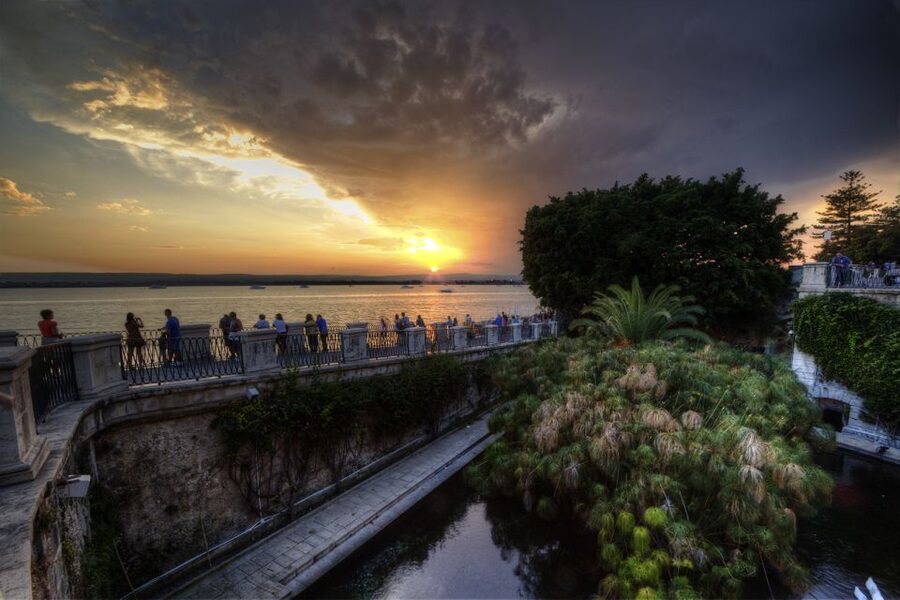
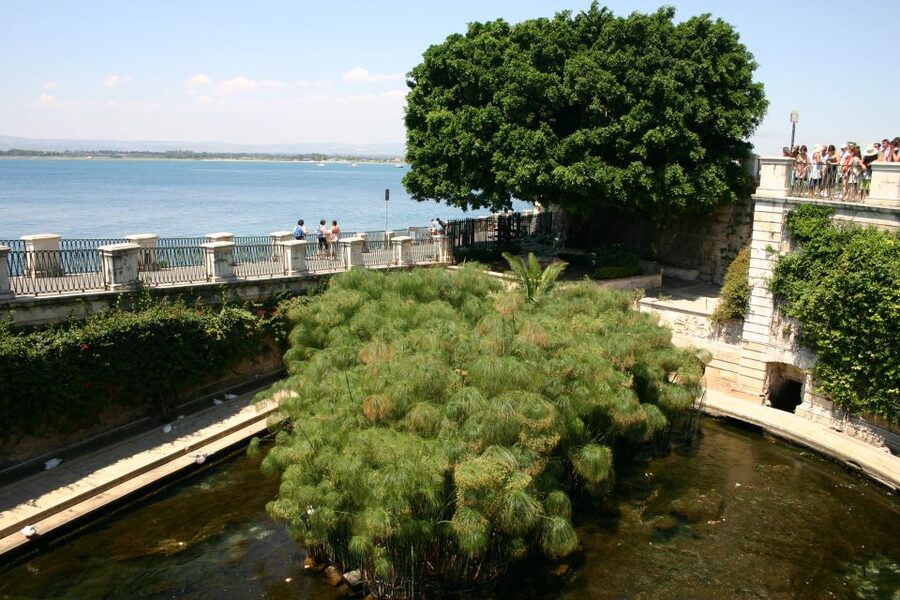
After the Cathedral area, the walk continues toward Aretusa Fountain by the water. This stop matters because it shifts the mood from stone monuments to a quieter, myth-tied moment near the sea.
The myth of Aretusa is tied to Ovidius, and the fountain’s setting adds an extra layer to the story. The water is described as clear and fresh, and papyrus grows there—papyrus that was probably brought during the time Archimedes lived in the town.
Even if you don’t know Greek myths by heart, the guide’s job here is to connect the cultural reference to the physical place. You’ll leave with a clearer idea of why this spot became important, not just that it looks scenic.
This is also a good moment to take a breather. The walk has a steady rhythm, but near the sea you get that natural pause that makes the tour feel human-sized. And because it’s an old town, you’ll still be surrounded by streets and stone as you transition toward the next neighborhood layer.
Viewpoint time and the sea panorama pause
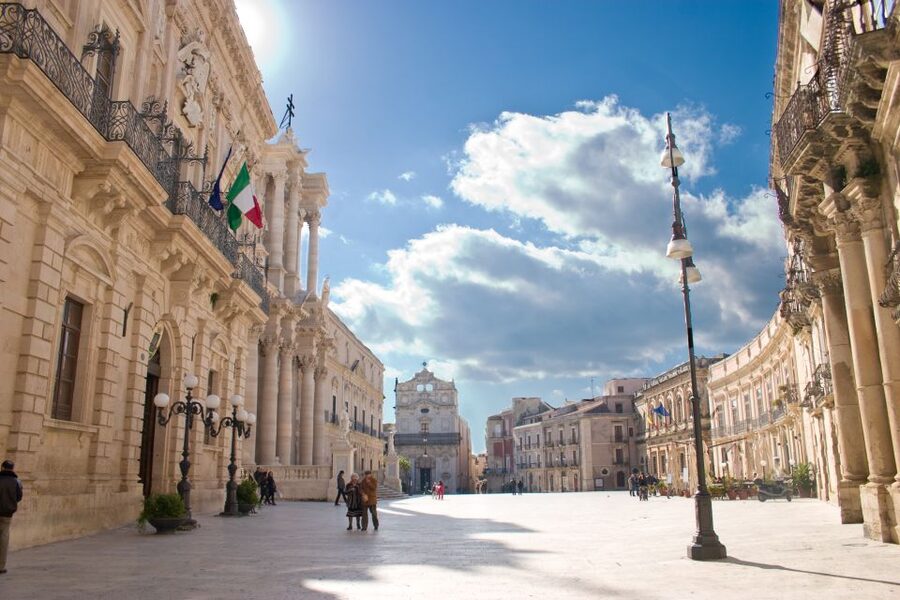
Ortigia rewards you for stopping. One of the stops is a viewpoint, built into the route so you can see what the sea gives this place that inland cities don’t.
I like that this isn’t treated as a random photo break. The viewpoint is placed after key landmark context, so you understand what you’re looking at. It helps you connect the monuments to the shoreline setting, instead of letting the views feel like an afterthought.
If you’re sensitive to pacing, viewpoints are often where tours go right or wrong. Here, it works because the walk is flexible and the time is used for understanding and orientation, not just snapping pictures and sprinting away.
Jewish Quarter and Via Maestranza: seeing how power shaped streets
The way back passes through the Jewish Quarter, then onto Via Maestranza, the street where the town’s nobility had pompous homes.
This part of the walk is valuable because it reminds you that Ortigia wasn’t just a place of worship and ancient temples. It was also a lived-in city where different communities built their identity into streets and buildings.
Via Maestranza gives you a different type of architectural reading. Instead of focusing only on churches and ancient structures, you look for signs of wealth and status in the homes of the nobility. That context changes how you interpret the scale, facades, and street presence.
This is where a private guide really earns their keep. You’re not just seeing walls. You’re learning why the walls look the way they do and how the street grid reflects older social realities.
Archimedes Square, the Fountain of Diana, and ending near Piazza Archimede
Next you reach Archimedes Square, where you’ll see the neoclassical Fountain of Diana. The fountain is a symbolic reminder of Syracuse’s past glory, and it ties back to the guide’s earlier references through myth and classical memory.
The tour is designed to end in the heart of Ortigia at Piazza Archimede. The operator’s description also notes the activity ends back in the meeting area, near Apollo’s starting point. Practically, that means you finish back within the same walkable core so you’re not left stranded half across town.
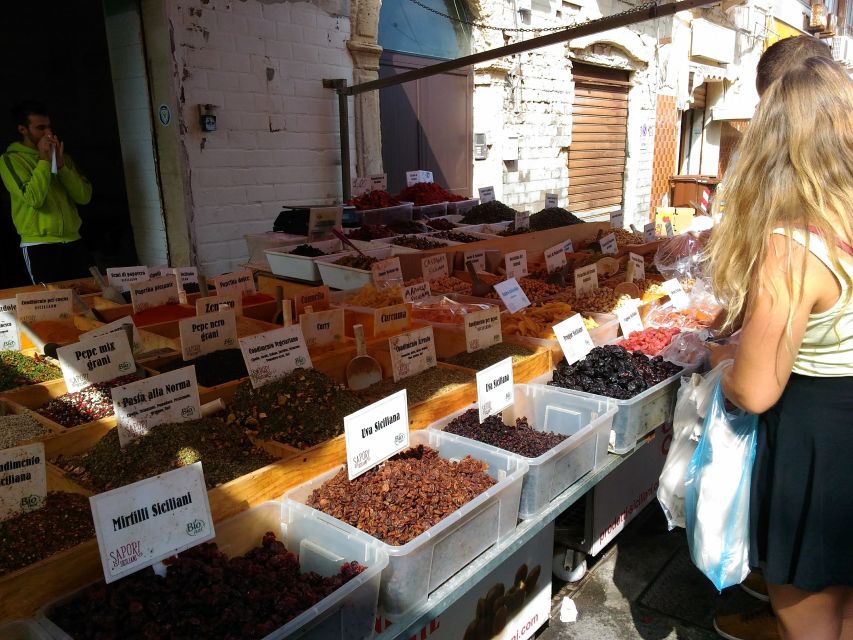
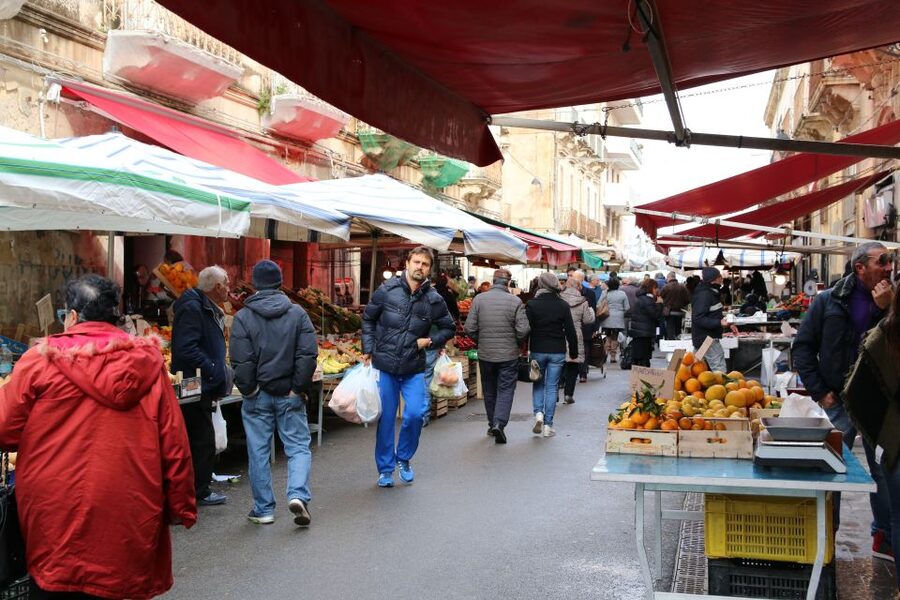
If you want to extend the experience on your own terms, you can ask the guide to finish near the local fish and fruit market. The market is open only in the morning and on working days, so this works best if you plan your visit accordingly.
Even if you don’t shop, the market area gives you that grounded feel of Ortigia as a living neighborhood. Colors, scents, and daily rhythms help the monuments stick in your memory.
Price, group size, and value for money
The price is $220.91 per group up to 9 for a 2-hour private walking tour. On the surface, that sounds like a premium, but it’s how private guiding should be judged: you’re paying for a licensed guide and flexibility, not per person in a typical mass-tour way.
If you’re traveling solo, it may feel pricey compared with a shared group tour. But if you have a couple of people, the cost per head drops quickly, and the private pace becomes a real advantage—especially in a place like Ortigia where questions can be easier and more meaningful in a small group.
There’s also an important practical value: languages. The tour is offered with a live guide in Italian, English, and German for private use, so you’re not stuck hoping someone on your tour speaks your language. In my experience, language comfort changes how much you remember the next day.
There’s a shared-group option too, depending on the time of year, but group tours are bookable only in English or Italian, and in rare cases very small groups may hear explanation in both languages. If your priority is maximum attention and the ability to move at your own pace, choose private.
Who this tour suits best (and who might skip it)
This is best for you if you want to see top sights of Ortigia without guessing your way through the story. If you care about how the city evolved—from Greek influence to later baroque Catholic layers—this format makes that evolution readable.
It also fits well if you’re traveling with family members who want breaks. Reviews mention the guide being flexible, and the walking pace is described as relaxed with a flexible itinerary, which matters when not everyone has the same stamina.
If you’re the type who loves long free wandering and doesn’t care about context, you could save money by walking independently. You’ll still see the monuments, but you’ll likely miss the why behind them.
Practical tips before you go
A few details can make or break your day in Ortigia.
First: dress for churches. Shoulders covered and no sleeveless tops or shorts. If you’re packing light, plan a lightweight cover-up so you don’t feel stressed at Cathedral Square.
Second: think about the market timing if you want that market finish. It’s open only in the morning and on working days, so afternoon plans might skip it.
Third: bring comfortable shoes. Ortigia streets are old and uneven in places, and this is a walking tour designed to cover multiple key points within a short timeframe.
Finally: check your guide language in advance if you’re booking shared group options. For private tours, language is offered in English, German, or Italian; for shared groups it’s limited to English or Italian.
Should you book this Syracuse Ortigia private walking tour?
I’d book it if you want the main Ortigia hits in a tight time window and you like your sightseeing explained as you go. The combination of Temple of Apollo, Cathedral Square, and the sea-focused stop at Aretusa Fountain gives you a full “old town + meaning” experience without turning the day into a marathon.
If you’re traveling as a group of up to 9, the pricing makes even more sense because you’re essentially buying private time for everyone together. And the guide-led format helps you read the city’s layers rather than just collecting photos.
Skip it only if you strongly prefer self-guided wandering, or if you’re not interested in church interiors and myth-linked context. For most people visiting Syracuse, this is one of the most efficient ways to get the feeling of Ortigia with clear takeaways.
FAQ
Where does the Ortigia private walking tour start?
You meet your guide at the Apollo Temple entrance in Largo XXV Luglio. The guide will be holding a Hermes Sicily Tours sign or logo.
How long is the tour?
The tour is 2 hours. Starting times depend on availability.
Is this tour private or shared?
It’s available as a private tour (also described as private/small groups) with a licensed guide. There is also a shared group option during some periods of the year, with language limits.
Which languages are offered?
Private tours are offered with live guides in Italian, English, and German. Shared group tours are bookable in English or Italian.
Do I need special clothing for any stops?
Yes. A dress code is required for places of worship: no shorts or sleeveless tops, and shoulders must be covered for both men and women.
Are admission fees included for the Cathedral?
No. The optional visit to the Cathedral interior may require an admission fee, which is not included.