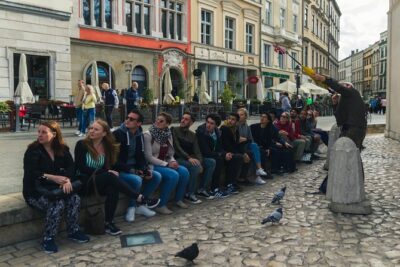
Nuremberg’s old town clicks into place fast. This walking tour strings together the places that made the city famous—churches, squares, crafts streets, and the castle—with a local guide steering you the whole way. You get stories that connect the Golden Age to the harder chapters, without turning the streets into a history lecture.
I love how the format is built for real sightseeing: you walk on foot at a human pace, and the guide handles the route so you do not hunt for directions or pull out a map. I also like that it is led in English by a local born and raised in Nuremberg, so the details feel grounded, not copied from a brochure.
One thing to consider: the path includes cobblestones and at least a couple of steep uphill stretches toward the castle. If you have mobility limits or a cranky knee, plan for breaks (and maybe adjust your pace).
In This Review
- Key things to know before you go
- Getting oriented in Nuremberg without wrestling a map
- Der Schöne Brunnen: Gothic beauty and a famous legend
- St. Sebaldus Church: why religion shaped the city
- Hauptmarkt: the central square where Nuremberg shows off
- Kaiserburg Castle: the triple fortress and the view payoff
- Albrecht Dürer’s House: the medieval home behind famous art
- Tiergartnertorturm and the defensive DNA of the city
- Weissgerbergasse: craftsmen’s street and the scars of WWII
- Altstadt wandering: where the tour turns into your personal route
- Price and value: why this feels like a smart deal
- What kind of traveler this suits best
- My verdict: should you book this Nuremberg walking tour?
- FAQ
- How long is the walking tour in Nuremberg?
- What language is the tour offered in?
- Where do I meet for the Nuremberg walking tour?
- What time does the tour start?
- Does the tour include admission tickets for the stops?
- Is there a limit on group size?
- What is the cancellation policy?
Key things to know before you go
- Local guide route-finding: You follow the guide, so you are not constantly checking your phone for directions.
- A great mix of eras: Medieval power, Reformation-era religion, and wartime reconstruction all show up along the walk.
- The big payoff is at the Kaiserburg: Expect a climb and then city views.
- Plan for uneven ground: Cobblestones and hills mean sturdy shoes matter.
- Short stops keep it fun: Most sights are brief, so you keep moving and still get the stories.
Getting oriented in Nuremberg without wrestling a map
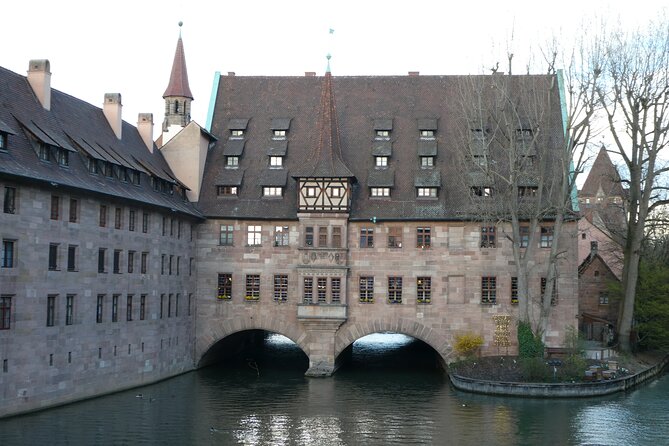
This is the kind of tour that helps you stop feeling lost. Instead of bouncing between landmarks on your own, you get a steady route through the old town, with a guide narrating as you go. The pacing also helps: it is not a sprint, and you typically get quick moments at each key spot to look, listen, and take photos.
You start at a central meeting area in the historic core, and the tour loops back there at the end. That matters because it lets you keep your afternoon flexible for coffee, lunch, or a longer sit-down somewhere else. It also means you are not finishing on the far edge of town wondering how to get back.
The group size tops out at 50, which keeps the walk organized while still letting you hear the guide. And since it runs in English with a mobile ticket, it is straightforward to join without extra planning gymnastics.
You can also read our reviews of more walking tours in Nuremberg

Der Schöne Brunnen: Gothic beauty and a famous legend
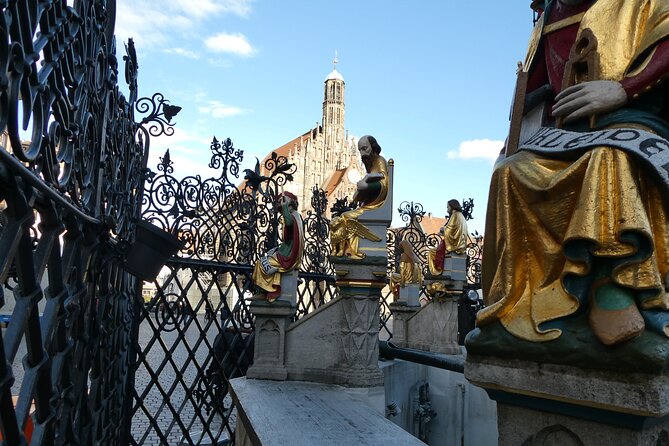
Your walk begins around Der Schöne Brunnen, a landmark tied to late 14th-century Nuremberg. This fountain is not just pretty to glance at; it is a Gothic architecture statement, and it sets the tone for how the city treats art and myth as part of everyday life.
You also learn that this is tied to one of Nuremberg’s best-known legends. That blend—visual beauty plus story—helps you understand why locals still point visitors toward this spot first. Even if you only spend about ten minutes here, the guide uses the fountain as a launchpad for what comes next.
Practical tip: take one good photo, then listen. It’s easy to get distracted by the details, but the guide’s story gives you a better reason to notice the architecture afterward.
St. Sebaldus Church: why religion shaped the city
A short walk brings you to St. Sebaldus Church, one of the city’s most important churches. Expect the focus to be less about quick postcard angles and more about how religion, the Reformation, and Nuremberg’s cultural life tangled together.
This stop is a Romanesque-Gothic masterpiece, and it gives the tour a more serious backbone. The guide connects what you see to the bigger historical shifts, and you also hear how Nuremberg’s musicians fit into the story of the city’s identity.
The time here is brief, roughly ten minutes, so you will not linger like you would on a dedicated church visit. But you will walk away with a mental map of what to look for next time, because the guide points out the parts that matter.
Hauptmarkt: the central square where Nuremberg shows off
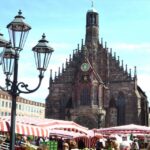
Next up is Hauptmarkt, the old town’s central square and one of the easiest places to re-orient yourself later. This is where you start connecting the dots between key landmarks—especially the major fountains and the grand church presence around the square.
The tour highlights the Beautiful Fountain and the Frauenkirche, and it also brings attention to the Männleinslaufen (one of those Nuremberg traditions that people love to brag about). Even if you know nothing about it today, the guide’s explanation makes it feel like a local event, not a trivia fact.
If you want a smooth photo stop, arrive with your camera ready but do not rush. Ten minutes here goes fast if you keep walking with your eyes locked on the crowd. Let the guide tell you what to focus on, then snap.
Kaiserburg Castle: the triple fortress and the view payoff
This is the stop that turns a walk into an experience. You reach Kaiserburg Nuremberg, the landmark that sits above the city like a crown. The guide explains it as a triple-castle complex—Imperial Castle, Burggrafenburg, and imperial city buildings—so you understand it as more than one fortress.
The big practical reality: this section involves a hill climb. Reviews and real-world street logic line up here—cobblestones plus steep grade means you should wear shoes with grip. It is not usually a long distance, but it is a noticeable climb, and the pace depends on the group.
The reward is at the top area: you get a higher vantage point over Nuremberg, plus time for photos and a breather once you’re there. Many guides build in a short pause so you can grab a drink or stretch your legs before heading back down.
If you have limited mobility, consider whether you want to wait at a lower point and rejoin later. The tour includes enough walking that “just one steep stretch” can become the deciding factor.
Albrecht Dürer’s House: the medieval home behind famous art
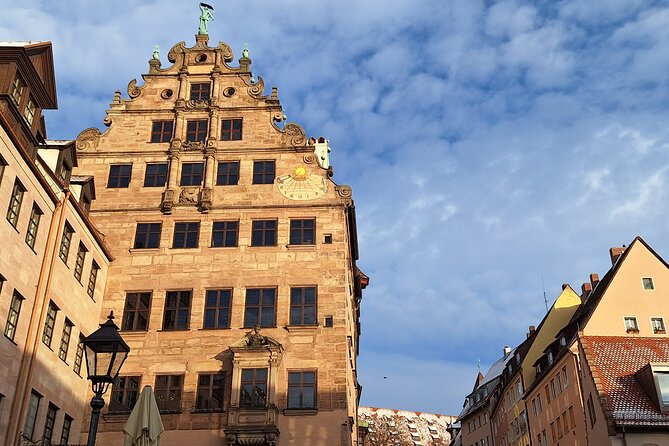
Then the tour shifts into a different kind of Nuremberg pride: creativity and craftsmanship. At the Albrecht Dürer House, you learn that the building dates to around 1420 and later took on its current look after modernization around 1500.
The story centers on Dürer himself. From 1509 until his death in 1528, the house served as his home and work place. That timeline gives you a sense of how the city supported major artists—this was not just a place for trade and fortifications.
You also get a short, focused window to connect the architecture to the person. Even if you are not a deep art history reader, this stop helps you see Nuremberg as a place where ideas were made physical in buildings and workshops.
Tiergartnertorturm and the defensive DNA of the city
Next you visit Tiergartnertorturm, a defensive tower from the 14th century that towers over one of Nuremberg’s most beautiful squares. This is where the city stops being mostly religious and artistic and becomes practical again—built to protect, built to last.
The guide uses the tower to explain how fortifications worked in a medieval city: structures like this were not just scenic; they were part of how power stayed in place. Even if you spend only about ten minutes here, it changes how you read the streets as you walk them.
Look up while the guide talks. Towers can be visually obvious from a distance, but you miss a lot if you keep your eyes on the pavement.
Weissgerbergasse: craftsmen’s street and the scars of WWII
One of the most memorable stretches is Weissgerbergasse, a famous craftsmen’s street in medieval Nuremberg. The tour frames it as a must-see because it shows how trades shaped the city’s everyday texture—not just the official monuments.
What makes this stop especially meaningful is the way the guide handles World War II. You learn about the destruction and the reconstruction of the old town, and you see how modern preservation choices reflect a city trying to rebuild its identity.
This is one of those sections where your understanding grows as you move. You start to notice how narrow streets and building lines create a feeling of continuity—then the reconstruction story gives that continuity a more complicated, human meaning.
Altstadt wandering: where the tour turns into your personal route
The walk then broadens into the Altstadt experience—moving through the old town with a local’s sense of what to notice. The focus stays on history and legends, but you also get practical recommendations for the rest of your stay.
You pass major anchors like the main market area and churches including St. Sebald and St. Lorenz. At the same time, the tour is not just about the famous spots; you are also steered toward quieter corners such as castle gardens and even an executioner’s house, depending on the flow of the day.
The value of this segment is that you leave with a mental shortlist. After a 2.5-hour introduction, you know where to go for a second round on your own—whether that means revisiting a square at a different hour or taking a slower look at something that felt important during the walk.
Price and value: why this feels like a smart deal
At around $3.63 per person, this tour is priced in a way that signals strong value—especially for a guided walk that covers multiple major landmarks, in English, with a local born and raised in Nuremberg. In practice, it feels like more of a low-cost entry into a guided introduction than a pricey, attraction-ticketed experience.
The best part is what you get for that money: route guidance (so you save time), interpretation (so you understand what you see), and a story thread that connects medieval glory with later rebuilding. The tour also includes entry as free at the listed stops, so you are not spending extra during the walk.
If you want one first-day activity that makes your whole trip easier, this checks that box. It turns Nuremberg from a list of sites into a place with reasons behind it.
What kind of traveler this suits best
This tour is ideal if you:
- Want a high-yield overview of Nuremberg’s old town in about 2.5 hours
- Like history that includes both impressive achievements and difficult chapters, handled with care
- Prefer a guided route over self-guided map work
It may be less ideal if you:
- Struggle with steep hills or long uphill walking on cobblestones
- Need long sits at each stop (this tour keeps stops fairly short so you can see more in less time)
My verdict: should you book this Nuremberg walking tour?
If you want an easy way to get oriented and actually understand what you are looking at, I think this is a strong booking. You get a local guide, smart pacing, and a route that hits the big emotional beats of Nuremberg: Gothic landmark moments, castle views, and wartime reconstruction told respectfully.
Just be honest with yourself about the hills. Wear good shoes, plan to take your time on the climb, and you’ll get a tour that makes the city feel more real long after you finish walking.
FAQ
How long is the walking tour in Nuremberg?
It lasts about 2 hours 30 minutes (approx.).
What language is the tour offered in?
The tour is offered in English.
Where do I meet for the Nuremberg walking tour?
The meeting point is at Schöner Brunnen / Hauptmarkt, 90403 Nürnberg, Germany.
What time does the tour start?
The start time listed is 11:30 am.
Does the tour include admission tickets for the stops?
The tour lists admission as free for the sights included in the walk.
Is there a limit on group size?
Yes. The tour has a maximum of 50 travelers.
What is the cancellation policy?
You can cancel for a full refund up to 24 hours before the experience’s start time. If you cancel later than that, the amount paid is not refunded.