REVIEW · NUREMBERG
Nuremberg: Walking Tour of Former Nazi Party Rally Grounds
Book on GetYourGuide →Operated by Geschichte Für Alle e.V. · Bookable on GetYourGuide
Nuremberg’s stones tell a chilling, planned story. This guided 2-hour walk takes you across the former Nazi Party rally grounds, from the Dokumentationszentrum Reichsparteitagsgelände area to Zeppelin Field, so you can see how the Nazis used architecture, axes, and crowds as propaganda tools. I especially like the way the guide uses old photos (you’ll get a picture folder) to show what the structures looked like when they were new, and how the tour keeps the focus on what these spaces were meant to do to people—guide names like Frank and Thurston have been praised for doing that clearly and without drama.
There’s one real consideration: it’s a walking tour of a huge site, and in winter the light can disappear before you finish the best photo angles. One common fix is simple—bring good footwear and choose a start time that gives you daylight for Zeppelin Field.
Key points worth planning for
- Great Road (Große Straße): the north–south axis that structured the whole spectacle
- Congress Hall scale: you’ll confront the “ruins” feel, including the 40-meter standing height detail
- Zeppelin Field (Zeppelinfeld): a mass-audience stage with the scale logic made visible
- Photo-based explanation: guides use period images so you can picture what’s gone
- Discussion about today’s use of the site: you’ll hear how people handle this history now
- Ends at the Zeppelin Field: not just a quick stop—this is the tour’s big finish
In This Review
- Why This Walk Hits Harder Than Usual Sightseeing
- Meeting at Dokumentationszentrum: Get Your Bearings Fast
- Kongresshalle and the Shock of the 40-Meter Scale
- Große Straße (The Great Road): When a Straight Line Becomes a Script
- Zeppelin Field: From Ruins to the Idea of 200,000 People
- How the Tour Treats Propaganda Without Softening It
- Photo Folder + On-Your-Feet Context: Why It Works in 2 Hours
- Weather, Timing, and Comfort Tips That Actually Matter
- Who Should Book This Tour
- Should You Book It?
- FAQ
- How long is the tour?
- What does it cost?
- Where do I meet the guide?
- What language is the tour offered in?
- Does the tour run in bad weather?
- Where does the tour finish?
- Is the tour suitable for people with mobility impairments?
Why This Walk Hits Harder Than Usual Sightseeing
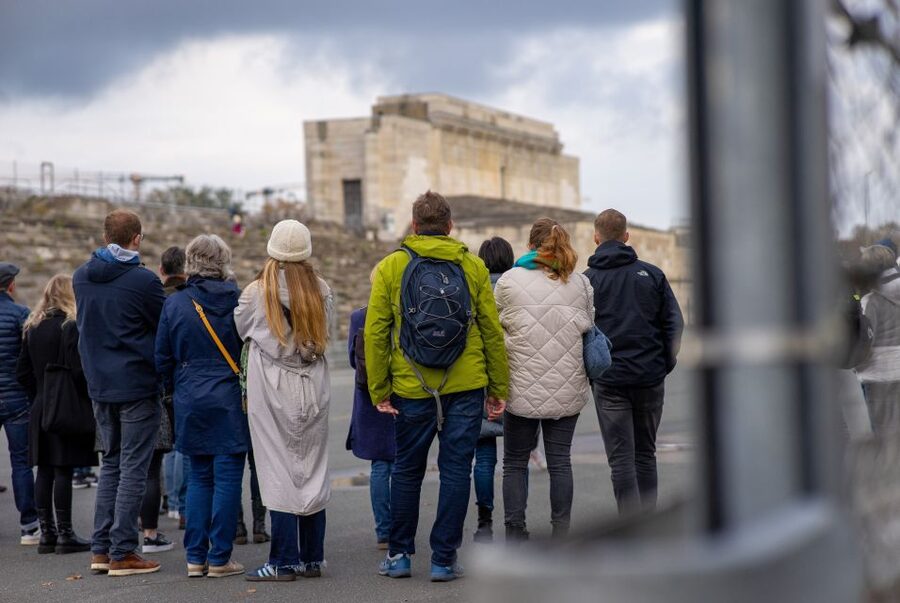
The former rally grounds in Nuremberg don’t feel like a set of museum rooms. They feel like a plan. That’s what makes this tour so effective: it turns big, intimidating ruins and repurposed buildings into a clear story about staging power.
I like that the focus isn’t just dates and names. You spend time linking architecture to behavior—how a processional route, a massive hall, and a stadium-like field could organize attention, emotion, and belonging. And you’re not asked to “admire” anything. You’re shown what was built, why it was built, and what it enabled.
Also, the guides get praised for explaining in an unbiased, respectful way. Names like Sylvia and Anita have popped up with comments about clear speaking and careful handling of a difficult subject. That matters here. You want a guide who can tell the story plainly without turning it into shock theater.
Meeting at Dokumentationszentrum: Get Your Bearings Fast
Most starts begin at the Dokumentationszentrum Reichsparteitagsgelände area, by the entrance stairs at Bayernstraße 110. The guide will be holding a picture folder and wearing a name tag for Geschichte Für Alle e.V. This helps you find them quickly, even if the site looks confusing at first.
Depending on the time, there may be another starting option at Kongresshalle. So check your exact start location before you head out. That small detail saves time and frustration, especially if you arrive hungry and the walking starts right away.
Right away, the tour sets the tone: this isn’t about “dark tourism” for thrills. It’s about understanding the National Socialist Party’s use of buildings and public events for propaganda. You also get reminders about the concentration camp system and the mass-scale propaganda shows that connected the regime to large crowds.
If you’re visiting Nuremberg for the justice side of history—along with the documentation and memorial spaces—this is the piece that shows how the regime tried to make itself look inevitable.
You can also read our reviews of more walking tours in Nuremberg

Kongresshalle and the Shock of the 40-Meter Scale
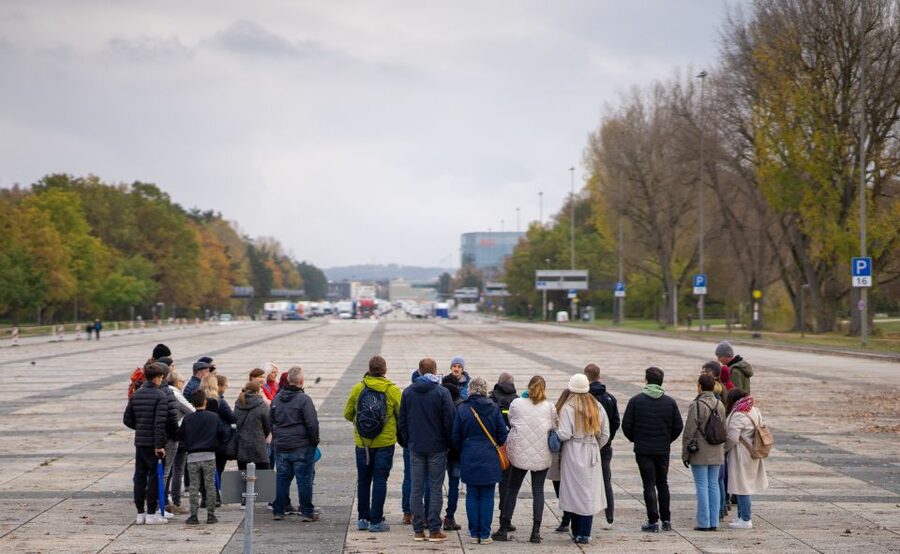
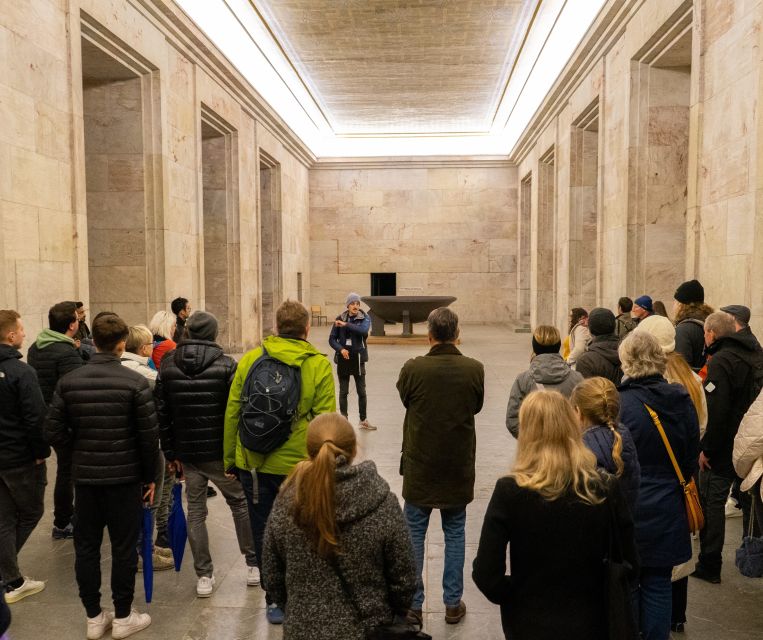
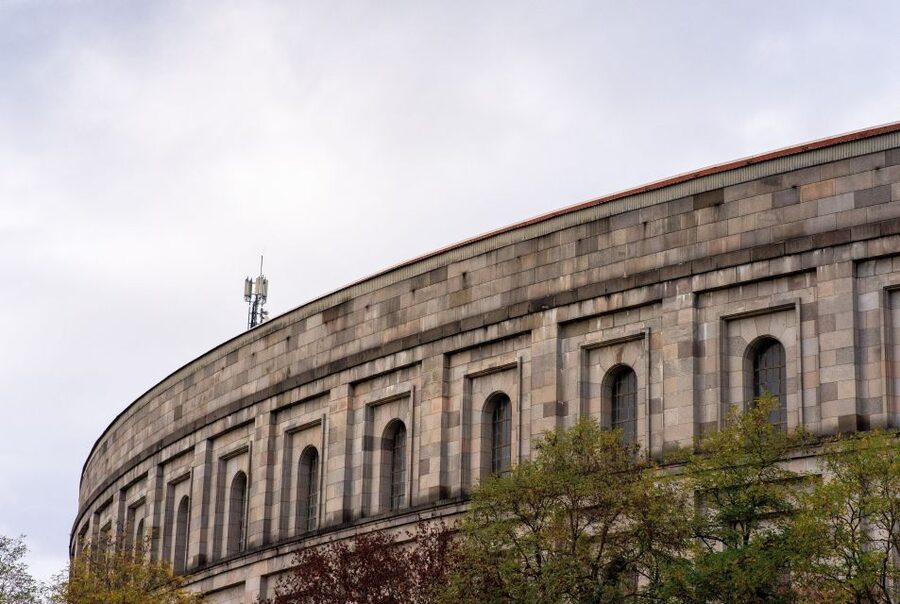
A key stop is Kongresshalle (Congress Hall). Even in its ruined state, the scale is hard to wrap your head around. The tour calls out the 40-meter height detail for what remains, and that number lands differently when you’re standing near it rather than reading it.
Here’s what I’d watch for during your walk: the guide doesn’t treat Kongresshalle like a generic monument. You’re shown how the space functioned as part of the Party’s event machine—how a grand structure could amplify authority, create awe, and turn politics into theater.
One reason this stop feels worth the money (it’s just $15 for a 2-hour guide-led walk) is that you’re getting interpretation. The buildings are big, yes. But the guide helps you understand why “big” was the point. They explain the basic features of the Nazi view of history and how architecture supported that worldview.
Practical note: if you’re sensitive to intense topics, this is also where you want your guide’s pacing to feel right. Based on guide feedback, the better tours keep a steady, careful rhythm rather than rushing past the moral weight of the story.
Große Straße (The Great Road): When a Straight Line Becomes a Script
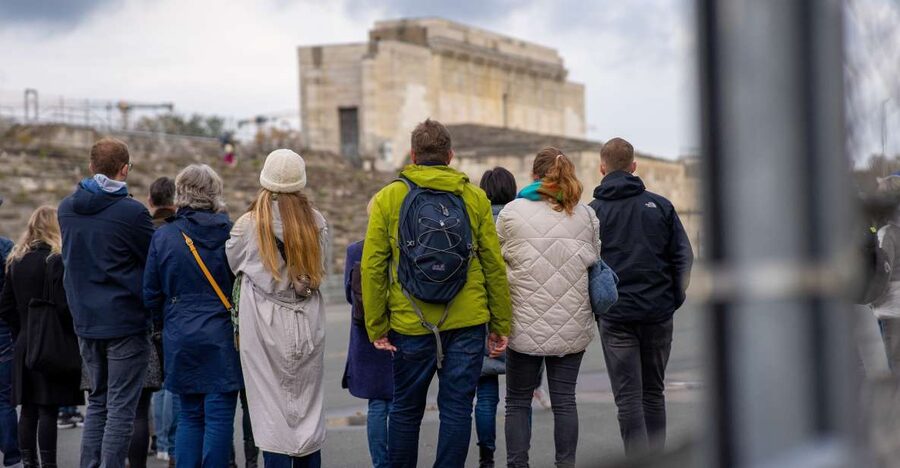
Then you follow The Great Road (Große Straße), the north–south axis that leads you toward Zeppelin Field. A straight line sounds boring on a map. On the ground, you understand the trick: it creates forced movement, controlled sightlines, and a sense that the crowd is marching into destiny.
This part of the tour matters because it teaches you to read space like a message. The route is not random walking paths; it’s an intentional pathway designed to choreograph arrival and attention. The guide connects that staging to what happened at rally events—how the Nazis used mass gatherings as a propaganda tool.
I also like that the tour ties this to the “function and effect” of National Socialist architecture rather than just pointing at facts. It’s the difference between saying what’s there and showing what it was doing to people. Even if you know the history already, this geometry-based explanation gives you a new way to understand how the spectacle was engineered.
Zeppelin Field: From Ruins to the Idea of 200,000 People
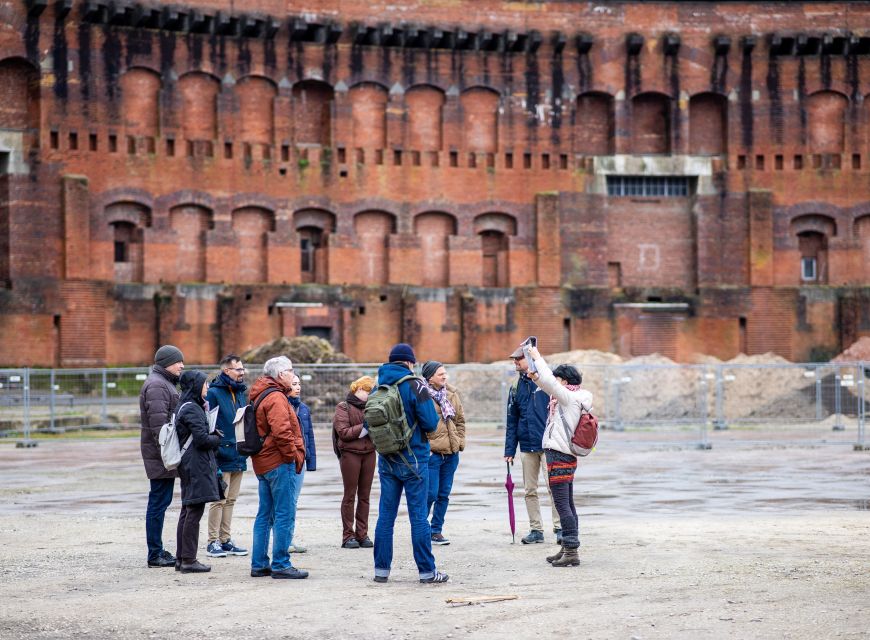
The highlight stop is Zeppelinfeld (Zeppelin Field). It’s massive, and it forces you to confront what “scale for show” means.
The tour finishes at Zeppelin Field, and the description specifically mentions the Zeppelin Tribune, designed to hold up to 200,000 people. Even if you can’t fully picture that number while you’re walking, you can feel the logic of the design: open space for crowds, viewpoints for the performers, and an environment that makes public events feel unavoidable.
When you reach Zeppelin Field, listen for how your guide explains the staging of rally events. The best guides connect the physical layout to the psychology of spectacle—how the regime used the promise of unity, movement, and destiny to build influence.
One timing warning comes straight from guide feedback: in winter, the tour can run into darkness before you get the best view angles. If you’re choosing between start times, pick one that keeps Zeppelin Field in daylight. Your camera (and your brain) will thank you.
How the Tour Treats Propaganda Without Softening It
A big reason this tour earns strong ratings is how it handles a sensitive subject. The tour isn’t just “here are Nazi buildings.” It’s “here’s how the regime tried to build support through public theater.”
You’ll learn about:
- the National Socialist Party and how it framed history in its own terms
- propaganda rallies and their mass-scale effect
- the “other side” of the concentration camp system and what those rallies meant in the broader system of repression
- the current discussion about the site’s use today
That last point is important for modern visitors. These buildings aren’t neutral. They’re part of a memory struggle: what do you do with architecture built to serve atrocity? A guided tour that mentions present-day debate helps you place the grounds inside today’s moral and civic conversations, not just within the past.
And yes, you’ll see repurposed elements along the way. The best tours don’t let that make the story feel less terrible. Guides like Bettina and Frank have been praised for repeatedly bringing attention back to what happened—so you don’t get lost in the size of the structures.
Photo Folder + On-Your-Feet Context: Why It Works in 2 Hours
This is a focused, 2-hour format, and that’s part of the value. You’re not trying to “cover everything” in Nuremberg. You’re getting a guided walk that links a few critical points—Congress Hall, Great Road, Zeppelin Field—into one clear chain of cause and effect.
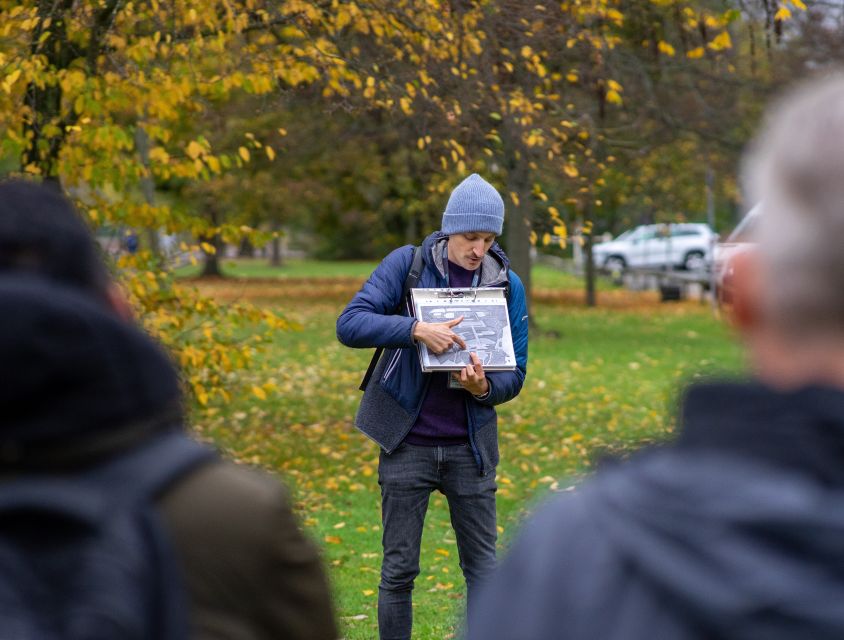
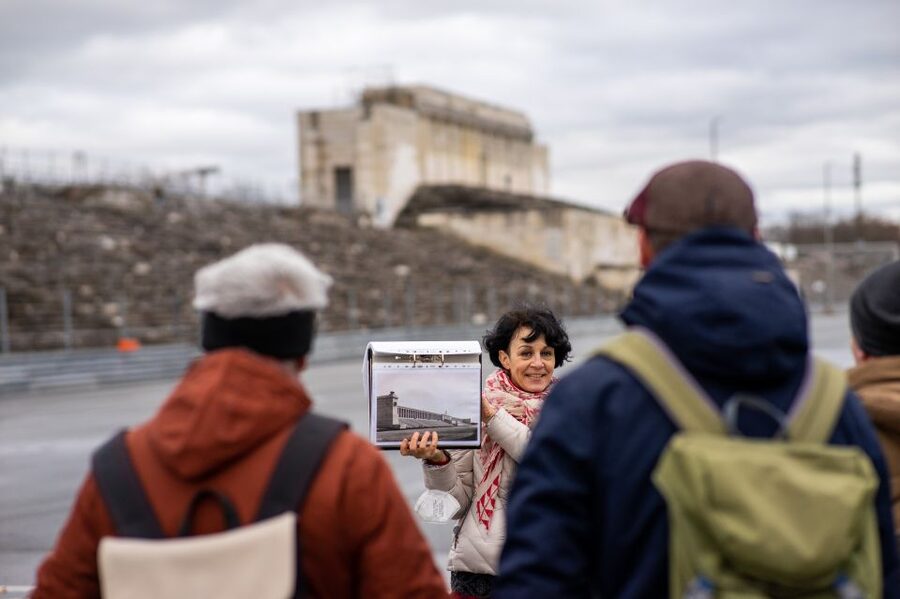
One practical detail: your guide carries a picture folder and uses it to show how the buildings looked when they were built. That matters more than people expect. When you’re staring at ruins or altered spaces, it’s hard to imagine the former completeness. Period photos let you “reconstruct” the spectacle quickly, so the architecture’s purpose becomes obvious.
Also, the pacing seems built for the real world. The walk is steady, but the group isn’t moving so fast that you lose context. Several comments mention that the tour pace and explanation made the time fly—two hours is enough to understand the layout without turning it into a lecture marathon.
Weather, Timing, and Comfort Tips That Actually Matter
The tour runs rain or shine. That’s good news and bad news: good because it doesn’t cancel easily, bad because you should dress for wet ground and wind.
Here’s what I’d do before you go:
- Wear shoes with solid grip. The site is large, and you’ll walk more than you expect.
- Bring a layer. Bavarian weather can shift fast, and winter darkness comes early.
- Plan your start time so the Zeppelin Field part is still visible. If you love photos, this is the moment you don’t want to miss.
If you’re doing this alongside other Nuremberg stops, give yourself a little buffer after. Your head will be busy processing the architecture and the meaning behind it, even if your feet are ready to sit down.
One more constraint: it’s not suitable for people with mobility impairments. The route is on foot across large grounds, so it’s worth planning an alternative if accessibility is a factor.
Who Should Book This Tour
This tour is ideal if you:
- want a guided explanation of how propaganda used architecture and crowds
- like history that connects physical space to human behavior
- want a focused 2-hour experience that highlights the rally grounds’ major nodes
It’s also a strong fit for history teachers, students, and anyone who has read about the Nazi era but still wants the “how did it work” part made visible.
If you prefer purely contemplative visits with minimal walking, you might find the pace and length less comfortable. But if you’re willing to move through the grounds and get interpretation, this is one of the best ways to make sense of what you’re seeing.
Should You Book It?
Yes, if you want the rally grounds to make sense as a system—not just as a collection of grim leftovers. The value is strong: a 2-hour guided tour for $15 is usually cheaper than the time you’d spend piecing the story together yourself, and the picture-folder approach helps you understand the spaces quickly.
Book it particularly if you care about:
- the Great Road axis
- Congress Hall’s sheer scale, including that 40-meter detail
- Zeppelin Field and the idea of a crowd designed for 200,000
I’d only think twice if you’re not comfortable with lots of walking or if you’ll be arriving when darkness is likely to swallow the best views. If that’s your situation, adjust your timing and footwear plan, and you’ll get much more out of the experience.
FAQ
How long is the tour?
The tour lasts 2 hours.
What does it cost?
It costs $15 per person.
Where do I meet the guide?
Meet the guide next to the entrance stairs to the Dokumentationszentrum Reichsparteitagsgelände at Bayernstraße 110. The guide will be holding a picture folder and wearing a name tag for Geschichte Für Alle e.V.
What language is the tour offered in?
The tour is offered in German and English.
Does the tour run in bad weather?
Yes, the tour takes place rain or shine.
Where does the tour finish?
The tour finishes at Zeppelinfeld (Zeppelin Field).
Is the tour suitable for people with mobility impairments?
No, it is not suitable for people with mobility impairments.