REVIEW · PHILADELPHIA
The Constitutional Walking Tour of Philadelphia
Book on Viator →Operated by The Constitutional Guided Walking Tour · Bookable on Viator
Seeing Philadelphia’s Constitution-era landmarks in one brisk loop is oddly satisfying. I love that this tour links 20+ historic stops into a clear story, and that the guides I’ve heard about (like PJ and Connor) keep it friendly and question-friendly. The main catch: it’s an outdoor orientation, so you won’t tour the interiors during the 75 minutes (and that’s true even for famous targets like Independence Hall and the Liberty Bell).
The route is short—about 1.25 miles—and timed in quick bites, which makes it realistic even on a busy day. It runs rain or shine, and the meeting point is right outside the National Constitution Center, so you can get started without hunting for clues. One practical thing to consider: traffic, wind, and street noise can make hearing tougher, so plan for a fast walk with a lot of outside viewing.
In This Review
- Key points to know before you book
- Why Philadelphia’s Founding-Era Walk Works So Well
- Meeting at the National Constitution Center: What to Expect from Step One
- Stop-by-Stop: The 20+ Sites That Turn Into One Coherent Story
- National Constitution Center to Independence Hall: the core of the founding
- Congress Hall, banks, and courtrooms: power in multiple forms
- Carpenters’ Hall, military role, and Franklin Court
- Churches, a sewing icon, a Quaker meeting house, and a burial ground
- The Value Equation: $30 for Orientation, Not Entry Fees
- Practical Tips So You Don’t Miss the Story
- Who Should Book This Constitutional Walking Tour?
- Should You Book This Constitutional Walking Tour?
- FAQ
- How long is the Constitutional Walking Tour?
- What does the $30 price include?
- Is the tour in English?
- Where do I meet the tour guide?
- Will we go inside places like Independence Hall and the Liberty Bell?
- Does the tour run in bad weather?
- How far do we walk?
- Is there a group size limit?
- Can I cancel for a full refund?
Key points to know before you book
- 20+ sites in 75 minutes: you get the big map of Independence National Historical Park fast.
- Outdoor-only focus: great for orientation, not a substitute for timed-entry museum hours.
- Small group (max 40): easier to hear, easier to ask questions.
- Rain or shine: you’re not waiting out the weather to learn the story.
- Guide styles vary by person: most are engaging and story-forward, but it’s still an informational walking tour.
Why Philadelphia’s Founding-Era Walk Works So Well
Philadelphia is the kind of city where the fastest way to understand the past is… walking it. This tour keeps you in the tight cluster around Independence National Historical Park, so the “big ideas” of the American founding don’t feel like random facts. Instead, you see how law, money, government, religion, and even printing/identity tie together across a few blocks.
The price point matters here. At $30 per person for about 75 minutes, you’re paying for guided orientation, not museum admissions. Since admission into many sites costs extra and often involves security lines or timed entry, this format can actually be good value: you leave knowing what to target next.
You can also read our reviews of more walking tours in Philadelphia


Meeting at the National Constitution Center: What to Expect from Step One
You meet at National Constitution Center, 525 Arch St. Check in about 15 minutes early, and you’ll find the group outside near the main entrance by large stone benches. You’ll get a mobile ticket, and the tour runs in English, which is helpful if you’re juggling multiple stops that day.
This is a guided, weather-proof plan. The tour operates rain or shine, so wear shoes that handle wet pavement and bring a light rain layer if skies look iffy. Reviews also suggest it’s a brisk walk—there are stopping points to catch your breath, but it’s not a sit-and-stare lecture.
A final practical note: with so many stops close together, the tour works best if you show up ready to pay attention for short stretches. Think of it as getting your bearings fast, then doing deeper museum time later.
Stop-by-Stop: The 20+ Sites That Turn Into One Coherent Story
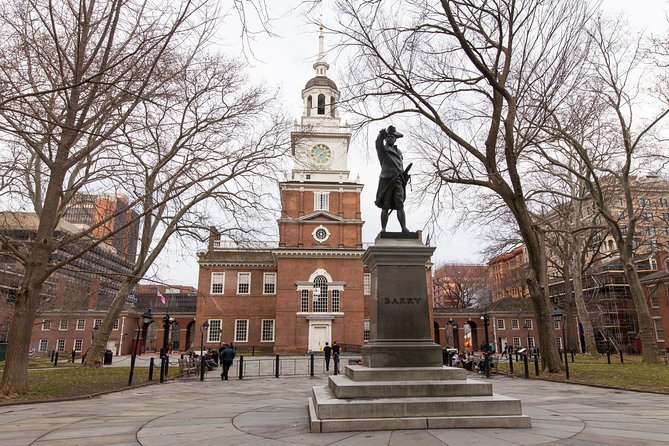
National Constitution Center to Independence Hall: the core of the founding
The tour starts at the National Constitution Center, where you get the orientation hook—what the Constitution-era moment meant and why Philadelphia became the stage. It’s a smart opener because it frames everything you’ll see next: government isn’t abstract here; it’s buildings, decisions, and people acting under pressure.
From there you move to the commemorated President’s House. This open-air site marks the predecessor to the White House, where Presidents George Washington and John Adams lived while Philadelphia served as the U.S. capital from 1790–1800. Even though you’re outside, the idea lands: leadership wasn’t yet “fixed” in Washington, D.C. the way we think of today.
Next is Declaration House (Graff House), tied to the time Thomas Jefferson lived here when he wrote the Declaration of Independence. This stop works well if you like connecting famous documents to everyday real estate. The tour doesn’t treat it like a shrine—it helps you imagine the work and the setting.
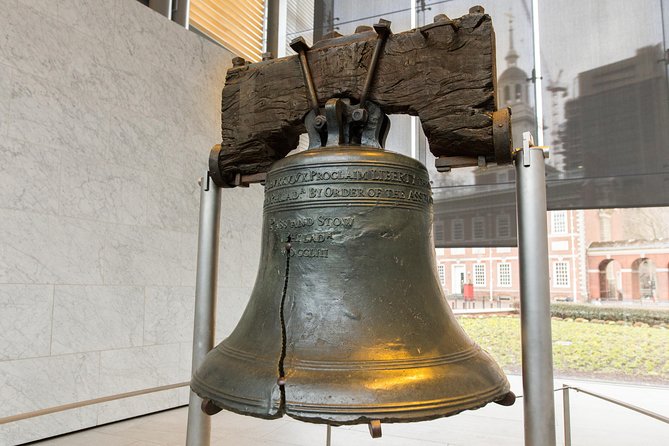
Then you reach the Liberty Bell Center, one of America’s clearest visual symbols of freedom. You don’t need a long explanation to understand why people line up for it; the tour just gives you context so your later visit feels less like a photo stop and more like a story you already know.
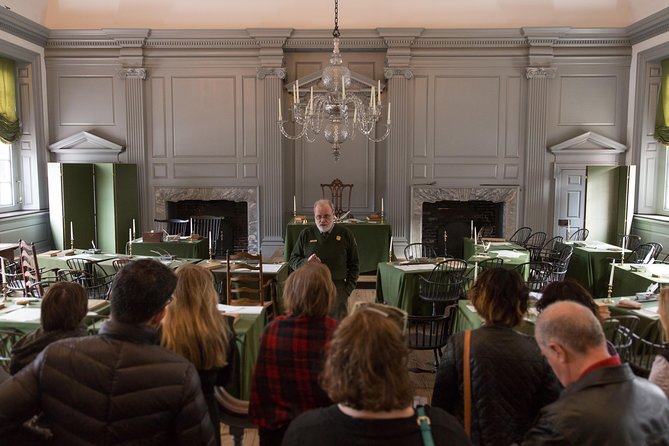
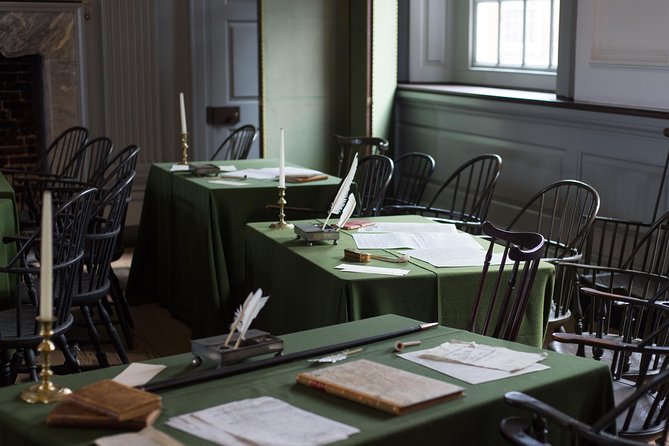
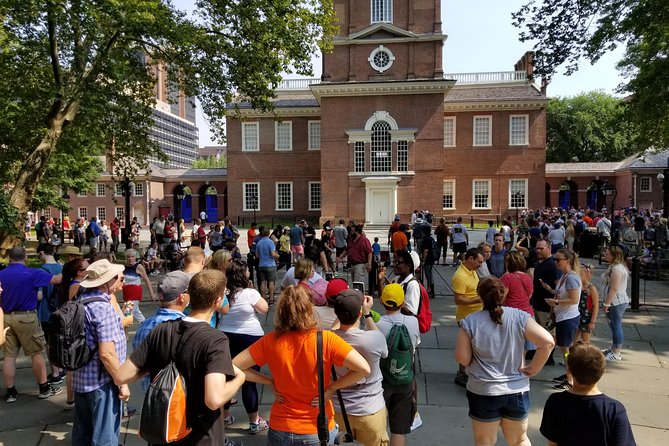
Finally, you arrive at Independence Hall, the birthplace of America. The building itself is the lesson: built in 1732 as the Pennsylvania State House, it later hosted the moment when the United States found its governmental backbone. The tour focuses on what’s outside and around the site—so if you want interior access, you’ll need to plan a separate visit.
Congress Hall, banks, and courtrooms: power in multiple forms
After the founding documents and symbols, the walk shifts toward institutions—who ran things, where decisions happened, and how the country funded itself.
You’ll stop at Congress Hall, built between 1787 and 1789 as the Philadelphia County Court House, and later used as the United States Capitol and the meeting place of Congress from 1790 to 1800. It’s a great reminder that the architecture of power can change roles over time.
Next up is Old City Hall, the former home to the U.S. Supreme Court. This is where the tour’s “big ideas” feel grounded. Even a brief stop helps you picture how a young nation tested legal authority in a real place.
Then you see The Signer, a statue inspired by George Clymer. It’s easy to walk past public art on your own, but on this tour it becomes part of the narrative: founding wasn’t just paperwork—it was public identity and civic symbolism.
The route continues to American Philosophical Society Museum, described as the oldest scholarly society in the U.S. That detail is more than trivia. It helps you understand the founders weren’t only political actors; they were also builders of knowledge systems.
After that comes Library Hall, identified as the nation’s first public library and the former Library of Congress. Seeing a library in a “government corridor” is a helpful mental shift. In early America, public learning wasn’t an afterthought.
Now for the money stops. You’ll pass the Second Bank of the United States (today a portrait gallery) and then the First Bank of the United States, tied to the first great constitutional debate. This is one of the most valuable parts of the tour for many people, because you start to feel that constitutional arguments weren’t only about rights—they were also about budgets, stability, and the rules behind finance.
The Second Bank stop gives you the “infrastructure” side of the story, while the First Bank stop points you toward how contested those decisions were.
Carpenters’ Hall, military role, and Franklin Court
If the first half gives you government and symbols, this middle section shows “who made it work” and how the country organized itself beyond Congress.
At Carpenters’ Hall, you’ll learn it’s tied to the birthplace of the American identity. It’s a reminder that political change needed meetings, labor networks, and organized groups—not just leaders in formal chambers.
Then you’ll see New Hall Military Museum, which interprets the role of the military in early U.S. history. This stop is especially useful if you’ve mostly thought about documents and speeches. It nudges you toward the reality that ideas traveled with forces and planning.
Back to finance: the walk returns to the First Bank of the United States stop, again highlighting the constitutional debate sparked by the bank’s existence and role. If you care about why the system was designed the way it was, this part of the route helps you stop treating the Constitution as a single moment.
Finally, you end up at Franklin Court, known for Ben Franklin’s home and the only Colonial-themed post office. For me, this is where the tour becomes fun instead of strictly formal. It’s a quick stop, but it adds a “daily life” texture to the big political story.
Churches, a sewing icon, a Quaker meeting house, and a burial ground
The last stretch turns from government to community—religion, civic groups, and the people who lived with the founding era around them.
You’ll visit Christ Church, an active parish since 1695, often called the Nation’s Church. It’s labeled this way for a reason: in early Philadelphia, religious spaces were woven into public life. You get a sense of continuity too, because the church didn’t just become historic once—it kept functioning.
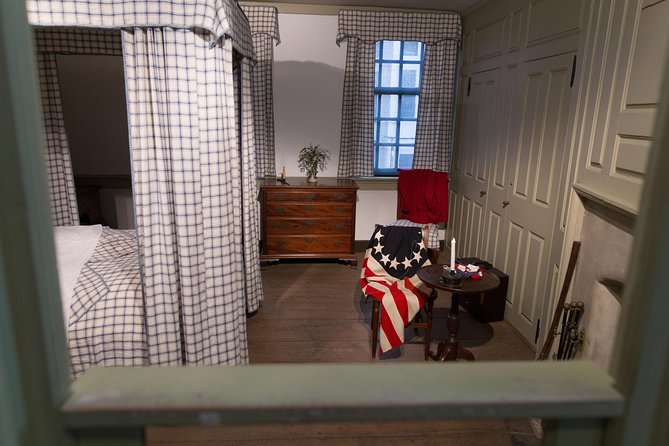
Next is Betsy Ross House, linked to the story of Betsy Ross sewing the first Stars and Stripes. Even if you’ve heard the legend before, this stop works as a place-based reminder that national identity was stitched together by people, not only declared by leaders.
Then you’ll see the Arch Street Meeting House, home to the Society of Friends (Quakers). This is a strong contrast stop. It broadens the founding-era story beyond one political lane and shows you religious and civic communities had their own ways of shaping public values.
The tour concludes at Christ Church Burial Ground, where Benjamin Franklin is described as being buried, along with other founding figures resting there. Ending at a burial ground sounds heavy for a walking tour, but it lands as a human finale: history didn’t only happen on paper; it ended up in real bodies, real neighborhoods, and real memorials.
The Value Equation: $30 for Orientation, Not Entry Fees
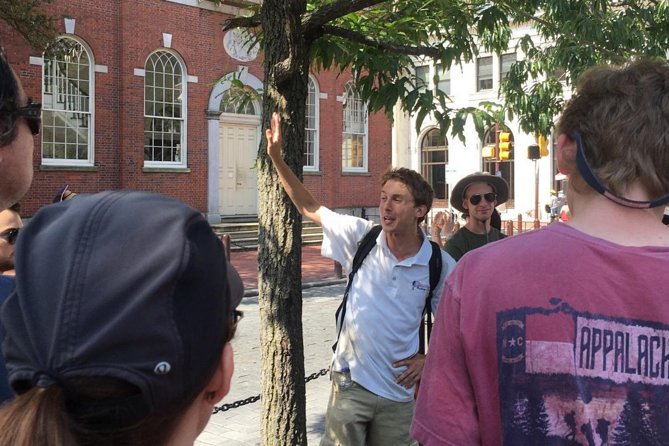
Here’s how I think about this tour’s value. You’re paying for a guided route that covers a tight cluster of key sites and gives you a roadmap for your next steps. The tour itself is about 75 minutes with multiple short stops, totaling around 1.25 miles, which makes it efficient.
But you should plan your expectations on admissions. The tour does not include food or drinks, and it also doesn’t include admission to historic sites. Many of the big names you see—like Liberty Bell and Independence Hall—often involve security screening, possible lines, or timed access when you want to go inside. This is why the orientation approach can save you money and time: you’ll know where to spend your limited visit energy next.
Practical Tips So You Don’t Miss the Story
- Bring walking shoes. The pacing is brisk, and you’ll be on city pavement for most of the time.
- Pack water. Even in cooler weather, you’ll work up a little energy on a one-mile-plus loop.
- Wear a hat or plan for shade if it’s sunny. One review advice was basically: light layers, and be ready for weather.
- If it’s windy or traffic noise is loud, position yourself toward the guide when you can. A few people noted hearing can be tricky outdoors.
- If you want interior time, you’ll need to plan it separately after the tour. This walking experience is built for outside seeing and connecting the dots.
Who Should Book This Constitutional Walking Tour?
Book it if you fit one of these profiles:
- You’re seeing Philadelphia for the first time and want the fastest way to understand Independence National Historical Park.
- You like your history delivered as a street-level story—documents, leaders, institutions, and symbols tied to specific stops.
- You’re traveling with kids or mixed ages and want something that stays structured without being museum-only.
- You want a low-stress activity that works in bad weather.
You might want a different plan if:
- You only want inside access to the major sites during this one time window.
- Your schedule is super tight and you can’t handle walking plus brief stops.
- You need a long, slow pace with lots of time in each building.
Should You Book This Constitutional Walking Tour?
Yes, if you want a smart, efficient way to get your bearings in Philadelphia’s Founding zone. At $30 and about 75 minutes, it’s a solid deal for the amount of ground you cover and the way the route connects government, symbols, money, and community. Just go in knowing it’s primarily an outdoor orientation, not a timed-entry replacement—and you’ll likely leave with a better plan for what to see next.
FAQ
How long is the Constitutional Walking Tour?
It runs about 1 hour 15 minutes (approximately 75 minutes).
What does the $30 price include?
The tour includes the 75-minute guided walking experience through the historic area. It does not include food, drinks, or admission to historic sites.
Is the tour in English?
Yes, the tour is offered in English.
Where do I meet the tour guide?
You meet at the National Constitution Center, 525 Arch St, Philadelphia, PA 19106, outside the main entrance by 3 large stone benches. Check in about 15 minutes early.
Will we go inside places like Independence Hall and the Liberty Bell?
This is an outdoor walking tour meant as an overview and orientation. Admission to historic sites is not included, and the tour focuses on stopping and viewing the sites.
Does the tour run in bad weather?
Yes. It operates rain or shine.
How far do we walk?
The walk is about 1.25 miles.
Is there a group size limit?
The tour has a maximum of 40 travelers.
Can I cancel for a full refund?
Free cancellation is available if you cancel up to 24 hours before the experience starts. If you cancel less than 24 hours before, the amount paid is not refunded.