REVIEW · PHILADELPHIA
Philadelphia Historical Independence Walking Tour
Book on Viator →Operated by Bow Tie Tours · Bookable on Viator
Philadelphia history fits in a 90-minute walk. This is a practical, story-led route through the Independence Hall area, with 20+ landmark stops that connect the Declaration, the Constitution, and everyday decisions that shaped the new nation, all for $25. I especially liked how the guide turns big government moments into human choices, and how you get a clear sense of how Philadelphia functioned as the engine of the Revolution. One thing to plan around: some specific sites can be temporarily inaccessible depending on conditions outside anyone’s control.
I also like the stop mix that goes beyond the headline buildings. You’ll spend time around Franklin Court (including the spot where Franklin’s house stood) and you’ll hear about Betsy Ross House, so the story covers both politics and the people living inside the new system.
The logistics are easy: meet at the Philadelphia Visitor’s Center at 599 Market St near 6th and Market, grab your mobile ticket, and join a group capped at 30. If you’re sensitive to pacing, know the tour runs about 1 hour 30 minutes, and in real life it can stretch when questions fly and access changes.
In This Review
- Key things I’d zero in on before you go
- Why this 90-minute Independence walk feels worth your $25
- Meeting at Independence Visitor Center (599 Market St) without fuss
- Independence Hall: Declaration, Constitution, and why peaceful change mattered
- Franklin Court and Carpenters’ Hall: the Revolution behind the paperwork
- Congress Hall and the President’s House site: early government felt personal
- The Betsy Ross House stop and more Independence-area landmarks
- How the guides keep it lively (and handle real questions)
- Pace, comfort, and timing: what to expect while you walk
- Price and value: when $25 buys real context
- Who should book this Independence tour
- Should you book this Philadelphia Historical Independence Walking Tour?
- FAQ
- How long is the Philadelphia Historical Independence Walking Tour?
- Where does the tour start?
- What major stops are included?
- Is the tour offered in English?
- Do I get a mobile ticket?
- How large is the group?
- Are there admission fees at the listed stops?
- What should I know about weather and cancellations?
- Is a service animal allowed?
Key things I’d zero in on before you go

- A tight route with 20+ historic landmarks across the Independence area
- Independence Hall as the anchor, with explanations of the Declaration of Independence and Constitution
- Franklin Court + Benjamin Franklin’s Library Company (founded 1731), so you see thinkers and institutions, not just speeches
- The early-government set-piece stops like Carpenters’ Hall, Congress Hall, and the President’s House site
- Betsy Ross House and other founding-era locations, which adds real-life texture to the Revolution
- Small-group energy (max 30), with guides who answer questions and can tailor the walkthrough in the moment
Why this 90-minute Independence walk feels worth your $25

Philadelphia can swallow your whole day fast. This tour doesn’t. It’s built like a concentrated history sampler: walk a core loop, pause at major landmarks, and leave with a working mental map of how the United States took shape.
At $25, you’re paying for interpretation more than for entry tickets. The itinerary highlights major stops that show admission ticket free, and the real value is the guide doing the connecting work—turning names, dates, and documents into a story you can actually hold onto.
You also get the comfort of a guided pace without being stuck at one building. You’re moving through the same historic district that you’ll later explore on your own, but now it makes sense. That’s the difference between seeing buildings and understanding them.
You can also read our reviews of more walking tours in Philadelphia



Meeting at Independence Visitor Center (599 Market St) without fuss

You’ll start at the Philadelphia Visitor’s Center at 599 Market St, by 6th and Market. It’s a good meeting point because it’s central to the Independence area you’ll want to walk anyway.
Plan to arrive early enough to orient yourself inside the center and be ready when the group gathers. The tour includes a mobile ticket, and the confirmation comes at booking, so you should be set once you’re there.
One more practical note: the tour is listed as near public transportation, which matters in Philly where you can lose time to detours. If you’re pairing this with another stop later—like the Liberty Bell area or a museum nearby—starting here helps you build a sane day.
Independence Hall: Declaration, Constitution, and why peaceful change mattered

The big first stop is Independence Hall. This is the moment your brain shifts from Revolutionary War battles to government-making details.
You’ll get explanations for why Independence Hall is so central, including how the Declaration of Independence and the Constitution were debated and adopted. A guide will also connect the history to the people behind the documents—often with a focus on the father of the Constitution, and how orderly transfer of power became a point of pride in the new nation.
The format here is simple: short stop, clear talking points, then you move on. That’s helpful because the building district can feel overwhelming on your own. With a guide, the crowd noise and street motion don’t erase the meaning.
One “watch your expectations” thought: Independence Hall is a heavy hitter, so you’ll want to treat this first stop like orientation. If you’re hoping to spend hours here, save that for later. This tour is more about getting the story structure so your longer visit feels easier afterward.
Franklin Court and Carpenters’ Hall: the Revolution behind the paperwork

After Independence Hall, you head toward Franklin Court. This stop is short, but it lands an important idea: Benjamin Franklin wasn’t only a famous figure; he was part of how Philadelphia built knowledge and civic life. You’ll see the spot where Franklin’s house was, and the tour uses that to connect people, place, and purpose.
From there, Carpenters’ Hall is where the story shifts to organization. You’ll learn about Carpenters’ Hall and the First Continental Congress. This is the kind of topic that can turn into a blur if you read about it alone. On a walking tour, the guide can point to what was happening in the city at the same time, so you start to understand why meetings mattered so much.
Here’s what I like about this pairing: Franklin Court makes you think about communication and ideas. Carpenters’ Hall makes you think about decisions and coordination. Together, they show that building a country isn’t only about speeches—it’s also about where people met and how they planned.
Congress Hall and the President’s House site: early government felt personal
Two key stops in the itinerary are Congress Hall and the spot connected to the President’s House.
At Congress Hall, you’ll hear about the idea of peaceful transfer of power—the kind of civic ritual that sounds abstract until you see it framed as a real political achievement. This is a theme you’ll keep bumping into as you walk the district: the new nation wasn’t just fighting a war; it was building habits.
Then you move to the President’s House site. The guide helps you picture George Washington during his years as president and shares fun facts about the place. I like this stop because it takes the presidency out of poster-history and places it into physical geography—what the role looked like when the office was new and still being defined.
If you’re the type who enjoys practical details, this is one of the best segments. It’s easier to remember government history when it’s tied to actual locations and built-environment clues.
The Betsy Ross House stop and more Independence-area landmarks
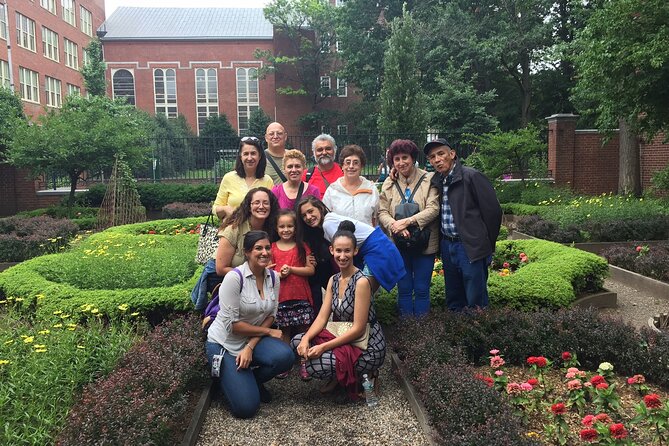
A big reason people choose this tour is that it balances the document-heavy narrative with everyday people and recognizable sites. You’ll walk through the Betsy Ross House, tied to the story of the seamstress believed to have lived there while sewing the first American flag.
After that, the itinerary includes other important landmark locations around the Independence National Historical Park area, such as:
- Declaration House, where Thomas Jefferson wrote the Declaration of Independence
- The original Supreme Court building, a reminder that the new government quickly turned from argument to institutions
- The Library Company of Philadelphia, founded in 1731 by Benjamin Franklin
- Carpenters’ Hall (already covered), plus other key meeting spaces tied to early decision-making
One helpful thing: the tour covers over 20 landmark locations, so even when a stop is brief, it feeds into the bigger pattern. You’re not just hearing about famous names; you’re getting a sense of how interconnected the sites are, and why Philly was the center of gravity for early American government.
How the guides keep it lively (and handle real questions)
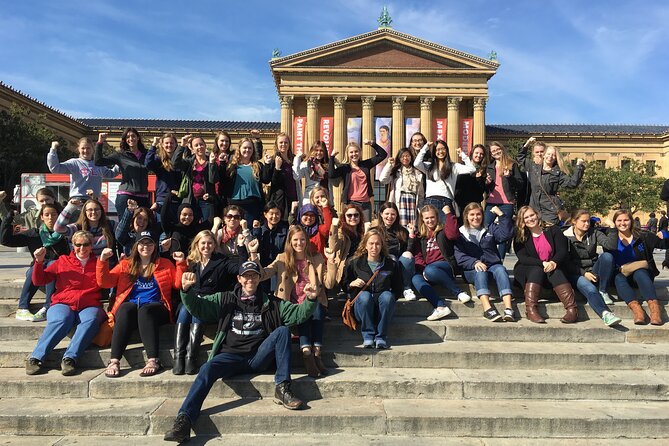
The tour is run by Bow Tie Tours, and the guide style matters a lot here. In the best moments, the tour feels like someone is translating the past into present-day logic.
I’ve seen how guides like Neil, Matt, Andrew, and Mike have a knack for answering questions without making people feel rushed. Some guides also tailor the walk in the moment—especially when the group is small or includes kids.
That flexibility is one of the most praised parts of the experience. When your group is only a handful of people, you often get more back-and-forth, and it can turn into a near-private-feeling lesson. One guide even adjusted the route off-script for a father-son pair, which is exactly what you want if you’re trying to meet specific interests like Washington’s world or the early Supreme Court.
Families also tend to do well on this tour. Guides have shown they can keep younger travelers engaged and answer questions at a pace that makes sense for multiple ages. If you have strollers, the route is described as something most travelers can do, and the group size cap keeps the crowd factor from becoming a wall.
Pace, comfort, and timing: what to expect while you walk
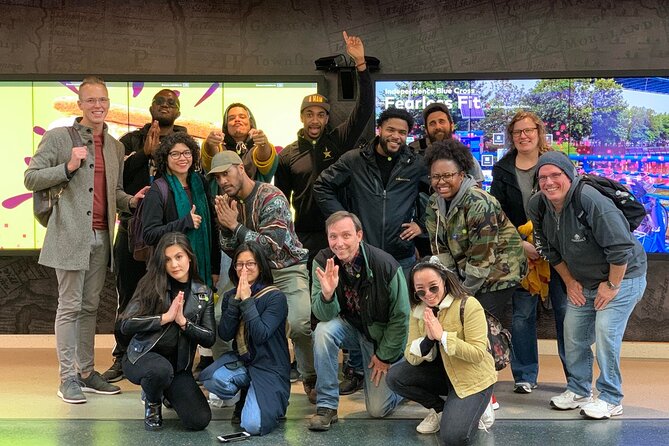
The tour runs about 1 hour 30 minutes (approx.) and it’s designed as a series of short stops. That means you’ll spend more time walking than standing around—but you’ll still get enough talking at each site to make the landmark stick in your memory.
That said, real life can change the pacing. Some sites may be inaccessible at certain times, and timing can shift if the area is affected by conditions you can’t control. If that happens, a good guide will adapt so you still get plenty to see.
For your comfort:
- Wear shoes you trust. This is a walking tour through a busy historic district.
- Give yourself buffer time afterward. Even when the plan is 90 minutes, some groups can run longer depending on questions.
- Bring a sense of curiosity. The tour is at its best when you lean into the guide’s explanations and ask follow-ups.
If you’re the type who wants a strict checklist finish in under two hours, you’ll still get plenty. Just don’t treat it like a stopwatch event.
Price and value: when $25 buys real context
Let’s talk money in plain terms. $25 is a modest price for a guided route that hits the core of Philadelphia’s early government story—Independence Hall, the Revolutionary-era meeting places, and Franklin’s institutions—plus many more landmark stops.
The key value isn’t that you’re paying for a pile of paid entries. It’s that you’re buying clarity. Without guidance, it’s easy to get stuck in the names and miss the logic of how power was formed.
Also, the tour lists several stops as admission ticket free, which helps keep the cost predictable. When you’re traveling on a budget, predictable costs are worth something.
Finally, with a maximum of 30 travelers, it’s not a massive group slog. You’re more likely to hear the story and ask a question than you would on a larger, louder bus-style tour.
Who should book this Independence tour
This tour is a strong fit if you want:
- A quick way to understand how the Declaration and Constitution fit together
- Landmark coverage across the Independence area without planning a route yourself
- A guide who can explain early American government in human terms
- A history walk that’s easier to follow than a self-guided tour when you’re short on time
It’s also worth booking if you like stories that connect government to real buildings. Philadelphia’s Independence district can look similar block-to-block, but with the tour’s stop-by-stop framing, those details start to separate and make sense.
If you already know a lot and want deep research notes, you might find the stops are brief. But the trade-off is speed: you’ll come away with an organized view and a list of places worth revisiting longer on your own.
Should you book this Philadelphia Historical Independence Walking Tour?
If you want a focused, well-structured introduction to America’s founding era in the one place where it really happened, I’d book it. The price is reasonable, the route targets the big decision-making sites, and the guide-driven explanations are the point—not just the walking.
I’d also book it if you’re traveling with kids or a mixed group, because the tour’s small-group format and Q-and-A-friendly style make it easier to keep everyone in the story.
My only real “pause before booking” advice is simple: plan for variability. Some landmarks can be hard to access at certain times, and the flow can change if conditions shift. If that happens, choose a guide-friendly mindset and you’ll still get a lot out of the day.
FAQ
How long is the Philadelphia Historical Independence Walking Tour?
The tour lasts about 1 hour 30 minutes.
Where does the tour start?
You meet at the Philadelphia Visitor’s Center at 599 Market St, Philadelphia, PA 19106 (near 6th and Market Streets). The tour ends back at the meeting point.
What major stops are included?
The tour includes Independence Hall, Franklin Court, Carpenters’ Hall, Congress Hall, the President’s House site, and the Betsy Ross House area. It also includes other landmark locations such as Declaration House, the original Supreme Court building, and the Library Company of Philadelphia.
Is the tour offered in English?
Yes, the tour is offered in English.
Do I get a mobile ticket?
Yes, the tour uses a mobile ticket.
How large is the group?
The tour has a maximum group size of 30 travelers.
Are there admission fees at the listed stops?
The itinerary notes admission ticket free for the stops listed, including Independence Hall.
What should I know about weather and cancellations?
The tour requires good weather. It offers free cancellation up to 24 hours in advance for a full refund, and cancellations within 24 hours are not refundable.
Is a service animal allowed?
Yes, service animals are allowed.