REVIEW · PHILADELPHIA
Philadelphia Old City Historic Walking Tour with 10+ Top Sites
Book on Viator →Operated by Founding Footsteps · Bookable on Viator
Cobbles and punchlines lead the way. This Philadelphia Old City Historic Walking Tour is a tight 90-minute route through the Revolutionary-era sites most people come to see, with a guide who mixes big-picture context and real-world storytelling. I like that you get photo stops at 10+ top places without having to build a plan from scratch, and I like the guide style that turns complicated events into clear, funny moments. One thing to consider: a few major stops are donation-only or ticketed separately, so you may spend a bit extra if you want to go inside.
I also like the practical pacing. At its best, it helps you get your bearings fast—and ends near Independence Hall so you can keep exploring afterward on your own.
In This Review
- 5 things to know before you walk Philadelphia’s Old City
- Why this Old City tour works when you only have 90 minutes
- Start at 302 Arch St, end near Independence Hall
- The guide style: stand-up humor + real Revolutionary War context
- Stop-by-stop: from Betsy Ross House to Elfreth’s Alley
- Christ Church: donation-only, and a key site for Revolutionary stories
- Carpenters’ Hall: donation-only, and sometimes closed
- Ben Franklin Post Office: the first post office stop
- The Second Bank: where a longer stop pays off
- Liberty Bell: famous views, but plan on extra admission time
- Independence Hall finale: wrap-up outside, then keep exploring
- What you’ll feel during the walk (and why the pace matters)
- Tickets and donations: what’s included vs. what costs extra
- Price and value: $43.50 buys time, context, and smart routing
- When to go and how to pack for this walk
- Who this tour suits best
- When it might not be your perfect fit
- Should you book the Philadelphia Old City Historic Walking Tour?
- FAQ
- How long is the Philadelphia Old City Historic Walking Tour?
- Where does the tour start?
- Where does the tour end?
- Are tickets included for the Betsy Ross House?
- Is the Liberty Bell admission included?
- Is Christ Church part of the tour if you need to pay a donation?
- Do you need to pay extra for the Ben Franklin Post Office stop?
- Is Carpenters’ Hall always open during the tour?
- What’s the group size and walking fitness level?
5 things to know before you walk Philadelphia’s Old City
- Comedian historian guides: you’ll hear Revolutionary War stories with jokes and Q&A energy, not museum-monologue vibes.
- 10+ photo stops, 15+ sites passed: you cover a lot of ground for 90 minutes without feeling like you’re sprinting.
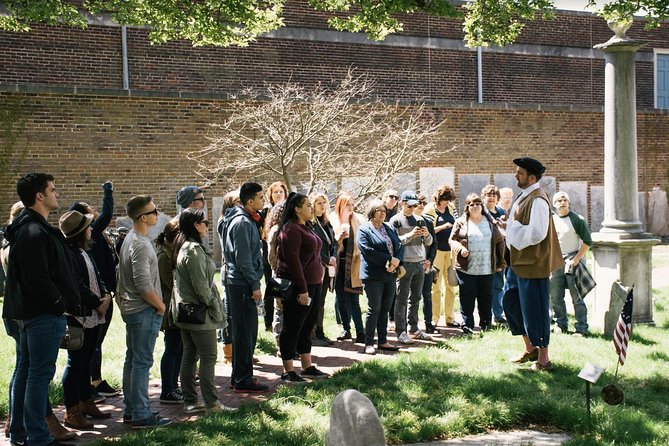
- Small groups: capped at 20 travelers, which keeps the walking flow easier to manage.
- Mostly outside: good for getting oriented, but it means weather matters.
- Some stops cost extra: Betsy Ross House, the Liberty Bell area, and the Ben Franklin Post Office are not included admissions.
Why this Old City tour works when you only have 90 minutes
Philadelphia’s Old City can feel like a history overload—street after street of names you recognize from school. This tour is built for the moment you want answers, not homework.
You get a guided walk that focuses on the Revolutionary War story arc and how it connects to the United States you see today. It’s also a strong choice for first-time visitors who want the highlights layered with context, rather than bouncing from one standalone attraction to the next.
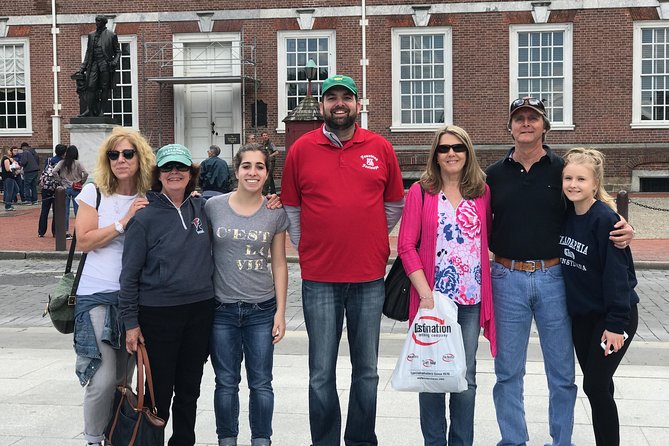
And because the group stays small (max 20), the guide can keep things moving while still taking questions. That balance shows up again and again in the way guides are described across the tour experiences I reviewed, especially the humor-first style from stand-up comedians turned history teachers.
You can also read our reviews of more walking tours in Philadelphia


Start at 302 Arch St, end near Independence Hall
The tour begins at 302 Arch St, Philadelphia, PA 19106. That’s a good launching pad for Old City walking routes because you’re close to major streets and public transit options.
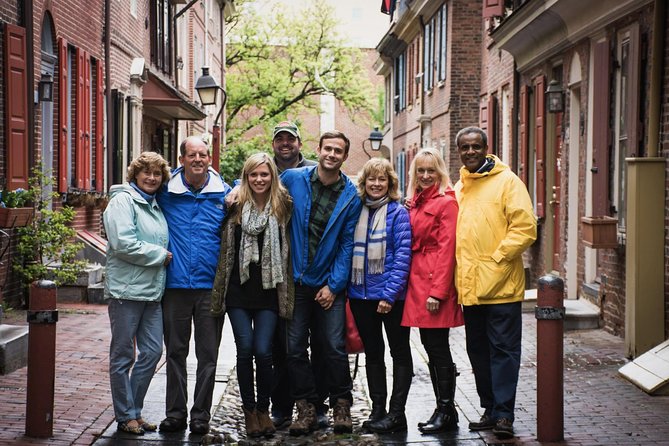
It ends outside Independence Hall, around 5th and Chestnut, roughly four blocks from the start. The upside: you finish where most people want to go anyway. The downside: you’ll want to plan a little buffer after the tour if your next stop depends on tickets or timed entry.
If you’re trying to fit Philly into a busy day, the multiple departure times help. This is the kind of tour you can slot in early to understand the area, then wander back later with better context.
The guide style: stand-up humor + real Revolutionary War context
This isn’t just someone reading dates off a wall. Guides are described as former stand-up comedians and history teachers, and that pairing matters.
In practice, it shows up as a talk that stays clear and human. Instead of getting lost in details, you get story beats: who did what, why it mattered, and how the struggle for independence shaped the country after the smoke cleared.
It also sounds like guides tend to be interactive. In the experiences linked to this tour, names like Seamus Miller and Joseph come up repeatedly, along with praise for answering questions and keeping the group engaged. There are also mentions of Amanda and Ty, with the common thread being a friendly, funny presentation that still sticks to the historical point.
If you like learning that feels like conversation (not performance cosplay), you’ll likely enjoy this format. And if your travel party has mixed ages—teens up to adults—you should find the pace works because it’s structured but not rushed.
Stop-by-stop: from Betsy Ross House to Elfreth’s Alley
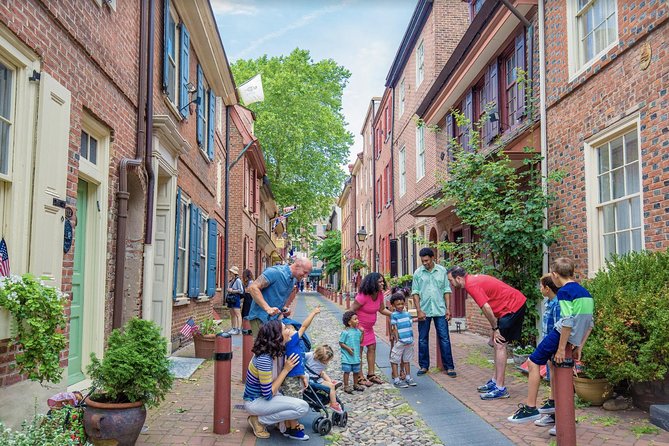
The walk opens with a quick look at the Betsy Ross House courtyard. The stop is short, and importantly, admission is not included. You can buy tickets at the gift shop if you want to continue inside after the tour. That’s a smart design: you get the setting and the story beat first, then decide whether you want the extra time and ticket cost.
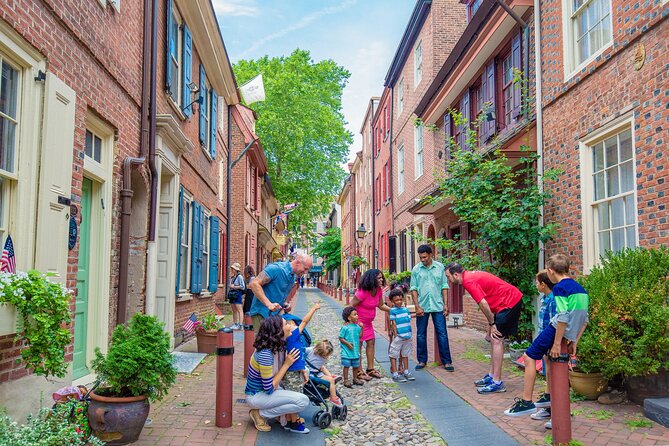
Next comes Elfreth’s Alley, often described as the oldest continuously lived-on street in the original American colonies. It’s a great early “wow” moment because it shows how close the Revolutionary-era world still feels to the present-day street grid. This stop is listed as free for the tour time there.
There’s also a quick side story along the route tied to a suspension-bridge record claim. You won’t spend long here, but if you enjoy learning how early Americans talked about engineering accomplishments, it’s a fun tonal change from battlefield politics.
Christ Church: donation-only, and a key site for Revolutionary stories
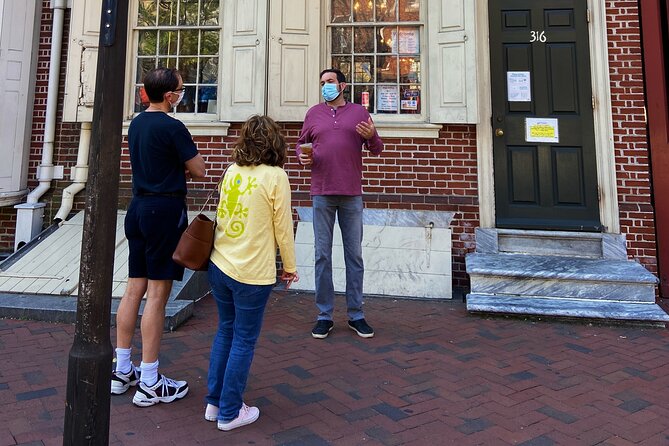
Then you hit Christ Church, described as the Church of the Revolution. The tour time here is brief, but it matters because it ties the Revolution to specific places where decisions, influence, and social life overlapped.
Christ Church is donation only for your visit time. That means no fixed ticket price is listed as part of the tour, but you should be ready with cash/card that works for donations if you want to step in and take your time.
This is also one of the stops where a strong guide makes a difference. With the right explanation, the building isn’t just an old church—it becomes a node in the Revolution’s story, not a random landmark.
Carpenters’ Hall: donation-only, and sometimes closed
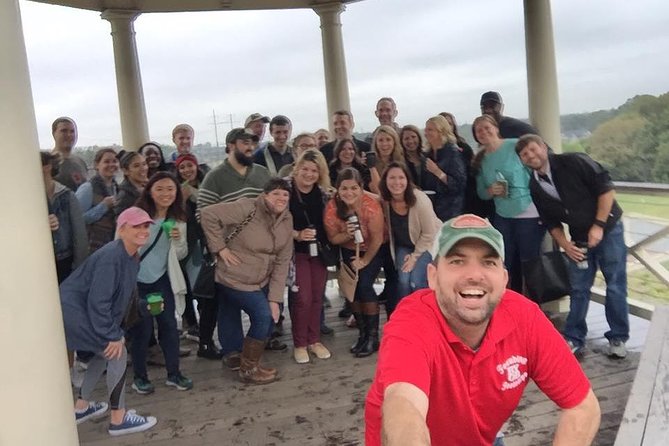
The tour includes Carpenters’ Hall, linked to the early “seed” idea behind American independence. Like Christ Church, it’s donation only during your stop time.
There’s an important practical note: Carpenters’ Hall is currently closed, and the tour visits it when it’s available to the public. So if your visit date lands during a closure, you’ll still get the narration, but you may not get the same level of access you would on a different day.
This is also where it helps to think like a smart visitor. A walking tour can’t guarantee interior access for ticketed or closed spaces. Instead, it gives you the context so that when you do visit later, you’ll know exactly what to look for.
Ben Franklin Post Office: the first post office stop
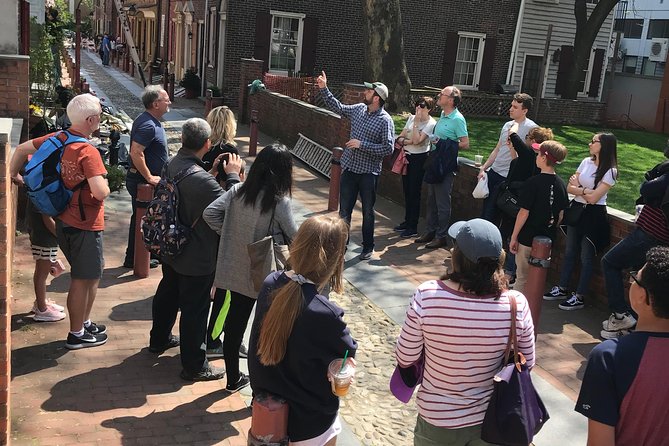
The next named landmark is the B. Free Franklin Post Office stop, described as the first post office in America. Admission is not included, so if you want to go inside, you’ll need to handle that separately.
This stop is short, but it’s a useful theme shift. Independence isn’t only letters about politics and battles. It’s also communication systems—how news traveled, how orders moved, and how a growing nation coordinated beyond the battlefield.
If your group likes practical history, you’ll probably appreciate this placement late in the first half of the tour. It keeps the Revolution from becoming only a hero-and-hat storyline.
The Second Bank: where a longer stop pays off
You get a longer look at the Second Bank of the United States with a 15-minute stop. The note here is that you’re viewing a presidential portrait gallery run by the parks department, and the tour time there is free.
This stop is valuable because it broadens the narrative. After independence comes the hard part: building institutions that could keep going after the excitement of founding. The bank is a concrete way to talk about how the U.S. tried to stabilize money, credibility, and governance.
If you’ve been rushing through Old City sights on your own, this longer stop is a built-in chance to slow down and actually look, not just pose for photos.
Liberty Bell: famous views, but plan on extra admission time
Next up is the Liberty Bell area with a 15-minute stop. The tour lists admission as not included.
This is still a must-do stop, even if you decide not to go inside. The time window gives you a chance to see it, photograph it, and hear the significance explained clearly by your guide. And because it’s such a central symbol, you’ll likely leave with a much better understanding of what it represents beyond the surface-level name recognition.
One key practical point: because admission isn’t included, you’ll want to decide in advance if your schedule allows you to add ticket time for the Liberty Bell visit.
Independence Hall finale: wrap-up outside, then keep exploring
The tour ends at Independence Hall. You’ll spend time discussing why it matters and the founding figures connected to it. Your tour concludes outside Independence Hall, around that 5th and Chestnut area.
That ending location is useful. It drops you right where most self-guided exploring happens next. If you want to tour interiors at later stops, you’ll be positioned close enough to do it with less backtracking.
It also helps you pace your day. Instead of trying to do everything in one huge chunk, you finish the guided portion, absorb the story beats, then choose what to add with your remaining time.
What you’ll feel during the walk (and why the pace matters)
This is the kind of tour where timing is part of the product. The total duration is about 1 hour 30 minutes, and the stops are built to keep momentum.
That pace is praised a lot in the guide experiences tied to this tour: people mention it as “not too long” and paced well enough that you don’t feel dragged down by history lectures. For many visitors, that’s the difference between enjoying Old City and accidentally turning your day into a standing marathon.
Also, because the group size stays under 20, you’re less likely to get stuck behind a line of strangers. You can keep moving, and your guide can shift attention to the group without the tour turning into a one-way speaker session.
Tickets and donations: what’s included vs. what costs extra
Here’s the practical breakdown, so you don’t get surprised:
- Included with the tour: the guided walk, narration, and photo stops across the major Old City sites.
- Not included admissions: Betsy Ross House, the Ben Franklin Post Office, and Liberty Bell are listed as admission not included during the tour stop time.
- Donation-only sites: Christ Church and Carpenters’ Hall are donation only for the visit time.
There’s one more helpful detail: for Betsy Ross House, it’s set up so you can tour the courtyard first and then buy tickets afterward at the gift shop if you want the museum portion.
This matters for value. You’re paying for the guide and the structure. Then you choose which “optional interiors” are worth the extra ticket time on your schedule.
Price and value: $43.50 buys time, context, and smart routing
At $43.50 per person, you’re not just paying for a walk. You’re paying for someone to connect the dots from site to site—why each stop fits into the Revolution’s timeline.
The value case looks strongest if:
- you want a guided orientation to Old City,
- you don’t want to plan a route across multiple ticketed attractions,
- your group benefits from humor and storytelling to stay engaged.
It also helps that the tour includes photo stops at 10+ top sites and passes 15+ Philadelphia locations during the route. That’s a lot of “coverage per hour” for a neighborhood that’s walkable but spread out enough to be annoying when you’re solo with a map.
If you already plan to pay for several interior admissions anyway, the guide time can help you choose better and enjoy those stops more once you’re there.
When to go and how to pack for this walk
The tour requires good weather, so it’s one of those “check the forecast” activities. Old City is best when streets are dry and you can comfortably stand still for photos without freezing or getting soaked.
You should have moderate physical fitness for the walking pace. It’s not described as strenuous, but it is a full 90-minute walking experience.
A few other practical notes from the tour info:
- Service animals are allowed.
- Children must be accompanied by an adult.
- The tour is in English.
- It’s near public transportation, which is handy for getting there on time.
Wear comfortable shoes. Bring a layer if you’re walking in cooler months, and keep your camera ready for the quick photo moments.
Who this tour suits best
This walking tour is a great match if you are:
- a history buff who wants the highlights connected into one story,
- a first-timer trying to understand Old City in a single morning block,
- traveling with a mixed-age group and want a pace that stays friendly.
It’s also smart if you like tours that end in the right place for independent time. Finishing near Independence Hall means you can keep going without re-tracing your steps.
When it might not be your perfect fit
A few realistic considerations:
- Some stops have extra costs or limits. If your plan depends on going inside every major site, you’ll need to budget extra for places where admissions aren’t included.
- Carpenters’ Hall can be closed depending on what’s available to the public on your day.
- This is an outdoor walk, so bad weather can disrupt plans.
If you’re the kind of traveler who prefers long museum time inside ticketed spaces, you might still love the tour for context—but you’ll probably want a second plan for deeper visits after.
Should you book the Philadelphia Old City Historic Walking Tour?
Yes, if your goal is to understand Philadelphia’s founding sites fast and enjoy the walk while you’re doing it. For $43.50 you get a structured route through the places that matter most—paired with a guide who brings humor and clarity instead of turning the trip into a textbook.
Book it especially if:
- you want 10+ photo stops and a guide-led story arc,
- you’re visiting for the first time and want a clean overview,
- you plan to add a few interior visits on your own afterward.
Skip it (or pair it differently) if you want only museum time inside ticketed attractions. This tour is at its best when you treat it as your orientation and your story engine, then use your free time to go deeper where you personally care most.
FAQ
How long is the Philadelphia Old City Historic Walking Tour?
The tour runs about 1 hour 30 minutes.
Where does the tour start?
The meeting point is at 302 Arch St, Philadelphia, PA 19106.
Where does the tour end?
It ends outside Independence Hall, around 5th and Chestnut, about four blocks away from the start.
Are tickets included for the Betsy Ross House?
No. Admission to the Betsy Ross House museum is not included. You can buy tickets at the gift shop after the courtyard stop.
Is the Liberty Bell admission included?
No. The tour lists Liberty Bell admission as not included.
Is Christ Church part of the tour if you need to pay a donation?
Christ Church is donation only during the stop time.
Do you need to pay extra for the Ben Franklin Post Office stop?
Yes. Admission is not included for the Ben Franklin Post Office stop.
Is Carpenters’ Hall always open during the tour?
No. Carpenters’ Hall is listed as currently closed, with plans to visit when it is available to the public.
What’s the group size and walking fitness level?
The tour has a maximum of 20 travelers, and it’s designed for guests with moderate physical fitness.