REVIEW · LIVERPOOL
A Walk Through Time: History of Liverpool Walking Tour
Book on Viator →Operated by Global City Experience · Bookable on Viator
Liverpool’s history moves at sidewalk speed. This guided walk strings together major sights—plus the stories behind the port, trade, and docks—so you start to see the city’s timeline instead of just reading it.
I especially like the historian-style guidance that turns streets and buildings into a clear narrative. You’ll also get a tight dock-and-commerce focus across the waterfront area, which is the key to understanding why Liverpool grew so fast.
One thing to plan for: the route is mostly outdoors and can feel cold and windy along the riverfront, and the commentary can be fast at times—bring a warm layer and comfortable shoes.
In This Review
- Key things to know before you go
- A Walk Through Time: the easiest way to orient yourself in Liverpool
- Getting value for $27.74: what’s included (and what costs extra)
- Where the tour starts and finishes near Castle Street
- Royal Liver Building and the Three Graces: the waterfront opener
- Liverpool Parish Church Gardens and the St Nicholas’ site (1207 origins)
- Old Hall Street, the Cotton Exchange, and the port that beat London
- Liverpool Town Hall (1749) and why Georgian power still matters
- Castle Street and the architecture that shows change
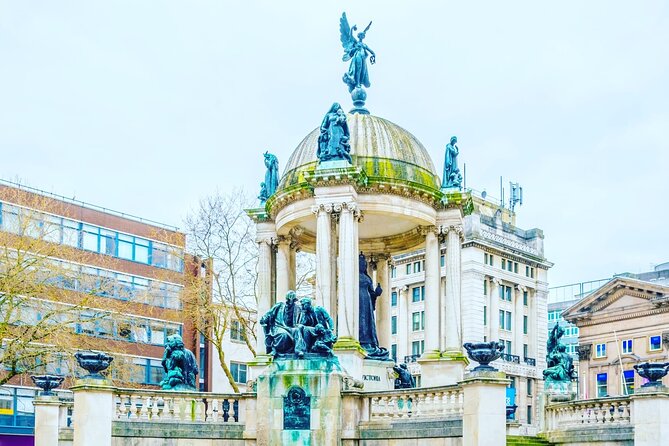
- Queen Victoria Monument and the 1800s turning point
- Liverpool ONE: modern life built on the same city logic
- Old Dock (1715) and Royal Albert Dock (1846): the port engine room
- What the guides bring: John and Julio’s style
- Who this walk fits best (and who might want a different kind of tour)
- Quick tips to make it smoother on the day
- Should you book A Walk Through Time in Liverpool?
- FAQ
- Where does the tour start and end?
- How long is the walk?
- What language is the tour offered in?
- Do I need an admission ticket for all stops?
- Is there a mobile ticket?
- What’s the group size limit?
Key things to know before you go
- A 1 hour 50 minute timeline across Liverpool’s key waterfront and historic-center sites
- Historian guides (John or Julio have led groups) who keep things entertaining and question-friendly
- Medieval to 1800s storytelling, including St Nicholas’ origins and Liverpool’s port rise
- Docks you can’t get from a quick bus ride, including a look at major wet-dock milestones
- Small group cap of 40, which makes it easier to hear and ask questions
- Good weather required, and winter wind off the water is real
A Walk Through Time: the easiest way to orient yourself in Liverpool
If you’re trying to get oriented fast, this is a smart format. It’s not a slow museum tour with one building and a long break. It’s a walking timeline: you move, you glance up at famous architecture, then you get the story that explains why each place matters.
What makes it work well is the way the route emphasizes cause and effect. Liverpool’s growth didn’t happen by accident. It was linked to trade, shipping routes, and dock engineering—so when you see a dockside landmark, the history clicks into place.
And because it’s guided, you don’t have to guess what you’re looking at. Even if you’ve seen photos of the Three Graces, this kind of context helps you understand what you’re actually seeing.
You can also read our reviews of more walking tours in Liverpool


Getting value for $27.74: what’s included (and what costs extra)
At about $27.74 per person for roughly 1 hour 50 minutes, you’re paying for a guided, story-driven walk that hits a lot of headline landmarks without making you spend all day. In practice, that’s good value if your goal is to understand Liverpool quickly.
Two important “budget reality checks”:
- Some stops list admission as not included (notably at the Royal Liver Building area and the Liverpool Town Hall). So you’ll get the history and the exterior viewing, but if you want to go inside those buildings, plan on separate entry costs.
- The rest are mostly walk-by and on-site viewing, with free public access around the sights listed.
For me, the best value part is the quality of the narration. The guide-led format matters more than squeezing in extra photo stops.
Where the tour starts and finishes near Castle Street
You’ll start at Royal Liver Building, Pier Head, Liverpool L3 1HU—right where the waterfront view makes you understand why Liverpool became a trading powerhouse. The official end point is at Queen Victoria Monument, One Derby Square, James St, Liverpool L2 1AB.
That matters because you’re not stuck walking the same loop back again. Instead, you finish near Castle Street and the central areas that connect to more of Liverpool’s sights. It’s a convenient setup for planning the rest of your day.
Also note the practical stuff: you get a mobile ticket, the tour is offered in English, and it’s near public transportation. That makes it easier to fit even if your schedule is tight.
Royal Liver Building and the Three Graces: the waterfront opener
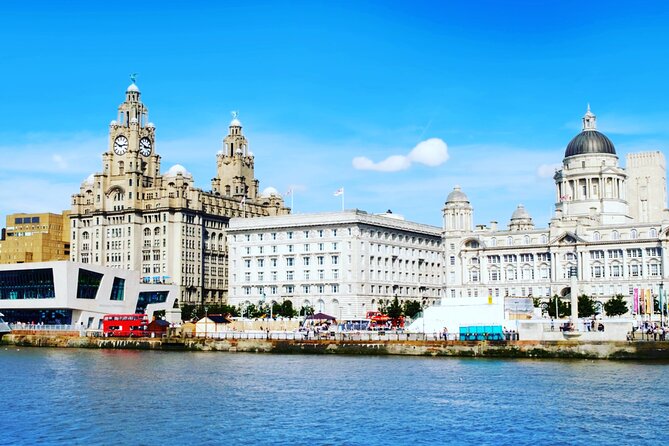
You begin at the Royal Liver Building, one of the famous Three Graces on the Pier Head waterfront. This is a strong start because it anchors the whole story in Liverpool’s maritime identity. Before you even leave the area, you get an introduction that frames what you’re about to see.
Expect the guide to connect the architecture and waterfront presence to Liverpool’s global mindset. The Three Graces aren’t just pretty skyline icons; they’re part of a city built around shipping, movement, and trade.
Time-wise, it’s a short stop, but it’s the one that helps the rest of the route make sense. If you love seeing how modern landmarks tie into deeper history, this beginning sets the tone.
Liverpool Parish Church Gardens and the St Nicholas’ site (1207 origins)
Next you cross over toward the Liverpool Strand and the area connected with the oldest building in the city centre—once St Nicholas’ Church. The St Nicholas’ maritime association is a good match for a city whose identity grew from the sea.
This part focuses on medieval origins, with the timeline reaching back to 1207 and then pointing toward the 13th-century roots of how Liverpool took shape. The angle here is practical: you’re not just looking at a park or gardens; you’re learning that “where you stand” can be the start of the story.
The best payoff is how the guide ties the name and location to Liverpool’s global trade links, including the Atlantic. It’s a quick stop, but it gives you a reference point for the medieval city.
You can also read our reviews of more historical tours in Liverpool
Old Hall Street, the Cotton Exchange, and the port that beat London
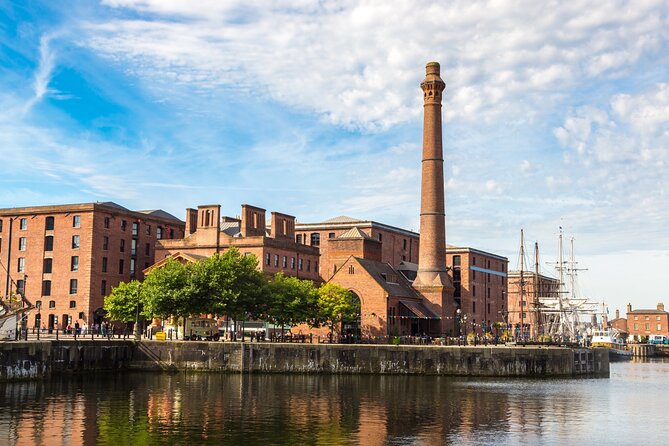
Then the route moves toward Old Hall Street, a street tied to the old town hall area after Liverpool received its town charter. This stretch matters because it connects civic power to commerce. In other words, it wasn’t only ships and docks. The city’s rules, institutions, and wealth grew with trade.
You’ll also pass Grade I listed buildings on the way and arrive toward the Cotton Exchange area, where trade from across the world was handled. One of the standout storyline claims you’ll hear is that Liverpool’s cotton trade overtook London by the late 18th century.
This is where the tour’s “Atlantic trade” theme gets real. You start connecting the dots: docks bring goods in, institutions manage trade, and city growth follows. If you like big-picture explanations, this section is one of the most satisfying.
And yes, it’s moving fairly quickly, so keep your attention up as you walk. The pay-off is the continuity: each landmark leads to the next one.
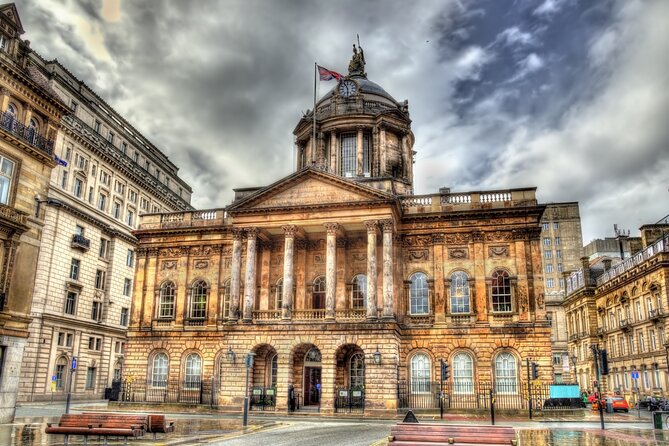
Liverpool Town Hall (1749) and why Georgian power still matters
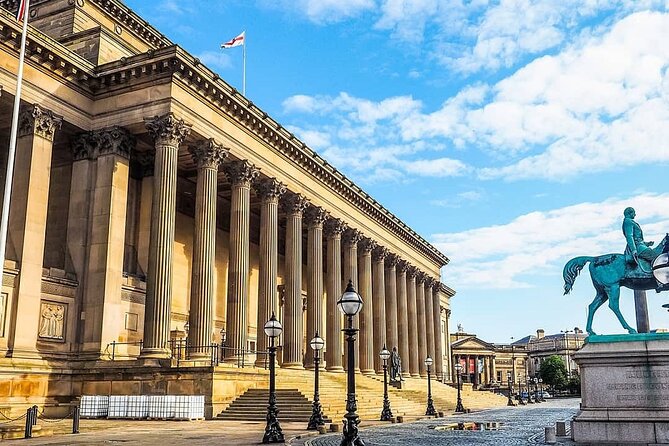
Next up is Liverpool Town Hall, built in 1749. This stop is a good balance point between the older medieval setting and the later dock-focused era.
The emphasis here is on how the building represents civic status and commerce. You’ll get an academic-style explanation of the structure and why it sits where it does in Liverpool’s rise as a global port city.
It’s also one of the places where you may have to do a quick decision. Entrance is listed as not included at this stop, so you’ll likely see more of the exterior and local context rather than going deep inside. If being inside matters to you, check what you’d need to add on your own.
Castle Street and the architecture that shows change
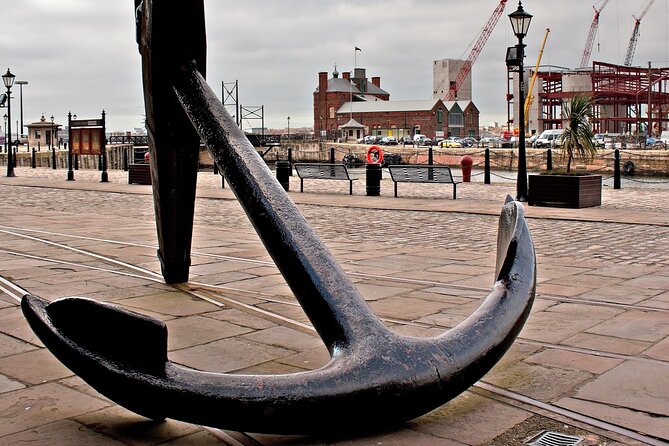
Now you get a time jump down Castle Street. This section is built around the idea that the street itself is a record—its buildings and architecture show evolving layers of the city.
You’ll hear about Liverpool Castle and why Castle Street became important. It’s a longer stop than some of the others, and it’s paced to let you take in what you can see from street level.
What I like about this segment is how it breaks the pattern a bit. Instead of only dockland and trade, you get more street-level texture, and you can feel how the city reorganized over time.
If you’re the type who likes cities with visible “before and after,” this part will keep you engaged.
Queen Victoria Monument and the 1800s turning point
The walk then reaches the Queen Victoria Monument area. Here the story centers on Liverpool’s development as commerce scaled up, with a focus on the growth toward the largest port scale for global trade by 1800.
It’s a short stop, but it works like a hinge. You move from earlier trade building blocks into the era when Liverpool’s influence became huge—and more complex, too.
This is also an area where you can keep your bearings. The end point is nearby, and it’s central for continuing your day.
Liverpool ONE: modern life built on the same city logic
After the heavier dock-and-trade sections, you’ll move through Liverpool ONE, the modern shopping destination. The guide gives a guided look at this part of the city and points out shops and attractions.
This is useful for two reasons. First, it helps you connect the story you just heard to what’s around you today. Second, it gives you options for where to spend time after the tour, especially if you’re pairing history with shopping and a meal.
It’s not a long stop, so it’s more of a quick “here’s what’s next” than a full guided shopping crawl.
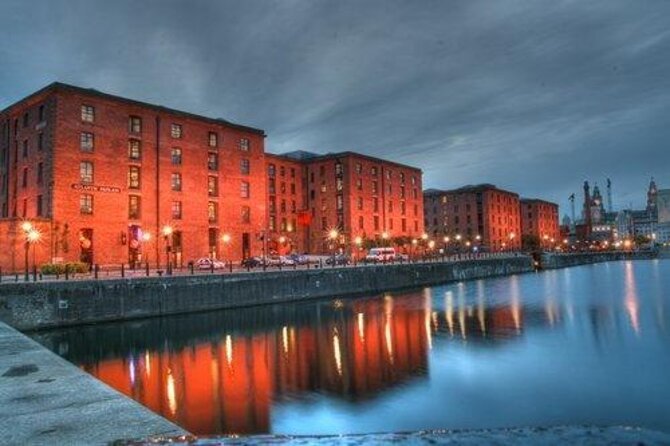
Old Dock (1715) and Royal Albert Dock (1846): the port engine room
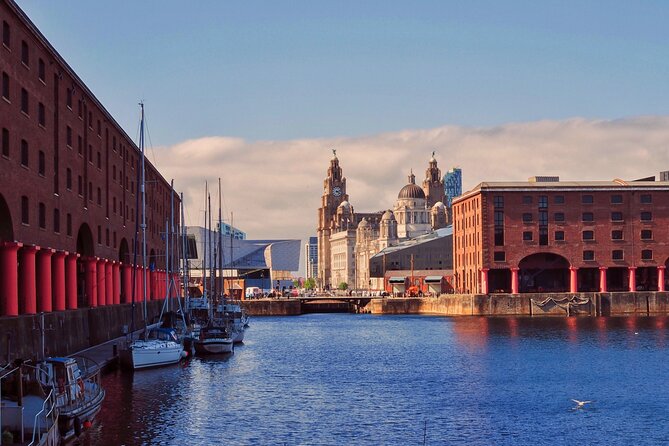
One of the biggest wins of this tour is that it doesn’t leave you only with viewing from a distance. You get to focus on dock sites with historical framing—starting with the Old Dock portion.
The highlight here is the idea of the first commercial wet dock on the planet built in 1715. That’s a huge claim, and the way it’s presented is meant to show why this mattered for operations and efficiency. In plain terms: Liverpool didn’t just have ships; it built a dock system that could handle trade smarter.
Then you move toward Royal Albert Dock on the waterfront, built in 1846, and the story shifts into the 1800s. You’ll hear about how the dock became the center of commerce, and how Liverpool’s dock-linked industries connected to the First and Second World Wars.
This is also where the tour can acknowledge the darker side of Liverpool’s maritime past. One of the most memorable themes you can expect to hear about is Liverpool’s role in the transatlantic slave trade. The key point is that the guide includes it in the story, not as a throwaway line.
If you want history that doesn’t only show the shiny parts, this section is a real reason to book.
What the guides bring: John and Julio’s style
The guide lineup you’ll commonly encounter includes John and Julio, and they tend to run the same kind of show: clear explanations, a steady sense of humor, and lots of story flow.
A pattern in the way they lead is that they try to keep you involved. They don’t just talk at the group; they encourage questions. And the presentation style can handle the noise that comes with busy waterfront streets, which matters on a walk like this.
One more thing I appreciate: you’re not likely to feel like you’re stuck listening for long stretches. The route keeps changing scenery, and the guide uses that movement to keep the timeline moving too.
Still, speed is part of the format. Some people may find the pace fast if you prefer slow conversations. If you’re sensitive to quick talking, wear your best patience and keep an eye on the guide’s face more than the street corners.
Who this walk fits best (and who might want a different kind of tour)
This is a strong match if you want:
- A quick way to understand Liverpool’s growth from medieval origins through docks and into the modern city
- A guided format that makes connections instead of listing facts
- A port and waterfront focus, with stops along major landmarks
It also works well for people who like smaller groups and a flexible, question-friendly approach. The group cap is 40, which tends to help the conversation stay on track.
You might want a different style if you prefer long indoor stops, lots of museum time, or you want every landmark with included admissions. Since some entrances are not included at certain key sites, this is more “walk-and-learn” than “walk-and-enter-everything.”
Quick tips to make it smoother on the day
This walk is outdoors and hugs the waterfront more than once. Bring:
- A warm top or jacket, even in mild seasons, because wind can cut across the riverfront
- Comfortable shoes with grip, since pavements can be uneven near older streets and dock areas
- A phone charged, since you’ll use a mobile ticket
Also, plan your day so your next stop isn’t far away. Since the tour ends at the Queen Victoria Monument area near Castle Street, you’re well positioned for central sightseeing after.
Should you book A Walk Through Time in Liverpool?
Book it if your priority is a fast, guided orientation to Liverpool—especially the docks, trade, and how the city’s architecture connects to its rise. At $27.74 for about 1 hour 50 minutes, with English commentary, a small-group size cap, and historian-led stories, it’s a practical way to get your bearings and learn something you can use all trip.
I’d skip it or choose a different tour style if you need lots of indoor time or if you expect every major building to be included with admission. And if your visit is in a period with poor weather, note that the experience requires good weather, and outdoor walks can get reshuffled.
FAQ
Where does the tour start and end?
The tour starts at Royal Liver Building, Pier Head, Liverpool L3 1HU, UK. It ends at Queen Victoria Monument, One Derby Square, James St, Liverpool L2 1AB, UK.
How long is the walk?
It runs for about 1 hour 50 minutes.
What language is the tour offered in?
The tour is offered in English.
Do I need an admission ticket for all stops?
No. Some stops list admission as not included, while others are free to access. You may need separate entry if you want to go inside certain buildings.
Is there a mobile ticket?
Yes, the tour includes a mobile ticket.
What’s the group size limit?
The tour has a maximum of 40 travelers.