REVIEW · OLD TOWN VILNIUS
Vilnius: 2.5-Hour Jewish Quarter Walking Tour
Book on GetYourGuide →Operated by Vilnius with Locals Tours · Bookable on GetYourGuide
Old streets, heavy history, and real answers. On this 2.5-hour Vilnius Jewish Quarter walking tour, you trace why Vilnius became known as the Jerusalem of Lithuania, from the pre-war Litvak world to the wartime division of neighborhoods.
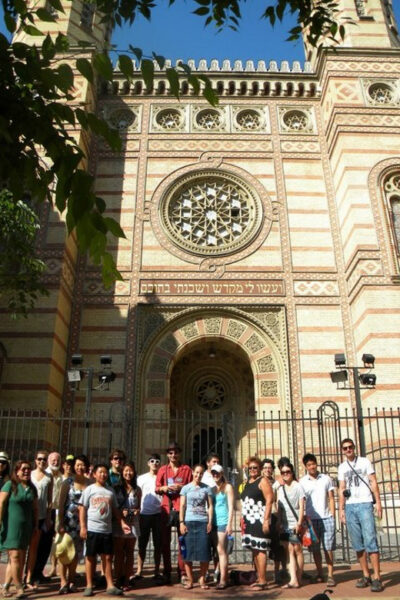
I like the way the route is built around the geography you can still see: narrow, winding lanes of the former Jewish Quarter, plus stops tied to big names like Vilna Gaon. I also appreciate that the tour can include a visit inside the Vilnius Choral Synagogue when it’s open.
One heads-up: the walk includes cobblestones and stairs, and the synagogue stop depends on opening hours during religious festivals and public holidays.
Key things that make this tour worth your time
- Town Hall meet-up in the Old Town with a clear spot: in front of Vilnius Town Hall (Didzioji g. 31), look for a guide with a yellow bag and a yellow Vilnius with Locals Tours sign.
- Two wartime ghettos: you visit both areas and learn how Nazi rule reshaped daily life in Vilnius.
- Vilna Gaon and the Great Synagogue area: you’ll see key locations connected to one of Lithuania’s most famous Jewish scholars.
- A synagogue visit if open: the Choral Synagogue stop is included, but it may be closed for holidays.
- Past photos + present-day streets: you compare what used to be here with what remains.
- Small choices after the tour: you can continue near the market for lunch or head toward the Jewish Museum and the Jewish Cultural and Information Centre.
In This Review
- Why Vilnius became the Jerusalem of Lithuania (and why you’ll care)
- Meeting on Didžioji g. 31: find the yellow sign, start on time
- Narrow, winding lanes and Litvak life before World War II
- Great Synagogue of Vilna: what’s on the ground now
- WWII ghettos in Vilnius: two divisions, one brutal system
- The Choral Synagogue stop: included if it’s open
- How the guide connects past and present without losing context
- Pace, shoes, and who should do this walk
- Price and value: is $26 for 2.5 hours a good deal?
- What to do after: market lunch, Jewish Museum, and Big Ghetto area
- Should you book this Vilnius Jewish Quarter walking tour?
- FAQ
- How long is the Vilnius Jewish Quarter walking tour?
- Where do I meet the guide?
- How much does the tour cost?
- Is the tour in English?
- Which synagogue is included, and is it guaranteed to enter?
- Does the tour cover World War II ghettos?
- Is the tour suitable for people with mobility impairments?
Why Vilnius became the Jerusalem of Lithuania (and why you’ll care)
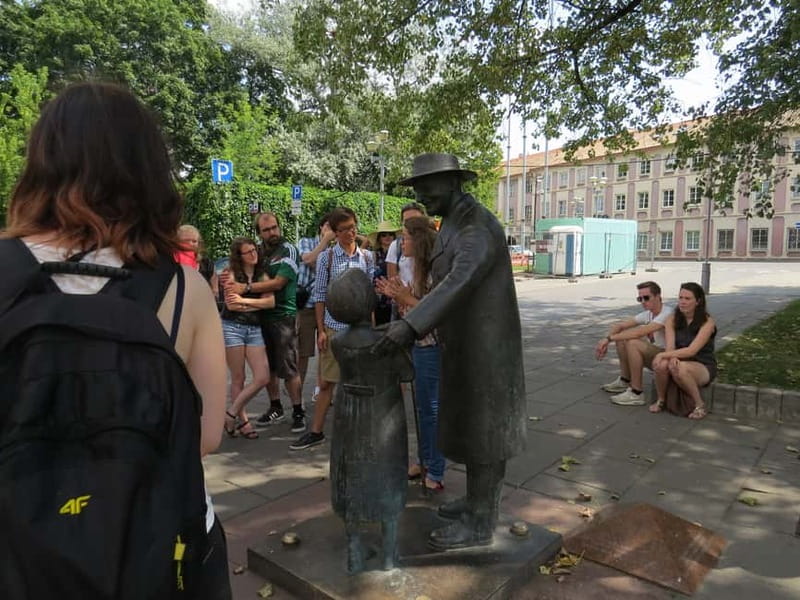
Vilnius doesn’t tell its Jewish story with one monument. It spreads the story across streets, building sites, and neighborhood borders—some of them altered, some erased, some still readable if you know what to look for.
That’s the point of this walk. You start with the “good times and bad” framing, then follow how a city became famous for Jewish learning and community life. The title Jerusalem of Lithuania usually isn’t just a nickname for tourists—it connects to the importance of study, scholarship, and famous teachers. In Vilnius, that includes Vilna Gaon, whose story shows up in the tour not as trivia, but as a way to understand why the city mattered to Jews far beyond Lithuania.
By the time you reach the wartime chapter, the nickname hits harder. You’re not looking at history as a checklist. You’re walking through the same urban fabric that once held an intense community life—and then watching how war and occupation tore that fabric apart.
Meeting on Didžioji g. 31: find the yellow sign, start on time
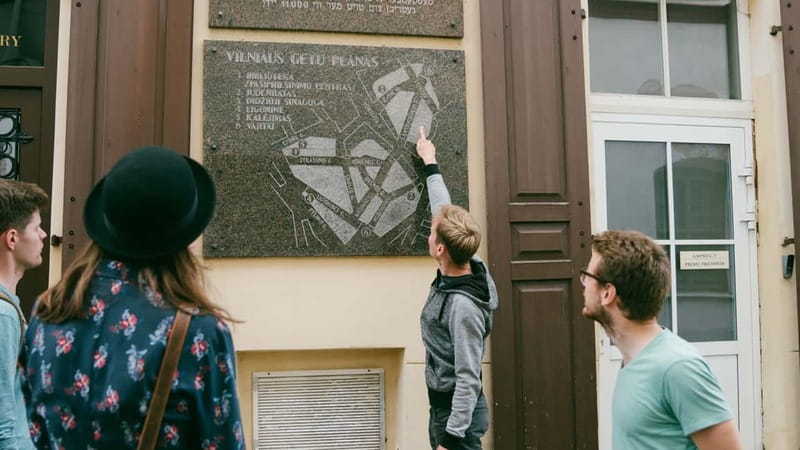
The tour starts at Vilnius Town Hall (Didzioji g. 31). You’re looking for the guide holding a yellow bag and a yellow Vilnius with Locals Tours sign, typically waiting on the left side on the stairs.
This matters more than it sounds. A Jewish Quarter walk moves quickly through small lanes where a late start can throw off your whole rhythm—especially because the itinerary includes stairs and cobblestones. You also don’t want to arrive without any mental hook. The tour begins with a short orientation to Jewish history in Vilnius, then goes straight into walking.
If you’re the type who likes to take photos, this is where you’ll want to switch into planning mode: focus first on listening and locating yourself, then capture angles and street patterns as they come into focus.
Narrow, winding lanes and Litvak life before World War II
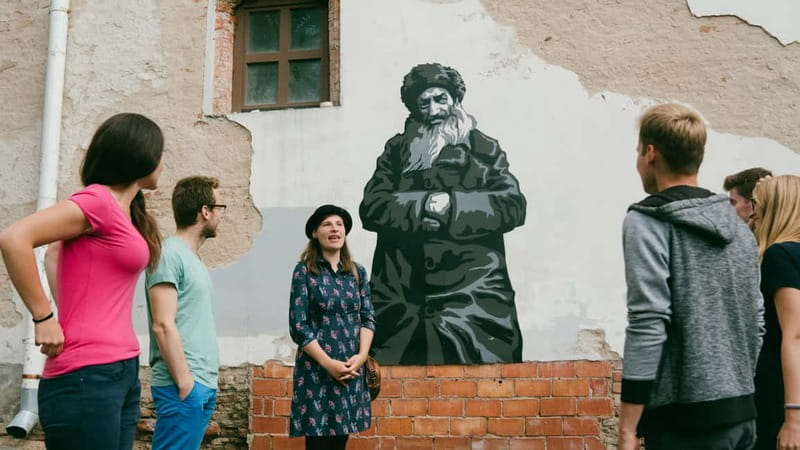
Once you’re moving, the tour leans into something Vilnius does well: the old town grid isn’t “neat.” The Jewish Quarter streets twist and narrow, and the guide uses that physical layout to explain social life and community identity.
Expect a guided narrative on Lithuanian Jews—often called Litvaks—before World War II. You’ll see photos of the past that help bridge the gap between your mental image and the modern street view. It’s one thing to read about a neighborhood. It’s another thing to stand on a street corner and realize the building you see today is not the community you were reading about yesterday.
I also like how this segment doesn’t rush to the Holocaust without context. That doesn’t mean it avoids the hard stuff. It means it builds a baseline: who lived here, what the community looked like, and why the city became so important for Jewish life and scholarship.
Great Synagogue of Vilna: what’s on the ground now
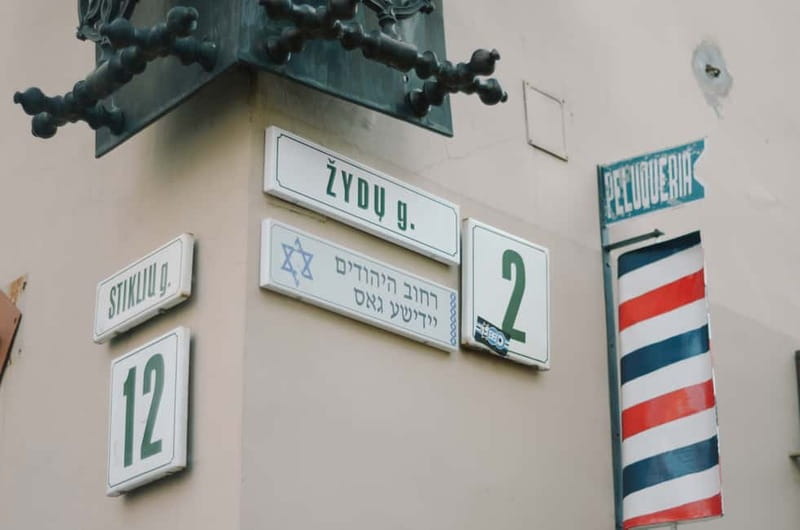
A major moment on the route is the stop at the site of the Great Synagogue of Vilna. Even if you know the synagogue’s name, seeing the location within Vilnius’ street layout helps you understand scale and centrality. Synagogues in this part of Europe weren’t only places of worship; they were landmarks of community organization.
You’ll also go to the area associated with Vilna Gaon’s home. That pairing is smart. It connects religious and cultural authority to a real neighborhood geography. You’re not just hearing who a person was—you’re seeing where that person’s life plugged into the city.
If you’re the kind of person who likes your history grounded in place, this is one of the strongest stretches of the tour.
WWII ghettos in Vilnius: two divisions, one brutal system
This tour is serious about the wartime chapter. After the synagogue and scholar-related stops, you move into the story of how the Jewish Quarter was divided into two ghettos during World War II.
You’ll visit both ghetto areas and hear how Nazi rule operated in Vilnius. The guide also frames the war story in a way that links local geography to policy decisions—where people were forced to go, how neighborhoods were reorganized, and how occupation reshaped daily survival.
One reason this part lands is that it’s not only about what happened once. It’s about how boundaries formed, shifted, and hardened. You’re essentially learning to read the city like a historical map—then realizing how much of the map was imposed by violence.
It’s emotionally heavy. That said, the tour also includes how the story is handled today, which brings you back from tragedy to context.
The Choral Synagogue stop: included if it’s open
The Vilnius Choral Synagogue stop can be a highlight because it adds an indoor, living religious space to an otherwise outdoor walk through sites and neighborhoods.
Here’s the practical part: the tour notes that the synagogue may occasionally be closed to visitors during religious festivals or public holidays. The entrance is included when it’s open, but you should plan mentally for an outside-oriented experience if you arrive on a day when access is restricted.
If you’re going on a trip around Jewish holidays, this is worth keeping in mind. It doesn’t make the tour a waste—because the earlier stops still cover the Great Synagogue area, Vilna Gaon’s connection, and the wartime ghetto geography. But it does mean you should expect flexibility around this final “synagogue in hand” moment.
How the guide connects past and present without losing context
This is the part that separates a good walking tour from a forgettable one: the guide doesn’t treat the Jewish Quarter like a museum display.
The tour includes discussion of:
- Jewish life and identity in Vilnius before the war
- the Holocaust and the ghetto system under Nazi rule
- what’s left today and how the city is working with (and around) that history
That’s why many people finish the tour feeling they understand the shape of Vilnius’ story, not only the facts. You see how places were used, how boundaries were created, and how memory shows up in streets that have changed.
Also, the guide is English-speaking. People mention that guides like Milda, Kristina, and Sarunas have led tours with clear explanations and thoughtful handling of sensitive topics. If you care about nuance—how communities suffered, how decisions were made, and how modern society reflects on the past—this kind of guiding style is a major part of the value.
Pace, shoes, and who should do this walk
This tour is built for walking. It lasts 2.5 hours, and it’s not designed around sitting down.
A couple practical considerations:
- Mobility: it’s explicitly not suitable for people with mobility impairments.
- Expect cobblestones and stairs—including at the start at Town Hall.
If you’re traveling with older legs, this doesn’t mean you can’t do it—but you should go in honestly prepared: wear sturdy shoes, plan for a steady pace, and don’t schedule it as a “catch-up” activity after a long travel day.
Who it suits best:
- You want Jewish history tied to places you can actually stand on.
- You prefer context over a quick sightseeing loop.
- You’re okay with a respectful, serious approach to the Holocaust and wartime division of neighborhoods.
If you’re looking for a “light” tour with minimal sadness, you may find the content heavy. If you’re seeking understanding, the structure works.
Price and value: is $26 for 2.5 hours a good deal?
At $26 per person for 2.5 hours, this tour is priced like a mid-range city history walk—but with two built-in value drivers.
First, you get a guided route through multiple key areas tied to specific stories: Litvak life, Vilna Gaon, the Great Synagogue site, and both wartime ghettos. Second, you get entrance to the Vilnius Choral Synagogue when it’s open, which isn’t something you’d automatically get on a self-guided stroll.
In plain terms: you’re paying for interpretation. In a place where many original structures are gone or transformed, a guide helps you connect what you see to what you need to understand. That’s usually where this kind of tour delivers the best “per hour” value.
Also, the tour has a strong overall rating: 4.7 out of 5 from 271 ratings, which suggests most people feel the time and emotional weight are matched by explanation quality.
What to do after: market lunch, Jewish Museum, and Big Ghetto area
Once the walking portion ends, you’ll be in the right zone to keep exploring. The plan offered gives you options, and I like the flexibility.
Common next steps include:
- Stay near the market area for lunch
- Visit the Jewish Museum
- Return toward the Big Ghetto area to explore the Jewish Cultural and Information Centre
If you want to keep the story going, the museum and cultural center are the obvious follow-ups because they help you slow down after the walk. If you’d rather just decompress, lunch in the nearby area is a good reset before more reading and exhibits.
Should you book this Vilnius Jewish Quarter walking tour?
Book it if you want a place-based account of Vilnius’ Jewish story: the nickname Jerusalem of Lithuania, the role of Vilna Gaon, the Great Synagogue area, and the reality of two wartime ghettos. The structure is designed to connect pre-war life to the war, then bring you back to how the city handles memory today.
Skip it or choose something else if:
- Walking on cobblestones and stairs is a problem for you.
- You’re looking for only upbeat sightseeing.
- You’re depending on a guaranteed indoor synagogue visit on a holiday schedule (because the Choral Synagogue may be closed to visitors).
If you’re prepared for a serious, guided walk through both beauty and brutality, this is a strong use of time in Vilnius.
FAQ
How long is the Vilnius Jewish Quarter walking tour?
It lasts 2.5 hours.
Where do I meet the guide?
Meet the guide in front of Vilnius Town Hall at Didzioji g. 31. Look for a guide with a yellow bag and a yellow Vilnius with Locals Tours sign, usually on the left side on the stairs.
How much does the tour cost?
The price is $26 per person.
Is the tour in English?
Yes, the tour is in English with a live guide.
Which synagogue is included, and is it guaranteed to enter?
The tour includes entrance to the Vilnius Choral Synagogue, but it may occasionally be closed to visitors during religious festivals or public holidays.
Does the tour cover World War II ghettos?
Yes. You’ll visit the site of the Great Synagogue of Vilna, areas connected to Vilna Gaon, and you’ll learn about how the Jewish Quarter was divided into two ghettos during World War II, including both ghetto areas.
Is the tour suitable for people with mobility impairments?
No. The tour is not suitable for people with mobility impairments. It involves walking on streets and visiting sites that include stairs.