REVIEW · BIRMINGHAM
Birmingham Walking Tour: Canals, Victorians & Today (1:30pm)
Book on Viator →Operated by Positively Birmingham Walking Tours · Bookable on Viator
Birmingham changes fast, but the story stays. This 2-hour walk ties together Gas Street Basin, Victorian squares, and modern civic spots like the ICC, with a guide who makes the city make sense. I especially liked the live audio setup (so you can hear without crowding in) and the way the route mixes big sights with atmospheric corners you’d miss on your own.
One thing to consider: it’s a real city walk with several blocks between stops, and the tour does require decent weather. If your feet are easily bothered, bring comfy shoes and plan for a moderate pace.
In This Review
- Key highlights worth showing up for
- Entering Birmingham at the Library of Birmingham (and why it matters)
- ICC and Symphony Hall: how Birmingham hosts big events
- Brindleyplace to Gas Street Basin: canals you can actually feel
- Victoria Square and Chamberlain Square: reading Birmingham’s design layers
- Birmingham Museum and Art Gallery: a quick peek at the 1880s double portico
- The Mailbox and The Cube: reuse, views, and media connections
- Ikon Gallery, and then Hall of Memory’s art deco pause
- ICC Mall and Birmingham Town Hall: finishing with civic history
- Audio receivers and guide style: what to expect minute-to-minute
- Price and value: does $20.80 make sense for this 2-hour route?
- Who this walk is best for (and who might want something else)
- Should you book this Birmingham walking tour?
- FAQ
- How long is the Birmingham Walking Tour: Canals, Victorians & Today?
- What time does the tour start?
- Where does the tour begin and end?
- Is the tour offered in English?
- What is the price per person?
- What’s included for hearing the guide?
- Are there admission tickets included during the tour?
- What is the maximum group size?
- Does the tour run in bad weather?
- Is free cancellation available?
Key highlights worth showing up for
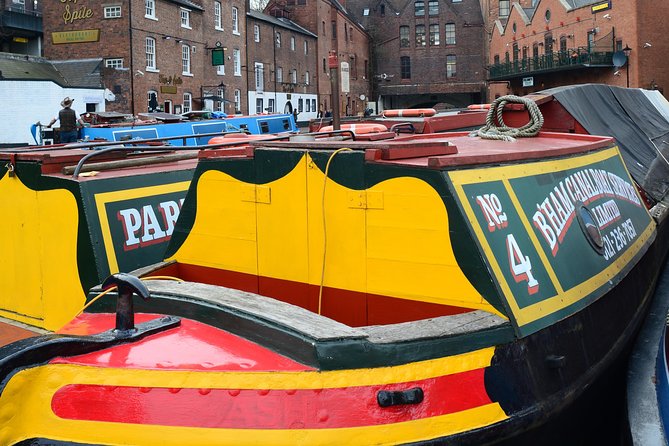
- Live audio receivers (headsets with a guide transmitter) help you hear clearly while you keep moving
- Gas Street Basin gives you that canals-in-Birmingham feeling, not just street-level views
- Victorian-to-today squares like Victoria Square and Chamberlain Square help you read the city’s layout
- Quick hits at major buildings including the Library of Birmingham, the ICC, and Birmingham Town Hall
- Stops that blend old and reused spaces like The Mailbox (a former sorting office)
Entering Birmingham at the Library of Birmingham (and why it matters)
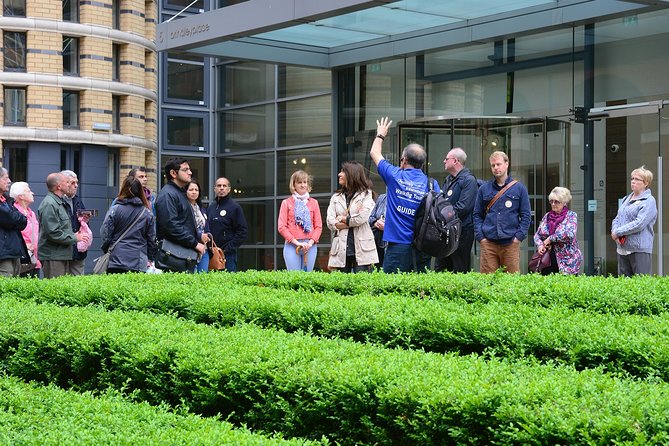
The tour starts at the Library of Birmingham in Centenary Square, a big modern landmark that instantly tells you this city builds bold. It’s free to enter during the stop, and you get about 10 minutes to look around without feeling rushed.
I like starting here because it sets the tone. Birmingham’s growth has always been tied to work, trade, and civic ambition, and the library is a clear example of that today. Even if you’re not a book person, the building is worth a careful look.
Tip: use this first stop to get your bearings. After that, the walk connects the city’s different eras in a way that feels logical, not random.
You can also read our reviews of more walking tours in Birmingham

ICC and Symphony Hall: how Birmingham hosts big events
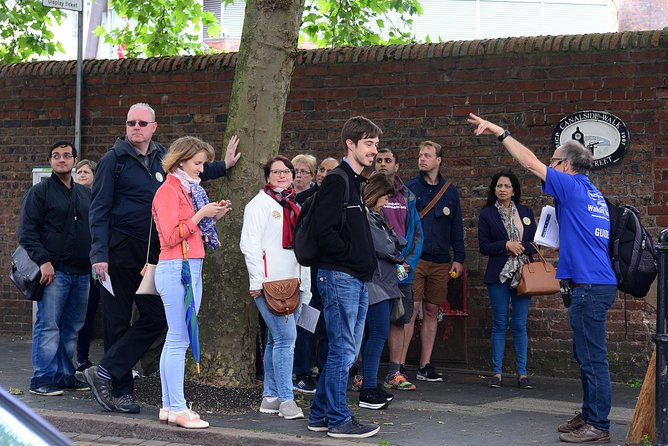
Next you’re at the International Convention Centre Birmingham and you’ll also see Symphony Hall. This is where the tour shifts from architecture watching to city role watching: how major venues support the life of a working city, not just tourism.
You only get around 10 minutes, so keep your eyes open. You’re not trying to tour every interior. Instead, you’re learning how these buildings function as parts of the city machine—draw in people, run events, and keep Birmingham visible on the national map.
If you like places where public life happens, this stop will click. If you want deep museum-style explanations, you may wish the schedule were longer—but the walk format keeps momentum.
Brindleyplace to Gas Street Basin: canals you can actually feel
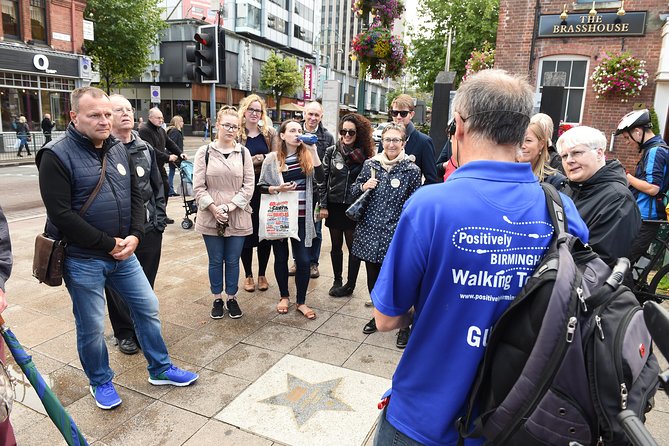
Brindleyplace is next, with about 10 minutes to look at its shift from history to modern use. This is the kind of area that can look “just pretty” from a distance, but on the walk you get the context for why it looks the way it does.
Then comes Gas Street Basin, one of the most atmospheric parts of Birmingham for this route—about 15 minutes. Here the emphasis is on the coming of the canals and Gas Street Basin’s place in the country’s canal network. You get that sense of waterways as infrastructure, not just scenery.
This is where the tour earns its canals title. The canal-side mood is real: open space, water, and the feeling that the city’s past is still present in the streetscape.
Practical note: the ground can be uneven near canalside edges. Even with “only” a couple of minutes to look around at each spot, comfortable shoes matter.
Victoria Square and Chamberlain Square: reading Birmingham’s design layers
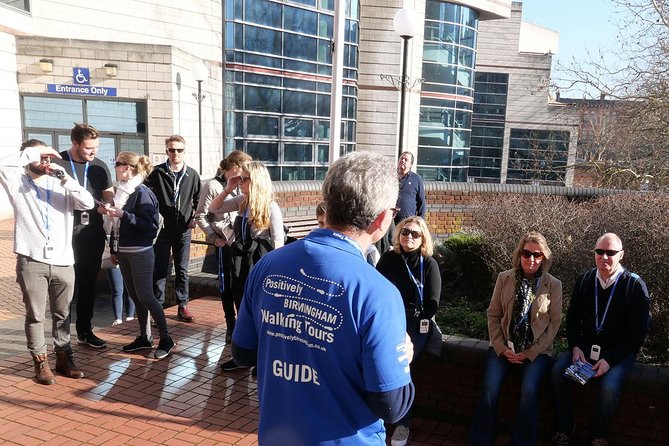
From the water you move back into the civic heart with Victoria Square (around 10 minutes) and Chamberlain Square (around 10 minutes). The guide’s angle here is useful: public art, Victorian development, and how the city keeps adjusting as it moves toward the future.
Victoria Square is also a strong photo stop because you’re seeing both older planning and later updates. Chamberlain Square feels more like the city’s forward-facing chapter, so together they give you a nice “then and now” contrast without needing a museum ticket.
What I liked is that these aren’t just stops where you glance and move on. The route makes you notice how squares shape movement: where people gather, where views open up, and how pedestrians flow between major nodes.
Birmingham Museum and Art Gallery: a quick peek at the 1880s double portico
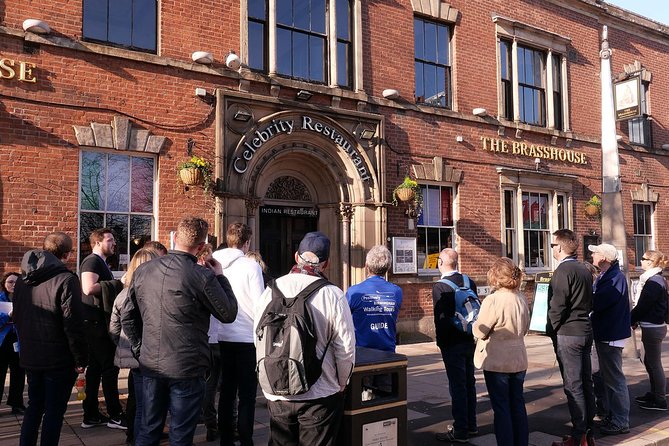
At Birmingham Museum & Art Gallery, you’re not going for a full interior tour. The schedule gives you about 2 minutes to pass by and spot the 1880s design, including the double portico.
Even with the short timing, it’s an effective stop because it puts a spotlight on the city’s visual ambition. Birmingham didn’t just grow in industry; it also built institutions that looked impressive and serious.
If you’re the type who wants more than a quick exterior view, this stop may leave you wanting. Still, it works well in a 2-hour walk because it keeps the pacing steady while delivering at least one “wow” façade.
The Mailbox and The Cube: reuse, views, and media connections
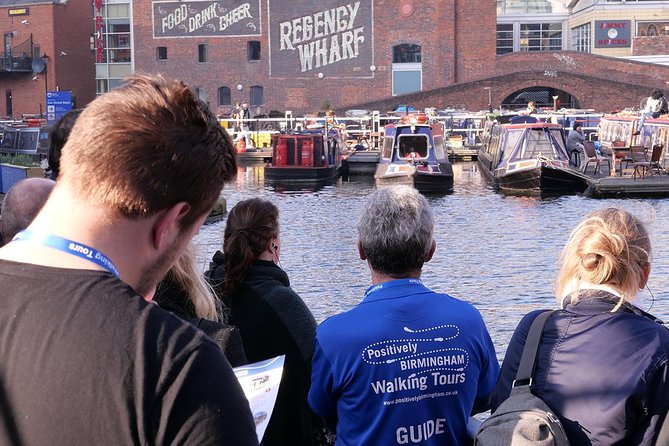
Next is The Mailbox, about 5 minutes. Here the focus is the conversion of a former post office sorting office into a mixed-use development, plus the fact that it includes the Birmingham headquarters of the BBC.
Then you move to The Cube at the back part of the Mailbox (about 1 minute). The payoff is the promise of some of the best city views from the upper floors. You won’t have long here, but it’s a strong way to show how a city reuses old industrial-era space for modern work and public life.
I like this section because it connects two different ways of understanding Birmingham:
- old logistics and industry, repurposed
- current media and office life, built on top of that foundation
If the weather is good, this area feels even better. You’re near modern glass-and-stone spaces where the city looks confident.
Small caution: since the stops here are brief, plan to look up as much as look ahead. The tour’s timing is fast, and quick observation is part of the deal.
Ikon Gallery, and then Hall of Memory’s art deco pause
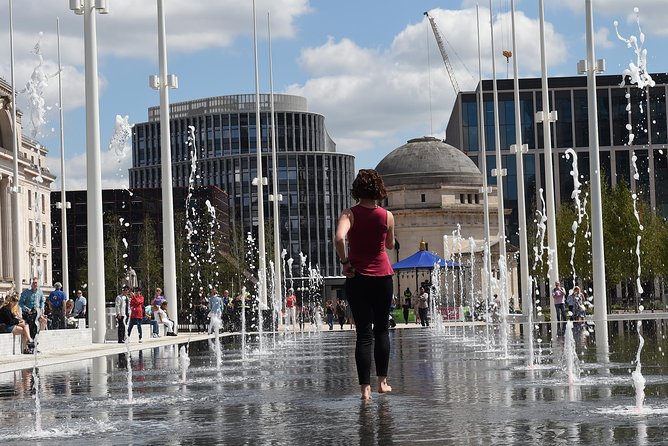
The route also includes a look at the Ikon Gallery, noted as being originally built as a school and one of over forty buildings by the architects Martin & Chamberlain. You’re likely seeing it from the outside as you pass, but it adds a thoughtful extra layer: education and design as part of Birmingham’s growth story.
Then you head to Hall of Memory (about 5 minutes). This is one of the emotional turns of the walk. It began as an art deco memorial in 1925 for the fallen of the First World War, and it has since expanded to include later conflicts, including the Second World War and more recent ones. The stop highlights art deco features, including William Bloye tablets.
This is the moment I recommend you slow down a notch. The rest of the tour moves at a steady walking pace. Hall of Memory is where the guide’s stories tend to land, because you’re standing in a serious, human-sized monument.
ICC Mall and Birmingham Town Hall: finishing with civic history
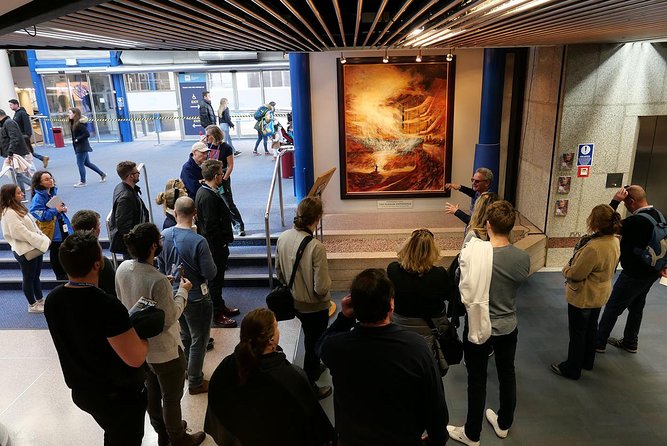
The final stretch heads through ICC Mall, described as the main route from Centenary Square to the canalside. It’s about 10 minutes, and it helps you understand how the walk line ties back to the city’s layout—how people move between major public areas.
Then you finish with Birmingham Town Hall (about 5 minutes). It’s described as the oldest building in Victoria Square, dating from 1834. This closing stop gives you a firm historical anchor after all the modern nodes you’ve just seen.
I like ending here because it leaves you with a clean takeaway: Birmingham’s present didn’t arrive out of nowhere. It grew from planning, institutions, and big civic buildings that helped the city function for centuries.
Audio receivers and guide style: what to expect minute-to-minute
This tour uses a live audio system, with each guest loaned a receiver. You’ll either bring your own earphones with a 3.5mm socket or you can be provided a new pair. The key benefit is that you can listen without being pressed right up against the guide.
You may also find that the audio system isn’t used every day, so if audio matters to you, I’d come prepared with simple 3.5mm earphones just in case. Either way, the tour is designed so you can hear clearly while still keeping your place in the group.
On guide energy: the tour is known for a lively, funny approach, with guides like Jonathon and Michael bringing humor and fast-paced storytelling. In practice, that usually means you’ll get lots of detail without long pauses—and you’ll likely finish the walk feeling like you picked up real context, not just a list of sites.
Group size stays under 35 people. In smaller groups, it can feel extra personal, and you’ll have more room for questions.
Price and value: does $20.80 make sense for this 2-hour route?
At $20.80 per person for about 2 hours, you’re paying for three things:
1) a guide to connect the dots between eras
2) an efficient walking route that hits major points without long detours
3) an audio system that improves comfort and clarity
A big value lever is that many stops are timed with ticket-free entry, while a couple of others include admission or entry access for specific moments. Stops like the Library of Birmingham and Hall of Memory are listed as ticket-free during the tour, while places such as Birmingham Museum & Art Gallery and The Mailbox (plus The Cube) are marked as having admission included.
So you’re not paying for a full museum day, and you’re not stuck outside everything either. You get a mix: quick exterior moments plus a few entries where the value is baked into the price.
If you’re only in Birmingham for a short stay, this tour can help you get oriented fast. It’s also a decent choice if you like walking but don’t want to plan a route yourself.
Who this walk is best for (and who might want something else)
This tour is a good fit if you:
- want a fast orientation to Birmingham’s center
- like canals, civic buildings, and Victorian-era streetscape
- prefer short stops where the guide explains why each place exists
It may feel less ideal if you’re expecting a slow, deep, museum-heavy day. This walk is about momentum and context, not spending half an afternoon inside one attraction.
Physical note: the tour asks for moderate physical fitness. It’s not described as difficult, but it is walking, so bring shoes you can trust.
Should you book this Birmingham walking tour?
I think you should book it if you want to understand Birmingham quickly and enjoy a guided route that connects canals, civic squares, and modern reuse projects in a single afternoon. The live audio, the tight 2-hour timing, and the mix of ticket-free stops with a few included admissions make the $20.80 feel fair.
Book it especially if you enjoy guides who talk with energy and humor. If you’d rather take your time at every stop, or you’re traveling with very limited walking capacity, you may want a slower, more flexible option.
FAQ
How long is the Birmingham Walking Tour: Canals, Victorians & Today?
It runs for about 2 hours.
What time does the tour start?
The start time is 1:30 pm.
Where does the tour begin and end?
It starts at the Library of Birmingham in Centenary Square, Birmingham B1 2ND, UK, and ends back at the meeting point.
Is the tour offered in English?
Yes, the tour is offered in English.
What is the price per person?
The price is $20.80 per person.
What’s included for hearing the guide?
The tour may use a live audio system. If it is used, each guest is loaned a receiver to hear the guide who wears a radio transmitter. Guests should bring earphones with a 3.5mm socket, or a new pair may be provided.
Are there admission tickets included during the tour?
Some stops are ticket-free. A couple of stops include admission, such as Birmingham Museum & Art Gallery, The Mailbox, and The Cube.
What is the maximum group size?
The maximum group size is 35 travelers.
Does the tour run in bad weather?
The experience requires good weather. If it’s canceled due to poor weather, you’ll be offered a different date or a full refund.
Is free cancellation available?
Yes. You can cancel up to 24 hours in advance for a full refund, and refunds are 100% if you cancel at least 24 hours before the start time.
###