REVIEW · MARSEILLE
Marseille: Essential Guided Walking Tour of the City
Book on GetYourGuide →Operated by Marseille Tour · Bookable on GetYourGuide
Marseille history walks in a straight line. I love how Charles threads 2,600-year-old Greek and Roman roots through everyday streets, and I also love the way the tour stacks in big-name views with quieter corners like Le Panier and Windmill Hill. You get a tight, human introduction to a city that can feel fast and complicated on your own.
One thing to plan for: this is a 5 km walk, so you’ll want comfortable shoes and a water break mindset, especially in warmer weather. If you’re not up for steady walking, you may find the pace less fun than the sights.
In This Review
- Key things that make this tour stand out
- Starting at La Major Cathedral: your Marseille “anchor point”
- Le Panier on a hillside: murals, Vieille Charité, and Windmill Hill
- Church of Accoules and the route to Rue de la République
- Vieux Port and the Cannebière: boats, forts, and wartime memory
- Saint Victor’s Abbey: Roman architecture and a breather with views
- Le Pharo and Palais du Pharo: Napoleon III’s seaside palace viewpoint
- How long is 150 minutes, really? Pace, distance, and comfort
- Who Charles is and why the tour feels personal
- Price and value: what $41 buys you in Marseille
- Who should book this guided walk (and who might skip)
- Should you book this tour?
- FAQ
- Where is the meeting point?
- How long does the tour last?
- How far do you walk?
- What’s included in the price?
- Is the tour wheelchair accessible?
- Where do you get dropped off at the end?
Key things that make this tour stand out
- Charles’s storytelling approach: history with humor, plus helpful visuals like diagrams and photos
- Small group feel: limited to 8 participants, so questions don’t get lost
- Marseille in layers: La Major, Greek/Roman roots, World War II at the docks, then the hill neighborhoods
- A smart mix of viewpoints: Vieux Port, Saint Victor’s area, and the Le Pharo vantage points
- Creative Marseille on display: Le Panier street art, winding lanes, and artisan energy
- Two drop-offs that help you continue: Old Port and Palais du Pharo
Starting at La Major Cathedral: your Marseille “anchor point”
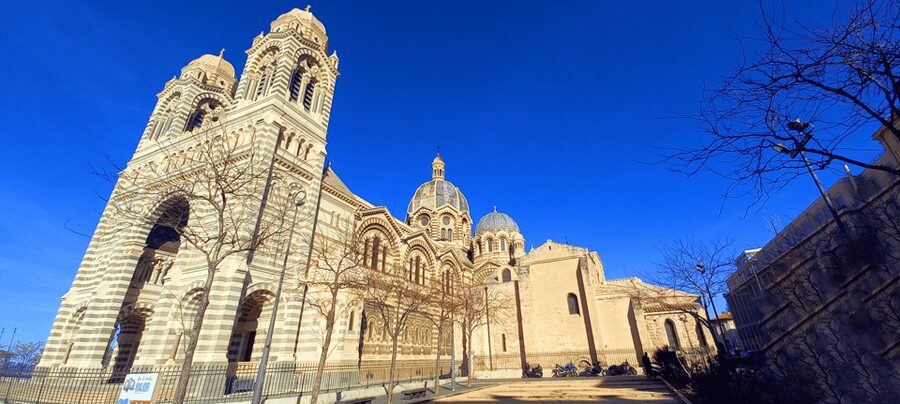
Your walk begins at La Major Cathedral (Cathédrale Basilique Sainte-Marie-Majeure, dit La Major). Look for your guide in front of the church and spot the white cap. The building itself sets the tone: Neo-Byzantine and Romanesque architecture that feels monumental even before you move.
This first stretch matters because Marseille’s story doesn’t start in one place. It starts in layers—religion, trade, empires, then modern life—so your guide’s opening context gives you a mental map fast. I like that you don’t just get dates. You get a sense of why the city grew the way it did, and what to notice as you head into the older quarters.
Practical tip: this is a good moment to ask where you want to spend extra time later. Charles tends to structure the tour so you’ll know what’s important and why.
You can also read our reviews of more walking tours in Marseille

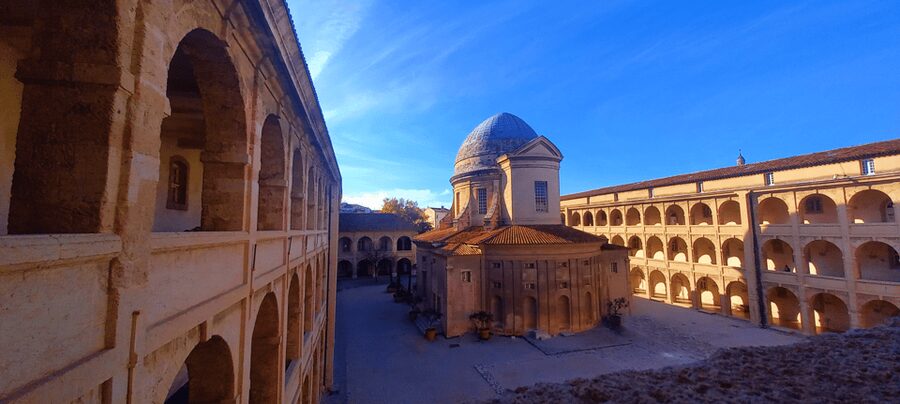
Le Panier on a hillside: murals, Vieille Charité, and Windmill Hill
Next you climb into Le Panier, one of Marseille’s oldest neighborhoods, stacked on a hillside above the Vieux Port and the Mediterranean. The vibe here is part art, part history, part “how did they build streets like this?” You’ll see street art murals that make the neighborhood feel alive, not preserved behind ropes.
A few stops stand out for me. The Vieille Charité hospital is a calm, historic pause—useful when the streets start to feel like a maze. Then you head toward Windmill Hill, which offers that small-jolt view of the port area below. The walk isn’t just scenic; it’s explanatory. You’re learning how geography shapes the city.
What’s great about Le Panier is that it teaches you how to navigate Marseille like a local. You’ll understand why people hang around the slopes, why the streets feel intimate, and how the city’s creative side connects to its older roots.
Watch your step on the uneven sidewalks. This is classic Marseille walking—charming, but not always smooth.
Church of Accoules and the route to Rue de la République
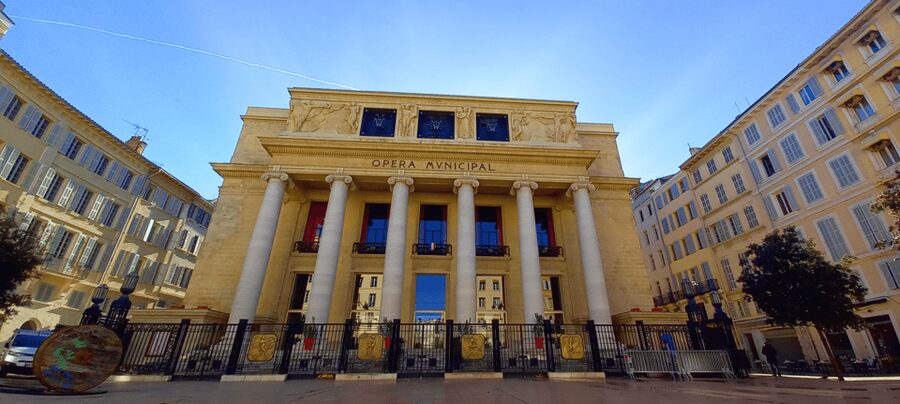
As you continue, you pass through areas that feel less like postcard Marseille and more like daily Marseille. The Church of Accoules is one of those spots that rewards attention—small enough to feel personal, old enough to hint at the city’s long continuity.
Then you connect toward Rue de la République, a street that acts like a corridor through the city. If Le Panier is the “why it’s interesting,” Rue de la République is the “how people move through it.” You’ll notice galleries, workshops, boutiques, cafés, bistros, and restaurants along the way. It’s not just shopping energy; it’s a reminder that Marseille lives here, not only in museums.
Why this segment helps: it keeps the tour balanced. You’re not stuck only in old stones and hilltop views. You’re also seeing how commerce and street life sit alongside the historic core.
Vieux Port and the Cannebière: boats, forts, and wartime memory
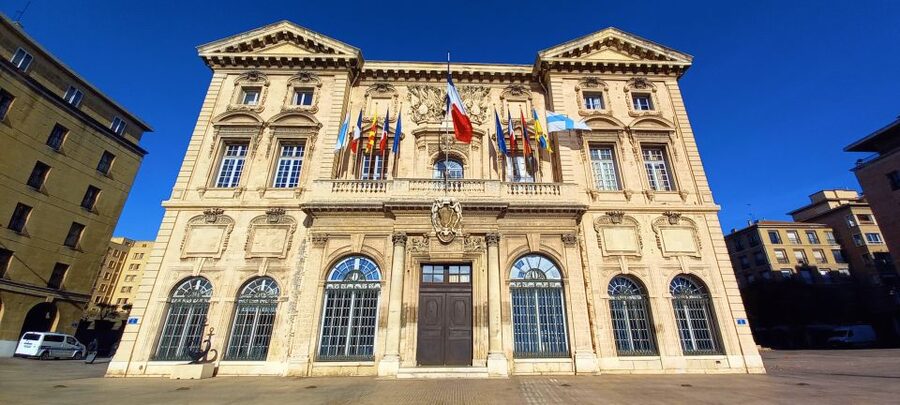
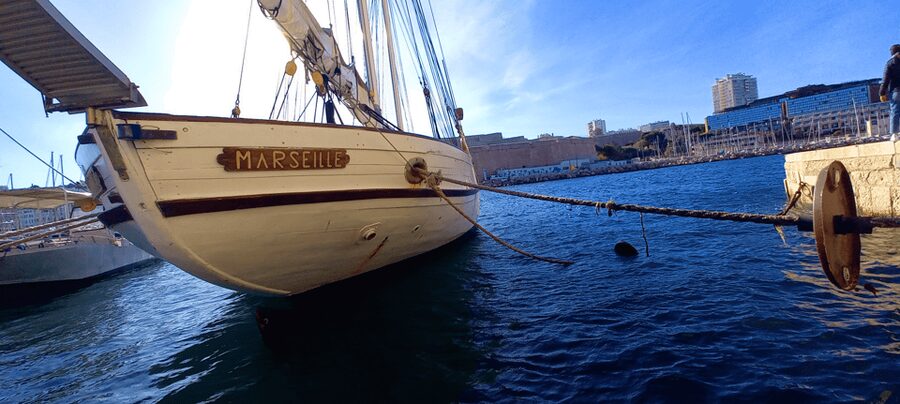
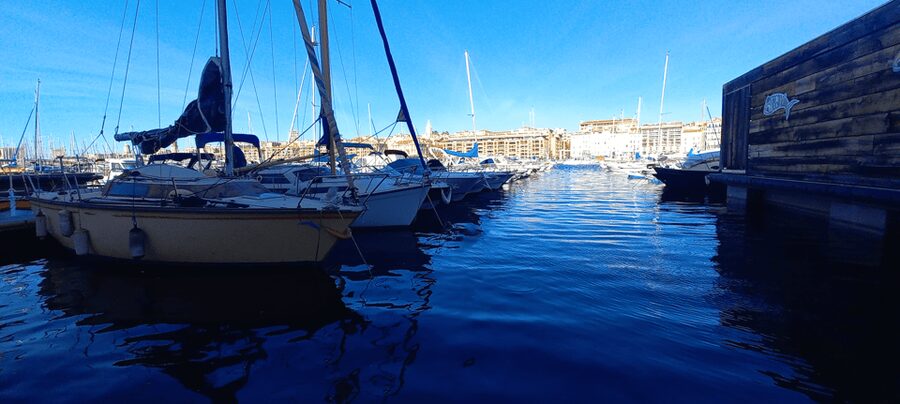
You’ll reach the Old Port (Vieux Port), Marseille’s working heart. Your guide points out the forts guarding the harbor—Forts Saint-Jean and Saint-Nicolas—and you’ll see boats and yachts moving on bright water. The harbor doesn’t feel like a background; it feels like the city’s engine.
Here’s where the tour gets emotionally real. At the docks, you’ll learn about Marseille’s rich but tragic World War II history and how it intersects with the port’s strategic importance. For me, this is one of the most valuable parts of the day because it turns sightseeing into understanding. You start looking at the same waterfront and thinking, What happened here? Why does it still matter?
Then you stroll down the Cannebière, one of the city’s lively main streets. This is where you’ll see the mix of locals and visitors, plus storefronts, cafés, and places to eat. It can feel busy, but it’s also useful. You’re getting a sense of modern Marseille’s rhythm, not only its past.
If you’re hungry, this is a good time to mentally tag nearby food spots for later. Food isn’t included on the tour, so you’ll want to save your appetite for when the tour lets you go at your own pace.
Saint Victor’s Abbey: Roman architecture and a breather with views
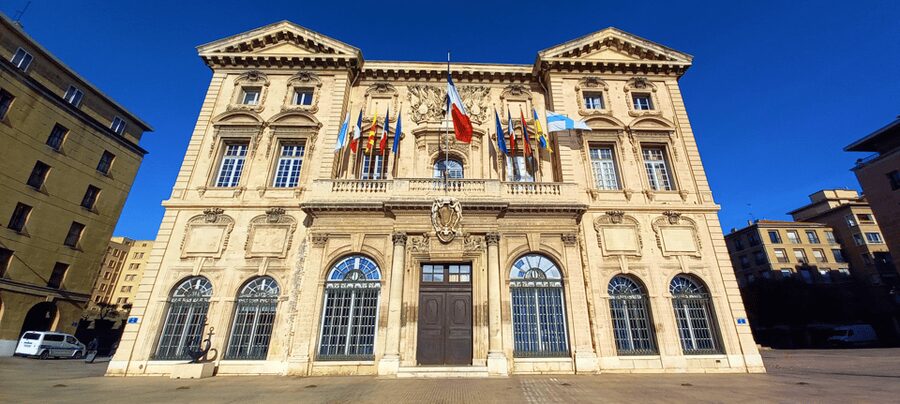
From the port area, the walk continues toward Abbaye Saint-Victor. The setting here shifts again. Saint Victor’s Abbey is famous for its Roman architecture, and your guide helps you read the stones rather than just look at them. You’ll get a sense of what survived, what changed, and why this area became such a meaningful stop in Marseille’s long timeline.
A key moment comes with a break time that also includes sightseeing and scenic views on the way. That means you’re not rushing through everything. You get a pause to hydrate, look around, and let the story settle. Views matter on walking tours because they’re the moments your brain uses to connect dots.
What I like: this stop gives you a quieter kind of drama. The abbey area feels more grounded than the port streets, so it balances the day. If you’ve been photographing nonstop, this is where you can slow down and actually look.
Le Pharo and Palais du Pharo: Napoleon III’s seaside palace viewpoint
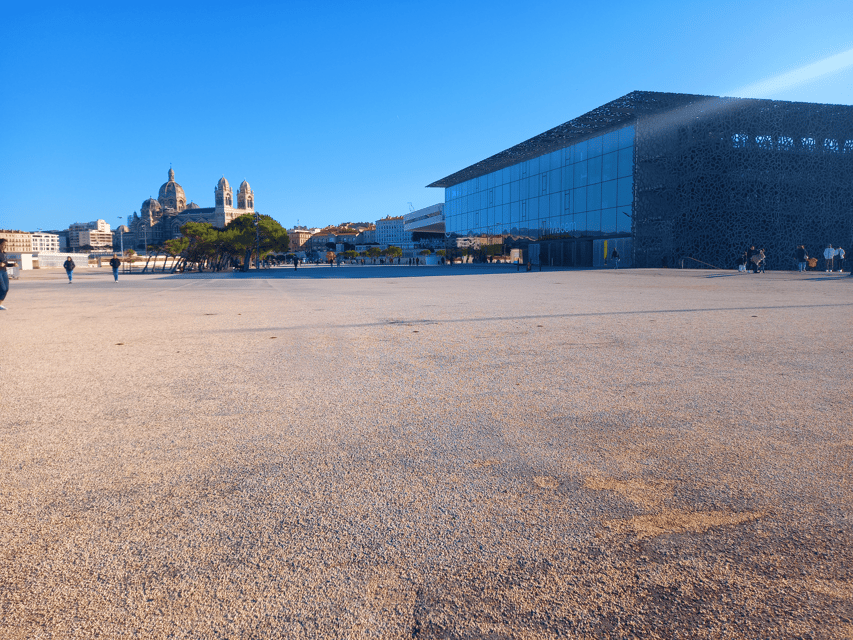
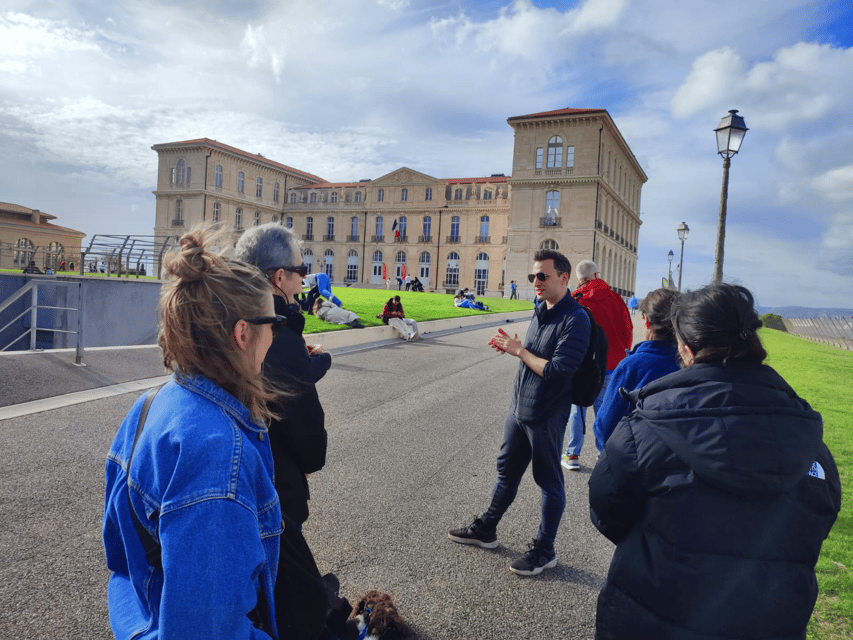
Your final big highlight heads toward Le Pharo, where you get sweeping views and a grand sense of space. You’ll be able to take in the Palais du Pharo—built in the mid-19th century by Emperor Napoleon III for Empress Eugénie. Even if you don’t know every detail about French Second Empire politics, the building’s scale and placement make the story easy to grasp.
This portion also links back to your earlier Marseille themes: sea power, empire reach, and the way leaders used waterfront prestige. Your guide helps connect those ideas so it doesn’t feel like random architecture trivia.
You’ll also admire the Roman architecture of Abbaye Saint-Victor in the lead-in context, which creates a neat “then and now” feeling: Marseille’s older layers echo forward into newer monuments and their purposes.
At the end, you’ll return to the meeting area area for wrap-up, with two drop-off options: Old Port of Marseille and Palais du Pharo. That’s helpful because you can finish near either the harbor for food and strolling, or near the viewpoints if you want one last look at the city.
How long is 150 minutes, really? Pace, distance, and comfort
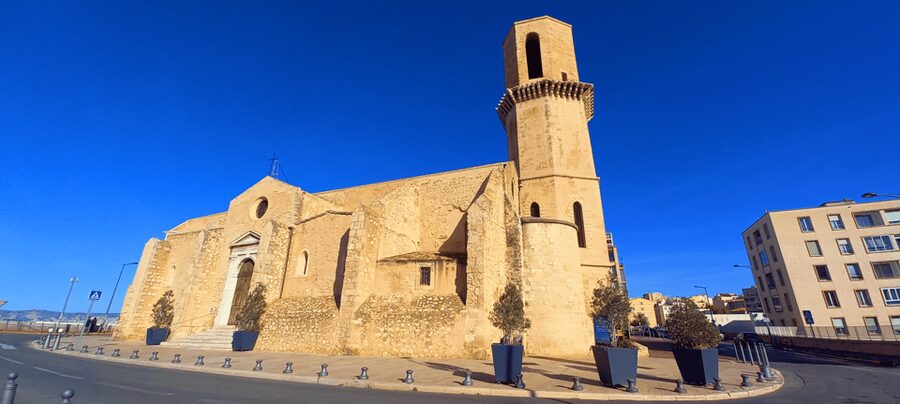
150 minutes sounds exact, and it is—but the feel depends on walking pace and how much your guide stops to explain. Expect steady walking across about a 5 kilometer route. The tour is designed as a walk with pauses, not a quick sprint from photo spot to photo spot.
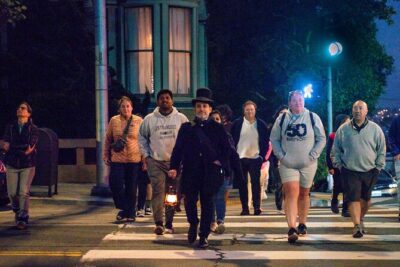
Small group size matters here. With a maximum of 8 participants, the pace stays workable and questions don’t hijack the schedule. From the way Charles runs the day, you also get an impression of a guide who watches the group. People mention he keeps the tour fun without letting it feel chaotic, and that he’s good about tailoring the flow if a question or a curiosity comes up.
My practical advice:
- Bring water and something small to snack on. Food isn’t included.
- Wear shoes you trust on uneven paving.
- Sunglasses help, because you’ll hit open port light and hillside views.
Who Charles is and why the tour feels personal
Charles, your guide, is local and bilingual (French and English). The most noticeable thing about his approach is that the history doesn’t come out as a lecture. It comes out as story logic—connected events you can picture.
Several people note that Charles uses diagrams and photos to show how the city used to look and how it changed over time. That’s a big deal in Marseille, where parts of the modern city can make ancient roots hard to spot. Visuals help you understand what you’re looking at while you’re still standing there.
You’ll also get humor in the mix. It’s not silly. It just makes dense topics easier to hold onto. And because it’s a small group, it’s genuinely easier to ask questions along the way.
One more practical perk: Charles tends to share recommendations after the tour—museums, restaurants, and things to do nearby. Even if you’re only in Marseille for a short stop, that follow-up is the difference between seeing a city and actually using your time there.
Price and value: what $41 buys you in Marseille
At $41 per person for a 150-minute guided walking tour, the value comes from three places: time efficiency, expert interpretation, and group size.
First, 2.5 hours is enough to cover major areas without wasting your day stuck in transit. Second, you’re not paying just for access to landmarks—you’re paying for translation of context: why the port mattered, why Le Panier is where it is, and how Marseille’s older layers show up in architecture and street patterns.
Third, the small group cap (8 participants) keeps the experience from feeling like a rushed slideshow. That’s what turns a decent walking tour into an actually useful one for a first visit.
If you’re short on time, this tour is one of those “buy orientation” moves: you leave with a stronger sense of where to go next and what to look for when you walk on your own.
Who should book this guided walk (and who might skip)
This is a strong fit if:
- You’re visiting Marseille for the first time and want a clear starting foundation
- You like street-level history, not only museum rooms
- You want a mix of port atmosphere and hilltop neighborhoods
- You’re okay walking around 5 km and stopping for explanations
You might skip (or pick a lighter option) if:
- You need wheelchair accessibility. This tour isn’t suitable for wheelchair users.
- You want minimal walking and maximum lounging
- You’re sensitive to long sun exposure and don’t want to manage water breaks
Should you book this tour?
I think you should book it if you want your Marseille day to make sense quickly. Starting at La Major, then moving through Le Panier, the harbor, Saint Victor, and ending at Le Pharo is a smart route that builds understanding step by step. Charles’s storytelling, bilingual delivery, and small-group pace are exactly what you want when your schedule is tight but your curiosity is big.
Do it early in your trip if you can. The best value isn’t only the sites. It’s what you learn so the rest of the city becomes easier to read on your own.
FAQ
Where is the meeting point?
Meet your guide in front of La Major Cathedral in Marseille (Cathédrale Basilique Sainte-Marie-Majeure, dit La Major). The guide will be wearing a white cap.
How long does the tour last?
The tour runs for about 150 minutes.
How far do you walk?
This tour covers a 5 kilometer route.
What’s included in the price?
The tour includes a live walking guide. Food and drinks are not included.
Is the tour wheelchair accessible?
No. It is not suitable for wheelchair users.
Where do you get dropped off at the end?
You have two drop-off locations: Old Port of Marseille and Palais du Pharo.