REVIEW · PHILADELPHIA
Philadelphia: History, Highlights & Revolution Walking Tour
Book on GetYourGuide →Operated by WeVenture · Bookable on GetYourGuide
Revolutionary Philadelphia is easier on foot. This 150-minute walk turns the big-name landmarks into a simple story, moving through Old City and Independence National Historical Park with a live guide doing the explaining. I love how the route connects Independence Hall, the Liberty Bell, and Elfreth’s Alley into one coherent timeline, instead of just stop-and-gawk sightseeing.
I love the Museum of the American Revolution stop, especially the live presentation tied to the George Washington tent. You’ll also get discounted admission you can use after the tour, so you can slow down when you want more than a quick overview. One thing to keep in mind: you’re on your feet for about 2½ hours, so dress for Philly weather and be ready for a fair amount of walking and standing.
In This Review
- Key points at a glance
- Signer’s Garden start: a clear kickoff for Old City
- Independence Mall and Independence National Historical Park: getting your bearings fast
- Independence Hall plus Congress Hall: the founding drama, minus the confusion
- Liberty Bell and Carpenters’ Hall: the stops that lock in the meaning
- The recreated President’s House: the founding story gets personal
- Museum of the American Revolution: live Washington tent demo and a smart ticket add-on
- Elfreth’s Alley to Betsy Ross House: the street-level Revolution
- Benjamin Franklin’s grave and the US Mint: founders, industry, and legacy
- Finishing in Old City: what to do once the walk ends
- Price and value: why $45 makes sense for 2.5 hours
- Who this tour is best for
- Should you book this Philadelphia Old City Revolution tour?
- FAQ
- Where is the meeting point?
- How long is the tour?
- What will we see during the walk?
- Is the Museum of the American Revolution stop included?
- Do I get anything extra for the museum?
- Is the tour wheelchair accessible?
- What language is the tour guide?
- Can I get a refund if plans change?
- Does my ticket support anything locally?
Key points at a glance
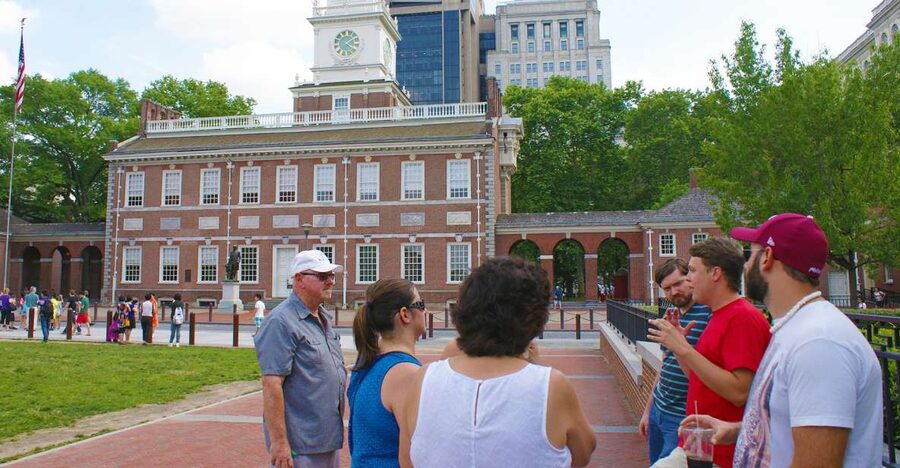
- Independence Hall and Liberty Bell, explained in plain order so the major events connect fast
- Museum of the American Revolution live tent demonstration with the Washington connection up close
- Photo-worthy Old City stops at the Liberty Bell, Betsy Ross House, and Benjamin Franklin’s grave
- Small-group style interaction that helps you get your questions answered (and get better photos)
- Discounted museum entry after the walk so you can choose how much time to spend inside
- A ticket that supports a local community organization tied to historic preservation
Signer’s Garden start: a clear kickoff for Old City
The tour begins at the Signer Statue in Signer’s Garden, which is a nice change from the chaos of trying to meet near a busy street corner. You’ll start your walk already “in the story,” since the area itself points you toward the founding-era theme before you even move.
If you’re driving, plan extra time. Parking in Old City can be tight, and street or metered parking isn’t a reliable bet because the maximum time is shorter than the tour length. Giving yourself cushion here means you’re not rushing at the start.
You can also read our reviews of more walking tours in Philadelphia


Independence Mall and Independence National Historical Park: getting your bearings fast
Right away, you’ll pass through Independence Mall and into Independence National Historical Park territory. This is where the tour earns its keep for first-timers: the guide isn’t just naming buildings. You’ll learn what these spaces were for and why they mattered to the new United States.
The park setting also helps you understand scale. From street level, it can feel like a cluster of famous sights. With a guide’s pacing and context, it starts to read like a sequence of decisions, arguments, and public moments.
Independence Hall plus Congress Hall: the founding drama, minus the confusion
At Independence Hall, you’ll spend time focused on what happened there—specifically, the creation of the Declaration of Independence and the U.S. Constitution. The landmark is famous, but what’s often missing for visitors is the “why it happened when it did” feeling. That’s where the walking format helps. You hear the story, then you immediately see the surrounding civic architecture that shaped it.
You’ll also visit Congress Hall, another key piece of the founding era puzzle. The best part is that these are not treated as random historic stops. They’re linked as part of how the Revolution and early government actually played out.
If you like learning through a map in your head, this is your tour. You’ll get a clear line from the major documents to the places where government business got done.
Liberty Bell and Carpenters’ Hall: the stops that lock in the meaning
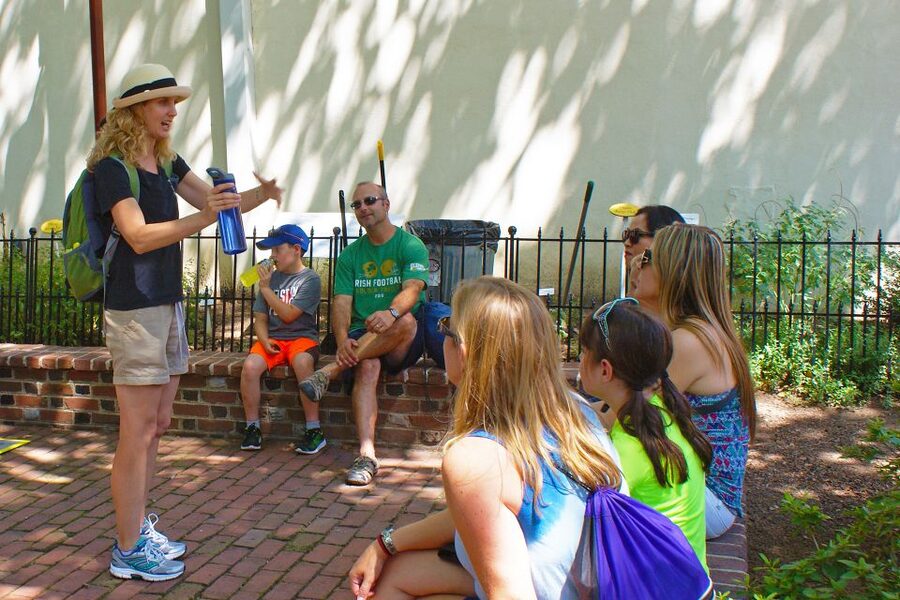
The Liberty Bell is a photo stop, so don’t expect a long linger. Still, it’s one of those moments where the guide’s framing makes all the difference. You’ll hear why this symbol became what it is—and why people in the founding era cared about freedom as something practical, not just patriotic phrasing.
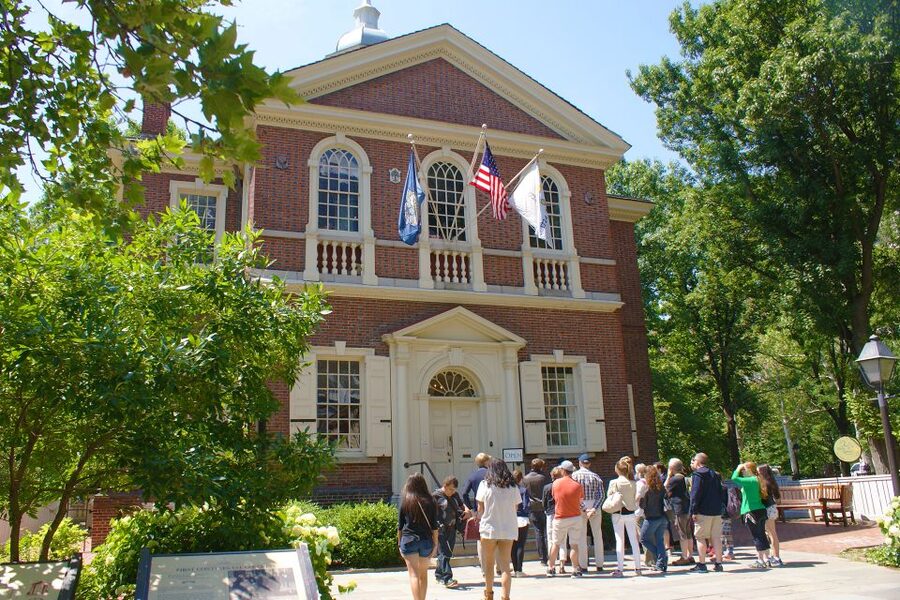
Next comes Carpenters’ Hall, and this is where the tour keeps you from feeling stuck in only the biggest names. The building helps broaden the story beyond the poster sites, and it adds texture to how meetings and civic life took shape during the Revolution.
The recreated President’s House: the founding story gets personal
One of the most memorable parts is when you make your way up the steps and into the recreated President’s House site. You’ll learn about the lives of the two leaders who lived there, plus the often overlooked people who played key roles in making the founding era work.
This is a smart move for a walking tour because it shifts you from dates and documents into human scale. You stop thinking of leadership as a single spotlight and start seeing a whole system of people, routines, and responsibilities.
Museum of the American Revolution: live Washington tent demo and a smart ticket add-on
The Museum of the American Revolution stop includes a guided presentation with a George Washington tent demonstration—focused on the war-period setting tied to his living quarters. It’s the kind of thing that makes you look at history from the inside out, not like a museum label stuck to the wall.
Even better: you’ll receive discounted admission to the museum that you can redeem after the tour. That matters because the walking tour gives you direction, not a replacement for reading every exhibit panel. Use the discount later when you’re ready to slow down, especially if you’re the type who likes to return to places after the initial story clicks.
On a short trip, this setup is good value. You’re not paying just to see exteriors, and you’re not forced into a full museum day on someone else’s schedule.
Elfreth’s Alley to Betsy Ross House: the street-level Revolution
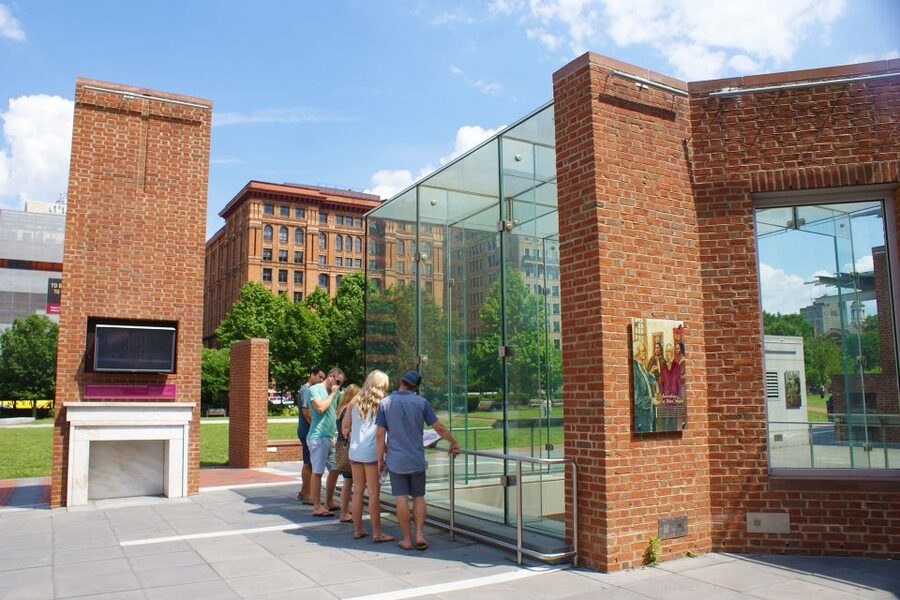
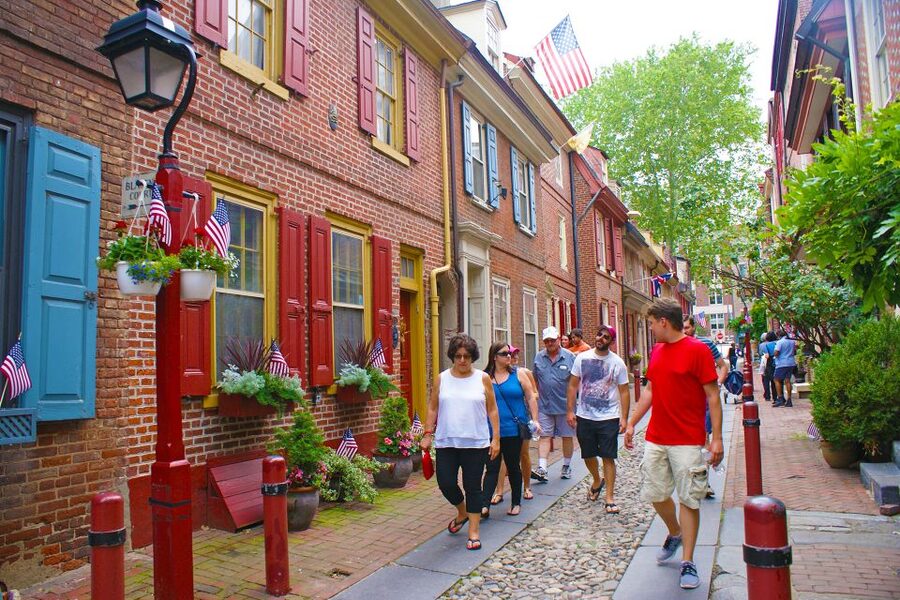
Then the tour shifts from public buildings to everyday life, which is exactly what makes Philadelphia more than a museum city. You’ll walk down Elfreth’s Alley, described here as the nation’s oldest continuously inhabited residential street. That alone is a powerful contrast: Revolutionary politics might be the headline, but people lived ordinary lives in the same city.
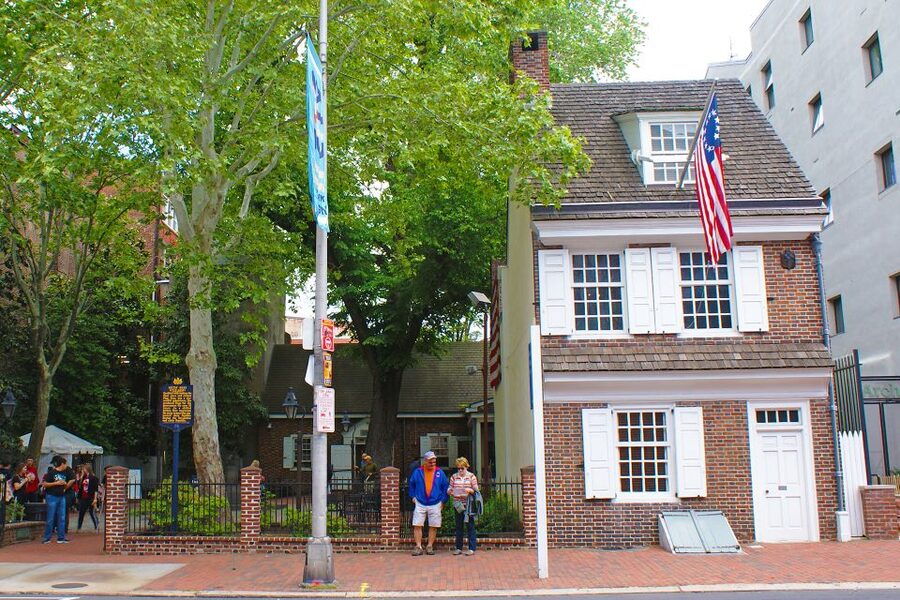
You’ll also stop at the Betsy Ross House for a photo opportunity connected to the story of Betsy Ross, credited with creating the first American flag. It’s a quick moment, but it helps anchor how symbolism traveled into homes and craft—where national identity becomes something you can hold.
Tip: wear shoes you don’t mind on uneven ground. These Old City streets look charming on camera, but they’re still streets.
Benjamin Franklin’s grave and the US Mint: founders, industry, and legacy
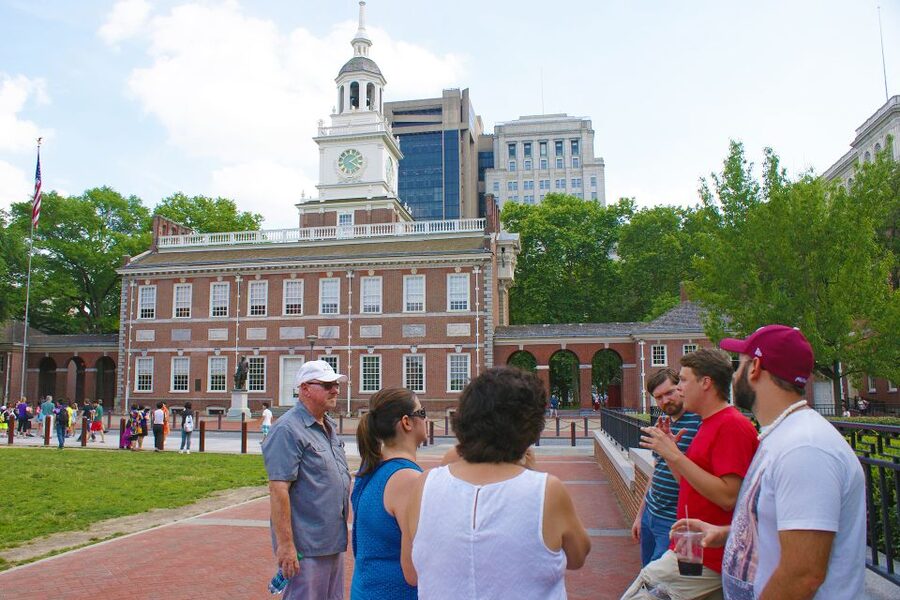
You’ll pass by Benjamin Franklin’s burial site with a photo stop. Franklin is one of those figures where a short explanation can still change how you see the entire founding era. The tour places him where you can pay respects and connect his influence to the places and people around him.
The tour also includes a sighting of the U.S. Mint. That’s a useful inclusion because it nudges the story beyond speeches and meetings. Early America had to solve practical problems—trade, money, manufacturing, and trust. Seeing the Mint while you’re already thinking Revolutionary thoughts makes that connection feel less abstract.
Finishing in Old City: what to do once the walk ends
You’ll finish back in Old City, which is a great landing spot. After 150 minutes, you’ll have the mental framework to explore on your own—whether that’s wandering a little longer around the Independence area or heading to the Museum of the American Revolution with the discounted admission you earned during the tour.
If you’re trying to fit Philadelphia into a tight schedule, this is also a strong way to “prime the pump.” The guide’s narrative gives you direction, so later museum time doesn’t feel like random rooms. It feels like follow-up.
Price and value: why $45 makes sense for 2.5 hours
At $45 per person for about 150 minutes, this tour is priced like a serious guided experience, not a casual stroll. Here’s what you’re actually getting for the money:
- A local guide who talks through the major Independence-era story beats
- A Museum of the American Revolution live demonstration (the Washington tent presentation)
- Discounted museum admission you can use afterward
- A donation to a local community organization tied to historic support
- A national park service fee included in the cost
For me, the value comes from the combination. You’re not paying only for access to famous buildings, and you’re not paying only for a museum lecture either. You get both, plus a ticket that supports local work. If you’re short on time and want the highest concentration of Revolutionary-era meaning in one afternoon, this hits the target.
One more value point: you’ll hear your guide’s style. In past groups, I’ve seen guides like John and Brittney praised for being engaging and personable, while Adam and Tom were repeatedly noted for story depth and strong pacing. Nina, Maria, Peter Coë, Caroline, Carla, and Patricia also show up in the guide mix with consistent feedback about clarity and answering questions well.
Who this tour is best for
This works especially well if you want a clear Independence-era overview without drowning in dates. It’s also a good fit for families and mixed-age groups—one guide was even praised for making the walk fun for a 14-year-old plus adults while keeping pace manageable.
If you already know a lot of Revolutionary history, you’ll still likely enjoy it for the physical geography and the way the guide threads the story together. And if you’re a first-timer, you’ll come away with a much better mental map for what to see next.
Should you book this Philadelphia Old City Revolution tour?
Yes, if you want a guided walk that turns the famous Independence landmarks into a readable story and then adds a hands-on style museum presentation with the Washington tent connection. The discounted museum admission afterward is a practical bonus, and the included donation gives your ticket meaning beyond your own photos.
Book it especially if you only have a half day (or less) and you want your time to feel structured. Just make sure you’re comfortable walking for about 2½ hours, and plan layers. Philly weather loves surprises, and your best photos will happen when you’re not rushing the whole time.
FAQ
Where is the meeting point?
Meet your guide at the Signer Statue in Signer’s Garden.
How long is the tour?
The duration is 150 minutes.
What will we see during the walk?
You’ll explore iconic Old City Philadelphia sites, including Independence Hall, the Liberty Bell, the Museum of the American Revolution, Elfreth’s Alley, the Betsy Ross House, Benjamin Franklin’s grave, and you’ll also pass by Congress Hall, Carpenters’ Hall, and areas around North 6th Street and Market Street. The U.S. Mint is also included.
Is the Museum of the American Revolution stop included?
Yes. The tour includes a guided presentation at the Museum of the American Revolution featuring a live demonstration with the tent that George Washington lived in during the war.
Do I get anything extra for the museum?
You’ll receive discounted admission into the Museum of the American Revolution that you can redeem after the tour.
Is the tour wheelchair accessible?
Yes, it is wheelchair accessible.
What language is the tour guide?
The tour guide provides the experience in English.
Can I get a refund if plans change?
Free cancellation is available up to 24 hours in advance for a full refund.
Does my ticket support anything locally?
Yes. The tour includes a donation to a local community organization, connected to historic sites supported by ticket proceeds.