REVIEW · BARCELONA
Barcelona 2-Hour Gothic Walking Tour
Book on GetYourGuide →Operated by Turisme de Barcelona · Bookable on GetYourGuide
Barcelona’s Gothic Quarter reads like a mystery novel. In just 2 hours, you move through 2,000 years of Barcelona stonework, from Roman traces to soaring Gothic corners, guided by someone who knows how to point out what you’d otherwise miss. It’s all in the same compact maze, so you’re not spending half your trip just finding the next turn.
I especially love the way the tour helps you see monuments as lived-in history, not postcard backdrops. The Cathedral cloister and the visit to Capella de Santa Àgata make the religious architecture feel real, and the walking route brings you close to key spots like Plaça del Rei and the Saló del Tinell.
One thing to consider: it’s a steady 2 hours of walking on cobblestones, plus a few indoor pauses. If you’re tight on mobility, plan for a slower pace and speak up early so your guide can help your group keep comfortable.
In This Review
- Key highlights to look for
- Start at Plaça Seu: the i symbol and getting oriented fast
- Two hours in Barri Gòtic: Roman traces to Gothic grandeur
- Barcelona Cathedral cloister: why the tour stop feels bigger than the exterior
- Capella de Santa Àgata: the small stop with an emotional punch
- Museu d’Historia de Barcelona: turning buildings into a timeline
- Plaça del Rei and Plaça Sant Felip Neri: when the stones have stories
- Carrer del Bisbe and the secret balconies: details you’d miss alone
- English bonus at Museu Frederic Marès: the payoff after the walking ends
- What to wear and how to pace yourself for a smooth 2 hours
- Price and value: why $32 can make sense in Barcelona
- Should you book this Barcelona Gothic Quarter tour?
- FAQ
- How long is the Barcelona 2-Hour Gothic Walking Tour?
- Where does the tour meet?
- What sites are included during the walk?
- Is the tour available in English?
- What extra benefit is included for the English tour?
- What is the price?
- Is the tour guided?
- Can I cancel for a refund?
Key highlights to look for
- Cathedral cloister stop that adds meaning behind the big façade
- Capella de Santa Àgata for a quieter, more intimate side of Gothic Barcelona
- Gothic Quarter route that connects Roman leftovers to medieval power
- Plaças like Plaça del Rei and Plaça Sant Felip Neri, with real atmosphere and history
- English bonus: Museu Frederic Marès right after the walk, with time to wander
Start at Plaça Seu: the i symbol and getting oriented fast
The tour meets at the tourist information office, so look for the small i symbol. The starting point is at Plaça Seu (Plaça Seu, 2), a handy area because it puts you right by the Gothic Quarter heart. You’ll begin with your official local guide, and once you’re moving, the neighborhoods start to make sense quickly.
This is a smart setup for a first-day visit. The Gothic Quarter can feel like a puzzle box. With a guide, the streets become a timeline instead of random alleys, and you start linking names you see later on your own.
You can also read our reviews of more walking tours in Barcelona



Two hours in Barri Gòtic: Roman traces to Gothic grandeur
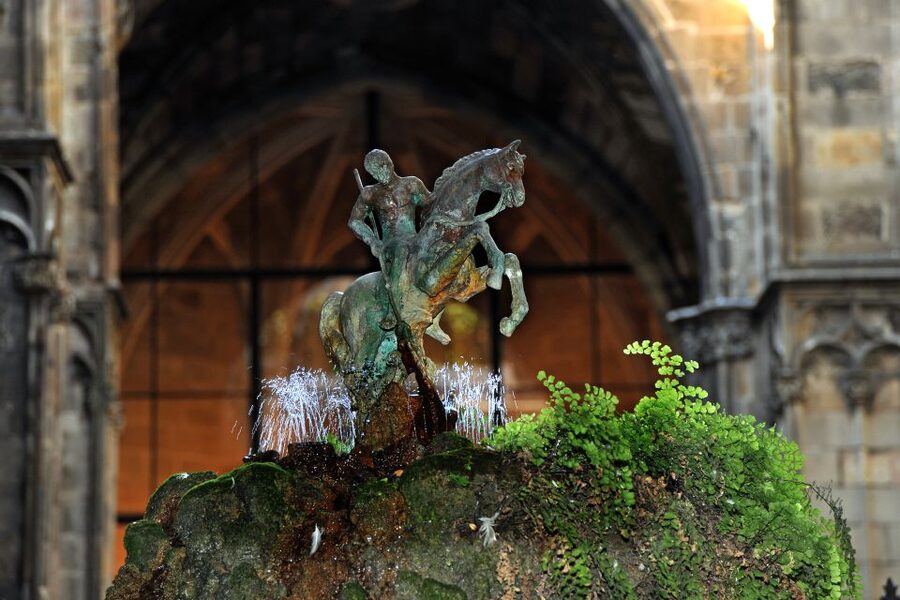
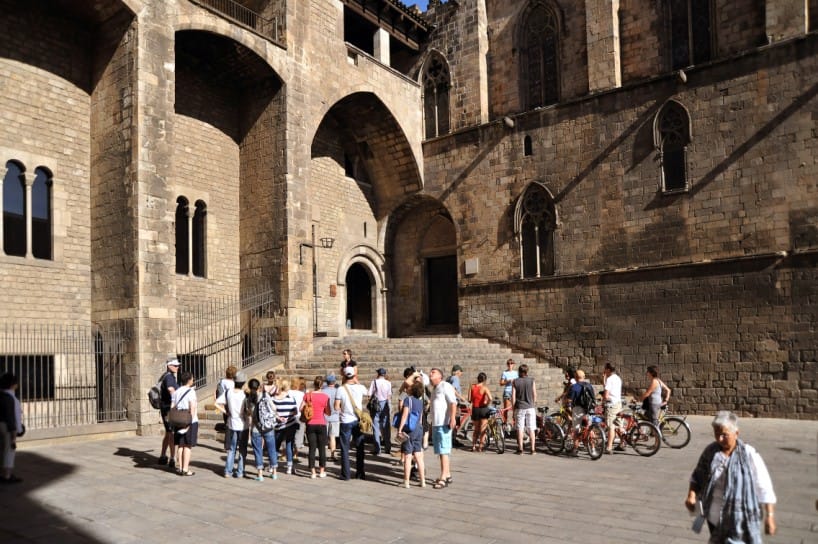
The core experience is a guided stroll through the Gothic Quarter, focused on the streets, squares, and centuries-old buildings that still shape daily life. You’ll pass major historic landmarks and also the kind of “wait, what is that?” details that most guidebooks don’t highlight.
A few of the standout concepts the tour brings together:
- Roman Barcelona (Barcino) is not gone. You get pointed to places like the Roman Temple of Augustus, tucked away in a medieval courtyard.
- Medieval power isn’t abstract. You’re shown where royal and civic life played out, including references such as the Palau Reial Major and the Saló del Tinell.
- Gothic Barcelona feels earned, not decorative. The architecture doesn’t just impress; it tells you who had influence, and when.
If you like walking tours that teach you how to look, this one fits well. Many guides on this route are described as friendly, funny, and able to answer questions on the spot. You might even get visual support, like photos used to help you match what you’re seeing to the story being told.
And yes, it’s compact. One review noted that you don’t have to walk very far because the sites are close. Still, you’re on your feet for the full block of time, so comfortable shoes really matter here.
Barcelona Cathedral cloister: why the tour stop feels bigger than the exterior
At the Cathedral stop, you don’t just get the famous exterior. You also get a guided look that includes the cathedral cloister, which changes how you understand the place. The cloister works like an architectural classroom: you see how the building’s parts relate, and why Gothic design was meant to do more than look impressive.
This is also where the guide’s job becomes clear. The Cathedral can feel overwhelming if you’re just sightseeing. With a guide, it becomes manageable, and you start noticing patterns in stonework and space. A few of the guide names mentioned in past tours include people like Alex, Alexa, and others, and the common thread is that they slow you down at the right moments.
Also, plan for indoor time. If you arrive expecting only “outside photos,” you’ll be pleasantly surprised by how much of the experience happens in quiet, structured spaces.
Capella de Santa Àgata: the small stop with an emotional punch
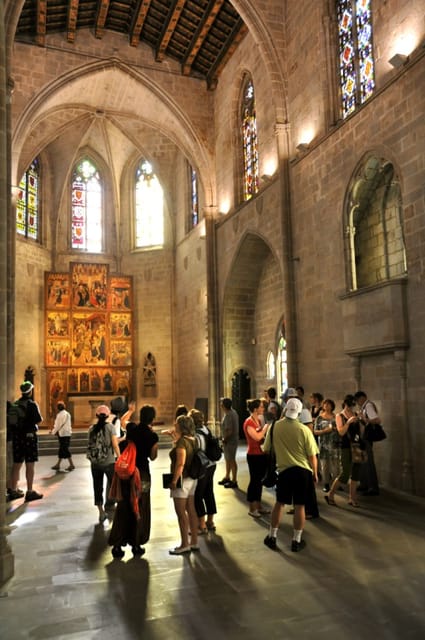
Next comes the Chapel of Santa Àgata, guided and meant to be seen with context, not rushed past. This is the kind of location that can get lost if you’re doing Barcelona solo. In a guided format, you’re more likely to notice details that signal why the chapel mattered to the people who built and used it.
The tour’s overall theme helps here. The Gothic Quarter isn’t just about big monuments. It’s also about the way sacred architecture sits inside everyday neighborhoods. Santa Àgata gives you that smaller-scale contrast: less about spectacle, more about atmosphere and meaning.
If you’re the type who enjoys architecture, this stop is a good payoff. You’ll leave with a clearer idea of how Gothic religious spaces were designed for specific experiences of light, movement, and reverence.
Museu d’Historia de Barcelona: turning buildings into a timeline
Inside the Museu d’Historia de Barcelona, the tour adds a different kind of learning. Instead of only walking past scenes, you get a guided museum moment that ties what you saw outside to what the city looked like across eras.
Even if you’re not a hardcore museum person, this stop tends to work because it connects back to the Gothic Quarter route. The museum piece helps you place Roman references and medieval stories into a more coherent timeline, so the streets you just walked feel like parts of a bigger puzzle.
The museum component also balances the tour. Two hours can easily become repetitive if everything is exterior. Adding a guided museum look gives your brain a chance to reorganize what it just learned.
A few more Barcelona tours and experiences worth a look


Plaça del Rei and Plaça Sant Felip Neri: when the stones have stories
A big part of what makes this walk worth your time is the inclusion of the squares. Plaça del Rei gets highlighted as one of the most atmospheric squares in Europe, and for good reason: it feels like a “stage” for history. You get architectural edges, a sense of old power centered nearby, and a clearer idea of how the Gothic Quarter functioned beyond tourism.
Then there’s Plaça Sant Felip Neri, a more moving stop because of its layered past. This square includes a baroque church and walls marked from Spanish Civil War bombings, while today it’s a place where children play and musicians sometimes bring music to the air. That contrast is what makes it memorable, even if you only pause briefly.
These squares are also where you get the most “Barcelona feel.” The tour doesn’t treat the Gothic Quarter like a dead museum. It shows you places locals still use, which helps you understand why this area stays alive.
Carrer del Bisbe and the secret balconies: details you’d miss alone
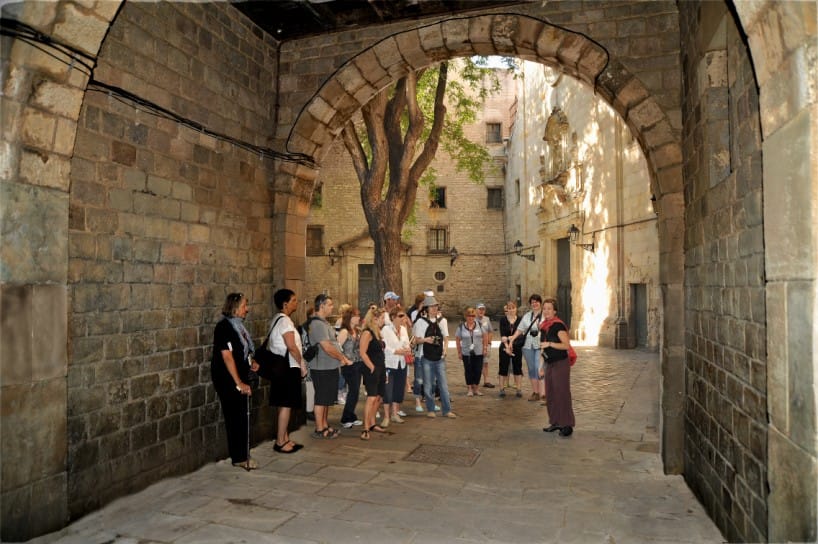
Between the major monuments and squares, the tour threads through streets like Carrer del Bisbe, where you can spot Gothic facades and flower-filled balconies. It’s a small thing, but it matters. The Gothic Quarter’s beauty is often in the micro-details: carved edges, doorways, and the way buildings frame narrow sightlines.
This is also where your guide earns their fee. Several guides mentioned in past tours, including Olga Escribano, Jordi, and Pilar, are described as passionate and good at answering questions. That means when you’re staring at a façade, you’re not guessing. You’re learning what you’re looking at and why it’s shaped the neighborhood.
If you like taking photos, these are the moments you’ll want your camera ready, because they give you visuals that go beyond the single “main view” most people chase.
English bonus at Museu Frederic Marès: the payoff after the walking ends
If you’re joining the English tour, one of the best value add-ons is that the walk ends with access to the Museu Frederic Marès. This isn’t just a quick pass. The tour includes free admission, and you get time for your own wandering afterward.
The museum is housed in a medieval palace, which means you’re not only seeing objects. You’re also experiencing period architecture again, right after the Gothic Quarter walk. Inside, the focus is on a wide collection tied to Marès, including sculptures, antique curiosities, and personal artifacts. You can expect a mix of religious art and everyday objects, including things that reflect how people lived rather than only what they believed.
This bonus works especially well if you like your history slightly off the main track. It’s a nice cultural “second chapter” after the outdoor route, and it gives your brain time to slow down without feeling like you wasted time.
What to wear and how to pace yourself for a smooth 2 hours
This tour is built for a specific rhythm: walking first, then guided indoor moments. Because you’ll cover a lot in a short time, I’d plan like this:
- Wear shoes that handle uneven stone.
- Bring a small drink and take a moment when you can.
- If you’re sensitive to heat or rain, dress in layers. One rainy-day group mentioned the tour handed out umbrellas, and having the right outer layer makes a big difference.
If you need your pace adjusted, don’t wait until midway. A guide named Miguel has been described as understanding with a guest who had movement difficulty, so you’ll want to speak up early and make it easy for your guide to help.
Also, if you’re given audio equipment (some groups mention an earpiece), keep it in place. It makes a difference when you’re in alleys where voices don’t carry the way they do in open squares.
Price and value: why $32 can make sense in Barcelona
At $32 per person for 2 hours, you’re paying for the main advantage of guided history: saved time and better viewing. Barcelona is full of impressive buildings, but the Gothic Quarter can be a blur if you’re moving without context.
Here’s where the value shows up:
- You get a structured route through key sites, including the Cathedral cloister and the Santa Àgata chapel, which take more effort to plan than most solo travelers realize.
- The guide can point out details you’re unlikely to spot on your own, like Roman relics inside medieval surroundings.
- If you choose the English tour, the Museu Frederic Marès add-on is a meaningful bonus because it extends your experience beyond the outdoor walk.
Even if you don’t end up loving every single stop, the tour often pays you back through “aha” moments: seeing Roman Barcelona under Gothic layers, recognizing how squares shaped daily life, and understanding how to read the architecture going forward.
Should you book this Barcelona Gothic Quarter tour?
Book it if you want a fast, high-signal introduction to the Barri Gòtic. This is especially good for first-timers who want history that connects to what you can actually see today, not just names and dates.
Skip it if you prefer slow museum time over street walking, or if you already know the Gothic Quarter well and want deeper self-guided research. The format is efficient by design, so it’s less about lingering and more about learning the area in a short window.
If you do book, I’d plan to schedule it early in your trip. Once you learn the structure of the Quarter, the rest of your Barcelona days feel easier, because you’ll know where you are, what you’re looking at, and why it’s there.
FAQ
How long is the Barcelona 2-Hour Gothic Walking Tour?
It lasts 2 hours.
Where does the tour meet?
The meeting point is at the tourist information office. Look for the i symbol at Plaça Seu (Plaça Seu, 2).
What sites are included during the walk?
The tour includes a guided walk through Barcelona’s Gothic Quarter, with visits that include the Barcelona Cathedral (including the cloister) and the Chapel of Santa Àgata, plus a guided stop at the Museu d’Historia de Barcelona.
Is the tour available in English?
Yes. The tour language listed is English.
What extra benefit is included for the English tour?
The English tour includes free admission to the Museu Frederic Marès after the walking tour, along with free time there.
What is the price?
The price is $32 per person.
Is the tour guided?
Yes. It’s a live tour with an official local guide.
Can I cancel for a refund?
Free cancellation is available up to 24 hours in advance for a full refund.