REVIEW · HUE VIETNAM
Hue Customizable Tour with Imperial Citadel & Forbidden City
Book on GetYourGuide →Operated by Adventure Journey Vietnam · Bookable on GetYourGuide
A bronze gate complex can tell you a whole empire. This Hue tour is a practical way to understand the Nguyễn Dynasty world inside the Imperial Citadel, plus the Forbidden Purple City where royal life played out behind walls. I especially liked the way guides like Ha and Misa explain symbols in plain English, and the smart stop-by-stop flow that keeps the story moving. One thing to plan for: you still need to budget Imperial City entrance tickets and you’ll do plenty of walking under Hue’s heat.
You can choose the walking tour (guided on foot for about 2.5 hours through the key royal zones) or a private car day where you set your own order and add major sights around Hue. That flexibility is real value here: it can be a focused afternoon in the Citadel or a full-day hit list.
Either way, you’ll get an English-speaking local guide for the walking option, meeting at the bronze cannons area near Cửa Ngăn. If you pick the private car option, you get transportation with an English-speaking driver, but not a licensed guide—so you’ll want to rely on your own reading or choose the walking tour when you want deeper explanations.
In This Review
- Key highlights you’ll feel fast
- Hue’s Imperial Citadel is easier to read with a guide
- Walking tour vs private car: pick your style of Hue
- The walking tour (guided on foot)
- The private car option (you set the pace)
- Where the tour starts: the bronze cannons near Cửa Ngăn
- The route through the Citadel: gates, flag tower, and the main ceremonial spine
- Nine Holy Cannons (Cửu Vị Thần Công)
- Stage of Flag / Flag Tower (Kỳ Đài Huế)
- Cửa Ngọ Môn (Noon Gate) and troop/ceremonial movement
- Thái Hòa Palace (Điện Thái Hòa)
- Nine Dynastic Urns, Mieu Temple, and the court’s calendar of worship
- Nine Dynastic Urns (Cửu Đỉnh Huế)
- Mieu Temple (Thế Miếu Huế)
- Forbidden Purple City: where royal life stayed behind walls
- How long you’ll actually spend, and what to do after the guide leaves
- Private car add-ons: build a full Hue day around royal tombs
- Tickets and budget math: the real cost of an Imperial City visit
- What you’ll learn (beyond buildings)
- Who should book this Hue experience
- Practical tips that make the tour easier
- Should you book this Hue tour?
- FAQ
- Where do I meet for the walking tour?
- How long is the walking tour through the Imperial Citadel and Forbidden City?
- Is the Imperial City entrance ticket included?
- Are combo tickets available for the Imperial City and tombs?
- What languages are offered?
- Is pickup included?
- What happens at the end of the walking portion?
- If I choose private car, do I get a guide?
- Can I customize the private car itinerary?
- What is the cancellation policy?
Key highlights you’ll feel fast
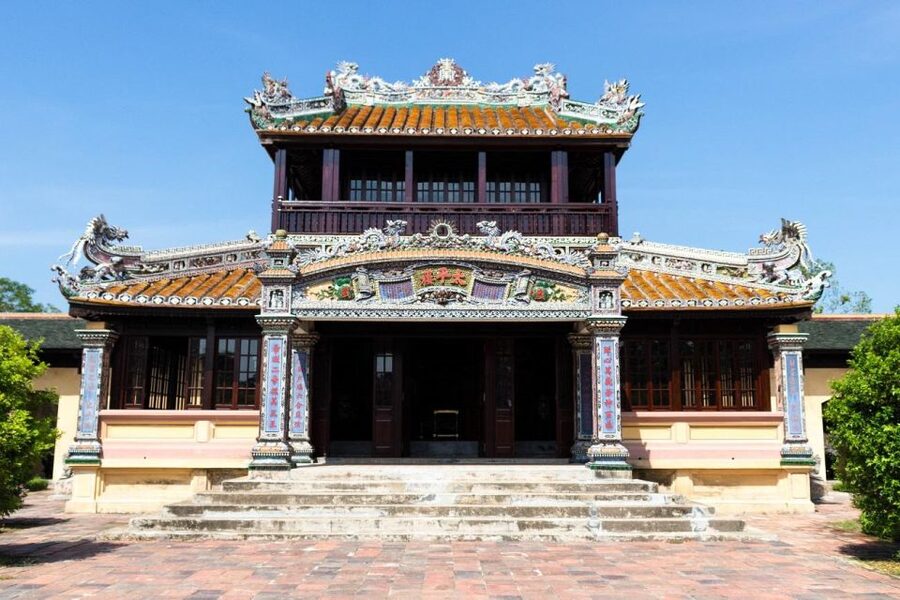
- Royal symbolism made simple: guides connect numbers, gates, and building layouts to how the court thought.
- Two ways to do it: walking for history depth, private car for freedom and pacing.
- A strong start at the cannons: the tour kicks off near the bronze works that frame the Imperial City.
- Coronation-core architecture: you’ll spend real time around Thái Hòa and the halls that mattered.
- Finish with freedom: after the Forbidden Purple City, you can linger on your own nearby.
- Add classic Hue sights: Thien Mu Pagoda and major royal tombs are available as add-ons.
Hue’s Imperial Citadel is easier to read with a guide
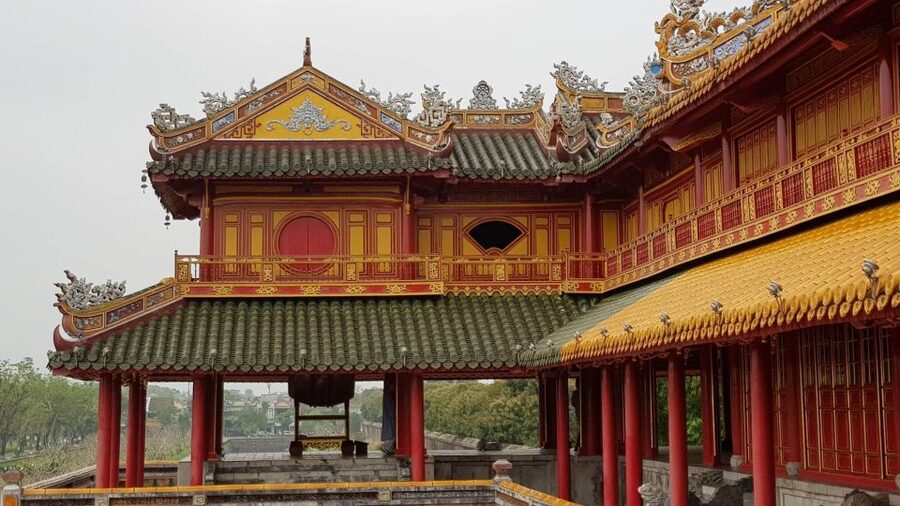
Hue’s royal complex can feel like a maze if you’re just wandering with a map. With this tour, you get the “decoder ring” for what you’re seeing—why the gates sit where they do, why certain structures matter, and how the Nguyễn emperors organized power through space.
I like that the guide isn’t just listing facts. The best guides in this program (people like Ha, Misa, Nhi, Nhien, and Linh) are strong on storytelling. They explain the court world in a way that makes the buildings stop being random stone and start acting like a timeline.
And because the tour is built around key architectural stops, you don’t waste time “finding the good parts.” You arrive at them in the order that makes sense.
You can also read our reviews of more city tours in Hue Vietnam


Walking tour vs private car: pick your style of Hue
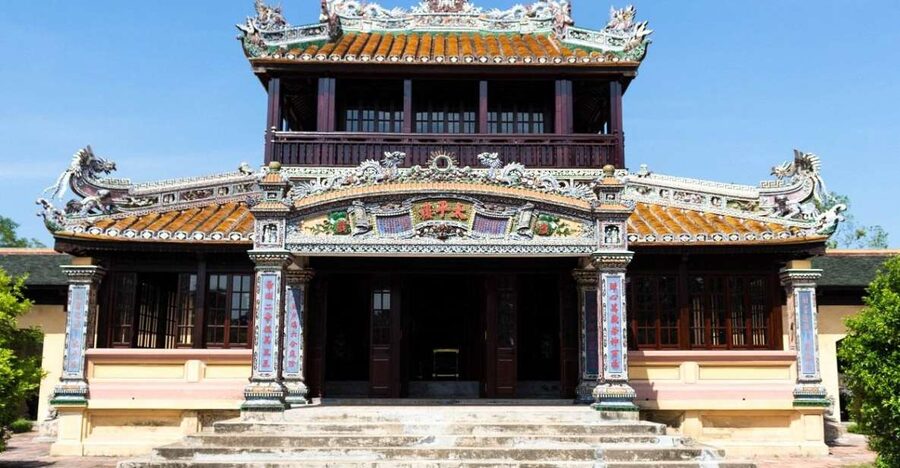
This experience works because it offers two different ways to experience the same area.
The walking tour (guided on foot)
If your priority is history and meaning, choose the walking option. You’ll meet your guide in the Citadel area (near the bronze cannons by Cửa Ngăn), then spend roughly 2.5 hours walking through the Imperial Citadel and Forbidden Purple City.
This is the best match when you want to understand the royal logic: how gates guide ceremonies, how palace space supports hierarchy, and why the complex is laid out the way it is.
The private car option (you set the pace)
If you want freedom and fewer steps, the private car option makes sense. You’ll be picked up from a central Hue hotel or Hue Railway Station, then driven around to the sights you choose from a menu.
Here’s the trade-off: the driver is English speaking for communication, but they’re not positioned as a tour guide. So you’ll get smooth transport and timing, but not the deep explanations that you get with the walking tour.
Where the tour starts: the bronze cannons near Cửa Ngăn
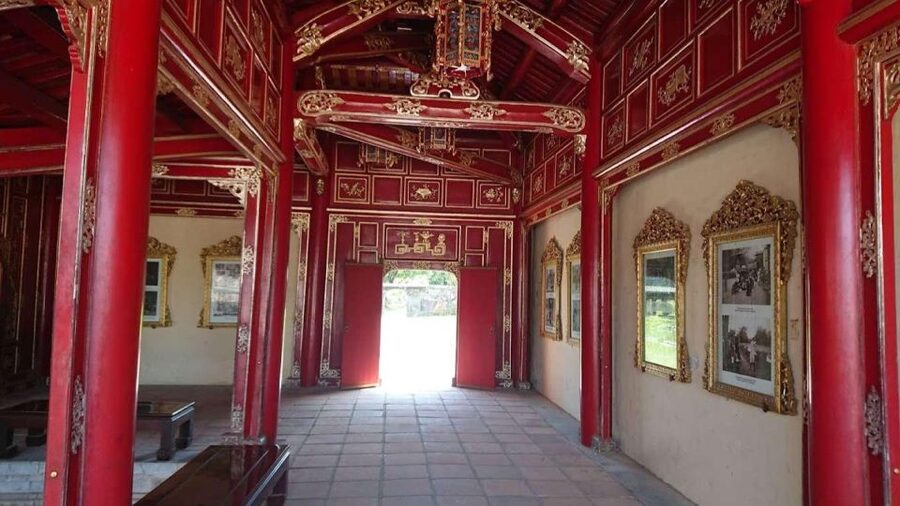
Meeting can be a small headache on some tours. Here, it’s pretty direct.
Your guide holds an A4 paper with your name at 4 Bronze Cannons near the Ngan Gate (Cửa Ngăn) inside the Hue Imperial area. It’s also worth knowing: there are bronze cannons on the opposite side too, so it helps to confirm you’re at the right set.
Why start with cannons? Because they anchor the story early. The complex isn’t just about buildings—it’s about how Hue’s court used power, art, and ceremony to project authority.
The route through the Citadel: gates, flag tower, and the main ceremonial spine
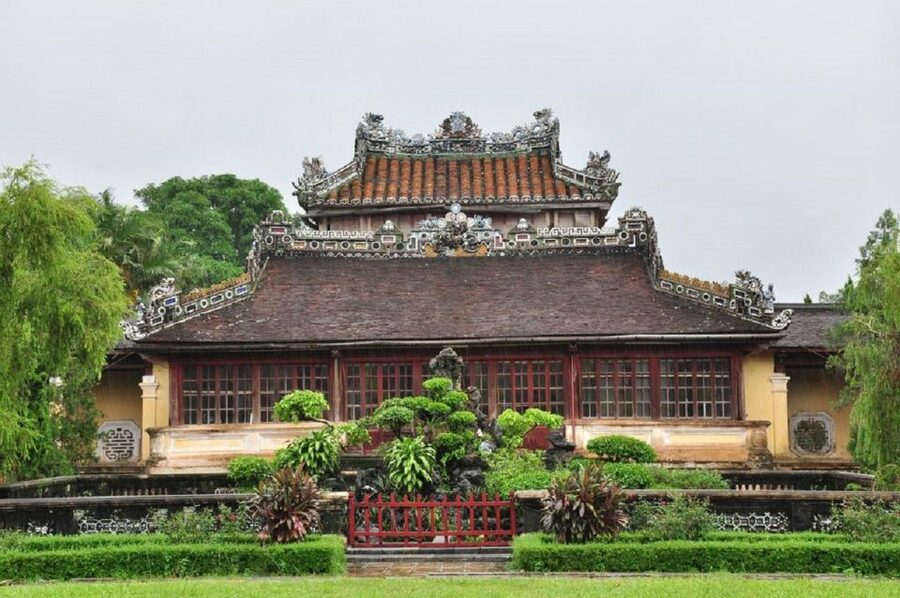
Your guided walk is organized around the places that help you “read” Hue’s royal world.
Nine Holy Cannons (Cửu Vị Thần Công)
You’ll see the Nine Holy Cannons early. These bronzes were cast in Gia Long’s second year (1803), and they’re treated as top-tier bronze art. The tour also explains that during the reign of King Khải Định, they were moved to their current position.
I like this stop because it makes the Citadel feel less like a museum of big buildings and more like an operating system of power—art and politics in the same package.
Stage of Flag / Flag Tower (Kỳ Đài Huế)
Next comes the area tied to royal signaling: the flag structure in the south face zone. The tour frames it as part of how the court displayed authority and coordinated ceremonies.
Even if you’re not a flag-nerd, this helps you understand how the Citadel used visual cues for status.
Cửa Ngọ Môn (Noon Gate) and troop/ceremonial movement
The Noon Gate is one of the highlights because it’s clearly tied to both ceremony and movement. You’ll hear how it was built in 1833 in traditional Vietnamese style under King Minh Mạng, then used for troop movements and formal events.
This is the moment where the walking tour really pays off: without a guide, it’s easy to see a gate and move on. With a guide, you start noticing how gates control access and attention.
Thái Hòa Palace (Điện Thái Hòa)
Then you reach the ceremonial heart around Thái Hòa Palace—the coronation place of 13 Nguyễn kings from Gia Long to Bao Dai.
This stop is a big deal for context. It’s the kind of place where you quickly understand why “palace” here isn’t just decorative. It’s the political center, built to host the moments that define a dynasty.
Guides also tend to explain connections to the way the court thought about order—how architecture reinforced their worldview. That’s exactly the kind of detail people come back loving when they talk about guides like Misa.
Nine Dynastic Urns, Mieu Temple, and the court’s calendar of worship
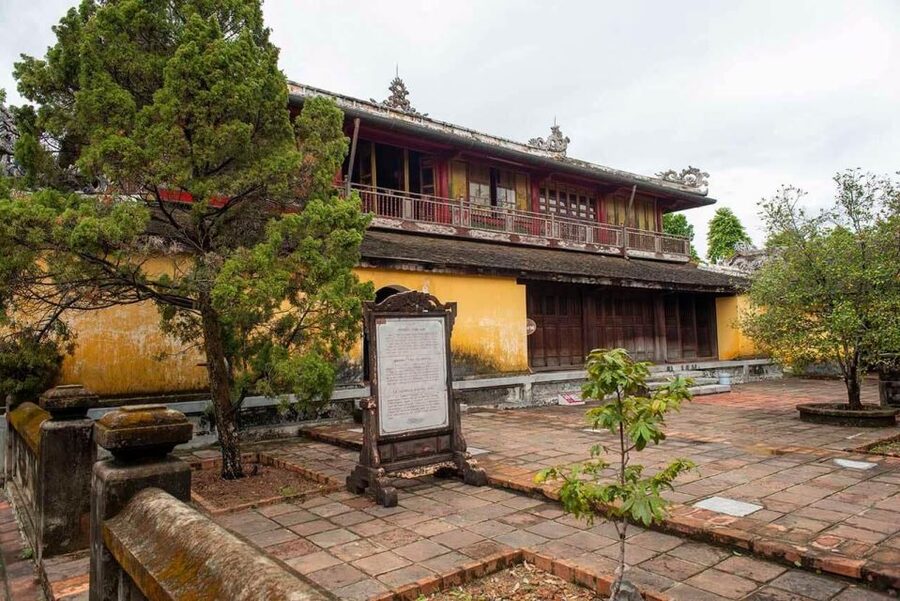
After the main ceremonial zones, the tour adds the “spiritual maintenance” side of royal rule.
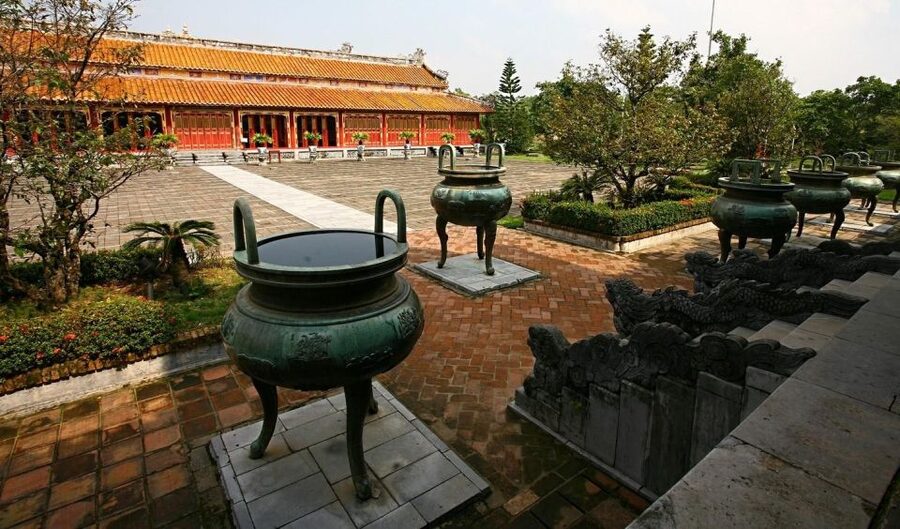
Nine Dynastic Urns (Cửu Đỉnh Huế)
You’ll visit the bronze urns in front of the Mieu Temple area. The tour explains they were commissioned by Emperor Minh Mạng in 1835 and inaugurated on March 1, 1837. You’ll also learn how they fit into the court’s symbolism.
Mieu Temple (Thế Miếu Huế)
The Mieu Temple is described as a place to worship 10 Nguyễn kings (built in 1821 under Minh Mạng, as the tour explains).
This part helps you understand something most people miss on a first visit: royal rule wasn’t only about politics and warfare. It also relied on rituals that kept the dynasty “legible” to its people.
Forbidden Purple City: where royal life stayed behind walls
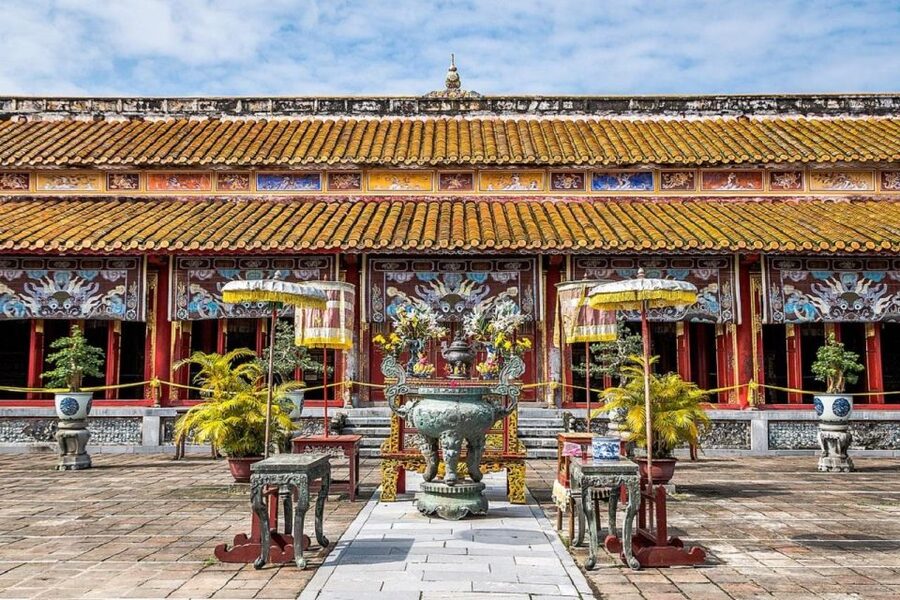
The tour’s final big guided zone is the Forbidden Purple City (Tử Cấm Thành).
This is where the story shifts from ceremonies to daily court life. The tour explains that this area belonged to the core royal world: kings, queens, minor wives, and concubines. It sits behind the Thái Hòa area in the Imperial City complex.
You’ll hear that the complex was first built by King Gia Long (1804), and later the name changed in Minh Mạng’s reign (1822), becoming known as the Forbidden Purple City.
I like that the tour doesn’t treat this like a “sad forbidden place.” It frames it as a system of controlled access—space that shaped relationships, power, and routine.
Guides also tend to keep this section engaging by asking questions and tying specific structures to how the court worked. People mention that the pacing feels right and that there’s time to look around without being bullied along.
How long you’ll actually spend, and what to do after the guide leaves
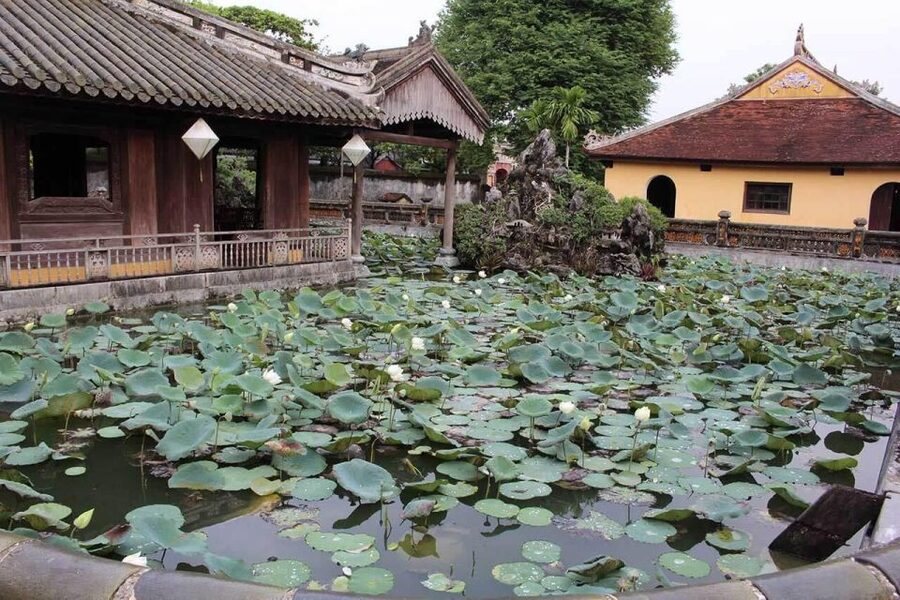
A key feature: once you’ve gone through the Forbidden Purple City, the guide says goodbye and your official guided time ends.
That’s useful because it lets you switch into “wander mode” without losing the context you just learned. You can:
- Return for extra photos with a clearer sense of what you’re photographing
- Slow down near the spots you liked most
- Use nearby time to observe everyday life in the area around the Citadel
Practical note: the walking is outdoor-heavy. If you can, pick an option with an earlier start in the morning, so you get the same sights with less suffering.
Private car add-ons: build a full Hue day around royal tombs
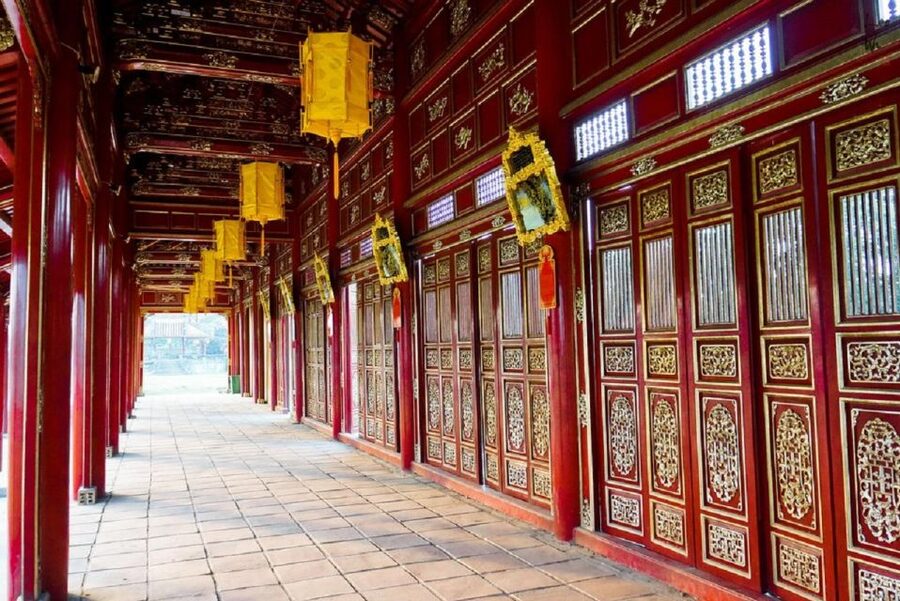
If you choose the private car option, you can customize your route with stops such as:
- Thien Mu Pagoda
- Minh Mang Tomb
- Tomb of Tự Đức
- Khai Định Tomb
- Thủy Tiên abandoned water park
- Plus time to include the Citadel area depending on how your day is arranged
Why these are strong pairings: royal tombs and the Imperial Citadel are two halves of the same story. The Citadel shows how power worked while emperors ruled. The tombs show how they wanted power remembered after death.
And if you’re curious about different emperors, your tomb choices help you compare eras in stone. It’s also a great way to pace the day: you can trade a long walk for a car ride when the heat gets too much.
Tickets and budget math: the real cost of an Imperial City visit
The tour price is listed as $12 per person, and that’s a big reason it’s attractive. But you should plan your real total with the ticket situation in mind.
Entrance tickets for the Imperial City are not included. The entry price is listed as 200k/adult for the Imperial City.
There are also combo tickets you may want:
- 420k for Imperial City with 2 tombs (valid in two days)
- 530k for Imperial City with 3 tombs (valid in two days)
So the best value strategy depends on how many tombs you plan to see. If you’re doing only the Citadel complex on one afternoon, you’ll likely stick to the Imperial City entry. If your plan includes royal tombs across one or two days, the combo can help.
Also: tickets matter more than you’d think for timing. When you know your ticket choice early, you reduce awkward pauses at entry points.
What you’ll learn (beyond buildings)
This tour is built around understanding Vietnamese royal culture, not only sightseeing.
You can expect explanations about:
- Vietnamese emperors and their royal world
- Their wives, minor wives/concubines, and eunuchs (the tour highlights this directly)
- How the royal court reinforced hierarchy through space, ceremony, and symbolism
The best part is when the guide matches the level to your curiosity. Some guides keep it clear and structured; others go more into symbol meaning and architecture details. You’ll feel that the guide is there to help you connect dots, not just to pass the time.
People also talk about guides being friendly and good at answering questions. If you’re the type who asks why a gate faces a certain direction or what a symbol represents, this kind of tour rewards you.
Who should book this Hue experience
This is a great fit if:
- You want a clearer understanding of Hue’s Nguyễn-era world
- You value guided context for major historical sites
- You like a flexible day where you can add other attractions by private car
It’s less ideal if:
- You hate walking in hot weather (the Citadel walk is outdoor and spread out)
- You expect a full guide for the private car option (that option includes the driver, not a guide)
For first-time Hue visits, I’d lean walking tour first, then use the rest of your time for either tombs or downtime.
Practical tips that make the tour easier
- Bring water and plan for breaks. There are multiple short breaks built into the schedule.
- Wear shoes that can handle uneven stone. The Citadel surfaces aren’t always flat and friendly.
- If you’re planning tombs too, choose your ticket plan early so you’re not guessing day-of.
- Ask questions when you feel curious. Some guides—like Ha and Misa—do a great job turning your questions into clearer explanations.
If you want the best “bang for your buck,” pair a guided walking tour of the Citadel with one or two tomb stops. That gives you both the living court and the court legacy.
Should you book this Hue tour?
Yes, if you want to understand Hue instead of just seeing it. The combination of a focused guided route inside the Imperial Citadel plus the chance to explore the Forbidden Purple City makes this a strong use of time.
Book it especially if you’re interested in royal culture and want guides who explain in an accessible way—people like Ha, Duy, Misa, Nhien, Nhi, and Linh show up again and again for a reason: they turn architecture into a story you can actually remember.
If you’re trying to keep costs ultra-low and skip the walking, consider whether you’d be happy doing the Citadel with less guidance. But if you want meaning and not just photos, this is one of the best ways to spend an afternoon in Hue.
FAQ
Where do I meet for the walking tour?
You meet your guide at the 4 Bronze Cannons area near the Ngan Gate (Cửa Ngăn). The tour note also says there are other cannons on the opposite side.
How long is the walking tour through the Imperial Citadel and Forbidden City?
You’ll have about 2.5 hours walking through the Hue Imperial Citadel and Forbidden City.
Is the Imperial City entrance ticket included?
No. Entrance tickets to the Imperial City are not included. The Imperial City entry price is listed as 200k/adult.
Are combo tickets available for the Imperial City and tombs?
Yes. The information lists combo ticket options valid in two days: 420k with 2 tombs, or 530k with 3 tombs.
What languages are offered?
The tour guide is listed as English.
Is pickup included?
Pickup is included for the private car option for city-centered hotels in Hue (and for Hue Railway Station / Phu Bai Airport in Hue). The walking tour option starts at the cannons, with pickup not included.
What happens at the end of the walking portion?
After the Forbidden Purple City, the local guide says goodbye and the tour finishes. You then have your own time to discover the area nearby.
If I choose private car, do I get a guide?
Not as a guide. The private car option includes an English-speaking driver for communication, but it’s noted that there is no tour guide for the private car option selected.
Can I customize the private car itinerary?
Yes. You can customize the day to include options such as Thien Mu Pagoda, Minh Mang Tomb, Tự Đức Tomb, Khai Định Tomb, and Thủy Tiên abandoned water park, depending on what you choose.
What is the cancellation policy?
The tour offers free cancellation up to 24 hours in advance for a full refund.