REVIEW · PARIS
Paris Montmartre Private Walking Tour – Best Art, Culture, Food
Book on Viator →Operated by ExperienceFirst · Bookable on Viator
Montmartre turns into a storybook fast on foot. This private, 90-minute walk mixes big-name art sites with small, fun details like the I Love You Wall and Montmartre’s last windmill, plus time for photos and breaks. I particularly love how the route connects art history to what you can still see today, and how the food-and-culture stops feel built for real sightseeing. One thing to think about: it’s mostly step-free, but you still tackle hills and narrow streets, and Sacré-Cœur entry is not included—so you may need a plan for that if you want to go inside.
You also get the one-two punch of serious creativity and playful Paris. I like that you’re not just staring at monuments—you’re learning the why, from the artists tied to Bateau-Lavoir to the symbolism around the windmill and surrealist sculpture. And since it’s private, you can usually slow down for viewpoints, snacks, and questions without feeling herded. The only real drawback is that you should expect an exterior-focused tour experience, with hills and traffic around the most popular corners.
In This Review
- Key Points to Know Before You Go
- Why Montmartre’s Art, Food, and Street Life Works in 90 Minutes
- Meeting at Rue des Abbesses: Start Here Like a Pro
- I Love You Wall: Your First Photo, But Make It Meaningful
- Montmartre’s Old Streets: Cafés, Boutiques, and a Bohemian Past
- Bateau-Lavoir: Where Picasso, Modigliani, and Braque Became a Movement
- The Windmill and Renoir/Van Gogh Links: Art You Can Point To
- The Wall-Man Sculpture and Marcel Aymé’s Surreal Twist
- Dalida Bronze Bust: Music Fame, Local Roots
- The Pink House Café: A Photo Op With a Real Food Reason
- The Montmartre Vineyard: Winemaking Heritage in the City
- Sacré-Cœur at the Highest Point: Views First, Entry Later
- The Private Guide Advantage: Flexibility That Matters
- Price and Value: What $57.13 Buys You in Real Terms
- Should You Book This Montmartre Private Walking Tour?
- FAQ
- How long is the Paris Montmartre Private Walking Tour?
- Where does the tour start and end?
- Is this tour private?
- Is entry to Sacré-Cœur included?
- What language is the tour offered in?
- Do I need a ticket on my phone?
- Is the route accessible for people who can’t handle stairs?
- What kinds of stops will I see during the walk?
- How far in advance is it commonly booked?
- Is there free cancellation?
Key Points to Know Before You Go
- I Love You Wall: the message appears in over 300 languages, so it feels less like a photo spot and more like a mini art statement
- Bateau-Lavoir: you’ll connect the area to Picasso, Modigliani, and Braque and understand why this neighborhood mattered
- Windmill + art references: the windmill is tied to paintings by Renoir and Van Gogh, and it links to Montmartre’s lively past
- Food and photo rhythm: there’s built-in time for refreshments and pictures, including a famous pink café house
- Sacré-Cœur views without entry: you’ll get the high-point payoff and tips for going inside on your own
Why Montmartre’s Art, Food, and Street Life Works in 90 Minutes
Montmartre is one of those places that can swallow a whole day. This tour trims the chaos down to 1 hour 30 minutes, while still covering the ideas that make the neighborhood matter: artists, street culture, and the kind of Paris that feels human-sized. You’ll start near Rue des Abbesses and end around La Bonne Franquette, with Sacré-Cœur’s hilltop presence in your last stretch.
What makes it practical is the pace. The tour includes time for refreshments and photographs, so you’re not forced to sprint between stops. And because it’s private, your local guide can adjust to your group—if you’re photo-heavy, curious, or simply want a few extra minutes at a café.
The other big win is focus. Instead of “check the box” sightseeing, you get a thread that ties together art spaces like Bateau-Lavoir, playful landmarks, and music/celebrity memory like the Dalida bronze bust.
You can also read our reviews of more walking tours in Paris



Meeting at Rue des Abbesses: Start Here Like a Pro
The tour starts at 19 Rue des Abbesses, 75018 Paris. You’ll also end at La Bonne Franquette, 18 Rue Saint-Rustique, 75018 Paris. Both are in the middle of the Montmartre action, so plan to arrive a few minutes early and double-check you’re at the exact spot listed for the start.
Montmartre streets can confuse navigation apps, especially around small squares and clustered entrances. My advice: take a screenshot of the meeting point from the tour details before you leave your hotel, then match it to what you see on the street. If you’re doing this with kids or you’ve got multiple people in your group, give yourself extra buffer time—this area runs busy and a little stop-and-go.
Also keep in mind the guide will be leading a walking route that avoids stairs, but you’ll still deal with hills and narrow streets. If you’re even slightly unsure about your comfort level, it’s smart to plan ahead with comfortable shoes.
I Love You Wall: Your First Photo, But Make It Meaningful
Your first stop is the I Love You Wall in a small Montmartre square. The art installation spells out the phrase I Love You in over 300 languages. It’s sweet, yes—but it’s also a clever way to start the tour because it sets the tone. Montmartre isn’t only about museums and famous painters. It’s also about everyday creativity and public art.
From a practical perspective, this is a good early stop because it’s easy to orient yourself. You can take a few photos right away, and you’re not yet committing to the longest uphill portions. If you’re traveling with kids, this is a strong “low effort, high payoff” start: easy to see, quick to understand, and visually fun.
Montmartre’s Old Streets: Cafés, Boutiques, and a Bohemian Past
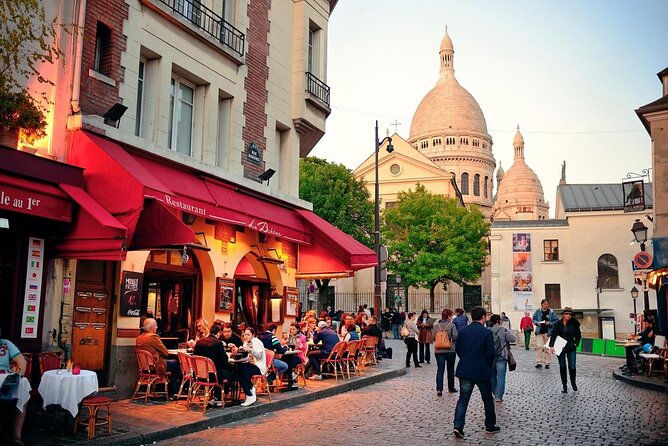
Next you’ll walk one of Montmartre’s oldest streets, a busy corridor packed with cafés, boutiques, and historic-looking architecture. This is where your guide gives you the bohemian context—why artists and oddballs ended up here, and how the neighborhood’s reputation turned into a kind of permanent stage set.
I like this stop because it helps you read the neighborhood as you walk. A lot of Montmartre is “pretty,” but the best part is realizing it’s pretty on purpose. Your guide connects what you’re seeing now to the way the area functioned when creativity was less about galleries and more about life in the street.
A small note: this area can feel crowded. Since the tour is private, you won’t be squeezed into a giant group wave, but it can still be tight in places. If you’re someone who hates crowds, plan your photos quickly and aim your questions at your guide rather than scanning endlessly for the next landmark.
Bateau-Lavoir: Where Picasso, Modigliani, and Braque Became a Movement
Bateau-Lavoir is one of the most important stops on the route. It was once a humble artists’ residence, and it’s closely tied to legends who revolutionized modern art—Picasso, Modigliani, and Braque.
What’s valuable here is your guide’s framing. You’ll learn the idea of Bateau-Lavoir as a creative hub, not just a name-drop. When you see the physical setting and hear how artists used places like this, it makes the modern art story feel grounded instead of abstract.
Drawback? You may want to slow down here for photos and questions, but you’re also in a busy neighborhood. If your group likes quiet, choose a moment when the street traffic thins a bit, or just focus on listening. The story lands best when you let it.
You can also read our reviews of more food & drink experiences in Paris



The Windmill and Renoir/Van Gogh Links: Art You Can Point To
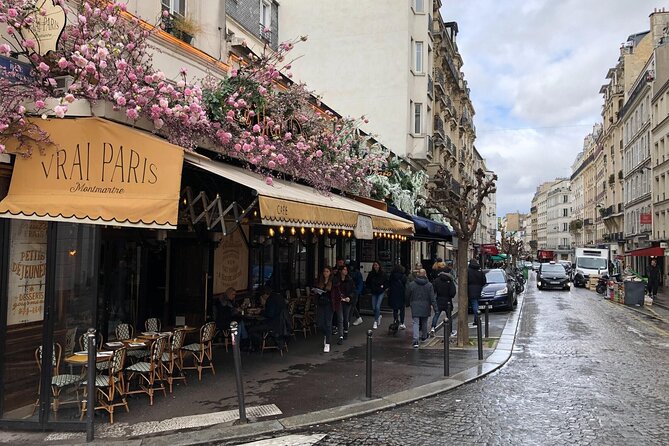
Montmartre’s historic windmill is featured in paintings by Renoir and Van Gogh, and it’s a beloved symbol of the area. It’s also more than a scenic backdrop: it once served as a dance hall, which adds a fun layer to the Montmartre mythos.
This is one of those stops where I love a guide who can connect symbolism to reality. A windmill is easy to understand. The “once a dance hall” detail makes it feel like a living part of the neighborhood rather than a staged photo prop.
Also, if you’re a visual thinker, the art references give you a mental filter. Even without seeing the paintings right now, you can start imagining how the same view would have looked to artists back then.
The Wall-Man Sculpture and Marcel Aymé’s Surreal Twist
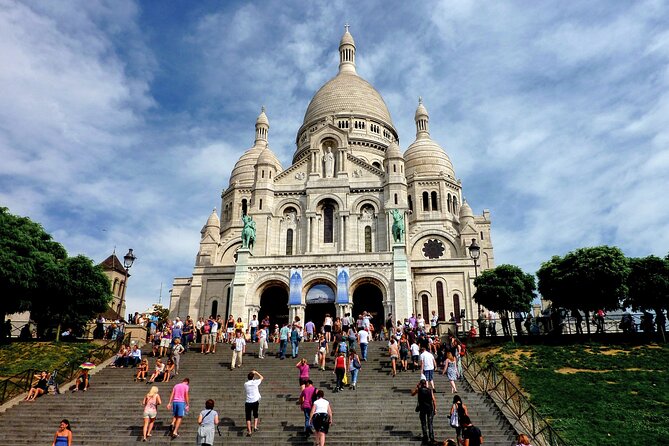
You’ll also see a whimsical sculpture inspired by a short story by Marcel Aymé: a man walking through a wall. It’s a playful nod to the surrealism often associated with Montmartre.
I find this stop refreshing because it shifts gears. You’re not only learning about painters and famous names—you’re getting a taste of Montmartre’s oddball imagination. The sculpture is small, fun, and instantly recognizable in photos, but it also signals the neighborhood’s larger attitude: reality is flexible here.
It’s a good stop if your group enjoys quirky storytelling. It can also be a useful break from the bigger, more serious art stops.
Dalida Bronze Bust: Music Fame, Local Roots
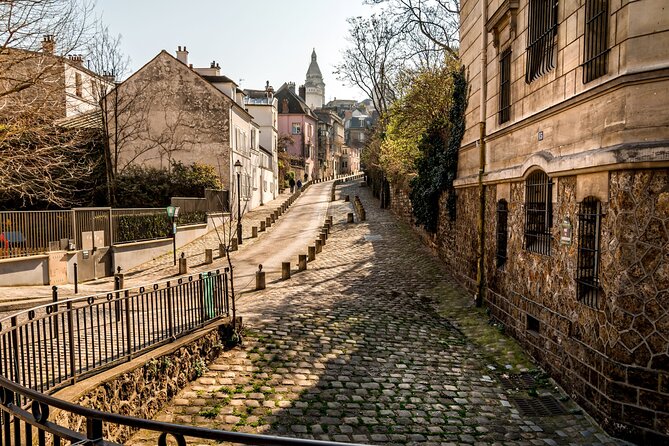
Next comes a bronze bust honoring Dalida, a French singer who was a long-time Montmartre resident. It’s located in a peaceful square, which makes it a nice contrast to the busier street segments.
This is where the tour broadens beyond painting into the wider cultural identity of Montmartre. It reminds you that artistic reputation isn’t only about painters—it’s also about music, performance, and how a neighborhood keeps memories in public spaces.
If you like “Paris as living memory,” this one lands well. It’s not a massive monument, but it gives you a clearer sense of how names and stories get honored in the city.
The Pink House Café: A Photo Op With a Real Food Reason
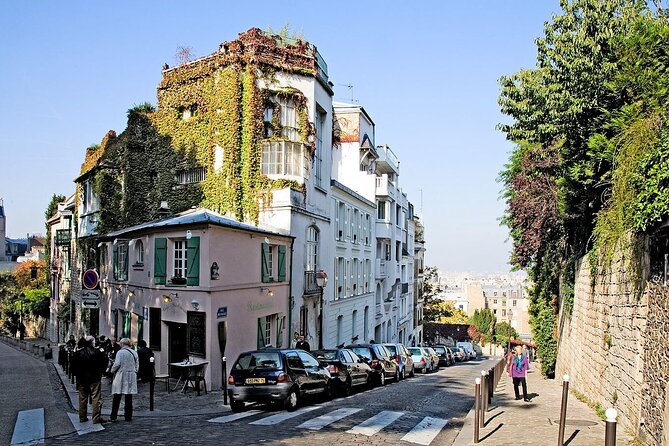
One of the tour’s most memorable stops is a quaint pink house that’s been an emblem of Montmartre for decades. It’s a café now, and your guide will point out why it mattered to artists—Picasso and Utrillo are linked to the spot—and help you understand what to look for as you take photos.
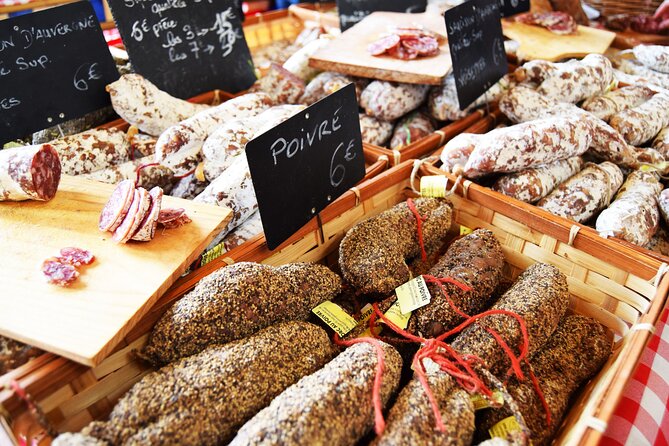
This is also where the food angle becomes concrete. Since the tour includes time for refreshments, you’re not just walking past places and hoping something is good later. You’ll get a better sense of the neighborhood’s daily rhythm—then you can choose to stop based on what your feet and your appetite need.
Realistically, it can be a popular photo stop, so expect some company. If you’re hungry, treat it as a chance to rest your legs and reset rather than just chasing the perfect angle.
The Montmartre Vineyard: Winemaking Heritage in the City
Hidden in the heart of Montmartre is a small vineyard that produces wine. The vineyard was established in 1933 to preserve Montmartre’s winemaking heritage, and it now functions like a living reminder that this neighborhood wasn’t always just stone-and-stories.
Even if you don’t plan to drink wine, I love this stop because it makes Montmartre feel less like a theme park. It adds a “time depth” layer. You’re standing in a place that carries a specific history, not only a famous view.
If you’re the kind of traveler who appreciates small facts that change your understanding of a place, this is a highlight.
Sacré-Cœur at the Highest Point: Views First, Entry Later
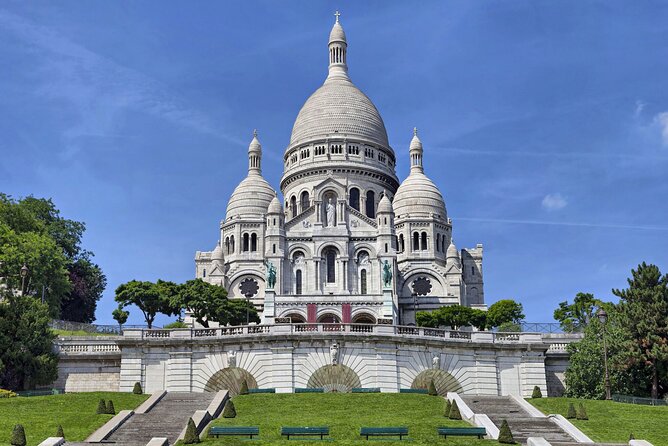
The tour ends with Sacré-Cœur Basilica, perched at the highest point in Paris. Expect stunning city views and a serene atmosphere. Built in the late 19th century, its white domes and intricate mosaics are major visual attractions.
Important: the tour includes passing by the basilica and sharing tips on what to see inside, but entry is not included. If you want to go in, the good news is that it’s free of charge to enter when open—your guide will give pointers so you can make the self-guided visit more worthwhile.
This is also the best moment for a quick reality check. If you’re hoping for a full basilica experience with tickets and a long interior time slot, this probably won’t match that expectation. But if you want the exterior viewpoint payoff and a plan for your own next steps, it’s ideal.
The Private Guide Advantage: Flexibility That Matters
Because this is a private tour, it’s built for you. Your guide can adapt the pace and order based on your interests. If your group cares more about art than food, you’ll get more story time at the artist sites. If you want more photo stops, you’ll have room.
You’ll also be with an experienced local guide. The names you might encounter, based on prior group experiences, include guides like Laura, Anastasia, Heidi, and Tamar—and they’re described as strong at storytelling, kid-friendly explanations, and sharing practical food ideas.
That last part matters more than people think. In Montmartre, where the streets look similar and menus blur together, a guide pointing you toward better bites can save both money and time. Even if you only use a tip or two, it changes how the neighborhood feels.
Price and Value: What $57.13 Buys You in Real Terms
At $57.13 per person for about 1 hour 30 minutes, this tour sits in the “budget-friendly but not bargain” category. The value comes from the private format plus the concentration of high-interest stops in a short window.
Here’s how I’d judge the value for myself:
- You’re paying for someone to connect what you see—Bateau-Lavoir, the windmill, Marcel Aymé’s surreal reference, Dalida’s bust—into a clear storyline.
- You’re paying for flexibility and time for breaks, rather than rushing through just to tick sites off a list.
- You’re paying for local food suggestions in a neighborhood where it’s easy to overspend or end up in a spot that’s only good for photos.
If you’re traveling solo or as a couple, private tours can still feel pricey, but the short duration helps. If you’re a family, the kids-friendly storytelling and the ability to slow down at the right moments can be worth it. If your group members are mobility-limited, the hills and narrow streets may reduce the value, because you’ll have to adjust your expectations.
Should You Book This Montmartre Private Walking Tour?
Book it if you want Montmartre without the overwhelm. This tour is best for people who like art, quirky culture, and practical sightseeing with time to snack and photograph. The route makes sense: it starts with an instantly fun public art moment, moves through artist landmarks like Bateau-Lavoir, adds playful surprises like the Marcel Aymé sculpture, and finishes with Sacré-Cœur views.
I would skip or reconsider if your group needs lots of step-free space and low walking. The tour avoids stairs, but it still involves hills and narrow, busy streets. Also think about what you want at Sacré-Cœur: you’ll get excellent exterior views and guidance, but you won’t have a booked entry included.
If you’re comfortable with a short uphill day and you want a guide who can turn Montmartre into a coherent story, this private walk is a solid use of your time—and a good value for what you get.
FAQ
How long is the Paris Montmartre Private Walking Tour?
It runs for about 1 hour 30 minutes.
Where does the tour start and end?
It starts at 19 Rue des Abbesses, 75018 Paris, and ends at La Bonne Franquette, 18 Rue Saint-Rustique, 75018 Paris.
Is this tour private?
Yes. Only your group participates.
Is entry to Sacré-Cœur included?
No. The tour passes by the basilica exterior and shares tips for what to see if you choose to enter on your own when it is open.
What language is the tour offered in?
The tour is offered in English.
Do I need a ticket on my phone?
Yes. The tour includes a mobile ticket.
Is the route accessible for people who can’t handle stairs?
It doesn’t include stairs, but it does involve hills and narrow, sometimes busy streets.
What kinds of stops will I see during the walk?
You’ll see landmarks such as the I Love You Wall, Bateau-Lavoir, a historic windmill, a Marcel Aymé-inspired sculpture, a Dalida bronze bust, a pink café house, a small Montmartre vineyard, Sacré-Cœur (exterior), and a lively square near the end.
How far in advance is it commonly booked?
On average, it’s booked about 57 days in advance.
Is there free cancellation?
Yes. You can cancel up to 24 hours in advance for a full refund.