REVIEW · OSLO
Central Oslo Guided Walking Tour with Local Guide
Book on Viator →Operated by NORDIC FREEDOM TOURS · Bookable on Viator
Oslo hits you fast when you walk it. This 2-hour guided loop strings together the Tiger Sculpture at Jernbanetorget and the waterfront Oslo Opera House for a simple, street-level way to understand the city’s shape and attitude. I love how the route keeps the big sights within easy reach, so you get orientation without feeling like you’re crisscrossing town. I also like the guide style—friendly, humorous, and focused on answering your questions as you go.
One thing to plan for: you’ll cover a fair chunk of central Oslo on foot in a short time, with frequent turns onto busy streets. If your walking pace is limited, bring sensible shoes and consider whether you’ll want breaks.
In This Review
- Quick hits before you book
- Why this 2-hour Oslo walk is such good first-day value
- Tigeren pa Jernbanetorget: the fast explanation of Oslo’s nickname
- Oslo Opera House (2008): reading modern architecture from street level
- Rådhusgata toward Oslo City Hall: a historic street that leads somewhere real
- Akershus Fortress: walking through a late-13th-century defense legacy
- Oslo City Hall (1931–1950): Nobel Peace Prize meaning beyond the ceremony
- Oslo Cathedral (1697) and Baroque details you can actually spot
- Karl Johans Gate: Oslo’s main street as a simple wayfinding tool
- Aker Brygge: shipyard origins turned into a modern waterfront district
- The Storting building: Norway’s parliament, explained in plain terms
- Ending at the Royal Palace square: a clean finish with an easy next move
- Price and what $16.94 really buys you
- What you should know about the tour format (and what it doesn’t include)
- Who this Oslo walk suits best
- Final call: should you book this central Oslo walking tour?
- FAQ
- How long is the Central Oslo Guided Walking Tour?
- How much does the tour cost?
- Is the tour offered in English?
- Where does the tour start and where does it end?
- Are tickets or admission included for the stops?
- Do you visit the inside of buildings during the tour?
- What is the maximum group size?
- What weather conditions does the tour require?
- What is the cancellation policy?
- Are service animals allowed?
Quick hits before you book
- Tigeren at Jernbanetorget: the millennium-era tiger statue that explains Oslo’s nickname fast.
- Opera House viewpoints without inside visits: you’ll see the architecture from the water and the plaza area.
- Akershus Castle grounds + fortress story: a late-13th-century defense site now used as a museum area.
- Oslo City Hall in Nobel-Peace context: a stop tied to Norway’s public role, not just sightseeing.
- Main-street Oslo on Karl Johans Gate: a clean walking line from the palace direction toward the central station side.
- Aker Brygge and the Storting: waterfront redevelopment meets Norway’s seat of parliament.
Why this 2-hour Oslo walk is such good first-day value
For the price point, what you’re buying is not ticket access—it’s city sense. This tour hits the dense center: government buildings, cultural icons, and a classic waterfront district, all linked by walkable streets. At about 2 hours, it’s long enough to build a mental map and short enough that you can still plan the rest of your day.
I like that it’s built around “see it from the outside” moments. Since there are no interior building visits included, you avoid the common problem of long lines or last-minute closures. You’ll still get context for what you’re looking at—so the next time you pass these places on your own, they make more sense.
The route is also practical if you’re new to Oslo. You start near public transit at TigerJernbanetorget and finish in the royal-palace area, so you’re not stuck at the far end of town when you’re done. Most people can join, and service animals are allowed.
You can also read our reviews of more walking tours in Oslo


Tigeren pa Jernbanetorget: the fast explanation of Oslo’s nickname
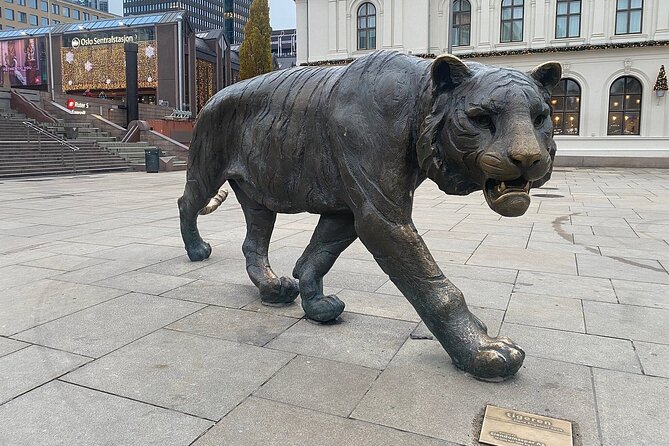
The walk begins at TigerJernbanetorget, at the square where the Tigeren sculpture sits. This tiger statue was erected in 2000 to mark the city’s millennium, and it’s one of those sights that instantly gives you a theme for the whole day: Oslo likes to brand itself with confidence.
From here, the tour does a smart thing. It doesn’t start with a random monument and hope you’ll care. It starts with a story you can carry—why the city is called Tiger City, and how a modern symbol sits right next to the transport hub.
Practical tip: this is an easy place to get your bearings. If you’re arriving by train or bus, it’s a calm “launch pad” before the walking gets busy.
Oslo Opera House (2008): reading modern architecture from street level

Next you reach the Oslo Opera House, finished in 2008. Even if you’re not into architecture, you’ll likely notice what makes it feel different: the building’s design and its waterfront setting. It’s a major cultural landmark, home of the Norwegian National Opera and Ballet.
Because the tour doesn’t include inside building visits, you’ll focus on the outside experience. That’s actually a plus. You get time to understand how the building sits with the harbor and how people naturally move around it—without worrying about entry rules.
What you should watch for: angles and materials. The Opera House is visually readable from more than one distance, and the guide’s commentary usually helps you connect what you’re seeing with Norway’s modern public priorities.
Rådhusgata toward Oslo City Hall: a historic street that leads somewhere real
The tour then moves along Rådhusgata, a historic street constructed in the 1620s. This is one of those stops that can be underrated when you want “the big photo.” But the value here is the direction: Rådhusgata leads you toward the Oslo City Hall, so the street itself becomes a corridor through time.
You’ll hear why this part of central Oslo matters for urban development and civic identity. It’s not just a pretty lane; it’s a pathway that connects older city planning with the public institutions you’ll see next.
Quick practical note: streets in this area can be busy. Keep an eye on crossing points and expect the guide to manage the group through traffic-heavy segments.
Akershus Fortress: walking through a late-13th-century defense legacy
Akershus Fortress is the big historical anchor on the route. Built in the late 13th century around 1299, it was designed to protect Oslo from invasions. Over time, it served multiple roles—military base, prison, and now a museum and historical site.
Since this tour doesn’t include visits inside buildings, you’ll experience Akershus as an outdoor museum zone. That can still be powerful. Fortress walls, courtyards, and the overall layout let you understand why it worked as a defensive structure in the first place.
Why I like this stop: it gives you contrast. After modern landmarks like the Opera House, you get a sense of how long Oslo’s center has been shaped by security, power, and governance.



Oslo City Hall (1931–1950): Nobel Peace Prize meaning beyond the ceremony
From Akershus, you head to Oslo City Hall, built from 1931 to 1950. It’s widely recognized as a symbol of Norwegian administrative, social, and cultural ideals. A key extra layer is that it hosts the Nobel Peace Prize ceremony every year.
This is where “outside sightseeing” becomes more than a checklist. The building isn’t just a landmark to pose in front of. It’s part of Norway’s public story, tied to international recognition and the way the country presents its values.
If you’re the type who likes your photos with a reason, this stop works. Even without going inside, the guide can connect what you’re seeing to what the building is used for.
Oslo Cathedral (1697) and Baroque details you can actually spot
The tour continues at the Oslo Cathedral, originally constructed in 1697. It’s known for Baroque architecture and has gone through renovations, including work in the 20th century. It also remains a living cultural and religious site.
Here’s the practical value: a guided explanation helps you look longer. Without that, you might treat it like a background building. With it, you can start noticing the style cues and understanding why the cathedral has been adapted over time.
If you enjoy religious architecture, this is a good stop because it’s quick but meaningful. You’re not stuck for hours, but you still leave with a clearer picture of what makes the cathedral stand out.
Karl Johans Gate: Oslo’s main street as a simple wayfinding tool
Next is Karl Johans Gate, Oslo’s main street. It stretches from the Royal Palace to Oslo Central Station, and it’s lined with historic buildings, shopping, dining, and key cultural sites. The idea is simple: this is the spine of central Oslo.
Even if you don’t plan to shop, you’ll benefit from the “walk it once with a guide” approach. You’ll understand where the street leads, where the major landmarks sit along it, and how it connects neighborhoods of different moods.
I also think this segment helps with planning the rest of your trip. After the tour, you can use Karl Johans Gate like a map—start walking and you’ll be moving through the kind of central Oslo you actually came for.
Aker Brygge: shipyard origins turned into a modern waterfront district
Then you reach Aker Brygge, a popular shopping, dining, and entertainment area by the water. The story is neat: it started as a shipyard established in 1854, then was transformed into its current form in the 1980s.
What I like about including Aker Brygge on this tour is the balance. You’ve got government buildings, religious sites, and now a waterfront district where everyday life and leisure overlap. It helps you feel Oslo as a place people actually hang out—not just a place you tour.
Because this tour doesn’t promise long stops or interior visits, keep your eyes open for small moments: how the harbor edge is organized, how people move along the waterfront, and where you’d return later if you want a longer meal or photo session.
The Storting building: Norway’s parliament, explained in plain terms
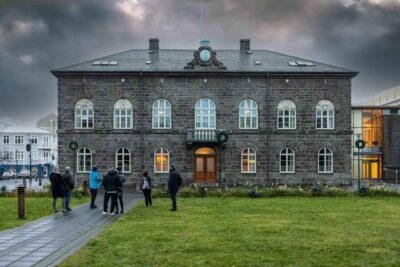
The tour includes the Storting building, which is the seat of the Norwegian Parliament. Constructed between 1861 and 1866, it’s an important landmark of 19th-century architecture and a visible symbol of Norway’s democratic system.
This stop can surprise people who thought they’d just see famous buildings from the outside. When the guide connects the architecture to the idea of government and civic authority, you start reading the city differently. It’s not only about style; it’s about how a country shows what it values.
Practical advice: this is a great place to ask questions. The timing usually gives you a chance to clarify how the political system connects to daily life in Norway.
Ending at the Royal Palace square: a clean finish with an easy next move
You finish at the square in front of the Royal Palace, Det Kongelige Slott. This is a good ending point because it feels like a natural “center of gravity” for the walk. You get your final landmark moment, plus an open area where you can decide what to do next—walk further, grab food nearby, or head back toward transit.
If you want to keep the momentum, this finish also helps you line up future sightseeing. The Royal Palace area connects well with the main pedestrian flow, so it’s easier to extend your day than if you were dropped somewhere isolated.
Price and what $16.94 really buys you
At $16.94 per person for about 2 hours, this is priced like a value city-orientation walk. The main thing you’re paying for is the guide and the structure: a local narrative that turns “buildings I recognize” into “places I understand.”
If you’re comparing it to self-guided roaming, the math is simple. You could walk some of these streets on your own. But without a guide, you’d likely miss the links: the tiger city theme, the reasons for the fortress, the Nobel Peace Prize connection at City Hall, and the way the main street routes the center.
Also, the small size matters. The group has a maximum of 27 people, and multiple guide names in feedback point to a conversational, attentive approach—exactly what you want for a short tour.
What you should know about the tour format (and what it doesn’t include)
No interior building visits are included. That means you won’t be doing museum-style time inside Akershus structures or going into the Opera House, City Hall, or Cathedral.
For some people, that’s a dealbreaker. For others, it’s the best part. Outside-only means less time queuing and more time understanding what you’re seeing from the street.
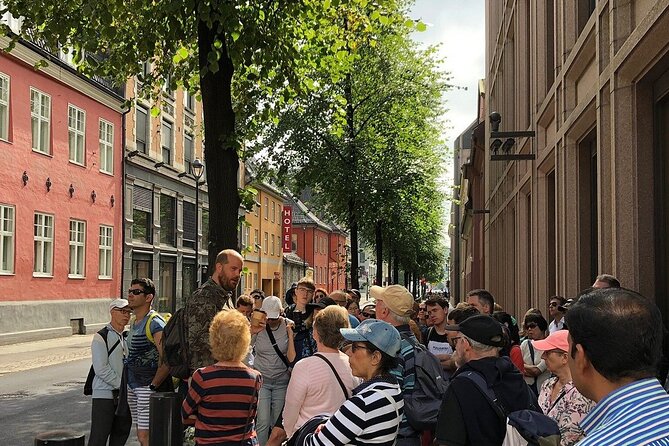
Expect frequent walking and a steady pace. It’s not a slow “stroll and stop for tea” tour, but it’s also not a marathon. If you like to ask questions, you’ll probably find the guide keeps things moving without shutting down the conversation.
One more practical point: good weather matters. If conditions are poor, the tour can be changed or refunded.
Who this Oslo walk suits best
This is ideal for:
- First-time visitors who want a map of central Oslo in a morning or early afternoon.
- People who like architecture and civic landmarks but don’t want a long day.
- Travelers who prefer a guide that explains and talks back, not just a lecture.
It may be less ideal for:
- Anyone who struggles with regular walking and uneven curb cuts in busy central streets.
- People who want heavy museum time inside lots of buildings.
Final call: should you book this central Oslo walking tour?
I’d book it if your goal is fast understanding of central Oslo. The route covers the headline sights—Tigeren, the Opera House, Akershus Fortress, City Hall with Nobel Peace Prize context, Oslo Cathedral, Karl Johans Gate, Aker Brygge, and the Storting—without wasting your time on complex entry plans.
If you want “only the inside of famous places,” then this won’t fully scratch that itch since interior visits aren’t included. But if you’re happy to see Oslo from street level and leave with a clearer sense of how the city works, this tour is a strong value.
FAQ
How long is the Central Oslo Guided Walking Tour?
It lasts about 2 hours.
How much does the tour cost?
The price is $16.94 per person.
Is the tour offered in English?
Yes, the tour is offered in English.
Where does the tour start and where does it end?
It starts at TigerJernbanetorget, 0154 Oslo, Norway, and finishes in front of the Royal Palace at Slottsplassen 1, 0010 Oslo, Norway.
Are tickets or admission included for the stops?
Most stops are free to view from the outside. A mobile ticket is provided.
Do you visit the inside of buildings during the tour?
No. The tour does not include visits inside any buildings.
What is the maximum group size?
The tour has a maximum of 27 travelers.
What weather conditions does the tour require?
Good weather is required. If it’s canceled due to poor weather, you’ll be offered a different date or a full refund.
What is the cancellation policy?
Free cancellation is available up to 24 hours in advance for a full refund. If you cancel less than 24 hours before the start time, the amount paid is not refunded.
Are service animals allowed?
Yes, service animals are allowed.