REVIEW · OSLO
Oslo: Best of Oslo Walking Tour
Book on GetYourGuide →Operated by Vox City International · Bookable on GetYourGuide
Oslo can feel big at first. This Best of Oslo walking tour gives you a smart, story-led orientation across the center, mixing big civic sights (like Parliament and City Hall) with the more human history of Christiania and the harbor. I love how the guide connects what you see to why it matters, and I like that you get an audio route app after the walk so you can keep exploring while things are still fresh in your head.
One caution: the route is on city sidewalks, and in winter they may not be fully cleared. In at least one case, mobility issues cut the tour short, so plan accordingly if you use a wheelchair or need extra help with ice and slush.
In This Review
- Key highlights worth showing up for
- A 2-Hour Orientation Walk Through Oslo’s Key Districts
- Starting at Nobel Peace Center or University Aula: Getting Oriented Immediately
- Parliament, Karl Johan, and the Norwegian State in Plain Sight
- Christiania Torv and Oslo’s Name-Changing Past
- Cathedral, Theater, and Royal Palace: Architecture You Can Actually Read
- Harbor Time: Opera House, Akershus Fortress, and Aker Brygge’s Real Mood
- The Included Audio App: Keep Walking After the Tour
- How the Guides Shape the Experience (Minji, Oliver, Anastasia, and More)
- Practical Notes: What’s Included, What’s Not, and Real-World Comfort
- Price and Value for $38 in Oslo’s Center
- Who This Tour Fits Best
- Should You Book This Oslo Walking Tour?
- FAQ
- How long is the Oslo walking tour?
- What does the tour cost?
- Which languages are available for the live guide?
- Where do I meet the guide for the English tour?
- Where do I meet the guide for the German tour?
- What is included in the price?
- Is entry to attractions included?
- FAQ
- Can I cancel for a full refund?
- Can I reserve now and pay later?
Key highlights worth showing up for
- Nobel Peace Award context on the street: You’ll hear how the Nobel Peace connection plays out beyond Sweden.
- Christiania’s original-center story: The tour explains why Oslo’s city center shifted and how the name changed over centuries.
- Karl Johan + Parliament as Oslo’s “decision center”: You walk the main government-and-boulevard axis and understand what you’re looking at.
- Opera House and harbor viewpoints: You get the waterfront mood, including areas tied to Ceremonies and harbor life.
- Aker Brygge aftertaste, not just a drive-by: The tour ends with time in the lively quay-and-neighborhood atmosphere.
- Audio app to extend your day: After the guide, you can keep going with a curated self-walk built for practical sightseeing.
A 2-Hour Orientation Walk Through Oslo’s Key Districts
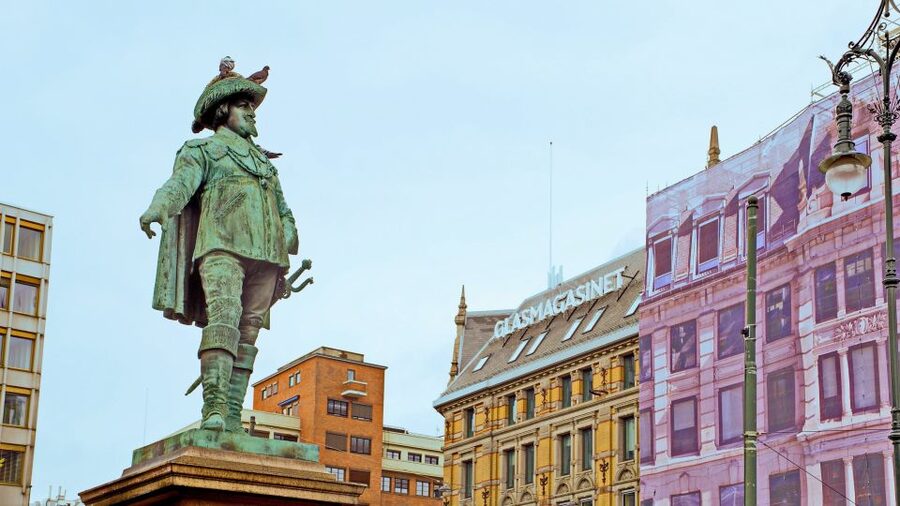
This is the kind of tour you do early in your trip, because it turns Oslo from a list of landmarks into a map you understand. In about two hours, you cover the most useful parts of the center: the civic core, the older city-area stories, and the waterfront approach. It is not a museum day, and you won’t be waiting in indoor lines, which is a big deal when Oslo’s weather has opinions.
For $38 per person, what you’re really buying is guidance plus context. The live commentary (English or German) helps you spot what matters without guessing. Then the included sightseeing app extends the value, because you get a follow-up route so you’re not stuck with only what you saw during the walk.
You can also read our reviews of more walking tours in Oslo


Starting at Nobel Peace Center or University Aula: Getting Oriented Immediately
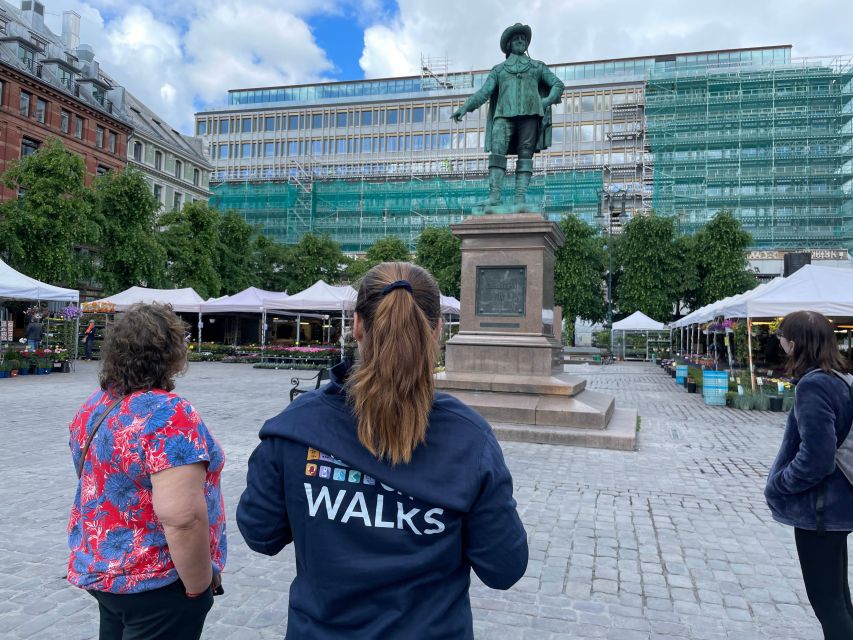
You can start at one of two places. If you book the option that starts at the Nobel Peace Center, that makes sense because the early narrative quickly frames Oslo as more than a Scandinavian capital. You’ll feel the political and diplomatic thread right away.
If you’re on the English tour, you meet near the statue of P.A. Munch by the Faculty of Law building entrance, at University Aula on Karl Johan Street (Karl Johan Str. 47). This is a nice start point because it puts you on one of Oslo’s key promenades from the beginning, so you can orient to the street geometry and scale fast.
Arrive about 5 minutes early. Guides often start on time, and it matters because you’re walking city-center blocks, not waiting for a bus.
Parliament, Karl Johan, and the Norwegian State in Plain Sight
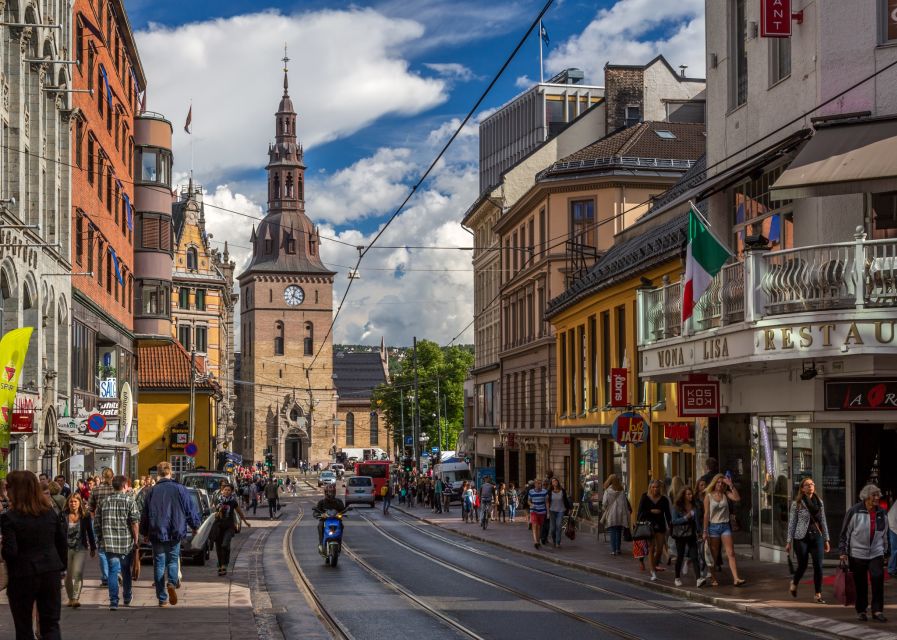
This tour treats the center like a living classroom. You’ll pass major institutions and learn the human stories behind them, not just the dates. The route includes stops and viewpoints around the Norwegian Parliament and the boulevard vibe of Karl Johan Street, where civic power sits close to everyday life.
A fun concept the guide uses is Oslo’s nickname, Tiger City. You’ll hear the logic behind it as you walk past symbolic pieces like the Tiger Sculpture, plus other civic landmarks that connect national identity to street-level design. You also get buildings like the Grand Hotel Oslo on your route, which helps you understand why Oslo’s most visible architecture often acts as a stage for public life.
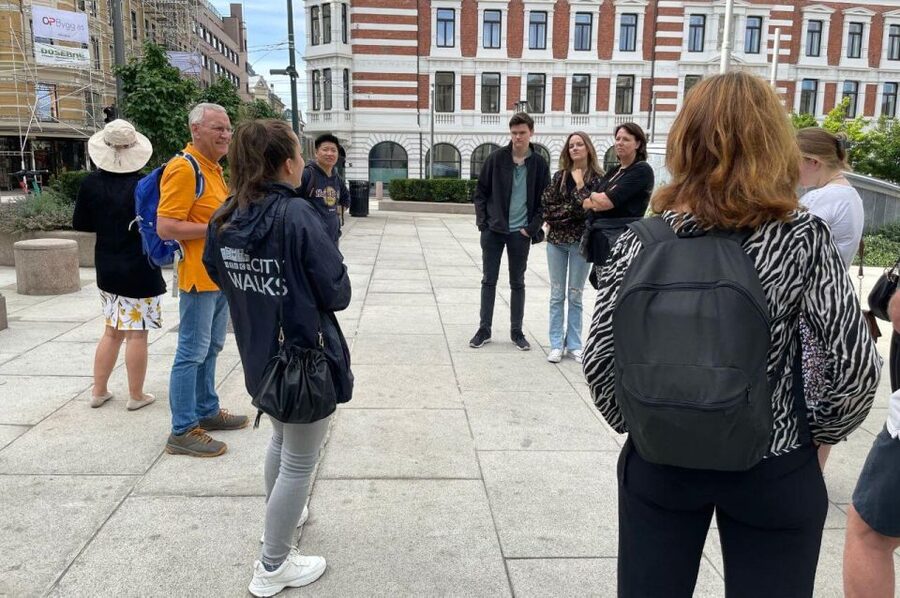
Expect a steady pace. Many guides are praised for clear, fluent English and finishing right on schedule. One review mentioned the guide keeping a group of 10 comfortably within earshot, and another said large groups were supported with earpieces, which is a practical touch if your sightline isn’t perfect on a busy sidewalk.
Christiania Torv and Oslo’s Name-Changing Past
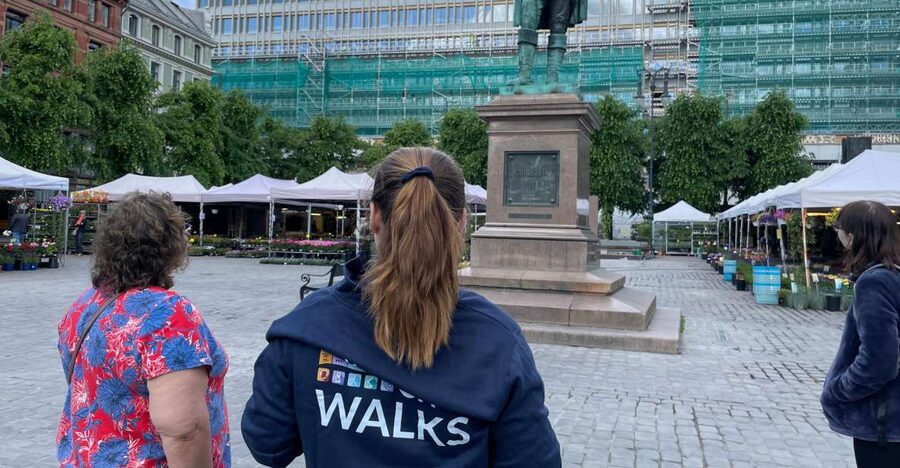
The Christiania area is where the tour turns from monuments to origin stories. You’ll visit Christiania Torv and hear how Oslo’s “center” and even its name evolved over time. The guide explains why the Norwegian capital has changed its name several times in the last few centuries, and what that says about political shifts, rebuilding, and identity.
Why this matters for you: Oslo’s downtown can look modern, but the city layers are still there. When you understand that Christiania was the earlier core, sudden details start to make sense. Streets feel less random, and older landmarks feel less like decorations and more like clues.
This part of the walk also makes the rest of the tour easier to enjoy. Once you understand the timeline, the architecture around you stops being just pretty and starts being readable.
Cathedral, Theater, and Royal Palace: Architecture You Can Actually Read
Oslo’s central buildings are often dramatic, but the tour helps you translate them. You’ll see major sites such as Oslo Cathedral, the National Theater, and the Royal Palace along the route. There’s also time around the University of Oslo area, which matters because universities shape a city’s energy and population even if you never go inside.
This is also a good moment to appreciate how the tour balances scale. You get big institutional facades, but you’re not rushed through them. The guide’s job is to point out what to notice, then explain why locals care. More than one guest highlighted that the guide’s storytelling included cultural context, not just trivia.
If you like walking tours where you come away knowing what to look for later, this section delivers. You’ll be able to look at a building after the tour and say, I get what role that plays in Oslo.



Harbor Time: Opera House, Akershus Fortress, and Aker Brygge’s Real Mood
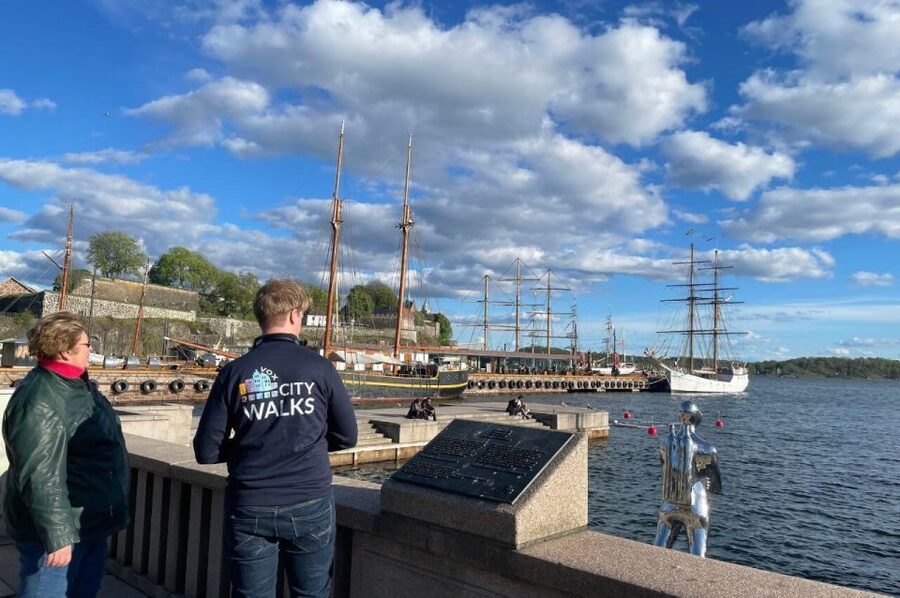
The waterfront portion is where Oslo starts to feel cinematic. You’ll pass the Norwegian Opera House, then move through areas tied to harbor life and ceremonies, including Ceremony Pier. The tour also includes stops like Kvadraturen and nearby streets, which helps connect the city center to the water instead of treating them like separate worlds.
From there, the route pushes toward the fortress-and-quay vibe: Akershus Fortress and the lively neighborhood around Aker Brygge. If you want one “what Oslo feels like” takeaway, it’s here. Aker Brygge is modern, but it’s not sterile. The quay area gives you the mix of cafes, social energy, and water views that makes the city worth a second walk.
The itinerary also includes stops such as Tjuvholmen and Anatomigården on the broader route. You may also notice KOK Oslo Sauna near Langkaia. Even if you don’t book an entry, it’s a reminder that Oslo’s public life includes places for wellness and relax-time, not only sightseeing.
The Included Audio App: Keep Walking After the Tour
One of the smartest add-ons here is the app with audio-guided route. After your guided session, you download or access the provider’s app and use it to continue exploring. You’ll scan the QR code on your voucher to get started.
What I like about this setup is that it reduces decision fatigue. Instead of wondering what to see next, you get a path with built-in context. The self-guided route’s main sights include places like Frogner Stadion, Trinity Church, Karl Johan’s monument, Grensen, and Aamodt Bridge, plus more.
This is especially helpful if your day has mixed weather. If you do the tour in the morning and it rains later, you can still keep moving with direction, and you won’t feel like you’re wandering without a plan.
How the Guides Shape the Experience (Minji, Oliver, Anastasia, and More)
Guides make or break a walking tour, and this one tends to score high for a reason: many guests specifically praise how the guide tells the story clearly and keeps the group together. I noticed names popping up repeatedly in the feedback, including Minji, Oliver, Olaf, Anastasia, Amelia, Judit, Csilla, and Maria. You’ll find that guides often answer questions on the spot and share practical recommendations.
A few practical examples that matter for your expectations:
- Some guides handled rain calmly and kept the tour engaging, which is reassuring if you’re worried about weather.
- Several reviews mentioned the guide’s pace being reasonable, with time to absorb rather than speed-walking from stop to stop.
- In larger groups, earpieces were used to help everyone hear.
- Guides often point out specific places to eat or drink. One example called out W.B. Samson for coffee and cinnamon buns, and another praised a ferry suggestion for exploring nearby islands.
This is the kind of tour where the guide’s personality affects how much you enjoy the walk. The good news is the reviews consistently describe fluent English, clarity, and warmth.
Practical Notes: What’s Included, What’s Not, and Real-World Comfort

Here’s the practical side you should plan for:
- You get the guided walking tour with live commentary and the sightseeing mobile app.
- Entry to attractions isn’t included, so if you want to go inside any sites, you’ll need to plan separate tickets or decide on outside viewing only.
- The tour is about two hours, so comfortable walking shoes matter more than you’d think. City sidewalks can be slick in colder months.
One caution from real-world feedback: if you have mobility constraints, the winter sidewalk condition can be an issue. If that’s you, I’d plan around timing, travel with a bit of flexibility, and be ready to ask what route adjustments are possible.
Price and Value for $38 in Oslo’s Center
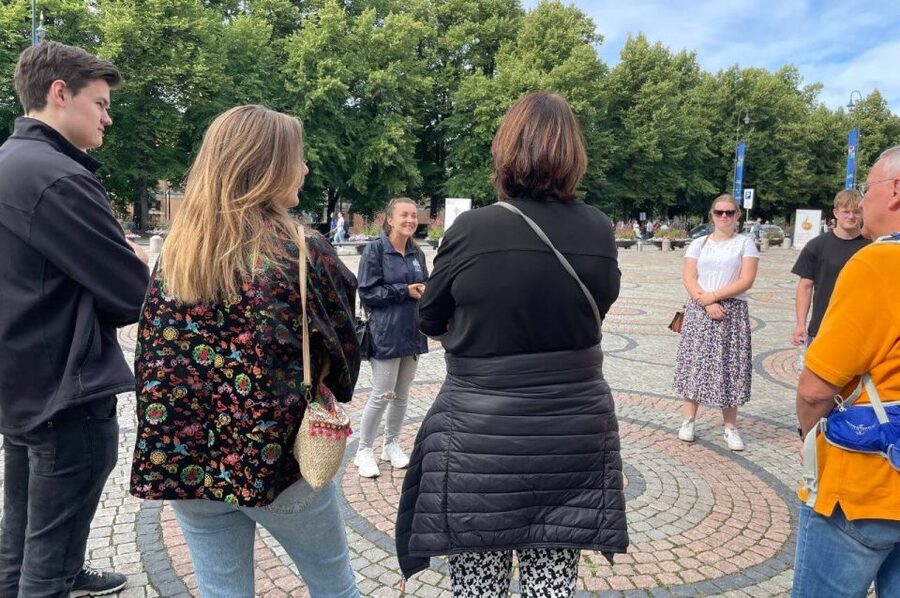
Let’s talk value in a grounded way. For $38, you’re not paying for museum entrances. You’re paying for:
- a guide to connect locations into a coherent story,
- live commentary in English or German, and
- an app that keeps your sightseeing going after the walk.
In Oslo, that combination can save time. If you tried to figure out the political context, Christiania’s timeline, and why certain landmarks sit where they do, you’d spend a lot of energy on reading and route-planning. This tour hands you the structure quickly, then lets you choose what to deepen later.
The other value factor is that the route is concentrated. You get many major sights in a compact window, which is perfect if you’re only in Oslo for a couple days and want the most “I understand the city” payoff per hour.
Who This Tour Fits Best
This tour fits you if you:
- want a first-day orientation in Oslo,
- like city history tied directly to what you’re standing in front of,
- prefer walking routes that help you decide where to spend more time later, and
- want the convenience of an audio app to keep exploring at your own pace.
It is also good if you enjoy architecture, government buildings, and how public space expresses identity. You’ll cover a lot of civic and cultural ground without turning it into a long, exhausting day.
If you need indoor museum time or have very limited mobility, you might want to think carefully because it’s still a walking tour with outdoor sidewalks.
Should You Book This Oslo Walking Tour?
If it’s your first or second day in Oslo, I’d book it. This is a strong choice when you want a quick map of the city plus stories that make the sights feel connected. The audio app is the bonus that helps your morning work later in the day, which is exactly how a good orientation tour should behave.
Skip it only if you already know Oslo deeply and you’re looking for a specialized theme (like only modern art, only Vikings, or only architecture tours with long stop times). For most first-timers, though, this hits the sweet spot: major landmarks, clear explanations, and practical next steps.
FAQ
How long is the Oslo walking tour?
It lasts about 2 hours.
What does the tour cost?
The price is $38 per person.
Which languages are available for the live guide?
You can choose English or German.
Where do I meet the guide for the English tour?
Meet near the statue of P.A. Munch by the Faculty of Law building entrance at University Aula, Karl Johan Str. 47.
Where do I meet the guide for the German tour?
Meet at the Nobel Peace Center, Brynjulf Bulls plass 1.
What is included in the price?
A guided walking tour with live commentary and a sightseeing mobile app.
Is entry to attractions included?
No, entry to attractions is not included.
FAQ
Can I cancel for a full refund?
Yes, you can cancel up to 24 hours in advance for a full refund.
Can I reserve now and pay later?
Yes, you can reserve now and pay later.