REVIEW · MONTREAL
Old Montreal Private Walking Tour
Book on Viator →Operated by Guidatour · Bookable on Viator
Old Montreal makes sense after a guide. This private walk turns scattered landmarks into a clear storyline, starting at Notre-Dame Basilica and winding through the city’s most famous squares and streets with the pacing of a local. You get a private experience with an easy Old Montreal orientation in about two hours.
I like two things a lot. First, the small, capped group size (up to 15) means you can actually ask questions without shouting into history. Second, the guide-led storytelling connects buildings and street names to what Montrealers lived through, from early institutions to the Old Port area.
One thing to keep in mind: it’s a walking tour, so weather can be a factor. That said, on cold or snowy days, guides may build in a little timing for breaks, so dress like you plan to be outside for the full loop.
In This Review
- Key things to know before you go
- From Notre-Dame Basilica to Old Montreal lanes: where the story starts
- Place d’Armes and Place Royale: public squares that explain the city
- Place Jacques-Cartier and landmark exteriors: architecture you can read
- Notre-Dame-de-Bon-Secours Chapel, City Hall, and St-Jacques Street
- Hôtel-Dieu and Cours Le Royer: early services under your feet
- Sulpician Seminary and the Old Port wrap-up
- Price and value: what $168.98 per group really means
- How long it takes and how to time it in your visit
- Guide style: what you should ask for during the walk
- What to bring, and how to stay comfortable outside
- Should you book this Old Montreal Private Walking Tour?
- FAQ
- How long is the Old Montreal private walking tour?
- Where do we meet your guide, and where does the tour end?
- What is the price for the tour?
- How many people are in a group?
- What language options are available?
- What’s included in the price?
- Are food and drinks included?
- Is the tour suitable for families with kids?
- Can I cancel for a full refund?
Key things to know before you go
- Meet at Notre-Dame Basilica and start with a big visual anchor that helps everything else click.
- Street-level history through narrow Old Montreal lanes, not just talking points from a bus.
- Place d’Armes and Place Royale give you the public-squares context in a short time window.
- St-Jacques Street and the Old Port area show how the city’s money, services, and daily life were shaped.
- Photo and sight stops like the Sulpician Seminary add memorable moments, not just facts.
- A private setup for your group keeps the experience flexible for kids, friends, and first-timers.
From Notre-Dame Basilica to Old Montreal lanes: where the story starts
The walk begins at Notre-Dame Basilica, which is a smart choice. Even if you’ve seen photos, being there in person gives you a scale check. This is one of those spots where your brain goes, Okay, this is the heart of the old city, and suddenly the rest of Old Montreal isn’t random.
From there, you move into the core of Old Montreal with your guide steering you through narrow streets and tighter corners than you expect. That maze effect matters. Without local guidance, you can easily get lost between beautiful buildings. With a guide, those lanes become a route you understand.
What I like about this kind of start is how it sets expectations. You’re not just collecting pretty facades. You’re learning how the city grew, where power and commerce showed up, and why specific streets became important. You’ll get the sense of Montreal’s early layout and how today’s streets map onto older life.
Practical tip: plan to bring comfortable walking shoes. Cobblestones and uneven sidewalks can turn a “quick orientation walk” into a sore-feet story.
You can also read our reviews of more walking tours in Montreal


Place d’Armes and Place Royale: public squares that explain the city
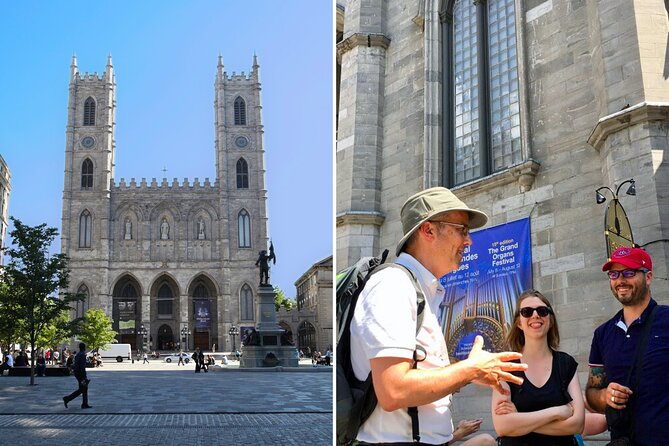
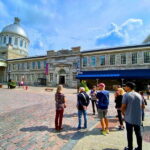
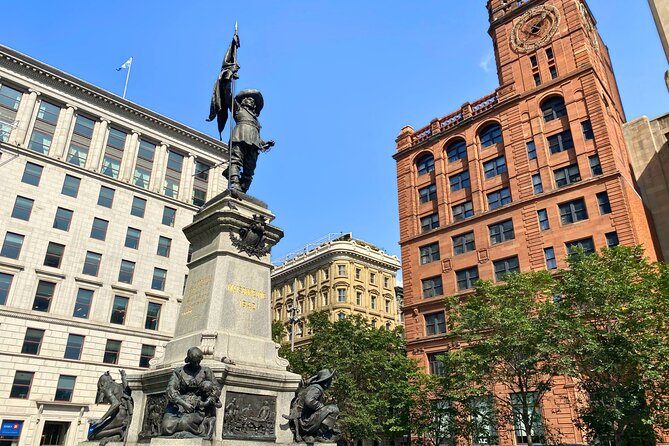
Old Montreal’s big spaces are small compared to city plazas elsewhere, but they’re loaded with meaning. Your guide typically brings you through Place d’Armes and Place Royale, two squares that help you understand what this area was built for.
Here’s what these stops do for you: they give you a mental map. Squares are where people gather, where ceremonies happen, and where city life concentrates. In a short tour window, squares are the best shortcut to bigger context because they reveal what mattered at the time—rather than only showing you one impressive building.
At the same time, you’re not locked into a museum pace. Your guide keeps you moving and pointing out architectural cues—so when you later wander on your own, you’ll notice patterns instead of staring at individual postcards.
If you’re the type who likes to know what you’re looking at before you take photos, these squares are a win. They also work well if you’re traveling with kids, since open areas make it easier to keep attention.
Place Jacques-Cartier and landmark exteriors: architecture you can read
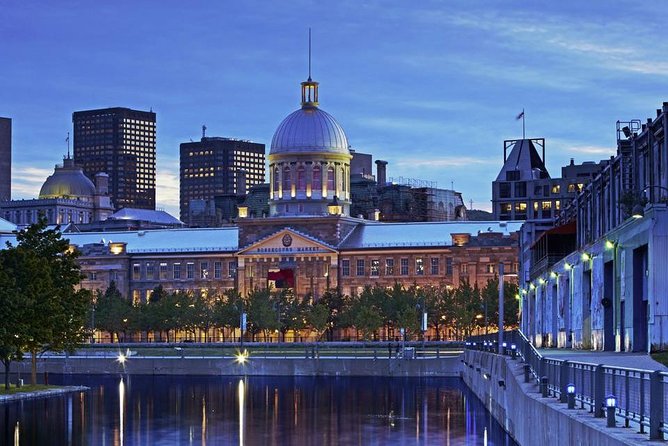
Next up is Place Jacques-Cartier, a place for monuments and outdoor art you can admire without tickets. The value here is timing. In about the span of a couple of blocks, you go from “this place is pretty” to “this place is significant.”
From there, your route focuses on external architecture—meaning you get to see major civic and cultural structures without being stuck in lines. Stops you may pass include:
- The three courthouses
- Château Ramezay
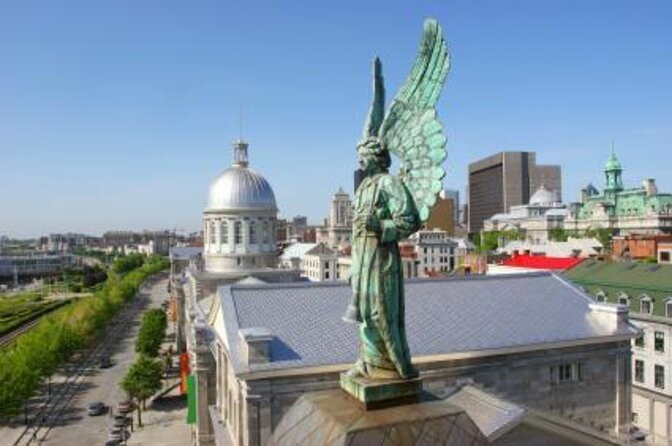
- Bonsecours Market (Marché Bonsecours)
Even if you don’t go inside, exteriors teach you a lot. Courthouse architecture often signals authority and permanence. A market signals daily commerce. A chateau signals status and power. When a guide connects those dots out loud, it becomes easier to remember.
This is also a good zone for photos. Place Jacques-Cartier and the surrounding facades give you angles that look good in any season. If you’re traveling in winter, keep your camera strap tight; ice + dropped gear is a classic Montreal subplot.
Notre-Dame-de-Bon-Secours Chapel, City Hall, and St-Jacques Street
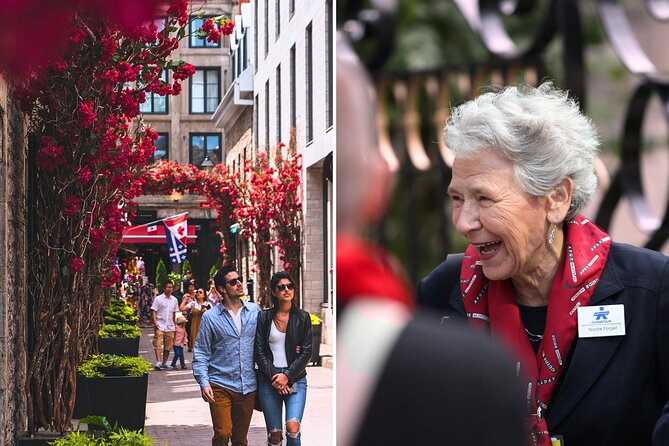
After the squares, you shift to religious and civic landmarks and then to the street that tells a very specific story: St-Jacques Street, often described as the former Wall Street of Canada.
You’ll pass by Notre-Dame-de-Bon-Secours Chapel and City Hall, which is a useful contrast. Montreal’s old core wasn’t only about faith and government. It was also about finance, trade, and the services that make a port city function.
Then you walk along St-Jacques Street, and that connection becomes real. The street name isn’t just trivia. It helps you interpret what you’re seeing: who would have walked these blocks, what business would have happened here, and why certain buildings clustered where they did.
If you like history that affects everyday life, this part delivers. It’s the difference between learning dates and learning patterns—how cities earn, govern, worship, and organize themselves.
Hôtel-Dieu and Cours Le Royer: early services under your feet
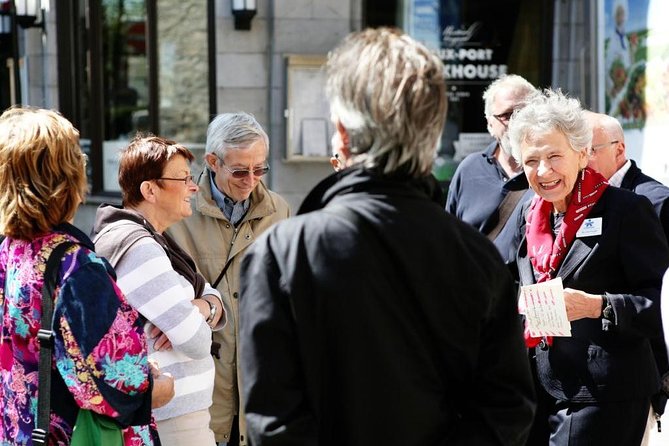
Just off the charming St-Paul Street, you may reach the foundation site of the city’s first hospital, Hôtel-Dieu, in Cours Le Royer.
This stop is small, but it matters because it shifts the story away from only politics and commerce. Hospitals are where a city’s social fabric shows up. Even without going inside anything, this is the kind of moment that makes Old Montreal feel lived-in rather than staged.
I like these kinds of “under-your-feet” stops because they change how you look at the district. After seeing where early health services began, you start spotting other traces of daily life—work, care, and community—right alongside the big architectural statements.
You can also read our reviews of more private tours in Montreal

Sulpician Seminary and the Old Port wrap-up
One highlight people often look forward to is a photo stop at the Sulpician Seminary, described as the oldest building of the historic district. You get a straightforward visual moment—then your guide ties it back to what it represented in the city’s growth.
From there, the walk typically circles into the story of the Old Port area. This is your payoff moment. By the time you reach the end, you should feel like you’ve got a practical mental checklist for what to explore next on your own.
That matters because Old Montreal is easy to overdo. It’s gorgeous, and you can spend your whole trip wandering in pretty loops. A good orientation walk helps you avoid that. You’ll know what you saw, why it was there, and what type of second-day wandering makes sense.
End point: your tour generally finishes at Le Vieux Montréal, Place d’Armes area (around 500 Place-d’Armes). It’s a convenient spot for continuing your day, grabbing a meal nearby, or branching out toward the port.
Price and value: what $168.98 per group really means
The price is $168.98 per group for up to 15 people, and it runs about 2 hours. That can sound steep if you only think in per-person terms. But private walking tours live or die on how many people you bring.
Here’s the simple math logic you can use:
- For 2 people, it’s about $84.49 each.
- For 4 people, about $42.25 each.
- For 6 people, about $28.16 each.
- For 10 people, about $16.90 each.
If you’re a couple, it can still be a good deal because you’re buying time with a guide who can tailor answers and adjust pacing. If you’re a family or a group of friends, it usually feels like a better value fast.
Also note what’s not in the price: food and drinks aren’t included. That’s common for walking tours, but it keeps the experience flexible. Your guide can suggest options near your route without you feeling locked into one specific stop.
One more detail that helps value: this walk is centered on outdoor viewing and street-level exploration, so you’re not paying for a menu of separate admissions during the two-hour window.
How long it takes and how to time it in your visit
The tour runs about 2 hours, so it’s perfect as:
- your first afternoon in Montreal, when you need orientation fast
- a morning plan before you go deeper into neighborhoods
- a weather-smart activity when you still want to see the city without committing to a full-day schedule
An extra planning note: this tour averages booking around 38 days in advance, so earlier reservations make it easier to match your preferred start time.
Guide style: what you should ask for during the walk
A private tour works best when you treat the guide like an on-the-ground translator. This tour format gives you that chance because you’re not sharing with strangers who want the fastest route possible.
A few smart ways to use your guide’s time:
- Ask for 2-3 priorities before you start. For example, do you want architecture, political storylines, or port-era life?
- Ask for food ideas that fit your pace. On cold days, guides often point out warm places and coffee stops with character.
- At the end, ask for a simple next-step plan: where to go for a post-tour lunch, and what’s worth a quick detour.
From past experiences with guides on this route, I’ve found the best recommendations tend to be specific. One example: Crew, a coffee stop in an old bank building, gets singled out as a cool choice. Another: crepes at Chez Suzette and tapas at Pastek are practical post-walk options that fit the area well.
You don’t need to follow every suggestion. The value is that you leave with a shortlist that matches your interests and your energy level.
What to bring, and how to stay comfortable outside
This is a walking tour, and Old Montreal is not famous for wide, flat sidewalks. You’ll enjoy it more if you show up prepared.
Bring:
- Comfortable walking shoes (non-negotiable)
- Layers for weather changes, especially in winter
- A jacket with pockets for warmth and sanity
- A charged phone for maps and photos
Children are welcome as long as they’re with an adult. Since the tour is private, the pace can often adapt to your group’s needs. That’s a big reason to choose this format over a larger group bus tour.
Service animals are allowed, and the meeting spot is near public transportation, so you’re not stuck if your plans shift.
Should you book this Old Montreal Private Walking Tour?
Book it if you want a clear Old Montreal orientation and you like history that connects to what you’re actually seeing on the street. This tour fits best when you have limited time, want a private pace, and care about architecture and how the old city worked as a living place—not just a photo set.
Skip it (or consider a different style) if you prefer to wander without structure at all. Old Montreal is so pretty you can easily do it alone, but you’ll miss the quick connections that make the whole district feel organized.
If you’re on the fence, here’s my simple rule: if you’ll spend money on a good meal, you should probably also invest in a guide for the first two hours. It makes the rest of your days in Montreal more confident, less guesswork, and a lot more fun to walk.
FAQ
How long is the Old Montreal private walking tour?
It runs about 2 hours.
Where do we meet your guide, and where does the tour end?
You meet at BMO Bank of Montreal, 119 Rue Saint-Jacques, Montréal, QC H2Y 1L6. The tour ends in Le Vieux Montréal at 500 Place-d’Armes, Pl. d’Armes, Montréal, QC H2Y 2W2.
What is the price for the tour?
The price is $168.98 per group.
How many people are in a group?
The maximum group size is 15 people. This is a private tour, so only your group participates.
What language options are available?
The tour is offered in English, with two language options available and you can choose your start time.
What’s included in the price?
A private tour and a professional guide are included.
Are food and drinks included?
No. Food and drinks are not included.
Is the tour suitable for families with kids?
Children must be accompanied by an adult, and most travelers can participate.
Can I cancel for a full refund?
Yes. You can cancel for a full refund if you cancel at least 24 hours in advance. If you cancel less than 24 hours before the start time, the amount paid is not refunded.