REVIEW · MONTREAL
Montreal: Top Rated Small Group Old Montreal Walking Tour
Book on GetYourGuide →Operated by MTL Detours · Bookable on GetYourGuide
Old Montreal makes more sense on foot. I love the 10-guest size, which keeps the walk relaxed instead of packed, and I love the expert storytelling that turns landmarks into real stories you can actually remember. The only catch: you’ll cover distance on cobblestones, uneven ground, and stairs, so it’s not a good match if you have mobility or vision limits.
In the same two hours, you get a guided path through the historic core, without the usual sprinting. Guides named in recent trips, like Amelie and Martin, are praised for being friendly, fast on follow-up questions, and good at balancing facts with humor.
You also start in the middle of it all. The tour begins outside the Marché Saint Laurent boutique & café at 503 Place d’Armes, and it runs in all weather. Bring comfortable shoes, and expect a steady pace that still leaves room for questions.
In This Review
- Key things I’d watch for before you go
- Old Montreal, less crowd pressure, better listening
- The drawback to plan around
- Where the walk starts: Marché Saint Laurent at Place d’Armes
- Place d’Armes and Notre-Dame Basilica exterior: context you’ll carry all day
- Saint-Paul Street and Old Montreal side lanes: the stories behind the corners
- Place Jacques-Cartier and Bonsecours Market: commerce meets culture
- The guide experience: why the 2 hours don’t feel rushed
- Small treats, parting gift, and a list you’ll actually use
- What $46 gets you for 2 hours in Old Montreal
- Who this tour suits best (and who should choose another plan)
- Should you book this Old Montreal walking tour?
- FAQ
- What’s the duration of the Montreal Old Montreal walking tour?
- How large is the group?
- Where do I meet the guide?
- What is the tour language?
- What should I bring?
- Who can join and who should not?
- Can I cancel and book without paying right away?
Key things I’d watch for before you go
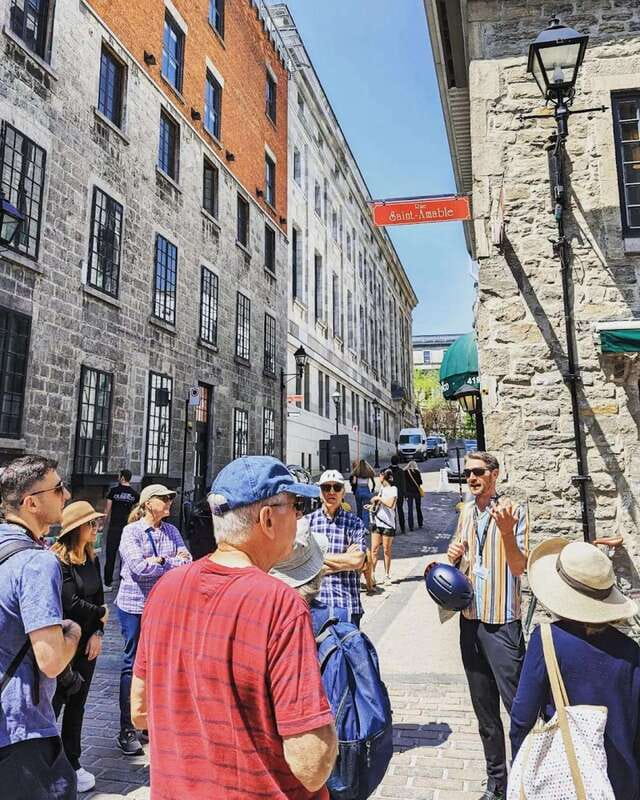
- Maximum 10 guests means you hear more and ask more, especially on narrow cobblestone streets.
- An official-permit guide with live English narration keeps the whole experience structured and clear.
- Old Montreal highlights plus side streets: Place d’Armes, the Notre-Dame Basilica exterior, Place Jacques-Cartier, Bonsecours Market, and Saint-Paul Street.
- You get practical local help afterward via a written list of where to eat, drink, and explore.
- Small treat and a parting gift add a nice finishing touch (including items like maple candy and postcards on some departures).
- Two hours is short enough to fit early or mid-day, but long enough to feel like you actually learned the neighborhood.
Old Montreal, less crowd pressure, better listening
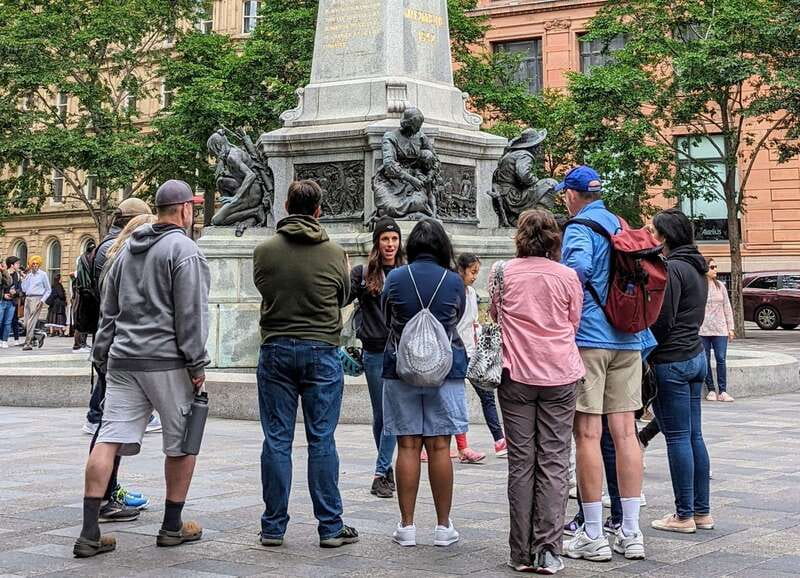
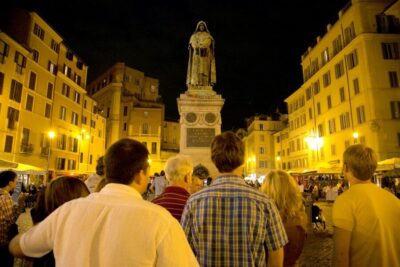
Old Montreal can look postcard-perfect, but it can also feel like a theme park. This tour is built to fix that. By capping the group at 10 people, you stop spending your attention playing human Tetris at the curb. Instead, you keep pace with the guide and stay oriented as streets turn, signs change, and the architecture shifts from French colonial influence to later European styles.
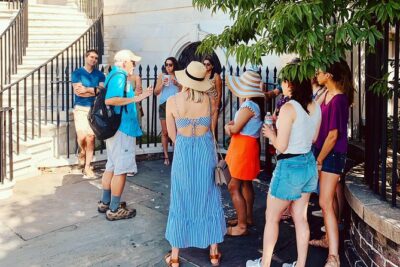
That smaller group size also changes the whole vibe. You’re not just watching a procession of tourists. You’re walking with someone who can actually respond to your questions in the moment. In the guide-led stories, the key theme is Montreal as people and decisions, not just buildings and dates. That’s the difference you feel right away: you start noticing details instead of just snapping photos.
You can also read our reviews of more walking tours in Montreal


The drawback to plan around
This is a walking tour with real terrain. Cobblestones, uneven surfaces, and some stairs show up along the way. If you’re dealing with mobility limits or visual impairments, the tour itself explicitly isn’t recommended, even if you’re determined. If that’s your situation, you’ll get more peace of mind with a different format.
Where the walk starts: Marché Saint Laurent at Place d’Armes
Your meeting point is easy to find once you anchor to the square. You start outside the Marché Saint Laurent boutique & café at 503 Place d’Armes, on the ground floor of the Edifice Aldred (the tall beige-stone building) at the edge of Place d’Armes Square.
If you’re standing in the square facing Notre-Dame Basilica, the café is off to your left. The guide meets you on the sidewalk outside the café entrance.
Why this matters: starting here puts you in the center of the historic “story stage.” Place d’Armes is where a lot of Old Montreal’s early civic and religious life clusters, so the tour can begin with context fast. You don’t waste time getting oriented. You move right into the district.
Place d’Armes and Notre-Dame Basilica exterior: context you’ll carry all day
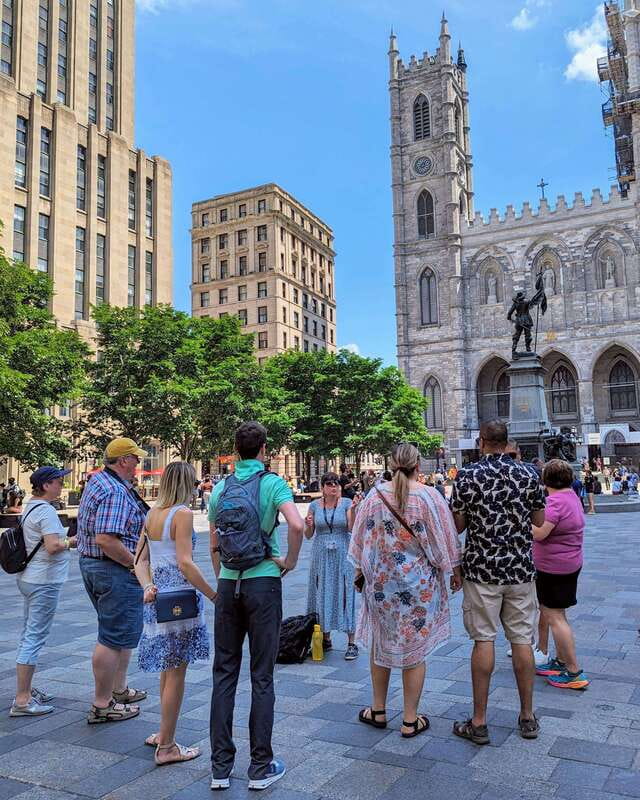
The tour’s first big anchor points are Place d’Armes and the exterior of Notre-Dame Basilica. The value here isn’t just that these are famous. It’s that your guide connects what you’re seeing to why it matters: who the buildings served, what the city was trying to do at the time, and how power, faith, and commerce shaped the streets around you.
With a larger group, people usually skim the surface here. On a small-group walk, you can slow down just enough to notice architectural textures, street layout choices, and the way the square functions as a gathering place.
You’ll likely hear specific pointers to look for on the exterior of the Basilica, plus how the neighborhood evolved around it. That’s the kind of orientation that helps later, when you’re reading plaques on your own or trying to understand why certain blocks feel more “centered” than others.
Saint-Paul Street and Old Montreal side lanes: the stories behind the corners
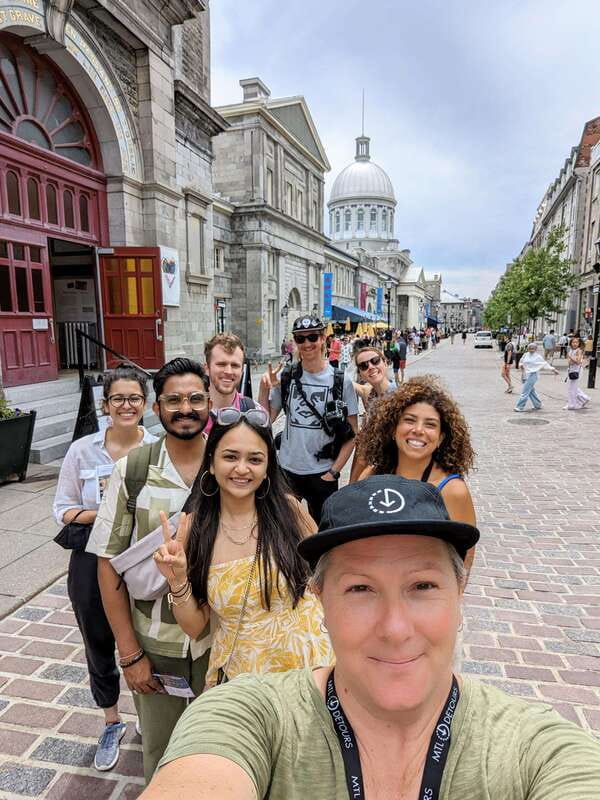
One of the best parts of Old Montreal is how quickly it can feel like you’re stepping into a different era. The tour leans into that, taking you to Saint-Paul Street and the surrounding areas, including hidden corners most people miss when they march straight to the next photo stop.
On this section, I’d expect two things. First, your guide focuses on the people and defining moments that shaped Montreal, not a list of dates you’ll forget by the tram ride home. Second, you’re given small “what to notice” prompts that make the walk feel personal.
This is also where a good guide shines. Guides named in recent trips—like Ellie, Caroline, and Louise—are described as engaging storytellers who keep the energy up and welcome questions. That matters because Saint-Paul and nearby streets are full of tiny details. If nobody tells you what you’re looking at, you’ll miss half of it.
Practical note: this stretch involves narrow streets and steady walking. If you like street photography, plan to pause only when your guide signals it—otherwise the group needs a reset point.





Place Jacques-Cartier and Bonsecours Market: commerce meets culture
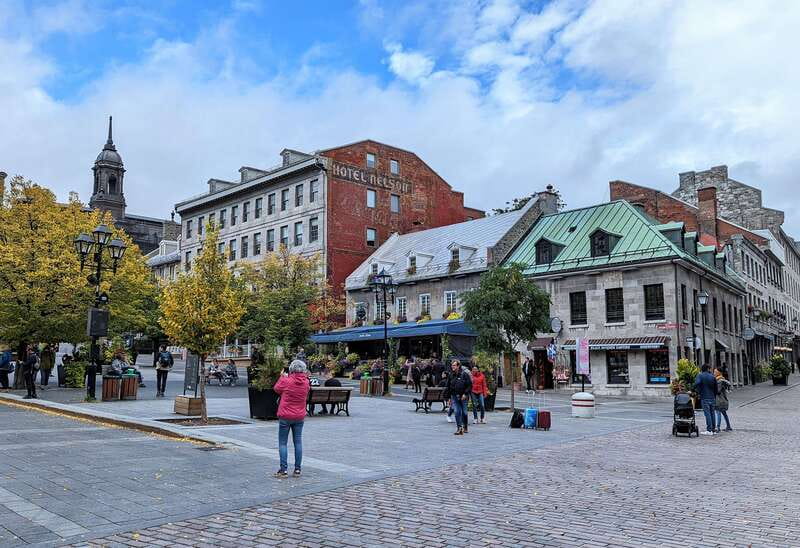
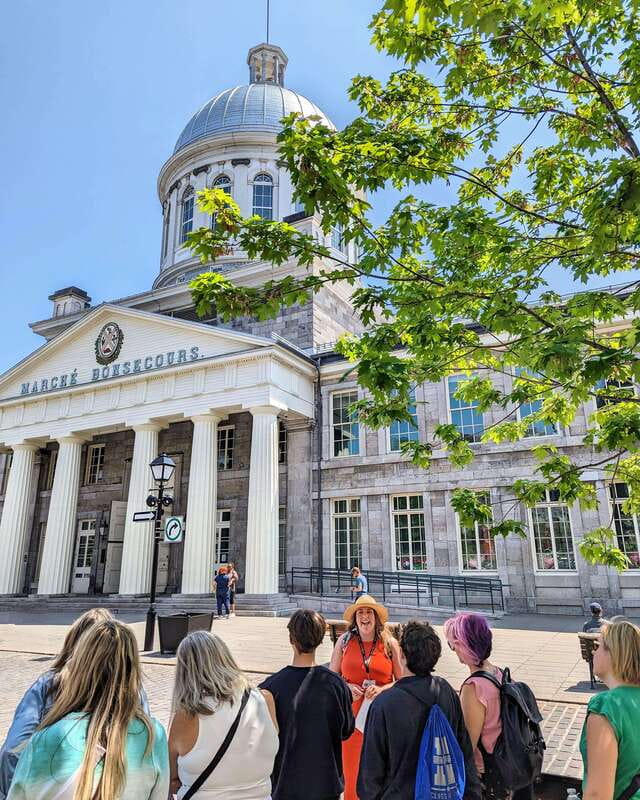
Next you’ll hit Place Jacques-Cartier and Bonsecours Market. These spots are about more than beauty. They’re about Montreal’s role as a city where trade, shipping, local markets, and civic life overlap.
The best value of including these stops is the shift in perspective. Early Old Montreal can feel like it’s all about religious and civic buildings. Then you get the market and square context, and suddenly the district reads like a living system: goods move, people gather, and the city keeps reinventing itself.
Bonsecours Market also helps you understand why certain buildings still feel important even after the original purpose fades. Your guide’s job is to connect the present-day look to the historical function, and that connection is what turns a tourist stop into a real takeaway.
Some guides have also been noted for taking time to show interiors as well as exteriors. You might get small moments like that, but don’t count on anything guaranteed beyond what’s visible and accessible along the route.
The guide experience: why the 2 hours don’t feel rushed
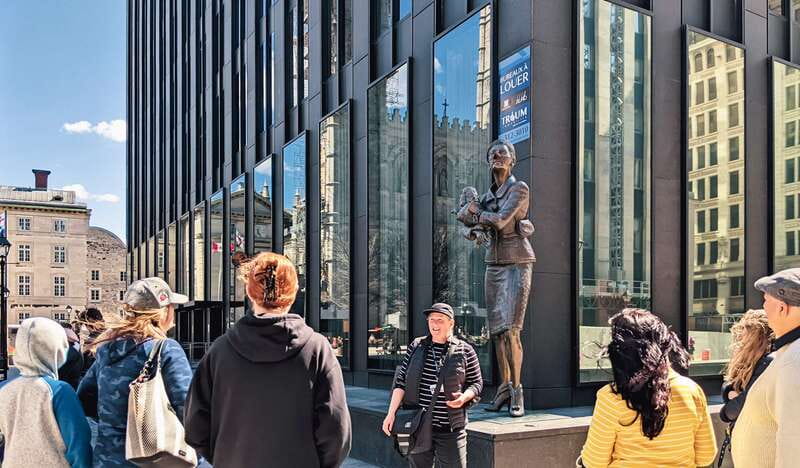
This tour is only two hours, but the point isn’t to speed-run history. The point is to fit a lot of meaning into a short time while keeping the pacing human.
A big theme from the guides’ reputations is how they manage attention. They’re praised for being friendly, funny, and attentive to the group’s comfort—like making sure people stay warm. Guides named in recent tours, including Jeff, Sylvia, and Rod, are repeatedly described as entertaining while still covering enough history to paint a clear picture.
Also, the tour isn’t presented like a lecture. It’s story-led, with time for questions. That’s why this works well for both first-timers and repeat visitors. If it’s your first trip, you get a foundation fast. If you’ve been to Montreal before, you get new angles that make familiar streets feel fresh.
Small treats, parting gift, and a list you’ll actually use
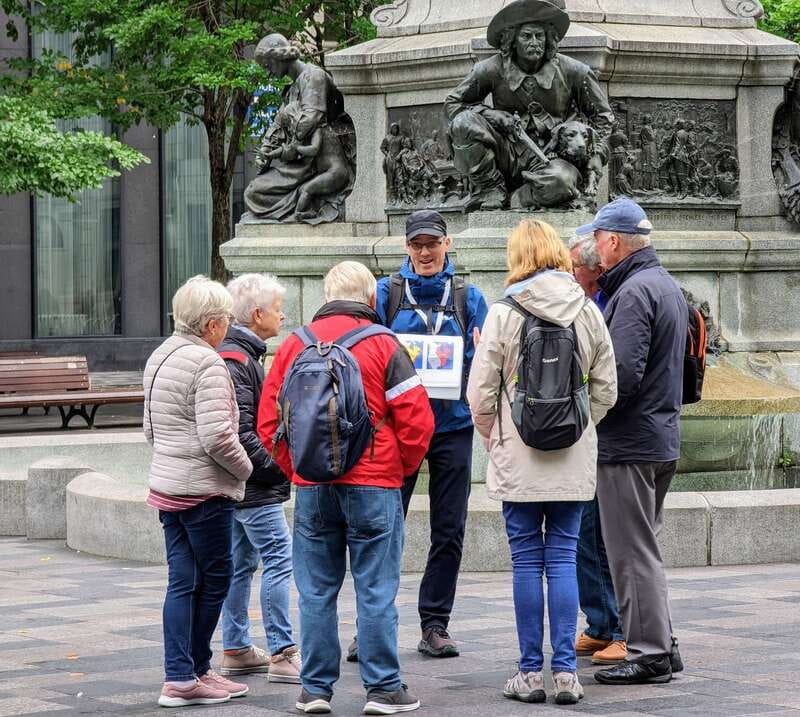
Most walking tours end with everyone wandering off and guessing where to go next. This one tries to solve that with what they give you at the end.
You’ll receive:
- a picked local recommendations list for nearby places to eat, drink, and explore
- a small local treat
- a unique parting gift
In at least one recent experience, parting items included things like maple candy and postcards, along with a short handout of places to try. That’s not just cute. It’s practical. When you’re standing in Old Montreal with two hours of new context in your head, it helps to have a guide’s shortlist that matches the kind of day you’re having.
If you’re the type who wants one or two sure bets rather than hours of searching on your phone, this is a real value-add.
What $46 gets you for 2 hours in Old Montreal
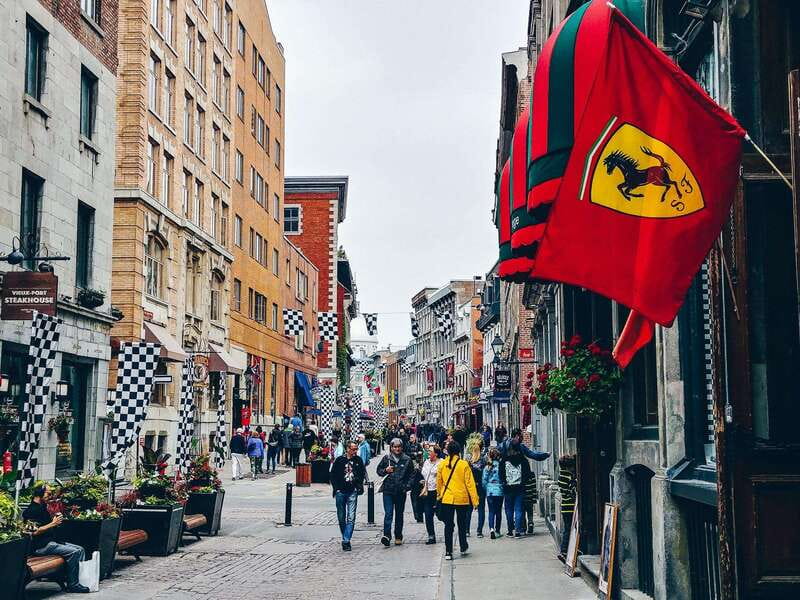
At $46 per person, this isn’t a budget “walk past a church” tour. But it also isn’t priced like a full-day excursion. The value comes from four things you can feel while walking:
- You’re paying for time with a live certified guide with an official permit. That keeps the content accurate and structured.
- The group size cap means your attention stays on the guide, not on avoiding collisions.
- You get more than sightseeing: the guide connects landmarks to people, culture, and defining moments.
- You receive extras afterward, including recommendations and a small treat/gift.
If you’re visiting for only a few days, this is the kind of tour that pays you back later. You’ll have a mental map of Old Montreal and a better sense of why the streets are where they are. That makes independent wandering more confident, not random.
Who this tour suits best (and who should choose another plan)
This tour is a great fit if you want:
- an English guided introduction to Old Montreal
- a small group experience with questions welcome
- a walk that covers major highlights (Place d’Armes, Basilica exterior, Place Jacques-Cartier, Bonsecours Market, Saint-Paul Street) plus less-obvious corners
It’s also a solid choice on your first day in town. Many people use it as orientation, then spend the rest of the trip exploring with better instincts.
Skip it if:
- you need mobility accommodations for stairs or uneven surfaces
- you have visual impairment needs that require a different format
- your group includes kids under 12 (the minimum age is 12)
Should you book this Old Montreal walking tour?
If you want the historic heart of Montreal explained in a way you’ll remember, I think this is an easy yes. The combination of 10-guest max, live English guide storytelling, and the practical handout at the end makes it feel like more than a loop of famous stops. It’s also one of the better options when you want to avoid the crush, because the route works only when the group stays small.
Book it if you’re the kind of traveler who likes structure plus flexibility—history with room for questions. Consider another option if you’re sensitive to walking on cobblestones or can’t manage stairs. In the right body and mindset, this is a friendly, high-value way to understand Old Montreal fast and keep exploring with confidence.
FAQ
What’s the duration of the Montreal Old Montreal walking tour?
The tour lasts 2 hours.
How large is the group?
It’s a small-group tour limited to a maximum of 10 participants.
Where do I meet the guide?
Meet outside the Marché Saint Laurent boutique & café at 503 Place d’Armes (ground floor of the Edifice Aldred, on the edge of Place d’Armes Square). The guide greets you on the sidewalk outside the café entrance.
What is the tour language?
The tour is in English.
What should I bring?
Wear comfortable shoes, since the tour involves walking over varied terrain.
Who can join and who should not?
The minimum age to join is 12. The tour is not recommended for travelers with mobility restrictions and is also not suitable for visually impaired people.
Can I cancel and book without paying right away?
Yes. You can cancel up to 24 hours in advance for a full refund. You can also reserve now & pay later, meaning you pay nothing today.