REVIEW · MONTREAL
Old Montreal Small-Group Walking Tour | Max 10 | by MTL Detours
Book on Viator →Operated by MTL Detours · Bookable on Viator
Old Montreal can feel like a maze at first. This small-group walking tour by MTL Detours gives you a guided path through the city’s key civic, financial, and religious landmarks, plus practical recommendations so you can keep exploring after the tour ends. What I like most is the focus on explanation over wandering and the way you get a tight, well-paced overview in just about 2 hours.
The best part is how much ground you cover without feeling rushed. You’ll get a curated handout of where to eat and what to see, and the tour style leaves room for questions even with a group capped at 10. One thing to consider: this is mostly outdoors, and the walking includes uneven cobblestones and some stairs.
If your goal is to understand Old Montreal fast, this is a strong first-day move. It’s also a smart pick if you don’t want to spend your vacation time cracking code on non-grid streets and “where do I go next” decisions.
In This Review
- Key things that make this tour worth your time
- Old Montreal Makes Sense Fast
- Price and what $44.40 really buys you
- Where you meet, how the walk flows, and how to dress
- Stop-by-stop: what you’ll see and why it matters
- The silver-domed landmark and Montreal’s civic life
- The oldest cobblestone street and the feel of earlier Montreal
- A lively historic square overlooking the Old Port
- A grand Second Empire building: power made visible
- Montreal’s famous landmark: exterior only
- Canada’s oldest bank and Montreal’s rise as a financial center
- An 18th-century governor’s residence and the colonial past
- The Sailors’ Church and the Old Port connection
- The birthplace of Montréal
- The former financial district: Canada’s Wall Street
- The guide makes the difference: Louise, Amelie, Darren, Elise, and more
- Food and drink tips you can use right away
- Who should book this tour
- Should you book Old Montreal Small-Group Walking Tour (Max 10)?
- FAQ
- How long is the Old Montreal walking tour?
- How many people are on the tour?
- Is the tour offered in English?
- Where do I start and where does it end?
- Do I need to worry about walking on cobblestones?
- Is the tour mostly outdoors?
- Are any interiors included?
- What’s the minimum age?
- Is it suitable for mobility restrictions?
- Are there any extra items included besides the tour guide?
Key things that make this tour worth your time
- Max 10 people keeps the tour interactive and lets you actually hear the guide
- Licensed local guide with a City of Montréal permit
- A paper handout of places to eat, see, and explore, picked by the guides
- Mostly outdoors with a moderate walking pace and cobblestones
- Small local treat and a parting gift (maple candy shows up in some outings)
Old Montreal Makes Sense Fast

Old Montreal isn’t laid out like most cities. Streets curve, the ground is uneven, and important buildings sit at angles that look random until someone explains why they’re there. That’s where this tour shines. In two hours, you get a big-picture storyline: how people built the city for civic life, commerce, worship, and daily movement along the Old Port.
You’re not just getting “this is pretty” sightseeing. You’re getting the logic behind the shapes and styles—why certain sites mattered to Montreal’s power and growth, and how those old choices still show up in what you see today. I also like that you get practical suggestions to bring the area to life beyond the walk.
Two more things help a lot when you’re doing Old Montreal for the first time. First, the group stays small enough that the guide can keep an eye on everyone. Second, you end near major landmarks and shopping/eating areas, so you can turn the tour into a flexible evening plan.
You can also read our reviews of more walking tours in Montreal

Price and what $44.40 really buys you
$44.40 for about 2 hours doesn’t sound cheap on paper. But in a place like Old Montreal—where you’re walking, standing, and learning the city’s “why”—you’re paying for a licensed local guide, a structured route, and context you can’t easily pick up from signage.
You also get extra value that isn’t just talk:
- a paper handout with curated places to eat, see, and explore
- a small local treat and a unique parting gift
- a mobile ticket (so you’re not hunting paperwork)
When I look at value here, I think about what you’d otherwise spend time doing: mapping your own route, reading enough to understand what you’re seeing, and then trying to find good food and sights nearby. This tour compresses that into a single, guided session.
If your schedule is tight—first day in town, limited time in Old Montreal—this price can feel like a shortcut. If you’re the type who loves slow, independent wandering and already knows the story, you might not need a guide. But most people benefit from the “starter kit” this tour provides.
Where you meet, how the walk flows, and how to dress
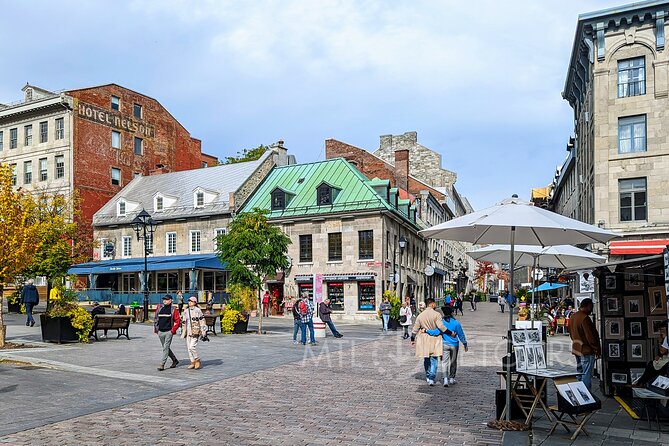
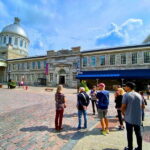
The tour starts at Marché Saint Laurent, at 503 Pl. d’Armes. It ends near Place Jacques-Cartier square and Bonsecours Market at 350 Rue Saint-Paul Est.
That end point matters. Bonsecours Market and the Place Jacques-Cartier area are good places to pivot into your next move: a café break, shopping, or more walking toward the Old Port. You finish in a “keep going” zone rather than someplace awkward.
Plan on a steady walking style. It’s described as a moderate level of walking, including uneven cobblestones and stairs, with limited seating. This matters most in two situations:
- Winter and shoulder-season cold, where your legs can feel fine but your hands and face freeze
- Days when you’re wearing shoes that don’t grip well on stone
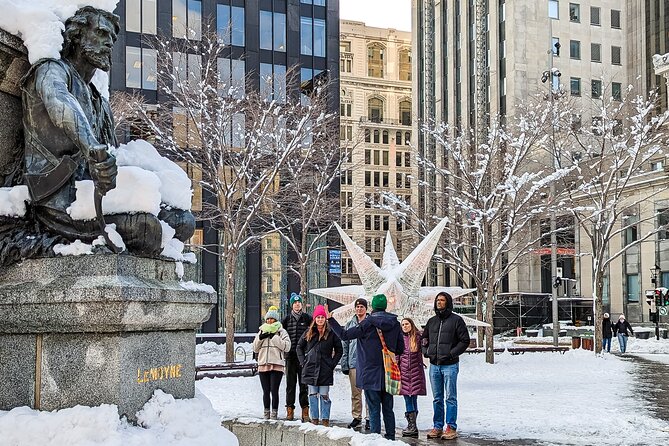
The tour runs rain, shine, or snow, so dress for real weather, not “hopeful forecast” weather. In colder reviews, guides even planned warm-up stops inside, and hand warmers have shown up as a thoughtful touch. Don’t count on that every day, but it’s a sign the guides take comfort seriously when it matters.
Stop-by-stop: what you’ll see and why it matters
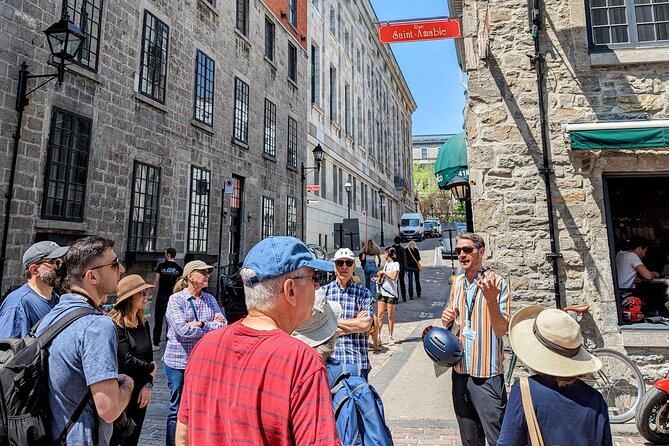
This walk is built around recognition. Even if you can’t name everything at the start, you’ll learn what to look for as the tour moves. Here’s how the main pieces fit together.
The silver-domed landmark and Montreal’s civic life
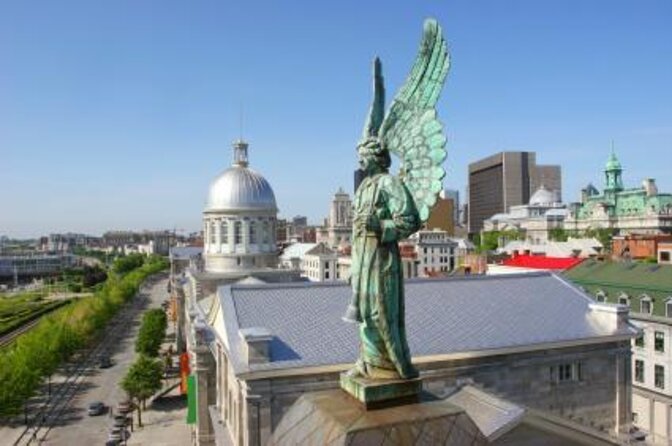
The tour begins in the Old Montreal area with a look at an iconic silver-domed landmark and how it shaped Montreal’s civic life. The payoff here is understanding Montreal as more than scenery. Civic buildings, public spaces, and the institutions around them explain why cities grow the way they do.
As you stand near it, listen for the story behind its role. A lot of travelers miss this part because they treat architecture like decoration. In this segment, it’s treated like a historical “engine”—how the city organized itself and why certain places gained importance.
A small drawback: if you’re expecting a lot of sitting time at each stop, you’ll be disappointed. This tour is mostly moving and standing. The trade-off is you get more sights in less time.




The oldest cobblestone street and the feel of earlier Montreal
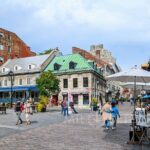
Next comes Montreal’s oldest street, known for cobblestones and historic façades. This is where you feel Old Montreal in your feet. The uneven stone isn’t just a detail—it’s part of the atmosphere and a reminder that the city wasn’t built to be convenient.
What I like about this stop is the chance to connect “surface” with “structure.” When you hear why buildings are positioned where they are, and how street life worked back then, the street stops being a photo backdrop. It becomes a timeline you’re walking through.
Also, this is a great moment to slow down mentally even if your feet keep moving. Watch the façades. Notice details in the stonework and entrances. The guide’s context helps you read those details faster.
A lively historic square overlooking the Old Port
Then you’re at one of Old Montreal’s animated historic squares with views over the Old Port area. Squares are where city life shows up—markets, meetings, movement. A guided explanation here helps you understand why this area attracts people now the way it did then.
This stop is also useful because it gives you a natural break in your route. Even if seating is limited, the open space makes it easier to orient yourself visually before you move on to more architectural and civic sites.
A grand Second Empire building: power made visible
You’ll admire a Second Empire building and hear about key moments in Montreal’s history. Second Empire is an architectural language—strong, formal, and designed to signal authority. When you learn what’s happening historically while you look at the building, it stops being just a style label.
This is the kind of stop that works best when you ask questions. If you’re the curious type, you’ll get more out of it by checking how the building’s role ties to broader changes in the city.
Montreal’s famous landmark: exterior only
Next is the exterior of Montréal’s most famous landmark, plus the story behind its creation. Important detail: this is outside only, and interior entry is not included.
This matters for planning. If you want cathedral interiors or museum-style time inside, you’ll need to add that separately. But even from the outside, this stop can be memorable if you pay attention to what the guide explains about why it was built and what it represented at the time.
Canada’s oldest bank and Montreal’s rise as a financial center
You’ll see Canada’s oldest bank and learn how Montreal became the country’s financial centre. This is one of the most “practical history” moments in the tour. The guide connects architecture and institutions to money and trade—how the city’s location and role turned it into a hub.
Even if banking sounds dry, the best guides make it feel human: people moving goods, ships coming in, money and contracts driving the pace of change. You’ll also start noticing how financial districts shape the streets around them—wider blocks, strategic corners, and formal entrances.
An 18th-century governor’s residence and the colonial past
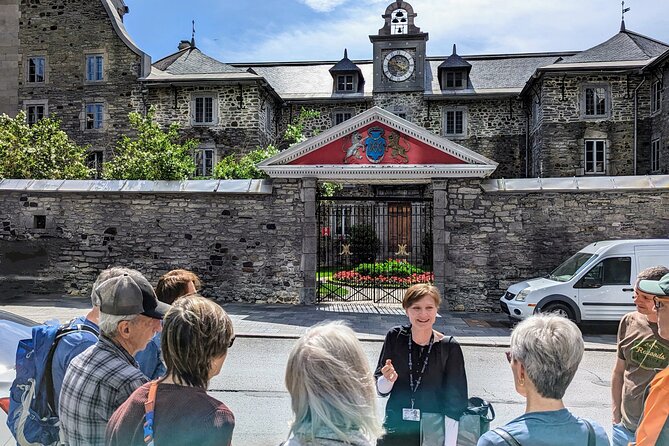
Then it’s an 18th-century former governor’s residence, with a focus on Montreal’s colonial past. This stop helps you balance the earlier civic and financial storyline. Governing and colonial administration explains the city’s early power structures and what life was like when Montreal was still consolidating its identity.
If you’re into understanding how control worked—who lived where and how decisions were made—this is a good segment to lean into with questions.
The Sailors’ Church and the Old Port connection
You’ll learn why a chapel is known as the Sailors’ Church, and how it connects to the Old Port. This is a great reminder that religious life wasn’t separate from daily labor and travel. Sailors needed hope, and communities built places to support that.
This stop also helps you see the Old Port as more than a view. The Old Port wasn’t just scenery; it was work, risk, arrival, and departure. The chapel story gives that context.
The birthplace of Montréal
You’ll stand near the birthplace of Montréal and hear how the city was founded. This is the “origin story” moment. You may not think you need an origin story until you’ve walked through the rest—suddenly the streets you’ve seen start making more sense.
This is a short but important stop because it anchors all the other sites. Without the founding context, civic buildings and colonial residences can feel disconnected. With it, you get a cleaner timeline.
The former financial district: Canada’s Wall Street
Finally, you’ll walk through Old Montreal’s former financial district, once known as Canada’s Wall Street. This segment is fun if you like patterns. You’re basically walking the area’s business DNA: where power concentrated, where trade mattered, and how the city’s economy shaped its physical layout.
It also sets you up for what to do next. Once you’ve got a sense of where the financial district lived, you’ll recognize similar “old money” cues as you continue exploring.
The guide makes the difference: Louise, Amelie, Darren, Elise, and more
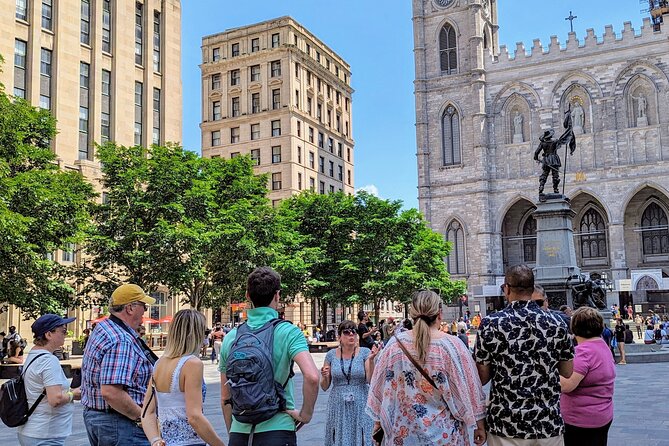
MTL Detours clearly takes guide quality seriously. The reviews you provided repeatedly mention energetic storytelling and strong command of architectural and cultural context.
Names that show up include Louise, Amelie, Darren, and Elise. If you get one of these guides, you should expect clear explanations and good pacing that fits a 2-hour experience. The guides also tend to end with actionable recommendations, not just general statements.
One useful tip: if you’re doing this as your first stop in Montreal, ask your guide for what to do next in the same day. You’ll leave with a map in your head, not just photos in your phone.
Food and drink tips you can use right away
This tour doesn’t try to turn Old Montreal into a restaurant commercial. Instead, it gives you a curated list of places to eat, drink, and explore on a paper handout selected by the guides. That matters because Old Montreal has plenty of options, and not all are worth your time.
I like that you get both food-and-sight suggestions in one go. It helps you avoid the common problem of choosing a restaurant near the busiest street corner, then wondering why it feels expensive and generic.
If you want an easy plan, use the handout to pick:
- one café or quick bite for later in the afternoon
- one “commitment” activity, like a museum or longer sight
- one option close to where you’ll be walking anyway, near the end of the tour
Who should book this tour
This walking tour fits best if you:
- want an organized overview of Old Montreal without getting lost
- enjoy architecture and want the story behind what you’re seeing
- like a small group and a guide who can answer questions
- are on a time budget and want a strong first-day plan
It’s also a reasonable choice for families with teens, since the minimum age is 12 and everyone needs a paid ticket. Because the walking is moderate and outdoors, it’s not ideal for anyone who struggles with steady walking on cobblestones and stairs.
Should you book Old Montreal Small-Group Walking Tour (Max 10)?
Yes, if you want structure, context, and a plan you can use immediately. For $44.40, you’re not just buying a walk—you’re buying a guided storyline, a curated handout, and a finish near major Old Montreal hubs.
Skip it if you hate walking on uneven stone, expect lots of interior time, or already know Old Montreal so well that you’re mainly looking for self-guided sightseeing. In that case, you might prefer a flexible schedule without a timed route.
If you’re deciding between doing Old Montreal solo or with a guide, this tour is a smart compromise: small group, short duration, and enough explanation to make future wandering feel effortless.
FAQ
How long is the Old Montreal walking tour?
It runs about 2 hours.
How many people are on the tour?
The group is capped at a maximum of 10 people.
Is the tour offered in English?
Yes, the tour is conducted in English.
Where do I start and where does it end?
It starts at Marché Saint Laurent, 503 Pl. d’Armes, Montréal and ends near Place Jacques-Cartier square and Bonsecours Market, at 350 Rue Saint-Paul E.
Do I need to worry about walking on cobblestones?
Yes. There’s a moderate walking level with uneven terrain such as cobblestones and stairs, and limited seating.
Is the tour mostly outdoors?
Yes. It takes place mostly outdoors and runs rain, shine, or snow, so dress for the weather.
Are any interiors included?
This is mostly an outside walk. One stop is specifically listed as outside only, with interior entry not included for that landmark.
What’s the minimum age?
The minimum age is 12, and all guests require a paid ticket.
Is it suitable for mobility restrictions?
It’s not recommended for travelers with significant mobility restrictions or difficulty walking at a steady pace.
Are there any extra items included besides the tour guide?
Yes. You receive a paper handout of places to eat and see, plus a small local treat and a unique parting gift.