REVIEW · MONTREAL
Montreal: Old Montreal Guided Walking Tour
Book on GetYourGuide →Operated by 16/42 tours · Bookable on GetYourGuide
Old Montreal tells its story by foot. This 2-hour guided walk in Old Montreal connects you to centuries of street life, landmark architecture, and a few Saint Lawrence River viewpoints, all with a pace that doesn’t feel rushed.
Two things I really like: the small-group setup (max 15) keeps the chat going, and I like how guides such as Chantal or Eduardo tend to bring the neighborhood to life. And the landmark line-up hits major photo-and-history stops like Place d’Armes, the Old Sulpicians’ Seminary, Notre-Dame Basilica, Place Jacques-Cartier, Bonsecours Market, and Saint-Paul Street.
One caution: it’s only two hours, so you may want a follow-up plan for your favorite streets—especially if cold weather or rain changes the pace.
In This Review
- Key highlights worth your time
- Why Old Montreal in two hours works
- Meeting at Place d’Armes: simple start, easy found
- The walking route from Place d’Armes to Saint-Paul Street
- Place d’Armes: the square that sets the tone
- Old Sulpicians’ Seminary: history you can point to
- Notre-Dame Basilica: why the guide’s explanation matters
- Place Jacques-Cartier and Bonsecours Market for photos and context
- Saint-Paul Street and Saint Lawrence River views
- How the guide turns streets into a timeline
- Price and value: is $25 a bargain?
- Who this walking tour suits best
- Quick checklist: what to bring and how to plan
- Should you book the Old Montreal guided walking tour?
- FAQ
- Where do I meet the guide?
- How long is the walking tour, and what group size should I expect?
- Is the tour offered in English?
- What landmarks are included in the route?
- What should I bring with me?
- Is there free cancellation and a reserve-pay-later option?
Key highlights worth your time
- Small group size (max 15) for a more personal, question-friendly walk
- Old Montreal core stops packed into a tight route: Place d’Armes to Saint-Paul Street
- Notre-Dame Basilica + Old Sulpicians’ Seminary as major anchors for the story
- Saint Lawrence River viewpoints for a breather and great photos
- A clear explanation of Montreal’s founding and growth so the streets make sense
- Local tips at the end to help you decide what to do next
Why Old Montreal in two hours works
Old Montreal is the kind of place that can swallow a whole day. That’s exactly why this tour’s length matters: you get the essentials without turning your feet into sore luggage.
I like that the experience is built around walking plus stops. That means you’re not just passing buildings; you’re getting the “why” behind them, then using that context as you move down the street.
You’re also getting a structured overview of Montreal’s origin and expansion—how it developed from its early roots into a major Canadian city. Even if you only have a weekend, you’ll leave with a clearer mental map, which makes everything else you do feel easier.
You can also read our reviews of more walking tours in Montreal


Meeting at Place d’Armes: simple start, easy found
You meet your guide on the steps of the BMO bank, on Place d’Armes. It’s a practical meeting point because it’s central to the Old Montreal area and works well as a starting hub.
Plan for comfort first. You’ll want comfortable shoes, and I’d treat this as a proper walking block, not a casual stroll.
The tour also encourages you to bring water (a reusable bottle helps) and snacks. That’s a small thing, but it makes the difference on days when the walk runs long under winter light or summer sun.
The walking route from Place d’Armes to Saint-Paul Street
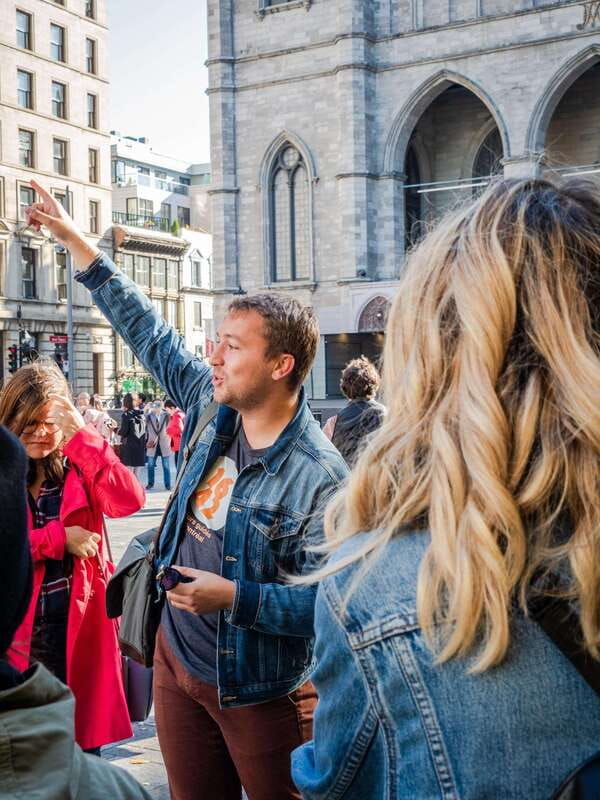
The core route is designed to move you through the Old Montreal “greatest hits” without pointless detours. You’ll pass through compact streets, then hit landmark clusters where the guide can slow down and explain what you’re seeing.
Here’s how the stops fit together as a story, not just a checklist:
- You begin at Place d’Armes, where the city feels anchored and purposeful.
- You continue toward the Old Sulpicians’ Seminary, one of the key historic buildings used to explain how the district formed and functioned.
- Then you move into the area around Notre-Dame Basilica, which is both an architectural focal point and a natural place for the guide to connect past and present.
- From there, you work your way to Place Jacques-Cartier and Bonsecours Market, which are ideal for photos and for learning what each space represents.
- Finally, you finish with a lively stretch on Saint-Paul Street, where the atmosphere of Old Montreal becomes easy to feel.
The pacing is part of the value. In a short tour, you want fewer awkward stops and more “look here, then walk there.” This route is built for that.
Place d’Armes: the square that sets the tone
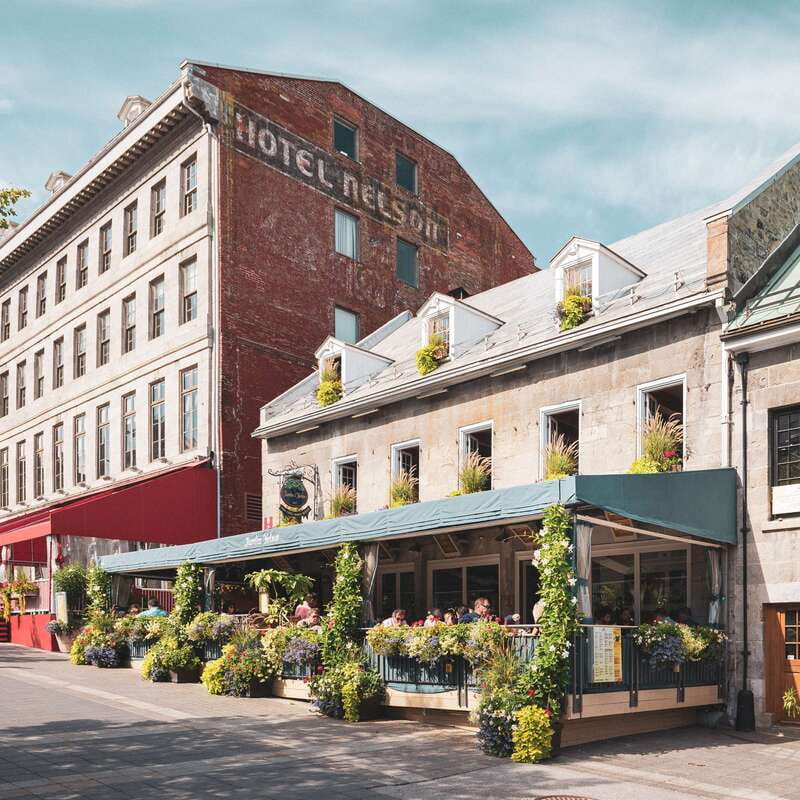
Place d’Armes is more than a convenient start. It’s where Old Montreal starts to feel like a planned district with a sense of order and purpose.
On a guided walk like this, a good square matters because it gives you a reference point. Once you understand what Place d’Armes represents in the overall story, the rest of the route stops feeling random.
Also, this is where many guides naturally frame the big picture before you start moving block by block. You’ll hear how Montreal began and how the city expanded over time, so the buildings don’t feel like isolated snapshots.
Old Sulpicians’ Seminary: history you can point to
The Old Sulpicians’ Seminary is one of the major anchors on the route. Even if your knowledge of Montreal is light, a stop like this gives you something concrete to track: a specific building, a specific role, and a sense of how the district developed.
I like this stop because it’s a “quiet” kind of importance. Instead of only focusing on what looks dramatic from far away, you’re learning what the historic structure means in how the neighborhood grew.
This is also the kind of moment where a good guide helps you slow down. If you’re taking photos, this is a strong place to do it without rushing, because the guide’s context makes the pictures more satisfying later.
You can also read our reviews of more guided tours in Montreal
Notre-Dame Basilica: why the guide’s explanation matters
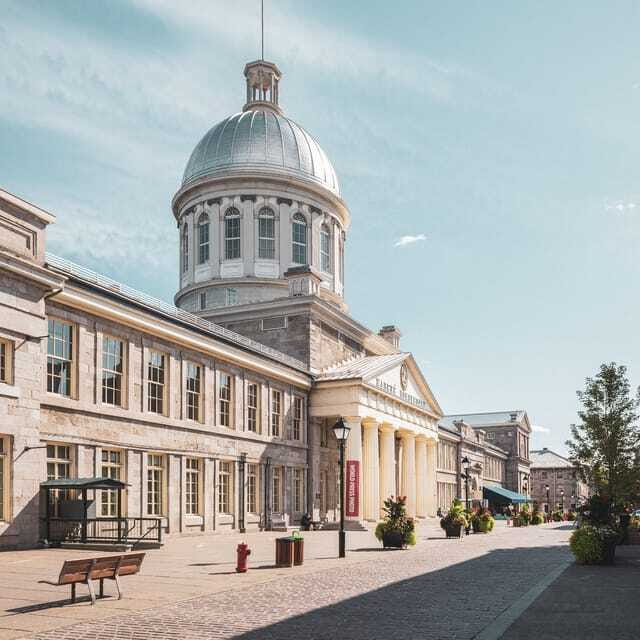
Notre-Dame Basilica is the sort of landmark people recognize from postcards. What makes it more useful on a walking tour is the way the guide connects the building to the broader Montreal timeline.
I especially value stops like this because the guide is translating architectural cues into story cues. You’re not just seeing stone and shape; you’re learning why this spot matters in the district’s evolution.
And because you’re on foot, you’re in the right position to notice the details the way locals do—at human height, in real light, with the square-and-street layout all around you.
Place Jacques-Cartier and Bonsecours Market for photos and context
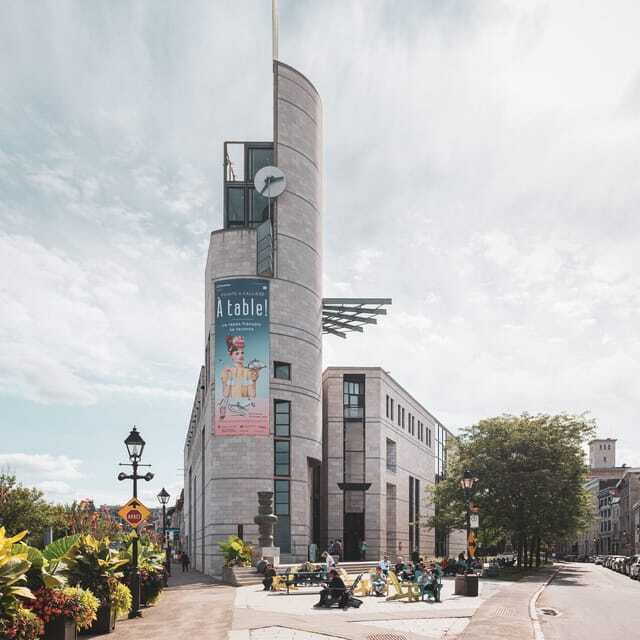
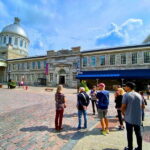
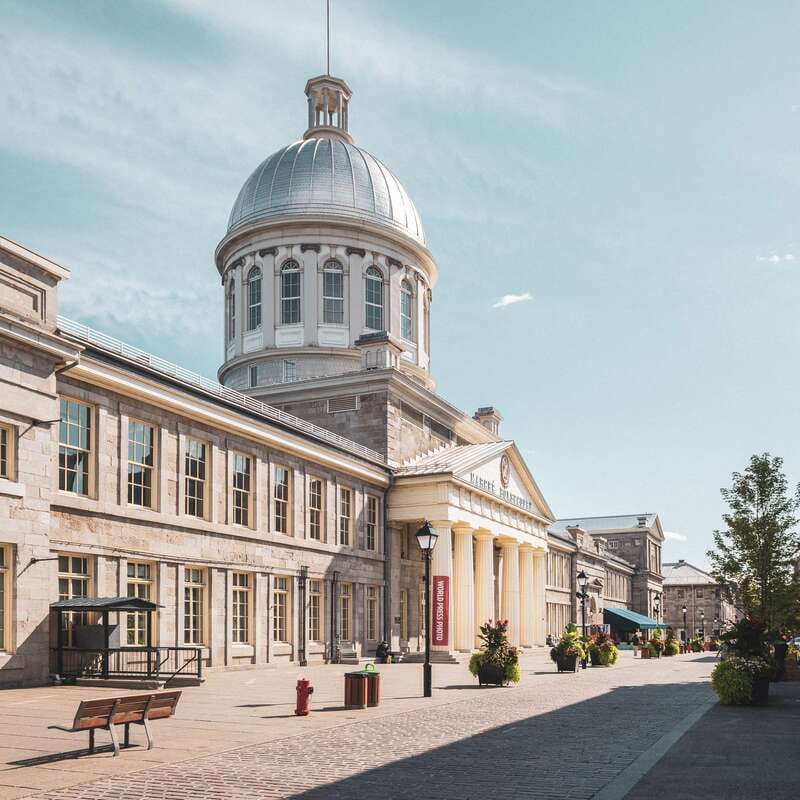
Place Jacques-Cartier and Bonsecours Market are perfect mid-tour anchors. They give you open space and strong angles for pictures, and they also give the guide a chance to explain the character of these public areas.
I like that the tour doesn’t only hit big-ticket religious landmarks. Markets and civic squares help you understand daily life and public gathering spaces, which makes Old Montreal feel less like a museum and more like a lived-in neighborhood.
If you tend to forget everything you read online once you’re on the ground, these stops help. The guide’s explanations give the photos a memory hook—what this place represents, and how it fits into the larger Montreal story.
Saint-Paul Street and Saint Lawrence River views
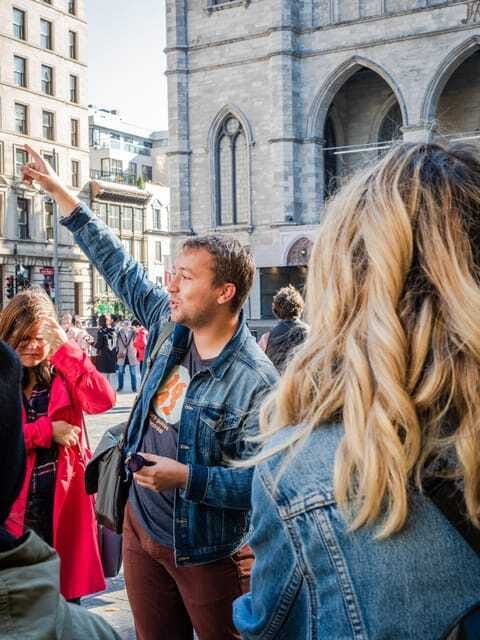
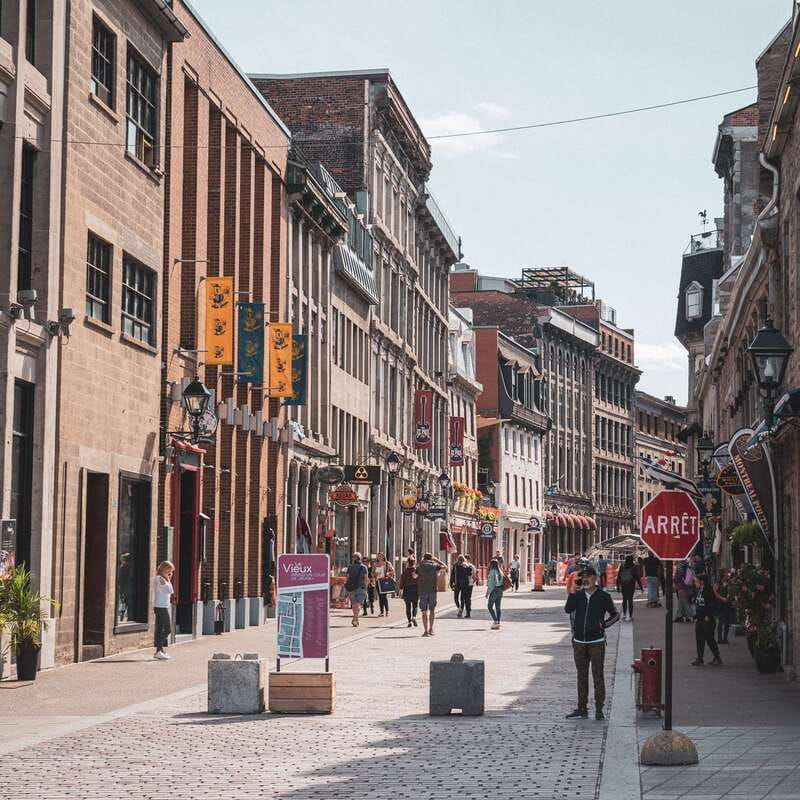
The finish on Saint-Paul Street is a smart move. It’s the kind of street where you can feel the Old Montreal vibe in your body: compact walking, layered storefront energy, and lots of visual textures.
You’ll also get moments to enjoy the Saint Lawrence River views. That’s more than a scenic break. It helps you understand that Montreal’s Old district wasn’t isolated—it’s tied to trade routes and the geography of the riverfront.
If weather is tough, this portion still matters because it often becomes your reset moment. Several guides are known for keeping an eye on comfort, such as making sure people can pause where it’s cooler when needed.
How the guide turns streets into a timeline

The tour’s real “secret sauce” is the storytelling. The route covers several landmarks, but the guide stitches them together into a timeline: how Montreal was founded, how it grew, and how the area’s identity formed.
I like tours that explain both history and present-day context. That’s what makes your next steps smoother. You’re not left wondering what to do after the tour ends—you get tips for where to go during your stay, plus ideas for museums and places to eat.
Guide style varies, but the common thread is strong communication. You’ll hear clear, easy-to-follow explanations in English, and guides are often good at answering questions on the spot.
On past walks, guides such as Sandrine, Debbie, and Chantal have been singled out for friendliness, good pacing, and the ability to keep a group moving while still taking time for questions. And even when the group is small, the tour doesn’t feel scaled down—it keeps its structure.
Price and value: is $25 a bargain?
At $25 per person for a 2-hour guided English walk, the value comes from three things.
First, you’re paying for direction. Old Montreal is easy to wander, but hard to understand quickly without a guide. This tour compresses the learning into a short window.
Second, you’re getting a small-group experience with a maximum of 15 participants. That matters when you want questions answered or want the guide to adjust for the group’s pace.
Third, the tour covers multiple major landmarks in a logical order. Instead of spending your day jumping between separate attractions, you get one coordinated route that covers key squares, churches, and historic buildings, plus river views.
If you’re trying to make the most of a tight schedule, this is one of the simplest ways to do it without hiring private transportation or stacking multiple tickets.
Who this walking tour suits best
This tour is ideal if you want a quick, high-impact introduction to Old Montreal. It’s also a strong choice if you like history but don’t want to sit in a classroom or read your way through confusing street names.
It works well for couples who want a shared overview, and it’s handy for solo travelers too, because the guide helps you connect the dots fast.
If you’re visiting with kids, the guide approach can be more interactive. Some guides are known for involving children in creative ways, which helps keep the attention on a two-hour walking plan.
The tour is also a good match for anyone planning to explore beyond Old Montreal afterward. Once you understand how the district fits into the city’s growth, it’s easier to choose the right neighborhoods and activities.
Quick checklist: what to bring and how to plan
Bring comfortable shoes. Old Montreal is lovely, but the streets demand real walking support.
Also pack:
- Water and a reusable bottle if you have one
- Snacks so you don’t run out of energy mid-walk
- A small plan for weather, since you’ll be outdoors most of the time
In winter or shoulder season, dress in layers. Guides often manage pacing and comfort, but you still want to be prepared for chilly air and possible rain.
And if you have a must-see spot later that day, give yourself a buffer. A two-hour guided walk tends to make you want to linger near your favorite buildings.
Should you book the Old Montreal guided walking tour?
Yes, if your goal is to get oriented fast and see the district’s most important landmarks in one clean route. The mix of Place d’Armes, Old Sulpicians’ Seminary, Notre-Dame Basilica, Place Jacques-Cartier, Bonsecours Market, Saint-Paul Street, and Saint Lawrence River views is exactly what you want from an intro tour.
Book it especially if:
- You’re short on time and want a structured plan
- You like explanations that connect past and present
- You want local tips for what to do after the walk
Skip it (or pair it differently) if you already know Old Montreal well and you’re craving a longer, slower format with more in-depth stops. Since it’s only two hours, you’ll likely want extra time on your favorite streets afterward.
FAQ
Where do I meet the guide?
Meet your guide on the steps of the BMO bank on Place d’Armes.
How long is the walking tour, and what group size should I expect?
The tour lasts 2 hours and runs as a small group with a maximum of 15 participants.
Is the tour offered in English?
Yes. The guided tour is in English.
What landmarks are included in the route?
You’ll visit and learn about key Old Montreal spots including Place d’Armes, the Old Sulpicians’ Seminary, Notre-Dame Basilica, Place Jacques-Cartier, Bonsecours Market, and Saint-Paul Street, plus time for Saint Lawrence River views.
What should I bring with me?
Bring comfortable shoes, snacks, water, and a reusable water bottle.
Is there free cancellation and a reserve-pay-later option?
Yes. You can cancel up to 24 hours in advance for a full refund, and there is also a reserve now & pay later option.