REVIEW · NEW ORLEANS
New Orleans: French Quarter Food History Walking Tour
Book on GetYourGuide →Operated by Doctor Gumbo Tours · Bookable on GetYourGuide
New Orleans food has a way of turning stories into flavor. This French Quarter walking tour is built around classic Louisiana bites and a guide who ties what you eat to where the city’s culinary traditions came from. I especially like the lineup that covers both Po-Boy and Muffuletta, plus stops for gumbo, hot sauce, and a sweet finish like bananas foster bread pudding. One thing to plan around: it’s not suitable for gluten intolerance, and there’s no gluten-free, dairy-free, or vegan option.
You’ll also get a practical, walk-and-taste format that keeps the experience moving without feeling rushed—right down to the water being included and the end point landing you back in the French Quarter (finish on Toulouse St). The mix of Creole-style comfort food, Cajun staples, and snack-shop stops makes this a good “first taste of the Quarter” choice. If you’re coming hungry and open to spicy hot sauce, you’ll enjoy the day a lot.
In This Review
- Key things I’d put at the top
- Price and what $85 buys you in New Orleans
- Meeting in the Quarter: 316 Chartres St and your first bite
- The Cajun gumbo stop: why it sets the tone
- Hot sauce bar: tasting heat and learning how New Orleans uses it
- Leah’s Pralines: the Creole sweet stop with a choice of classics
- NOLA Poboys: catfish Po-Boy and the seafood story
- Muffuletta plus boudin balls: two classics in one stretch
- Creole Cookery: red beans and rice for the comfort-food finale
- Bananas foster bread pudding: dessert that feels like a finish line
- Vegetarian option: what you can expect if you request it
- Walking pace, timing, and how to prep
- Who this tour is best for (and who should skip it)
- The guide factor: why these tours often feel personal
- Should you book this French Quarter food history tour?
- FAQ
- Where does the tour start?
- How long is the tour?
- How much food do you get?
- Is water included?
- Are alcoholic drinks included?
- Is there a vegetarian option?
- Is the tour gluten-free or vegan?
- What is the meeting and ending location?
Key things I’d put at the top
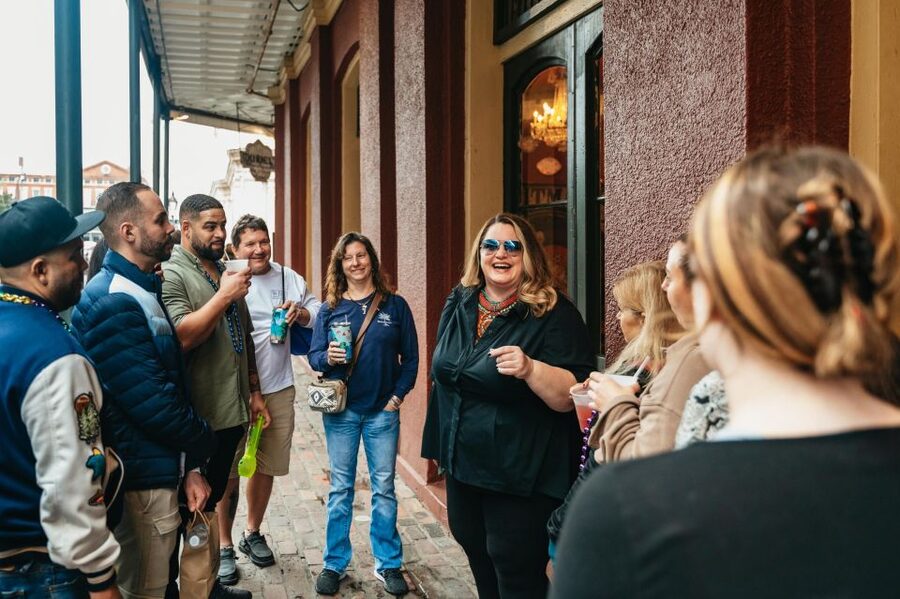
- 3-hour French Quarter route designed around up to 8 food samples (with up to 9 tastings listed)
- Historic culinary context as you move block to block, not just a food list
- Two signature sandwiches: Po-Boy and Muffuletta
- Hot sauce bar with dozens of varieties so you can measure your spice tolerance
- Vegetarian option by request (not vegan): black-eyed pea soup, veggie jambalaya, portobello Po-Boys
- Finish on something sweet: bananas foster bread pudding
Price and what $85 buys you in New Orleans

At $85 per person for a 3-hour guided walk, the value isn’t just the meals. It’s the fact that you’re getting a guided route through the French Quarter while sampling a spread of Louisiana staples that you’d have to work hard to line up on your own.
You can expect up to 8 food samples included, and the experience is described as having up to 9 tastings. Either way, the structure matters: you’re not paying for one sit-down meal and a couple of snacks. You’re paying for multiple stops that each tell you something different about how New Orleans eats—gumbo first, then heat, then sweets, then sandwiches, then dinner-style comfort, then dessert.
One more value point: water is included, and the stops are set up so you can buy cold drinks if you want them. Alcohol and soft drinks aren’t included, so you can keep it simple and still feel well fueled.
You can also read our reviews of more walking tours in New Orleans

Meeting in the Quarter: 316 Chartres St and your first bite
Your day starts at 316 Chartres St, meeting inside 3rd Block Depot. That choice is smart because it puts you right in the thick of the French Quarter early, before the route disperses into smaller side streets.
From there, you’ll cross the lively Vieux Carré (Old Square) to reach the first major tasting. The first stop is 3rd Block Depot, where you’ll get their rustic, Cajun-style gumbo served with warm potato salad.
Why that start works: gumbo is one of the dishes that functions like a culinary anchor in New Orleans. It’s hearty, layered, and gives you something substantial at the beginning—especially helpful if you’re the type who wants to walk and taste without constantly worrying about when you’ll eat next.
A practical note: gumbo with potato salad is a comfort-food start, but it can also make the later hot sauce stop feel even hotter by comparison. Pace yourself and take sips of water as needed.
The Cajun gumbo stop: why it sets the tone
This first tasting isn’t just about checking off gumbo. It’s also about getting oriented to what the tour is doing: mixing Cajun-style and Creole-style flavors under the umbrella of New Orleans cuisine.
The gumbo is described as Cajun-style, and the tour later moves into other classics like red beans and rice. That sequencing helps you taste patterns rather than random picks. You start with a thick, savory bowl, then you build outward into condiments (hot sauce), sweets (pralines), and then sandwiches that reflect Louisiana’s seafood and street-food culture.
If you’re sensitive to spice or heat, this is where you can still set a baseline. Gumbo gives you flavor depth without forcing you to choose a high-spice option immediately.
Hot sauce bar: tasting heat and learning how New Orleans uses it
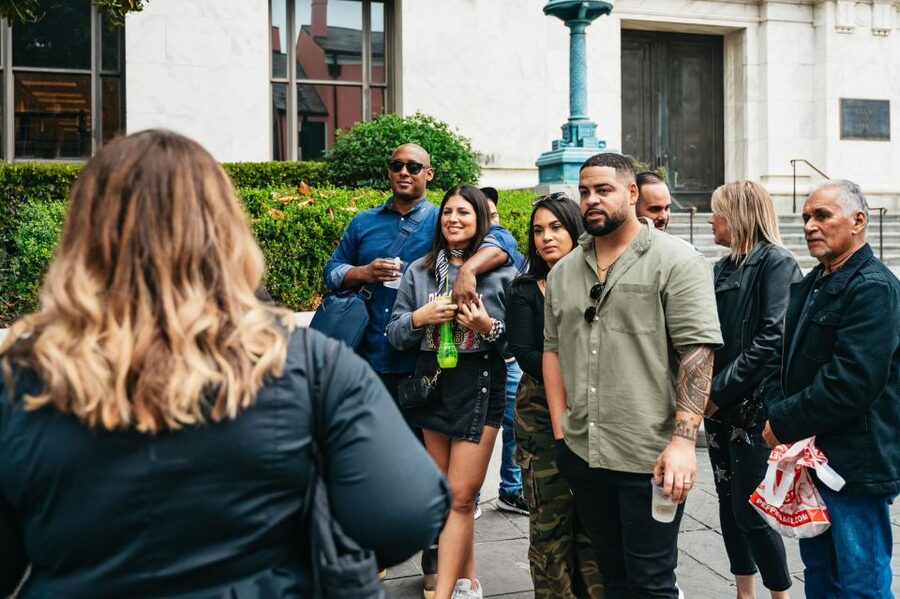
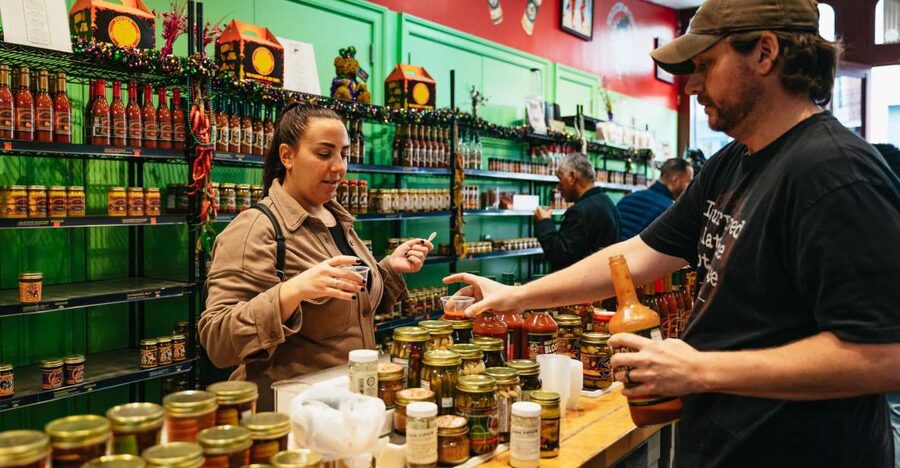
Next comes a stop at a popular hot sauce bar, where you can sample dozens of fiery hot sauce varieties. This is one of those experiences that feels small until you’re standing there comparing flavors and heat levels.
Why it’s worth your attention: hot sauce in New Orleans isn’t just punishment heat. The variety matters. You’ll likely notice differences that match the dish you’re eating—savory sauces that add body, brighter ones that feel tangier, and others that lean straight toward heat.
What to watch: if you don’t handle spice well, start with tiny tastes. The bar setting is designed for sampling, not for one big bold decision. Taking it slowly also keeps you comfortable for the sandwich-heavy portion coming up soon.
Leah’s Pralines: the Creole sweet stop with a choice of classics
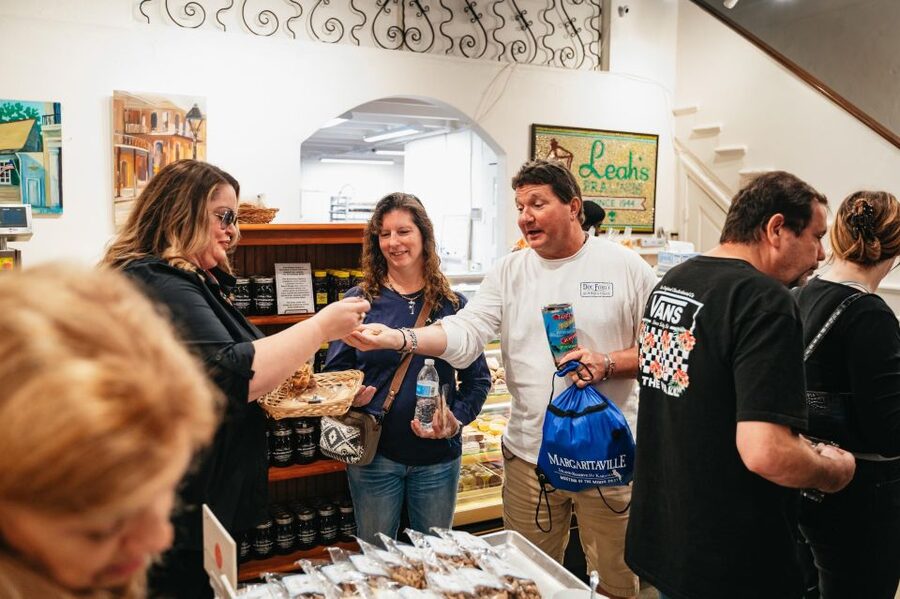
After the heat, the tour heads to Leah’s Pralines. Here you’ll sample a typical Creole classic, with an option that includes bacon pecan brittle.
This stop is a good counterweight to the savory-heavy route. Pralines also give you a window into how New Orleans treats sweets: not always delicate, often rich and textured, and very tied to local tastes.
One practical advantage: it’s an easy way to satisfy the sweet tooth early enough that dessert at the end still feels special rather than forced. If you’re balancing your appetite, this is a sweet spot to slow down and actually taste the differences instead of racing through bites.
You can also read our reviews of more food & drink experiences in New Orleans
NOLA Poboys: catfish Po-Boy and the seafood story
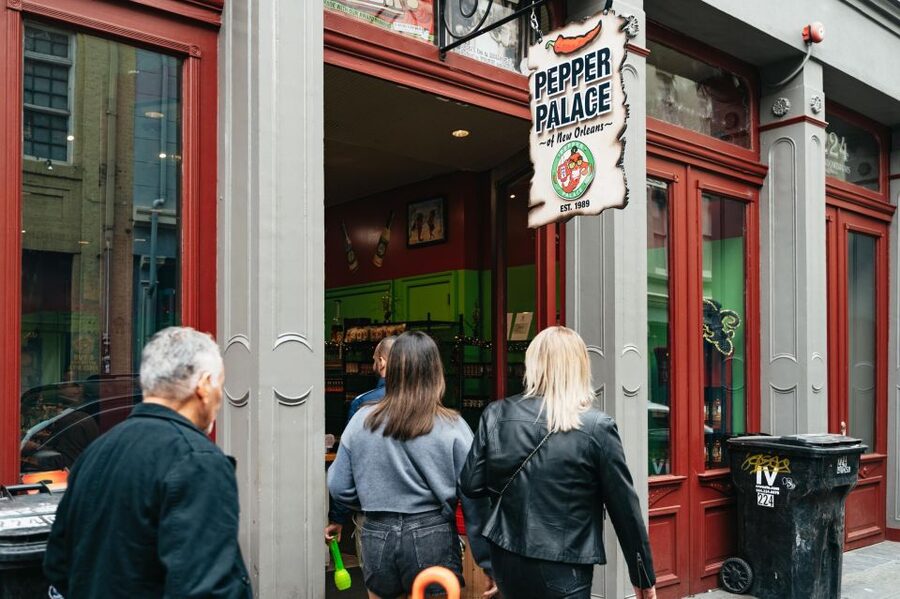
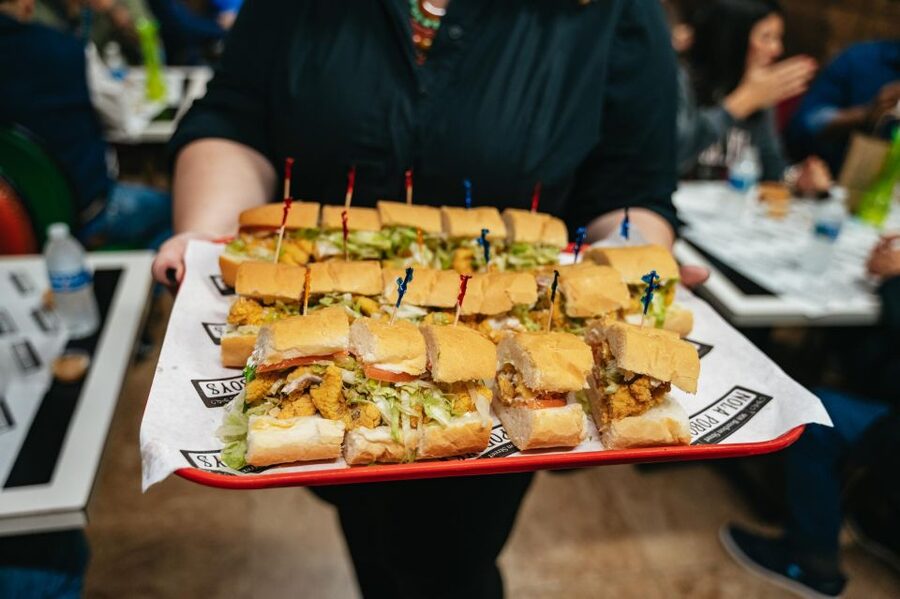
Then it’s time for a New Orleans sandwich that’s basically a city identity: the Po-Boy. At NOLA Poboys, you’ll learn more about the tradition of seafood in Louisiana before biting into a freshly fried catfish Po-Boy.
This is where the tour shifts into street-food mode. A fried fish sandwich gives you that crunchy, salty, tangy experience that works as both food and food history. It also sets up the later sandwich comparison with the Muffuletta.
If you’re trying to figure out which sandwich you’d want again later, pay attention to texture here. Fried catfish with the typical Po-Boy structure is a very different eating experience than a muffuletta-style sandwich.
Muffuletta plus boudin balls: two classics in one stretch
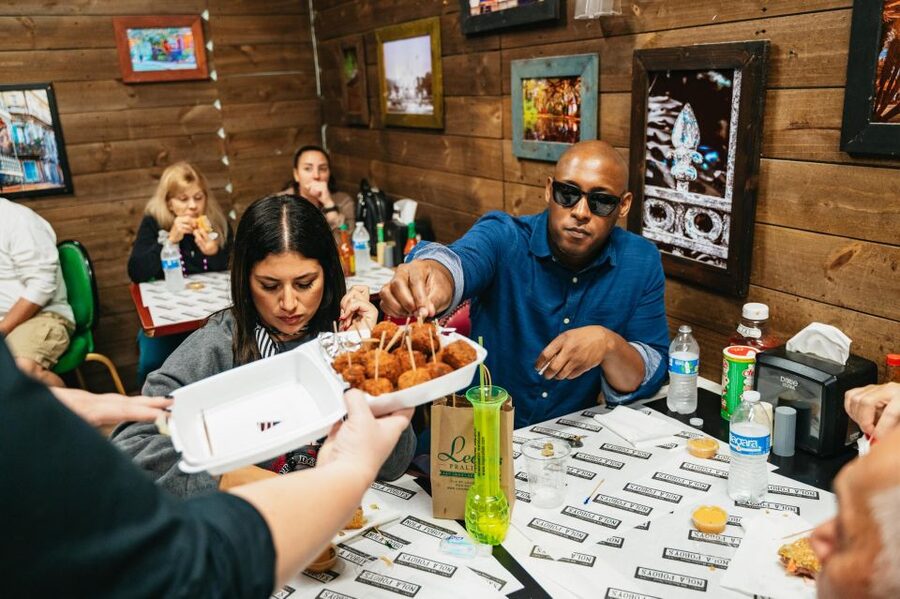
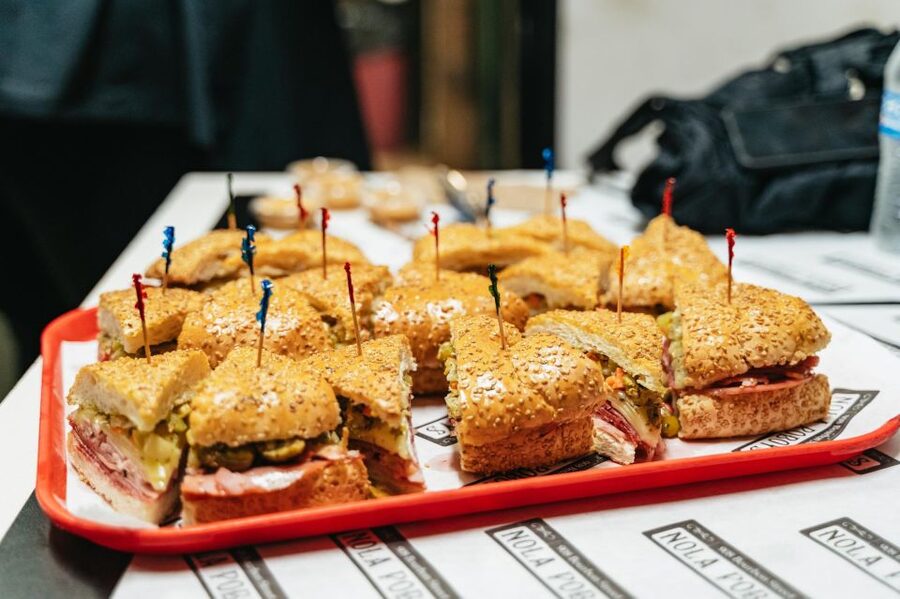
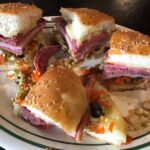
Next you’ll experience another New Orleans original: the Muffuletta. You’ll also get boudin balls during this part of the route.
That pairing is a clever move. Muffuletta brings you the meaty, olive-forward sandwich profile, while boudin balls give you a Cajun-leaning snack that feels like it belongs in the same story as gumbo and hot sauce. Together, they show how New Orleans can be both hearty and snackable.
What I’d consider if you’re planning ahead: boudin is sausage-based, and these are not light bites. By this stage in the tour you should be ready for thicker flavors and more filling textures. If you know you eat slowly, lean into it—don’t feel rushed to finish everything quickly, because part of the value here is tasting at the pace the guide sets.
Creole Cookery: red beans and rice for the comfort-food finale
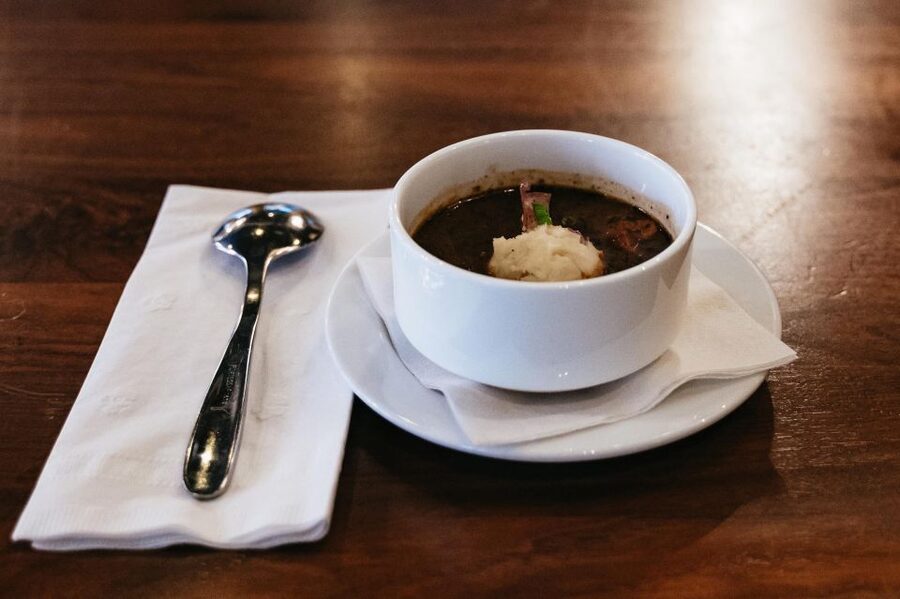
Your next major sit-down moment is Creole Cookery, where you’ll tuck into red beans and rice.
Red beans and rice is the kind of dish that makes sense in a food-history tour because it’s simple on the surface but powerful in how it represents routine and comfort. You get something warm and steady—ideal after the sandwich and snack portion.
The guide’s job here is to connect the dots: why this dish shows up, why it fits New Orleans daily life, and how the city’s ingredients and traditions shape what ends up on plates.
If you’ve been eating a lot of handheld food up to this point, this is your chance to settle your stomach and slow down. It’s also the stop that can calm your spice level, because red beans and rice usually plays more background to any heat you might have tasted earlier.
Bananas foster bread pudding: dessert that feels like a finish line
The tour ends on a sweet note with bananas foster bread pudding, finishing at Toulouse St.
This is the kind of dessert that works well at the end of a walking tour. It’s rich and aromatic, but it’s not something you want to start with. If you’ve followed the route and your appetite stayed steady, this final bite should feel like a reward instead of an obligation.
It also makes the whole experience easier to remember. Gumbo and sandwiches can blur together in a food crawl, but bananas foster bread pudding is specific enough to stand out.
Vegetarian option: what you can expect if you request it
There is a Vegetarian Option available by request at checkout. That option includes black-eyed pea soup, veggie jambalaya, portobello Po-boys, and other riffs on Southern classics.
This is important because New Orleans food tours can sometimes default to removing one element and calling it vegetarian. Here, the vegetarian plan is built around multiple dishes that still feel like they belong to the same family as the meat-forward ones: hearty beans, comforting rice-based food, and a sandwich version that keeps the street-food vibe.
One caution: the tour has no vegan option, and it also doesn’t offer gluten-free or dairy-free alternatives (as stated). If you’re vegetarian but also have other dietary restrictions, you’ll need to plan carefully and notify the provider about food allergies when booking.
Walking pace, timing, and how to prep
This is a walking tour with a total duration of 3 hours. You’re moving between stops both on foot and via short transitions, crossing parts of the Quarter along the way.
Because it runs rain or shine, I’d pack for weather first, then food. In New Orleans, that can mean heat and humidity in warm months, or slick sidewalks after rain. Comfortable shoes matter because the experience depends on you staying with the group.
Also: you’ll be eating multiple items across several stops, including a hot sauce sampling. Come in with an empty stomach or very light breakfast. One of the most common practical wins with a tour like this is that you don’t have to squeeze meals into a busy day.
Who this tour is best for (and who should skip it)
This works especially well if you want a structured introduction to New Orleans food without spending hours choosing restaurants. You’ll see the French Quarter route, try a mix of Cajun staples and Creole classics, and get the kind of food-history context that makes the dishes feel less random.
You may want to look elsewhere if you:
- Have gluten intolerance (the tour is not suitable)
- Need vegan options (not available)
- Have food allergies beyond what you can clearly communicate to the provider (notify them when booking)
It’s also labeled wheelchair accessible, but it’s simultaneously described as not suitable for people with mobility impairments. If mobility is a question for you, contact the activity provider before booking so you can confirm what “accessible” means in practice for your situation.
The guide factor: why these tours often feel personal
The experience is led by an English-speaking guide, and the repeated pattern across guide styles is what you’d hope for in a food history tour: stories that connect what you eat to the city itself, plus a sense of humor and interaction.
You’ll see names like Beth, Gary, Dylan, Meg, John (often referred to as Professor), and Dillon associated with top-rated experiences. That matters because the best part of any tasting tour isn’t just the food—it’s getting explanations that help you remember what you liked and why.
Even at a high level, you can tell this is built for pacing: people mention not being rushed at the stops and leaving satisfied. That’s a good sign if you want to ask questions or take your time.
Should you book this French Quarter food history tour?
I’d book it if you want a guided way to eat your way through the Quarter in one go. The value is strongest when you want variety: gumbo, hot sauce sampling, pralines, catfish Po-Boy, Muffuletta, boudin balls, red beans and rice, and bananas foster bread pudding—all with a guide tying the pieces together.
Skip or reconsider if your dietary needs don’t match the stated limits, especially gluten intolerance or vegan requirements. Also, if spicy food is a hard no, you’ll want to plan for the hot sauce bar stop by going slow with your tastings.
FAQ
Where does the tour start?
It meets at 316 Chartres St inside 3rd Block Depot.
How long is the tour?
The duration is 3 hours.
How much food do you get?
You get up to 8 food samples included, with the tour also described as having up to 9 food tastings.
Is water included?
Yes. Water is included.
Are alcoholic drinks included?
No. Alcoholic beverages and soft drinks are not included, though most stops have stocked bars where you can purchase beverages.
Is there a vegetarian option?
Yes. A vegetarian option is available by request at checkout and includes items like black-eyed pea soup, veggie jambalaya, and portobello Po-boys.
Is the tour gluten-free or vegan?
No. It does not have a gluten-free, dairy-free, or vegan option. It’s not suitable for people with gluten intolerance.
What is the meeting and ending location?
You meet inside 3rd Block Depot and finish on Toulouse St, New Orleans, LA 70116.