REVIEW · LONDON
London: Landmarks Walking Tour
Book on Viator →Operated by Vox City International Ltd · Bookable on Viator
Two hours can change how London feels. This short guided walk gives you an easy route through the capital’s power centers and royal drama, plus just enough color to help you plan the rest of your trip.
I love the live commentary that turns famous buildings into understandable stories, and I love the Vox City app that keeps the experience going after the walk. Hearing guides like Freya, Louis, Lew, Jess, and Sebastian explain what you’re seeing makes the city click fast.
One thing to consider: this tour is very meeting-point dependent. If you don’t arrive close to the start time at Trafalgar Square, you risk getting separated from the group, especially in crowds.
In This Review
- Key highlights worth knowing before you go
- Getting oriented at Trafalgar Square, then moving fast
- Big Ben and the details you usually skip
- Parliament, law courts, and the machinery behind politics
- Churchill’s bronze, then wartime decision-making
- Westminster’s royal church area: coronations, burials, and a pause to look up
- St James’s Palace and the ceremonial walk toward Buckingham
- Horse Guards and photo timing with the King’s Life Guard
- Regent Street, the first shopping mall idea, and London’s theatre edge
- Soho: food, fashion, entertainment, and the night vibe
- The art stop that gives the day a different flavor
- What you’re really paying for: value at $20.80
- Using the Vox City app the right way
- Who this tour suits best (and where it might not)
- Should you book this London landmarks walking tour?
- FAQ
- How long is the London landmarks walking tour?
- Where do I meet the guide?
- What time does the tour start?
- Is the tour in English?
- Are entry tickets to attractions included?
- Is free cancellation available?
Key highlights worth knowing before you go
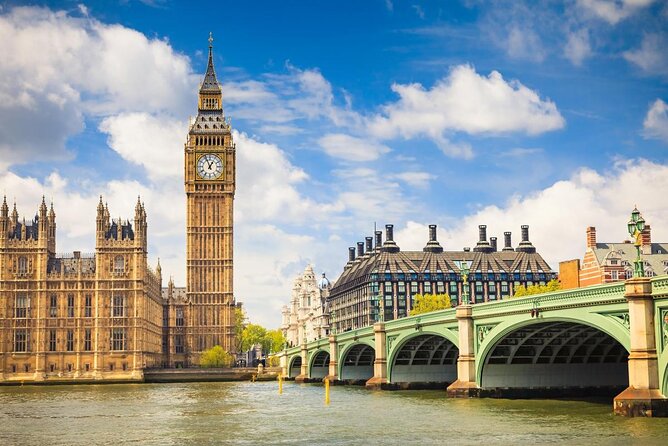
- Trafalgar Square start puts you in the middle of central London, right where most visitors want to be anyway
- Big Ben, Parliament, and the Supreme Court help you connect landmarks to how the UK actually works
- Royal sights in walking distance cover Westminster Abbey area, St James’s Park, St James’s Palace, and Buckingham area
- Great midday photo timing often lines up with the changing scene at the Guards on a short schedule
- Small-group feel with a maximum of 25 people means questions stay possible
- Route flexibility can happen when streets change, like protests or rain, and the guide may adjust the walk
Getting oriented at Trafalgar Square, then moving fast
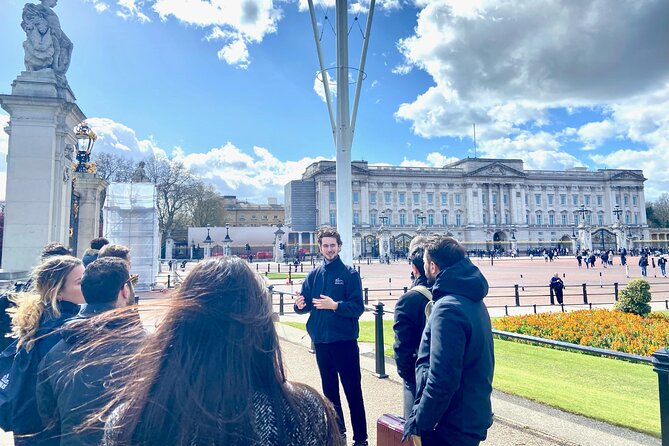
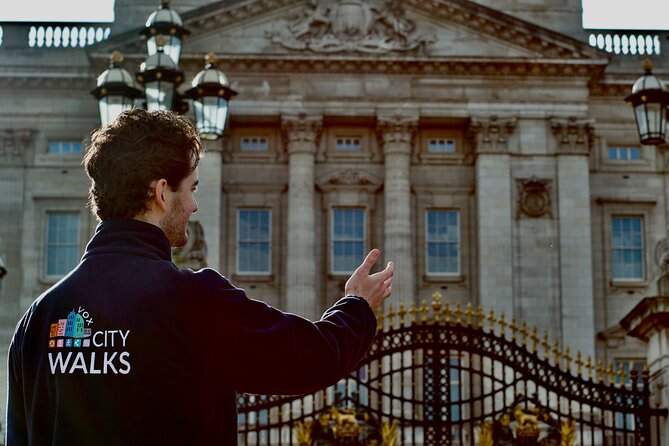
This is a smart way to start a London visit because it begins at Trafalgar Square, a giant “you are here” landmark. You meet next to the large white cube statue on the 4th Plinth opposite Canada House, and your guide wears a dark blue Vox City uniform. If you’ve ever wandered for 20 minutes trying to find the right street in London, you’ll appreciate how efficient this keeps things.
The tour runs about 2 hours, starting at 12:30 pm and ending back near the meeting point. That schedule matters: it gives you prime daylight for photos and helps you avoid burning a whole day on the “big hits” before you know where you want to return later.
You can also read our reviews of more walking tours in London



Big Ben and the details you usually skip
You’ll head toward Big Ben, and this is where the walking pace helps. On public transport, it’s easy to glance and move on; on foot, you can notice angles, nearby buildings, and the way the area frames the tower.
One detail that stood out in the tour description is that Big Ben was recently renovated, restored to gleaming golden and blue colours. Even if you’ve seen photos before, seeing the colors in person makes it feel less like a postcard and more like a real part of the city’s everyday life.
The practical tip here: plan for crowds around major landmarks. Your best tool is staying with the group and using guide timing for photos rather than trying to “beat the crowd” on your own.
Parliament, law courts, and the machinery behind politics
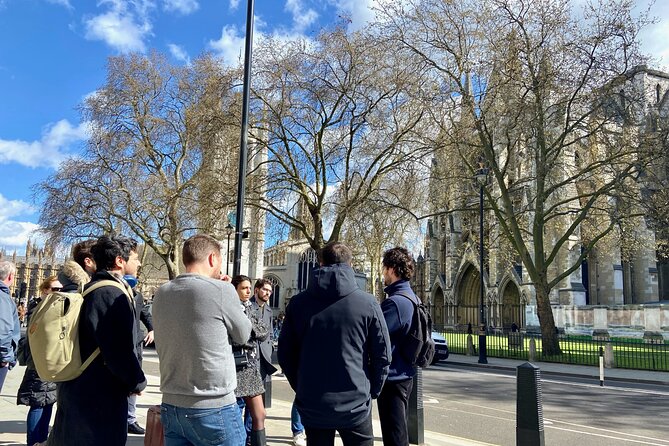
Next comes the part many “classic sightseeing” tours rush through: the UK’s political and legal core. You’ll look at the heart of politics where laws have been introduced and debated for centuries, and then move on to the UK Supreme Court, where the most important civil and criminal cases have been heard for over 100 years.
Walking past these stops makes the city feel organized. You start to see how London’s big institutions sit close together, within a tight web near government buildings. It’s not just big statues and famous names; it’s the context that makes later visits to Westminster and museums feel more meaningful.
If you like understanding how a place works, this section delivers. If you prefer pure postcard scenery with zero “how the system works” talk, you might find yourself wishing for more time at the photo stops. The good news is the pace is designed to keep it moving, while still pausing for explanations.
Churchill’s bronze, then wartime decision-making
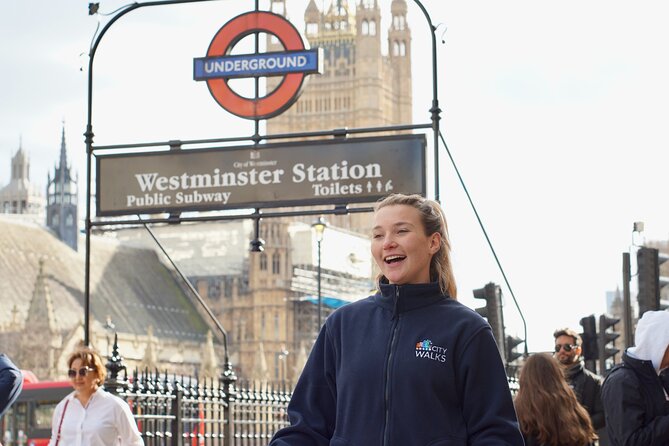
You’ll stop for a bronze statue of Winston Churchill—a quick moment, but the kind that anchors the day. Churchill shows up again in another way later, with a pass by the buildings where he made wartime decisions during World War Two.
What I like about combining these moments is the mental link. You’re not just seeing a name on a plaque; you’re getting a sense of where decisions were made and why Churchill mattered to the story of the city during the war years.
You’ll also get time to take photos without the usual “run, pose, sprint to the next stop” feeling. One of the best bits of feedback was that the tour timing often allowed more than a blink at each highlight, and this section is the kind that benefits from that.
Westminster’s royal church area: coronations, burials, and a pause to look up
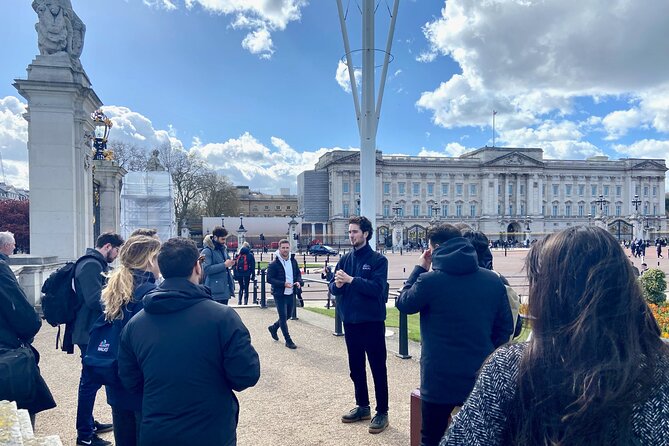
Then you’re in the orbit of a famous royal church where monarchs have been coronated and buried. Even if you don’t go inside, the exterior and setting are enough to make you look up and slow down for a second.
Nearby, you pass through the area with St James’s Park, described as lush and elaborate, right in the middle of a city. The tour notes that King Henry VIII once hunted deer there. That detail is exactly the kind of thing that changes a park from “nice greenery” into “a location with real royal footprints.”
If you’re the type who likes small stories, this part lands well. It gives you a sense of how power and leisure overlapped in London long before today’s traffic and schedules existed.






St James’s Palace and the ceremonial walk toward Buckingham
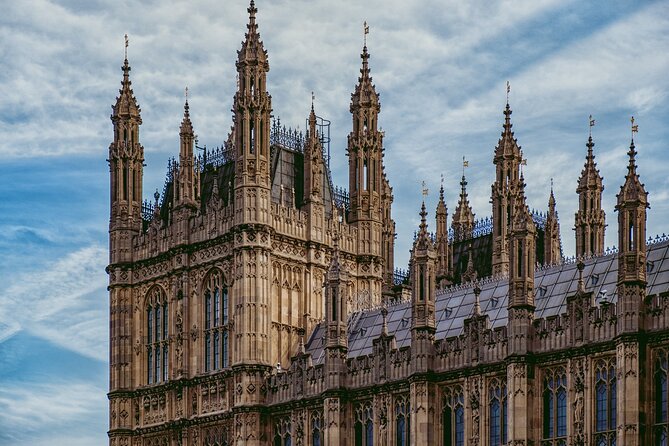
After the park, you’ll see the Tudor palace where generations of monarchs used it as a royal residence. In the walk, it helps to think of it like a corridor of time: Tudor roots here, royal present there, all connected by geography.
Then the route shifts to a ceremonial walk tied to major events. You’ll pass along the ceremonial route where Trooping the Colour is performed and where the annual London Marathon finishes. You’re basically walking the city’s big stages—places built for pageantry and crowds—even when everything looks calm on a regular day.
From there, you’ll see the famous royal palace where monarchs still reside, protected by the King’s Guard. This is where the tour’s timing really matters. On a good schedule, you get a chance to catch the guards at a moment that feels like London at its most theatrical.
Horse Guards and photo timing with the King’s Life Guard
You’ll be ready for a snapshot of the horsebacked King’s Life Guard, wearing red tunics and white plumed helmets. This is pure eye-candy, and the reason it works on this tour is the short, guided stop keeps you from missing the moment while you’re fighting for a vantage point.
A key practical point: guards and ceremonial routines can be affected by crowds and street conditions. The walk is designed to keep you moving, but you’ll still benefit from being alert and keeping your camera ready when the guide signals the moment.
One of the best pieces of feedback was that the guide often timed key scenes perfectly, so you could take photos without wasting the whole afternoon. That’s exactly what you want on a two-hour overview.
Regent Street, the first shopping mall idea, and London’s theatre edge
From royal London, you swing into the shopping and show zones. You’ll pass by Regent Street, described as the first ever shopping mall design, and noted as guarded by the oldest police force in the UK. Even if you don’t plan to shop, the architecture and street energy make it feel like a different London than the government-and-palaces stretch.
Then you move through the West End area, where you can spot famous theatres tied to iconic stage productions. This part works best if you’re a little curious about what you’ll want to see later. You’ll get visual prompts that help you choose a show once you’re back in planning mode.
Soho: food, fashion, entertainment, and the night vibe
Next comes Soho, described as a district mixing food, fashion, entertainment, and nightlife. On a walk like this, you’re not meant to “live” in Soho for hours. Instead, you get the feel of it—enough to tell you whether you’ll want a separate evening visit later.
What helps is that the walk sequence makes Soho feel like a release valve after royal formality and legal institutions. You go from stiff ceremony to human chaos, and the contrast makes both feel more vivid.
The art stop that gives the day a different flavor
Finally, you’ll see an art gallery that houses thousands of portraits, paintings, and sculptures from artists around the world. In a two-hour overview, that’s a smart choice because it breaks the pattern of monuments only.
Even without going inside, the gallery stop signals that London isn’t just power and royalty. It’s also art and storytelling. If your later plans include a museum day, this stop helps you decide what mood you want to chase: portraits, painting, or sculpture.
A practical note: entry tickets to attractions are not included. So treat this as a “see the place, get inspired” stop unless you decide to add an entry separately.
What you’re really paying for: value at $20.80
At $20.80 per person for about two hours, this tour is priced like a practical shortcut. You’re paying for three things you’d otherwise spend time hunting for: a route that ties landmarks together, a guide who turns “what is this?” into “now I get it,” and an app layer that extends your prep and recall.
Here’s the math that usually makes sense for people: if you’re on your first (or second) trip day and you don’t want to waste hours figuring out how central London connects, paying for a guided loop is often cheaper than lost time plus wrong directions.
Also, this tour is set up for small-group conversation. With a maximum of 25 people, you’ll usually have room to ask questions without shouting over a giant crowd.
Using the Vox City app the right way
This walk includes the Vox City sightseeing mobile app in multiple languages (English, Spanish, French, German, Italian, Mandarin). To get it, you’ll download using the QR code on your voucher and you’ll want your phone ready before you arrive.
It’s not just a nice extra. It’s what lets you keep the tour’s context after you finish. If you’re the kind of person who circles back to landmarks on day two, the app can help you remember what to look for next.
One practical drawback: a mobile device and headset aren’t included. So bring your phone, and if you like clearer audio, consider using your own headphones.
Who this tour suits best (and where it might not)
This is a good fit if you want a short London overview, you enjoy history explained in plain language, and you want a guided set of stops that mix royal sites, politics, and art. It’s also a great choice when you don’t have much time and you want to get your bearings fast.
It may feel less ideal if you want deep museum time or lots of paid entries. The tour keeps to exterior viewing and short pauses, and entry tickets aren’t included. If you’re chasing inside experiences only, you’ll likely want separate timed tickets.
Also, it’s still a walk. Most people can participate, but you’ll want comfortable shoes and a basic tolerance for city walking. London is London: streets, crowds, and occasional detours happen.
Should you book this London landmarks walking tour?
I’d book it if you’re craving structure. If you want the city to make sense quickly, this tour gives you a guided route that connects Trafalgar Square, Big Ben, political and court sites, royal areas, shopping streets, and an art stop in a single two-hour block.
I’d think twice if you’re very tight on timing or you hate walking through busy areas. And do yourself a favor: arrive a few minutes early at the exact Trafalgar Square meeting spot next to the white cube on the 4th Plinth, and have your voucher QR ready so you’re not scrambling at the start.
If you get the guide and timing right, this is the kind of first-day experience that makes the rest of London easier to explore on your own.
FAQ
How long is the London landmarks walking tour?
The tour lasts about 2 hours.
Where do I meet the guide?
You meet at Trafalgar Square (Trafalgar Sq, London WC2N 5DS, UK), next to the large white cube statue on the 4th Plinth opposite Canada House.
What time does the tour start?
The start time listed is 12:30 pm.
Is the tour in English?
Yes, the tour has live commentary in English. The Vox City sightseeing app is also available in English and several other languages.
Are entry tickets to attractions included?
No. Entry tickets to attractions are not included.
Is free cancellation available?
Yes, you can cancel for a full refund up to 24 hours before the experience’s start time.