REVIEW · BRUGES
Bruges Private 2-Hour Walking Tour
Book on GetYourGuide →Operated by Omnia Travel · Bookable on GetYourGuide
Bruges is best when someone local steers. This private 2-hour walking tour threads through the UNESCO-listed historic center with a real focus on the big medieval landmarks and the stories behind them. You’ll start in the center, walk at a human pace, and end in a calmer pocket of the city near the Princely Béguinage.
Two things I really like: you get a guide who can tune the tour to your group (I’ve seen guides like Jan, Theo, Paul, and Dirk handle everything from teen attention spans to families), and the route hits Bruges’s most important stops without wasting time. The walk also mixes major squares like Market Square and Burg with quieter stretches that make you feel how the city actually works on foot.
A fair heads-up: it’s only 2 hours, and entrance fees are not included—so if you want to go deep inside every church or museum stop, you’ll likely need extra time (or plan to pay a couple entries yourself).
In This Review
- Quick take: what you’ll remember after 120 minutes
- How a private 2-hour walk works in Bruges
- Starting at ’t Zand and the Market Square approach
- Market Square belfry: civic power you can see from across town
- Jan Van Eyck Square and the buildings that explain trade
- Burg Square, the Gothic City Hall, and the Holy Blood Basilica
- Fish Market, Tanners Square, and Dijver canal views
- St. John’s Hospital: an old European institution you can still see
- Minnewater and the Princely Béguinage: the tour’s softer ending
- Price and value: what $223 gets you (and how to judge it)
- Who should book this Bruges private walking tour
- Should you book this tour?
- FAQ
- Where does the tour start?
- How long is the Bruges private walking tour?
- What’s the price?
- What’s included in the price?
- What isn’t included?
- Is pickup included?
- What languages are the guides available in?
- Does it visit the main UNESCO-listed historic sites?
- Can I cancel for a full refund?
- Where does the tour end?
Quick take: what you’ll remember after 120 minutes
- The UNESCO core, on foot: you cover the historic center in a tight, logical loop.
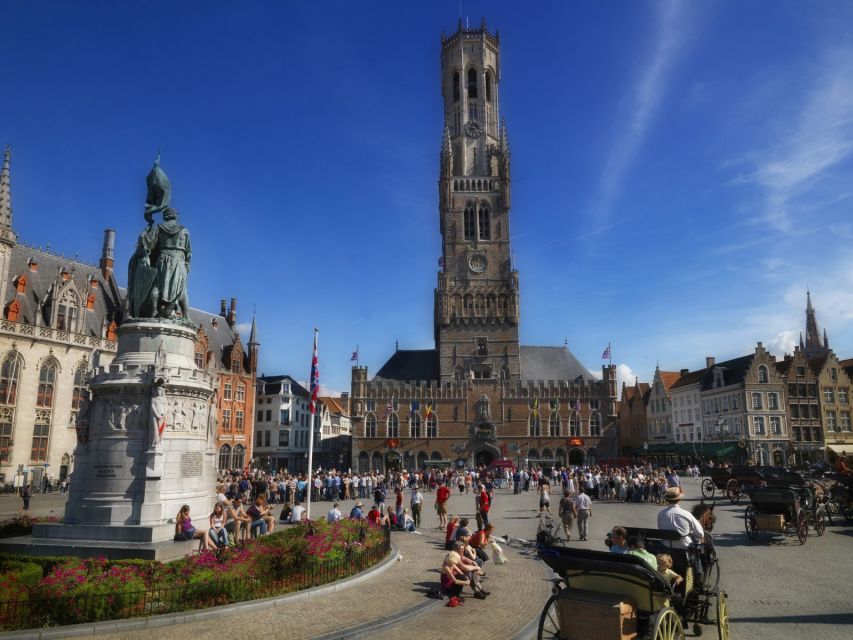
- Belfry-and-square Bruges: you pass the imposing 83-meter Market Square belfry and learn what it meant in its day.
- Hanseatic Bruges, explained simply: you walk past key buildings tied to trade, finance, and power.
- Burg + Basilica of the Holy Blood: you’ll see the ceremonial heart of the city and one of its most famous relic sites.
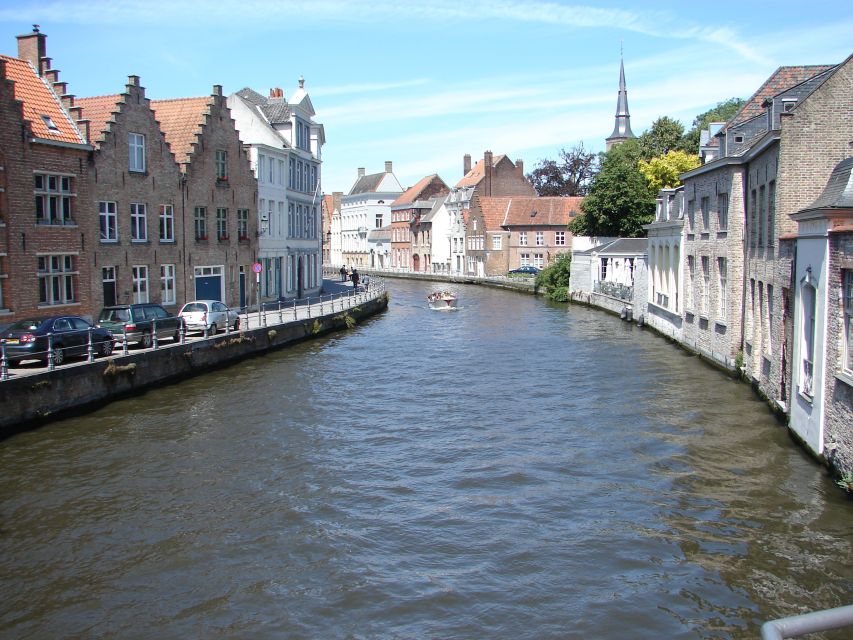
- Canals and atmosphere: routes through Fish Market, Tanners Square, and Dijver help you picture life beyond the postcard shots.
- A peaceful finish: you end near Minnewater and the 13th-century Princely Béguinage.
How a private 2-hour walk works in Bruges
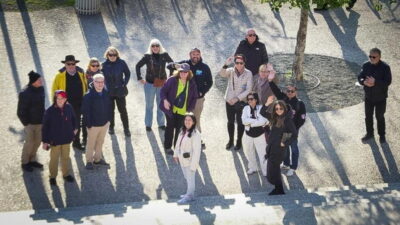
This is built for a private group, priced for up to 20 people, and led for a full 2 hours. Practically, that means you’re not stuck in a long line of strangers, and you can keep moving without constantly stopping for the slower person in the crowd.
Pickup is simple if you’re close to the historic center: you can meet your guide at the hotel lobby (only if your hotel is in that area), or at the Bruges train station, or at Tourist Office In & Out (‘t Zand 34, 8000 Brugge). Starting at ’t Zand Square by the Concert Hall also gives you an easy point to orient yourself before you head deeper into the medieval streets.
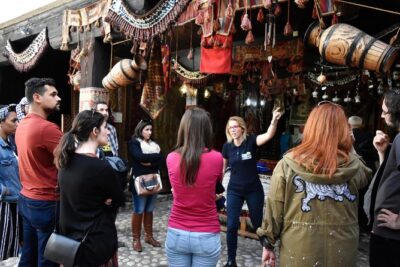
You’ll hear the city through your guide’s eyes. Several guides referenced in the experience stories—like Jan, Theo, Paul, Erik, Dirk, and Daniel—come across as flexible. One guide even kept things moving smoothly despite heavy rain, staying undercover most of the time. That matters in Bruges, where weather can change fast and walking is the whole point.
One more practical note: entrance fees and meals aren’t included. That’s normal for a walking tour, but it does mean your guide can show you what’s important from the outside, and you may choose a couple interiors based on what you care about most.
You can also read our reviews of more walking tours in Bruges

Starting at ’t Zand and the Market Square approach
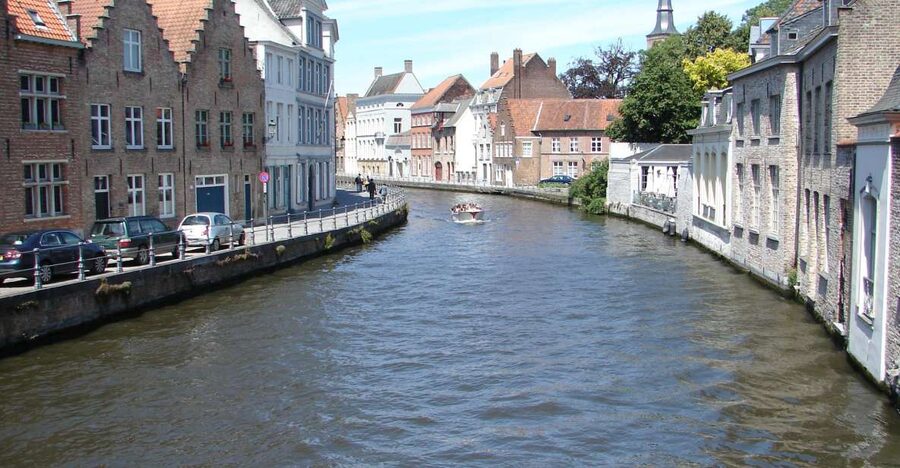
The tour typically kicks off at ’t Zand Square near the Concert Hall, then heads along the main shopping street toward the Market Square. This is a smart way to begin. You get your bearings early, and you’re walking through the same area you’d use for your own sightseeing—so the tour feels useful, not like a random shortcut.
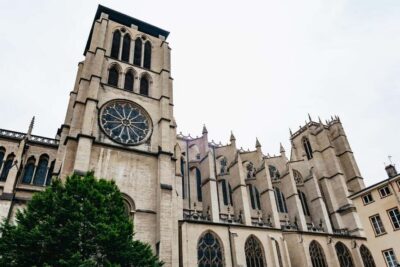
On the way, you’ll visit St. Savior Cathedral. Even if you’re not the type to read every plaque, cathedrals like this help you understand the city’s scale and what people were building when Bruges was a major player in Flanders. It also sets a tone for the rest of the walk: Bruges isn’t just pretty canals. It’s a place where money, faith, and civic pride all lived side by side.
Then you turn toward the Market Square, where the atmosphere changes. This is where the city shows off—literally and politically.
Market Square belfry: civic power you can see from across town
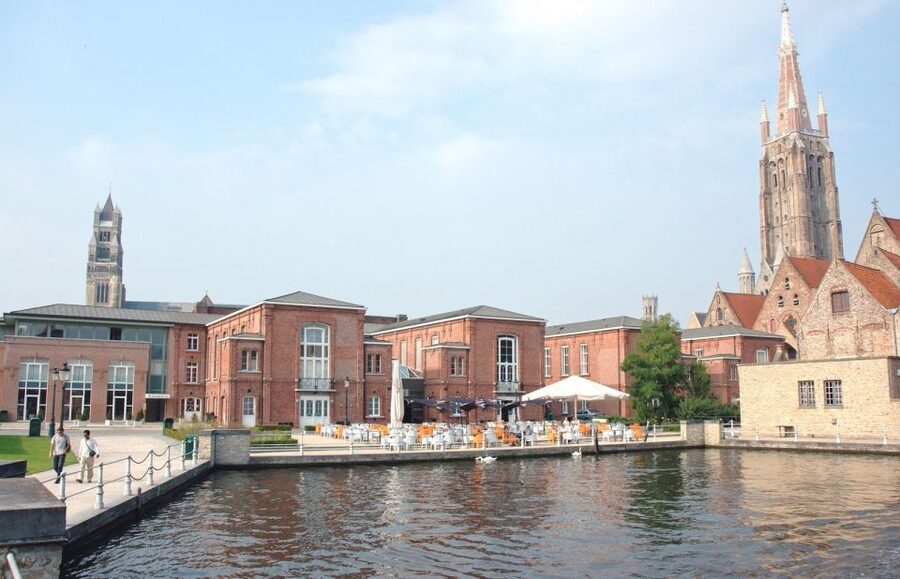
In Market Square, you’ll see the 83-meter-tall belfry. This is one of those Bruges sights that’s hard to fully grasp until you stand near it and look up. Your guide’s job here is to explain why this kind of tower mattered: it wasn’t only decoration. It was a statement of authority in a city that grew rich through trade.
What I like about how this tour handles Market Square is that it doesn’t treat it as a photo stop. Instead, you connect the belfry to the surrounding medieval layout—how streets funnel people here, and why this area became the public stage for important civic life.
If you’re traveling with teens, this stop tends to work well. Several tour stories point to guides keeping young people engaged with clear, focused explanations instead of endless dates.
Jan Van Eyck Square and the buildings that explain trade
From Market Square, the walk continues to Jan Van Eyck Square, once the center of Hanseatic Bruges. This is where the tour makes Bruges click for a lot of first-timers. You start to understand that medieval Bruges didn’t become important by accident. It was an economic and financial hub in the 13th to 15th centuries, and you can still feel that structure in the streets.
Along the way, you’ll pass several standout buildings, including:
- Saaihalle (1399)
- Huis ter Beurze, described as the first stock exchange
- The Toll House
These are the kinds of details you’d miss if you were just wandering with a map. The tour translates them into human meaning: trade brought wealth, wealth brought institutions, and institutions shaped how the city looked and operated.
Also, this is a great segment for architecture lovers. You’re walking past reminders of Bruges’s commercial role, and your guide can point out what to notice without turning it into a lecture. Guides named across the experience stories—like Jan and Paul—tend to connect facts to the places you’re standing in front of, not just the idea of history.
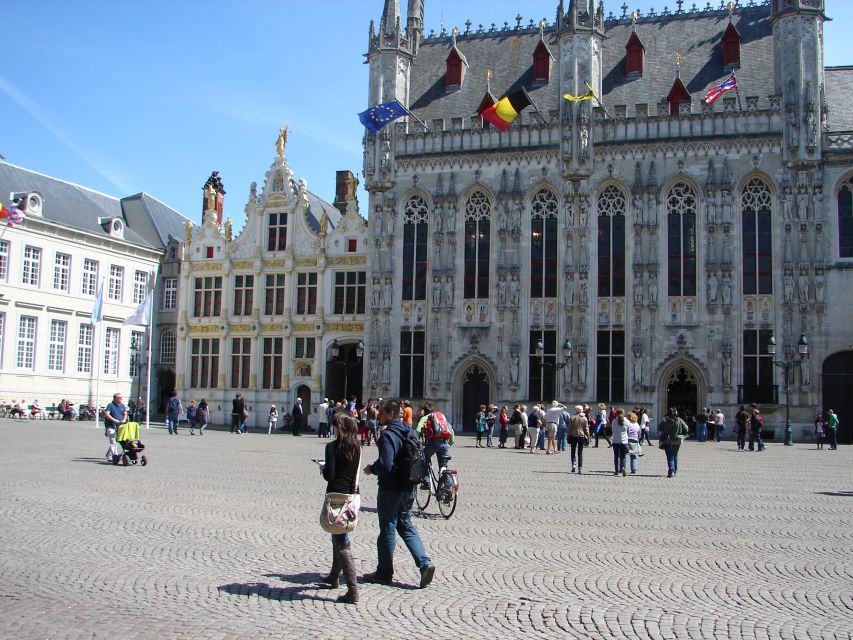
Burg Square, the Gothic City Hall, and the Holy Blood Basilica
Next is Burg, one of Bruges’s most charming squares. It’s a strong contrast to the Market Square route: Burg feels more ceremonial, with the civic and religious anchors close together.
Here you’ll see:
- The stunning Gothic City Hall
- The Basilica of the Holy Blood
- The Liberty of Bruges, once the city’s courthouse and now the Municipal Archives
This section is one of the biggest “wow” clusters on the route. The Gothic City Hall gives you the visual scale, while the Basilica points you toward one of Bruges’s best-known pilgrimage stories. Even if you don’t go inside (entrance fees aren’t included), seeing where the Holy Blood focus sits in the city makes the place feel more purposeful.
One practical tip that came through in guide experiences: if you’re interested in what’s inside, your guide can help you decide how much time to allot. Some tour stories mention guides pointing out where to find specific chapel areas and what to look for once you’re inside—useful if you’re trying to plan your own follow-up visit later.
If the weather turns, this is also a logical area to slow down and reassess. You’ll have enough major landmarks clustered together that you can adjust without losing the whole tour.

Fish Market, Tanners Square, and Dijver canal views
After Burg, you transition into the more intimate side of Bruges. You’ll walk through the Fish Market, Tanners Square, and along the very picturesque Dijver. This is the part of the tour that feels most “Bruges” in the postcard sense, but with better context.
Why it matters: these stops show how the city’s working spaces and daily life connect to the civic monuments you saw earlier. Bruges wasn’t just a political stage. It was a place where people traded, processed goods, and lived along canals.
You also pass by St. Mary’s Church. From what guides do during the walk, this stop often becomes a “what to look for later” moment. In one example, a guide helped people focus on notable artwork inside the church—something that can be easy to miss if you just pop in for a quick look.
If you’re the type who likes to keep moving but still wants meaning, this segment is a sweet spot. You get the beauty of the canals and squares while your guide keeps tying it back to why Bruges looked like this in the first place.
St. John’s Hospital: an old European institution you can still see
A key mid-tour pause is St. John’s Hospital, described as one of the oldest preserved hospital buildings in Europe. Your guide will likely frame why this matters and how it fits into the city’s older patterns—Bruges cared about more than commerce and ceremony.
Some tour experiences highlight that inside the hospital area, there are meaningful chapel spaces worth noticing, including Romanesque elements in lower levels. Even if you don’t go deep into interiors, the fact that the hospital building is preserved helps you understand continuity. You’re not just looking at set dressing. You’re looking at a real historic function that survived.
Also, this is a good stop for photos, and it’s often less stressful than the main squares. If you’re traveling with multiple generations, this can be a calmer moment when everyone can regroup.
Minnewater and the Princely Béguinage: the tour’s softer ending
The walk ends near Minnewater and the Princely Béguinage. This is a thoughtful finish. After all the major squares and public buildings, you get a shift into a quieter atmosphere and a chance to breathe.
Minnewater is a great place to slow your brain down. Several guide stories mention things like swan photos along the canals on the way, and that kind of moment is exactly why a walking tour works. You see the city as a sequence of moods, not just a list of stops.
The finale at the 13th-century Princely Béguinage lands as a cool historical bookend. The tour has already shown you Bruges as a trading and civic powerhouse; this ending reminds you the city also had long-term communities and traditions that weren’t always about money or politics.
If you want to keep exploring after the tour, this is a strong place to do it. You’re already in an area that feels more “take your time” than “catch the next landmark.”
Price and value: what $223 gets you (and how to judge it)
The price is $223 per group up to 20 for the 2-hour private guided walk. That can be a bargain—or not—depending on your group size and how you like to travel.
Here’s the practical math:
- If you fill a group near the top end, the cost can come out very low per person.
- If you’re a small group (or just two people), the per-person cost rises fast.
So the value comes from what’s included: a private guide who can tailor pace and attention, plus a route that hits a lot of major sights in one go. If it helps you avoid backtracking through Bruges and you’d rather spend your limited time enjoying the city than mapping it, the guide cost makes sense.
Just remember what’s not included: entrance fees. If you want to go inside more than a couple highlights, budget a bit extra.
Also, guides in the experience stories show a pattern of adapting for families and even mobility needs. One guide named Dirk was noted for accommodating a mother with mobility issues, and another guide handled rain by keeping people undercover. That flexibility is hard to price, but it’s real value when you’re in an old city where weather and cobblestones can mess with plans.
Who should book this Bruges private walking tour
This tour is a strong fit if you:
- Want a first solid overview of Bruges’s historic center in a short time
- Like history tied to visible places, not just dates
- Travel with kids or teens and need someone who can keep them engaged
- Appreciate a guide who can adjust pace and make the walk smoother in bad weather
- Prefer canals and key squares, but still want the “why” behind the architecture
It may not be the best match if you:
- Want to spend lots of time inside multiple churches or museums during these two hours
- Have a strict schedule that doesn’t allow a guide to pause for questions or slow walking segments
Should you book this tour?
I’d book it if you want Bruges without the usual wandering stress. The route is efficient, the sights are the big ones, and the experience seems to rely on strong guiding—people like Jan, Theo, Paul, Erik, Dirk, and Daniel pop up as examples of guides who stay engaging and adapt to the group.
I’d hesitate only if you’re the kind of traveler who wants long interior time as your main event. This is a walking tour that teaches you to see the city first. Then you can decide what to enter on your own.
If you’re doing Bruges for the first time and you want your time to feel well spent, this is a very practical way to start.
FAQ
Where does the tour start?
It typically departs from ’t Zand Square, at the Concert Hall.
How long is the Bruges private walking tour?
The duration is 2 hours.
What’s the price?
It costs $223 per group, up to 20 people.
What’s included in the price?
A private guide for the 2-hour tour.
What isn’t included?
Entrance fees and meals are not included.
Is pickup included?
Yes. Pickup is available at the hotel lobby (only if located in the historic center), or at the Bruges train station, or at the Tourist Office In & Out (’t Zand 34, 8000 Brugge).
What languages are the guides available in?
Spanish, Dutch, English, French, and German.
Does it visit the main UNESCO-listed historic sites?
Yes. The walk covers the UNESCO-listed historic center and focuses on the city’s key attractions.
Can I cancel for a full refund?
You can cancel up to 24 hours in advance for a full refund.
Where does the tour end?
The walk ends at Minnewater and the Princely Béguinage.