REVIEW · BIRMINGHAM
Birmingham City Centre Daily Walking Tour (10:30am & 2pm)
Book on Viator →Operated by Walking Tours in England · Bookable on Viator
If you want Birmingham fast, this walk is a solid start. It’s a guided city-centre walking tour that stitches together culture, industry, and major landmarks in about 90 minutes. You’ll be moving at a relaxed pace, with your route already planned—so you can focus on the details.
I really like how the stops are short and well-spaced, which makes it feel easy even if you’re new to the city. I also like that you get context as you go—industrial revolution, world-war history, and local legends are built into the route rather than tacked on at the end. One thing to consider: several notable places are shown with entry tickets not included, so if you want to go inside, plan for extra time and costs.
In This Review
- Key Things to Know Before You Go
- A 90-Minute Birmingham Walk That Sets the Scene
- Price and Value: What $19.41 Gets You
- Finding Your Way: Cathedral Square as a Practical Start
- Stop-by-Stop: What You’ll See and Why It Matters
- 1) Cathedral Square: Birmingham Through Its Cathedral Shadow
- 2) St Philip’s Cathedral Garden: Small Church, Big Era
- 3) Victoria Square: A Quick Step Back to the 1800s
- 4) Birmingham Town Hall: Famous Feet Have Walked In
- 5) Birmingham Museum & Art Gallery: Local Artists and a Landmark Building
- 6) Chamberlain Square: World-War Birmingham and Real Sacrifice
- 7) Centenary Square: From Old to New Birmingham
- 8) Hall of Memory: A Birmingham-First Memorial
- 9) Baskerville House: The John Baskerville Thread
- 10) Broad Street: Birmingham’s Walk of Fame
- 11) Symphony Hall: Along the Industrial Canals
- 12) Ikon Gallery: Old Meets New in Neo Gothic Form
- Guides and Group Energy: Why People Keep Giving High Marks
- Pace, Comfort, and Weather Reality Checks
- Who This Tour Is For (and Who Should Skip It)
- Should You Book This Birmingham City-Centre Walking Tour?
- FAQ
- How long is the Birmingham City Centre Daily Walking Tour?
- Where does the tour start and end?
- Is the tour in English?
- Are admission tickets included for the stops?
- What group size should I expect?
- What happens if the weather is poor or I need to cancel?
Key Things to Know Before You Go
- Low-stress route: 12 stops mapped through central Birmingham, with your guide handling the navigation
- Story-first sightseeing: industrial-era build-outs, world-war sacrifices, and memorials explained as you walk
- Smart time limit: about 1.5 hours, so you’ll get exterior views and highlights rather than full museum or building time
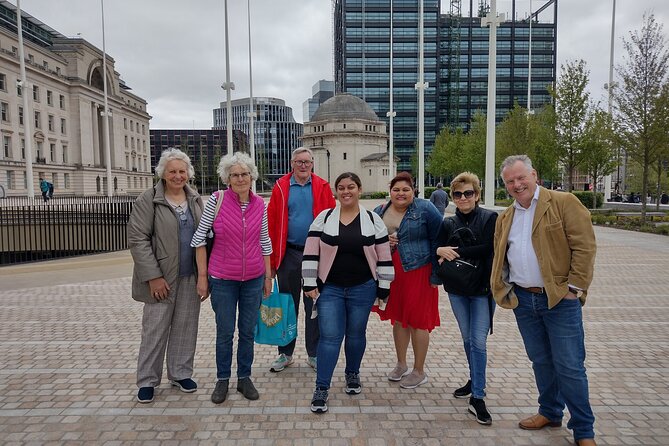
- Small group feel: capped at 20 travelers, which helps keep the walk interactive
- Guides make or break it: multiple guides (Phil, Dee, Peter, Richard, Carlos) are singled out for humor and energy
- Weather matters: it requires good weather, and a cold day can make the experience feel longer than the clock says
A 90-Minute Birmingham Walk That Sets the Scene
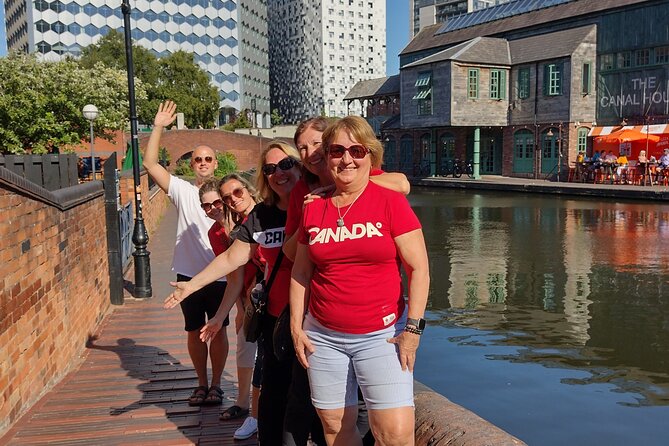
This tour works because it’s built for orientation. You start in Cathedral Square with Birmingham’s big-picture story and a clear idea of where you are in the city. Then you keep stepping through different eras—Victorian sights, world-war reminders, and modern Birmingham architecture—without needing to map anything yourself.
It’s also a good length for real sightseeing. At 1 hour 30 minutes, you can fit it into a first-day plan, then use the rest of your time for deeper exploring. And because most stops are outside or quick-look moments, you avoid the trap of spending your trip staring at the back of a ticket line.
You can also read our reviews of more walking tours in Birmingham

Price and Value: What $19.41 Gets You
At $19.41 per person, this is priced like an intro tour: not a bargain-light “just walk around” experience, and not an expensive full-day production either. The value is in three places.
First, you get a guided narrative that helps you connect the dots. Birmingham has layers—cathedrals, civic buildings, war memorials, and culture sites—and a guide turns that mix into a timeline you can remember.
Second, the route saves decision fatigue. If you’re only in Birmingham for a short time, this kind of structure helps you hit major points without guessing what matters most.
Third, the group size is small enough to feel personal. With a maximum of 20 travelers, it’s easier to ask questions and stay engaged—especially when the guide is funny, fast, or eager to share local color (and several guides—Phil, Dee, Peter, Richard, and Carlos—are mentioned with positive energy).
Only drawback on value: it’s not a “go inside everything” tour. Some stops list admission tickets as not included, which strongly suggests you’re meant to view highlights from the outside. If your priority is museum time or interior exploring, you’ll want to return later on your own.
Finding Your Way: Cathedral Square as a Practical Start
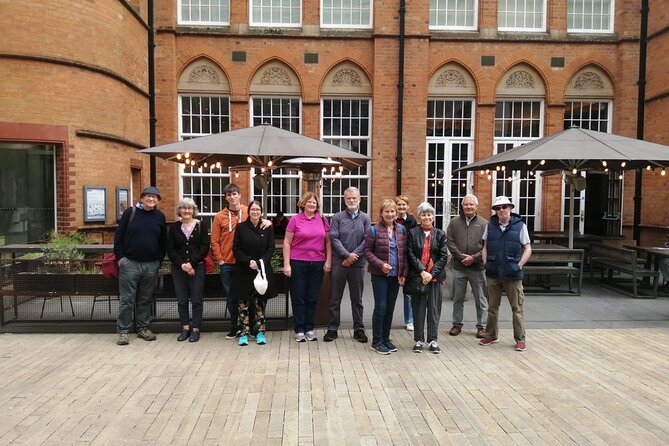
You meet at Birmingham Cathedral, Cathedral Square, Colmore Row, Birmingham B3 2QB. Ending point is Ikon Gallery, 1 Brindley Pl, Oozells Sq, Birmingham B1 2HS.
One practical tip from real-world experience: finding the exact meeting spot can be confusing if you expect a specific marker. People have pointed out that the usual flagpole wasn’t there, and that the Ferris wheel area in Cathedral Square is the helpful reference point. So when you arrive, look for the Ferris wheel and confirm with the staff that you’re at the right curb.
Also, the tour is near public transportation, which matters because Birmingham’s city centre can be hectic. If you’re arriving by transit, give yourself a few minutes buffer so you’re not sprinting in the cold.
Stop-by-Stop: What You’ll See and Why It Matters
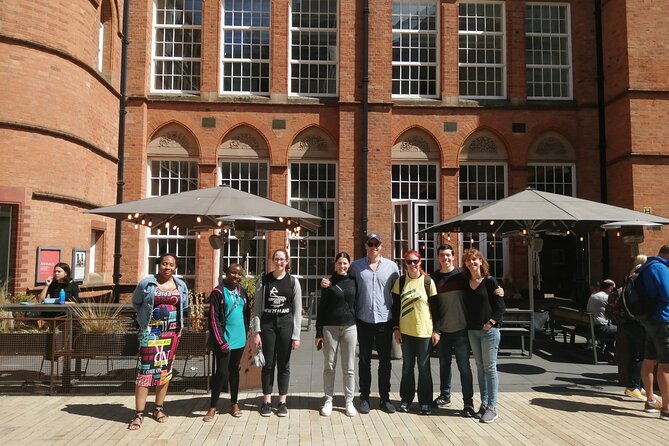
This route moves through 12 named stops. Each one is brief (around five minutes), which keeps the walk flowing. Think of it as highlights with context—small windows into larger stories.
1) Cathedral Square: Birmingham Through Its Cathedral Shadow
The tour starts in the shadow of Birmingham Cathedral. This is where the guide gives you a clean intro to the city’s history and sets up how the rest of the day fits together.
Why it’s useful: you’re grounded right away. Instead of wandering and hoping something clicks later, you hear the story first.
2) St Philip’s Cathedral Garden: Small Church, Big Era
Next is St Philip’s Cathedral Garden, where you’ll discover St Philip’s Cathedral described as one of the smallest cathedrals in Britain. The background here is tied to the industrial revolution, so you get a sense of how major growth shaped religious and civic spaces too.
If you love architectural details, this is a nice moment to slow down and look closely. Since it’s a garden stop, it also feels slightly calmer than the busier squares.
3) Victoria Square: A Quick Step Back to the 1800s
At Victoria Square, the tour shifts into Victorian Birmingham. You’re essentially getting a photo-friendly time change—from industrial-era momentum to 1800s civic identity.
This stop is short, so you won’t get a full lecture. But it’s a helpful bridge to what comes next.
4) Birmingham Town Hall: Famous Feet Have Walked In
Birmingham Town Hall is a standout because it’s tied to names you actually recognize: Charles Dickens, Emmeline Pankhurst, Bob Dylan, The Rolling Stones, and The Beatles are all noted as people who walked through its doors.
A key point for expectations: the admission ticket here is not included. So you’ll likely get the exterior (and the story) rather than an interior tour.
Still, the “who’s walked here” angle makes it feel less like a random building and more like a stage in Birmingham’s public life.
5) Birmingham Museum & Art Gallery: Local Artists and a Landmark Building
At Birmingham Museum & Art Gallery, you’ll see the building and hear about artists connected to Birmingham. Again, the admission ticket is not included, so this is more about place + context than a full museum visit.
If you’re an art fan, I’d treat this stop as your prompt to do your own follow-up. You’ll finish the tour with the name of the building in your head—and that makes it easier to pick a museum day later.
6) Chamberlain Square: World-War Birmingham and Real Sacrifice
Chamberlain Square is where the tone becomes more serious. You’ll discover Birmingham’s role in both of the World Wars and the sacrifices made by local people for the country.
This stop is emotionally framed, not just factual. Even though it’s only a few minutes, it’s one of the stops that gives the walk weight.
7) Centenary Square: From Old to New Birmingham
At Centenary Square, the focus turns to modern Birmingham—architecture and city life today. This stop gives you a sense of how the city has moved on, not just what it survived.
It’s also a useful contrast point after the war story. You leave the somber part and then look forward.
8) Hall of Memory: A Birmingham-First Memorial
Next is Hall of Memory, memorialising those who gave their lives for Birmingham and Britain. The ticket is not included, so plan for a viewing stop unless you decide to add entry time separately.
If you’re sensitive to memorial spaces, this is one of the moments to give yourself an extra breath. Short as it is, it deserves your attention.
9) Baskerville House: The John Baskerville Thread
At Baskerville House, the tour wraps in the story of John Baskerville. The ticket is not included, so it’s best viewed as a guided “here’s the connection” stop.
If you like quirky local topics, you’ll probably enjoy this one. It’s the kind of detail that makes a city feel specific, not generic.
10) Broad Street: Birmingham’s Walk of Fame
Broad Street is described as a walk of fame. This is one of the more playful stretches of the route, and it’s a good change-up after memorials and formal civic buildings.
It also helps you keep your bearings: you’re now clearly in the part of central Birmingham where culture and music references feel more present.
11) Symphony Hall: Along the Industrial Canals
Then comes Symphony Hall, where you take a relaxing walk alongside one of Birmingham’s iconic industrial canals. Ticket is not included, so expect this as a guided stroll with views and explanation rather than an indoor stop.
Why I like this segment: it breaks the “square, square, building” rhythm and gives you something calmer to look at while still moving.
12) Ikon Gallery: Old Meets New in Neo Gothic Form
The tour ends at Ikon Gallery, finishing where old and new blend together. The exterior is described as Neo Gothic.
This is a fitting closing moment: you’ve walked through eras, and the finish reflects that same mix. If you want an easy next step after the tour, this location works well because it’s a natural place to wander nearby before dinner.
Guides and Group Energy: Why People Keep Giving High Marks
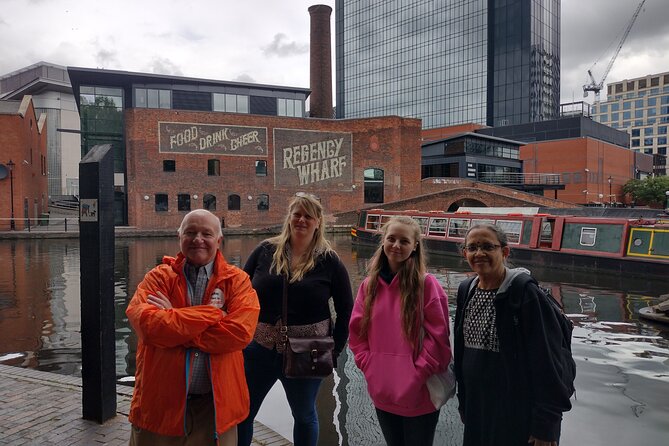
The best part of this tour isn’t a single building. It’s how the guide turns a list of sights into a story you can tell someone later.
Multiple guides are named positively in the feedback—Phil, Dee, Peter, Richard, and Carlos—and the consistent theme is that they’re energetic and engaging. People also mention humor and interactive explanations, which matters on a short walk. If you’re going to be outside for 90 minutes, you need the guide to keep it moving.
One more thing I’d highlight: guides appear to adjust to the group when needed. One account praised a guide for checking in on older walkers to make sure everyone was okay. That’s a real quality signal if you’re traveling with anyone who needs a steadier pace.
Pace, Comfort, and Weather Reality Checks
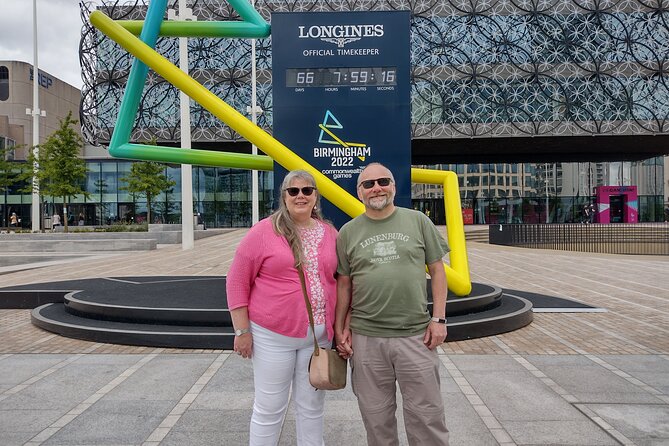
This is a walking tour, so comfortable shoes are non-negotiable. Even though each stop is brief, the total time is 90 minutes and you’ll be outside.
The experience requires good weather. That doesn’t mean you’ll never go out in mixed conditions, but it does mean you shouldn’t ignore the forecast. One cold-day account described the walk dragging because of how the guide paced and where they stopped for air.
My practical advice:
- Dress in layers, especially if you’re doing the 10:30am or 2pm slot in shoulder seasons.
- Bring a water bottle even if it’s cool.
- If you’re not very comfortable with fast spoken English, consider choosing a time when the guide is likely to run at a comfortable speed. One issue raised was a guide speaking too fast for a French group, even after a request.
Who This Tour Is For (and Who Should Skip It)
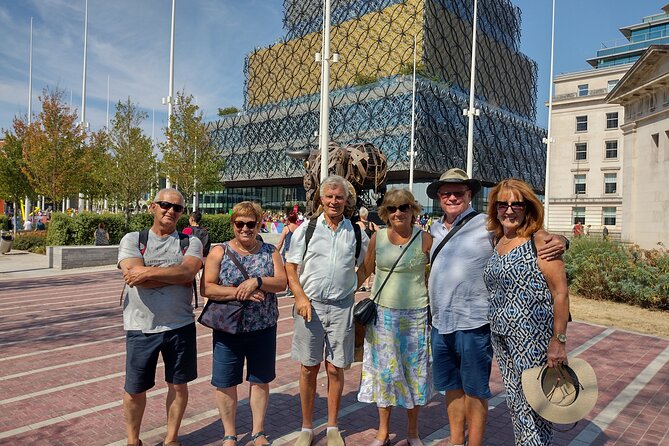
This tour is a strong fit if you want:
- A quick first-day orientation in Birmingham City Centre
- A guided overview that helps you decide where to return later
- A route that avoids stress about navigation
- A short group size (max 20) that doesn’t feel huge
It may be less ideal if:
- You want deep interior time at museums or major buildings. With tickets not included for several stops, the tour is clearly designed around highlights rather than full entry visits.
- You need a very slow walking pace. Most people seem to like the relaxed rhythm, but the day-to-day comfort can shift with weather and with the guide’s style.
Should You Book This Birmingham City-Centre Walking Tour?
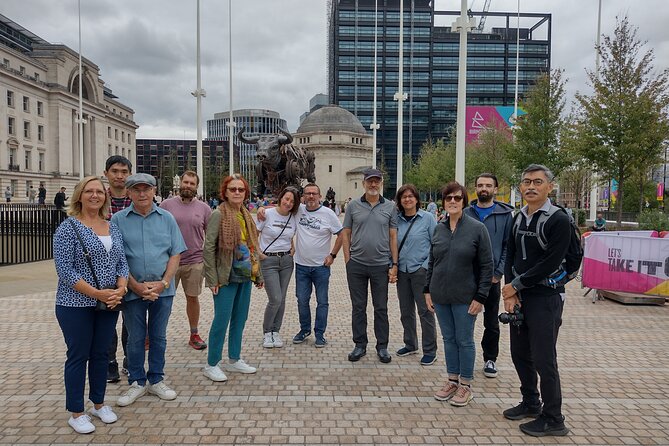
I’d book it if your goal is to understand Birmingham quickly and then explore more on your own. For the price, you get a guided storyline plus major landmarks—cathedrals, civic buildings, war remembrance, industrial canals, and a modern art finish—without spending your day charting directions.
I would hold off only if you’re specifically after lots of indoor admissions or you’re traveling on days where cold rain might be likely. For everything else, this is one of the most efficient ways to start a Birmingham trip: short, structured, and guided with enough humor and local context to make the city feel like more than a map.
FAQ
How long is the Birmingham City Centre Daily Walking Tour?
It runs for about 1 hour 30 minutes.
Where does the tour start and end?
It starts at Birmingham Cathedral, Cathedral Square, Colmore Row, Birmingham B3 2QB, UK, and ends at Ikon Gallery, 1 Brindley Pl, Oozells Sq, Birmingham B1 2HS, UK.
Is the tour in English?
Yes, the tour is offered in English.
Are admission tickets included for the stops?
Some stops are marked as free, while others are marked as admission ticket not included. So you may need to purchase entry separately if you want to go inside those specific places.
What group size should I expect?
The tour has a maximum of 20 travelers.
What happens if the weather is poor or I need to cancel?
The experience requires good weather, and if it’s canceled due to poor weather you’ll be offered a different date or a full refund. You can also cancel for a full refund up to 24 hours in advance of the start time.