REVIEW · BIRMINGHAM
Discovering Birmingham 2 hour Walking Tour to the Jewellery Quarter
Book on Viator →Operated by Positively Birmingham Walking Tours · Bookable on Viator
Birmingham’s hidden canals beat the usual sightseeing. This 2-hour walking tour lets you see the Jewellery Quarter up close, with backstreet alleys and a route by foot that reaches places a coach can’t. I especially like the way the guide uses an audio receiver, so you hear the story even when you’re a few steps back.
One possible drawback: it’s still a real outdoor walk, so you’ll want a coat or umbrella if the weather turns.
You also get a strong sense of Birmingham’s push-pull between old craft and new redevelopment. The vibe is friendly and lightly funny, and guides like Jonathan Berg and Bernard (plus others mentioned such as Ann and Maria) have a reputation for making the facts easy to follow. This works best if you’re comfortable walking at a moderate pace for about two hours.
In This Review
- The Big Wins You’ll Feel Right Away
- Getting Oriented at Centenary Square
- Entering the Jewellery Quarter by a Secret Canal Route
- Spotting Georgian Architecture Outside the Jewellery Quarter Church
- Birmingham Cathedral: A Short Look, and Sometimes the Stained Glass
- St Chad’s From the Inner Ring Road and the Car-Era Question
- Returning Through Victoria and Chamberlain Squares
- Price and Timing: What $20.80 Buys in Real Value
- What to Expect on Foot (and Who It Fits)
- The Weather Reality: Rain-Proof Planning
- Should You Book the Jewellery Quarter Walking Tour?
- FAQ
- Where does the tour start and when?
- How long is the walking tour?
- How much does it cost?
- What language is the tour offered in?
- Do I need to buy entry tickets for sights?
- Is an audio device provided?
- How big are the groups?
- What happens if it rains or the weather is icy?
- Are service animals allowed?
The Big Wins You’ll Feel Right Away
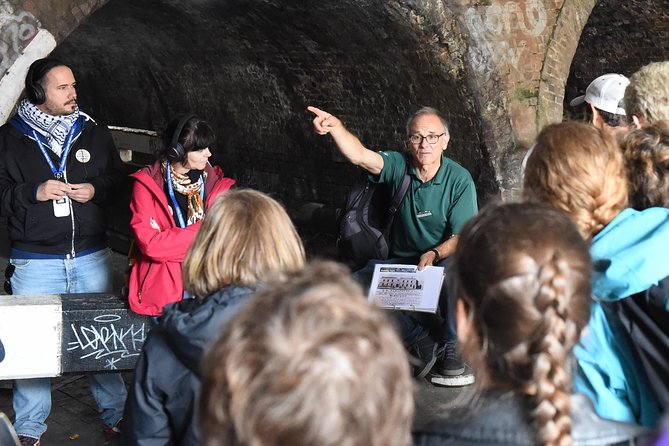
- Secret canal route into the Jewellery Quarter, including water-path connections many locals don’t use
- Georgian roots to modern Birmingham, with stories tied to what businesses grew there
- Audio receiver included, so you don’t miss the guide when you’re moving along
- Cathedral time built in, with a chance to step inside Birmingham Cathedral if timing works
- Post-war redevelopment reality check, seen from St Chad’s and discussed from street-level vantage points
- Small group limit (up to 40), which keeps the walk feeling personal rather than rushed
Getting Oriented at Centenary Square
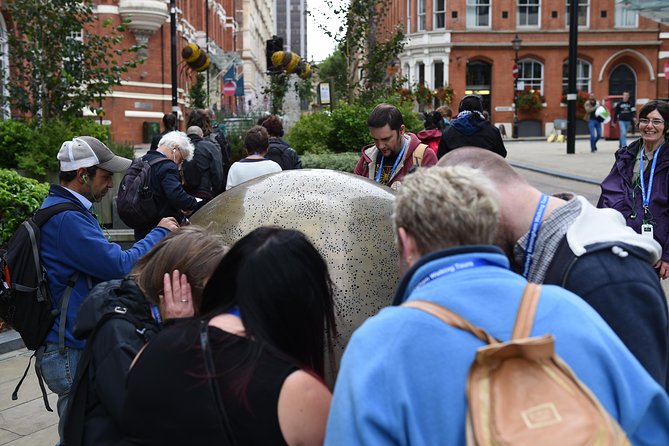
You meet at the Library of Birmingham area, right by Centenary Square, with a 1:30 pm start. The tour begins by using the square as a launchpad. You’ll get the city’s “why” first, not just the “what.”
This matters because Birmingham can feel like a patchwork if you only see it through monuments. Here, you’re taught how different parts of the city grew, and how they connect. It’s a fast way to get your bearings, without turning the first stop into a lecture marathon.
Centenary Square itself gives you something practical: a clear landmark where the group gathers, reforms, and stays together. In a walking tour, that small bit of structure helps a lot.
You can also read our reviews of more walking tours in Birmingham



Entering the Jewellery Quarter by a Secret Canal Route
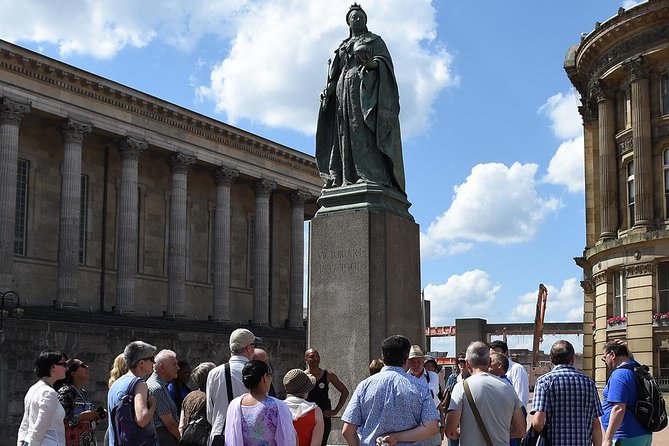
Then you head into the Jewellery Quarter in a way that actually feels like a local trick. You’ll go through the area by a secret canal route that even locals don’t commonly use. If you’ve ever walked canals for pleasure, this will scratch that itch. If you haven’t, you’ll still like it because it breaks the sightseeing pattern and makes the area feel real.
Once you’re inside the Jewellery Quarter, the guide focuses on how it developed over time. You’ll hear how Georgian-era beginnings shaped the kinds of work and businesses that grew there. And you’ll also see how the quarter is changing now, with modern Birmingham taking its place alongside older buildings and street grids.
This is one of the best parts of the tour because you’re not just looking at pretty architecture. You’re learning how a place earns its identity—through industry, workshops, and the people who kept showing up to build things.
Practical note: the Jewellery Quarter walk involves turning corners, passing through narrower paths, and moving alongside canal edges. It’s not hard, but it’s not a lazy stroll either.
Spotting Georgian Architecture Outside the Jewellery Quarter Church
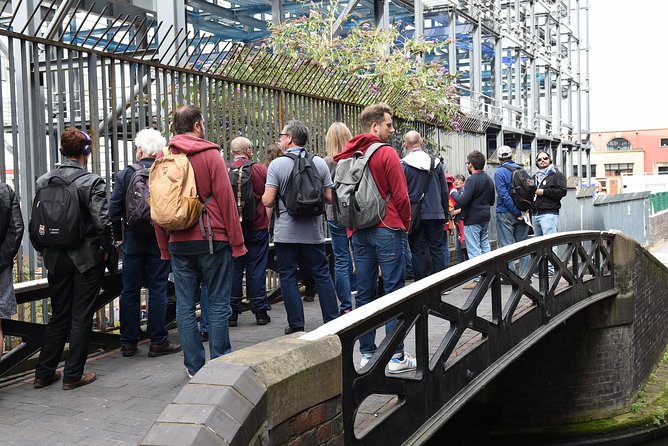
Next, you view the outside of the Jewellery Quarter church known as a 1779 example of Georgian architecture. You’re not going there to hunt for a ticket line or decode an interior—this stop is about noticing details.
Think symmetry, proportion, and the kind of building style that quietly signals why the area looked the way it did when it was still mainly a working district. Even if you’re not a dedicated architecture person, these quick exterior moments help you “read” the streets later when you’re exploring on your own.
This stop also gives the group a natural breather. Five minutes here keeps the energy moving without dragging the tour into slow mode.
Birmingham Cathedral: A Short Look, and Sometimes the Stained Glass
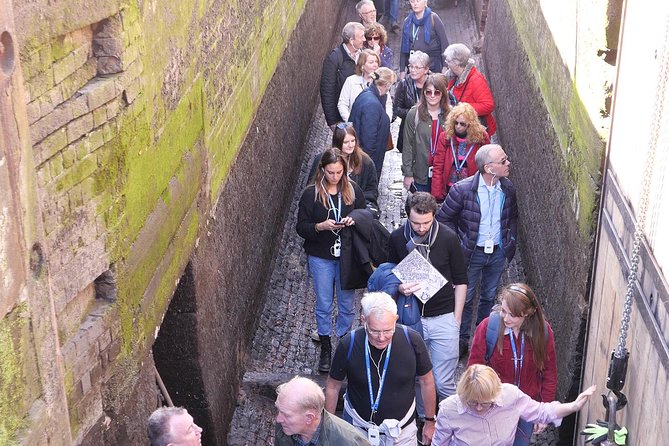
From there, you move to Birmingham Cathedral. You’ll see it as a fine English Baroque cathedral, and the guide explains what you’re looking at and why it’s significant in the broader city story.
If timing works and there aren’t conflicts with events, you may get a chance to go inside and experience Edward Burne-Jones stained glass. The tour window for this is tight, so don’t plan your day around the assumption that you’ll enter. Still, even an exterior view plus the possibility of stained glass makes this stop feel like you’re getting a little extra value for your time.
A quick realism check: the group only has a short slot here, so you won’t have endless minutes to linger. The upside is that it keeps the flow of the walk from stalling.
St Chad’s From the Inner Ring Road and the Car-Era Question
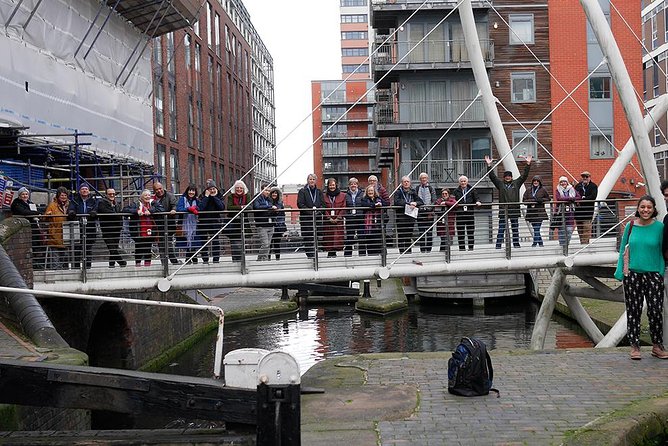
You then see St Chad’s from the inner ring road. That choice of viewpoint isn’t random. From there, you can appreciate how post-war redevelopment changed Birmingham—especially when the city treated cars like they came first.
This is where the tour becomes more than sightseeing. You’ll hear a discussion about how that car-centered planning shaped what got preserved, what got rebuilt, and what got lost or broken. Then you’re encouraged to judge for yourself: did Birmingham get a sensible plan, or did it get stuck paying for short-term decisions?
I like this part because it gives you a framework. Later, if you’re walking around the city on your own, you’ll spot the consequences of planning choices much faster than if you’d only seen streets without context.
And yes, you’re doing it while walking in real city conditions. It feels grounded, not staged.
Returning Through Victoria and Chamberlain Squares
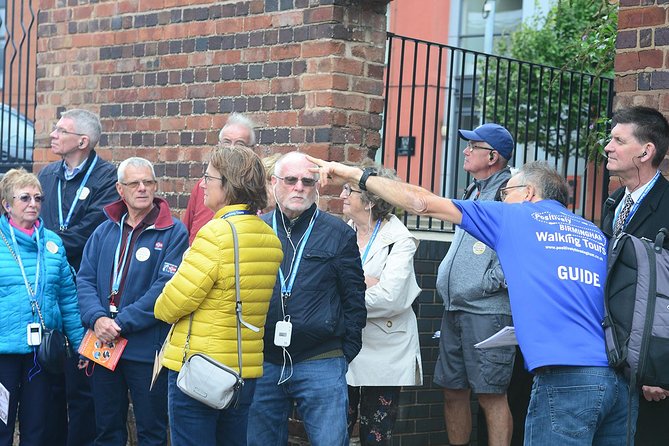
After St Chad’s, you work your way back toward the Library of Birmingham using several key city squares. You’ll pass by the area where St Philip’s Cathedral enters the picture, then see more of the city’s civic spaces up close.
Two squares get called out: Victoria Square and Chamberlain Square. In practice, this part of the walk is about contrast. You’ve spent time in the working-story streets of the Jewellery Quarter; now you’re looking at the civic face of Birmingham and how it’s being reshaped.
At Chamberlain Square, the guide explains the idea behind renovations and how the city is reconfiguring for what comes next. This is useful because Birmingham is actively changing. If you don’t have a quick guide context, it’s easy to miss what’s intentional versus what’s just construction noise.
By the time you reach the end point, it feels like you’ve moved from neighborhood detail back to city-wide perspective—without making the tour long or exhausting.
Price and Timing: What $20.80 Buys in Real Value

The tour costs $20.80 per person and runs for about 2 hours. For that time, you get far more than a casual walk with vague directions. You’re getting a guide, and you also receive a loan audio receiver, which is a big deal in a city with lots of background sound and moving groups.
No one likes paying for “maybe we’ll see something.” Here, the structure is clear: multiple stops, city squares, a cathedral focus, and a Jewellery Quarter route with canal elements. Also, there are no entry tickets required for the tour overall, so you’re not surprised by hidden admission fees.
One more point that affects value: the tour is capped at 40 people. Bigger groups often mean fewer questions and less personal attention. Here, the smaller size keeps the guide’s stories readable and easier to follow.
In short, if you want your Birmingham sightseeing to feel like you’re learning while you walk (and not just ticking boxes), this is priced like a solid “first or second day” activity.
What to Expect on Foot (and Who It Fits)
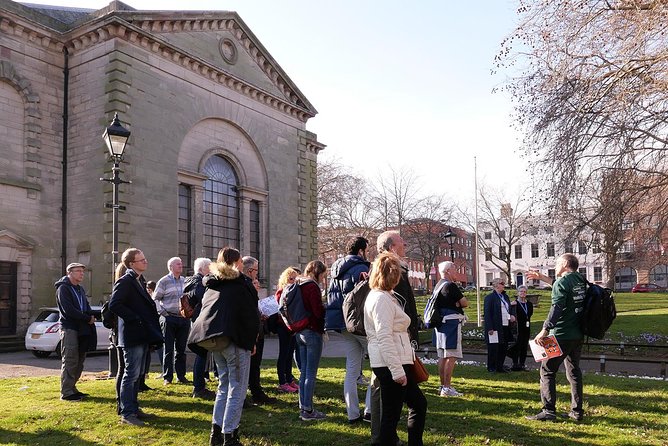
This experience is designed for people with moderate physical fitness. You’ll be walking continuously, turning often, and spending short bursts at each viewpoint. The good news is that no stop sounds like a long wait or a slow museum session. It’s a movement-based way to learn.
It’s also a smart pick if you like stories connected to places you can actually see—like how districts form from trade and how redevelopment changes street patterns. If you only want postcard views with minimal talk, this may feel too narrative-driven.
If you’re traveling with service animals, they’re allowed. And since the meeting point is near public transport, you can pair the tour with other plans without needing a car.
The Weather Reality: Rain-Proof Planning
Birmingham weather can be rude. The tour provider says they try not to cancel even with adverse weather, and if it’s raining, you should bring a suitable coat or umbrella. If conditions are icy, the route may be adapted.
That means you should pack for walking, not for sitting. If you know you get uncomfortable in drizzle or wind, a proper coat matters more than you think on a two-hour route.
Should You Book the Jewellery Quarter Walking Tour?
Yes—if you want Birmingham with context, not just landmarks. This walk is built around smart contrasts: Jewellery Quarter canals and Georgian-era development, then a shift to major city sights like Birmingham Cathedral and the planning lessons visible from St Chad’s.
Book it especially if:
- You want a guided route that reaches parts of the city that feel overlooked
- You like the idea of learning why a place developed, not only what it looks like
- You’d rather walk for two hours than spend a half-day on a slow-moving bus
Skip it or consider alternatives if:
- You hate outdoor walking in changing weather
- You’re hoping for long cathedral interior time, since any entry depends on schedule and time
If your goal is to come away understanding Birmingham’s old craft identity and its new city direction, this tour does exactly that—on foot, with real street-level storytelling.
FAQ
Where does the tour start and when?
The tour starts at the Library of Birmingham, Centenary Sq, Birmingham B1 2ND, UK, with a 1:30 pm start time. It ends back at the meeting point.
How long is the walking tour?
The tour lasts about 2 hours.
How much does it cost?
The price is $20.80 per person.
What language is the tour offered in?
The tour is offered in English.
Do I need to buy entry tickets for sights?
No entry tickets are required for the tour. The tour includes an admission ticket for Birmingham Cathedral if the schedule allows time for it.
Is an audio device provided?
Yes. You’ll be loaned an audio receiver so you can hear the guide even from a distance.
How big are the groups?
The tour has a maximum group size of 40 travelers.
What happens if it rains or the weather is icy?
If it’s raining, the tour tries not to cancel, so bring a suitable coat or umbrella. If conditions are icy, the route may be adapted.
Are service animals allowed?
Yes, service animals are allowed.