REVIEW · NEW YORK CITY
Wall Street and Financial District Walking Tour
Book on Viator →Operated by New York Tours · Bookable on Viator
Wall Street can feel like a blur unless someone explains it. This small-group Wall Street and Financial District walking tour turns big-name money stories into landmarks you can actually see, from the roots of the stock exchange to famous statues and churches.
I especially like the personal, small-group feel and the guide’s energy—plus the tour uses extra-large visual aids (including laminated-style info) that make the history easy to follow. I also appreciate that it works even if you are not a finance person; the guide tells the story in a way families and teens can keep up with.
One thing to consider: this is a high-pace, explanation-heavy walk. If you want slow sightseeing with lots of solo wandering time, you may find the tempo a bit intense for 2 hours.
In This Review
- Key highlights at a glance
- Starting at 20 Dey St: a Wall Street tour that gets you oriented fast
- Wall Street money stories tied to specific landmarks
- Federal Hall, Fearless Girl, and the Charging Bull: not just photos
- Trinity Church: the stop that explains why Alexander Hamilton still matters
- The tour’s finish inside the National Museum of the American Indian
- What makes it feel worth $34.95: the guide’s style and visual aids
- The pace: fun and fast, but plan your expectations
- Statue of Liberty upgrade: when the extra ticket is a smart add-on
- Who this Wall Street tour suits best
- Price and value: why $34.95 can make sense in Manhattan
- Should you book this Wall Street and Financial District walking tour?
- FAQ
- How long is the Wall Street and Financial District walking tour?
- Where does the tour start and end?
- What time does the tour begin?
- Is the tour offered in English?
- What is included in the price?
- Do I need to bring my ticket or will I get something on my phone?
- What about gratuities?
- Is there a Statue of Liberty and Ellis Island upgrade?
- Can children join, and are service animals allowed?
- Can I cancel for free?
Key highlights at a glance
Small group (max 15) with close attention to questions and photo moments.
Federal Hall + Wall Street statues tied to real people and real political milestones.
Trinity Church stop connects architecture to Alexander Hamilton and Robert Fulton.
Finish inside the National Museum of the American Indian at a building that’s linked to high-profile bankruptcy court history.
Optional Statue of Liberty and Ellis Island upgrade with headset access and ferry seating options.
Starting at 20 Dey St: a Wall Street tour that gets you oriented fast

The tour meets at 20 Dey St in Lower Manhattan and starts at 2:30 pm, lasting about 2 hours. That timing matters in New York: late afternoon gives you long views down the streets without feeling like you must rush through everything in the dark.
You’ll be moving through the Financial District on foot, and you’ll cover enough ground to feel like you learned the area’s “map” quickly. With a maximum group size of 15, it’s not a cattle-car tour, which makes a difference when you want the guide to point something out and explain it in plain terms.
If you like tours that give you a shortcut to understanding a city, this is built for that. You’ll see the icons, but you’ll also get the story behind why those icons matter.
You can also read our reviews of more walking tours in New York City


Wall Street money stories tied to specific landmarks

This is not just a list of famous buildings. The guide connects the dots between people, companies, and the institutions that shaped modern finance. Expect stops and narration built around the rise of the exchange and how power moved through American business.
A few themes you’ll hear: the transformation of the New York Stock Exchange into the huge global player it became, plus stories about how wealth built empires. The tour also brings in the Standard Oil saga and the idea of monopolies being illegal, which is a useful reminder that business history often includes courtrooms and laws—not just ambition.
And yes, you’ll hear big names like Rockefeller and Buffett. But the goal isn’t celebrity trivia. The goal is to show you how money systems form, how they expand, and how they eventually face scrutiny.
Federal Hall, Fearless Girl, and the Charging Bull: not just photos
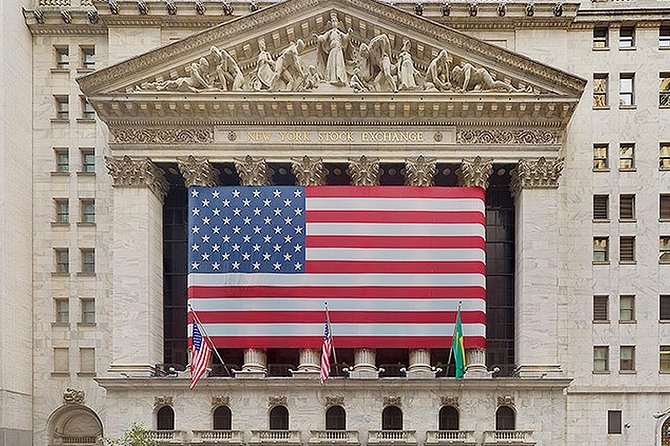
One of the strongest parts of this walk is the way it anchors Wall Street history to civic history. You’ll spend time around Federal Hall, described as the birthplace of American democracy, and you’ll also hear about George Washington taking the Oath of Office there.
That’s a smart move for first-time visitors. Most people treat Wall Street as pure business. Here, you get the idea that America’s financial story started right alongside its political one.
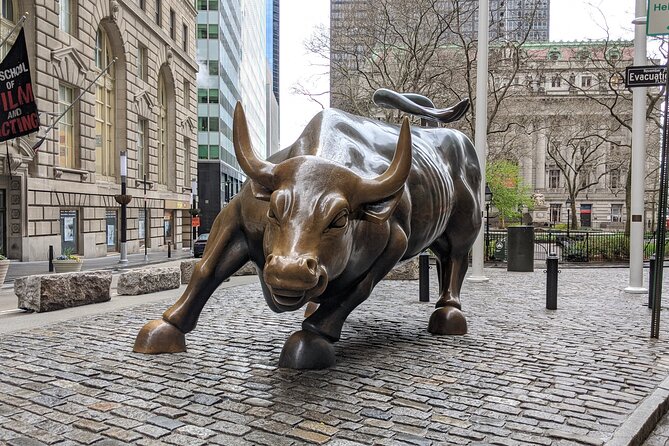
You’ll also see the Fearless Girl and the Charging Bull statues. These are famous for a reason, but the tour gives you context so they feel like part of a larger conversation—power, confidence, and public messaging—rather than random street art.
If you want a good sequence for photos, this stop delivers. You’re in the heart of the Financial District, and the guide also helps with group photo moments along the way.
Trinity Church: the stop that explains why Alexander Hamilton still matters
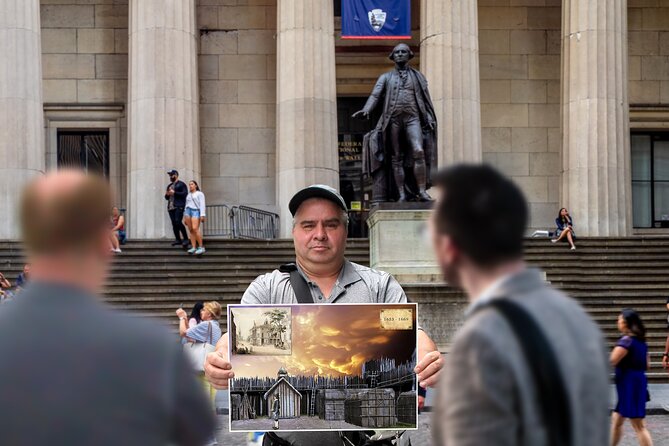
After the downtown civic-and-finance core, the tour heads to Trinity Church, including its connection to Alexander Hamilton and Robert Fulton. It’s the kind of stop that feels small on a map but huge in meaning.
Hamilton is often mentioned in “general history” ways, and Fulton is usually treated as a technology footnote. Here, the connection comes through as a reminder that finance, invention, and policy were tangled together early in U.S. growth.
Practical note: churches in this part of Manhattan can be busy, and you’ll be walking through a real working neighborhood. The guide’s job is to keep you moving and still make the details stick, and that’s where a good narrator earns their fee.
The tour’s finish inside the National Museum of the American Indian

The tour ends inside the National Museum of the American Indian. That alone is a nice change of pace from finishing outdoors on a random corner.
Here’s the twist that makes this finish feel memorable: the building currently houses the U.S. bankruptcy court of New York, where the Bernie Madoff case was heard. Whether or not you know that story already, it reframes the whole walk. Wall Street isn’t only about deals and growth—it’s also where legal accountability shows up when systems fail.
This is also a solid place to take a breath. You get a transition point from street-level sights into an indoor setting, and that helps you retain what you learned during the earlier stops.






What makes it feel worth $34.95: the guide’s style and visual aids
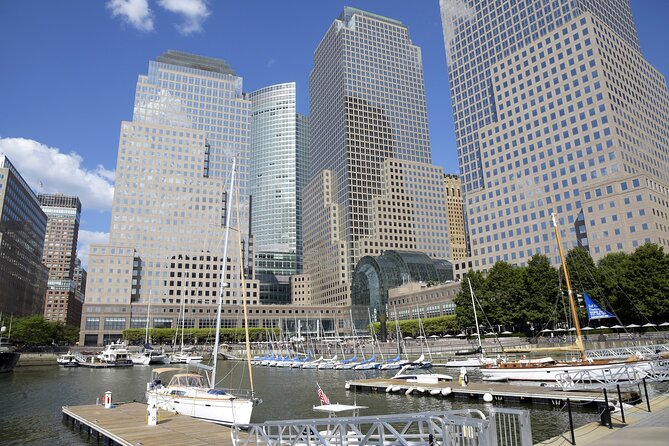
This tour is built around narration plus extra-large visuals. That’s not a small detail in a city like New York, where the distance between street level and the meaning of what you’re seeing can be huge. Big visuals make it easier to connect what the guide is saying to what your eyes are scanning.
I also love the “moment-to-moment” feel described by people who took it—especially the guide’s humor and pacing. In real terms, that means you won’t be trapped in a lecture where everyone’s eyes glaze over. The vibe tends to be lively, and the guide actively works to keep questions coming.
Another standout is that the guide helps with photos. You’ll have chances to get group pictures, and that matters on this kind of tour because Wall Street’s most famous spots are right where lots of people are trying to take the same shot.
And if you’re the type who cares about credibility, the guide is presented as someone with real ties to the Financial District. People repeatedly mention guides such as Richard as the reason the tour clicks—energetic, funny, and able to explain how things work from the inside.
The pace: fun and fast, but plan your expectations
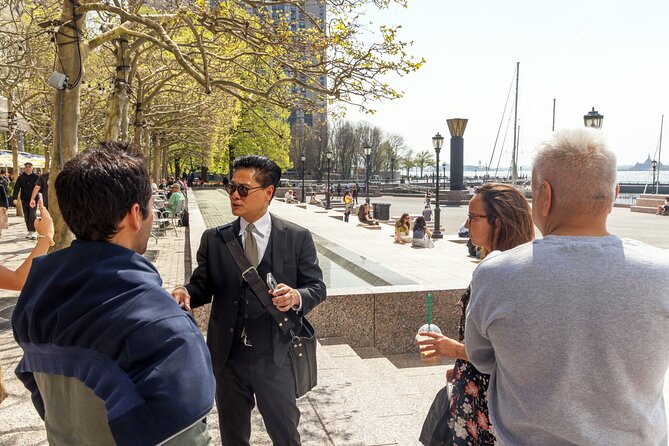
This is not a “stop, admire, linger” walk. It’s designed to pack in a lot of context in about two hours, so you’ll move. The upside is you finish feeling like you understand the shape of the area and the main stories tied to it.
The downside is simple: if you’re hoping for a relaxed stroll with minimal talking, you might feel pulled along. The best fit is a traveler who wants to learn while walking—someone who likes asking, listening, and then looking again with fresh eyes.
Also, keep your shoes game tight. Lower Manhattan sidewalks are packed, and you’ll be weaving through a dense neighborhood at an efficient pace.
Statue of Liberty upgrade: when the extra ticket is a smart add-on

The Statue of Liberty upgrade adds general admission to the Statue of Liberty and Ellis Island. The guide presents your tickets at the end of the walking portion, which is convenient because you don’t have to juggle separate ticket logistics mid-tour.
A few practical details matter here:
- Ferries have accommodations for inside or outside seating.
- On Liberty Island, there’s a free headset for self-guided tours.
- The experience is wheelchair accessible.
You’ll also access Ellis Island, where the focus is immigration artifacts, including items from 1892 and 1954. That’s a specific time range, and it’s a strong way to connect the immigrant story across generations rather than only treating it as a single moment in history. On-board ferries also have concessions and souvenirs, so you’re not stuck hunting for snacks.
Is it worth doing? If you’re a first-time visitor, yes, it’s a good pairing: finance and power on one side, immigration and human movement on the other. If you’re short on time, consider whether you want a single theme day or a mixed history day.
Who this Wall Street tour suits best
This works especially well for:
- First-time visitors to New York City who want immediate orientation.
- People who like history but also want it tied to real buildings and names.
- Families with teens who can handle discussion, not just sightseeing.
- Anyone curious about how American business grew—and how it can fail.
It’s also a strong pick if you’re the type who enjoys learning through stories. The guide’s style tends to be energetic, and the narration connects the dots quickly, which keeps the group engaged even when the topic is finance.
If you already know a lot about markets, you may still find value in the way the tour links personalities and institutions to physical places. But if you want strict market mechanics (stocks, bonds, trading) instead of historical context, you might want to pair this with something more specialized.
Price and value: why $34.95 can make sense in Manhattan
At $34.95 per person, you’re paying for a licensed professional guide, a structured 2-hour route, and extra-large visual support that helps you follow along. In New York, guided time in a compact area like Lower Manhattan can be more efficient than trying to self-navigate while also reading everything on the fly.
The value also comes from group size. With a maximum of 15 travelers, you’re more likely to get direct answers and better photo moments than you would on a bigger bus-style tour.
One more practical reason it feels like good value: the tour ends in an indoor museum setting, so you don’t feel like you’ve wasted your effort once you step back outside. You finish with context, not just more street clutter.
Should you book this Wall Street and Financial District walking tour?
If you want a fast, story-driven introduction to the Financial District, I’d book it. The itinerary pulls together political history (Federal Hall and Washington’s oath), business history (exchange origins and industry power stories), and accountability (the bankruptcy court connection at the end point).
It’s also a great bet if you like guides who bring the neighborhood to life with humor, strong visuals, and real-world perspective—people often mention guides like Richard for exactly that mix.
Skip it only if you prefer a slow walking pace or you want finance explained in technical detail. Otherwise, this is an efficient way to see Wall Street with meaning, not just motion.
FAQ
How long is the Wall Street and Financial District walking tour?
It runs for about 2 hours.
Where does the tour start and end?
The tour starts at 20 Dey St, New York, NY 10007. It ends at Citi Bike: Broadway & Battery Pl, New York, NY 10004.
What time does the tour begin?
The start time listed is 2:30 pm.
Is the tour offered in English?
Yes, it is offered in English.
What is included in the price?
The tour includes a narrated 2-hour walking tour with extra-large visuals and a licensed professional tour guide.
Do I need to bring my ticket or will I get something on my phone?
You get a mobile ticket.
What about gratuities?
Gratuities are welcomed and appreciated, but they are not included in the price.
Is there a Statue of Liberty and Ellis Island upgrade?
Yes. The upgrade includes general admission to the Statue of Liberty and Ellis Island, and the guide presents the tickets at the end of the tour.
Can children join, and are service animals allowed?
Children must be accompanied by an adult, and service animals are allowed.
Can I cancel for free?
Yes. Free cancellation is available up to 24 hours in advance for a full refund.