REVIEW · TIRANA
Walking Tour of Tirana
Book on Viator →Operated by Tirana Free Tour · Bookable on Viator
Tirana can feel confusing fast, but this walking tour gives you order. In about 2 hours 15 minutes, you move from Skanderbeg Square to key monuments tied to Albania’s 20th century, with English guidance that turns the city into a story you can actually follow. I like the tight route (it’s doable even with jet lag) and the fact that you get a mix of viewpoints, from older landmarks to newer ones.
My one caution: the walk ends at the Resurrection of Christ Orthodox Cathedral, so you’ll want a clear plan for afterward, and you should arrive a little early at the start because finding the exact meeting spot can be tricky if you’re watching street traffic.
In This Review
- Key Things to Know Before You Go
- A Smart Way to Get Oriented in Tirana
- Starting at Pallati i Kulturës (Opera House Area) Near Sheshi Skënderbej
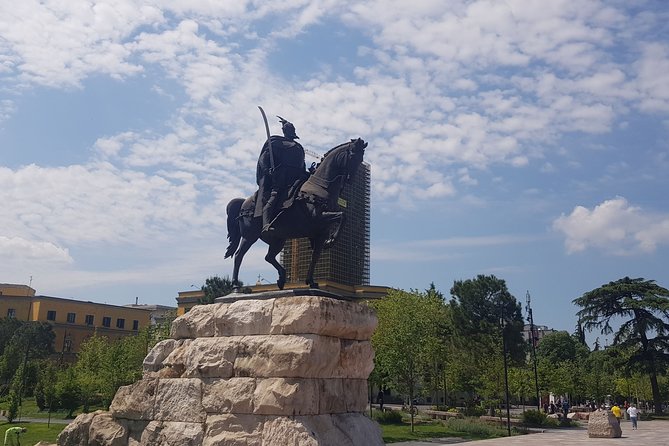
- Skanderbeg Square: The Best “Intro Stage” for the Whole City
- Xhamia Et’hem Bej and the Clock Tower: Old Tirana in Bite-Sized Views
- Bunk’Art 2: Turning the Communist Past Into a Physical Place
- National Gallery of Art: Communist-Era Art Through a Street-Level Lens
- Enver Hoxha Pyramid: A Major Landmark With a Loaded Backstory
- Blloku and the Dictator’s Villa: Where Power Used to Feel Close
- Postbllok Checkpoint Monument: The City’s Memory at Street Level
- Resurrection of Christ Orthodox Cathedral: Ending at a New Landmark
- Price and Value: Why $18.14 Feels Reasonable Here
- Pace, Weather, and What to Do With the Heat
- Who This Walking Tour Is Best For
- Should You Book the Walking Tour of Tirana?
- FAQ
- How long is the Walking Tour of Tirana?
- How much does it cost?
- Is the tour in English?
- What’s included in the price?
- What is the maximum group size?
- Where does the tour start and end?
- Does it run in all weather conditions?
- Are service animals allowed?
- Are children allowed?
- FAQ
- Is tipping required?
- FAQ
- What if I miss the tour due to timing issues?
- FAQ
- What is the booking lead time?
Key Things to Know Before You Go
- A short, structured loop through Tirana’s center keeps the pace light and photo-friendly
- Licensed English guides handle the big picture and answer questions in real time
- Free entry stops include Bunk’Art 2 and other sights tied to Albania’s communist era
- Max 15 people means it stays conversational, not a lecture in a crowd
- Hot-weather reality: the schedule is outdoors, so early timing helps on very sunny days
- You end near downtown at the Orthodox Cathedral, ready for your next stop
A Smart Way to Get Oriented in Tirana
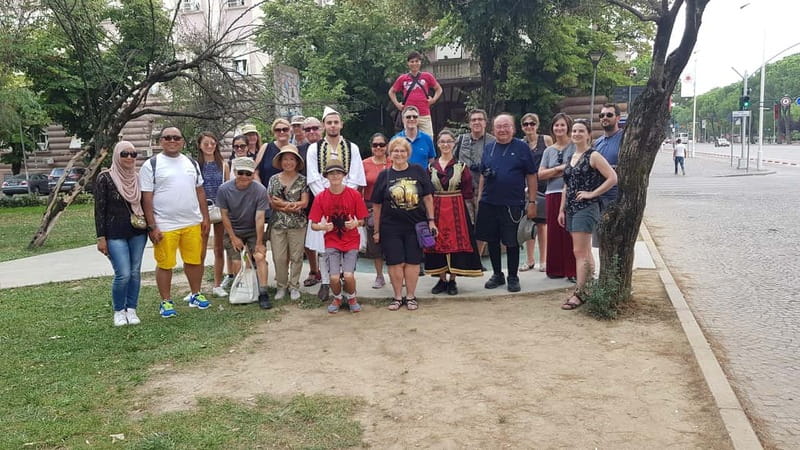
If Tirana is your first Albanian city, you’ll probably want two things quickly: direction and context. This walk is built for that. In a compact stretch of central sights, the guide ties together what you’re seeing with what it meant, especially during the communist era and its aftermath.
What makes it work is the rhythm: lots of quick stops, then short explanations at each one. That format suits real travel life. You’re not stuck staring at a single building for hours, and you still leave with names and landmarks you can revisit later.
You’re also not paying for multiple paid attractions as you go. The tour includes the sights with free admission tickets listed for each stop, which makes the $18.14 price feel more like a guide-and-structure fee than a “museum ticket” fee.
You can also read our reviews of more walking tours in Tirana
Starting at Pallati i Kulturës (Opera House Area) Near Sheshi Skënderbej
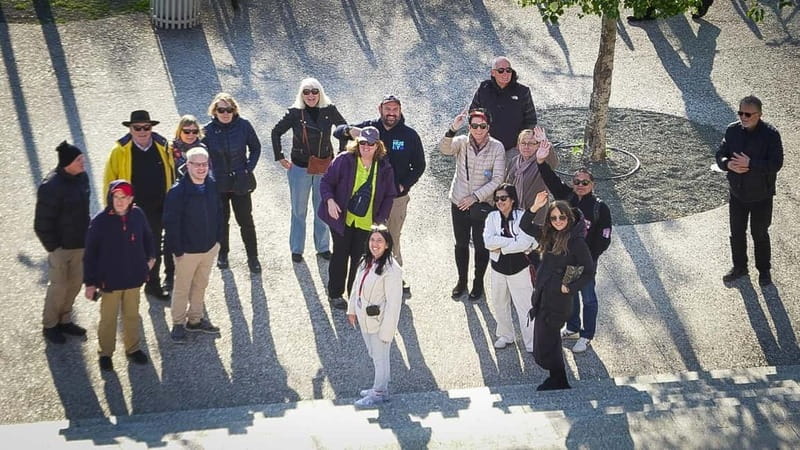
The tour meets at the National Theatre of Opera, Ballet and Folk Ensemble area, also described as Pallati i Kulturës on Sheshi Skënderbej. This matters because that neighborhood is the easiest anchor point to orient yourself. Once you’re there, the rest of the walk stays in the city center instead of turning into a long transit day.
Practical tip: stand by the Skënderbej/Sheshi Skënderbej area and give yourself a little buffer time. Even with Google Maps, the last block can be a game of phone-checking and head-turning. Arriving 10 minutes early helps you avoid that stress.
The guide check-in is also where you learn your pace for the day. Since the group can be up to 15 people, the guide can keep track of everyone without sprinting you through streets.
Skanderbeg Square: The Best “Intro Stage” for the Whole City
Your first major checkpoint is Skanderbeg Square, the main square of Tirana. Even if you’ve only seen it from afar on a bus or from photos, on a walking tour it becomes more than a backdrop. It’s the reference point the guide uses to explain how the city is laid out and how power, culture, and public space shifted over time.
This stop is short, about 10 minutes. That’s deliberate. You’re getting a first look and a frame of reference, not a full-day photo session. If you want more, you’ll know what to return to later because you’ll understand what the area symbolizes in the story the guide is telling.
Xhamia Et’hem Bej and the Clock Tower: Old Tirana in Bite-Sized Views
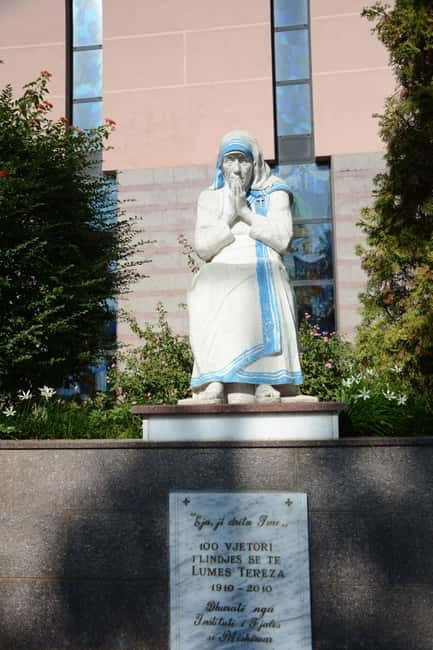
Next you’ll get two quick, high-impact glimpses of older city character: Xhamia Et’hem Bej (an old mosque) and the Clock Tower.
These are not long museum-style stops. They’re “look up, notice details, then move” moments. That works well because you’ll probably be walking and listening almost continuously. Short stops keep your brain from frying, and you still get the sense that Tirana has layers—not just modern landmarks.
A drawback to keep in mind: because these stops are brief (around 5 minutes each), you’ll get the biggest value if you’re paying attention to the guide’s quick explanation. Don’t treat them like sightseeing checkpoints where you rush photos and move on. The story is the point here.
Bunk’Art 2: Turning the Communist Past Into a Physical Place
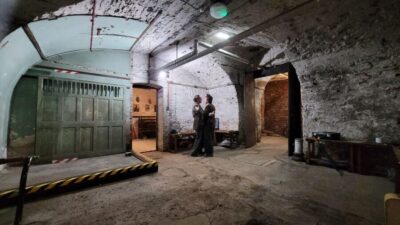
Then comes one of the tour’s most meaningful stops: Bunk’Art 2, a museum near the city center. The tour describes it as tied to the communist-era story, and this is where that theme becomes more tangible.
Why this stop is a highlight: it doesn’t stay abstract. You’re not just hearing that Albania’s 20th century was complicated. You’re seeing a dedicated site created to interpret that period. Even with only around 5 minutes on the schedule, the guide’s framing helps you know what you’re looking at and why it matters.
Also, because the tour lists admission as free for this stop, it’s a low-risk way to get oriented before you decide if you want a longer museum visit later.
If you’re the type who usually skips museums, this is one you’ll likely appreciate because it’s short, contextual, and placed right when the guide is building the “communist era theme” in your mind.
National Gallery of Art: Communist-Era Art Through a Street-Level Lens
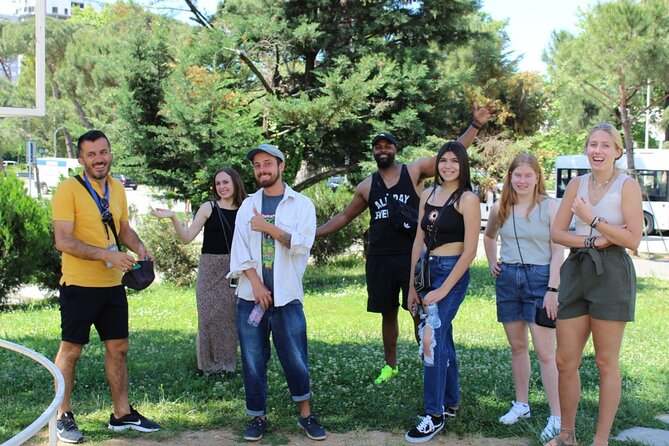
After Bunk’Art 2, you’ll stop at the National Gallery of Art. Here, the theme stays consistent: the tour frames it as learning about arts during the communist era.
This is another stop designed for quick understanding, about 10 minutes. The risk with gallery time is that it can turn into dead walking—just looking at things without knowing what you’re seeing. In this format, the guide helps you get the “why” fast, so the art doesn’t feel random.
If you’re a serious art fan, you might want more time here than the tour allows. But you’ll leave with a starting point: which themes to watch for, and what context to look up when you return.
Enver Hoxha Pyramid: A Major Landmark With a Loaded Backstory
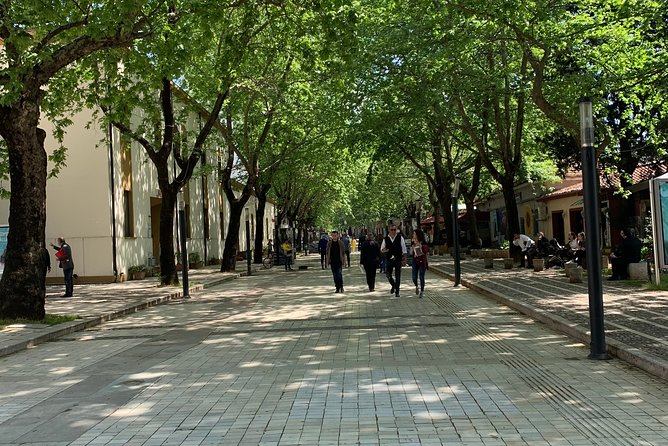
Next you’ll hit Enver Hoxha Pyramid, described as one of Tirana’s main landmarks. This is the kind of stop where the building itself is instantly recognizable, but the meaning comes from the guide’s explanation.
Why it’s useful on a first-day walk: it gives you a clear visual anchor for the communist era. Once you’ve seen it on foot, you can recognize it later even if you’re just driving past or walking in another part of town.
This stop is about 10 minutes. Again, the tour is not asking you to memorize architecture. It’s aiming to connect a landmark to the city’s political and cultural shifts so the rest of your Tirana days make sense.
Blloku and the Dictator’s Villa: Where Power Used to Feel Close
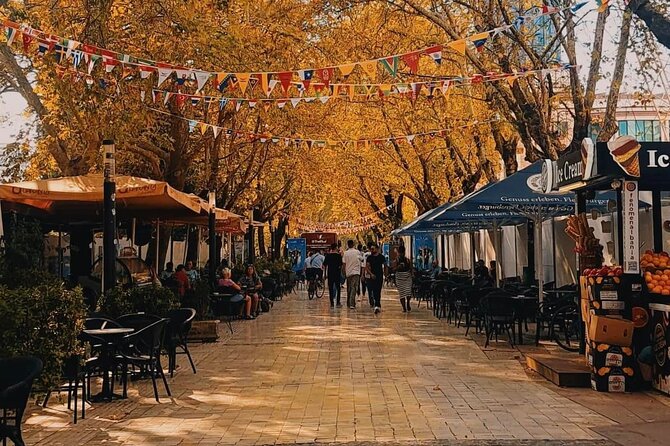
Then comes Blloku, an area where the tour highlights the villa of Albania’s dictator. This stop is only about 5 minutes, but it hits an important angle: the communist story is not only about big monuments. It’s also about who lived where, and how power shaped everyday geography.
What I like about including Blloku right after the Pyramid: the guide is effectively connecting dots. You go from a prominent landmark tied to leadership to a neighborhood where that leadership was embodied through living space.
If you’re walking through Tirana later and you notice the neighborhood vibe changing, this stop helps you understand why. Even when the tour gives you just a quick look, you’ll know what question to ask: what does this place signal about the era?
Postbllok Checkpoint Monument: The City’s Memory at Street Level
Next is the Postbllok – Checkpoint Monument, near Blloku. Another short stop (about 5 minutes), but it’s a strong one because it’s built around a single idea: checkpoints, control, and the physical reminders of security systems.
This is the kind of sight that can feel political, even uncomfortable, and that’s part of why it’s valuable. It’s not just “pretty buildings.” It’s a reminder that history leaves marks where people actually moved through the city.
Practical note: since the stop is quick, keep your focus on the guide’s explanation. If you’re just scanning for photos, you might miss the point.
Resurrection of Christ Orthodox Cathedral: Ending at a New Landmark
The walk finishes at the Resurrection of Christ Orthodox Cathedral (Katedralja Orthodhokse Ngjallja e Krishtit). The tour describes it as a new Orthodox cathedral and notes it’s very near the city center.
Why this ending works: it’s a clean “wrap point” after a route heavy with 20th-century landmarks. You end where you can naturally shift into the next part of your day—cafes, relaxed wandering, or additional sightseeing—without needing to cross town.
Timing wise, the last segment is about 5 minutes for the stop itself. Then you’re free to keep exploring on your own.
Price and Value: Why $18.14 Feels Reasonable Here
At $18.14 per person for roughly 2 hours 15 minutes, this isn’t priced like a single museum ticket. You’re paying for structure plus English-speaking licensed guidance, and the stops include free admission tickets for each listed site.
You’re also getting a small group size (up to 15). That’s a big deal. In a crowd, you can’t ask follow-ups. Here, the guide can keep the flow conversational—many guides on this walk are also known for humor and storytelling, which makes the history easier to hold onto.
One more value detail: the tour notes that by booking you join their general free walking tour model, where your payment covers both the reservation fee and the guide’s compensation directly. Gratuities are listed as not included, so tipping is optional—yet always welcome if you want to show appreciation.
In plain terms: you’re buying time-efficient context, and you’re not stacking paid entries on top.
Pace, Weather, and What to Do With the Heat
This experience is designed to operate in all weather conditions. That means you should expect outdoor walking even when conditions aren’t perfect, and you’ll want to dress appropriately.
The biggest comfort variable is heat. Several people highlight that Tirana can get extremely hot in summer, and they recommend going early. That’s good advice. If you’re deciding between morning and afternoon, morning usually wins because you get less sun-burn time and more comfortable walking.
Also, bring practical basics: water and sunscreen are a must in hot months. And if you’re someone who gets tired easily, you’ll appreciate the short stop durations. There’s no long slog between points—just frequent cues for when to look, listen, and move.
Who This Walking Tour Is Best For
This is a strong fit if:
- you want a first overview of Tirana’s core landmarks
- you like history explained in human terms, not just dates
- you want to leave with names you can search and revisit later
- you’re traveling solo, as a couple, or with friends and want a small-group vibe
It may be less ideal if:
- you hate walking outdoors for short bursts between stops
- you want long stays inside museums or galleries
- you need a very detailed, slow-moving experience without time pressure
For families: children must be accompanied by an adult. The walking is described as easy enough for most travelers, and the stop schedule keeps the pacing manageable.
Should You Book the Walking Tour of Tirana?
Yes—if you want the quickest way to understand what you’re looking at in Tirana’s center, this is a smart buy. The price is reasonable for an English-guided route with multiple free admission stops, and the structure is exactly what you need on a first day.
If you’re only in town for a day or two, this helps you avoid the common problem of walking past major sights with no context. And if you’re staying longer, it gives you a short list of what to return to on your own.
FAQ
How long is the Walking Tour of Tirana?
It runs for about 2 hours 15 minutes.
How much does it cost?
The price is $18.14 per person.
Is the tour in English?
Yes, it’s offered in English.
What’s included in the price?
You get an English-speaking licensed guide and an informative, interactive experience. The listed stops have admission tickets marked as free.
What is the maximum group size?
The tour has a maximum of 15 travelers.
Where does the tour start and end?
It starts at the National Theatre of Opera, Ballet and Folk Ensemble (Pallati i Kulturës, Sheshi Skënderbej, Tirana). It ends at the Resurrection of Christ Orthodox Cathedral (Katedralja Orthodhokse Ngjallja e Krishtit), near the city center.
Does it run in all weather conditions?
Yes, it operates in all weather conditions. You should dress appropriately.
Are service animals allowed?
Yes, service animals are allowed.
Are children allowed?
Children must be accompanied by an adult.
FAQ
Is tipping required?
Gratuities aren’t included, and the guide’s compensation is covered through your booking payment. Tips are at your discretion.
FAQ
What if I miss the tour due to timing issues?
The tour starts at the scheduled time, so it’s important to arrive before the departure to be safe.
FAQ
What is the booking lead time?
On average, it’s booked about 10 days in advance.