REVIEW · TIRANA
Tirana Walking Tour
Book on GetYourGuide →Operated by TRAVEL ALBANIA · Bookable on GetYourGuide
Tirana changes fast, and this walk shows why. In just 3 hours, you’ll trace the city’s shift from Ottoman and communist-era landmarks to Italian civic architecture and the new high-rise glow. I love how the route stitches together Tirana’s layers in a logical way, and I love that you’re not just looking at buildings—you’re hearing the stories behind them. One possible drawback: it’s a walking tour, so you’ll want comfortable shoes, and a few stops may be more exterior/photo-focused than museum-time.
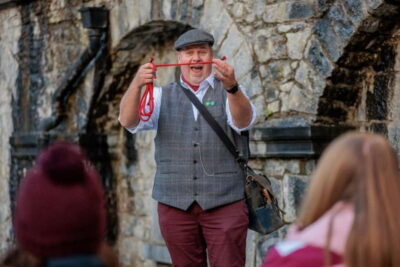
Meeting outside the Tirana International Hotel keeps things simple, and the tour moves at a relaxed pace that still covers a lot. If your guide is someone like Ilir, Gloria, Thomas, or Iris (names you’ll see often praised), you’ll get clear English support and plenty of time for questions, not a frantic race from point A to B.
In This Review
- Key highlights you’ll feel in real life
- Starting outside Tirana International Hotel: easy to find, easy to settle in
- Monumental Center: the clearest before-and-after in Tirana
- Skenderbeg Square to Et’hem Bey Mosque and the Watch Tower: where eras overlap
- Old Bazaar approach: Toptani Castle and Tanner’s Bridge for street-level context
- The repurposed Pyramid stop: a fast way to understand communist ambition
- Blloku and Enver Hoxha’s villa area: the neighborhood that explains power
- Bunk’Art 2 and the city’s memory museums
- Tirana Castle, Namazgah Mosque, and Tanner’s Bridge: the “we grew up here” loop
- Saint Paul’s Cathedral, Mother Teresa Square, and Orthodox presence
- Postbllok checkpoint and the House of Leaves: where the paranoia becomes real
- Blloku cafe time: a social break that helps you ask better questions
- Price and value: $17 for three hours that actually gives you direction
- Who this tour suits best (and who should skip it)
- Should you book this Tirana walking tour?
- FAQ
- How long is the Tirana Walking Tour?
- How much does the Tirana Walking Tour cost?
- Where does the tour start and finish?
- Is a guide included?
- What languages are available for the guide?
- Is a skip-the-line option included?
- Are meals and drinks included?
- What should I bring?
- Is the tour wheelchair accessible?
- Are children allowed?
- Final word
Key highlights you’ll feel in real life
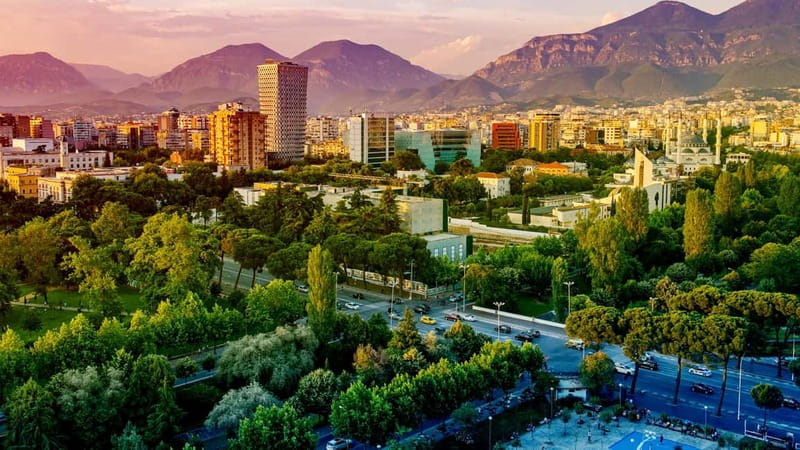
- A tight 3-hour route that covers both the old core and the modern city center
- Monumental Center contrast: heavy communist blocks next to Italian governmental architecture
- Mosques, bridges, and castles in one loop: Et’hem Bey Mosque, Tanners’ Bridge, Tirana Castle area
- Blloku after-hours vibe in daytime: Enver Hoxha’s villa area and the “old rules” neighborhood
- Cold War and post-communist memory through stops like Bunk’Art 2 and the Pyramid
- A coffee or cocktail moment built into the outing so the walk stays social
Starting outside Tirana International Hotel: easy to find, easy to settle in
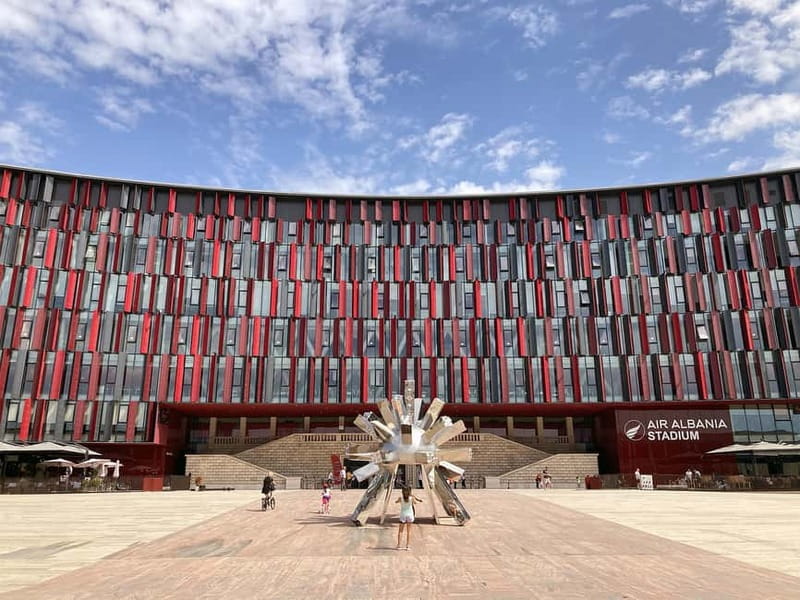
The tour starts at the Tirana International Hotel. That’s a good move for first-timers because it’s a clear landmark and it means you aren’t spending your first 30 minutes figuring out where the group is meeting. From there, you head straight toward the Monumental Center, which is basically Tirana’s “main stage” for understanding how different eras tried to leave their mark.
You’ll also get a guide who can work in Albanian, English, or Italian, so you don’t have to hunt for translations mid-walk. One extra practical point: if you’re visiting in cooler months or it’s raining, you’ll still have a plan—this is a walking route with lots of short stops and photo moments.
You can also read our reviews of more walking tours in Tirana
Monumental Center: the clearest before-and-after in Tirana
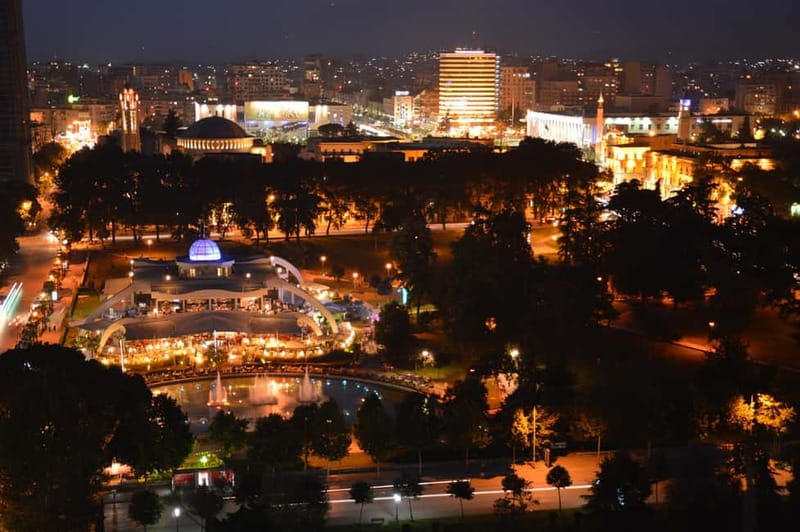
This is where Tirana’s timeline shows up in stone and steel. You’ll see the Palace of Culture and the National History Museum area—big, imposing communist-era presence—then you’ll notice the shift to older Italian civic architecture from the 1920s, connected to architect Armando Brasini.
What I like about this section is that it doesn’t ask you to memorize dates. It gives you a visual shortcut: you can literally see how power, ideology, and identity changed the city’s layout and building style. Even if you don’t know Albanian history yet, you’ll start to understand the logic—who built what, and why it looked the way it did.
If you care about architecture, this part is especially rewarding because Tirana today mixes newer skyline elements and redesigned public spaces with the heavy memory of older regimes. That contrast is the whole theme of the day.
Skenderbeg Square to Et’hem Bey Mosque and the Watch Tower: where eras overlap
You’ll walk by the statue of Albania’s national hero, Skenderbeg, and then head toward Et’hem Bey Mosque and the Watch Tower. These stops remind you that Tirana didn’t just have one “history.” It expanded across centuries, and you can still read that growth on the street.
Et’hem Bey Mosque is one of those places where your brain catches up with your eyes. It helps you understand Tirana as a city that was once shaped by Ottoman-era expansion and later reorganized under 20th-century upheaval. The watch tower adds another layer—signals of earlier defense and the city’s changing footprint.
Practical note: bring your phone for photos, but also take a second to look up and around. Even if you’re not a formal architecture person, this area makes you notice details.
Old Bazaar approach: Toptani Castle and Tanner’s Bridge for street-level context
Before you get into the historic heart, you’ll pass the newly reopened Toptani Castle and the stone Tanner’s Bridge. This is a great trio of “context stops.”
- Toptani Castle helps you connect Tirana’s past to what the city is doing now. Reopening implies use, not just preservation.
- Tanner’s Bridge is a reminder that older Tirana wasn’t all monumental squares—it also depended on practical links and river-crossing points.
- And once you move toward the old bazaar area, you start to feel how the city used to function day to day.
The value here is orientation. After these stops, you’ll understand where the historic core sits relative to the newer center. That makes everything you do after the tour easier—cafes, viewpoints, museums, and even navigation.
The repurposed Pyramid stop: a fast way to understand communist ambition
You’ll make a quick stop at the Pyramid. The word repurposed matters here. It tells you that Tirana inherited large, ideological structures—and then had to decide what to do with them once the system changed.
This isn’t a “sit and watch a full documentary” moment. It’s more like a marker on a map of meaning. A good guide will point out why a structure like this feels so dramatic: it was built to be seen, and it still draws the eye even when your focus is on what’s around it.
If you like history with visible evidence, this stop will click.

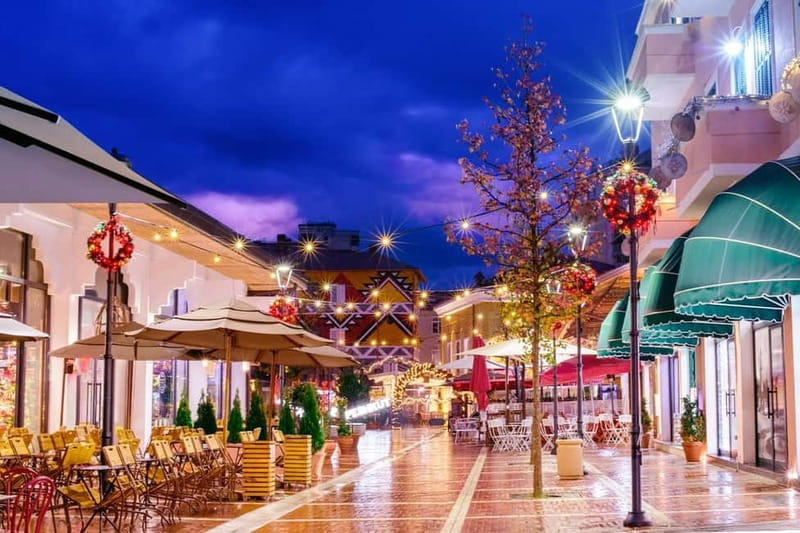
Blloku and Enver Hoxha’s villa area: the neighborhood that explains power
Next comes Blloku (sometimes you’ll hear it described with a “cool café district” modern tone). The tour also connects Blloku to Enver Hoxha’s villa area—so you’re not just strolling through the trendy present. You’re learning what made the area politically special.
This is one of the most important sections of the walk because it explains a common misconception: that communist rule was only about buildings and slogans. It was also about boundaries—who was allowed where, and what daily life felt like depending on proximity to the people in charge.
In practical terms, it’s a great lead-in to the final Blloku cafe time. You’ll be able to ask smarter questions like where locals go, what “normal” looks like in Tirana now, and how people talk about the past without turning it into a lecture.
Bunk’Art 2 and the city’s memory museums
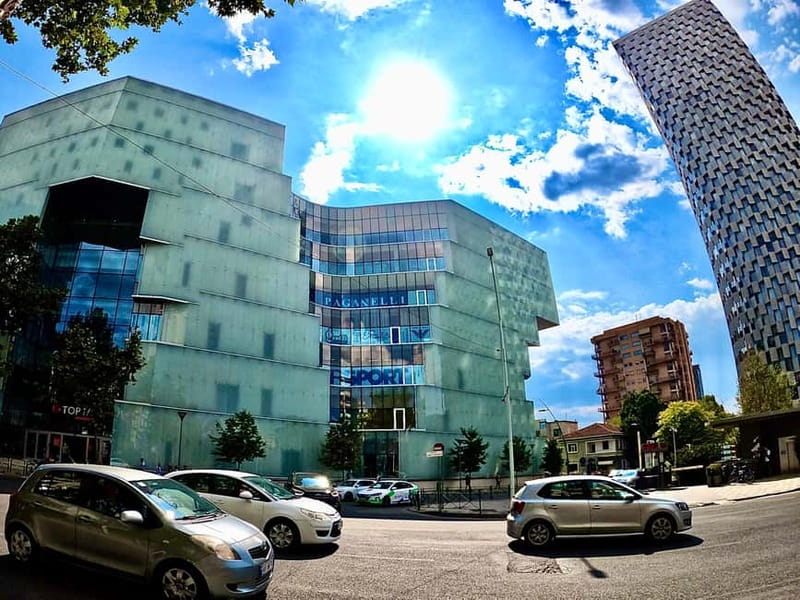
You’ll visit Bunk’Art 2 during the tour. Even if you don’t go deep into every exhibit detail, it adds weight to the day because it brings history into a physical space—one built for survival, secrecy, and control.
This is the moment when the tour stops being only about architecture and becomes about the lived experience of 20th-century Albania. A strong guide can help you connect the dots between the monumental buildings, the checkpoints and the memorial zones, and the way people understood safety and danger at the time.
If you’re the type who likes museums but doesn’t want to spend the whole day inside, this is a good compromise.
Tirana Castle, Namazgah Mosque, and Tanner’s Bridge: the “we grew up here” loop
You’ll get a break-and-photo moment around Tirana Castle, plus stops related to Namazgah Mosque and (again) Tanner’s Bridge. Together, they reinforce the idea that Tirana grew in stages.
- Tirana Castle area gives you a sense of elevation and the “overview thinking” you need for any city.
- Namazgah Mosque adds spiritual and historical context tied to earlier expansion.
- Tanner’s Bridge keeps the day grounded in practical urban life—movement, crossing, connection.
I like this part because it reminds you that history isn’t only in grand monuments. It’s in routes, neighborhoods, and the way older infrastructure still shapes how the city feels.
Saint Paul’s Cathedral, Mother Teresa Square, and Orthodox presence
The tour also takes you through religious landmarks and major squares—Saint Paul’s Cathedral, Mother Teresa Square, and the Resurrection of Christ Orthodox Cathedral.
Why does this matter? Because Tirana’s identity isn’t one-note. Albania has layered cultural and spiritual influences, and you see that in the variety of religious architecture across the route. A good guide uses these stops to talk about coexistence, change, and what “public life” looked like through different decades.
Also, these squares are often good “breather” points. You can regroup, take photos, and settle your legs before the final downtown segments.
Postbllok checkpoint and the House of Leaves: where the paranoia becomes real
Two stops in particular shape how you understand communist-era life: Postbllok (checkpoint) and the House of Leaves Museum.
- Postbllok checkpoint is a concrete reminder that movement and surveillance weren’t abstract ideas. They shaped the rhythm of daily life.
- House of Leaves brings that feeling into a museum setting, helping you understand how records, control, and fear can exist under the surface.
These are also stops where a guide’s tone matters. If you end up with someone like Thomas or Ilir, you’ll likely get stories that make the experience feel human—focused on why systems worked the way they did, and what that meant for real families.
Even if you’re not a “history museum” person, these stops give you a better lens for everything else you see in Tirana after the tour.
Blloku cafe time: a social break that helps you ask better questions
After you’ve covered a lot of ground, you’ll have time together in a fashionable Blloku cafe to address questions about history, local restaurants, customs, and things you might want to do next.
This is where the tour becomes useful beyond facts. You can ask about food options, how to behave in local settings, or which areas feel safest and easiest for wandering. And if you’re traveling solo, this built-in group conversation can be a real win.
One caution: the tour highlights a coffee or cocktail moment, but drinks aren’t listed as included. So plan for that extra cost, and pick what fits your budget.
Price and value: $17 for three hours that actually gives you direction
At $17 per person for about 3 hours, this tour is priced like an introduction, not like a luxury production. That’s good news because Tirana is a city where you’ll want context fast. If you spend your first day wandering without orientation, you’ll miss why the city’s contrasts are so striking.
So what makes it good value?
- Qualified guide throughout (and not just at the “big” stops)
- A route that mixes photo points, short visits, and guided explanations
- Key themes you’ll reuse all week: architecture shifts, communist memory, and how Blloku changed over time
- A stop that helps you pivot from history to practical life in Tirana (the cafe time)
If your priority is a quick “get your bearings fast” walk with meaningful context, this hits the sweet spot. If you only want museum time and prefer not to walk, you might feel it’s too much movement for too short a window.
Who this tour suits best (and who should skip it)
This walking tour fits best if you want Tirana in one half-day shot: architecture, politics in street form, and the big landmarks you’ll keep seeing later. It’s also a strong choice for people who care about how cities change—especially cities that went through major ideological shifts and then had to reinvent themselves.
I’d think twice if you:
- hate walking in uneven city surfaces (even with short breaks),
- want a “food tour” style experience,
- or expect every stop to be a long indoor museum visit.
For most first-timers, though, it’s an efficient foundation. And if you’re returning later, it makes your second day feel way smarter because you understand what you’re looking at.
Should you book this Tirana walking tour?
Yes, if you want a guided overview that connects the dots between Ottoman-era leftovers, communist-era power structures, and today’s modern Tirana vibe. It’s also a good deal for the time: three hours is long enough to learn real stuff and short enough to keep your afternoon free.
Book it especially if you like asking questions and you want a guide who can explain what you’re seeing in plain language. From the guide names you’ll likely hear on these tours—Gloria, Thomas, Ilir, Iris—you can also expect that the best experiences often come from guides who keep it personal and flexible.
If you tell me when you’re visiting and what you care about most (architecture, political history, religion, or just finding great cafés), I can suggest how to pace the rest of your day around this tour.
FAQ
How long is the Tirana Walking Tour?
It lasts 3 hours.
How much does the Tirana Walking Tour cost?
The price is $17 per person.
Where does the tour start and finish?
The tour meets at the Tirana International Hotel (meeting point can vary by option) and finishes back at the Tirana International Hotel.
Is a guide included?
Yes. A qualified live guide is included.
What languages are available for the guide?
The guide can speak Albanian, English, and Italian.
Is a skip-the-line option included?
Yes, it includes skipping the ticket line.
Are meals and drinks included?
No. Meals and drinks are not included, even though the tour includes time for a coffee or cocktail stop.
What should I bring?
Bring comfortable shoes.
Is the tour wheelchair accessible?
Yes, it is wheelchair accessible.
Are children allowed?
Unaccompanied minors are not allowed, and children must be accompanied by an adult.
Final word
If you want Tirana with context—fast—this tour is one of the cleanest ways to do it. You’ll leave with better street sense, clearer history, and a short list of places to explore next.