REVIEW · COLMAR
Colmar: Highlights Walking Tour and Wine Tasting
Book on GetYourGuide →Operated by Bretzel&Fun · Bookable on GetYourGuide
Half-timbered streets and wine in two hours. I love how this small-group Colmar walking tour keeps things chatty and focused, and I like that the last stop is an in-town cellar tasting where you learn as you sip, not just pose for photos. With English and French guidance from locals like Nicolas, you’ll leave with a clearer sense of why Colmar matters in Alsace.
One heads-up: this tour happens rain or shine, and the historic center means cobblestones. If you’re planning flimsy shoes, swap them now.
In This Review
- Key things I’d circle before you book
- Colmar’s Old Town, told on your feet
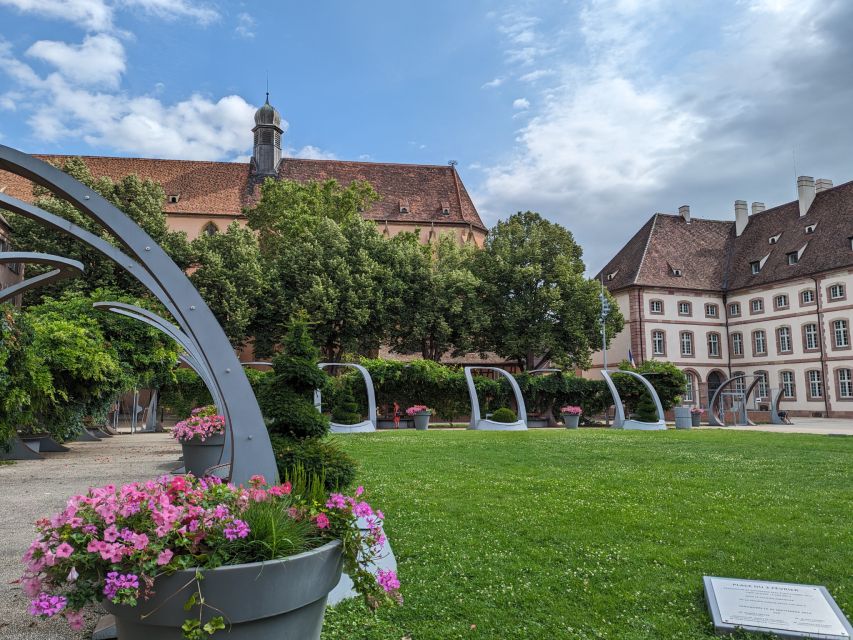
- Where the tour starts: Parc du Champ de Mars and fontaine Bruat
- The walking route: Renaissance dwellings to Gothic sanctuaries
- Half-timbered houses: how to spot the style fast
- Why Colmar is called the Capital of Alsace Wines
- The tasting: where the lessons turn into something you can taste
- Who should book this Colmar highlights and wine tasting
- Price and value: is $53 worth it for 2 hours?
- Small-group energy: why it feels different than bigger tours
- Practical tips so you enjoy every minute
- Should you book this Colmar highlights walking tour with wine tasting?
- FAQ
- Where is the meeting point for the tour?
- How long is the Colmar highlights walking tour and wine tasting?
- What languages are offered during the tour?
- What’s included in the price?
- Is the tour canceled if it rains?
- How large is the group?
- Is there free cancellation?
- Is the tour suitable for pregnant women or people with mobility impairments?
Key things I’d circle before you book
- Max 6 people: smaller group size makes it easier to ask questions and actually talk history, not just listen.
- Nicolas as guide: multiple tours highlight how he brings Colmar to life with local context.
- Alsace wine culture explained: you’ll connect grape names like Gewürztraminer and Riesling to what you’re tasting.
- Colorful half-timbered streets: Renaissance homes and Gothic sanctuaries turn into an easy walking route.
- Tasting in a real Colmar winery: you’re sampling in the town, not hopping to some far-off production site.
- Three samples by choice: at least some tastings let you select which wines to try from a menu.
Colmar’s Old Town, told on your feet
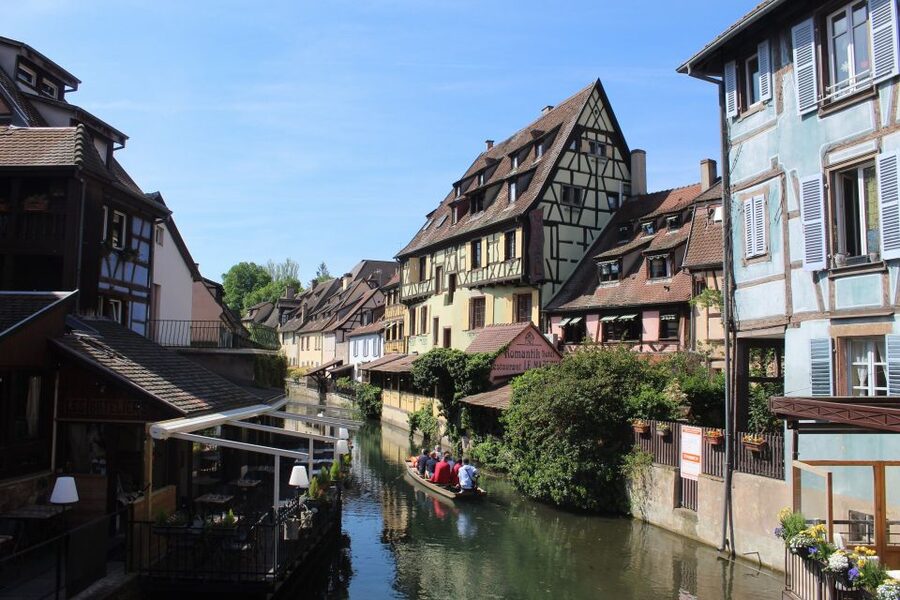
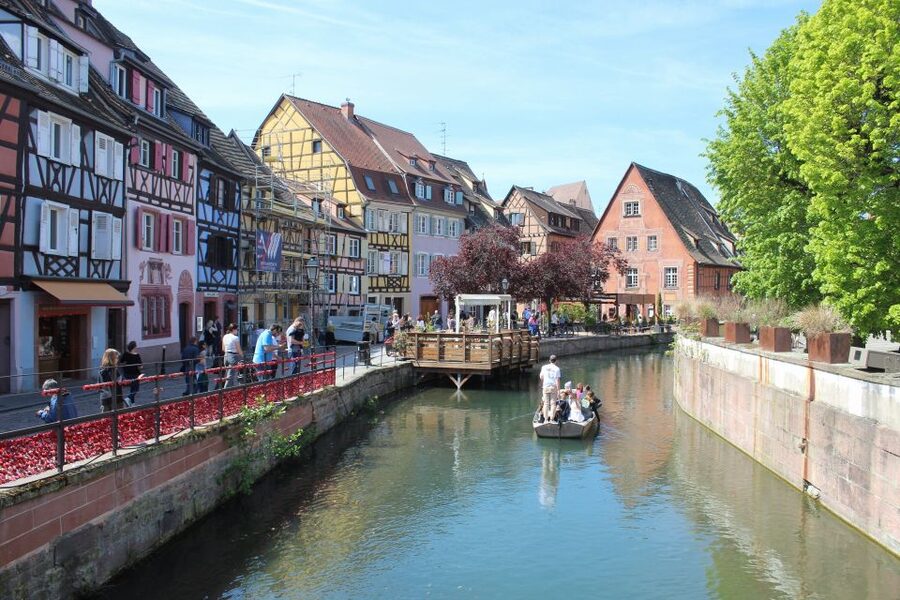
Colmar is one of those places where a walk can feel like a photo album that still breathes. The canal-side corners and half-timbered facades pull you in fast, but the tour is built so you don’t only see the look. You get the why, too—how Alsace culture, French and German influences, and centuries of local life shaped the streets you’re walking.
What I like most is the pace. Two hours is long enough to cover the main highlights without turning into a sprint. And because the group is limited to 6 participants, you’re less likely to feel like you’re being herded through a checklist.
The itinerary is also smart about mood. You start with architecture and town stories, then you switch to wine—so your brain has time to absorb the visual clues. After the walking portion, the tasting feels like a natural payoff rather than a random add-on.
The tour runs with a live guide (English or French) and you’ll meet at Parc du Champ de Mars by fontaine Bruat. That puts you close to the old-town flow, so you begin with momentum instead of transit time.
You can also read our reviews of more walking tours in Colmar
Where the tour starts: Parc du Champ de Mars and fontaine Bruat
The meeting point matters more than people think. Parc du Champ de Mars is the kind of landmark you can find without stress, and fontaine Bruat is a clear “you’re in the right place” marker.
From there, the guide sets expectations quickly: you’re walking through Colmar’s medieval core, plus the architectural span that makes Alsace feel like a mix of eras. That means you’re not only collecting pretty buildings. You’re learning what to notice—roof lines, facades, street widths, and how the town’s layout reflects its history.
If you want your day to run smoothly, I suggest you arrive a little early and take 60 seconds to look around. It’s not sightseeing time yet. It’s a quick calibration so you can follow the route without constantly asking where you’re heading.
The walking route: Renaissance dwellings to Gothic sanctuaries
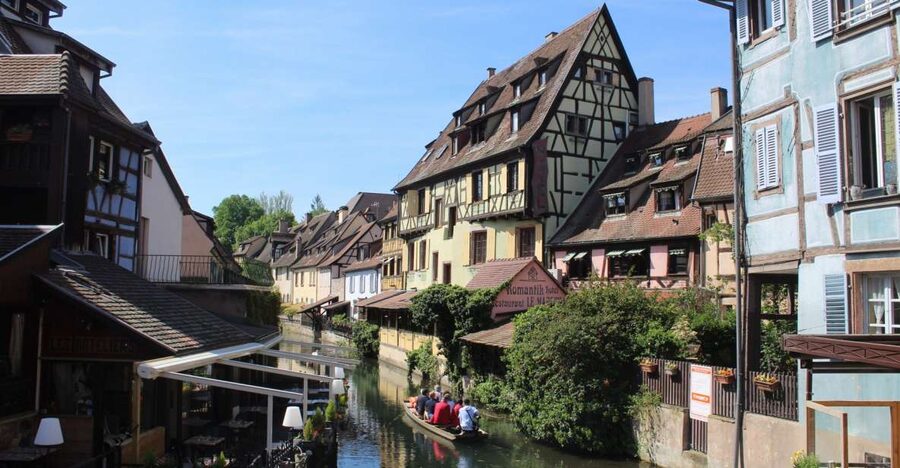
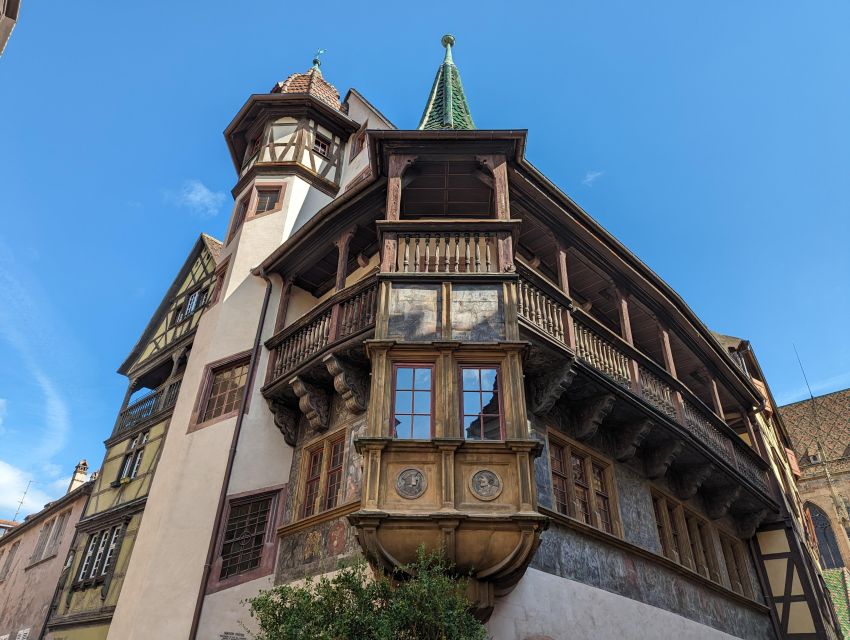
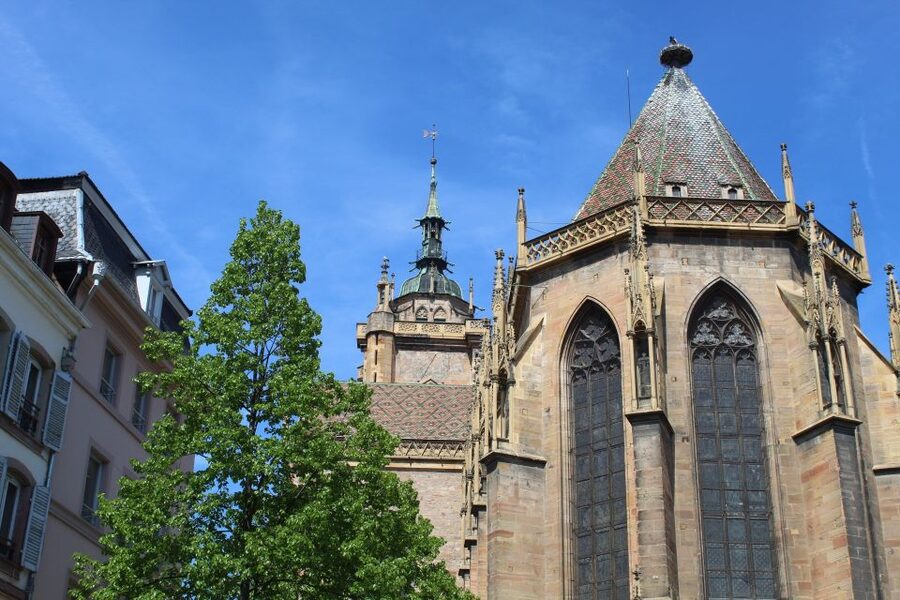
Colmar’s Old Town is compact, but it has layers. One moment you’re looking at Renaissance-style dwellings; the next you’re facing something with Gothic weight and details. On your own, it’s easy to admire the buildings without understanding why they look the way they do.
This tour gives you a way to read the town. The guide points out how Colmar became known as a key place for Alsace wines, and how that reputation connects to everyday life. The streets aren’t just scenery; they’re part of the story of what the town valued and built over time.
You’ll also walk cobblestone streets in the historic medieval center. That sounds basic until you realize how often “basic” is exactly what makes Old Town architecture feel real. You hear footsteps change on stone, you feel the turns that slow you down, and you get those postcard angles where half-timbered houses look like they’re leaning toward the street.
One thing I appreciate is that the tour is structured enough to keep you moving, but still relaxed. You’re not getting steamrolled by a timer every few minutes. It’s paced for learning and pictures.
Half-timbered houses: how to spot the style fast
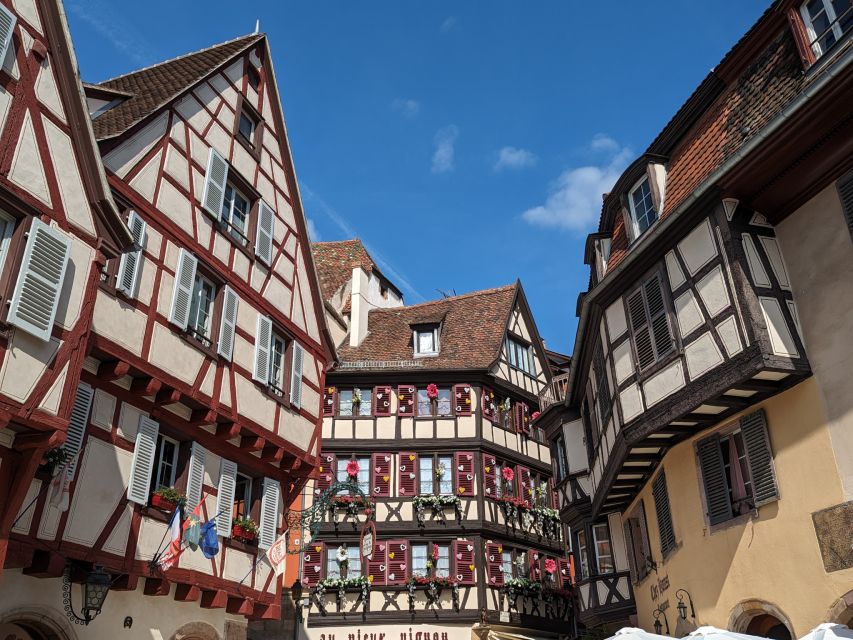
Half-timbered houses are the signature look, but not all of them “read” the same way unless you know what to look for. This walk helps you notice the details that create the character: the contrast of wood framing and plaster, the color choices, and how the facades interact with street perspective.
When you understand the style, the town stops feeling like a single lookalike set. Instead, you see variation—older facades, renovated ones, and the subtle shifts that suggest different decades of use.
This is also where you’ll feel the Alsatian flavor in your own senses. The colors, the narrow streets, and the way storefronts and courtyards sit along the route all contribute to that fairytale vibe people talk about. The difference is you’ll also know what you’re looking at and why the town feels so distinctly Alsace rather than generic “European old town.”
If you’re the type who likes to take photos, this section gives you a reason to aim your camera differently. You’ll be standing in places where the guide explains how to frame streets and buildings so the story sits inside the picture.
Why Colmar is called the Capital of Alsace Wines
Colmar’s wine role isn’t just marketing. It’s built into how people talk about the region, the grape varieties, and even the rhythm of local culture. On this walk, the guide explains why Colmar occupies an important place in Alsace as the Capital of Alsace Wines.
That matters because Alsace wines can feel confusing if you only remember a few names from a shop shelf. The tour helps you connect the grape varieties you’ll taste later to the broader wine culture of the area.
You’ll hear about the region’s white-wine focus and the styles people associate with Alsace. Expect mentions like Gewürztraminer, Riesling, and Pinot Gris. Even if you’re not a serious wine geek, those names turn into a mental map. After the tasting, you’ll be able to say what you liked and why, using real vocabulary instead of just “tasty” and “dry.”
And because the walk is guided, you’re also getting the French–German historical blend that shaped Alsace. You see it in architecture, then the guide connects it to how people and traditions developed around wine and trade.
The tasting: where the lessons turn into something you can taste
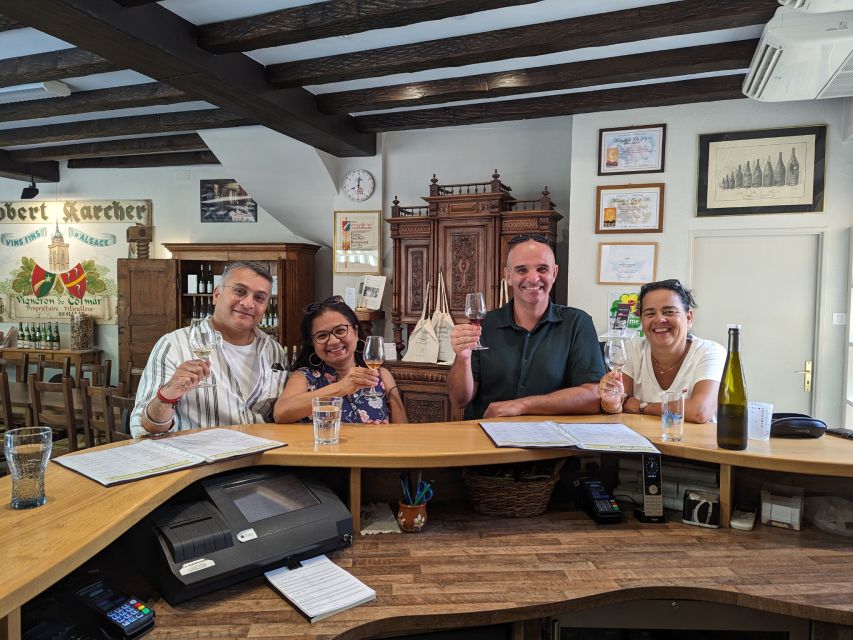
After you cover the main town highlights, the tour ends at a winery for an Alsatian tasting. This is the part that many people love because it’s practical. You’re not only learning about bottles. You’re tasting them with guidance.
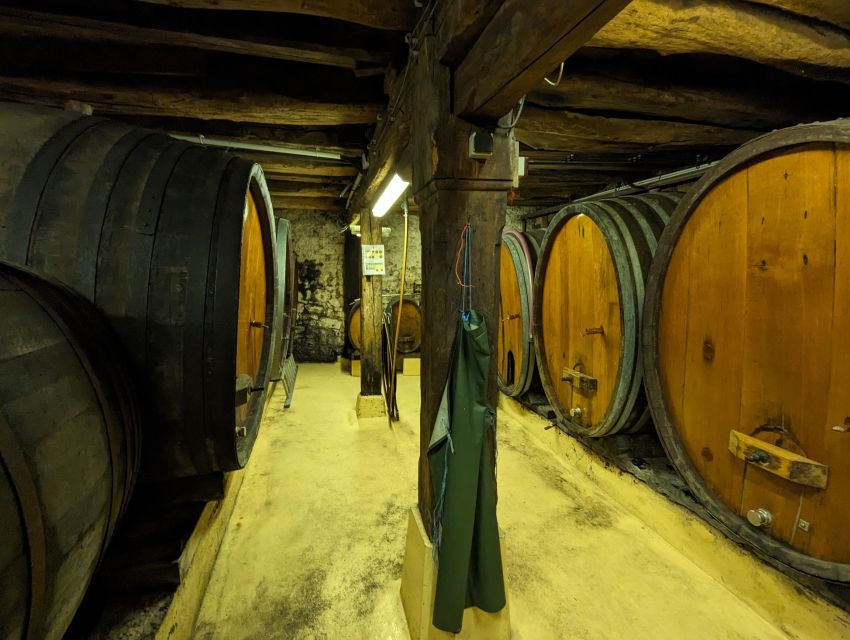
Multiple guide-led experiences highlight a special angle: the tasting happens in an actual winery right in Colmar rather than a distant stop. One standout detail from the tasting descriptions is Robert Karcher & Fils, mentioned as dating back to 1605, and noted as one of the oldest winery experiences in Colmar’s city proper.
How the tasting tends to work (based on the tasting format people describe) is that you sample three wines, often chosen from a menu. Some tasting experiences mention selecting from around 24 options, with you trying the three that interest you most. That’s a big deal for value. It turns a standard pour into an informed choice.
If you want to get more from the tasting, ask the guide what to look for in aroma and finish. The guide’s job isn’t to turn you into a sommelier. It’s to help you connect what you taste with the grape variety and the style of Alsace whites.
You’ll also likely talk about production and what changes from year to year. That kind of context makes the tasting feel less like a souvenir and more like an education you can carry home.
Who should book this Colmar highlights and wine tasting
This tour is a good fit if you want two things in one go:
- A guided walk that explains Colmar’s look and layout.
- A tasting that teaches you how Alsace whites are understood locally.
It’s also a strong option for first-time visitors because it helps you get your bearings quickly. One of the recurring themes from tour experiences is that guides like Nicolas provide useful follow-up suggestions after the walk, so you’re not stuck guessing where to eat next.
I’d especially recommend it if you:
- Like architecture but want the story behind it.
- Want an easy intro to Alsace wine varieties without booking a full-day plan.
- Prefer small groups where you can actually ask questions.
Two groups should think twice:
- If you’re pregnant, the tour is listed as not suitable.
- If you have mobility impairments, it’s also listed as not suitable.
And yes, it runs rain or shine, so plan for cobblestones.
Price and value: is $53 worth it for 2 hours?
At $53 per person for about 2 hours, the value depends on what you want from a Colmar morning. You’re paying for three bundled things: a guided Old Town walk, wine education during a tasting, and access to a winery stop inside Colmar.
Here’s why that can feel like good value:
- A guided walking tour alone often costs a similar amount in European towns.
- The tasting adds real substance because you’re tasting Alsace whites and learning grape-specific differences.
- The small group size (up to 6) adds value if you prefer personal attention over a crowded tour vibe.
Is it a bargain? It’s not “cheap,” but it’s positioned as a focused intro. If you’re trying to maximize your first day in Colmar without spending half your vacation planning logistics, this price-to-time balance can make sense.
Also, people mention that they buy bottles during or after tastings, sometimes at reasonable prices. Even if you don’t buy, the education and wine sampling are the point.
Small-group energy: why it feels different than bigger tours
Tour groups can blur together fast. This one doesn’t, mainly because the group size is limited to 6 participants. That small number changes the feel of the walk. You’re more likely to hear the explanation clearly, and you get a better chance to ask questions about Alsace culture, French–German influence, or what to look for when you wander afterward.
Guides like Nicolas are repeatedly praised for storytelling and for being from Colmar, which helps the walk sound like a local sharing their city instead of a script reading at you. Another guide connected to tastings is Fannie, mentioned as leading the wine tasting in some experiences. That matters because wine tasting is a “human” activity—questions, pacing, and comfort change how much you enjoy it.
This is also where the tour’s timing works. Two hours gives you a complete arc: town first, tasting second. You don’t feel like you’re dragging through the middle.
Practical tips so you enjoy every minute
You can make this tour smoother with a few simple choices:
- Wear comfortable shoes for cobblestones.
- Bring a light layer even in mild weather since it runs rain or shine.
- If you’re a wine newbie, don’t worry. Focus on what you like and ask for quick explanations tied to the grape names you try.
- If you want to keep exploring after, ask the guide for where to eat and drink. Many experiences describe getting helpful restaurant and bar ideas directly from the guide.
If you’re planning a full day in Colmar, this tour works well early. It gives you your bearings and helps you understand what you’re seeing later when you go back out on your own.
Should you book this Colmar highlights walking tour with wine tasting?
Yes, if you want a smart first look at Colmar that includes both town context and an Alsace wine tasting in the city. The biggest win for me is the combination: Old Town walking + in-town tasting, guided by locals like Nicolas, with Alsace white grapes such as Gewürztraminer, Riesling, and Pinot Gris turned into something you can taste and remember.
Skip it if you can’t do walking on cobblestones, or if you fall into the tour’s listed non-suitable categories (including pregnancy and mobility impairments). And go in knowing it runs rain or shine.
Overall, at $53 for 2 hours with a small group and a real winery tasting stop, it’s an easy recommendation for anyone building a first-day plan in Colmar.
FAQ
Where is the meeting point for the tour?
Meet your guide in Parc du Champ de Mars at the fontaine Bruat.
How long is the Colmar highlights walking tour and wine tasting?
The tour lasts 2 hours.
What languages are offered during the tour?
The live tour guide offers English and French.
What’s included in the price?
The experience includes a walking tour, a guide, and a tasting of Alsatian wines.
Is the tour canceled if it rains?
No. The tour takes place rain or shine.
How large is the group?
It’s a small group limited to 6 participants.
Is there free cancellation?
Yes. You can cancel up to 24 hours in advance for a full refund.
Is the tour suitable for pregnant women or people with mobility impairments?
No. The tour is not suitable for pregnant women or people with mobility impairments.