REVIEW · SAVANNAH
Savannah Historic District Walking Tour
Book on Viator →Operated by Bonnie Blue Walking Tours of Savannah · Bookable on Viator
A good Savannah square tour helps you read the city. This one strings together the key blocks of the Historic District with a local guide who connects monuments, architecture, and trade to the people who shaped it.
I especially like how the stops are time-boxed but not rushed, so you get real context at each square. I also love that the route is built around major public landmarks—so you’re not bouncing between random attractions.
One thing to consider: the storytelling can be strongly interpretive, and if you want strictly neutral history, you might find the tone a mismatch.
In This Review
- Key Points You’ll Actually Care About
- Why This Savannah Historic District Squares Walk Works
- Price and What You Get for $46.16
- Your 3-Hour Route: From Barnard Street to Gordon Street
- Telfair Square: Mary Telfair and the Museum Connection
- Franklin Square: Haitian Revolutionary Memory and First African Baptist
- City Market Neighborhood Stroll: Shops, Food, and Local Picks
- Ellis Square: City Market’s Loss and Restoration, Plus Economic Reality
- Johnson Square: Nathanael Greene and a Widow’s Big Influence
- Wright Square: Railroad Power Meets Native Leadership
- Chippewa Square and Oglethorpe: Founder Logic in One Stop
- Madison Square: The Jasper Monument and Civil War-Era Houses
- Monterey Square: Pulaski’s Grave-Base Reminder
- What Bonnie Blue Walking Tours Adds Beyond the Sights
- Pace, Comfort, and Weather Reality
- Who This Tour Suits Best (And Who Might Skip It)
- Should You Book This Savannah Historic District Walking Tour?
- FAQ
- How long is the Savannah Historic District walking tour?
- What does the tour cost?
- Is anything included besides the guide?
- What’s the meeting point and where does it end?
- What language is the tour offered in?
- Does the tour run in bad weather?
- Can I cancel and get a refund?
Key Points You’ll Actually Care About
- Small group size (max 10) means you’re more likely to get your questions answered.
- All stops are free on the schedule, so your money goes to the guide and the walk.
- Savannah’s squares with monument focus makes it easier to orient yourself for the rest of your trip.
- Frequent story-heavy pauses keep the pace relaxed on flat walking surfaces.
- A local café break helps you reset without derailing the tour.
Why This Savannah Historic District Squares Walk Works
Savannah is a city you understand by slowing down. The Historic District is laid out around squares, and this tour uses that layout like a map. You’ll walk from Telfair Square toward Monterey Square, hitting the moments and names that keep showing up in the city’s buildings, streets, and street-level memory.
What makes this tour a strong value is the mix of viewpoints. You’re not only hearing about founding figures and war heroes. You’re also seeing how religion, Black communities, and the economics of slavery and cotton trade fit into the same downtown story. If you like history that links the dots—people to places to power—this format suits you.
You can also read our reviews of more walking tours in Savannah



Price and What You Get for $46.16
At $46.16 per person for about 3 hours, you’re paying for a local guide’s time and on-the-ground pacing, not a pile of paid entry tickets. The scheduled square stops are listed as free, which matters: you’re spending on interpretation, not repeated admissions.
For me, the best “price logic” here is this: you get a long morning walk in a compact area, plus a guide who can handle questions while you’re looking at the evidence. Reviews also repeatedly mention food and museum suggestions, which is practical add-on value—you can turn the tour into a better rest-of-trip plan.
The tour runs in all weather, so the “cost” of going is mainly what you choose to wear and bring, not extra money for indoor backups.
Your 3-Hour Route: From Barnard Street to Gordon Street
You start at 121 Barnard St near Telfair Square at 9:00 am, then end at 11 W Gordon St at Monterey Square. That end point is handy: it drops you back into one of the most photographed, easy-to-explore downtown corners, so you’re not stranded after the guide hands you off.
The walk is designed for most people, and the size stays small—maximum 10 travelers. The pace is described as leisurely, with room to sit and hydrate under shade when it’s warm. Most of the route is on flat surfaces, which is a big deal in Savannah’s downtown.
Telfair Square: Mary Telfair and the Museum Connection
Your first stop is Telfair Square, where you hear about Mary Telfair and why her name is tied to the Telfair Museum. This matters because it sets a theme for the whole tour: Savannah’s history isn’t only military dates and political speeches. It’s also cultural influence—who funded art and education, and how that shaped what survived.
Practically, the first stop is also a good “warm-up square.” You’ll learn what to look for as you walk: how squares function socially, how monuments relate to streets, and how the city’s layout tells a story before you even start comparing buildings.
Franklin Square: Haitian Revolutionary Memory and First African Baptist
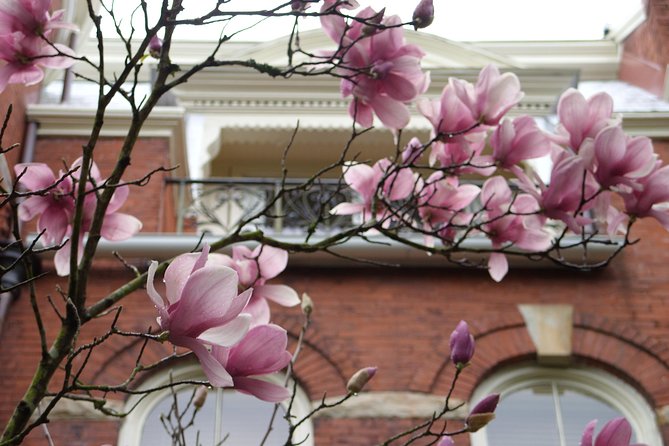
Next is Franklin Square, a stop that packs in multiple layers. You’ll see the Haitian monument and learn about the Haitian regiment that fought during the Revolution. That one detail expands Savannah’s story beyond a simple American-only frame and helps you understand why the city remembers allied and international forces.
Franklin Square also includes the First African Baptist Church, highlighted as the oldest Black Baptist congregation in America. This is one of those moments where a square tour becomes more than sightseeing. You’re not just looking at an address—you’re learning what that congregation represents and why its presence belongs in the downtown narrative.
A small heads-up: this is a stop where you’ll want to pause and listen. The context is dense, and the guide’s explanations are meant to be taken in while you’re standing there, not later from memory.
You can also read our reviews of more historical tours in Savannah






City Market Neighborhood Stroll: Shops, Food, and Local Picks
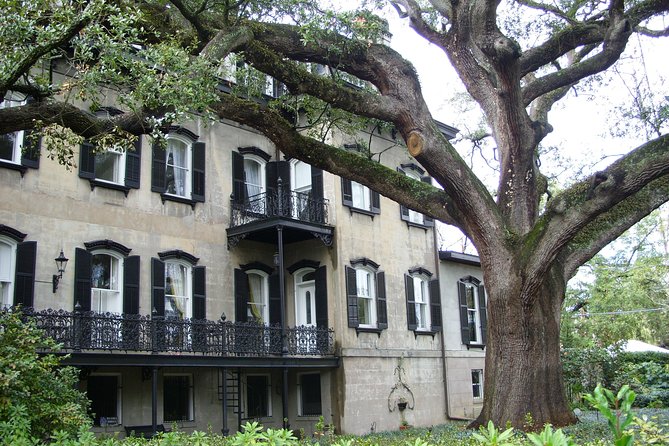
Between squares, the tour shifts gears into a stroll through the middle of City Market. This is where you get recommendations for shops, restaurants, and attractions—helpful because City Market can feel overwhelming if you don’t know what’s worth your time.
The value here is timing. You’ll have enough history in your head to make sense of the area, but you’re also close to places where you can act on that information right away. If you’re building a first-day plan, this little “turn your knowledge into choices” stretch is a smart move.
Ellis Square: City Market’s Loss and Restoration, Plus Economic Reality
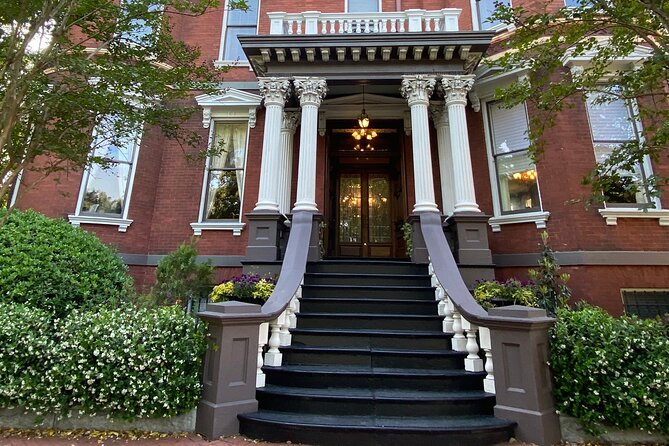
At Ellis Square, you learn about Savannah’s City Market history, including its loss and the recent restoration of the square. That restoration angle is important because it shows how cities don’t just preserve; they also repair. You’re seeing how memory survives through maintenance, not just through old photos.
Then the tour gets more focused on economics and human history. You’ll hear about African Americans’ contributions to antebellum Savannah’s economy as both free people and enslaved people. If you’ve ever wondered why certain downtown wealth appears where it does, this stop connects those dots using the city’s lived structure rather than abstract textbook history.
One reason this stop lands well: it doesn’t isolate a topic. It folds people into the same physical landscape—so you leave with a more honest map of who benefited, who labored, and how that shaped what you see today.
Johnson Square: Nathanael Greene and a Widow’s Big Influence

Johnson Square centers on a monument to Nathanael Greene, a war hero, and then zooms into something you might not expect on a typical “great man” tour: how his widow altered US economy and history. This adds a human multiplier to the story—history doesn’t only turn on battlefield decisions.
When a guide highlights the widow’s role, you get a reminder that power can shift through networks, property, and decisions made off the battlefield. It’s also a way to keep the tour fresh, because the stop isn’t just about who Greene was—it’s about what happened after.
If you like clean story arcs, this square delivers one: hero → aftermath → consequences that ripple beyond the moment.
Wright Square: Railroad Power Meets Native Leadership
At Wright Square, you’ll look at two monuments with very different themes: one to a railroad magnate, and one to a native American chief. That pairing is one of the most visually interesting parts of the walk because it forces you to compare how different leaders are memorialized.
This stop also helps you understand that monuments can be political statements, not just commemorations. The guide’s explanation gives you the “why,” so the square stops feeling like random statues and starts feeling like a public record.
There’s also a practical rhythm here—this part of the tour is followed by a chance to break, which keeps the later squares from feeling like a nonstop slog.
Chippewa Square and Oglethorpe: Founder Logic in One Stop
Chippewa Square is where you hear about James Oglethorpe, the founder of Savannah and of Georgia. For me, this stop is a key anchor because Oglethorpe’s name is everywhere in Savannah’s identity. When you learn his role at the actual location, it becomes easier to interpret the rest of the city.
The “win” of doing Oglethorpe mid-tour is that you’ve already learned about squares, churches, and commerce. That makes the founding story feel more connected rather than like a standalone lecture.
Madison Square: The Jasper Monument and Civil War-Era Houses
Madison Square brings several threads together. You’ll see the Jasper monument and hear about his heroic deeds in the Battle of Savannah. That sets up the Revolutionary War layer, but the stop doesn’t stop there.
You’ll also view Sorrel-Weed House and the Green-Meldrim House, with discussion of Savannah during the Civil War. These building names matter because they help you shift from “people in the past” to “buildings that still hold the physical argument.” It’s a strong pairing: monuments tell you what to remember, and houses tell you how people lived through what they remembered.
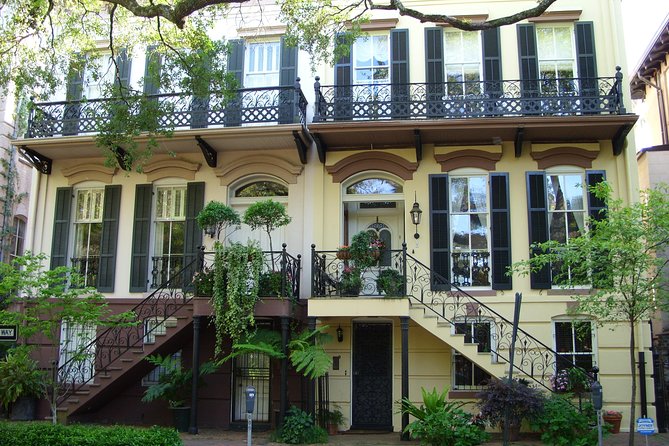
One small practical benefit: Madison Square is a good place to look around slowly. Even if you’re not a “history house” person, the guide’s pointing helps you notice architectural cues you would otherwise miss.
Monterey Square: Pulaski’s Grave-Base Reminder
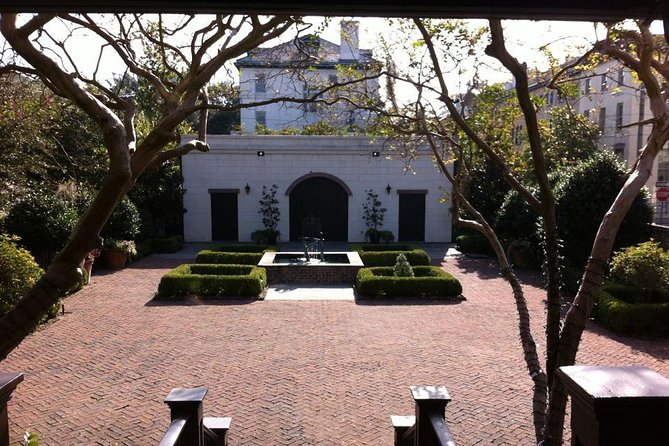
The final square is Monterey Square, often described as a favorite for its views. You’ll hear about Casimir Pulaski, with the note that he’s buried at the base of his monument.
Ending here is smart. You finish with a clear, visual payoff—one person, one location, one grave-base detail you can take with you as a mental marker. Then you’re done at a spot that’s easy to transition into independent exploring.
What Bonnie Blue Walking Tours Adds Beyond the Sights
The guide experience is the heart of this tour. Multiple comments highlight that Bonnie combines deep local knowledge with nonstop storytelling, and that the info isn’t just bullet points. You get a sense that she’s researched the connections: how war stories tie into street-level development, how architecture supports the timeline, and how modern Savannah fits into the longer arc.
I also like that the tour doesn’t pretend history is frozen. You’ll hear about contemporary Savannah topics like housing patterns, gentrification, and SCAD. That doesn’t replace the older stories—it gives them context, so the Historic District feels like a living place with memory rather than a museum set.
Pace, Comfort, and Weather Reality
This tour is built for a relaxed walking style. Reviews mention flat surfaces, a leisurely pace, and opportunities to sit and hydrate in shade, especially in warm weather. There’s also a scheduled break at a local café later in the walk—handy because you’ll have time to reset without rushing off-script.
Weather is “real” here: the tour operates in all conditions, so plan to dress for rain or heat. I’d bring a small water plan and wear shoes that won’t hate you by hour two. Savannah mornings can feel gentle at 9:00 am and then change fast.
One small caution from feedback: local construction can sometimes add noise that competes with the guide’s voice. If you’re sensitive to that, it’s still manageable—but it’s worth knowing.
Who This Tour Suits Best (And Who Might Skip It)
You’ll likely love this tour if:
- You want a structured orientation to the Historic District that makes the squares meaningful.
- You like history that connects Revolutionary War, Civil War, and Savannah’s economic story.
- You enjoy asking questions while you’re standing in front of the actual monuments and landmarks.
It may not be your best match if you want strictly neutral storytelling all the time. One review flagged political interpretation as a problem and another mentioned the guide wasn’t personable for that couple. If you prefer history delivered with a fully neutral tone, consider whether you’re okay with an opinionated storyteller style.
Should You Book This Savannah Historic District Walking Tour?
Yes—if your goal is to get your bearings fast and leave with names, dates, and a usable mental map. The small group size, the free-stop structure, and the fact that the walk runs about three hours make it a solid use of a morning in downtown Savannah.
I’d book it especially as your first or second day. You’ll get recommendations along the way, and you’ll understand which squares and buildings matter when you return later on your own. If you’re a repeat-visitor or you already know Savannah’s basics, the tour’s strength is still that it links the city’s visible landmarks to deeper context—so it doesn’t feel like a rerun of generic sightseeing.
FAQ
How long is the Savannah Historic District walking tour?
It lasts about 3 hours.
What does the tour cost?
The price is $46.16 per person.
Is anything included besides the guide?
The tour includes a local guide. Admission tickets for the listed stops are free, based on the tour schedule.
What’s the meeting point and where does it end?
It starts at Telfair Square, 121 Barnard St, Savannah, GA 31401 and ends at Monterey Square, 11 W Gordon St, Savannah, GA 31401.
What language is the tour offered in?
The tour is offered in English.
Does the tour run in bad weather?
Yes, it operates in all weather conditions, so you’ll want to dress appropriately.
Can I cancel and get a refund?
Yes. You can cancel for a full refund up to 24 hours in advance. If you cancel less than 24 hours before the start time, the amount paid is not refunded.