REVIEW · SAVANNAH
Heart of Savannah History Walking Tour – 2hr
Book on Viator →Operated by Explore Savannah · Bookable on Viator
Savannah’s story clicks into place on foot. This Heart of Savannah walk strings together the founding years, the Revolution and Civil War, and even pop-culture references along oak-lined streets from Wright Square to Forsyth Park.
I love the way the guide ties each stop to a larger idea: square design, why the city started on a 40-foot bluff, and how specific people shaped Savannah’s identity. One consideration: it is a continuous stroll, so if you like long rests and slow pacing, plan to use the benches and pause when the group naturally stops.
In This Review
- Key things I’d bank on before you go
- Savannah Squares to Forsyth Park: a two-hour “lay of the land”
- Starting in Wright Square and learning why Savannah is built the way it is
- Juliette Gordon Low’s birthplace: you’ll see it from the street
- Independent Presbyterian Church and that famous steeple
- Chippewa Square and the Forrest Gump bench moment
- Haunted-looking streets: the Sorrel Weed House and its gray brick mystery
- Madison Square: Revolutionary war drama on a square you can cross in minutes
- Green-Meldrim House: Gothic architecture plus Sherman’s occupation
- Passing SCAD’s former Volunteer Guard building
- The Gryphon Tea Room stop: apothecary cabinets you can picture
- Midnight in the Garden of Good and Evil: the Mercer Williams house
- Armstrong-Hessler style wow: the Armstrong-Kessler House at street level
- Forsyth Park and the Fountain finale you’ll want to photograph
- Tour value: what you get for a two-hour walk
- Who should book this walking tour (and who should plan a different approach)
- Should you book the Heart of Savannah History Walking Tour?
- FAQ
- How long is the Heart of Savannah History Walking Tour?
- Where does the tour start and end?
- Do I need to print anything, or is it a mobile ticket?
- Is the tour offered at different times of day?
- Is admission included for the stops?
- Will we go inside the homes or museums?
- Does the tour run in rain?
- Can I cancel for a full refund?
Key things I’d bank on before you go

- A fast route with clear city orientation: squares, monuments, and “how Savannah works” in about 2 hours
- Revolution and Civil War storytelling in the open air: from the Siege of Savannah to Sherman’s headquarters
- Film and book moments mixed in: including the Forrest Gump bench stop and the Midnight in the Garden of Good and Evil house
- Architecture you can read at street level: especially the Gothic Green-Meldrim House
- A memorable finale photo spot: Forsyth Park Fountain, installed in 1858 after a France mail-order catalog
- Guides that are funny and interactive: some past leaders included Rick Moss, Mark, Rose, and Crystal
Savannah Squares to Forsyth Park: a two-hour “lay of the land”
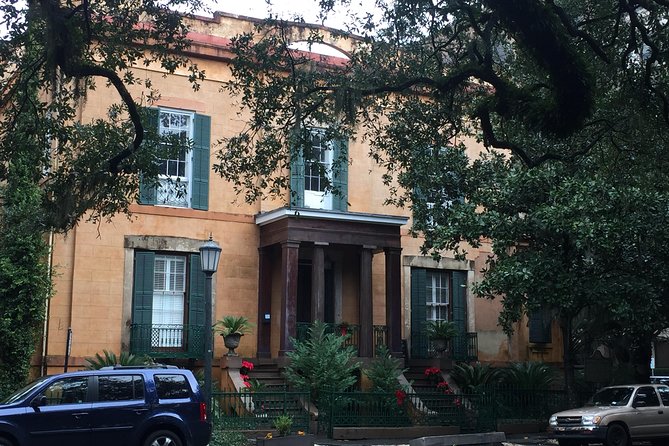
This tour is built for getting your bearings fast. In roughly two hours, you cover the historic core on foot, stopping at iconic squares and a few quieter landmarks that most people miss if they just wander on their own.
What makes it work is the mix of big-city context and specific details. You’ll hear why Savannah began where it did, how the layout of squares shaped daily life, and how later conflicts left traces you can still see. At the same time, the guide threads in stories that keep the walk fun—like the Revolutionary-era sites and Civil War connections—without turning it into a lecture.
It also helps that the group is capped at 30. That keeps the tour from feeling like a slow-moving crowd at every stop. You’ll have chances to ask questions, and the guide usually keeps things moving so you don’t lose the thread.
You can also read our reviews of more walking tours in Savannah



Starting in Wright Square and learning why Savannah is built the way it is
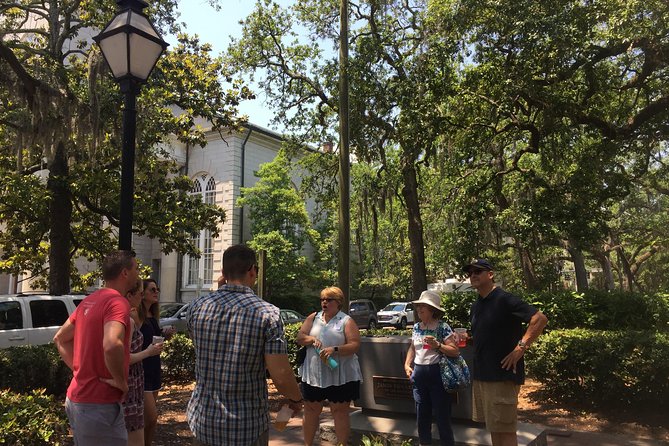
The walk starts at the north side of Wright Square, in front of the Gordon Monument. This is a smart place to begin because it sets the map in your mind right away.
You’ll learn how Savannah was first established and why General James Oglethorpe chose a 40-foot bluff. That detail matters because Savannah’s terrain and layout aren’t random—they influenced defense, visibility, and how people moved through the area.
From this square, you also get one of the tour’s best “connect the dots” moments: Tomochichi, chief of the Yamacraw Indians, is buried beneath the Gordon Monument. It’s the kind of fact that makes the city feel grounded and human, not just scenic.
And yes, you’ll also hear a quick port fact—Savannah’s port is the third largest in the nation. It’s not just trivia. It helps explain how a place that began as a colony became important for trade and logistics long after its first settlers.
Juliette Gordon Low’s birthplace: you’ll see it from the street
Next up is the Juliette Gordon Low Birthplace Museum area. The key point here is that you admire the birthplace from the outside. You don’t go into the home, but you still get the story behind the site: Juliette Gordon Low, founder of the Girl Scouts, was born here on October 31, 1860.
Even outside, this stop is worth it because it adds a different angle on Savannah. Not just military history and political founding—also community legacy and national impact.
Independent Presbyterian Church and that famous steeple
You’ll then head to the Independent Presbyterian Church. The guide explains how the congregation’s location and buildings changed over time. The church was founded in 1755 (originally on Ellis Square, which was Market Square), later destroyed by fire, then rebuilt on Telfair Square, only to be destroyed again by a hurricane.
Today, it sits on the corner of Bull St and Oglethorpe Ave, built in 1855. That set of repeated destruction and rebuilding makes the site feel real—like a living institution that kept going through disaster.
You’ll also hear which U.S. president was married in the church in 1885, and why the steeple is so famous today. If you’re the kind of traveler who enjoys matching story to architecture, this is a strong stop.
Chippewa Square and the Forrest Gump bench moment
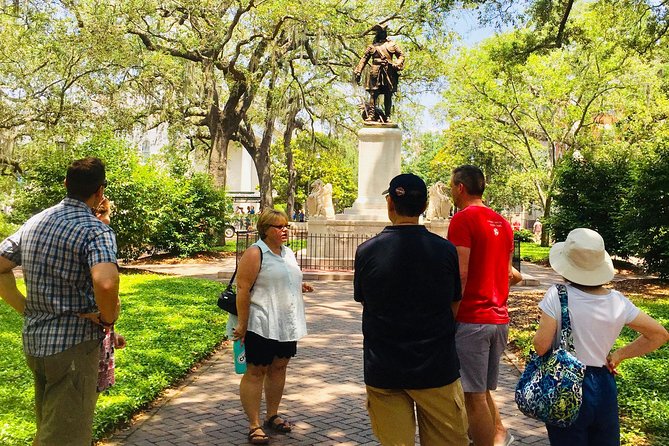
At Chippewa Square, the tour leans into pop culture in a way that still fits Savannah’s vibe. You’ll stop at the place where Forrest Gump sat with his box of chocolates while waiting for the bus.
It’s also a good moment to reset expectations. The monument in the center of the square is General James Oglethorpe—not Captain Morgan. The guide even points out the resemblance, and if that small confusion makes you smile, great—that’s part of why this stop works.
From there, you learn about the man behind the colony and what his monument represents. The movie reference gets you to look up, and the history gives you something to remember after the photo.
You can also read our reviews of more historical tours in Savannah






Haunted-looking streets: the Sorrel Weed House and its gray brick mystery
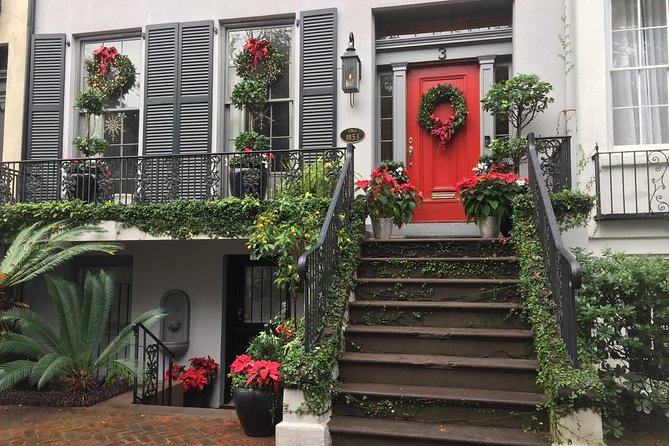
Next comes the Old Sorrel Weed House Museum & Tours area. You won’t do a full museum visit here; you pass the home and get the stories tied to its features.
This is where the guide’s tone can matter. The Sorrel Weed House is one of Savannah’s most haunted houses, and you’ll hear about the gray brick wall around the courtyard. You’ll learn why there are fingerprints in the brick and where the brick came from—exactly the kind of detail that turns a rumor into something physical you can imagine standing next to.
If you don’t care for spooky talk, you can still enjoy this stop as architectural trivia and storytelling mechanics. The brick details are tangible, even if the ghost angle isn’t your thing.
Madison Square: Revolutionary war drama on a square you can cross in minutes
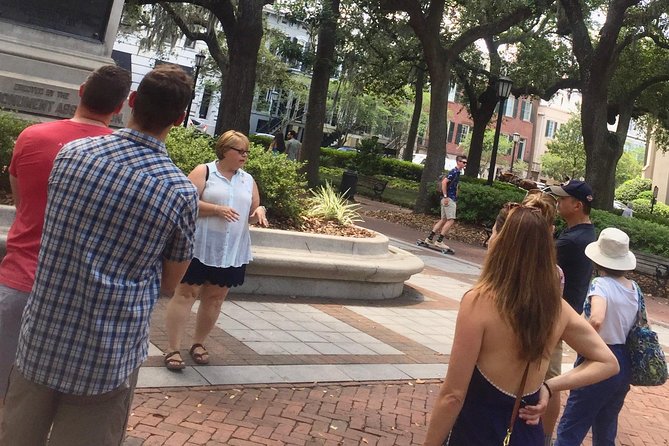
At Madison Square, you’ll hear what stood here during the American Revolution. The space where Madison Square sits today was once one of the bloodiest battles during the Siege of Savannah.
This stop works because it’s fast. You’re not stuck in long explanations. Instead, you get a clear historical anchor, and then you keep walking. That makes the Revolutionary context easier to hold in your head while you move through the city’s squares.
Green-Meldrim House: Gothic architecture plus Sherman’s occupation
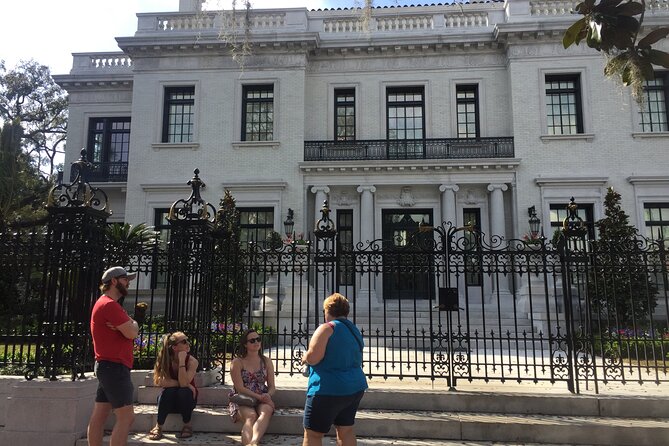
The Green-Meldrim House is one of those places you look at twice. Completed in 1853, it’s presented as the finest example of Gothic architecture in the South.
You’ll also get the cost context: it cost $93,000, or $3.2 million today, and it was the most expensive home in Savannah during the 1800s. That helps you understand why the building is such a statement—this wasn’t a modest house with good bones. It was a major flex.
The Civil War connection is the extra layer: the house served as Headquarters for General Sherman during his March to the Sea when he occupied Savannah. That pairing—Gothic style plus wartime HQ—gives you a fuller mental picture of how quickly a city can change roles.
Passing SCAD’s former Volunteer Guard building
The tour also includes a pass by a building originally built and used as the Savannah Volunteer Guard building, now owned by SCAD.
Even though you’re not going inside, it’s a helpful reminder that Savannah’s historic district isn’t frozen in time. Institutions reuse and repurpose old structures, and you’ll often learn more about a place’s identity just by noticing what the buildings became afterward.
The Gryphon Tea Room stop: apothecary cabinets you can picture
You’ll then reach the Gryphon Tea Room area, located inside what’s called the Shriner’s Building. This is where the tour turns pleasantly practical.
Inside the Gryphon Tea Room is a museum in itself. It was once used as Solomon’s Apothecary, and you can still see original mahogany cabinetry and cubbies used to store medicines. You’ll get enough detail to appreciate what you’re looking at, even if you don’t linger for a full meal.
The best part? It’s a natural “reset” point mentally during a walking tour. If you want to relax with tea, this is also where you can slow down without derailing the pace of the rest of the group.
Midnight in the Garden of Good and Evil: the Mercer Williams house
Another major stop for story lovers is the Mercer Williams house, made famous by the book Midnight in the Garden of Good and Evil by John Berendt.
The guide walks you through the real-life thread behind the scandal. Jim Williams purchased the home in 1969, and in 1981, his assistant Danny was involved in a shooting. The book released in 1993 spent 216 weeks on the New York best seller list, longer than any book in history, and the movie release later helped put Savannah on the tourism map.
This stop is a reminder that Savannah’s “famous landmarks” aren’t only monuments. Sometimes they’re homes tied to real events that turned into pop culture.
If you haven’t read the book or watched the movie, you might still enjoy the tour. Just know the guide explicitly encourages at least one of them before or during your visit so the stories land harder.
Armstrong-Hessler style wow: the Armstrong-Kessler House at street level
Near the end, you’ll talk about the Armstrong House, now known as the Armstrong-Kessler house. This is presented as a place where everyone pauses. The guide notes its size—26,000+ square feet—and the reaction it tends to trigger.
Important detail: it’s a private home today and not open for tours. So your experience here is visual and interpretive. You get the history and the context from the outside, which still works because the architecture is the main event.
Forsyth Park and the Fountain finale you’ll want to photograph
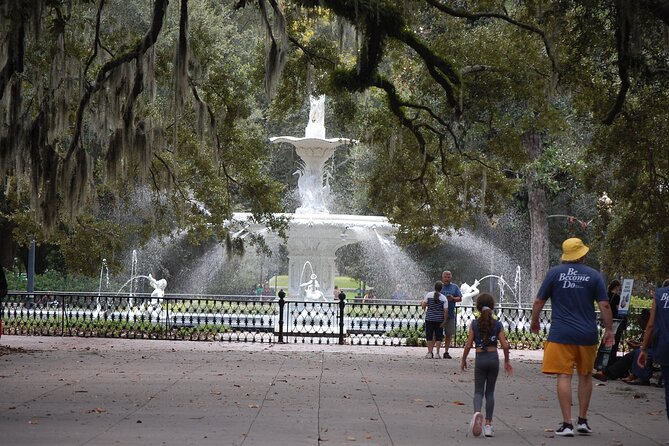
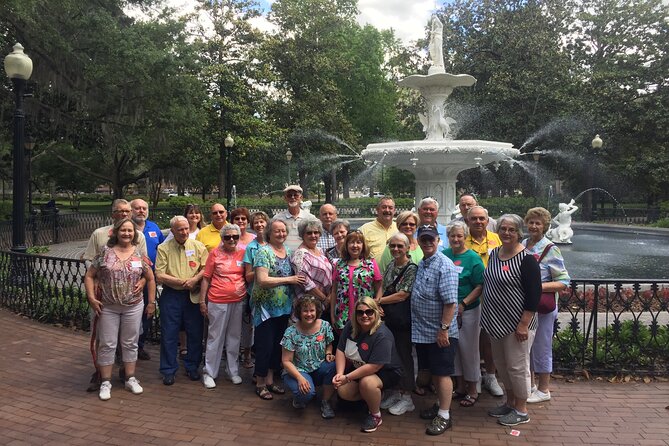
The tour ends at Forsyth Park, where the city’s scale shifts from historic blocks to a big public green space. The park began in 1848 with only 10 acres and now covers 30 acres—Savannah’s version of a central gathering place for young and old.
Then comes the crowning jewel: the Forsyth Park Fountain. You’ll hear how most people miss the origin story—this fountain was a catalog mail order from France, installed in 1858.
This ending is useful because it gives you a clean place to land. You’ll have your bearings for the rest of the afternoon, plus a signature photo moment that makes the tour feel complete.
Tour value: what you get for a two-hour walk
Even without naming a price, the value is clear in how the tour is structured. It’s short enough to fit your first or second day, but long enough to connect multiple layers of Savannah: the founding plan, the wars, the architecture, and the storytelling culture.
Most stops are free to view as part of the route, which matters because it keeps the experience from feeling like a checklist of paid entries. The Armstrong-Kessler house is the one major note where the admission isn’t included and it isn’t open for tours, so you’ll view it from outside.
The other big value is the guide format. You get a guided walk through the exact places you’ll want to revisit later. Think of it as paying for orientation and context, not just walking from stop to stop.
Who should book this walking tour (and who should plan a different approach)
This tour suits you if you want:
- a fast understanding of how Savannah’s squares and historic district work
- a mix of major sites and smaller, story-heavy stops
- a guide who uses humor and answers questions
It might not be the best fit if:
- you need lots of frequent breaks or you hate a steady pace
- you prefer strictly serious history with no spooky stories at all
- you’re very sensitive to voice volume and prefer ear microphones (this can be a factor in busy city conditions)
In past tours, people have praised the guides’ humor and the way they share small details that make places feel vivid—like the brick fingerprint explanation or the fountain’s France mail-order origin.
Should you book the Heart of Savannah History Walking Tour?
If you’re trying to decide what to do with your limited time, I’d book it. It’s a well-timed, high-return introduction to Savannah’s historic district. You’ll leave with a mental map, a stack of stories, and a list of places you’ll want to explore further on your own.
My one practical suggestion: bring comfortable shoes and a water bottle if you’re going in warmer months. Savannah walks can feel easy until you’ve been under the sun for a while. If you’re good with that, this is one of the most straightforward ways to turn a pretty city into a place you actually understand.
FAQ
How long is the Heart of Savannah History Walking Tour?
It runs about 2 hours, with the route designed to include breaks and benches along the way.
Where does the tour start and end?
It starts at Wright Square in Savannah and ends in Forsyth Park at the Fountain.
Do I need to print anything, or is it a mobile ticket?
You get a mobile ticket.
Is the tour offered at different times of day?
Yes, you can choose between a morning or afternoon tour time.
Is admission included for the stops?
Most stops on the route are free to view as part of the tour. The Armstrong House (Armstrong-Kessler house) notes that admission is not included, and it is not open for tours.
Will we go inside the homes or museums?
The tour notes that it does not go into Juliette Gordon Low’s home. Some stops are view-from-the-street, like the Armstrong-Kessler house, and others are passed by. The Gryphon Tea Room stop includes an on-site museum element you can see inside.
Does the tour run in rain?
Yes, it operates rain or shine.
Can I cancel for a full refund?
You can cancel up to 24 hours in advance for a full refund. If you cancel within 24 hours, the amount you paid is not refunded.