
REVIEW · BATH
Roman Baths and Bath City Walking Tour
Book on Viator →Operated by Footprints Tours Limited · Bookable on Viator
Roman Bath + Georgian Bath is an odd pairing, and that is exactly why this tour works. You get the story of a spa town that the Romans founded, then you walk into the 1700s architecture that still defines Bath today.
I especially love how the tour connects the dots: you see the big Roman sights inside the Roman Baths and then you shift to the honey-colored streets and terraces that make Bath look like a film set. And I also like the small-group feel—when I shared a walk with guides like William and George, the pace stayed human and questions didn’t get swallowed.
One thing to plan for: you have a moderate walking level and you’re on foot for about two hours, so comfy shoes matter. If you’re aiming to see the Roman Baths, double-check the option you book, because entrance is only included if you choose the upgrade.
In This Review
- Key things I’d circle before you book
- Bath in one walk: from Roman hot pools to honey-stone streets
- Meeting at Bath Abbey: quick start, less confusion
- Roman Baths upgrade: what you gain when the entrance is included
- The walk begins with Roman context: Pulteney Bridge and Bath Abbey
- Inside the Roman Baths: what to watch for during your visit
- Pump Rooms, Assembly Rooms, Royal Crescent, and the Circus
- What the small group really changes (and why some guides stand out)
- Timing, pace, and what to wear for a two-hour walk
- Price and value: what $35.37 buys you in Bath
- When you should book this walking tour
- Book it or skip it?
- FAQ
- Is the Roman Baths entrance included?
- How long is the Roman Baths and Bath City Walking Tour?
- Where do I meet the guide?
- Do I get a mobile ticket?
- Are there morning and afternoon departures?
- What’s the group size?
- Do children need tickets and can they join?
- What language is the tour in?
Key things I’d circle before you book
- Small group size (max 15) makes it easier to hear your guide and ask questions
- Optional Roman Baths entry upgrade lets you control how much time and cost you spend
- Start point at Bath Abbey (BA1 1LT) anchors the whole route so you don’t wander in the wrong direction
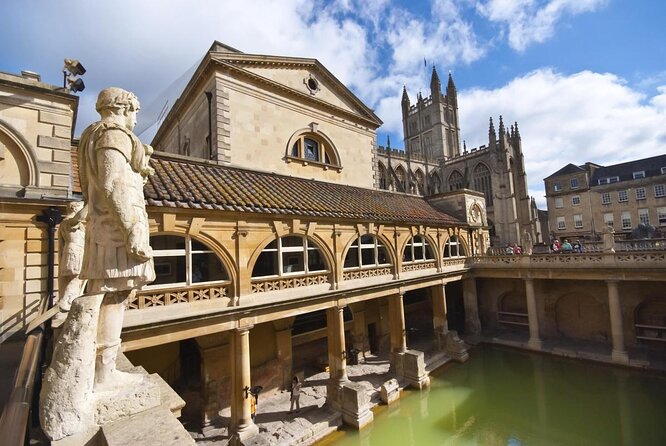
- Roman Baths highlights include the Great Bath, changing rooms, hot pools, and key museum pieces like Minerva’s Head
- Georgian Bath classics on foot: Pulteney Bridge, Pump Rooms, Royal Crescent, and the Circus
- Morning or afternoon departures help you match your day in town
Bath in one walk: from Roman hot pools to honey-stone streets

Bath is one of those English places where two eras fight for your attention—Roman and Georgian. What I like about this tour is that it doesn’t force you to pick a side. You start with the Roman story, then move into the architecture that turned Bath into a fashionable 18th-century spa society.
The Roman part is not just sightseeing from the outside. You get inside for the big-ticket features: the Great Bath with its dramatic colonnade, the changing rooms, and the hot pools where people once came to socialize as well as relax. Then you add the museum layer, with famous artifacts such as Minerva’s Head and inscribed stone tablets, which help you connect what you’re seeing to what the Romans actually used and valued.
After that, you switch gears to the Georgian cityscape. Bath’s trademark honey-colored stone buildings can be hard to appreciate if you’re only passing by. With a guide, the sights start to feel like part of one plan—bridges, abbeys, pump rooms, terraces, and curved streets all support the same theme: Bath as a spa town that learned how to market itself.
You can also read our reviews of more walking tours in Bath



Meeting at Bath Abbey: quick start, less confusion
Your meeting point is Bath Abbey (BA1 1LT), and the tour ends back at the same meeting location. That structure is helpful because Bath can feel like a maze of streets once you step off the main roads.
Still, Bath Abbey is large, so arrive a bit early and give yourself time to orient. If you’ve ever shown up to a big landmark and spent ten minutes trying to guess which group is yours, you’ll appreciate having one fixed anchor like this.
The tour is offered in English, uses a mobile ticket, and you’ll find it near public transportation. No hotel pickup is included, so you’ll want to plan your arrival and departure around Bath Abbey rather than around your lodging.
Roman Baths upgrade: what you gain when the entrance is included

The base walking tour is guided, but the Roman Baths admission depends on your selected option. If you upgrade, you pay the entrance fee as part of the experience—this is the part that most impacts value.
Why? Because the Roman Baths aren’t just a quick stop. Once you’re inside, you’ll want time to take in details like:
- the Great Bath layout and the column-lined look that still dominates the room
- the changing rooms and hot pools that explain how bathing worked
- the museum collection pieces, including Minerva’s Head and inscribed tablets
If you don’t upgrade, you may still get plenty of context on the Roman sites—but you’ll have to manage entry on your own later. If your goal is a smooth day with fewer decisions, upgrading is the cleaner path.
Also, the upgrade matters for time. This tour runs about two hours total, so splitting your attention between multiple ticketing moments can steal time from what you actually came to see: those Roman interiors and the architectural explanation that ties them together.
The walk begins with Roman context: Pulteney Bridge and Bath Abbey

Between the Roman Baths focus and the Georgian highlights, the route includes major landmarks that give you a sense of geography and style.
You’ll pass Pulteney Bridge, a standout crossing that helps you understand how Bath’s town grew around its water and spa reputation. Then you’ll see the Gothic Bath Abbey and hear about an important historical note: it’s the site tied to the coronation of England’s first king in 973.
That coronation detail matters more than it sounds. It’s a reminder that Bath wasn’t only a leisure destination—it also sat inside the power and identity of England. When you combine that with the Roman spa origins, you start to see Bath as a town that kept reinventing itself while staying rooted in its location and its water.
Inside the Roman Baths: what to watch for during your visit

This is where the tour earns its money for most people. The Roman Baths are the main attraction, and the guide’s job is to keep you from seeing it as a pile of old stones.
Once inside (on the upgraded option), you’ll tour the Great Bath, plus areas that explain how visitors moved through the bathing process. The changing rooms and hot pools give you the functional side—how the Romans expected people to prepare, bathe, and socialize. That matters because if you only stare at one big pool, you miss the flow.
Then you’ll shift to the museum collection. It’s not just trivia; it helps you identify what you’re looking at. Minerva’s Head is a great example of why this works. When you’re told what it represents, it becomes a focal point instead of just a famous object name.
You’ll also see inscribed stone tablets, which are the kind of artifacts that can feel intimidating when you’re on your own. With a guide, you learn how these pieces fit into the broader story of Roman life and spa culture.
You can also read our reviews of more city tours in Bath

Pump Rooms, Assembly Rooms, Royal Crescent, and the Circus

After the Roman stop, you head into Bath’s Georgian showpieces. This part is where Bath stops feeling like a history museum and starts feeling like a real town you could live in.
You’ll see:
- the Pump Rooms and Upper Assembly Rooms, which connect directly to Bath’s role as a social hub
- the Royal Crescent, Bath’s famous sweeping terrace—every angle feels designed
- the Circus, a circular terrace formed from curving segments
When you walk through these places with explanation, you start noticing the patterns. Royal Crescent is about symmetry and status. The Circus is about geometry and experimentation. Pump Rooms and Assembly Rooms are about people showing up, being seen, and turning health routines into public events.
This is the part you’ll remember when you leave. The Roman Baths give you the origin story, but the Georgian architecture gives you the look, the mood, and the city’s lasting identity.
What the small group really changes (and why some guides stand out)

This tour caps at 15 travelers, and that’s not just a comfort detail. It changes how the tour feels.
In the field, I’ve found that small groups make it easier to hear your guide, especially in places like Bath Abbey and around the Roman Baths where there’s always foot traffic. The people you end up walking with also affect the experience. A group small enough to stay together makes it easier to keep a steady pace and ask follow-up questions without feeling like you’re slowing a conveyor belt.
The guide quality seems to be a repeat theme in how people describe the experience. Names that came up include William, George, Jamie, John, Oscar, and Rhys. I like that you’re not just paying for a slideshow. You’re getting someone who can explain what you’re looking at, keep the timing right, and make the walk feel personal even in a busy city.
Timing, pace, and what to wear for a two-hour walk

The tour runs about two hours and includes walking between multiple major sights. That doesn’t mean it’s a hike—but it does mean your feet will work.
I’d plan for:
- comfy, grippy shoes (someone noted the day can be demanding on shoes)
- warm layers and gloves if you’re going in winter, since Bath can feel chilly even on mild days
- a calm mindset for crowds near big landmarks
The pacing is generally described as neither too long nor too short, with a balanced amount of information. Still, if you’re the type who wants long photo stops every ten minutes, you might have to accept quick breaks. The tour is designed to cover the Roman core and the Georgian highlights, and that takes time.
Also, you should have a moderate physical fitness level. If you have mobility limitations, you’ll want to consider how you handle standing and walking for the full duration, especially inside the Roman Baths where you’ll move through museum and exhibit spaces.
Price and value: what $35.37 buys you in Bath
At $35.37 per person, this tour is priced for a real guide-led experience, not just an audio headset and a map. Here’s how I think about the value:
You’re paying for:
- a professional guide
- a guided route across Bath’s biggest anchors (Roman Baths area plus top Georgian landmarks)
- a group size capped at 15, which helps the tour feel manageable
- optional add-on value if you choose the Roman Baths entrance-inclusive option
The biggest value decision for you is the Roman Baths entrance upgrade. If Roman Baths are your #1 priority, upgrading often makes your day smoother and reduces the hassle of timing your entry on your own. If you already planned to visit Roman Baths separately (or you’re trying to minimize total spend), you can choose the option that keeps the tour itself more focused on the walking and explanation.
One more point: Bath attracts lots of crowds. A guided route can save you from wandering in the wrong direction or missing the stories that make the buildings click. That’s where the cost starts to feel fair—especially when a guide can connect Roman origins to Georgian architecture so you don’t just collect photos.
When you should book this walking tour
I think this tour is a smart choice if you:
- want a first-day orientation to Bath that links Roman and Georgian Bath into one story
- like seeing top sights without spending your whole day figuring out routes
- prefer a guided explanation over reading plaques
- travel in a small group vibe and want the chance to ask questions
It may be less ideal if:
- Roman Baths are not a priority and you’d rather spend your time deeper in one area
- you hate walking for any stretch of time (it’s moderate, but it’s still walking)
- you expect total flexibility to linger at every stop for long periods
If your schedule allows a morning or afternoon departure, pick the one that matches your energy. Starting with the Roman Baths angle early in your visit can make the Georgian walk feel more connected, like Bath is evolving in real time instead of jumping eras.
Book it or skip it?
If you want the practical best of Bath without turning your trip into a self-guided scavenger hunt, I’d book it—especially if you choose the Roman Baths entrance-inclusive option. The value comes from the structure: one guided route, major landmarks in a tight time window, and enough context to make Bath’s architecture feel like it has a reason for being there.
Do plan for comfortable shoes and a couple layers. And when you arrive at Bath Abbey, give yourself a few extra minutes so you’re not stuck trying to identify the right guide in a crowd.
FAQ
Is the Roman Baths entrance included?
It depends on the option you book. The Roman Baths entrance fee is included only if you select the upgrade option.
How long is the Roman Baths and Bath City Walking Tour?
The tour is listed at about 2 hours.
Where do I meet the guide?
You meet at Bath Abbey, Bath BA1 1LT, UK.
Do I get a mobile ticket?
Yes. The tour includes a mobile ticket.
Are there morning and afternoon departures?
Yes. You can choose a morning or afternoon departure.
What’s the group size?
The tour has a maximum of 15 travelers.
Do children need tickets and can they join?
Children must be accompanied by an adult.
What language is the tour in?
The tour is offered in English.