
REVIEW · BATH
Walking Tour of Bath with Blue Badge Tourist Guide
Book on Viator →Operated by Bath Walking Tours · Bookable on Viator
Bath makes sense fast on this walking route. I like how a Blue Badge guide gives you instant context for Bath Abbey and the city’s Roman-to-Georgian story, and you get a smart 2-hour loop that shows the main sights without eating your whole day. One caution: it is mostly walking, with some uphill and stairs, and the big-ticket sites like the Roman Baths and Bath Abbey are viewed from the outside only.
I also really enjoy the small-group feel, capped at 20 people, which keeps the pace human and the Q&A actually useful. You can pick a morning or afternoon departure, and you’ll start right at Abbey Churchyard, where Bath’s skyline is already doing part of the work for you.
If you want to spend lots of time inside museums and ticketed rooms, you’ll need to plan those separately. This tour focuses on seeing, learning, and getting your bearings so your later stops feel way more meaningful.
In This Review
- Key points worth knowing
- Why this Bath walking tour is such a smart first move
- Meeting at Abbey Churchyard and how the route flows
- Bath Abbey at the start: Gothic grandeur and what came before
- Queen Square and the Georgian streets that frame WWII scars
- No. 1 Royal Crescent: culture, architecture, and the stories around the facade
- The Circus: architecture that looks like a plan for a movie
- Pulteney Bridge and the river-side Bath you recognize from films
- Sally Lunn’s Museum: a short stop that sets you up for later food history
- Back to Bath Abbey and a proper wrap-up with Q&A
- The Roman Baths finish: Aqua Sulis context, entrance view only
- What you get for $30.51: value based on time and guide quality
- Pace, walking level, and what to wear in Bath
- Who should book this Blue Badge Bath tour
- Should you book this tour of Bath with a Blue Badge guide?
- FAQ
- How long is the Walking Tour of Bath?
- Where does the tour start?
- Where does the tour end?
- Is admission to Bath Abbey or the Roman Baths included?
- Does the tour include stops like Queen Square, Royal Crescent, and The Circus?
- What language is the tour offered in?
- What happens if the weather is poor?
Key points worth knowing
- Blue Badge guide, full storytelling: You’re led by a certified guide, not someone reading facts off a card.
- Major Bath landmarks, tight route: Bath Abbey, Queen Square, Royal Crescent, The Circus, and Pulteney Bridge fit into a 2-hour walk.
- Roman Baths taught from the outside: You’ll get the Aqua Sulis context, but entrance isn’t included.
- Small group size (up to 20): It’s easier to hear the guide and ask questions.
- Comfortable for first-timers: This is built for orientation, so you won’t feel lost on your own later.
- Good-weather dependent: If conditions are poor, the tour may be rescheduled.
Why this Bath walking tour is such a smart first move
Bath can feel like a show-off city. The stone looks elegant, the streets curve, and suddenly you’re staring upward at crescents like you’ve missed a lecture. This tour helps you turn all that scenery into a timeline you can actually remember.
I love the way the guide uses the buildings like clues. Gothic Bath Abbey is not just pretty here; it’s a key marker for earlier churches on the site. And the Georgian set-pieces like Queen Square, Royal Crescent, and The Circus aren’t just architecture candy; they connect to the people and ideas that shaped Bath’s reputation.
The other thing I like is how practical the structure is. In about two hours you cover the city’s “read me first” highlights, then you’re done with the hard part: figuring out what to see next.
You can also read our reviews of more walking tours in Bath


Meeting at Abbey Churchyard and how the route flows
You meet at Abbey Churchyard, Abbey St, Bath BA1 1LY, and the tour ends back at the meeting point area. The walk is designed as a loop, so you don’t spend the afternoon retracing steps.
You’ll see the day as a sequence: Abbey Churchyard first, then a run of Georgian streets and set-pieces, and finally a Roman Baths finish plus a return to Abbey for wrap-up and Q&A. It’s a clean way to orient yourself, especially if Bath is your first stop in the region.
Since it’s near public transportation, you can pair this with trains and buses without feeling like you need a whole day devoted to logistics. Also, the tour uses a mobile ticket, so you’re not hunting for paper once you arrive.
Bath Abbey at the start: Gothic grandeur and what came before
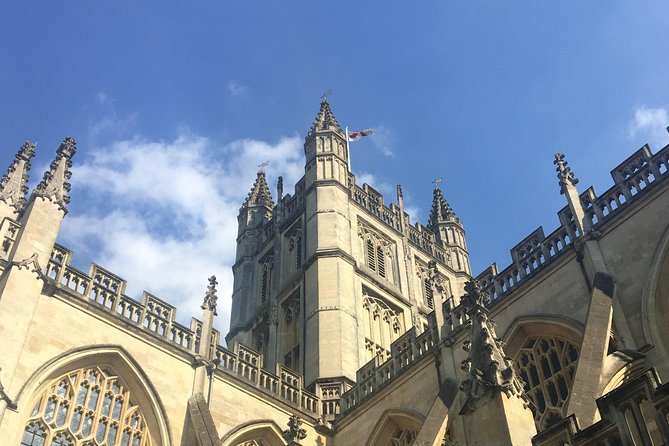
The tour begins right in front of Bath Abbey. Your guide points out exactly where to gather look for the flag and an A-board so you know you’re in the right group.
What makes this stop work is the storytelling angle. You’ll hear how the site developed before the current Gothic look took over. That matters because once you understand the layers here, the building becomes more than a photo stop.
Admission is not included for this part, so you’re not doing a full inside visit during the tour. You’ll get the key takeaways, plus a scene-setting history summary that helps the later stops click. If you still want to go inside, you’ll know what to look for and why.
Queen Square and the Georgian streets that frame WWII scars
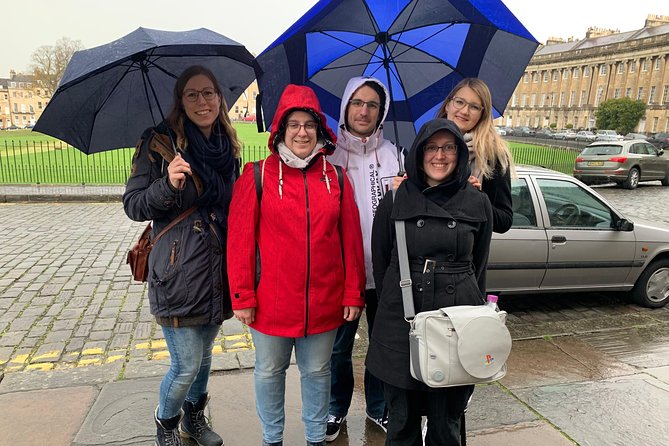
From the Abbey you move into Queen Square, a great place to learn how Bath’s elegant design coexists with real-world history. The guide connects the architecture to later events, including damage from 1942 during WWII.
This is one of those stops where you’ll feel your understanding change. Georgian harmony doesn’t mean life was simple or safe, and that contrast makes Bath more human. Even if you usually skip war history, this kind of local detail lands because it’s tied to the buildings you can literally see.
The stop is short, so don’t expect long explanations at every corner. Expect the guide to give you the “why this matters” version, then move you along.
No. 1 Royal Crescent: culture, architecture, and the stories around the facade
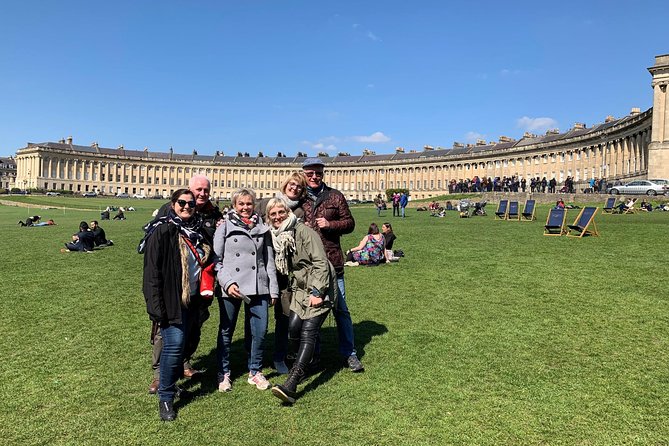
Next comes No. 1 Royal Crescent. This is where Bath starts to feel like a set. The crescent curve, the facades, and the street design create that famous sense of order.
Your guide ties the architecture to stories about the culture that lived in these rooms and neighborhoods. It’s not just naming styles; it’s showing what the design meant for status, living, and daily life.
Like most stops on this walk, it’s about learning just enough to make your own roaming later more satisfying. If you plan to return, you’ll know what to target first, instead of walking around randomly.
You can also read our reviews of more guided tours in Bath
The Circus: architecture that looks like a plan for a movie
Then you hit The Circus, another Bath star. This stop focuses on architecture, stories, and history, and it’s especially good if you like the “how was this built and why does it feel so dramatic” side of travel.
The Circus can look straightforward from a distance. Up close, it feels more deliberate and symbolic. The guide helps you read it as a designed space, not just a pretty landmark.
Again, it’s a quick stop. But quick here doesn’t mean shallow. The guide’s job is to point out the few things that unlock what you’re seeing.
Pulteney Bridge and the river-side Bath you recognize from films
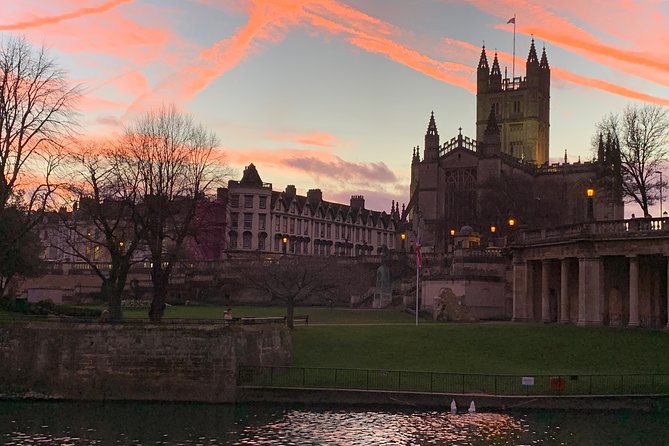
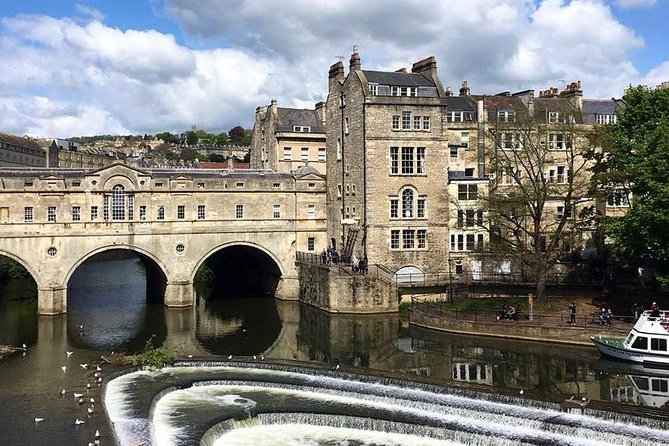
At Pulteney Bridge, you’ll get stories tied to the river and the look of the bridge itself. This is a practical photo moment too, because it’s a natural location to orient yourself along the water.
The bridge has that movie-set vibe, and your guide helps explain why. When you understand how Bath’s riverfront and building placement work together, the city feels less random.
If it’s rainy (Bath loves a drizzle), this is still a good stop. The guide keeps the story moving even if the light is less than perfect. You just may want a water-resistant layer and shoes that handle wet stone.
Sally Lunn’s Museum: a short stop that sets you up for later food history
Next is Sally Lunn’s Museum, focused on architecture plus stories and history. This part is less about big monuments and more about how Bath’s character shows up in smaller places and traditions.
Since it’s a short stop, you’re not doing a full museum visit during the tour, but you are getting the background that makes later exploration feel earned. If you love stopping for snacks after a walk, this is a logical moment to start thinking about what to do next in the area.
Back to Bath Abbey and a proper wrap-up with Q&A
You return to Bath Abbey for an overview of the walk and additional Q&A. This is a great structure choice. By the time you’ve covered the Georgian highlights and the Roman context, questions become sharper, and you get better answers.
Expect the guide to connect the dots: church history, Bath’s development, and how the different periods shaped what you see today. It’s also a good moment to ask practical questions like where to spend extra time next, or which nearby sights match your interests.
No admission is included for the attraction itself in this tour segment. But you do get a guided sense of priorities.
The Roman Baths finish: Aqua Sulis context, entrance view only
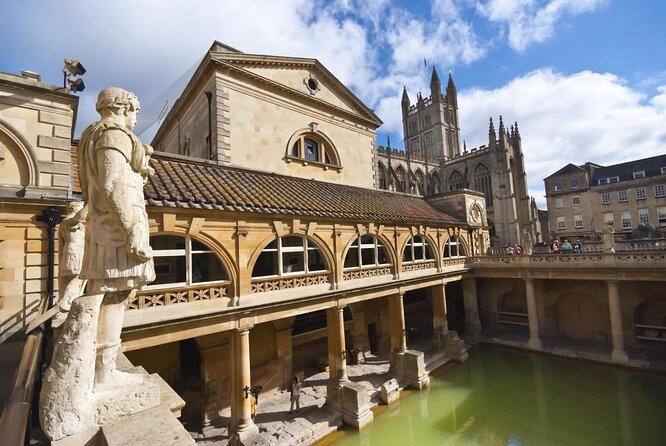
The final stop is the Roman Baths area, where you view the entrance and hear about Roman occupation of the city known as Aqua Sulis. This is the emotional payoff for people who like deep time.
What’s valuable here is the framing. Instead of walking into a ticketed site cold, you understand what the Romans were doing in this exact place and why Bath mattered to them. That makes a later self-guided visit feel more like a conversation with the site.
Entrance to the Roman Baths is not included. The tour ends back by Bath Abbey and the Roman Baths, returning you to the meeting area zone so you can continue exploring on your own.
What you get for $30.51: value based on time and guide quality
At $30.51 per person for around 2 hours, the value is all about what you’re buying: time plus expert interpretation. Bath’s best sights are close together, but they’re also easy to misread if you don’t know what’s going on.
Where the price feels fair is the guide impact. The tour consistently shines because the guides bring energy, humor, and clear explanations. People come away feeling the city has become readable, not just photographed.
You should also factor in that the walk covers a lot of major landmarks without paying for entrances during the tour. Since admissions are not included, you keep flexibility: you can choose what’s worth the ticket cost once you’ve got your bearings.
Also, this is often booked well in advance (on average about 25 days). If your schedule is tight, book early so you get the departure time you want.
Pace, walking level, and what to wear in Bath
This tour is rated for people with moderate physical fitness. Expect a fair amount of walking, with some uphill and up stairs. If you know your limits, plan around that rather than hoping to “push through” on the day.
Wear sturdy shoes. Bath stone can be slippery when wet, and the route includes open streets and uneven conditions. Bring a light waterproof layer just in case. One person even noted it drizzled the whole time and the tour still worked well, which tracks with how Bath weather behaves.
Group size is capped at 20, and the guide typically keeps the pace comfortable. Still, short stops mean you’ll move steadily between them.
Who should book this Blue Badge Bath tour
Book this if you:
- want a first-day orientation so Bath feels logical fast
- enjoy stories tied to architecture and street design
- like asking questions and getting direct answers
- prefer a guided route instead of wandering and guessing
Skip it (or at least add a second plan) if you:
- want long indoor time at the Roman Baths or inside Bath Abbey during the tour window
- need a fully level, low-walking itinerary
For most first-timers, though, this is a strong starting block. It sets your later stops up for success.
Should you book this tour of Bath with a Blue Badge guide?
Yes, if you want to understand Bath without doing homework first. The route hits the key landmarks in a tidy two hours, and the guide style makes the history and architecture feel connected instead of like random facts.
Book it early if you can, and plan to do any major indoor ticketed sites after. Think of this as your Bath map in human form. Once you’ve got the story, walking around Bath on your own is a lot more fun—and you’ll know what deserves your time.
FAQ
How long is the Walking Tour of Bath?
It runs for about 2 hours.
Where does the tour start?
The meeting point is Abbey Churchyard, Abbey St, Bath BA1 1LY, UK.
Where does the tour end?
The tour ends back at the meeting point area in front of Bath Abbey and the Roman Baths.
Is admission to Bath Abbey or the Roman Baths included?
No. Entrance to Bath attractions is not included, and the tour focuses on views and explanations.
Does the tour include stops like Queen Square, Royal Crescent, and The Circus?
Yes. The walk includes stops at Queen Square, No. 1 Royal Crescent, The Circus, Pulteney Bridge, and Sally Lunn’s Museum.
What language is the tour offered in?
The tour is offered in English.
What happens if the weather is poor?
This experience requires good weather. If it is canceled due to poor weather, you will be offered a different date or a full refund.