
REVIEW · BATH
Best of Bath Walking Tours – Georgian Tour
Book on Viator →Operated by Best of Bath Walking Tours Ltd. · Bookable on Viator
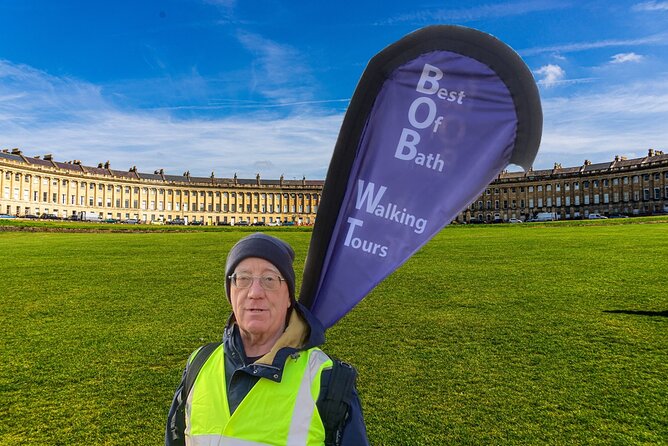
Georgian Bath makes sense when you walk it. On this Best of Bath Walking Tours Georgian Tour, Bob leads you through the city’s key architectural landmarks while stitching together what they were built for and who used them. I especially love how the route is built around Bath’s big Georgian set pieces, so you start recognizing patterns fast.
I also like that this is a small group (max 15), with time for questions and a guide who keeps things moving at an easy pace. One consideration: some of the most famous stops (like the Roman Baths and other interiors) have separate entry costs, so you’ll need to decide on the day whether you want to go inside.
In This Review
- Key highlights that matter on the ground
- Stepping out of Bath Abbey and into the Georgian story
- The Georgian core: Queens Square, the Circus, and Royal Crescent
- Queen Square: the “first chapter” of the set
- The Circus: classic façades with clever geometry
- Royal Crescent: 30 terraced houses, one sweeping statement
- Bath’s water legacy: hot springs, walls, and the Mineral Hospital
- Royal Mineral Water Hospital: faith and science in one place
- Roman Baths stop-by-stop: what to notice before you go inside
- A practical note on tickets
- Fashionable society in buildings: Assembly Rooms and the Georgian social world
- Another ticket reality
- Crossing Pulteney Bridge: the weirdly practical side of Georgian Bath
- Guildhall Market: where Bath’s history stays hand-to-mouth
- Pace, questions, and how to make it worth your time
- Who should book this Georgian walking tour
- Should you book the Best of Bath Walking Tours Georgian Tour?
- FAQ
- How long is the Best of Bath Georgian walking tour?
- Where does the tour start?
- What time does the tour start?
- How many people are in the group?
- What language is the tour offered in?
- Is there a mobile ticket?
- Are ticketed attractions included?
- What fitness level do I need?
- Is the tour dependent on the weather?
- What is the cancellation window?
Key highlights that matter on the ground
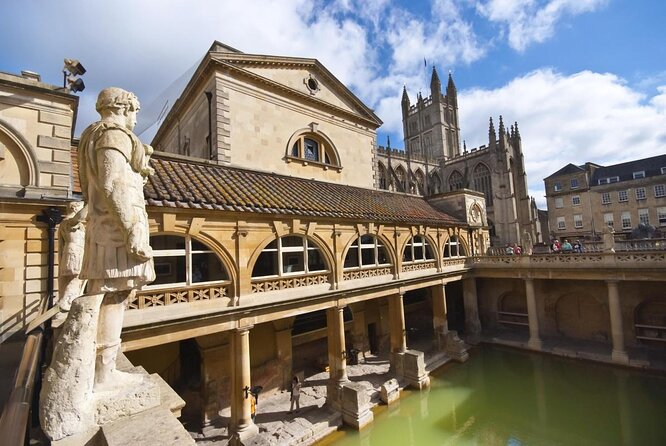
- Bob guides the whole thing with humor and clear explanations, not a lecture that drifts off
- A tight route through Georgian Bath from Queen Square to the Royal Crescent and the Circus
- Roman Baths context you can actually remember, including dates and later redevelopments
- Great “street-view” architecture at Bath Abbey, Assembly Rooms, Pulteney Bridge, and the Guildhall Market
- You may pay extra for interiors where tickets are not included
- Small group energy means you can ask questions and keep your bearings without stress
Stepping out of Bath Abbey and into the Georgian story
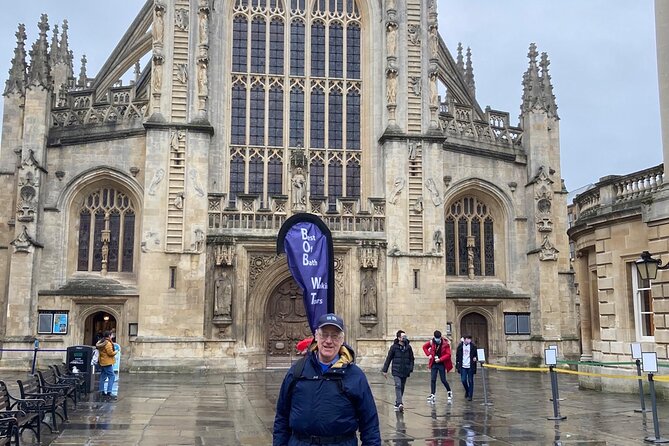
This tour starts where most people end up anyway: in front of Bath Abbey (Abbey Churchyard), right by the iconic church of Saint Peter and Saint Paul. Bath Abbey is not just a pretty landmark either. It traces back to the 7th century origins, was reorganized in the 10th century, then rebuilt in the 12th and 16th centuries—shaped by long chapters of religious and civic change. Standing there, you quickly feel why Bath is such a layered city.
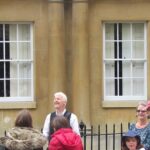
From the start, Bob’s approach helps you connect buildings to life. You don’t just hear what things look like; you learn what they were meant to do, who benefited, and how Bath’s water and status shaped the architecture. If you’ve ever looked at a street in a historic city and wondered what you’re supposed to notice, this tour is made for that moment.
You can also read our reviews of more walking tours in Bath
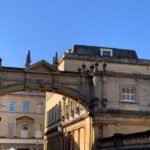
The Georgian core: Queens Square, the Circus, and Royal Crescent
The route leans hard into Bath’s Georgian identity, which is exactly what you want on a walking tour with a limited time window. You’ll move through the architectural sequence that ties Queen Square, the Circus, and the Royal Crescent together—like three scenes in the same play.
Queen Square: the “first chapter” of the set
Queen Square is described as the first element in Bath’s architectural sequence, linking to the Circus and Royal Crescent. All the buildings there are Grade I listed, which is a strong signal that you’re looking at high-value, protected architecture—not random old streets.
What I like here is that Bob’s explanations help you read the square as part of a planned visual journey. Instead of treating each building as a standalone postcard, you start seeing the design logic that holds the whole area together.
The Circus: classic façades with clever geometry
Next comes the Circus, a ring of large townhouses with three entrances. It was designed by John Wood the Elder and built between 1754 and 1768. The defining detail is how each segment faces one of the three entrances, so you get a classical façade straight ahead no matter where you’re standing.
That’s the sort of fact you can’t fully appreciate from a single photo. On the walk, it clicks because you’re physically moving around it—spotting how the design guides your viewpoint.
Royal Crescent: 30 terraced houses, one sweeping statement
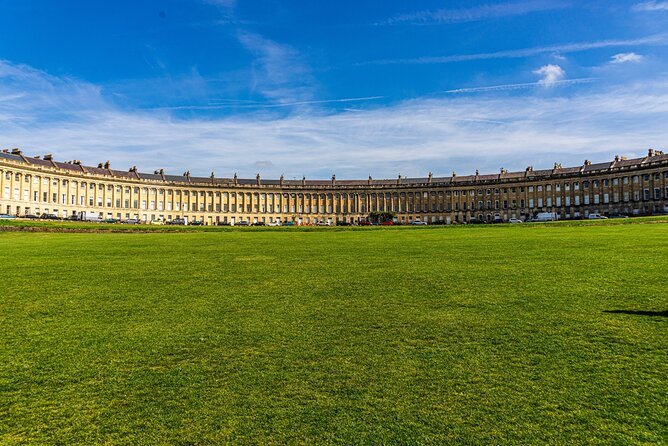
Then you hit the Royal Crescent—30 terraced houses laid out in a sweeping crescent. Designed by John Wood the Younger and built between 1767 and 1774, it’s one of the greatest examples of Georgian architecture in the UK (and Grade I listed to match its reputation).
If you’re the type who likes buildings for the human scale—how they frame a street, a view, a public image—this is where Bath really wins. Even if you’ve walked by it before, a guide helps you spot what you were missing: the order, symmetry, and the intended drama of the skyline.


Bath’s water legacy: hot springs, walls, and the Mineral Hospital
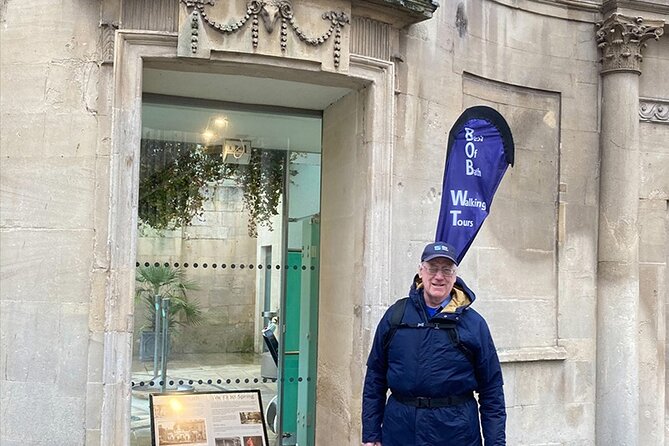
Bath’s story starts with water, but it doesn’t stop there. The tour route includes major references to the Hot Springs and the Old City Wall area, tying the city’s growth to what the water offered and how Bath developed facilities to support visitors.
Royal Mineral Water Hospital: faith and science in one place
One stop is the Royal Mineral Water Hospital, tied to a major shift in the 18th century. Construction began in 1737, marking a new period of faith and scientific belief in the healing powers of Bath’s mineral waters.
This is a good moment to zoom out. A lot of Bath’s Georgian grandeur is tied to people coming for health, and people paying to recover. If you want your visit to feel grounded (not just “pretty stone”), this part brings the logic back into view.
Roman Baths stop-by-stop: what to notice before you go inside
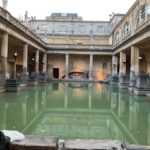
The Roman Baths are right at the heart of Bath’s long timeline. You’ll pass through the area even if you don’t plan an interior visit, and Bob gives you the essential background so the site lands with weight.
A temple was constructed on the site between 60 and 70 AD in the early decades of Roman Britain. A century later, the Roman baths were in ruins according to the Anglo-Saxon Chronicle. And the area around the natural springs was redeveloped multiple times through both the Early and Late Middle Ages.
A practical note on tickets
The Roman Baths admission is not included in the tour package. So think of this as two options:
- If you want to see the interior at a deep level, budget extra for entry.
- If you prefer keeping the day light, you can still get a lot from the context and exterior orientation.
Either way, the guide’s dates and timeline help you avoid the common problem: staring at impressive structures but not knowing why they’re still here.
Fashionable society in buildings: Assembly Rooms and the Georgian social world
Bath wasn’t only about health. It also became a fashionable resort town, and the Georgian period turned leisure into an industry.
The Assembly Rooms (and their Georgian-era setting) are built into the walk with a strong social angle. In the Georgian era, Bath’s architect John Wood the Elder and his son laid out housing areas for residents and visitors. Assembly rooms were built early in the 18th century, and the new or upper assembly rooms opened with a grand ball in 1771.
Bob also connects this place to well-known literary figures—Jane Austen and Charles Dickens are linked to Bath’s fashionable society. You don’t need to be an expert on either author to enjoy the point: these buildings weren’t created for quiet contemplation. They were built for gatherings, status, and the social machinery of a spa town.
Another ticket reality
Assembly Rooms admission is not included. If you want to go inside, treat it as an optional add-on that you can match to your energy level that day.
Crossing Pulteney Bridge: the weirdly practical side of Georgian Bath
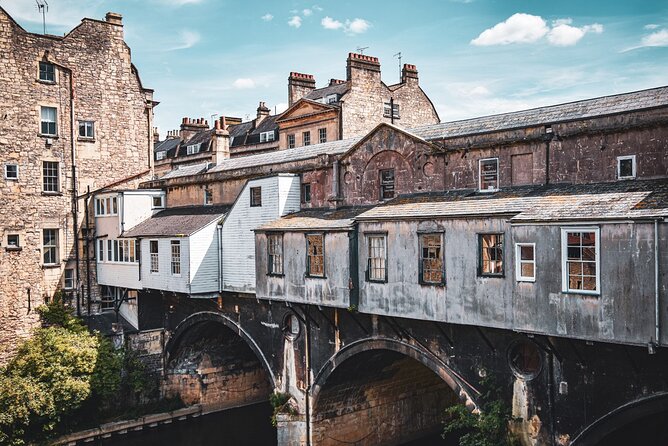
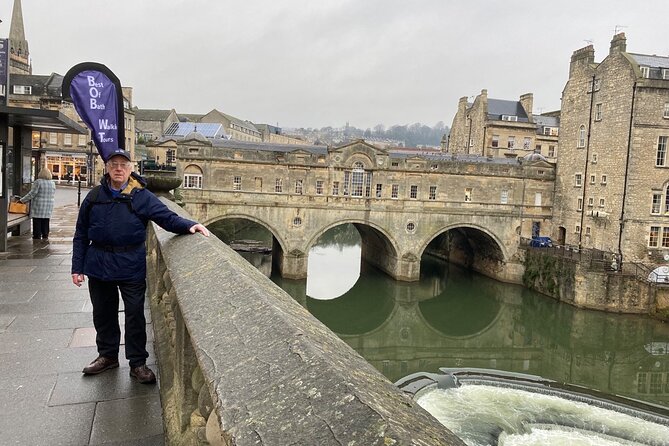
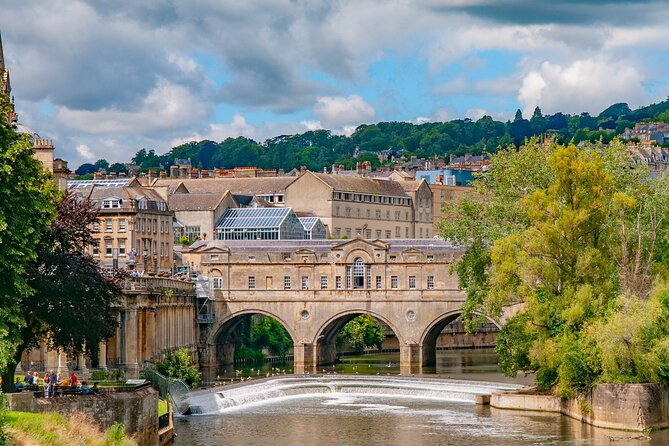
Pulteney Bridge is completed by 1774 and designed by Robert Adam in a Palladian style. The headline detail is unusual: shops run across the full span on both sides. Instead of a bridge that’s just for crossing, it becomes commercial space—an architectural solution that feels ahead of its time.
This is one of the stops where you get a small mental shift. You start seeing Bath not only as a refined Georgian set of buildings, but as a working city that needed markets, traffic flow, and revenue.
It’s also a great place to pause and reset. The walk keeps moving, but the bridge gives you a natural viewpoint and a chance to look both ways.
Guildhall Market: where Bath’s history stays hand-to-mouth
At the end of the walk, you’ll return near Abbey Churchyard, but along the way you pass Bath Guildhall Market. The Guildhall building is home to an indoor market, with interesting stalls, and it’s established since 1284.
This stop is short, but it gives you balance. You’ve spent the day in dignified architecture, and then you get a practical reminder: Bath’s economy has been built around commerce long before any modern visitor arrived.
If the city feels too grand at first, this is a good corrective.
Pace, questions, and how to make it worth your time
The tour is designed for moderate physical fitness and runs about 2 to 3 hours. In practice, that range matters because it keeps the experience from turning into an exhausting marathon. You’re walking between meaningful stops without it becoming a grind.
From what you can expect on the ground, Bob keeps the pace comfortable and built around your questions. The tour also encourages interaction. Ask about why a façade looks the way it does, or what a building functioned for in Georgian Bath, and Bob tends to answer in plain language.
A few smart tips to get more out of it:
- Wear comfortable shoes. You’ll be walking enough that poor footwear is the biggest risk.
- Bring a few questions. Even simple ones like who lived where can unlock the whole architecture story.
- If you’re visiting during a busy season, expect crowds. The walk is manageable, but it can slow down like any city-center stroll.
Who should book this Georgian walking tour
This one is a strong fit if you:
- Want a focused introduction to Georgian Bath without having to plan each stop yourself
- Like learning how architecture connects to daily life—health, leisure, commerce
- Prefer a small-group walk (max 15) where you can actually ask questions
It’s also a good choice if you’ve visited Bath before and felt like you missed the pattern. Bob’s explanations help you notice details even on familiar streets.
If you’re only looking for maximum interior time inside ticketed sites, you might find the tour leans more toward what you can see and understand from the street. But if you like context, that’s a win.
Should you book the Best of Bath Walking Tours Georgian Tour?
At $27.73 per person for roughly 2–3 hours, this is fair value—mostly because the tour time buys you interpretation. Many of the stops are free to view (Bath Abbey Churchyard, Queen Square, the Circus, the Royal Crescent exterior viewpoints, Pulteney Bridge, and the Guildhall Market), and the guide turns those façades into a coherent story. That’s where the value lives.
I’d book it if you want Georgian Bath to make sense quickly, and you appreciate a guide with humor and stamina who will answer your questions without making it feel like homework.
You might skip or adjust your expectations if you strongly want fully guided interior access to every major venue, since several key sights have admission not included (Roman Baths, Royal Mineral Water Hospital, Assembly Rooms, and No. 1 Royal Crescent).
FAQ
How long is the Best of Bath Georgian walking tour?
The tour runs about 2 to 3 hours.
Where does the tour start?
It starts in Abbey Churchyard, Bath BA1, UK, in front of Bath Abbey.
What time does the tour start?
The start time listed is 1:00 pm.
How many people are in the group?
The maximum group size is 15 travelers.
What language is the tour offered in?
The tour is offered in English.
Is there a mobile ticket?
Yes, the tour includes a mobile ticket.
Are ticketed attractions included?
Some stops are listed as free to view, but others have admission not included, including the Roman Baths, Royal Mineral Water Hospital, Assembly Rooms, and No. 1 Royal Crescent.
What fitness level do I need?
You should have a moderate physical fitness level.
Is the tour dependent on the weather?
Yes. It requires good weather, and if it’s canceled for poor weather you’ll be offered a different date or a full refund.
What is the cancellation window?
You can cancel up to 24 hours in advance for a full refund.