REVIEW · RIGA
Riga: 2-Hour History of Art Nouveau Walking Tour
Book on GetYourGuide →Operated by Guide agency Smile Line · Bookable on GetYourGuide
Riga turns buildings into puzzles. This Art Nouveau walking tour puts you in the right streets and gives you the backstory to read facades like a map. I especially like how the guide explains what the style was trying to balance: looks and practical design details.
My other favorite part is the focus on Mikhail Eisenstein and how different “flavors” of Art Nouveau show up from place to place, including what you can spot along Alberta Street. One consideration: it’s a 2-hour walk in a group, so you’ll want comfortable shoes and a plan for steady walking.
You meet at the Smile Line office in the House of the Black Heads (Townhall Square, 7), right in central Riga. The tour runs with German and English guides, and the group is formed with a minimum of 3 participants—often small enough to feel personal.
In This Review
- Key things I’d plan around
- Starting at the House of the Black Heads: Where the Walk Begins
- The 2-Hour Plan: How Much You Can Actually See
- Mikhail Eisenstein and the Port-City Story You’re Meant to Hear
- Alberta Street and Riga’s Architect Mix
- Decorative vs More Intellectual Art Nouveau
- Reading Ornament Like a Local: How the Guide Teaches Your Eye
- Guide Quality: The Real Reason People Score This Tour So High
- Price and Value for $39: What You’re Really Paying For
- Who This Tour Fits Best (and Who Might Find It Less Fun)
- The Finish: What You’ll Walk Away Knowing
- Should You Book This Riga Art Nouveau Walking Tour?
- FAQ
- How long is the Riga 2-Hour History of Art Nouveau walking tour?
- What does it cost per person?
- Where do I meet the guide?
- Is the tour a group tour?
- What languages are available for the live guide?
- Are entry tickets included?
- Is the tour wheelchair accessible?
- Can children join, and do they pay?
- Can I get the tour in other languages?
- What is the cancellation policy?
Key things I’d plan around
- Start at the House of the Black Heads, Townhall Square 7, then move from Old Town to the Art Nouveau district
- Mikhail Eisenstein gets a real explanation, including why he’s described as controversial
- Alberta Street is a highlight, where the city’s mix of architects comes into focus
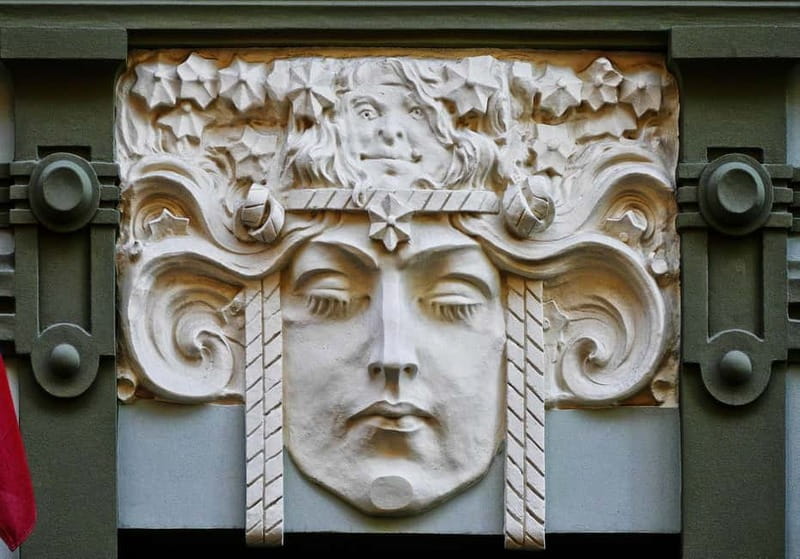
- You compare Art Nouveau approaches: highly decorative vs more “intellectual” design
- Small group feel is common, with past tours running under about 10 people
- Guides matter a lot here, with names like Tatiana, Gunta, Caspars, and Nelli showing up in standout trips
Starting at the House of the Black Heads: Where the Walk Begins
The whole tour makes sense the moment you step out of Townhall Square. You meet at the Smile Line office inside the House of the Black Heads, at Townhall Square, 7, so you’re not trying to guess where to start or how to orient yourself. It’s also a good “warm-up” location because the Old Town energy is right there, and you can feel how Riga’s center pulls you forward.
From that starting point, you head through the Old Town and toward the Art Nouveau district. Even if you don’t know the architectural terms, the guide’s job is to translate what you’re seeing into clear ideas—so you’re not just looking at buildings, you’re learning how to read them.
You can also read our reviews of more walking tours in Riga


The 2-Hour Plan: How Much You Can Actually See

Two hours is short enough that it stays fun, but long enough to build momentum. You’ll be walking continuously, and the tour is designed around spotting multiple buildings and comparing how the same overall style takes different forms across Riga.
A practical note: this is a group tour with a minimum of 3 participants, and some departures have been small (under 10 people). That small-group setup matters because it gives the guide room to answer questions and point out design details without rushing you.
Entry tickets aren’t included, which is a plus for your schedule. This tour is best when you treat it like a “street museum” experience: you’re learning from what’s visible on the outside.
Mikhail Eisenstein and the Port-City Story You’re Meant to Hear
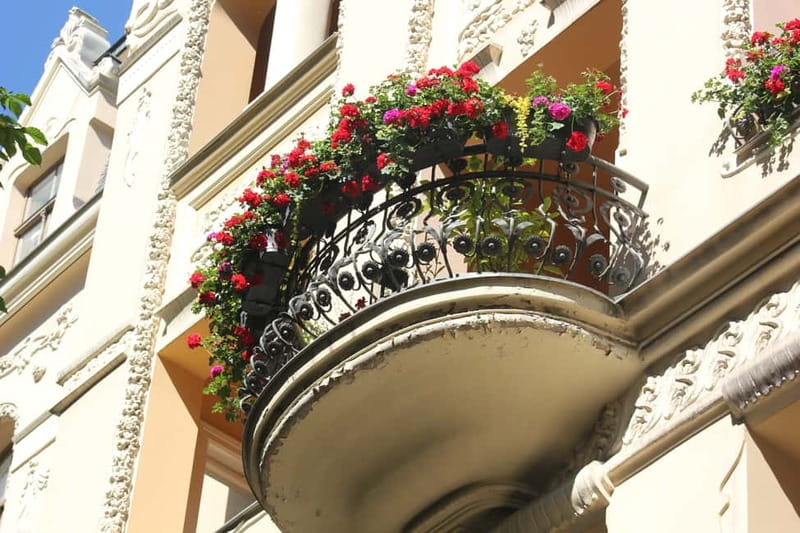
A big reason to take this tour is that it doesn’t treat Art Nouveau as a single look. It ties the buildings to the people who designed them, and one name you’ll hear again and again is Mikhail Eisenstein.
You get his story as a designer who worked in what was then a major port city in the Russian Empire. That context helps you understand why Riga’s Art Nouveau can feel both local and international at the same time. It’s not just decorative whimsy; it’s tied to trade, growth, and the ambitions of a city that wanted to show its modern face.
And yes, he’s described as controversial. The guide doesn’t just drop the label; the tour’s pitch is that you’ll learn about his history while you’re standing in the streets linked to his creations. Standing in the setting while someone explains the person behind it is a big part of why the tour sticks.
Alberta Street and Riga’s Architect Mix
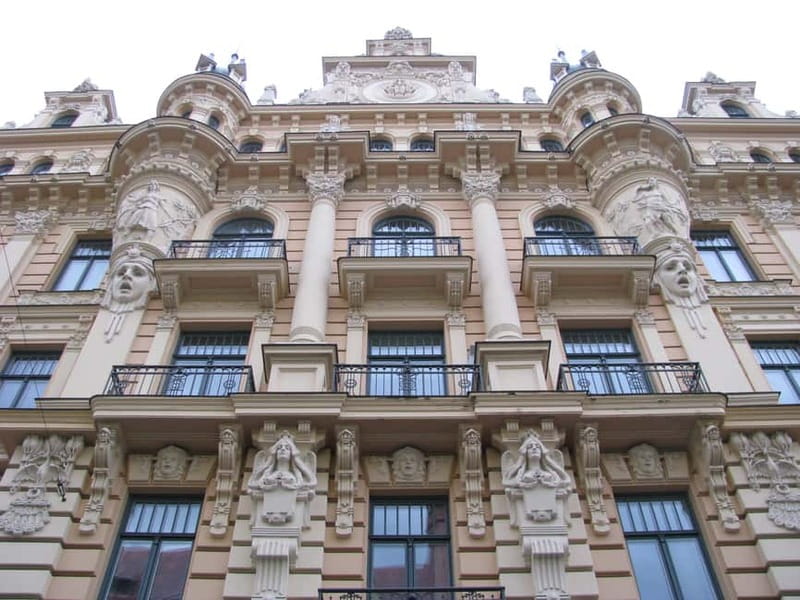
Along the walk, you spend time on the famous Alberta Street, which is one of the best ways to see how Riga’s Art Nouveau identity developed. This section isn’t only about one style. The guide also connects the look of the buildings to the mix of people shaping the city—Latvian, German, Russian, and Jewish architects all left their fingerprints on the streets.
That’s a useful idea for you as a visitor. If you come to Riga expecting one uniform “Art Nouveau look,” you’ll miss how varied the results are. Instead, this tour helps you notice patterns that come from cultural influences, design education, and changing tastes across decades.
Decorative vs More Intellectual Art Nouveau
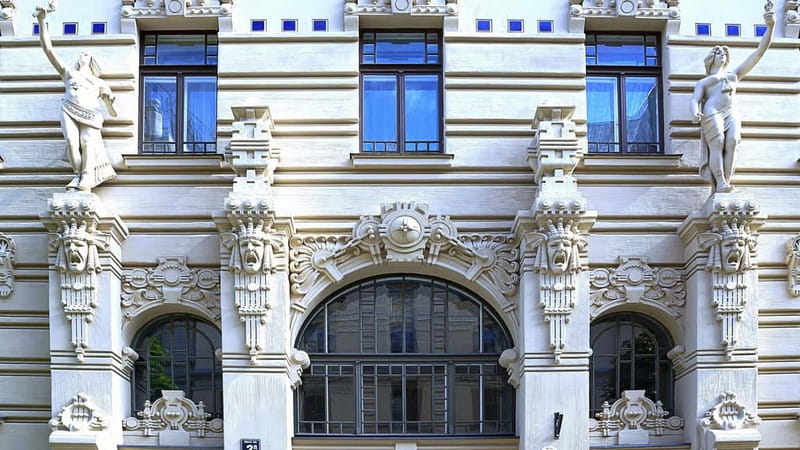
One of the tour’s best promises is that you won’t only chase pretty facades. You’re asked to compare different interpretations of Art Nouveau—some buildings lean heavily into ornament, while others read more “intellectual,” with design choices that feel structured and intentional.
The point is not to rank one type as better. It’s to see how Art Nouveau values were meant to show up in real design. The idea is that buildings were designed to be both beautiful and functional. So when the guide points you toward details, it’s not just “look at this fancy thing.” You start to connect decoration to purpose.
If you’ve ever walked past ornate buildings and wondered what you were supposed to notice, this tour helps you fix that. You’re trained to look for design logic, not just decoration.




Reading Ornament Like a Local: How the Guide Teaches Your Eye
Here’s what I’d expect to feel during the walk: your “Art Nouveau seeing skills” get switched on. The guide highlights ornamentation on some facades, and also explains how national romanticism shows up in design choices on others. That’s a smart way to teach, because you’re learning two things at once: the international style (Art Nouveau) and the local identity layered into it.
As you walk, pay attention to how different elements repeat across the streets. The guide’s job is to help you notice themes—shapes, materials, and decorative patterns—and then link those choices back to what Art Nouveau wanted to do in the first place.
And because the tour happens in real neighborhoods, you also learn a practical lesson: Riga’s Art Nouveau isn’t all in one museum. It’s embedded in everyday streets, which means you can keep exploring after your guide drops you back with sharper eyes.
Guide Quality: The Real Reason People Score This Tour So High
This tour’s ratings make sense once you think about the job: guiding you through architecture takes more than facts. It requires clarity, pacing, and the ability to answer questions without making the walk feel like a lecture.
A few guide names show up repeatedly in high-scoring experiences: Tatiana is credited with making the tour engaging and easy to follow, Gunta is praised for covering major landmarks and answering questions attentively, and Caspars is singled out for organization and for focusing on detail. Other named guides include Liga and Nelli, each described as delivering a fascinating experience.
One practical detail that can change everything on a walking tour is audio. In at least one past trip, an audio system was praised because it let people listen while enjoying the walk at the same time. So if you tend to struggle hearing guides in open air, that’s a solid sign you’ll have support.
Also, pace matters. Several guides are described as keeping an easy pace, which is exactly what you want on a two-hour loop. You’ll want enough time to look up at facades and not just keep moving.
Price and Value for $39: What You’re Really Paying For
At $39 per person for a 2-hour guided walk, you’re paying for three things: a local guide, guided interpretation, and structured time in the places where Art Nouveau is concentrated. Entry tickets aren’t included, so you’re not paying for access to museums or interiors. Instead, you’re paying to understand what you can already see from the street.
That’s good value in Riga. Art Nouveau works best when someone helps you read it. Without guidance, it’s easy to enjoy the facades but miss the design logic, the architect stories, and the “why” behind ornament and function.
The other value piece is flexibility. The tour offers free cancellation up to 24 hours in advance for a full refund, and you can reserve now and pay later. That matters if you’re juggling flight times or deciding which day to slot in Riga’s architectural highlights.
Who This Tour Fits Best (and Who Might Find It Less Fun)
This is ideal if you like history—but also if you like design details. If you’re the kind of person who pauses in front of facades and wants answers, you’ll enjoy how the guide builds the story while you’re standing in the neighborhood.
It also fits first-timers well because the meeting point is central and the tour walks you from Old Town into the Art Nouveau district, so you get a sense of geography, not just buildings.
A few practical matches:
- If you want a structured way to explore Riga without over-planning, this is a nice fit.
- If you’re traveling with mobility needs, the tour is described as wheelchair accessible.
- If you’re with kids under 6, they can join free—handy for families.
One caution comes from a past experience describing that children over 6 may get bored toward the end. That doesn’t mean kids can’t enjoy it, just that the tour leans intellectual and detail-focused, so plan to keep expectations age-appropriate.
The Finish: What You’ll Walk Away Knowing
By the end, you shouldn’t just remember Riga has Art Nouveau. You should be able to explain what makes Riga’s version distinctive and why the city became such a stage for multiple architect backgrounds.
You’ll have learned how Art Nouveau appears in different forms—decorative vs more structured—and how those differences connect to values like beauty plus function. And with Eisenstein at the center of the story, you’ll have a human thread that makes the architecture feel less random.
Most importantly, you’ll leave with a method for spotting details on your own. That’s what turns a two-hour tour into something you can reuse all week.
Should You Book This Riga Art Nouveau Walking Tour?
If you’re in Riga for a short time and you want to understand Art Nouveau instead of just photographing it, I’d book this. The tour starts in a great central spot, covers the streets where the style is concentrated, and uses guide-led stories (especially around Mikhail Eisenstein) to give you a framework for what you’re seeing.
I’d skip it if you hate walking or you only want interiors and ticketed sights. Since entry tickets aren’t included, you’ll be relying on your outdoor viewing and the guide’s explanations.
But if you want a guided, street-level way to read Riga’s architecture—and you like having your questions answered—this is one of the most practical “culture with motion” experiences you can choose.
FAQ
How long is the Riga 2-Hour History of Art Nouveau walking tour?
It lasts 2 hours.
What does it cost per person?
The price is $39 per person.
Where do I meet the guide?
Meet at the Smile Line office in the House of the Black Heads, Townhall Square, 7.
Is the tour a group tour?
Yes. It’s a group tour with a minimum of 3 participants.
What languages are available for the live guide?
The live tour guide is available in German and English.
Are entry tickets included?
No. Entry tickets are not included.
Is the tour wheelchair accessible?
Yes, the tour is described as wheelchair accessible.
Can children join, and do they pay?
Children under 6 can join excursions for free.
Can I get the tour in other languages?
Tours in Swedish, Norwegian, Polish, Spanish, Portuguese, French, Italian, or Japanese are available upon request.
What is the cancellation policy?
You can cancel up to 24 hours in advance for a full refund.