REVIEW · TRIER
Trier: City Walking Tour
Book on GetYourGuide →Operated by Trier Tourismus und Marketing GmbH · Bookable on GetYourGuide
A Roman gate and baroque power in one walk.
That’s the feel of this Trier City Walking Tour, where an official local guide strings together the city’s big landmarks—especially the Porta Nigra and other UNESCO-listed buildings—without making it feel like a textbook.
I love that the route is built around the classics you actually want to see on a first visit, and you get clear explanations as you go.
The second reason I like it: the guide work is live and handled in German and English, so you’re not stuck decoding signs or guessing what you’re looking at.
I also like the pace for a short visit because in about 1.5 hours you cover multiple eras, from Roman walls to medieval street drama and then toward baroque grandeur.
One possible drawback: the tour is only 1.5 hours, so you’ll see plenty, but you won’t have long, slow time at each stop.
If you want deep photo sessions or lengthy interior time, plan extra time before or after the walk.
In This Review
- Key highlights worth your time
- Price and value: why $17 can work well here
- Meeting point at Trier Tourist Information: find the Porta Nigra start fast
- Porta Nigra: the Roman gate that sets the whole tone
- Dreikönigenhaus, Judengasse, and Hauptmarkt: medieval Trier in story form
- Trier Cathedral and Church of Our Lady: sacred buildings with real-world context
- Electoral Palace and baroque authority: shifting from medieval fights to splendour
- Aula Palatina: Roman scale, but experienced as you walk through Trier
- What the UNESCO part really means for your trip
- Guide style: bilingual, live, and meant to be understood
- Who this tour is for (and who might want something else)
- Should you book the Trier City Walking Tour?
- FAQ
- FAQ
- Where does the Trier City Walking Tour start?
- How long is the tour?
- Is the tour guided in English?
- What monuments are included in the tour?
- What does the price include?
- How do I know where the tour ends?
- What is the cancellation policy?
- Is the tour wheelchair accessible?
Key highlights worth your time
- Porta Nigra first: start with Trier’s most famous Roman landmark, so everything that follows makes more sense.
- Four UNESCO monuments on one route: you’re not chasing sites across town.
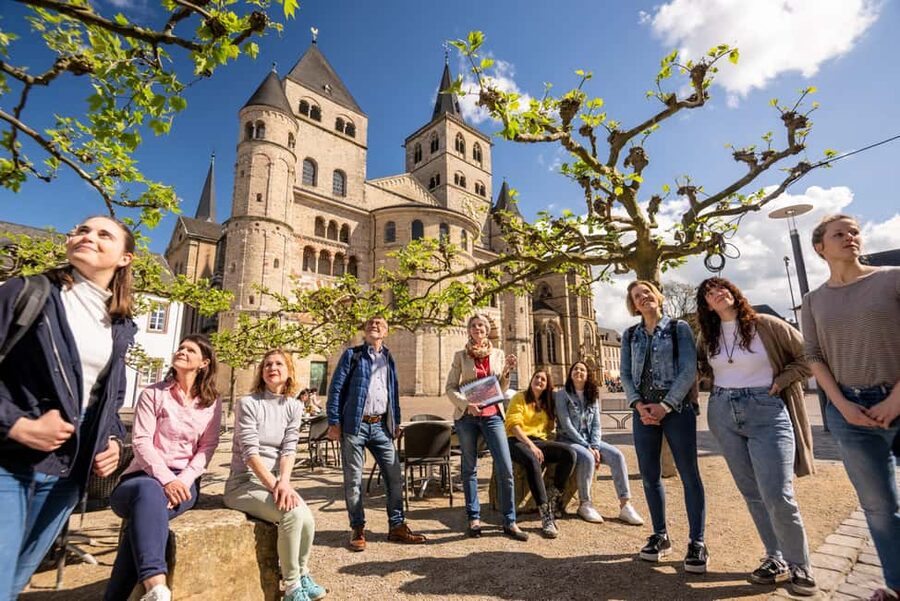
- Official Trier Guides: you get organized, guided storytelling instead of random “photo stops.”
- German and English live narration: easier for mixed-language groups and independent travelers.
- Middle Ages details that sound almost like folklore: bishop vs empire, plus entertaining local color.
- Ends near Kurfürstliches Palais: a logical finishing point for more wandering.
Price and value: why $17 can work well here
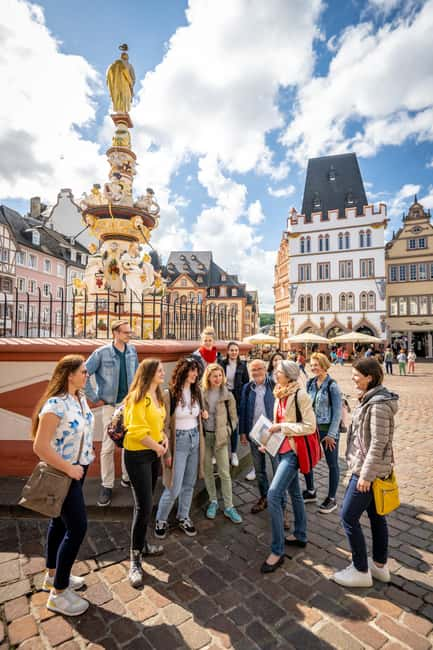
At about $17 per person for roughly 1.5 hours, this tour is a practical deal if you want orientation and context.
The value isn’t just the walking—it’s what’s packed into that time: a live guide, a guided look at four UNESCO monuments, and a route that hits Roman, medieval, and baroque highlights.
For comparison, many single-sight tours cost about as much or more, and they often focus on only one building.
Here, you’re getting a connected storyline. That matters in Trier because the city reads like layers: Roman engineering, medieval power struggles, then later splendor.
You’ll still want to return someday for a longer, unhurried visit—but as a first pass, this is efficient.
You can also read our reviews of more walking tours in Trier
Meeting point at Trier Tourist Information: find the Porta Nigra start fast
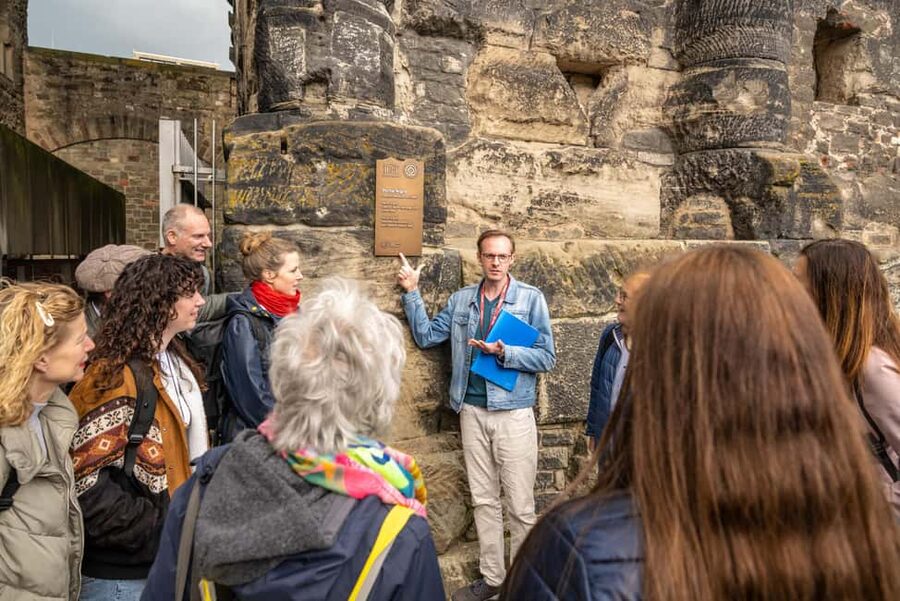
Meet in front of the Trier Tourismus und Marketing GmbH / Tourist Information area, right by the Porta Nigra.
This is one of those small details that makes the whole experience smoother: you’re starting where the tour’s main theme begins, so no awkward “Where is the group?” moments.
The tour is listed as an official one, and if anything goes sideways, you can ask the colleagues at the Tourist Information office.
That kind of built-in local support is reassuring when you’re arriving in a new city and want things to feel organized.
If you’re planning your day, it helps to know the tour ends near the Kurfürstliches Palais and the Palastgarten area.
So you can treat this walk as your morning or early-afternoon anchor, then keep exploring afterward without backtracking.
Porta Nigra: the Roman gate that sets the whole tone
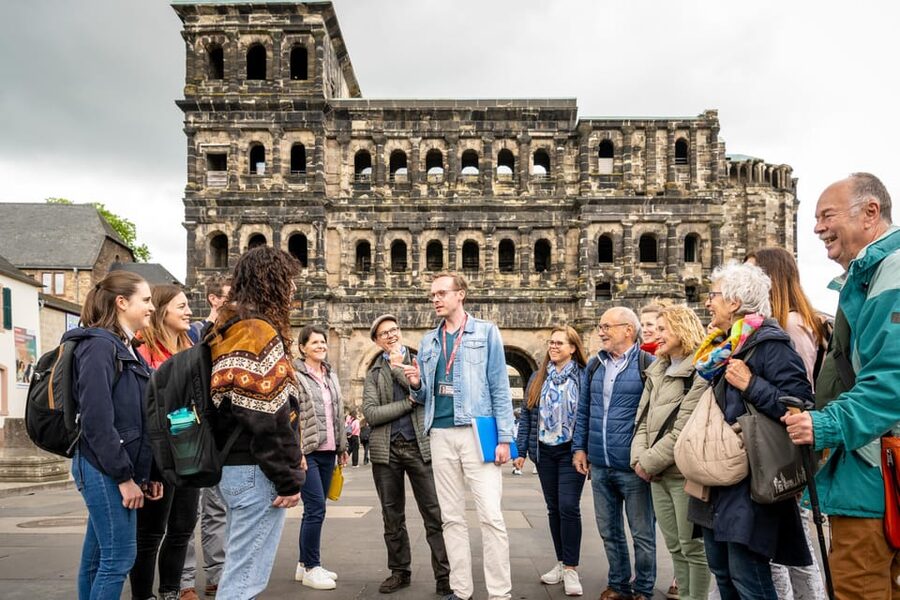
You begin at Porta Nigra, Trier’s best-known Roman monument.
The guide’s job here is smart: they start with the big statement so your later stops aren’t just isolated photos.
Once you understand the gate’s role and why it mattered, Trier’s later medieval and later civic claims start to click.
What I like about this first stop is that it frames Roman architecture in plain language.
You’re not just looking at old stone—you’re learning how Roman power showed itself in built form, and why that legacy shaped what came later.
Practical tip: wear shoes you’re comfortable walking in for the full 90 minutes.
The route is short enough to be manageable, but you’ll still be on your feet for most of it, starting immediately around the Porta Nigra area.
Dreikönigenhaus, Judengasse, and Hauptmarkt: medieval Trier in story form
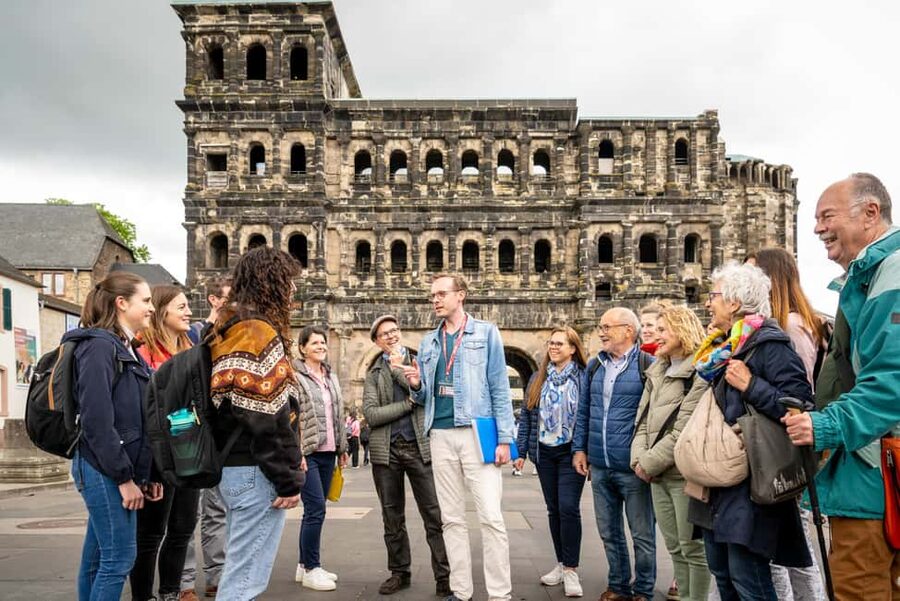
After the Roman start, the walking becomes more political and more human.
The tour route passes the Dreikönigenhaus, the Judengasse, and gets you to the Hauptmarkt area.
This is where the guide storytelling really earns its keep.
The medieval era in Trier wasn’t just cathedrals and kings; it was also neighbors protecting what they had, and civic groups pushing back against higher powers.
You get explanations of fortified citizens using architectural tricks to defend possessions.
And you also hear about the long tug-of-war between St Peter’s patronage for the city and the clash over authority, including the idea of imperial immediacy and the bishop’s pull.
One detail that’s worth holding in your head: the guide includes lively local color—things like knights, monkeys, and church towers—meant to make the power struggle feel real instead of distant.
You’ll probably see how architecture becomes a kind of argument when you’re told what to look for.
At Hauptmarkt, you’re also working with a useful travel advantage: squares are built for “standing still and absorbing.”
Even during a guided tour, this stop helps you orient yourself for the rest of the walk because Trier’s center is compact and readable.
Trier Cathedral and Church of Our Lady: sacred buildings with real-world context
Next up is Trier Cathedral, followed by time in the cathedral courtyard area and related sacred buildings—among them the Church of Our Lady and another basilica-linked stop.
The tour is designed around Trier’s UNESCO-listed cluster of classic central buildings, so you’re not just circling one monument—you’re moving through a set of sacred anchors that shaped life in the city.
Why I think this works for you: cathedral stops can turn into lectures about dates and styles.
Here, the guide ties the buildings to the city’s identity—who it claimed as a patron and how religious power blended into civic life.
That connection is what makes the time feel worth it, not just pretty.
A practical consideration: religious buildings can have changing access rules depending on services and ongoing work.
The tour format is a guided walk with sightseeing, so you’ll get the view and context even if certain spots are limited.
Still, if you’re hoping for interior time, consider adding a bit of extra buffer to your day after the tour ends.
Electoral Palace and baroque authority: shifting from medieval fights to splendour
Later, you move toward the Electoral Palace area, and the tour brings you to a more baroque-feeling phase.
You’ll also visit or pass the cathedral courtyard and then connect forward into the palace world—essentially watching Trier shift from fortified medieval identity to more formal, later grandeur.
This part matters because Trier isn’t only Roman and medieval.
It also has that later “official” style: authority that’s expressed through scale, symmetry, and statement-making façades.
If your brain wants a clean mental map of how cities evolve, this stop helps you see the timeline with your feet rather than in a guidebook.
You’ll finish with drop-off near Kurfürstliches Palais and the Palastgarten, which is a handy way to cap the walking loop.
Instead of being dropped on a random street, you’re left near another area where you can keep wandering at your own pace.
Aula Palatina: Roman scale, but experienced as you walk through Trier
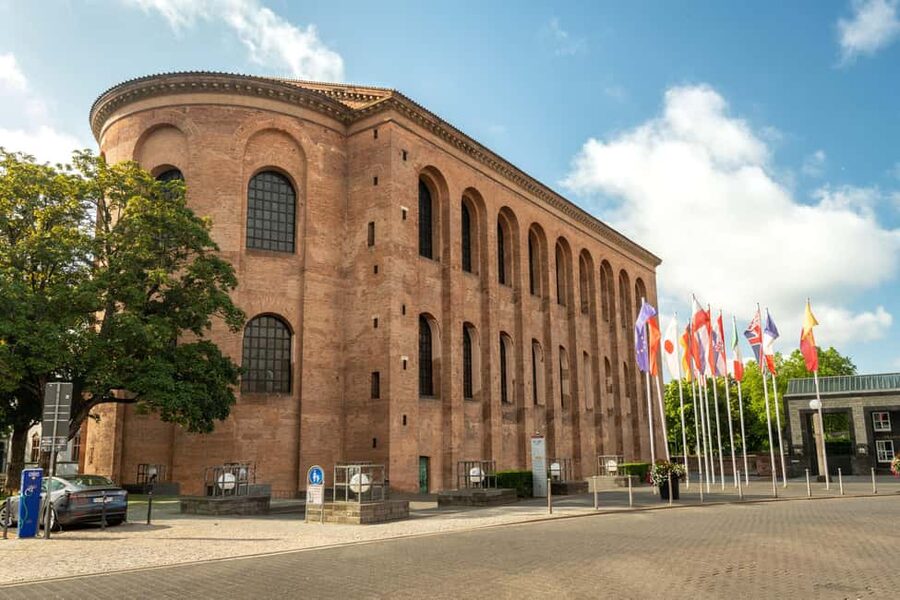
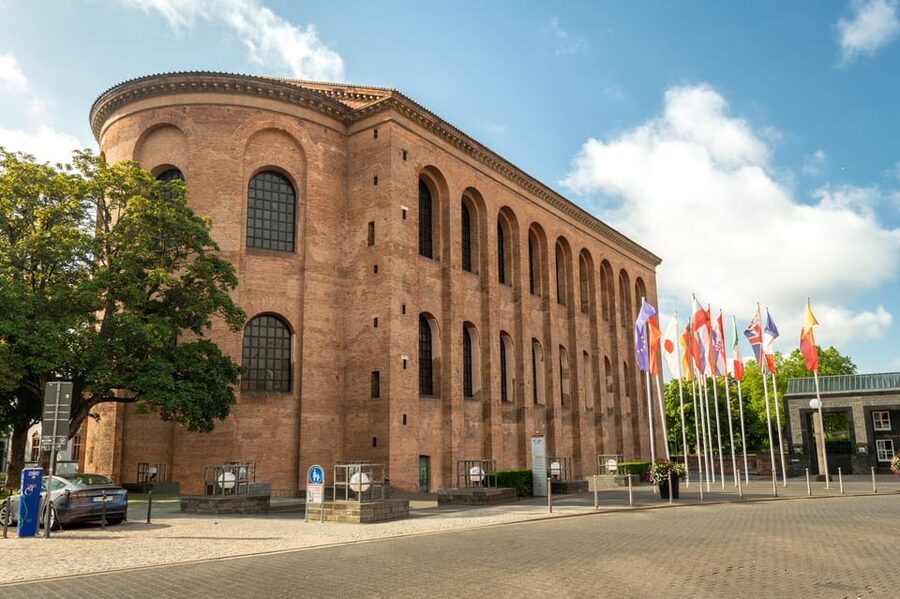
One of the most exciting additions to the route is Aula Palatina, Trier.
This stop gives you Roman “big room” energy after the gate and after the medieval squares and church spaces.
I like this because it helps prevent the common problem on short city tours: seeing Roman artifacts but not feeling the scale.
Aula Palatina tends to do the opposite. You get a sense that Roman Trier wasn’t only about walls—it also had grand interior space that mattered for how people gathered, governed, and presented power.
In other words, it’s one more clue that Trier’s story isn’t just a scatter of monuments.
It’s a sequence. You start at the boundary (Porta Nigra), then move through civic and sacred spaces, and then land in a major Roman hall experience.
If you like your photos and details: don’t rush past this stop.
Even when you’re following a group, taking a minute to look around—notice corners, sightlines, and proportions—will make the guided explanation stick.
What the UNESCO part really means for your trip
The tour highlights four UNESCO World Heritage Sites within Trier’s classic center.
That matters because UNESCO status usually means two things: the buildings are exceptionally preserved or significant, and the site is best understood as a connected whole.
Instead of treating each stop as a separate ticket purchase, you experience them as one story about how Trier grew.
Roman architecture lays groundwork. Medieval life reshapes and defends it. Later eras add their own statements.
And because the tour is guided, you’re less likely to miss the point of what you’re seeing.
You also get a very travel-friendly benefit: fewer decisions.
On your own, you’d still be able to piece the route together, but the guided loop makes it easy to see the main UNESCO cluster without turning your day into logistics management.
Guide style: bilingual, live, and meant to be understood
This is a live tour with a guide available in German and English.
That sounds basic, but it changes the whole experience because you can ask questions in a language you actually think in.
Based on what’s been described about the guide style—clear, informative, and eloquent—you can expect explanations that don’t just list dates.
They aim to help you look at stone and spaces with a purpose: why the architecture is there, why it matters, and what it suggests about the people who used it.
If you’re the kind of traveler who likes to feel oriented, this is your sweet spot.
If you prefer purely silent “walk and watch,” you’ll still enjoy it—but you might find you have less control over pacing at each stop.
Who this tour is for (and who might want something else)
This tour fits best if you:
- Have limited time in Trier and want a strong first-visit sweep
- Prefer official, organized guidance over self-guided guesswork
- Want to see Roman + medieval + baroque in one loop
- Like when a guide connects buildings to the story of civic power and everyday life
It may be less ideal if you:
- Want long interior visits at each monument
- Plan to spend most of your time photographing without listening
- Need total silence or a very slow, lingering pace
Should you book the Trier City Walking Tour?
Yes, if you want a smart, efficient way to understand Trier’s center and you like guided storytelling.
For $17 and about 90 minutes, you get a focused route built around major landmarks, including four UNESCO monuments, with a live bilingual guide.
I’d book it especially if you’re arriving in Trier for a short stay and want the day to feel coherent from start to finish.
And then—this is the best part—you can use what you learn on the walk to explore longer afterward around Kurfürstliches Palais and the palace garden area.
If you have extra time, treat the tour as your “set the mental map” day, not your last stop.
Trier rewards repeat visits, but this one is a strong foundation.
FAQ
FAQ
Where does the Trier City Walking Tour start?
You meet in front of the Tourist Information area, right at the Porta Nigra.
How long is the tour?
The duration is 1.5 hours.
Is the tour guided in English?
Yes. The live guide is available in German and English.
What monuments are included in the tour?
The tour includes visits to four UNESCO monuments.
What does the price include?
It includes a local guide and visits of 4 UNESCO monuments.
How do I know where the tour ends?
You’ll have two drop-off locations near Kurfürstliches Palais and Palastgarten.
What is the cancellation policy?
You can cancel up to 24 hours in advance for a full refund.
Is the tour wheelchair accessible?
Yes, the tour is listed as wheelchair accessible.