REVIEW · MEXICO CITY
Walking Tour of the Historic Center of Mexico City
Book on Viator →Operated by Kactus Free Walking Tour · Bookable on Viator
Mexico City’s center is a living timeline. This 3-hour walking tour strings together pre-Hispanic roots and colonial power in a compact route, so you start to see how the city’s architecture is basically a story you can walk through. You’ll get an easy orientation fast, especially if it’s your first visit.
What I really like is the way the tour connects places people rush past—Zócalo, Templo Mayor, and the art spaces—into one clear theme: how Mexico City became a fusion of cultures. I also like the pacing for a “high sights” neighborhood walk: it’s small-group (up to 10), and the guides tend to bring lots of practical comfort cues, like shade planning and careful street crossings, while still answering questions.
One drawback to keep in mind: this is mostly standing and walking on streets with cobblestones, and there aren’t many places to sit. If you’re sensitive to elevation or heat, you’ll want to plan breaks and bring water.
In This Review
- Key highlights on this historic-center walk
- First-timer orientation in Mexico City’s Historic Center
- Start at Plaza de la Constitución (Zócalo): power, courts, and craft shops
- Catedral Metropolitana: exterior history, Baroque lines, and why it matters
- Templo Mayor area: reading pre-Hispanic Mexico in the city grid
- Museo Vivo del Muralismo: Diego Rivera murals in the Ministry of Education
- Plaza de Santo Domingo: a viceroyalty square with world trade and big politics
- Plaza Tolsa and the little horse: street-level culture and quick conversation breaks
- Ventana Arqueológica: the past under the street
- Palacio de Bellas Artes: art everywhere, inside and out
- Palacio Postal: a majestic working building (mostly from the outside)
- House of Tiles: the best kind of photo stop
- Walking, timing, and how to enjoy the route without rushing
- Price and value: what you’re really paying for
- Who should book this Historic Center walk?
- Should you book this walking tour?
- FAQ
- FAQ
- How long is the Historic Center walking tour?
- Where does the tour start and where does it end?
- Is the tour offered in English?
- What group size should I expect?
- Which admissions are included?
- Which sites do not have admission included?
- Are service animals allowed?
- What happens if the weather is bad?
- Can I cancel for a refund?
Key highlights on this historic-center walk
- Small group size (max 10) keeps the tour personable and question-friendly.
- Zócalo to Bellas Artes route gives you a clean first-timer orientation across major landmarks.
- Diego Rivera murals at Museo Vivo del Muralismo show early-20th-century life through art.
- Templo Mayor area and Ventana Arqueológica reveal Mexico City’s layers right under your feet.
- Tickets are included for Museo Vivo del Muralismo and Ventana Arqueológica, while several other major stops are free to view.
- English-guided, story-led commentary (you may see guides like Fer/Fernanda, Luis, Gabby, Alexia, Eduardo, Sarah, Nat, Thomas, Benjamin, and Oscar) makes architecture easier to read.
First-timer orientation in Mexico City’s Historic Center
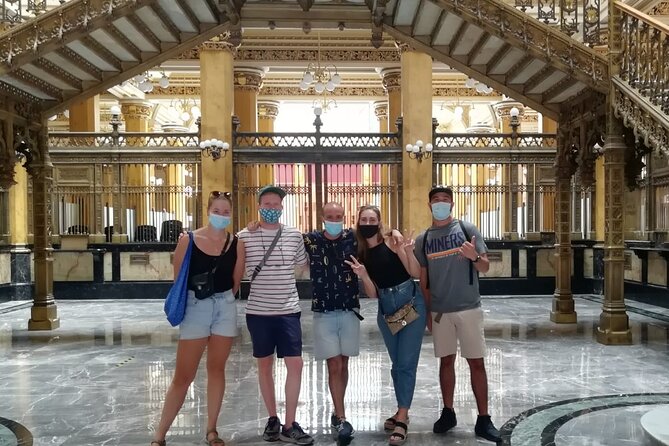
The Historic Center can feel like sensory overload on your own. This tour helps you connect the dots without making you study a map for hours. In a compact walk, you’ll move through the city’s major “identity zones”: political power at the Zócalo, Catholic and imperial influence at the cathedral and viceroyalty squares, and the pre-Hispanic world right at the heart of it all.
A big practical win is the group size. With a maximum of 10 travelers, the walk stays manageable and you’re more likely to get personal pacing help—especially around long crossings and crowded sidewalks. Many guides also adjust on the fly if you need a bathroom break or extra time in a courtyard.
Your main planning task is simple: expect a lot of walking. You’ll want comfortable shoes with grip, and you’ll probably be standing for exterior viewing at several stops. I’d also take the elevation seriously. Pace yourself from the start and don’t be shy about asking to pause.
You can also read our reviews of more walking tours in Mexico City



Start at Plaza de la Constitución (Zócalo): power, courts, and craft shops
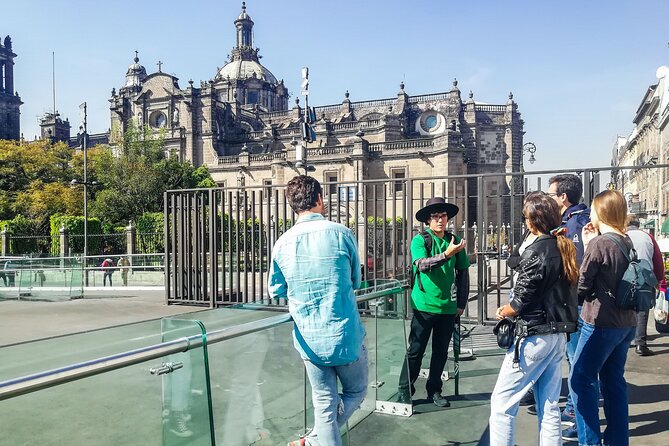
The tour kicks off at the Plaza de la Constitución—Mexico City’s signature square, the one that instantly tells you this is where national life happens. From here, you’ll see the edges of the National Palace and the Supreme Court of Justice, plus nearby silversmith shops that remind you the center isn’t just museum pieces.
What makes this stop useful is context. The Zócalo isn’t only a big open space; it’s a spatial introduction to how authority sits in the city. Once you’ve seen it from the right angles, it becomes easier to understand why other landmarks—like the cathedral and archaeological areas—are arranged where they are.
Time is brief here (about 15 minutes), so treat it as your orientation moment. Use it to take a wide establishing photo, then let the guide’s explanation frame what you’re about to see.
Catedral Metropolitana: exterior history, Baroque lines, and why it matters
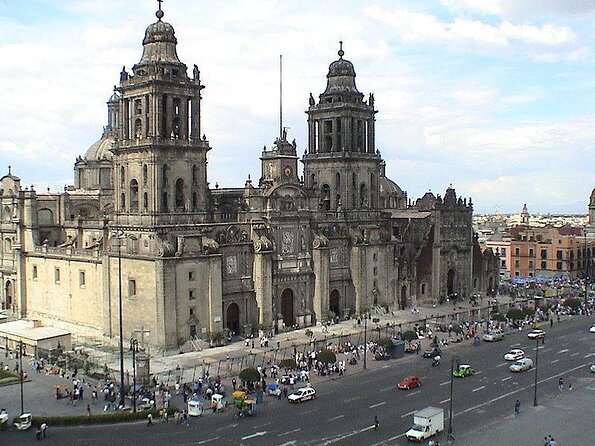
Next comes the Catedral Metropolitana de la Ciudad de México. You’ll focus on the outside—construction history, origins, and the way different architectural styles show up across time, including Baroque and neoclassical touches.
A quick note for planning: there’s no admission ticket included for the cathedral. That’s fine for this tour’s purpose because the real goal is to understand the cathedral as a cultural statement—how Catholic power physically anchors the center next to older Indigenous foundations.
The value here is how the guide turns “big church” into “historical layers.” Even without going inside, you’ll learn what to look for and why the details are there.
Templo Mayor area: reading pre-Hispanic Mexico in the city grid
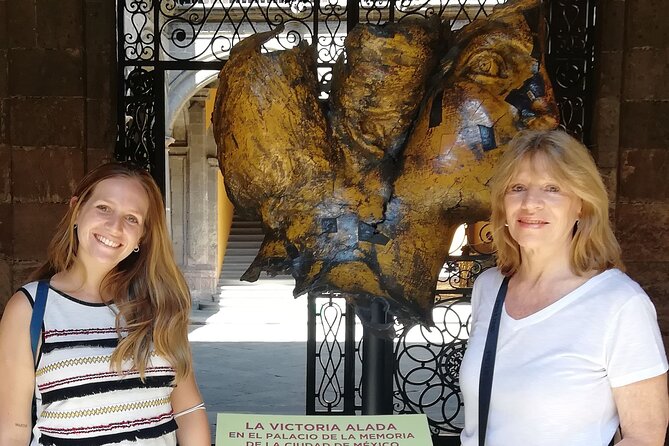
Then you’ll step into the area near the archaeological ruins of Templo Mayor, dedicated to the god of rain and the god of the sun. This stop is short (around 5 minutes in the itinerary you’ll follow), but it can be one of the most memorable—because it puts pre-Hispanic presence into the center of modern Mexico City.
The key lesson is spatial. The tour helps you understand the importance of the Mexicas and how the religious and urban geography worked together. When you grasp the layout concept, you start noticing how later buildings and plazas relate to older sacred space.
Because time is tight, don’t plan on slow photo sessions here. Instead, listen first, then snap photos quickly so you can carry the meaning with you.
Museo Vivo del Muralismo: Diego Rivera murals in the Ministry of Education
If you want a break from purely “viewing buildings,” this is it. At Museo Vivo del Muralismo, you’ll go inside the Ministry of Education building, where there are murals Diego Rivera painted—about a third of the murals attributed to his career are represented here.
This stop is about 25 minutes, and the focus is story-driven. You’ll see themes like festivals, traditions, social struggle, trade, and politics from the early 20th century. That matters because it shifts the tour from old-world monuments into modern national identity—how Mexico explained itself after the Revolution.
Admission is included for this stop, which is a real value move. You’ll also get a comfortable-ish indoor chunk in the middle of an outdoor-heavy route, which helps a lot in strong sun or heat.
A practical tip: if your guide offers a few minutes in the courtyard space to look closely at the Rivera murals, take them. Courtyards and mural viewing angles can change your perception fast.
You can also read our reviews of more city tours in Mexico City

Plaza de Santo Domingo: a viceroyalty square with world trade and big politics
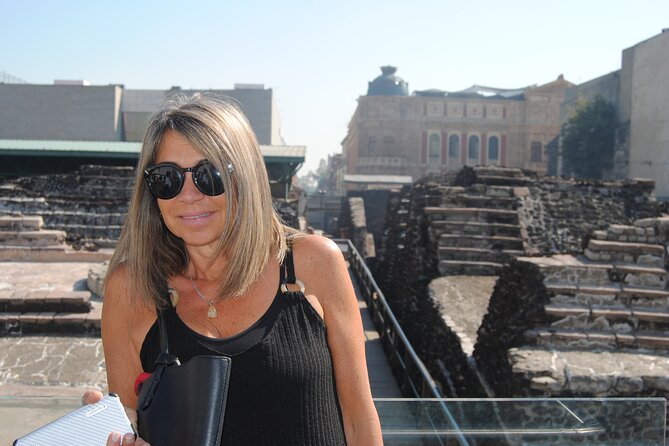
Plaza de Santo Domingo is one of those places where the present looks calm, but the historical significance is intense. You’ll visit this square as it witnessed key viceroyalty events in New Spain—and you’ll hear about trade connections with Asia, the presence of the Holy Inquisition, and attempts of France to conquer Mexico.
Admission isn’t required for this stop (it’s free to view), and the time is about 15 minutes. The learning payoff comes from how the guide links global history to a specific city block. When you hear about spice trade routes or European power struggles, the square stops being just “a nice plaza” and becomes a snapshot of global connections.
This is also a good moment to check your energy. If you need to cool down, this is where you can most realistically do it—while still keeping up with the group.
Plaza Tolsa and the little horse: street-level culture and quick conversation breaks
Plaza Tolsa is your rest-and-talk moment (about 20 minutes). The tour uses this pause to cover topics that don’t fit neatly into stone monuments: Indigenous languages, Day of the Dead traditions, music, politics, gastronomy, and lots of guide-specific local detail.
You’ll also see the equestrian statue of Charles IV—often nicknamed the little horse. It’s one of those objects that’s instantly recognizable in photos, but the tour uses it as a jumping-off point for explaining colonial-era storytelling through public art.
From here you’ll also catch exteriors like the National Museum of Art and the Mining Palace. The stop is free to view and designed for your brain to reset between major “landmark hits.”
Because the walk continues after this, use the time actively: drink water, take a breather, and ask your guide any question you’ve been saving up.
Ventana Arqueológica: the past under the street
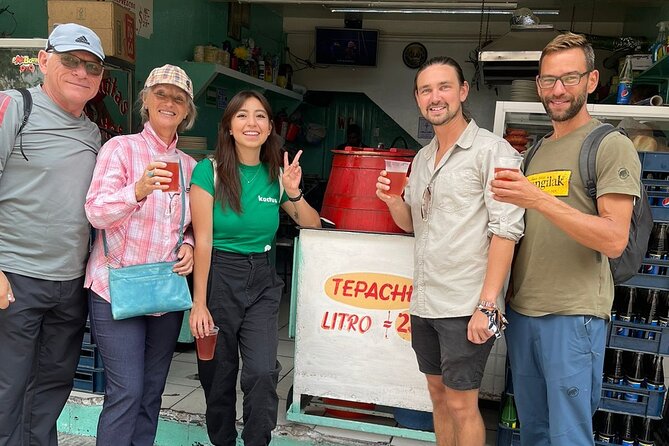
Ventana Arqueológica is the kind of stop you remember because you can literally see history layered under the city street. You’ll look at the past beneath a street next to Templo Mayor, understand how it was found, and learn about secrets hidden inside many buildings in the city center.
Admission is included here (about 5 minutes in the route). It’s short, but it’s efficient: you get the idea of archaeology as a living process, not something sealed behind museum glass.
This is also one of the clearest “fusion” examples on the itinerary. You’re standing in modern Mexico City, yet the architecture’s past is physically present right below your feet.
Palacio de Bellas Artes: art everywhere, inside and out
No Historic Center walk feels complete without Palacio de Bellas Artes. The tour treats it as a must-see, describing both exterior and interior art elements that tend to leave first-time visitors stunned.
You won’t spend a long time here (about 15 minutes), and the stop is free to view for this experience. But even a short look can help you understand why this building is famous: it’s a centerpiece where art culture and national identity meet in one location.
If you’re the type who likes to photograph details—columns, roof lines, and façade textures—this is a good place to do it quickly without getting separated from the group.
Palacio Postal: a majestic working building (mostly from the outside)
Next is Palacio Postal, where the focus is on the building as an economic and political consequence of a grand palace. You’ll be entertained by its look and learn what made the place matter.
Admission is not included for this stop, and it’s about 10 minutes. That means the value here is interpretation: the guide helps you read the “why” behind the architecture, not just the “what.”
House of Tiles: the best kind of photo stop
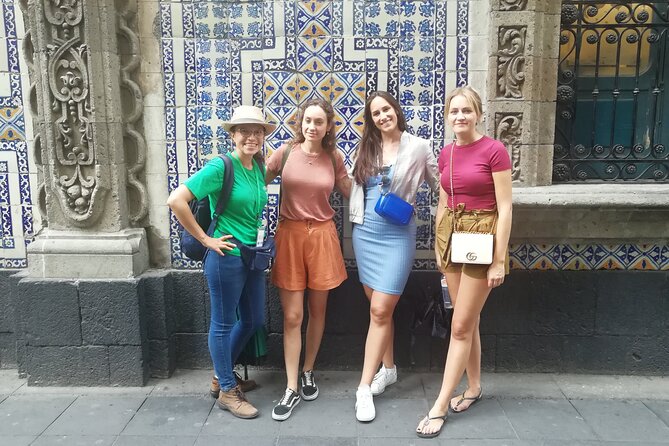
The tour finishes at the side of the Palace of Fine Arts and near the tile house, the House of Tiles. It’s one of the most photographed spots in this area for a reason: its exterior tile look turns the building into a visual landmark.
This stop is about 15 minutes, and admission is free to view in the tour context. The best way to enjoy it is to do a quick circuit: wide shot for context, then closer detail for the tile patterns.
The ending location makes sense. After a long walking loop, you’re not dumped back in a random corner—you’re placed near two major landmarks, so continuing on your own is easy.
Walking, timing, and how to enjoy the route without rushing
This is a 3-hour walking tour, and the design is built around moving through high-density areas efficiently. It’s not an in-depth “stay at one museum for hours” plan. Instead, it’s a structured sampler of Mexico City’s identity, mixing exterior landmark time with two ticketed indoor/underfoot experiences.
Here’s how to make it feel effortless:
- Start slow for the first 20 minutes, especially if altitude affects you.
- Wear shoes you can walk on for hours over cobblestones.
- Bring a small bottle of water. Even when you don’t see obvious seating, you’ll feel better staying hydrated.
- Use plaza stops like Plaza Tolsa as your reset button.
Also, note that the tour requires good weather. If you arrive with flexible plans, it’s easier to adapt if your date changes due to weather.
Price and value: what you’re really paying for
This is offered by Kactus Free Walking Tour, and the itinerary has a mix of included and not-included admission moments. Tickets are included for Museo Vivo del Muralismo and Ventana Arqueológica, which reduces uncertainty and saves you time on entry.
Other major stops—like the cathedral and Palacio Postal—aren’t included for admission, so you’re not paying for a full museum day. That’s actually part of the value: you’re paying for guidance, story, and smart sequencing.
And the group size helps justify the price. With a maximum of 10 travelers, you’re more likely to get thoughtful answers and a guide who can manage pacing, shade, and street crossings. Many guides doing this route are noted for English clarity and for being willing to adjust if the group needs a short pause.
If you want a first pass through Centro that helps you decide what to return to later, this format is strong.
Who should book this Historic Center walk?
This tour fits best if you:
- Want a first-timer orientation through Mexico City’s most important landmarks.
- Like history that’s tied to place, not just dates.
- Prefer small-group walking with time to ask questions.
- Want a mix of pre-Hispanic, colonial, and early-20th-century culture in one route.
It may feel less comfortable if you:
- Need frequent seating and long indoor breaks.
- Struggle with cobblestone walking.
- Have trouble with elevation unless you pace yourself.
Should you book this walking tour?
I think this is a smart choice for most first visits to Mexico City’s center. You get a lot of “big” sights in a short window, plus two meaningful stops where admission is handled for you: the Rivera murals and the under-street archaeology at Ventana Arqueológica.
If you go in with realistic expectations—comfortable shoes, water, and a willingness to stand some—you’ll come away with a clear mental map of how the city’s layers fit together. It’s also a great starting point for building your own later day plan around what grabs you most, whether that’s Bellas Artes, the cathedral area, or the art spaces.
FAQ
FAQ
How long is the Historic Center walking tour?
It’s approximately 3 hours.
Where does the tour start and where does it end?
It starts at Plaza de la Constitución in Mexico City’s Centro Histórico. It ends near the side of the Palace of Fine Arts and the tile house, at Edificio Guardiola on Av. 5 de Mayo 1.
Is the tour offered in English?
Yes, it’s offered in English.
What group size should I expect?
The tour has a maximum of 10 travelers.
Which admissions are included?
Admission is included for Museo Vivo del Muralismo and for Ventana Arqueológica.
Which sites do not have admission included?
Admission is not included for the Catedral Metropolitana de la Ciudad de México and for Palacio Postal.
Are service animals allowed?
Yes, service animals are allowed.
What happens if the weather is bad?
The experience requires good weather. If it’s canceled due to poor weather, you’ll be offered a different date or a full refund.
Can I cancel for a refund?
Yes—free cancellation is available up to 24 hours in advance for a full refund. If you cancel less than 24 hours before, the amount you paid won’t be refunded.