REVIEW · MATERA
Matera Walking Tour with Casa Grotta & Rock Church Entry
Book on GetYourGuide →Operated by Passi nei Sassi · Bookable on GetYourGuide
Matera’s stone streets feel like time travel. I love how this tour gives you a guided path through the Sassi without you getting tangled in the alleys, and I also love the hands-on feel of entering real rock-hewn churches plus a furnished Casa Grotta. One thing to keep in mind: the walking includes uneven stone and stairs, so it is not a good fit if you have mobility limits.
What makes it click is the mix of big visuals and small-scale daily life. You get sweeping views from the rock platforms, then you slow down inside churches and museum spaces to understand how people lived in the caves until the Sassi were abandoned in the 1950s.
In This Review
- Key highlights you will actually notice
- Why Matera’s Sassi is a must-walk with a guide
- Meeting at Via Don Minzoni and getting oriented fast
- Piazza Vittorio Veneto to Civita: the city reveals its logic
- Panoramas over Sasso Barisano: churches and daily life in one frame
- Sasso Caveoso: vicinati and the barbarian cemetery stop
- Monterrone rock churches: Santa Maria de Idris and San Giovanni in Monterrone
- Museum of Peasant Civilization + Casa Grotta: the life behind the stone
- How long it takes, and how to survive the walking
- Price and value: why $35 works here
- Guides and languages: what to expect from the human element
- Should you book this Matera walking tour?
- FAQ
- How long is the Matera Walking Tour with Casa Grotta & Rock Church entry?
- How much does the tour cost?
- Where do I meet the guide?
- Where does the tour finish?
- What is included in the ticket price?
- Is food or drink included?
- What languages are offered for the live guide?
- Are there any options for audio?
- What should I bring, and is it okay if it rains?
- Is the tour suitable for people with mobility impairments?
Key highlights you will actually notice
- Two rock church entrances at Monterrone, including Santa Maria de Idris and San Giovanni in Monterrone
- Casa Grotta visit in the vicinato, with original objects that show family life before the 1950s
- Museum of Peasant Civilization to connect the caves to work, tools, and community routines
- Sasso Caveoso moments like the vicinati (communal living) and the barbarian cemetery stop
- A guided route that reduces guesswork, so you spend less time lost and more time looking closely
Why Matera’s Sassi is a must-walk with a guide
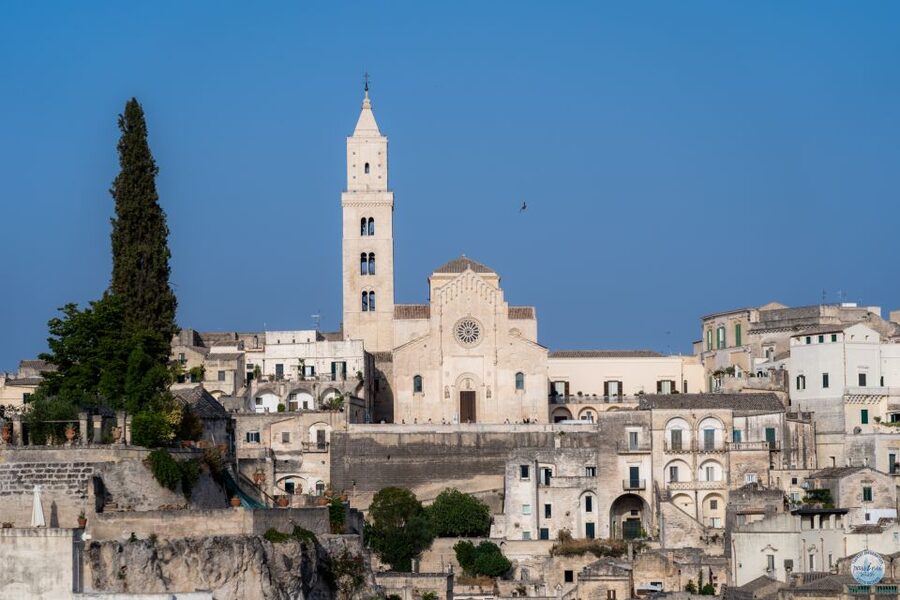
Matera’s Sassi are UNESCO-listed for a reason: the city is carved into rock, built in layers, and shaped by how people needed to live with the terrain. On your own, it can feel like you are just moving through a maze of stone. With a guide, the same streets turn into a map you can read.
The best part is that you do not just get photos. You get the why behind what you are seeing—how churches fit into daily life, what communal living meant, and how the cave world worked as a full neighborhood instead of a collection of sights. That context helps everything you see later on your own make sense.
You can also read our reviews of more walking tours in Matera
Meeting at Via Don Minzoni and getting oriented fast
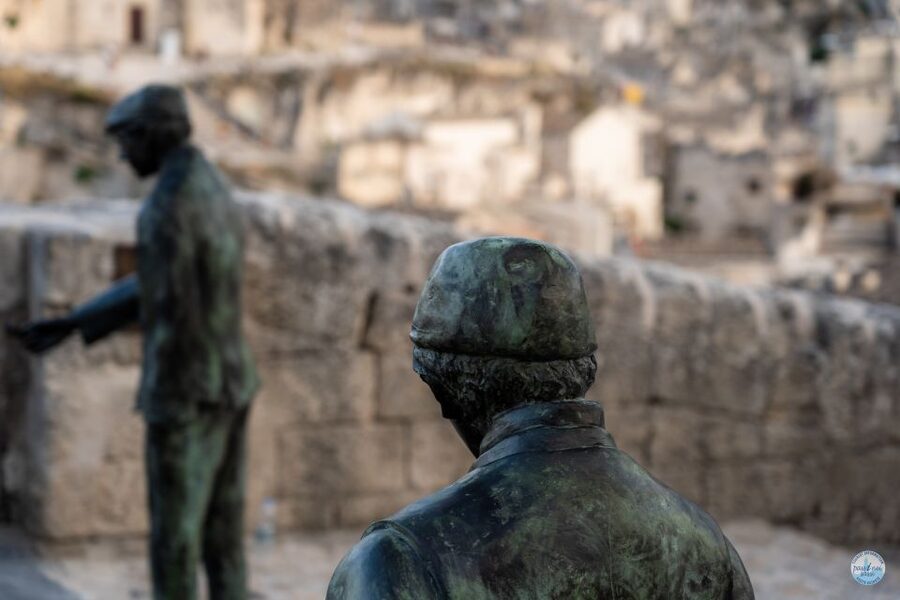
The meeting point is at the Central Office on Via Don Minzoni 13. From there, you do a short walk to Piazza Vittorio Veneto, one of the city’s key squares, where the tour officially begins.
This matters more than it sounds. Starting at a recognizable landmark helps you settle in right away, especially in a place where the streets can twist and drop. And when your guide sets the baseline—where you are, what part of Matera you are entering, and what to pay attention to—you spend less energy figuring it out and more energy noticing details.
Piazza Vittorio Veneto to Civita: the city reveals its logic
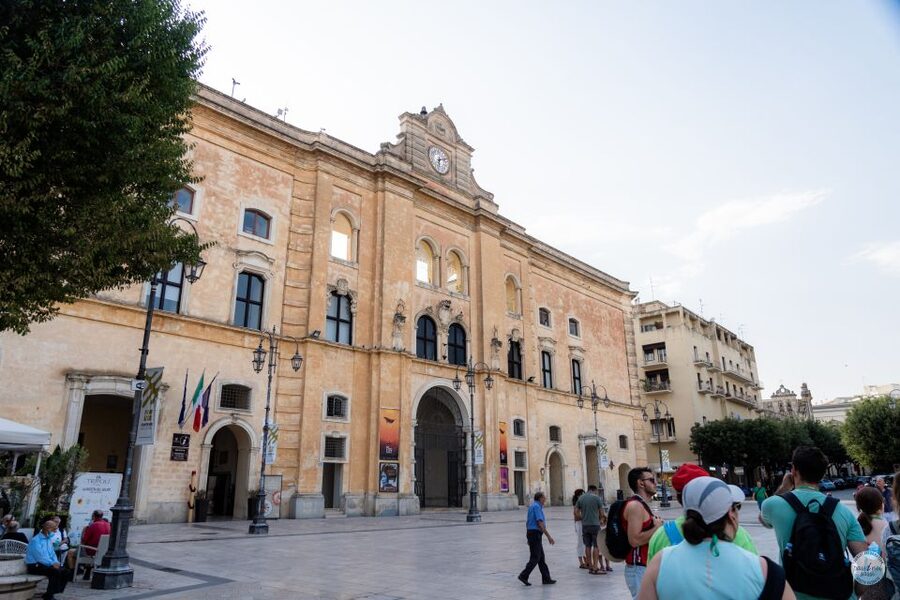
Once you start, you move through Matera’s historic center with stops that point out churches, noble palaces, and memorable corners. Then the route shifts toward Civita, the ancient medieval core that overlooks the city.
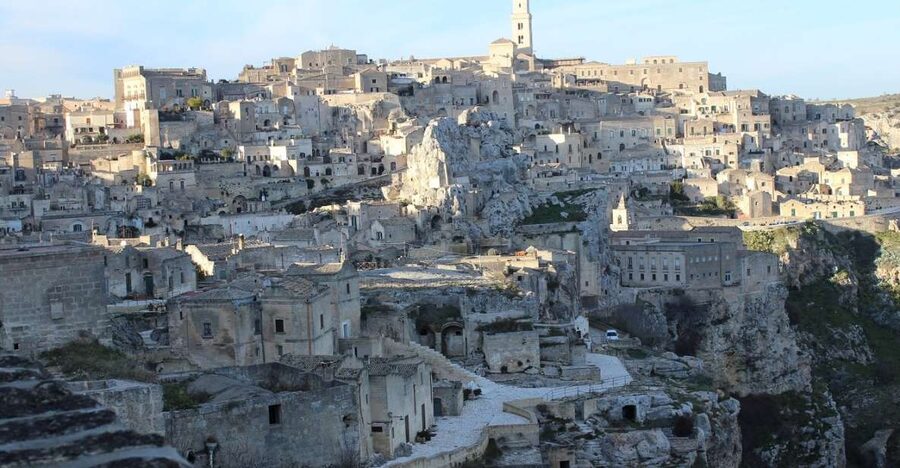
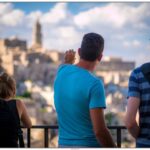
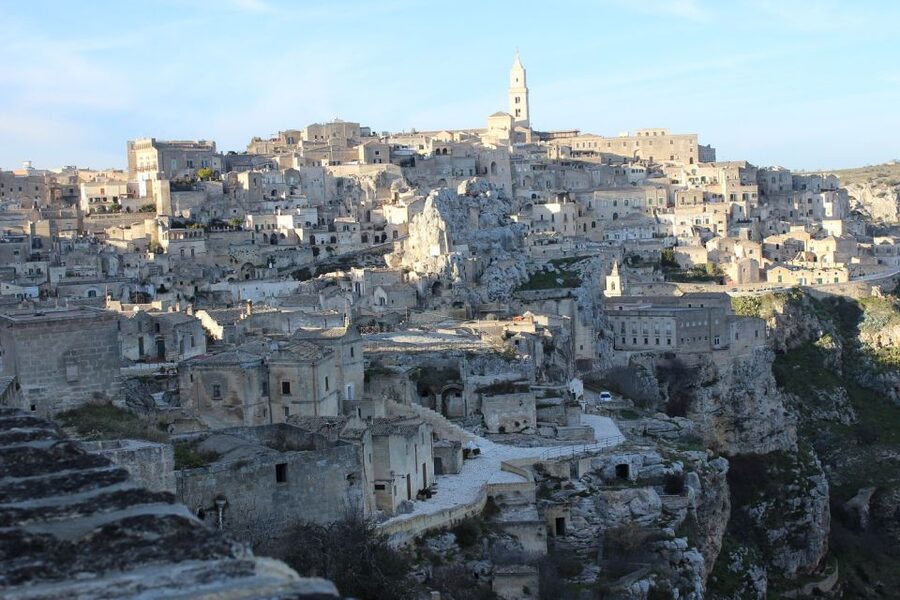
At Civita, you get the kind of view that teaches you how to navigate the rest of the day. You can see how Sasso Barisano sits across the valley: rock-hewn churches, cave dwellings, and the alleys that link life above and below. If you like architectural details, this is where your brain starts clicking into place.
Panoramas over Sasso Barisano: churches and daily life in one frame
Your next phase focuses on Sasso Barisano, the side known for its rock churches and cave settlements. From the panoramic points, your guide connects architecture to everyday life—what the spaces were for and why certain sites appear where they do.
One practical benefit: the view helps you understand the “shape” of the Sassi before you get close to it. Later, when you’re walking narrow paths and looking at façades carved into the rock, you know what you are looking at instead of just seeing impressive stonework.
Sasso Caveoso: vicinati and the barbarian cemetery stop
Sasso Caveoso is often what people picture when they hear Matera: the most iconic and dramatic part of the Sassi. Here, you will learn about the vicinati, which were extraordinary examples of communal living. Instead of isolated caves, families lived as part of a shared neighborhood structure.
You will also make time for the barbarian cemetery, a rare archaeological stop with a mysterious feel. Even if archaeology is not your main interest, it adds a layer to the story. It reminds you that these caves are not only a photo spot—they are tied to real timelines and changing cultures.
This is a good stretch for photos, but also a good stretch for listening. The guide’s job is to keep you from treating it like a sightseeing checklist. When you understand the meaning of vicinati and the reason a cemetery belongs here, the whole area reads differently.
Monterrone rock churches: Santa Maria de Idris and San Giovanni in Monterrone
Then the tour climbs to Monterrone rock, where you get two of Matera’s most important rock-hewn churches: Santa Maria de Idris and San Giovanni in Monterrone.
This is one of the tour’s biggest selling points because church entry is included. You are not standing outside wondering what you are missing. Inside, the focus is on the spiritual atmosphere and the frescoes, plus the sheer fact that these sacred spaces were carved into the rock itself.
If you are visiting when the town is crowded, a guide helps you manage the moments that otherwise feel chaotic—like long lines at church entrances. The group moves with a plan, which makes a difference when you only have a couple hours.
Museum of Peasant Civilization + Casa Grotta: the life behind the stone
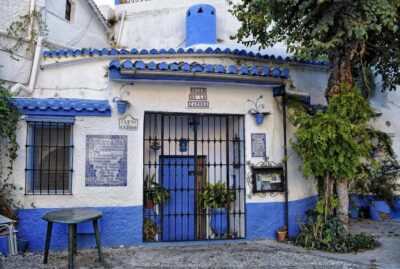
After the churches, you shift gears to the Museum of Peasant Civilization and a typical Casa Grotta of the vicinato. This part is where Matera stops being only “cool architecture” and becomes real life.
In the Casa Grotta, you see a cave dwelling furnished with original objects. That detail helps you picture what everyday routines might have looked like. You also get the big historical context: families lived in the Sassi until the 1950s, when the area was abandoned.
Then the museum ties that lived-in feeling to a broader picture of peasant life—tools, work habits, and the rhythms of community living. Together, the museum and the Casa Grotta do something valuable: they turn the Sassi from a dramatic stage into a functioning home world.
How long it takes, and how to survive the walking
The tour runs for about 2 hours, so it is designed to fit into a day without stealing your entire schedule. That short duration is part of the value: you get multiple “big hits” (historic center, panoramic views, cave dwellings, two church entries, and a museum) without needing a full afternoon.
What you should plan for:
- Bring comfortable shoes. The Sassi are not flat, and this tour is not stroller-friendly.
- It operates in light rain, so bring a rain layer just in case.
- Baby strollers and baby carriages are not allowed, and the tour is not suitable for people with mobility impairments.
If you are visiting in heat, expect you might feel it. Several guides handle tough weather by choosing shaded moments when possible and keeping the pace moving. Your goal is to arrive with water in mind, even though food and drink are not provided.
Price and value: why $35 works here
At about $35 per person for a 2-hour guided walk, the value is strong because you are paying for more than storytelling. Your ticket includes entrance to the rock churches (Santa Maria de Idris and San Giovanni in Monterrone) and the Museum of Peasant Civilization, plus an authorized regional-license guide.
In plain terms: you’re not just walking around and looking. You are getting access inside key sites that would cost extra and take time to arrange on your own. Add the fact that you end up with a clear route across the major sections of the Sassi, and you get a day-planning win, not just a “nice walk.”
If you like independent exploring, this is also a smart way to start. You finish with a much better understanding of where everything sits, so later you can wander with confidence instead of wandering for hours.
Guides and languages: what to expect from the human element
The tour runs with live guides in Spanish, Italian, German, English, and French. An optional audio guide is available in Spanish.
The human element matters here because the Sassi are easy to misunderstand if no one explains the connections between space and use. Past groups often highlight guides who know how to keep explanations clear and how to adjust to real conditions like crowds, rain, or intense heat. You might get a local guide such as Lorenza Borrelli, Lorenza, Vita, Patricia, Anna, Patrizia, Annalisa, Maria, Andrea, or Guido—names that show up often in actual guide lineups.
The takeaway for you: choose this tour if you want the Sassi story told in a way you can use, not just admire.
Should you book this Matera walking tour?
Book it if you are in Matera for a short time and you want a fast, well-structured way to understand the Sassi. It is also a great match if you care about rock churches and want to go beyond street-level viewing with an entry to the Museum of Peasant Civilization and a real Casa Grotta visit.
Skip it if you cannot manage uneven stone walking and stairs, or if you need stroller support. It is built as a walking experience, not a sit-down museum tour.
FAQ
How long is the Matera Walking Tour with Casa Grotta & Rock Church entry?
The tour lasts about 2 hours.
How much does the tour cost?
The price is $35 per person.
Where do I meet the guide?
The meeting point is at the Central Office on Via Don Minzoni 13, and meeting point may vary depending on the option booked.
Where does the tour finish?
The tour finishes at Piazza Giovanni Pascoli.
What is included in the ticket price?
Entrance tickets are included for the rock churches of Santa Maria de Idris and San Giovanni in Monterrone, as well as the Museum of Peasant Civilization, plus an authorized regional license guide.
Is food or drink included?
No. There is no food or drink provided on the tour.
What languages are offered for the live guide?
The live guide is available in Spanish, Italian, German, English, and French.
Are there any options for audio?
Yes. An optional audio guide is available in Spanish.
What should I bring, and is it okay if it rains?
Wear comfortable shoes. The tour operates in light rain, so bring a rain layer if needed.
Is the tour suitable for people with mobility impairments?
No. It is not suitable for people with mobility impairments, and electric wheelchairs are not allowed.