REVIEW · MADRID
Madrid Walking Tour from Puerta del Sol to Retiro Park
Book on Viator →Operated by Tours Madrid | TOURSTILLA · Bookable on Viator
Madrid rewards people who slow down. This Puerta del Sol to Retiro Park walking tour helps you connect famous buildings to the political, cultural, and everyday life behind them, all in about 2 hours 25 minutes. I especially like how the route strings together major highlights without needing paid entrances, so you keep moving and keep learning. I also like the guide support beyond the walk, with printed materials and a link for personalized recommendations after you finish. One thing to consider: it’s an outdoor walk, and if weather turns, you’ll want a backup plan since the experience depends on good conditions.
You’ll start in the center and end right by Retiro, which makes the tour feel practical, not just scenic. The group stays small (up to 24), it’s English, and the pace is steady enough to handle a lot of stops. The catch is simple: you’re viewing most landmarks from the outside, so if you’re hoping for indoor access, you’ll need to plan separate tickets for museums later.
In This Review
- Key highlights you’ll actually feel on the route
- A Fast Line From Puerta del Sol to Retiro Park
- Puerta del Sol, Calle de Alcalá, and Edificio Metrópolis
- Stop 1: Puerta del Sol
- Stop 2: Calle de Alcalá and the Four Seasons area
- Stop 3: Edificio Metrópolis
- Gran Vía’s Art, Leisure, and Instituto Cervantes
- Stop 4: Gran Vía
- Stop 5: Instituto Cervantes
- Stops 4–5 value for first-timers
- Círculo de Bellas Artes Terraces and the Banco de España Story
- Stop 6: Círculo de Bellas Artes
- Stop 7: Banco de España
- Cibeles Fountain and Palacio de Cibeles: City Pride in Stone
- Stop 8: Cibeles Fountain
- Stop 9: Palacio de Cibeles
- Puerta de Alcalá and the Easy Landing Into Retiro Park
- Stop 10: Puerta de Alcalá
- Stop 11: Parque del Retiro
- Price and Value: Why This Tour Costs So Little, But Not Zero
- What Makes the Guides Work (Even When the Stops Repeat)
- Getting Your Money’s Worth in 2 Hours 25 Minutes
- Wear shoes that can handle uneven city sidewalks
- Bring your curiosity, not just your camera
- Use the post-tour link and ask follow-up questions
- Who This Tour Fits Best (And Who Might Want a Different Style)
- Should You Book This Walk From Puerta del Sol to Retiro Park?
- FAQ
- How long is the Madrid Walking Tour from Puerta del Sol to Retiro Park?
- Where does the tour start and end?
- Is this tour offered in English?
- Do I need a ticket on my phone?
- Are there entrance fees included for the stops?
- Is the tip included in the price?
- What’s included in the tour?
- How large is the group?
- Is good weather required?
- What is the cancellation policy?
Key highlights you’ll actually feel on the route
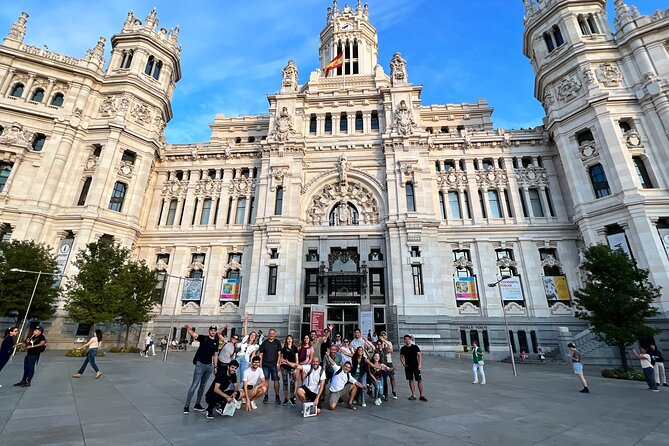
- No entrance tickets needed along the way, so you can spend more time walking and less time lining up
- Puerta del Sol to Retiro gives you both the city’s center pulse and its biggest green escape
- Guide-led context in English that makes architecture easier to spot and remember
- Small group size (max 24) helps the walk feel personal rather than rushed
- Printed tools + post-tour recommendations, so you leave with a next-day plan
A Fast Line From Puerta del Sol to Retiro Park
This is a classic Madrid “highlights with meaning” walk. You’re not doing a museum marathon. You’re doing a concentrated city tour, built around key sights that help you understand why Madrid looks the way it does. The route runs from Puerta del Sol to Retiro Park, so you finish in a place you can keep exploring without re-transporting.
The smart part is the sequencing. You begin where Madrid’s energy is loudest, then you move through the grand boulevards and major institutions, and finally you end in the park locals treat like an extra living room. If you’re only in Madrid for a short time, this format helps you get your bearings fast—and it also makes later wandering more satisfying because you know what you’re looking at.
Group size matters here. With a maximum of 24 people, you’re more likely to hear instructions clearly at street crossings, and it’s easier for the guide to keep an eye on the group. You also get a mobile ticket and confirmation at booking, which keeps the day of logistics simpler.
You can also read our reviews of more walking tours in Madrid



Puerta del Sol, Calle de Alcalá, and Edificio Metrópolis
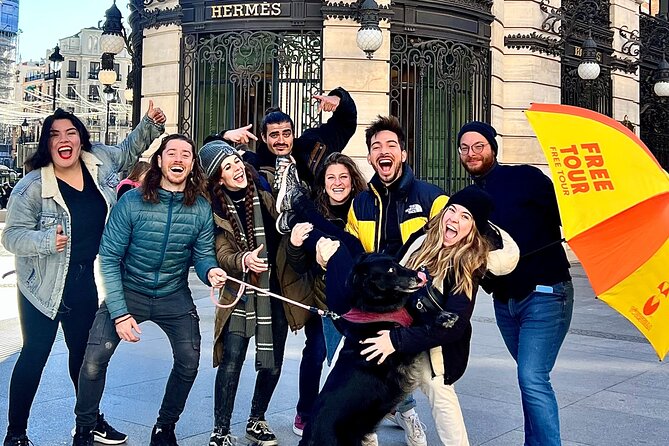
Your walk kicks off at Puerta del Sol, one of the most central meeting points in Madrid. This is a strong start because it puts you in the right mindset: you’re not arriving at a landmark and hoping you’ll connect it. You’re walking outward, learning as you go.
Stop 1: Puerta del Sol
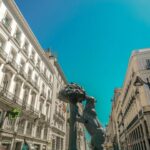
Puerta del Sol is the kind of place where history and modern life overlap. Expect your guide to frame the square’s role in Madrid’s identity and explain why this area matters beyond the obvious fact that it’s busy. It’s a clean warm-up stop: five minutes feels short, but it’s enough to set the tone.
Stop 2: Calle de Alcalá and the Four Seasons area
Next comes Calle de Alcalá, with a stop tied to the Four Seasons hotel and its surrounding story. This kind of stop is useful because it teaches you how Madrid layers eras—new prominence next to older significance. Even if you don’t stay in that area, you learn how to read the street like a timeline.
Stop 3: Edificio Metrópolis
Then you hit Edificio Metrópolis, often called the most photographed building in Madrid. Here’s why this stop works: it’s instantly recognizable, so the guide can point out details you might otherwise miss. You get a quick way to anchor your memory—later, when you spot the building in photos or from a distance, you’ll remember what the guide said.
Potential drawback in this section: you’ll spend most of the time outside. That’s great for energy and pacing, but it means the learning comes from the guide’s narration and what you can see on the facades, not from inside rooms.




Gran Vía’s Art, Leisure, and Instituto Cervantes
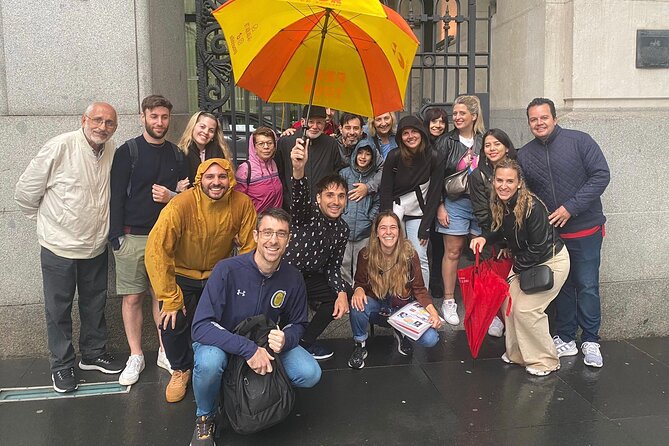
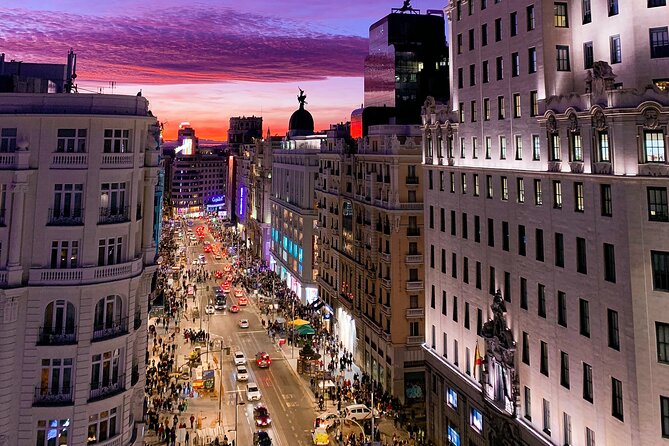
After you’ve taken in the iconic facades around Sol, the walk turns into a Madrid “main character” stretch: Gran Vía.
Stop 4: Gran Vía
Gran Vía is the city’s artery of art, leisure, and gastronomy. This isn’t just a shopping-and-strolling street. Your guide uses it to explain how Madrid broadcasts its cultural mood—where people gather, what gets elevated, and how architecture supports the vibe.
How to get more out of it: look up. Even when you’re surrounded by crowds, the best details tend to live above street level—signage, proportions, and building lines. The guide’s job here is to help you see what to notice so the street doesn’t blur.
Stop 5: Instituto Cervantes
Right after Gran Vía, you reach the Instituto Cervantes. This stop adds a different kind of Madrid spotlight: language as culture. If you’re thinking about learning Spanish—or even just wanting a sense of how the country organizes its language institutions—this makes the city feel more grounded in real systems, not just scenery.
Stops 4–5 value for first-timers
This is where the tour helps you connect dots. Gran Vía gives you the visual intensity of the city. Instituto Cervantes helps you understand why Madrid’s global profile isn’t only about landmarks—it’s also about influence and education.
Círculo de Bellas Artes Terraces and the Banco de España Story
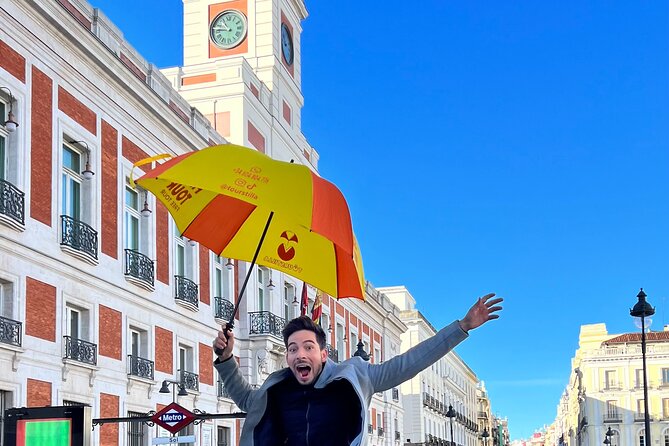
This next stretch takes you from viewpoints and fine arts to money, power, and the kind of drama Spain is famous for.
Stop 6: Círculo de Bellas Artes
At Círculo de Bellas Artes, you get to talk about views from its terraces and the role of the fine arts. Even if you don’t go in, the stop is useful because it tells you where Madrid’s best “sit and look” moments tend to be. The guide’s commentary helps you understand why terrace culture matters in a city that loves outdoor social life.
Stop 7: Banco de España
Then comes Banco de España, framed around its riches and armored vault. The tour also ties this stop to the famous heist-style pop culture reference people associate with Spain. Even if you’re not deep into that series, the takeaway is broader: you get a sense of how institutions are built to command attention and control access.
Practical benefit: after seeing the bank area, you’ll start spotting how Madrid uses grand, serious architecture to communicate stability. It’s a pattern you’ll keep seeing in other neighborhoods.
Cibeles Fountain and Palacio de Cibeles: City Pride in Stone
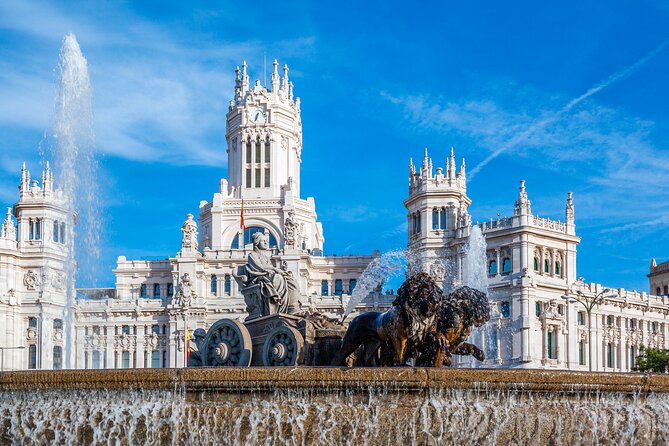
Now you move into a part of the walk where Madrid’s big symbolism becomes easy to recognize.
Stop 8: Cibeles Fountain
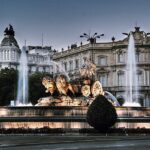
Cibeles Fountain is treated as a wonderful symbol of the Madrileños, and that’s exactly how it feels when you’re near it: the city acts like it owns the view. This stop works because it’s open and photogenic, which means you can take in the scene while your guide explains what the symbolism represents.
Stop 9: Palacio de Cibeles
Next is Palacio de Cibeles, tied to the Madrid City Council and featuring a terrace with what the guide presents as unbeatable views. Even if you’re not going up to the terrace on this walk, the stop helps you learn where the city’s administrative power lives—and where the public gets to look back at the city from above.
If you want to continue exploring after the tour, this is a good mental landmark. It tells you that there are viewpoints built into the city’s civic core, not only in tourist-heavy areas.
Puerta de Alcalá and the Easy Landing Into Retiro Park
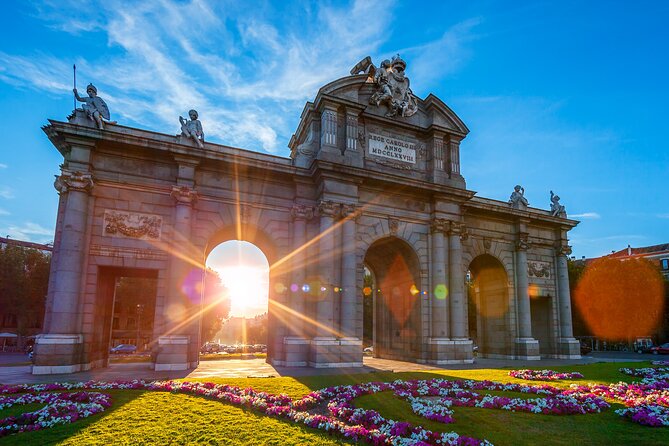
The end of the walk shifts from formal monuments to a big release valve: green space.
Stop 10: Puerta de Alcalá
Puerta de Alcalá is presented as Madrid’s most important royal gate. This is a stop where the guide’s job becomes storytelling. The gate gives you a clear “before and after” reference point for the city’s evolution—how Madrid framed itself through entrances, power, and prestige.
Stop 11: Parque del Retiro
Finally, you arrive at Parque del Retiro, described as El Pulmoncito, Madrid’s central park. This portion is 30 minutes, which is plenty of time to slow down, take photos, and reset your legs. After hours of moving through streets and architecture, the park feels like a reward that doesn’t require extra planning.
What to do in those last 30 minutes: don’t try to sprint through Retiro like a checklist. Instead, pick a direction and just walk slowly, letting the park’s layout help you decide what you want to return to later. If you end your day here, you also avoid the common problem of reaching a park too late to enjoy it.
The tour ends at P.º Argentina, 4, Retiro. That matters because it’s close enough to keep your momentum, whether you head toward more park paths or toward a nearby meal.
Price and Value: Why This Tour Costs So Little, But Not Zero
The listed price is $3.62 per group (up to 15), which sounds almost unreal for a guided, English-language walking tour with multiple stops and printed materials. The value is real, but it comes with one major condition: the guide tip isn’t included.
Here’s how I’d think about it as a practical traveler. The ticket price doesn’t cover the guide’s work. It’s the tip at the end that completes the math. Your plan should be: treat the posted price as the “start,” not the “full cost.” Some people reported being guided toward a tip level around €15 to €20 per person, so I’d budget for that so there are no surprises.
Even with that, the overall value stays strong because:
- You’re not paying for entries during the walk.
- You’re getting a structured route instead of wandering randomly.
- You get post-tour recommendations linked to your interests.
If you’re the kind of traveler who enjoys learning as you go—especially architecture, institutions, and the story behind why buildings exist—this tour format can be a cheap way to make Madrid feel personal quickly.
What Makes the Guides Work (Even When the Stops Repeat)
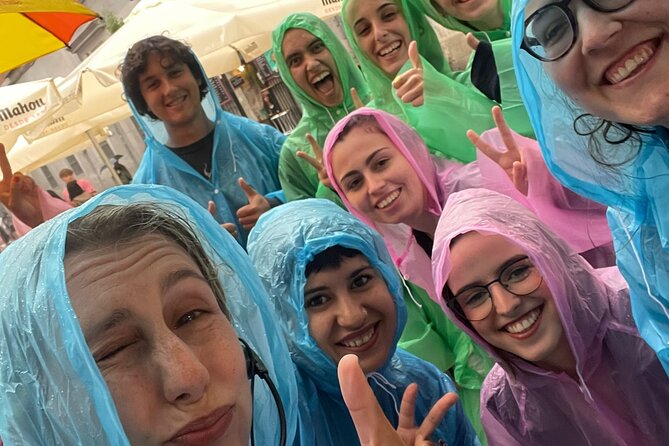
A walking tour lives or dies on the guide’s delivery. This one leans into storytelling, and the reviews you shared clearly match that style: guides like Maikel, Nita, Rambo, Edu, Laszlo, Martin, Melissa, Rambo again, and others get praised for making the walk engaging, clear, and fun.
I like this approach for a simple reason: Madrid can look overwhelming at first. You see a lot of impressive buildings. The guide turns that into a map inside your head.
You’ll notice another pattern: some guides build in small check-ins—like asking whether people need water or toilet breaks—and they keep the group together safely across streets. That’s not a detail you’ll brag about later, but it changes how enjoyable the walk feels in the moment.
Getting Your Money’s Worth in 2 Hours 25 Minutes
To squeeze value out of this tour, do three things.
Wear shoes that can handle uneven city sidewalks
This is a true walk between districts in central Madrid. The time listed is about 2 hours 25 minutes, but you’ll also experience street pacing and regrouping. Don’t treat it like a gentle stroll.
Bring your curiosity, not just your camera
Most stops are short—often around 5 to 15 minutes. That means you get fast context. The best way to enjoy it is to listen for the “why,” not only the “what.” When you learn what a building symbolizes or how an institution functions, photos become more than pictures.
Use the post-tour link and ask follow-up questions
The tour includes a personalized attention component after the walk, plus a link for recommendations on what to do in Madrid. I treat that as part of the value. You don’t just leave with memories; you leave with a plan tailored to your interests and your remaining time.
Who This Tour Fits Best (And Who Might Want a Different Style)
This works best if you want a guided “orientation plus highlights” day. It’s also a solid pick for:
- First-timers who need the main-city story in one afternoon
- Travelers who like architecture and institutional history
- People who want to end in a park and keep the day going
It may not fit as well if you want:
- Strict museum-quality interior access (this is built around exterior stops)
- A slow, single-neighborhood deep dive
- A zero-walking day
Also, this experience is designed for most travelers, and service animals are allowed. It’s near public transportation, which helps if you’re arriving from elsewhere or want to reconnect easily after the tour.
Should You Book This Walk From Puerta del Sol to Retiro Park?
If you want a smart, efficient way to see Madrid’s headline sights while learning what they mean, I think you’ll enjoy this. The route makes practical sense: you start at a central hub, you hit iconic architecture and major institutions, then you land at Retiro where your feet can finally slow down.
Book it if:
- You like guided context more than standalone sightseeing
- You want a route that costs little upfront but doesn’t require paid entrances
- You’re okay with outdoor viewing and short stop timing
Skip it or pair it differently if:
- You’re mainly hunting for indoor experiences and museum tickets on the same day
- You hate walking when the weather changes (the tour depends on good conditions)
If you book, do one thing that boosts your results: arrive at Puerta del Sol ready to listen. This tour rewards attention. You’ll finish the walk seeing Madrid with clearer connections, not just brighter photos.
FAQ
How long is the Madrid Walking Tour from Puerta del Sol to Retiro Park?
It runs for about 2 hours 25 minutes.
Where does the tour start and end?
It starts at Puerta del Sol, Centro, Madrid and ends at P.º Argentina, 4, Retiro, 28009 Madrid.
Is this tour offered in English?
Yes, it’s offered in English.
Do I need a ticket on my phone?
Yes. The tour uses a mobile ticket.
Are there entrance fees included for the stops?
No. Entrance fees are not included, and the tour information notes that admission tickets aren’t required for the sites on the route.
Is the tip included in the price?
No. The tip to the guide is not included and is given at the end of the tour.
What’s included in the tour?
The tour includes a local guide, printed material and teaching tools, a link for personalized recommendations, and personalized attention from your guide after the tour.
How large is the group?
The tour has a maximum of 24 travelers.
Is good weather required?
Yes. The experience requires good weather and may be rescheduled or refunded if canceled due to poor weather.
What is the cancellation policy?
You can cancel for free up to 24 hours in advance for a full refund. If you cancel within 24 hours, the amount you paid isn’t refunded.