REVIEW · AVIGNON
Avignon: History and Legend Walking Tour
Book on GetYourGuide →Operated by Enchanting Avignon · Bookable on GetYourGuide
Avignon’s legends begin on a bridge. This 2-hour walk through the historic center turns big-name landmarks into street-level stories, with a guide who links Avignon to the wider European picture. You’ll also get sound amplification (so the guide stays clear even in open squares) and plenty of photo stops along the way.
I especially love the way the tour is paced for real people: short stops, clear explanations, and anecdotes that keep the facts from feeling like homework. I also like that the guide, often Ana Maria, balances history with humor and practical context, so you finish with a mental map of what matters and why.
One thing to plan for: church access isn’t guaranteed. If schedules change, you may only get exterior viewing on some stops.
In This Review
- Key things you’ll notice on this tour
- Walking Avignon With Real Stories, Not Just Stand-There Sights
- Meeting at Place Crillon and Getting Your Headset Sorted
- Porte de l’Oulle: Starting Where the City’s Story Seems to Begin
- Pont Saint-Bénézet: The Bridge You’ll Remember by First Name
- Monastery Stops: Quick Looks That Add Depth to the Streets
- Place de l’Horloge and Place du Palais: Squares That Teach You Where to Look
- Palais des Papes: When Avignon’s Power Becomes Visible
- Avignon Cathedral: Church Time, With Schedules in Control
- Musée Du Petit Palais: A Short Photo Stop Worth Using as a Teaser
- The Second Monastery Stop and the Long Photo Moment in the Center
- Finishing on Rue de la République: A Clean Exit Into Independent Time
- Who This Walk Is Best For (and Who Might Want Something Else)
- Value for $23: Why the Price Makes Sense
- Should You Book the Avignon History and Legend Walking Tour?
- FAQ
- How long is the Avignon History and Legend Walking Tour?
- How much does it cost?
- Where do I meet the guide?
- What languages are available on the tour?
- What is included in the price?
- Are tickets to monuments included?
- Will we be able to enter churches?
- What should I bring?
- Is the tour suitable for wheelchair users, and are pets allowed?
Key things you’ll notice on this tour
- Local stories with a light, funny touch that keep the walk moving and the sights understandable
- Pont Saint-Bénézet photo time plus a guided look that makes the bridge story easier to follow
- The Palais des Papes focus in a way that helps you know what you’re seeing (not just where to stand)
- Two church attempts with schedules controlling whether you can go in
- Whispering boxes for clearer audio, with an optional 3.5mm plug if you prefer your own earphones
- A finish in Rue de la République that makes it easy to keep wandering afterward
Walking Avignon With Real Stories, Not Just Stand-There Sights
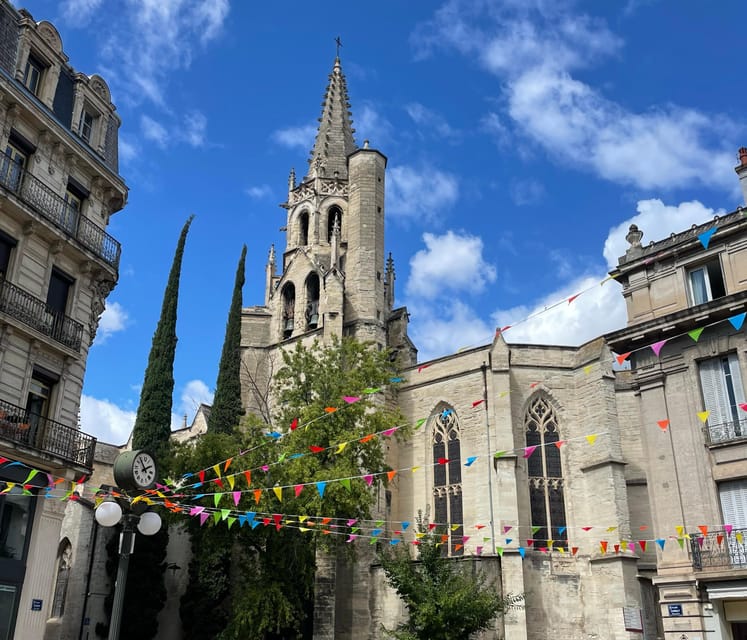
Avignon can feel like a postcard city from the outside—stone, arches, squares, and a lot of history packed into a small area. What makes this tour work is that it doesn’t treat those buildings like museum labels. Instead, you get a guided narration that ties what you’re seeing to the city’s past and the legends people repeat for generations.
The other big win is the tone. The guide’s style (often Ana Maria) is friendly and quick-witted, and the stories come with enough context to make you feel oriented by the end. It’s the kind of experience where you’re listening closely, but you’re also relaxed—no lecture vibe.
And because you’re on foot in a tight historic center, the walk is the point. You’re not just collecting photos; you’re building a sense of place: where the power center was, where everyday life likely played out, and how the city’s most famous landmarks connect to the streets between them.
You can also read our reviews of more walking tours in Avignon


Meeting at Place Crillon and Getting Your Headset Sorted
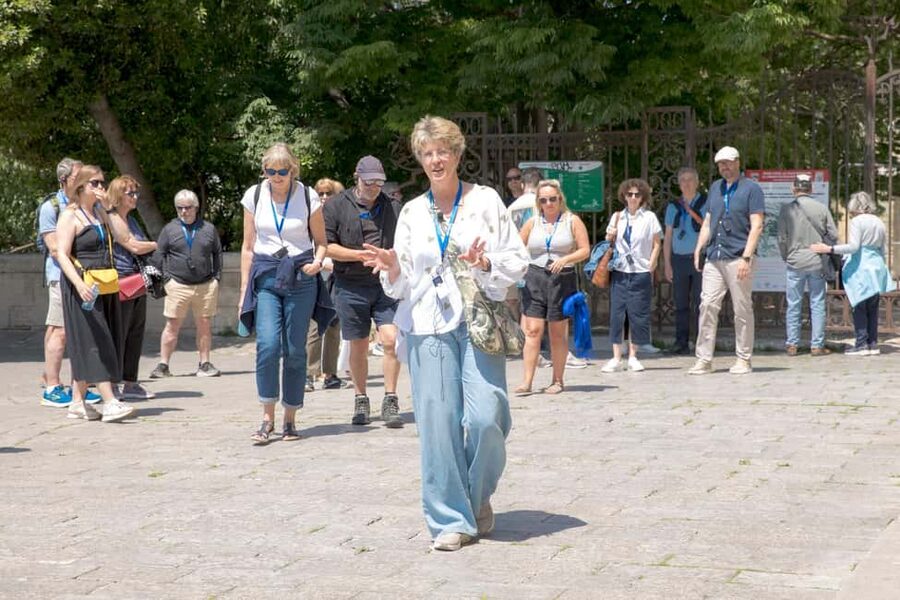
You’ll meet at 16 Place Crillon, outside the Express Carrefour Supermarket, under the big tree. Arrive about 10 minutes early so you start on time; the schedule is designed for a smooth, continuous walk.
Once you’re gathered, you’ll be given the sound amplification device (often called whispering boxes). In plain terms: it helps the guide’s voice cut through noise and distance, especially when you stop in open squares. If you already own earphones with a traditional 3.5mm plug, you can bring them—otherwise, the tour gear does the job for you.
Practical tip: wear comfortable shoes from the start. This is a walking route through historic streets, with stops that involve standing and looking up for architecture. A water bottle is also a smart move, especially in warm weather.
Porte de l’Oulle: Starting Where the City’s Story Seems to Begin
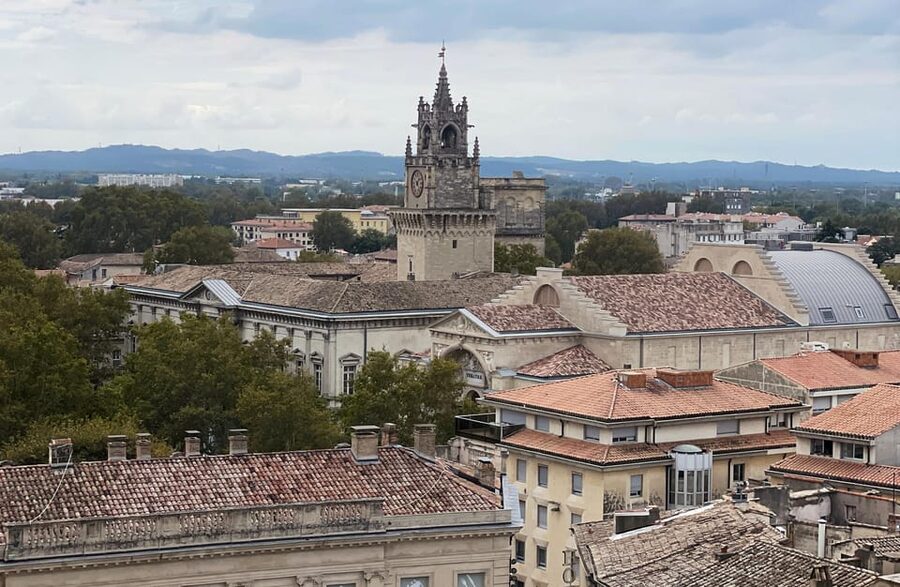
The tour kicks off with a short stop at Porte de l’Oulle. Even if you’re not an architecture expert, this kind of landmark helps you understand how the city’s old layout directed movement. A city gate is more than a wall feature—it’s a reminder that places like Avignon were shaped by entrances, borders, and controlled access.
This first segment is brief (about 5 minutes), which is exactly what you want early on. You get an orientation moment without burning time before the iconic sights start.
Pont Saint-Bénézet: The Bridge You’ll Remember by First Name
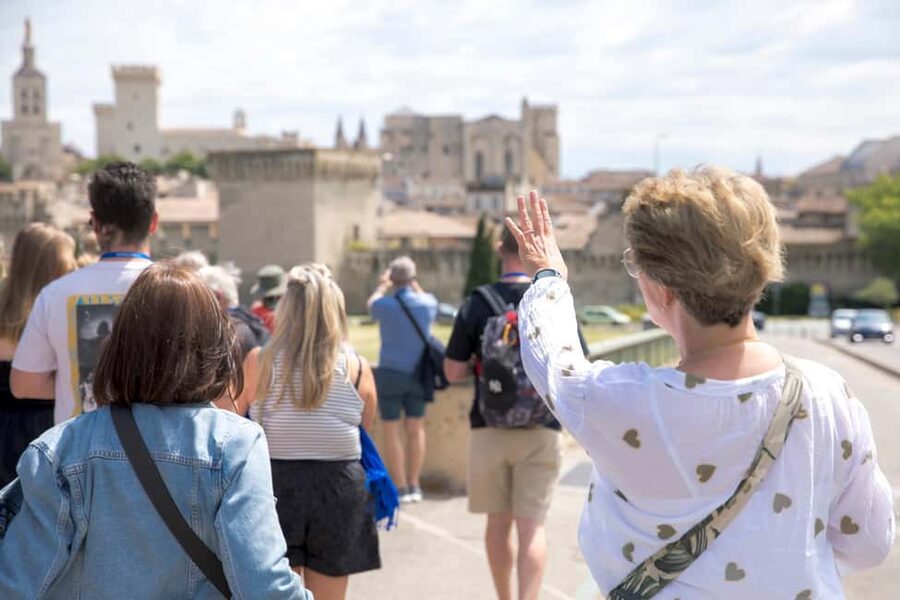
Then you head to Pont Saint-Bénézet, where you’ll have a photo stop and guided sightseeing (about 15 minutes). The bridge is one of Avignon’s headline visuals, but the tour angle is what makes it click: the guide connects the bridge to the legends and to the city’s identity.
This is a great stop even for first-timers. If you’ve seen the bridge in photos already, you’ll still learn how to look at it—what to notice from the angle you’re given and how the story fits into the bigger Avignon picture.
One practical note: bring your camera and be ready to pause. Photo stops work best when you’re not rushing or hovering—give yourself a minute to take in the view, then listen while the guide explains.
Monastery Stops: Quick Looks That Add Depth to the Streets
You’ll hit a Monastery area for a photo stop and a short visit (about 10 minutes). Later, there’s a second monastery stop (about 10 minutes) that gives you a chance to catch another layer of the religious and historical fabric of the city.
These are smaller moments compared to the Papal Palace, but they matter. They break up the tour so it doesn’t feel like one long queue of major monuments. More importantly, they help you understand why Avignon wasn’t only about politics and power. Religious institutions shaped daily life, too—so seeing monastery spaces (even briefly) adds balance.
If you’re someone who likes atmosphere as much as architecture, these monastery pauses are a strong reason to book.
Place de l’Horloge and Place du Palais: Squares That Teach You Where to Look
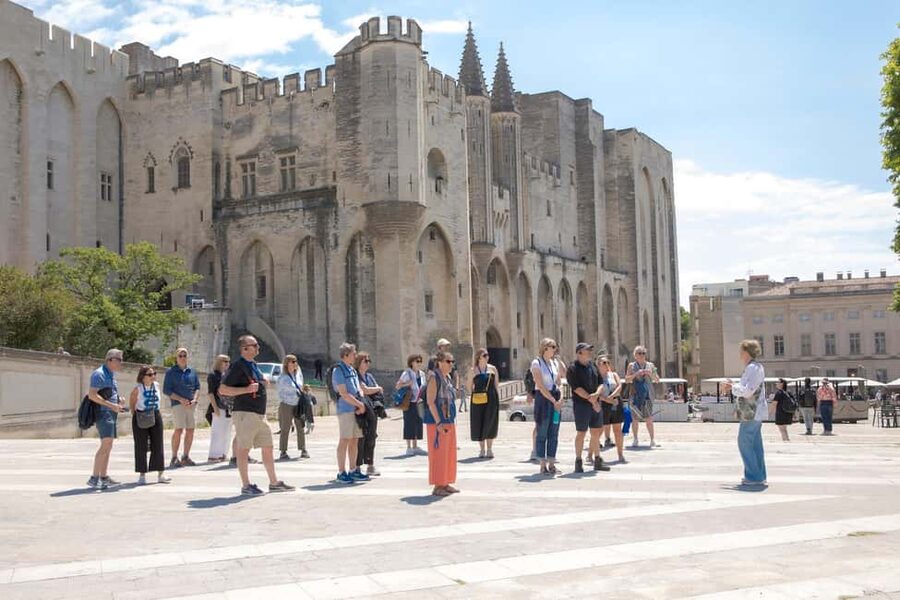
Next comes Place de l’Horloge (about 15 minutes), another stop that’s made for seeing and learning. The name points you toward the clock-centered identity of the square, and the guide uses this moment to help you picture the flow of life around public spaces.
After that, you’ll pass through Place du Palais Avignon for a short photo stop and guided sightseeing (about 5 minutes). It’s the kind of staging area that works like a prelude: you’re positioning yourself so the next stop hits harder.
A tip I like for tours like this: when you’re in a square, look at the buildings edges and entrances, not just the center. That’s where you get the sense of how people moved through Avignon back when these places were the center of the world.
Palais des Papes: When Avignon’s Power Becomes Visible
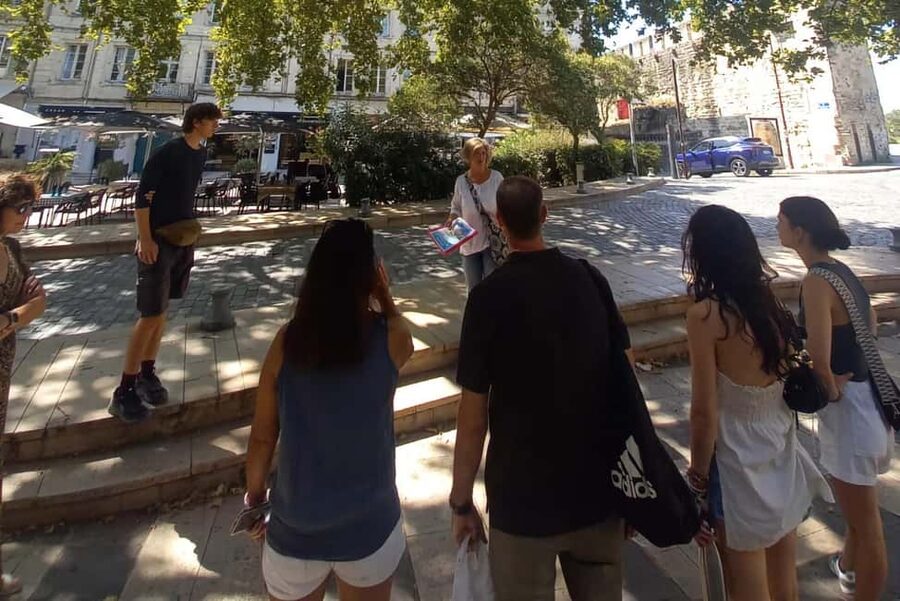
No Avignon walk feels complete without Palais des Papes (about 15 minutes). The tour gives you a guided look and photo time that focuses on the architecture and the historical context behind it.
This is where the “legend and history” theme matters most. You’re not just staring at huge stone walls; you’re getting help understanding why they’re impressive. The guide links the palace to Avignon’s role in wider European events, which makes the building feel less like a random landmark and more like a statement of authority.
If you’re the type who likes to revisit places later, this is also a stop that sets you up. One of the best values of a guided orientation is that you can return on your own with clearer questions—what to look for, what details matter, and how much time you want to spend inside (tickets aren’t included on the tour, so you’ll plan that separately).
Avignon Cathedral: Church Time, With Schedules in Control
You’ll then reach Avignon Cathedral (about 15 minutes), with photo time, a visit, and guided commentary. This is one of the stops that can be affected by opening hours. The tour tries to visit churches, and the exact access depends on schedules that can change without notice.
So here’s the best way to handle it: treat the cathedral as a priority, but keep your expectations flexible. If access is limited on the day you go, you’ll still get the guided introduction and the sightseeing value.
Also note: pets are allowed on the tour, but if the route reaches churches, pets have to wait outside during those visits.
Musée Du Petit Palais: A Short Photo Stop Worth Using as a Teaser
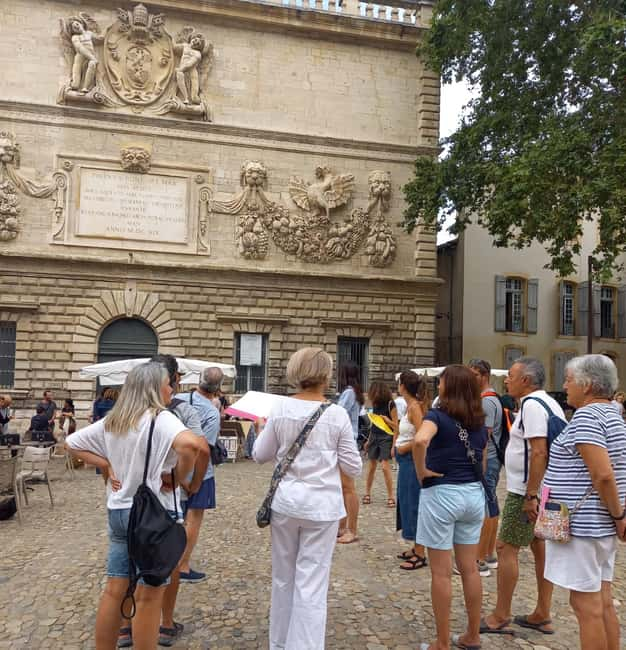
The route includes Musée Du Petit Palais Avignon for a brief photo stop and guided sightseeing (about 5 minutes). Tickets to paid sites aren’t included, so this visit is best understood as a quick orientation—like a preview.
This stop still has value because it helps you connect what you’ll see later to the city’s broader story. If you like art museums, the guided context can make a future independent visit feel less random.
The Second Monastery Stop and the Long Photo Moment in the Center
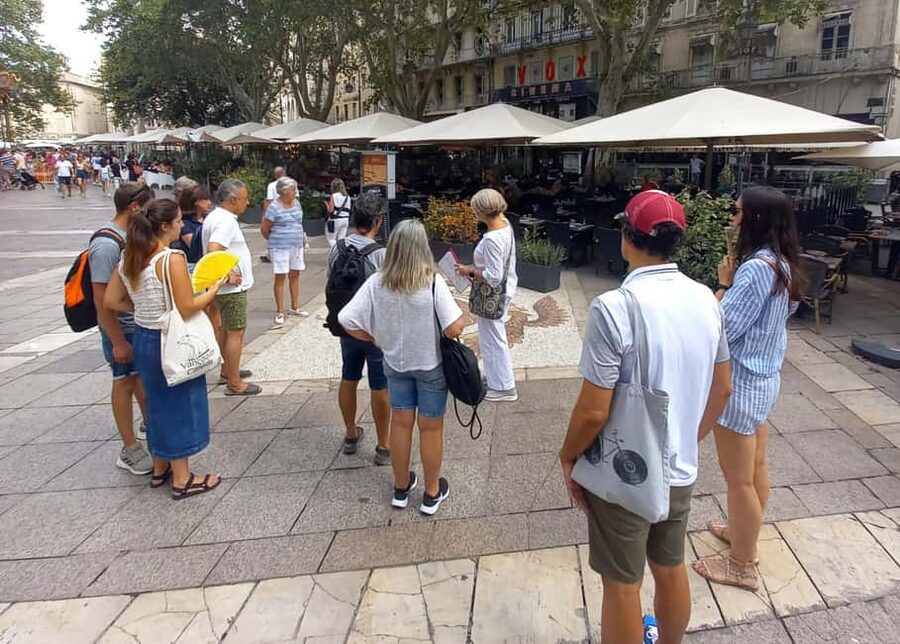
After the museum teaser, you’ll have another Monastery stop (about 10 minutes) before a longer stretch of guided sightseeing and photo time in the historic center (about 25 minutes).
That longer middle-to-end portion is a smart design choice. It lets you digest what you just learned and then apply it as you walk through the streets again. By this point, you’re less likely to feel like you’re just tagging landmarks. Instead, you start seeing how they relate to one another.
I like using this section for two things:
1) photographing anything you missed earlier, and
2) asking yourself what you want to do next, since you’ll have the mental map to make better choices.
Finishing on Rue de la République: A Clean Exit Into Independent Time
The tour finishes on Rue de la République. This is a convenient endpoint because it puts you back in a street that’s easy to use for getting on with your day: finding food, walking off more steam, or heading to another ticketed monument.
A key benefit here is how the tour supports your follow-up plans. The guide’s direction can help you figure out what’s worth tickets and what’s better enjoyed from the street. Some people even use the tour as a first-day orientation, then return later for deeper visits.
If you want one practical move: before you leave, note any monument names you plan to tackle next. You’ll remember the route more clearly once you’re back in your own time.
Who This Walk Is Best For (and Who Might Want Something Else)
This tour is a strong fit if you want:
- an easy-to-follow route through Avignon’s core sights in 2 hours
- guided context that makes the big landmarks easier to understand
- a guide style that’s funny, friendly, and not stuck in stiff delivery
It may be a weaker match if you have mobility limitations. The tour is not suitable for people with mobility impairments and not suitable for wheelchair users. It also includes stairs (important if you’re traveling with a stroller; children in strollers will need to be carried up stairs).
Also, this isn’t a private experience. Group size can vary, so you’ll be walking with others and sharing the route with the pace of a set itinerary.
On the other hand, if you like meeting people while you learn, the group format doesn’t have to be a downside. In fact, it can make the whole thing feel more like a shared outing than a one-on-one appointment.
Value for $23: Why the Price Makes Sense
At $23 per person for 2 hours, you’re paying for two things that are hard to DIY: a guided narrative that connects the sights, and sound amplification that keeps the guide’s voice clear throughout.
If you try Avignon on your own, it’s easy to spend time wandering, missing the story behind what you’re looking at, or arriving at major landmarks without knowing what to prioritize. This tour compresses that orientation into a short walk, and it does it with a local guide who presents local stories and context (not a certified-historian style of lecture).
Tickets for paid monuments aren’t included, so you’ll still decide later what you want to enter. But the tour helps you make that decision smarter, which is where the value really shows.
Should You Book the Avignon History and Legend Walking Tour?
Book it if you want a clear, enjoyable way to get your bearings in Avignon fast. The guide’s storytelling style (often Ana Maria) is a big part of the appeal: the tour stays lively, includes useful context, and makes major sites like Pont Saint-Bénézet and Palais des Papes easier to understand when you’re standing in front of them.
Skip it or consider alternatives if you need wheelchair-friendly access, or if you’re very set on guaranteed church interior access. Since church entry depends on opening hours, you should plan your expectations around that.
If your schedule is flexible, the tour also offers free cancellation up to 24 hours in advance and a reserve-now, pay-later option—handy when you’re still building a day-by-day plan in the South of France.
FAQ
How long is the Avignon History and Legend Walking Tour?
The tour lasts 2 hours.
How much does it cost?
It costs $23 per person.
Where do I meet the guide?
Meet at 16 Place Crillon outside the Express Carrefour Supermarket and under the big tree. Arrive 10 minutes early.
What languages are available on the tour?
The tour is offered in English and Spanish.
What is included in the price?
The tour includes a guided walking tour of Avignon’s historic center, stories and insights into the city’s past, exploration of squares and hidden alleyways, and a sound amplification device for each participant.
Are tickets to monuments included?
No. Tickets to enter paid monuments are not included, and visits to paid monuments are not included.
Will we be able to enter churches?
The tour will try to visit 2 churches, but opening hours can change and access is not guaranteed.
What should I bring?
Bring comfortable shoes, sunglasses, a sun hat, a camera, sunscreen, water, and weather-appropriate clothing.
Is the tour suitable for wheelchair users, and are pets allowed?
The tour is not suitable for wheelchair users or people with mobility impairments. Pets are allowed, but they have to wait outside if the tour visits churches.