REVIEW · LIVERPOOL
Best Of Liverpool Heritage, History & Culture Guided Walking Tour
Book on Viator →Operated by Liverpool Famous Walking Tours · Bookable on Viator
Liverpool clicks into place on foot. This guided walk is a smart first look at Liverpool, stitching together Beatles backstories with the city’s dock and architecture landmarks, without wasting time sitting in traffic. You’ll cover a lot of ground, but it stays relaxed and easy to follow.
I especially love the local guide perspective and the fast way this tour helps you orient the city center. The second thing I like is the mix of famous names and real-life working-port details, from the rope-making Ropewalks area to photo stops like the Golden Liver bird and the Three Graces waterfront. One consideration: it’s over two hours on cobbles and uneven surfaces, so wear grippy, comfortable shoes and bring water.
In This Review
- Key Highlights You’ll Notice Right Away
- A 2-Hour-15 Overview That Gets You Oriented Fast
- Starting at the Bluecoat School Lane (and Why That Matters)
- Sailors Home Gateway and Ropewalks: Maritime Liverpool in Human Scale
- Campbell Square and The Bridewell Gaol Cells: A Turning Point in Atmosphere
- Thomas Steers Way: Dry Dock History and the Changing Liverpool Sign
- Royal Albert Dock: Where Titanic Talk Fits Naturally
- Beatles Statue, Mathew Street, and the Endgame for Your Own Cavern Visit
- Three Graces to Town Hall: The Architecture Mile You’ll Want to Photograph
- What You’ll Learn From the Way Guides Tell the Story
- Practical Notes That Actually Change Your Experience
- Price and Logistics: Getting Value From a Small-Group Story Walk
- Should You Book This Liverpool Walking Tour?
- FAQ
- How long is the Best Of Liverpool Heritage, History & Culture Guided Walking Tour?
- How much does the tour cost?
- Where do I meet the guide, and where does the tour end?
- Is the tour offered in English?
- What’s included in the price?
- Is food or drink included?
- What should I wear or prepare for during the walk?
- Is this tour suitable for someone with moderate physical fitness?
- Are dogs or service animals allowed?
- What happens if the weather is bad or I need to cancel?
Key Highlights You’ll Notice Right Away
- Beatles moments without the crowd surge: you pass iconic spots and hear the stories behind them
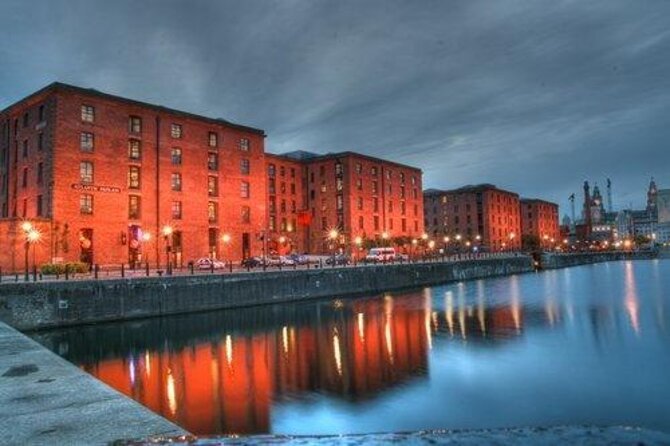
- Royal Albert Dock storytelling: dock history is tied to the Titanic in an easy way
- Photo-friendly city icons: Golden Liver bird, the changing Liverpool sign, and Beatles Statue chances
- Offbeat stop at a former Victorian gaol: Campbell Square and The Bridewell add texture
- A tight group size: up to 20 people means better pace and more room for questions
A 2-Hour-15 Overview That Gets You Oriented Fast
For $31.90 per person, what you’re buying is time and context. In about two hours and a quarter, you get a guided loop that moves through the city center, down toward the waterfront, and back again to Mathew Street—so you’re not piecing together directions and meanings on your own.
The tour is designed for real walking. It’s not listed as having hills or stairs, but you will be on uneven ground like cobbles, especially around older streets and central areas. If you’ve got limited time, this is one of those tours that helps you later decide what to revisit on your own.
You can also read our reviews of more walking tours in Liverpool



Starting at the Bluecoat School Lane (and Why That Matters)
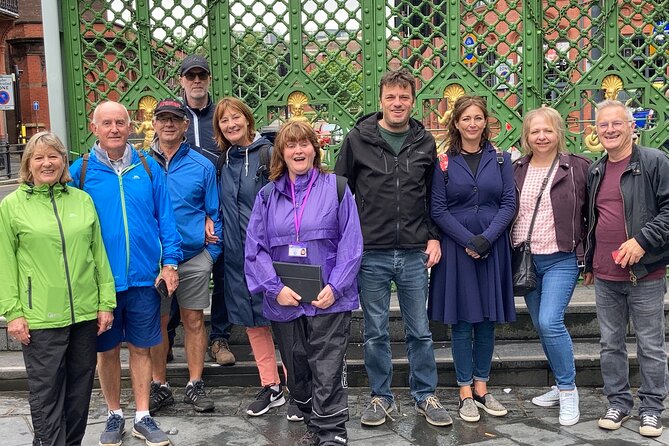
You meet at the front gates of the Bluecoat on School Lane, Liverpool L1 3BX. This is a solid starting point because it puts you right in the thick of the city’s cultural life before you sprint toward the famous waterfront.
The practical win here is simple: you start near a landmark, so it’s easier to find the group and settle in. You also get the tour tone right away—your guide sets the stage for how Liverpool’s story connects culture, industry, and identity. Even if you only know Liverpool through music, this opening helps you see how the city formed long before the Beatles era.
Sailors Home Gateway and Ropewalks: Maritime Liverpool in Human Scale
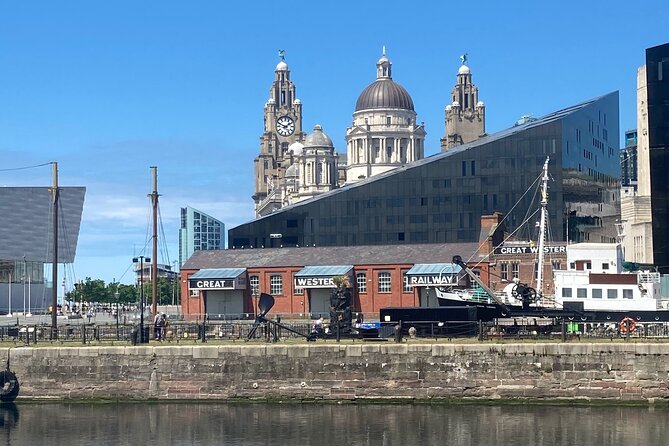
After Bluecoat, you head to the Sailors Home Gateway monument. This is where the tour gives you a classic Liverpool photo moment: the golden Liver bird. It’s the kind of stop where you can grab a picture quickly, but your guide also uses it to explain why this community mattered to sailors and the wider maritime world.
Then comes Henry Street and the Ropewalks area. Ropewalks is called that for a reason: it was historically where rope-making for sailing ships took place. That’s one of the best parts of this tour for first-timers. You’re not just hearing dates. You’re hearing how the city’s jobs shaped its streets, neighborhoods, and daily life.
Campbell Square and The Bridewell Gaol Cells: A Turning Point in Atmosphere
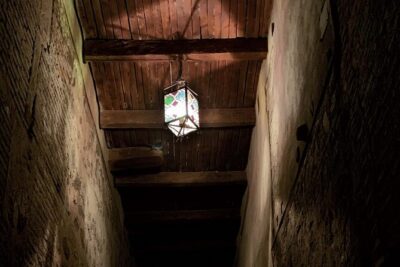
Campbell Square adds a darker, more surprising chapter. You’ll learn about The Bridewell, a converted Victorian gaol. The tour notes you may even get a chance to see inside one of the original cells, which is exactly the kind of detail that makes a city feel real instead of museum-flat.
This stop also gives you a breather from the constant “famous building” factor. You’ll feel the texture of Liverpool—how it grew, how it handled trouble, and how old spaces get reused. It’s an offbeat change of pace, and it’s one of the spots that tends to stick in memory.
Thomas Steers Way: Dry Dock History and the Changing Liverpool Sign
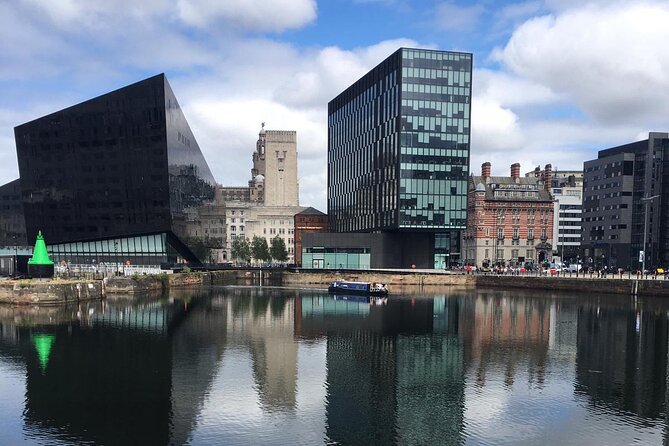
Next you reach Thomas Steers Way, located on the site of Liverpool’s first dry dock. This is a neat way to connect industrial infrastructure with something visually memorable. The tour points you to a large water fountain that captures maritime history, plus a quick look down through a port hole—small, but it gives you that working-waterfront feeling.
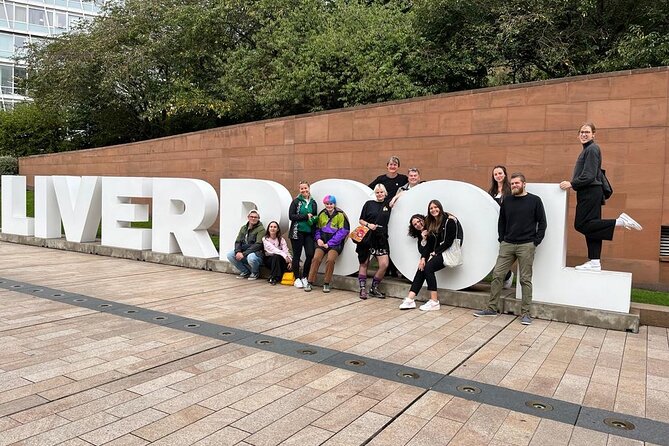
Right near here is the oversized LIVERPOOL selfie sign. You’ll see it as a photo moment, but your guide also uses it as a reminder that Liverpool is constantly updating while still referencing its past. The colors can change with the season or events, so the sign doesn’t feel stuck in time.
Royal Albert Dock: Where Titanic Talk Fits Naturally
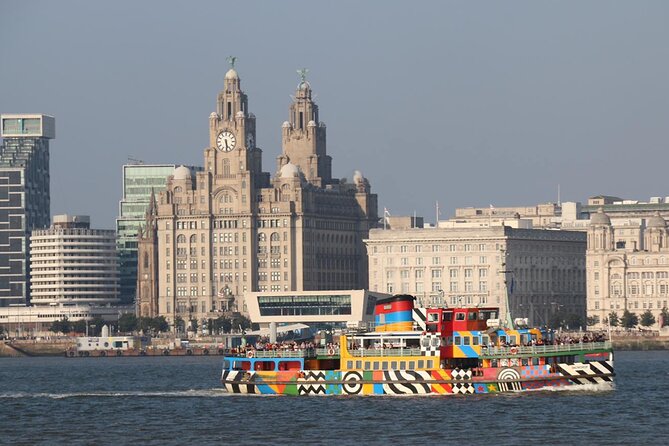
When you reach the Royal Albert Dock Liverpool, the tone shifts to waterfront drama—brick and stone heritage next to newer dockside architecture. The tour focuses on how the Titanic story became part of Liverpool’s maritime narrative, which helps you understand why this city still tells that tale.
You’ll also pass the bronze statue to Bill Fury. In dock-and-music Liverpool logic, this is the right stop at the right time: it blends the city’s sound with its docks, and it’s described as a fan shrine. Even if you’re not deep into rock history, it gives you a human anchor and a quick place to pause.
Beatles Statue, Mathew Street, and the Endgame for Your Own Cavern Visit
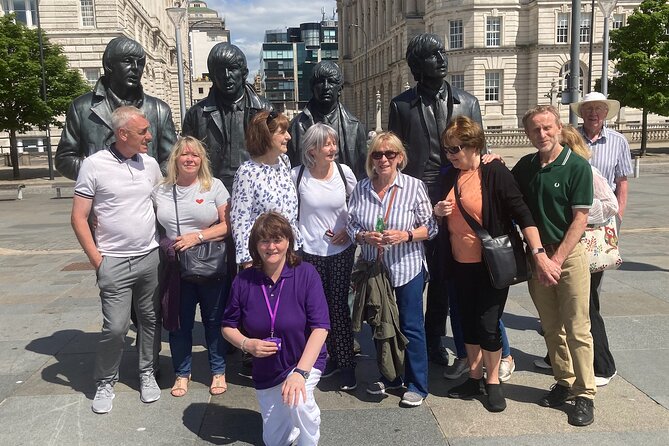
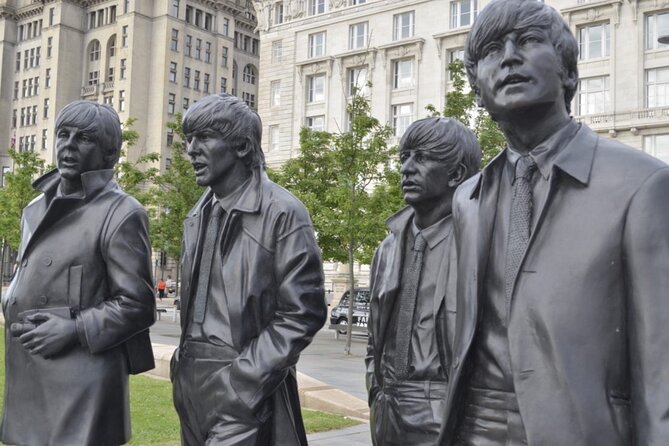
The Beatles Statue is a major highlight for fans. You’ll get a chance to grab a selfie with the Fab Four as you pass by, and the sculptor Andrew Edwards is specifically mentioned. There’s also a heads-up that access to this statue can sometimes be restricted; if that happens, you’ll visit alternative statues instead.
Then the tour ends at Mathew Street, a central location where you can continue on your own. From there, you can explore the Mathew Street and Cavern quarter independently, or if you want more Beatles depth, you can book a dedicated Beatles walking tour.
This is a smart structure. You’re not forced to buy more on the spot, but you have a clear next step. After the walking tour, you’ll usually know what to chase: more dockside, more architecture, or more music streets.
Three Graces to Town Hall: The Architecture Mile You’ll Want to Photograph
Once you’re back in the city center rhythm, you’ll hit several standout landmarks close together.
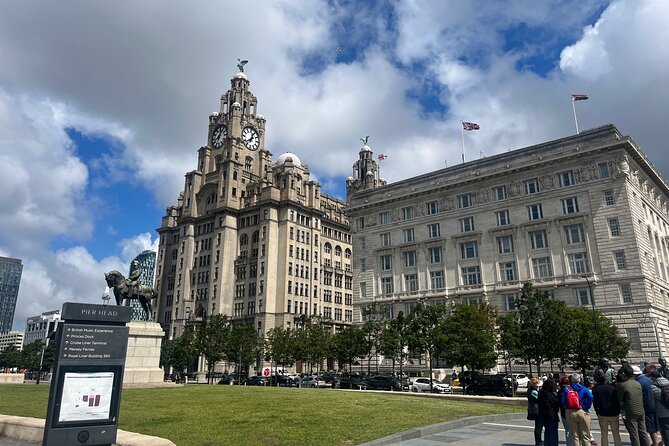
At the Three Graces area, you’ll learn why the Cunard Building, the Port of Liverpool Building, and the Liver Building are grouped together. The tour frames them as Grade II listed landmarks, with the Liver Building described as iconic. This stop works for you even if you only like taking pictures: it’s a visual cluster that makes it easy to understand Liverpool’s identity at a glance.
Then you walk along Castle Street, where you can see a connection to medieval times framed by attractive buildings and architecture. After that, you approach Liverpool Town Hall, recognized as one of the finest surviving 18th-century town halls in England. You’ll also hear about predecessors dating back to the 1500s, which gives the site a longer timeline than you’d guess from looking at it.
From there, Exchange Flags brings you a courtyard feel facing the Town Hall, plus the Second World War role of the area. You’ll also find the Nelson Monument and a large bronze Nelson dating to the early 1800s. Derby Square follows, where Liverpool Castle once stood and now an imposing monument to Queen Victoria is the focal point.
By the end of this stretch, the tour does something valuable: it shows you that Liverpool’s story isn’t only in famous names. It’s in how the city organized power, trade, defense, and civic life.
What You’ll Learn From the Way Guides Tell the Story
The itinerary is packed, but the real value is how your guide strings it together. In the feedback, guides are repeatedly praised for passion, engaging delivery, and fast answers to questions. Names like Mike, Carl, Pam, Roy, Allan, Colleen, Paul, Rob, Chris, Michael, and Matthew show up in the strongest reviews, and common threads are humor, clarity of pacing, and weaving Liverpool’s culture into the landmarks.
You should expect your guide to connect the dots between:
- working port geography and the city’s layout
- famous music history and the places people built and lived around
- “look and see” stops with short explanations that help you recognize what you’re seeing again later
If you’re the type of person who likes to understand why a building or street exists, this is exactly that kind of tour. It’s not a lecture. It’s the story matched to where you are standing.
Practical Notes That Actually Change Your Experience
A few real-world details matter here.
Shoes and footing: the tour says there are no hills or stairs, but uneven cobbles are part of the walk. Bring no-slip shoes. If you’ve ever slipped on cobbles in London or Edinburgh, you know the rule: good grip is everything.
Bring water: it explicitly recommends a bottle of water. That’s smart, because the tour doesn’t include food or drink. Plan to have a snack after, or before, depending on your timing.
Group size: the max is 20 people. That helps keep the pace manageable and makes it easier to hear your guide at key moments.
Photo stop reality: most stops are quick, by design. The Golden Liver bird, the Liverpool selfie sign, and the Beatles Statue are all positioned as brief photo chances, so keep your camera ready and don’t be stuck unlocking it while everyone else moves.
Route changes happen: the tour notes the route may change on occasion and some locations may be inaccessible operationally. Also, access to the Andy Edwards Beatles Statue can be restricted, with alternative statues used when needed.
Dogs and service animals: service animals are allowed, and well-behaved dogs are welcome. You’ll still be in busy central areas, so bring what your dog needs and keep the leash handling smooth.
Price and Logistics: Getting Value From a Small-Group Story Walk
At $31.90 for roughly 2 hours 15 minutes, the price works best if you want a guided “first map.” You’re not paying for museum admissions here; the stops are listed with admission ticket free, and the core included items are the guided walking tour and local Liverpool experienced guides.
This isn’t a food tour. If you like to snack during sightseeing, you’ll want to plan that elsewhere. The upside is you’re not paying extra for meals you might not eat. You’re paying for time, route planning, and a local narrative that helps you make better choices for the rest of your stay.
Should You Book This Liverpool Walking Tour?
Book it if you:
- are visiting Liverpool for the first time and want a quick mental map
- care about Beatles culture but also want the city behind the music
- like getting context while you walk, not after you get back to your hotel
- prefer small-group pacing (max 20) and the chance to ask questions
Skip it if you:
- hate walking on cobbles or you need a low-footing route
- want a food-and-drink experience built into the tour
- are only interested in one narrow theme and don’t want maritime and architecture mixed in
If you fall in the first group, this is a very efficient way to start your Liverpool trip and leave with ideas you can follow on your own.
FAQ
How long is the Best Of Liverpool Heritage, History & Culture Guided Walking Tour?
It runs about 2 hours 15 minutes.
How much does the tour cost?
The price is $31.90 per person.
Where do I meet the guide, and where does the tour end?
You meet at the front gates of the Bluecoat on School Lane, Liverpool L1 3BX, and the tour ends at Mathew Street in the city center.
Is the tour offered in English?
Yes, it’s offered in English.
What’s included in the price?
The guided walking tour and local Liverpool experienced guides are included.
Is food or drink included?
No. There’s no food or drink included.
What should I wear or prepare for during the walk?
You’ll want comfortable, no-slip shoes because you’ll pass through uneven surfaces like cobbles. The tour also recommends bringing a bottle of water.
Is this tour suitable for someone with moderate physical fitness?
It’s recommended for people with a moderate physical fitness level. The walk is described as having no hills or stairs, but you still do need to handle uneven ground.
Are dogs or service animals allowed?
Service animals are allowed. Well-behaved dogs are also welcome, keeping in mind busy areas and group walking.
What happens if the weather is bad or I need to cancel?
The experience requires good weather. If it’s canceled due to poor weather, you’ll be offered a different date or a full refund. Free cancellation is available up to 24 hours in advance for a full refund.